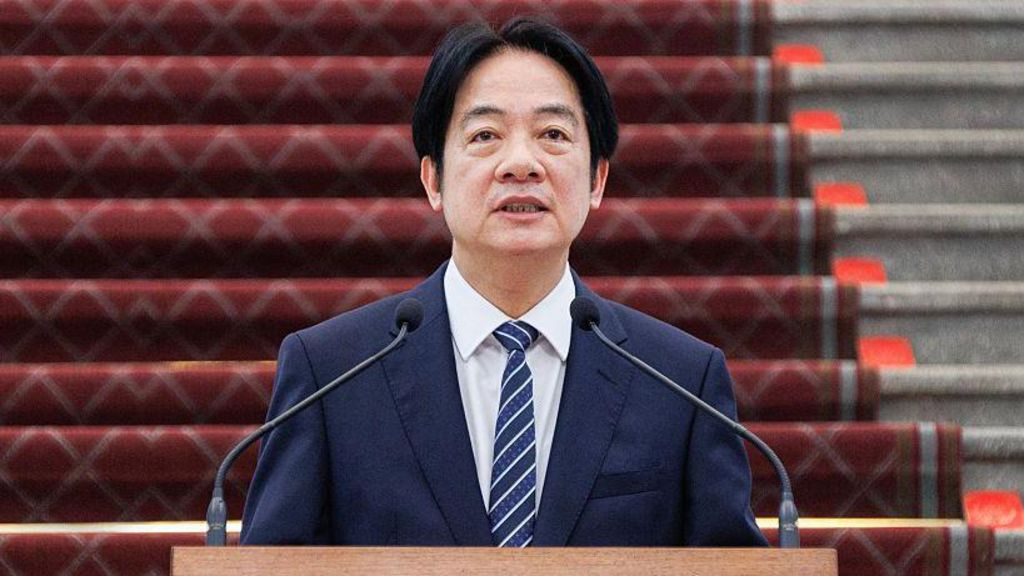
A Taiwan court has convicted four individuals, including a former presidential aide, for espionage activities on behalf of China. Among the convicted is Huang Chu-jung, a former assistant to a Taipei councillor, who received the harshest sentence of 10 years. The other three, including Ho Jen-chieh, a former staffer in the office of then Foreign Minister Joseph Wu, were sentenced to jail terms ranging from four to 10 years. The court revealed that the espionage activities spanned a significant period and involved the leakage of critical diplomatic intelligence. Huang was accused of instructing Ho to gather information from Wu, which was then transmitted to Chinese Communist Party intelligence using encrypted software. Additionally, Huang collaborated with Chiu Shih-yuan, another ex-DPP staffer, to collect further intelligence, including details about President Lai Ching-te’s travel itineraries. The court disclosed that Huang received nearly NT$5 million from the Chinese government, while Chiu was paid over NT$2 million. The convictions are part of Taiwan’s intensified efforts to combat alleged Chinese espionage, with 64 individuals prosecuted in 2024 alone, a notable increase from previous years. The espionage cases have further strained Taiwan-China relations, with President Lai’s Democratic Progressive Party (DPP) taking a firm stance against China, while the opposition Kuomintang (KMT) advocates for more dialogue. Critics of the DPP accuse the ruling party of using espionage allegations to suppress opposition voices. Meanwhile, China continues to assert its claims over Taiwan, regularly testing the island’s naval and air defenses.
分类: politics
-
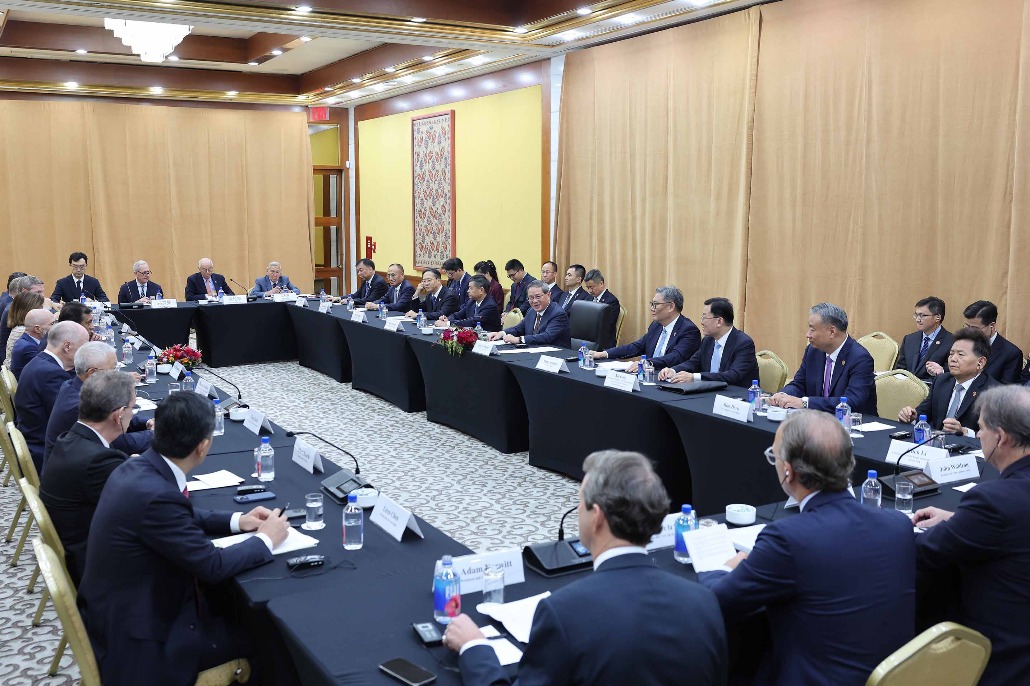
China, US need to find right way to get along in new era — Chinese premier
Chinese Premier Li Qiang emphasized the importance of fostering constructive and mutually beneficial relations between China and the United States during a meeting with representatives from US-friendly organizations in New York on September 25, 2025. The meeting, held on the sidelines of the 80th session of the United Nations General Assembly, included participants from the US-China Business Council, the National Committee on US-China Relations, the US Chamber of Commerce, and the Council on Foreign Relations, alongside scholars and business leaders. Premier Li underscored that China-US relations are the most significant bilateral ties globally, with both nations capable of being partners and friends. Reflecting on history, he noted that friendly exchanges have consistently been the mainstream trend between the two countries. Echoing President Xi Jinping’s vision, Li highlighted that the vast Pacific Ocean is ample space for both nations to coexist peacefully, respect each other, and pursue win-win cooperation. Economic and trade relations were identified as a cornerstone of bilateral ties, with Li emphasizing the complementary nature of their market structures and industrial systems. He expressed confidence in China’s ability to maintain stable economic growth and create opportunities for global businesses, including those from the US. Li reiterated China’s commitment to expanding openness, relaxing market access, and addressing foreign businesses’ concerns to ensure a favorable operating environment. He also stressed the importance of grassroots connections in strengthening the China-US relationship and called for enhanced mutual understanding and practical cooperation. US participants acknowledged China’s remarkable achievements in economic growth and innovation, expressing optimism about the future of bilateral relations and their potential to bring stability to the international community.
-
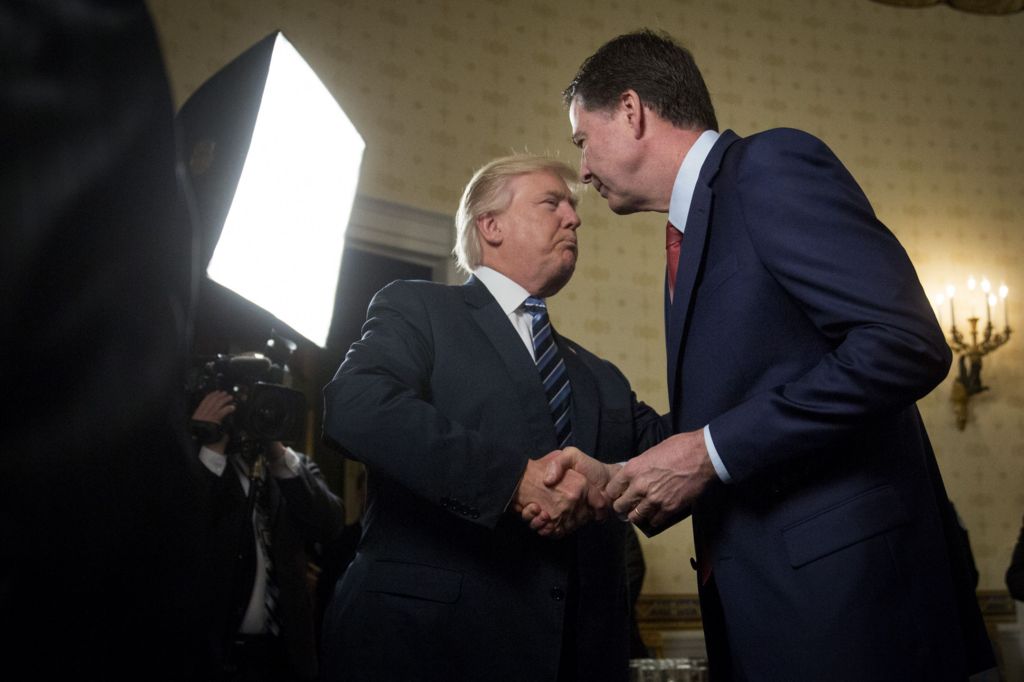
Comey indictment escalates Trump’s promise of political retribution
In a dramatic turn of events, former FBI Director James Comey has been indicted on charges of making false statements and obstruction of justice, following a Senate panel testimony in 2020. The indictment, announced by the Department of Justice late Thursday, comes less than a week after former President Donald Trump publicly called for the prosecution of his political critics on his Truth Social platform. This development has sparked widespread concern over the potential politicization of the Justice Department under US Attorney General Pam Bondi. Legal experts, including former federal prosecutor Laurie Levinson, have described the situation as unprecedented, noting the apparent collapse of the traditional firewall between the Justice Department and the White House. Trump’s recent appointment of Lindsey Halligan, a former personal lawyer with no federal prosecution experience, to oversee the case has further fueled accusations of vindictive prosecution. Comey, who has denied the charges, is expected to face a trial that could reignite controversies from the Russian election-meddling investigation during Trump’s first term. While the indictment has been celebrated by Trump and his supporters as a step toward accountability, critics argue it may be part of a broader strategy to target political adversaries and undermine the credibility of past investigations.
-
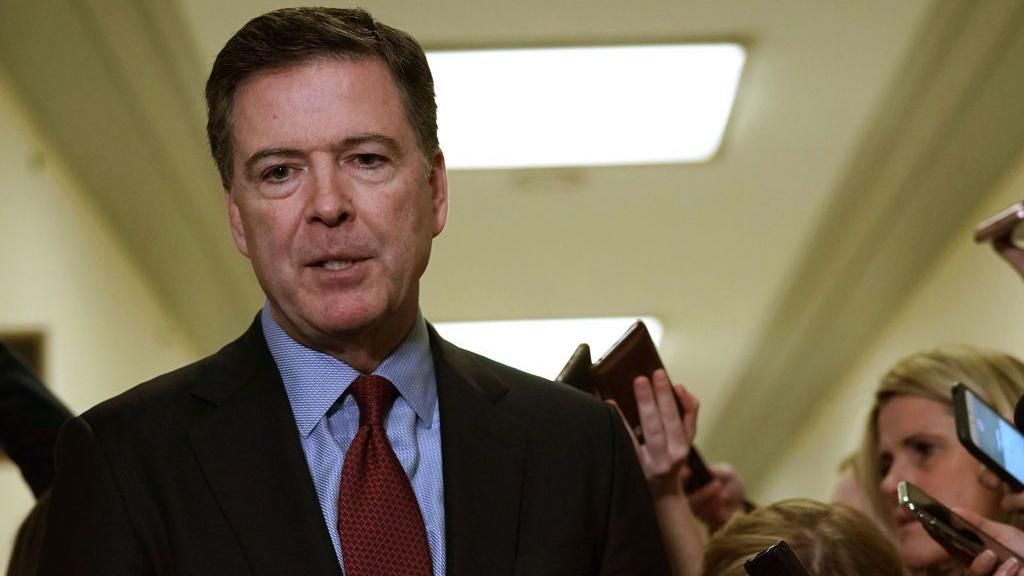
Former FBI director James Comey indicted on two charges
In a significant development, former FBI Director James Comey has been indicted by a federal grand jury in Virginia on two charges related to his testimony before Congress. The charges, which include making false statements and obstruction of justice, stem from his September 2020 testimony regarding the alleged authorization of leaking classified information to the media. The investigation is being led by Lindsey Halligan, the US Attorney for the Eastern District of Virginia, who previously served as President Donald Trump’s personal lawyer. Comey, who has long been a target of Trump’s criticism, has vehemently denied the charges, expressing confidence in the federal judicial system. His arraignment is scheduled for October 9 in Alexandria, Virginia. US Attorney General Pam Bondi emphasized the Department of Justice’s commitment to holding individuals accountable for misleading the public. The case, which is considered one of the highest-profile indictments during Trump’s second term, has sparked debates about the integrity of the justice system and the separation of powers. Legal experts, including former federal prosecutor Laurie Levenson, have noted the challenges in prosecuting the case, particularly in proving intent. The indictment comes amid ongoing tensions between Trump and his critics, with the former president expressing frustration over the pace of prosecutions against his political adversaries. Comey’s tenure as FBI director, marked by controversies including the investigation into Hillary Clinton’s emails and his subsequent firing by Trump, continues to be a focal point in US political discourse.
-
Why a tiny island’s fate could decide Seychelles’ next president
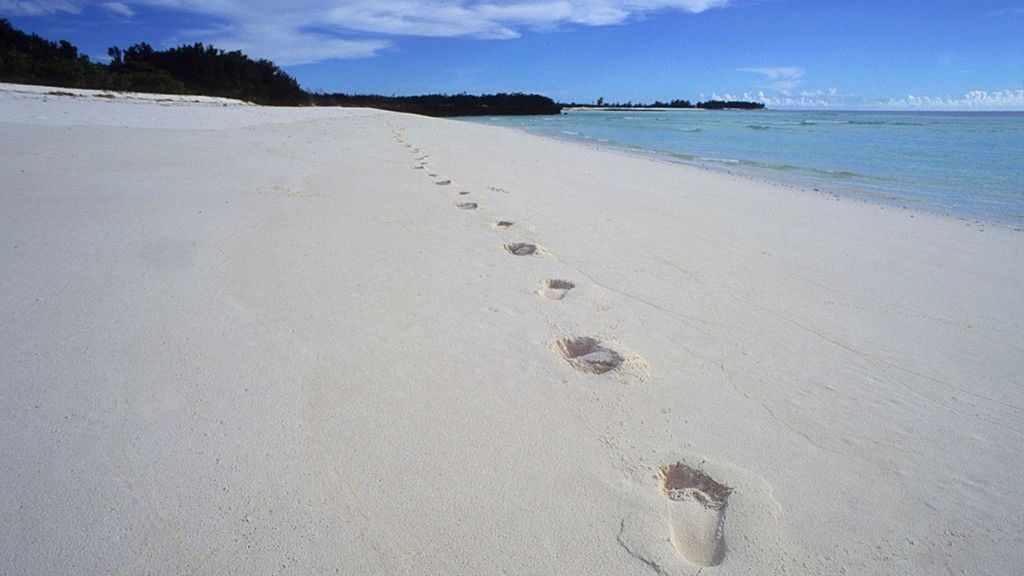
Assumption Island, a remote and seemingly unremarkable island in the Indian Ocean, has unexpectedly become a focal point in Seychelles’ ongoing elections. Located over 1,000 kilometers from the nation’s main hub, this barren island is now at the center of a heated debate involving geopolitics, environmental conservation, and national sovereignty. The island’s strategic location near key shipping lanes has attracted international interest, particularly from India, which sought to establish a military base there. However, public pressure has so far prevented such developments. The recent lease of part of the island to the Qatari royal family for a luxury resort has further stirred controversy, raising concerns about environmental degradation and lack of transparency. Conservationists warn that the island’s ecological significance, particularly its role as a nesting site for green turtles and its proximity to the UNESCO-listed Aldabra atoll, is at risk. As Seychelles heads to the polls, the future of Assumption Island has become a key electoral issue, with President Wavel Ramkalawan defending the Qatari deal as essential for economic survival, while opposition leader Dr. Patrick Herminie criticizes the government’s handling of the situation. The election outcome could determine the island’s fate, balancing economic interests against environmental preservation and national pride.
-
US President Gerald Ford’s would-be assassin dies at age 95
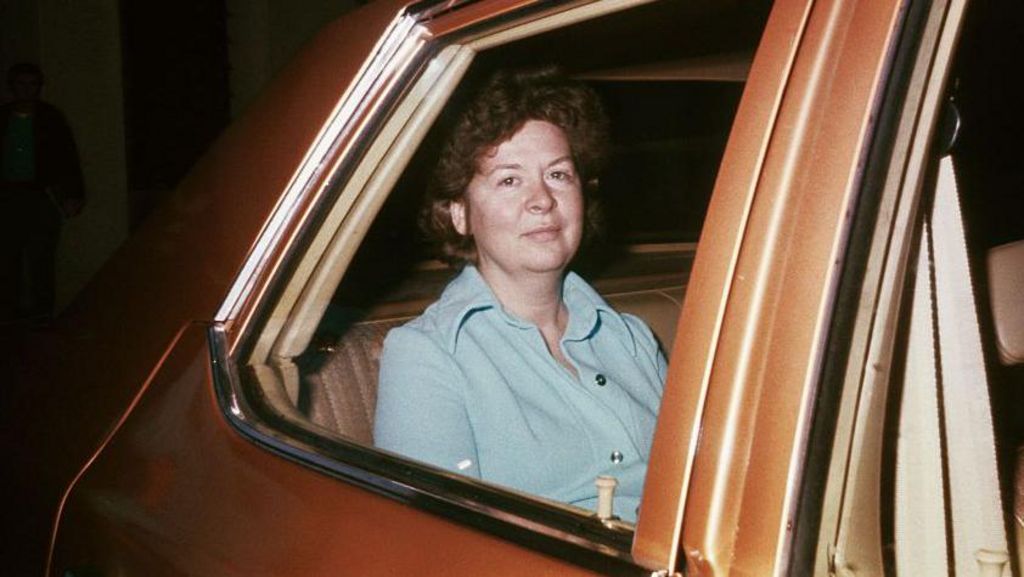
Sara Jane Moore, the woman who infamously attempted to assassinate U.S. President Gerald Ford in 1975, has passed away at the age of 95, according to U.S. media reports. Moore, who was sentenced to life in prison but later released on parole, died amidst renewed scrutiny of presidential security following recent assassination attempts on former President Donald Trump. On September 25, 1975, Moore fired a .38-caliber revolver at Ford outside a San Francisco hotel but missed her target. A former U.S. Marine in the crowd subdued her, preventing a second shot. Moore had been arrested the previous day for carrying a gun near Ford, which was confiscated, prompting her to purchase another weapon. She pleaded guilty and served 32 years before her parole. Her attack occurred just 17 days after Lynette ‘Squeaky’ Fromme, a follower of cult leader Charles Manson, also attempted to assassinate Ford. In a 2009 interview, Moore claimed her actions were driven by a belief that a violent revolution was necessary to change the U.S., citing the social upheaval of the 1960s and 1970s. Investigators found no ties to revolutionary groups and deemed her legally sane. Moore’s death coincides with the recent conviction of Ryan Routh, who attempted to assassinate Trump in 2022, highlighting ongoing concerns about presidential safety.
-
Obama gets Freedom of the City of Dublin amid some backlash
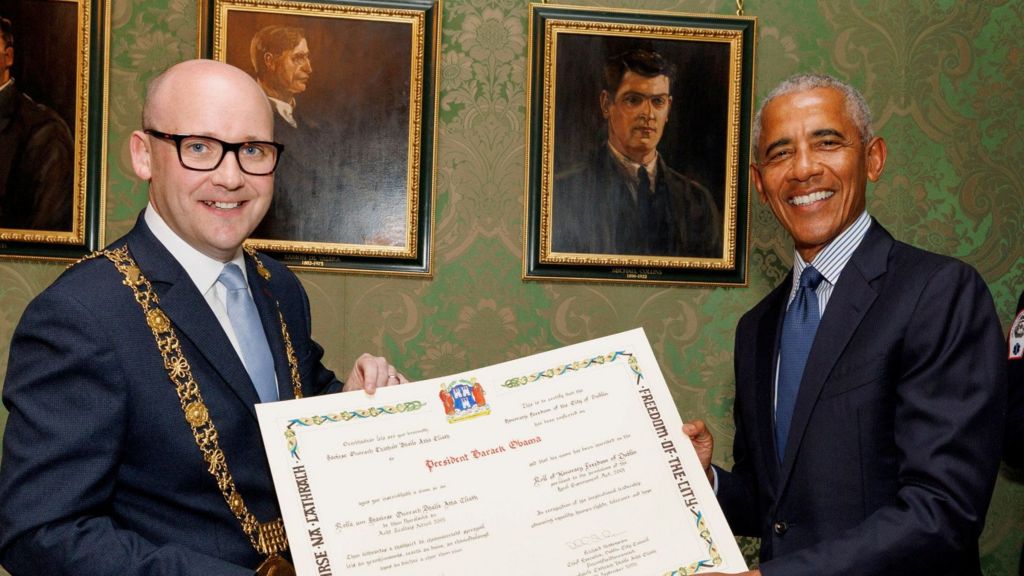
Former U.S. President Barack Obama was formally awarded the Freedom of the City of Dublin in a ceremony held at the Shelbourne Hotel on Thursday. The honor, bestowed by Dublin’s Lord Mayor Ray McAdam, recognizes Obama’s global leadership and vision for a fairer society. However, the event was not without controversy, as several Dublin councillors opposed the decision, citing concerns over Obama’s foreign policy, particularly his stance on Israel, Libya, Yemen, and Somalia. The council had initially voted in 2017 to grant the honor to Obama and his wife Michelle, with 30 votes in favor and 23 against. At the ceremony, Obama received a first edition of James Joyce’s *Ulysses* and a bottle of Teeling Whiskey. In his acceptance speech, he emphasized the enduring bond between Ireland and the United States, rooted in shared hope and resilience. The event was attended by approximately 30 guests, including the Lord Mayor’s six-year-old son, who presented Obama with a homemade Spider-Man card. Despite the opposition, Lord Mayor McAdam defended the decision, stating that no political career is without flaws and that the honor reflects Dublin’s recognition of Obama’s contributions. The Freedom of the City of Dublin, the highest honor the city can bestow, has been awarded to only 88 individuals, including notable figures like Nelson Mandela, John F. Kennedy, and Greta Thunberg. Obama’s visit to Dublin also includes a sold-out event at the 3Arena, where he will engage in a conversation with Irish journalist Fintan O’Toole.
-
Trump urges Turkey to stop buying Russian oil as Erdogan chases deal on F-35s
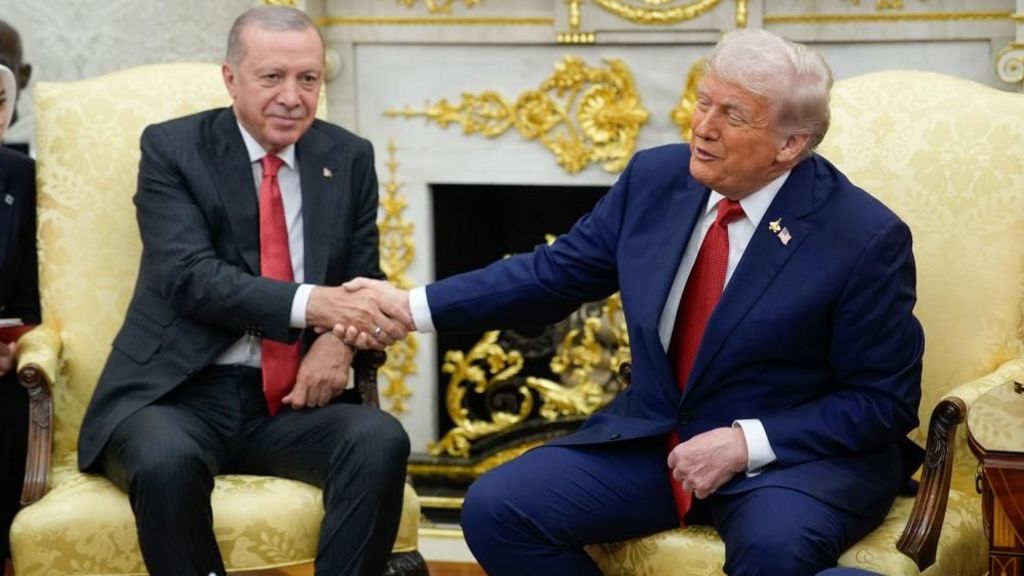
In a high-profile meeting at the White House, U.S. President Donald Trump called on Turkish President Recep Tayyip Erdogan to cease purchasing oil from Russia, emphasizing the importance of cutting off Moscow’s energy revenue as the conflict in Ukraine persists. Speaking alongside Erdogan, Trump described halting Russian oil imports as ‘the best thing’ Turkey could do to support global efforts against Russia’s aggression. The meeting concluded without concrete agreements on lifting U.S. sanctions on Turkey or advancing the sale of F-35 fighter jets, though Trump remained optimistic about resolving these issues. Turkey has been barred from acquiring F-35s since 2019 after it procured Russian S-400 air defense systems, leading to its expulsion from the F-35 production program. Trump highlighted Erdogan’s unique position as a leader respected by both Ukrainian President Volodymyr Zelensky and Russian President Vladimir Putin, suggesting that Turkey could play a pivotal role in influencing the war. Turkey, alongside India and China, remains one of Russia’s largest oil and gas customers. Trump’s remarks follow his recent warning to NATO allies about ‘funding the war against themselves’ through Russian energy purchases. The U.S. president also hinted at the possibility of lifting sanctions on Turkey ‘very soon’ if the meeting yielded positive outcomes. Meanwhile, bipartisan concerns in the U.S. Congress persist over Turkey’s military actions in Syria and its cooperation with Russia, casting doubt on the potential F-35 sale.
-
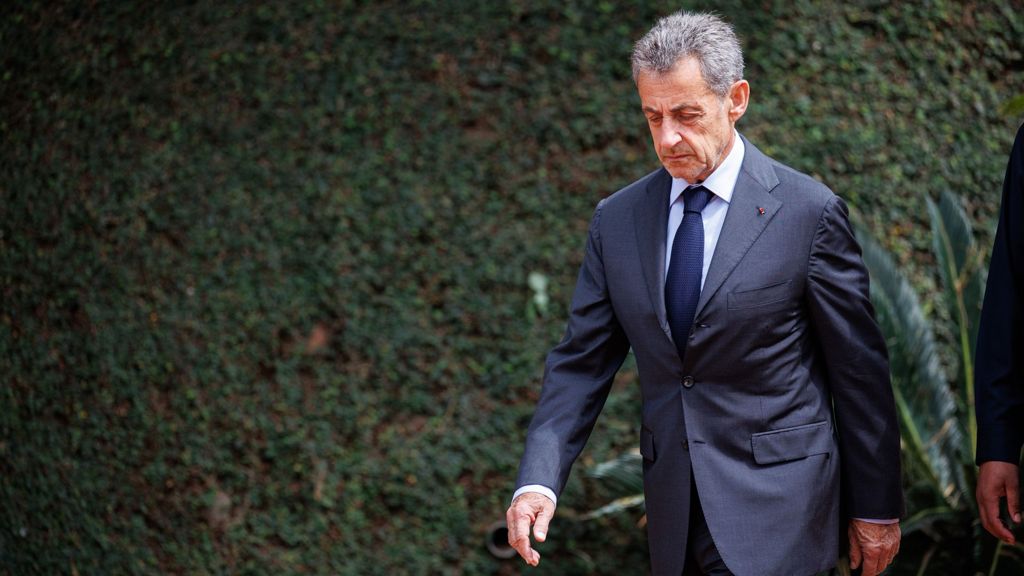
From former president to future prisoner: Sarkozy’s conviction divides France
Former French President Nicolas Sarkozy has been sentenced to five years in prison, marking a historic moment as he becomes the first ex-president of France to face such a fate. The verdict, delivered on Thursday in the high-profile ‘Libyan money’ trial, has reignited the polarizing debates that have long surrounded Sarkozy’s political career. Convicted of criminal conspiracy, Sarkozy expressed vehement outrage, claiming to be a victim of ‘limitless hatred’ from his adversaries. This case has once again highlighted the deep-seated divisions within French society and its political landscape. Sarkozy, who has consistently portrayed himself as a target of a left-wing judicial and media conspiracy, now faces a humiliating punishment that his supporters argue is disproportionate. The court acquitted him of three charges—illegal party funding, embezzlement of Libyan funds, and corruption—but convicted him on the broader charge of ‘criminal association,’ often used in cases involving organized crime. Critics question the severity of the sentence, especially given the 20-year gap since the alleged offense and the non-suspensive nature of the punishment, which means Sarkozy will serve time even if he appeals. The case has drawn sharp reactions from both ends of the political spectrum. Marine Le Pen, leader of the far-right National Rally, condemned the verdict as an example of judicial overreach, while the left views it as evidence of systemic privilege among the powerful. Sarkozy’s legal troubles are not new; he has previously been convicted on charges of corruption and illegal campaign financing. This latest chapter underscores the enduring influence of his controversial legacy on French politics, even as he remains a figure of the past. The trial has laid bare the fractures in a nation already deeply divided, with Sarkozy’s supporters and detractors clashing over the implications of his sentencing.
-
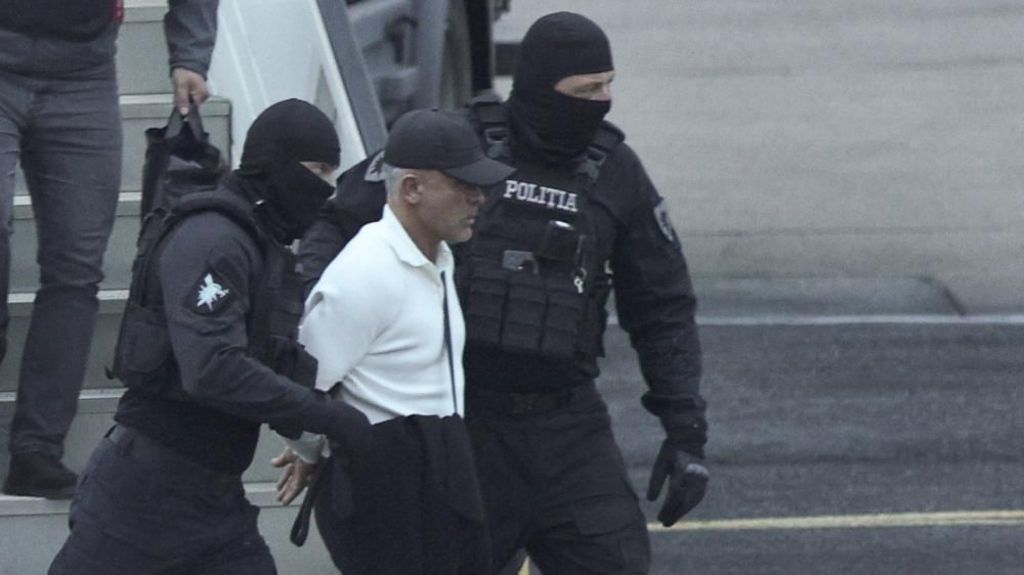
Greece extradites oligarch to Moldova in $1bn fraud case
Vladimir Plahotniuc, a prominent Moldovan oligarch and former political figure, has been extradited from Greece to Moldova, facing allegations of involvement in a $1 billion bank fraud case. The 59-year-old tycoon, who fled Moldova in 2019 after his Democratic Party lost power, was escorted by masked Moldovan police and Interpol officials upon his arrival at Chisinau airport on Thursday morning. Plahotniuc, who has repeatedly denied any wrongdoing, was swiftly transported to a detention center in the capital. His extradition occurs just days before Moldova’s pivotal parliamentary elections on September 28, which will determine the country’s future alignment—either toward European integration or a return to Russian influence. Moldovan President Maia Sandu, a staunch pro-European leader, has warned of Russia’s attempts to destabilize the nation through violence and disinformation. In a social media post, Sandu emphasized the importance of perseverance in the fight for justice, stating that even seemingly invincible criminals can be held accountable. Plahotniuc’s lawyer, Lucian Rogac, criticized the extradition as a politically motivated spectacle orchestrated by Sandu’s government. The oligarch is a key suspect in the 2014 “theft of the century,” where $1 billion—equivalent to over 10% of Moldova’s GDP—was siphoned from three banks. The case has long symbolized the country’s struggle with corruption and oligarchic influence. Meanwhile, Sandu has accused Russia of pouring significant resources into Moldova to undermine its democratic processes. Recent investigations by the BBC have exposed a disinformation network linked to Moscow and fugitive Moldovan businessman Ilan Shor, aimed at destabilizing the government ahead of the elections. Ukrainian President Volodymyr Zelensky, speaking at the UN General Assembly, highlighted the broader geopolitical stakes, warning that Europe cannot afford to lose Moldova to Russian influence. Pro-Russian parties in Moldova have accused Sandu’s government of intimidation and insufficient anti-corruption efforts, while Russia’s SVR intelligence service has baselessly claimed that the EU plans to falsify election results and deploy troops. Moldova, which declared independence in 1991, remains a battleground for geopolitical influence, with its Russian-speaking population and the Moscow-backed breakaway region of Transnistria adding to the complexity.