分类: politics

  • Gang Aoping: Justice is served for Jimmy Lai

    Gang Aoping: Justice is served for Jimmy Lai

    In a landmark ruling that has drawn international attention, Hong Kong’s High Court has sentenced media tycoon Jimmy Lai Chee-ying to 20 years imprisonment for national security offenses. The founder of the now-defunct Apple Daily newspaper was convicted on two counts of conspiracy to collude with foreign forces and one count of conspiracy to publish seditious materials.

    The sentencing, delivered on February 9, 2026, represents one of the most significant applications of Hong Kong’s national security legislation since its implementation. Three companies associated with Lai—Apple Daily Ltd, Apple Daily Printing Ltd, and AD Internet Ltd—were each fined HK$3,004,500 (approximately $384,000). Eight additional defendants connected to the case received prison terms ranging from six years and nine months to ten years.

    The Hong Kong and Macao Affairs Office of China’s State Council publicly endorsed the verdict through an article published under the pseudonym Gang Aoping on its official social media channels. The statement characterized the sentence as a ‘decisive and powerful demonstration’ that those challenging national security laws would face severe consequences.

    Judicial authorities emphasized that the proceedings were conducted with complete transparency and adherence to legal protocols, with the defendant’s litigation rights fully protected throughout the process. The court maintained that the trial was carried out independently without external interference, reflecting the maturity of Hong Kong’s legal system.

    The case has been widely viewed as a critical test of Hong Kong’s judicial autonomy under the national security framework implemented in 2020. Supporters of the verdict argue it represents necessary enforcement of laws protecting national stability, while critics have expressed concerns about implications for press freedom and political expression in the semi-autonomous region.

  • Israeli prisons ‘begin preparations to apply death penalty’ for Palestinians

    Israeli prisons ‘begin preparations to apply death penalty’ for Palestinians

    Israeli authorities have initiated concrete preparations to implement capital punishment specifically targeting Palestinian detainees, according to reports from Israeli media outlets. The development follows the preliminary approval of a death penalty bill by the Knesset in its initial reading during the previous year.

    The preparatory measures include the establishment of a specialized execution facility internally referred to as “Israel’s Green Mile” within the prison system. Operational training and procedural development are currently underway, with a delegation from the Israeli Prison Service scheduled to visit an East Asian nation to examine legal frameworks and methodologies for administering capital punishment.

    The proposed execution protocol would employ hanging as the method, with three correctional officers simultaneously activating the mechanism to distribute ethical responsibility. Specialist volunteer teams would be assigned to carry out these procedures, with executions mandated to occur within 90 days following final judicial verdicts.

    This legislation would initially apply exclusively to Palestinians identified as members of Hamas’ Nukhba elite unit who participated in the October 2023 attacks, subsequently extending to those accused of serious offenses in the West Bank. Notably, the proposed law contains explicit provisions excluding Jewish Israeli citizens from capital punishment eligibility for similar actions against Palestinians.

    While Israeli jurisprudence technically permits capital punishment in extreme circumstances, no executions have been conducted since the 1962 hanging of Nazi officer Adolf Eichmann for Holocaust-related crimes. The current initiative has drawn substantial criticism from human rights organizations and United Nations experts, who condemn it as violating fundamental human rights principles and international legal standards.

    UN specialists have particularly emphasized that mandatory death sentences eliminate judicial discretion to consider individual circumstances and mitigating factors, while Palestinian advocacy groups have characterized the legislation as unprecedented institutional brutality. The development occurs alongside reports of deteriorating conditions for Palestinian detainees, with advocacy groups documenting increased fatalities and alleged torture within Israeli detention facilities.

  • Bhumjaithai Party’s election victory signals shift in Thailand’s politics

    Bhumjaithai Party’s election victory signals shift in Thailand’s politics

    BANGKOK – Thailand’s political arena has undergone a profound transformation following the Bhumjaithai Party’s decisive electoral triumph, signaling a voter mandate for stability over radical reform. The conservative party secured 193 seats in the 500-member House of Representatives, positioning incumbent Prime Minister Anutin Charnvirakul for continued leadership while necessitating coalition building to achieve the 251 votes required for government formation.

    Analysts characterize this outcome as a seismic shift in Thai politics, marking the first conservative victory in a general election this century. Ken Lohatepanont, a University of Michigan doctoral researcher specializing in Thai politics, noted this represents a fundamental realignment from the populist dominance that has characterized the political landscape since 2001.

    The party’s surge is attributed to two strategic factors: its nationalist positioning during recent border conflicts with Cambodia, which resonated with rising patriotic sentiment, and its expansion beyond rural bases through alliances with regional power brokers and appointment of technocrats that appealed to urban middle-class voters.

    Meanwhile, the progressive People’s Party faces significant challenges despite capturing all 33 Bangkok seats and winning the party preference ballot. Their military reform agenda failed to connect with the prevailing nationalist mood, and the party now confronts legal threats similar to those that dissolved its predecessor, Move Forward Party, in 2024. The National Anti-Corruption Commission recently ruled that 44 former Move Forward lawmakers – including current People’s Party leadership – committed serious ethical violations regarding monarchy defamation laws, potentially disqualifying them from political office.

    The once-dominant Pheu Thai Party faces existential challenges after its worst electoral performance in decades, even losing its traditional stronghold in Chiang Mai. Having alienated both pro-democracy supporters through broken coalition promises and conservatives through perceived coziness with Cambodia’s leadership, the party may find joining a Bhumjaithai coalition its only political survival strategy according to analysts.

  • US military boards sanctioned oil tanker in the Indian Ocean after pursuit from the Caribbean

    US military boards sanctioned oil tanker in the Indian Ocean after pursuit from the Caribbean

    In a significant maritime enforcement operation, U.S. military personnel have boarded the Aquila II, a sanctioned oil tanker, in the Indian Ocean after tracking the vessel’s movements from the Caribbean Sea. The Pentagon confirmed the intervention on Monday, characterizing it as a “right-of-visit, maritime interdiction” against a vessel operating in defiance of established sanctions.

    The Aquila II, a Panamanian-flagged tanker under U.S. sanctions for transporting illicit Russian oil, has been monitored by authorities for its suspicious activities. According to maritime tracking experts, the vessel employed ‘running dark’ tactics—deliberately disabling its radio transponder—to conceal its location throughout much of the past year. Owned by a Hong Kong-registered company, the tanker was one of at least 16 vessels that departed Venezuela’s coast following the U.S. capture of then-President Nicolás Maduro last month.

    While the Pentagon’s statement did not explicitly connect the operation to Venezuela, the context suggests broader efforts to enforce oil sanctions. The Trump administration has intensified measures to control Venezuela’s oil production, refining, and global distribution since Maduro’s ouster in a January 3rd raid. U.S. officials view vessel seizures as both an enforcement mechanism and potential revenue source for rebuilding Venezuela’s devastated oil industry and economy.

    Current data indicates the Aquila II was not carrying crude oil at the time of interception, unlike previous tanker seizures linked to Venezuelan oil smuggling operations. The operation also aligns with broader U.S. efforts to restrict oil flows to Cuba, which relies heavily on shipments from Venezuela, Russia, and Mexico. President Trump recently signed an executive order imposing tariffs on countries supplying oil to Cuba, significantly impacting Mexico’s role as Cuba’s petroleum lifeline.

  • Third impeachment complaint filed against Philippine Vice President Sara Duterte

    Third impeachment complaint filed against Philippine Vice President Sara Duterte

    A coalition of priests and legal professionals has initiated the third impeachment proceeding this month against Philippine Vice President Sara Duterte, marking an unprecedented political challenge against the nation’s second-highest official. The complaint, formally submitted on February 9, 2026, alleges multiple constitutional violations including betrayal of public trust, culpable violation of the Constitution, and commission of high crimes.

  • Israel kills Palestinians in Gaza as cabinet deepens West Bank annexation measures

    Israel kills Palestinians in Gaza as cabinet deepens West Bank annexation measures

    Israeli security forces have intensified military and administrative actions across Palestinian territories, triggering widespread international condemnation. On Monday, a Palestinian civilian was fatally shot by Israeli troops in Gaza City’s Zaytoun neighborhood, marking another violation of the October 2025 ceasefire agreement. This incident follows Sunday’s lethal engagement in the same area where three Palestinians, including a minor, lost their lives according to medical authorities speaking with Al Jazeera Arabic.

    The escalation extends beyond Gaza into systemic policy changes in the West Bank. Israel’s security cabinet ratified sweeping measures on Sunday that substantially expand occupation authority over Palestinian-administered zones. Finance Minister Bezalel Smotrich and Defense Minister Israel Katz jointly announced these developments, which represent the most significant shift in administrative control since the 1967 occupation began.

    These newly approved regulations fundamentally undermine the Oslo Accords framework that had granted limited Palestinian self-rule in Areas A and B of the West Bank. The measures impose severe restrictions on Palestinian access to water resources, agricultural activities, residential construction, and business operations. Additionally, they facilitate the transfer of Palestinian land to Jewish settlers by overturning Jordanian-era prohibitions against such transactions.

    Minister Smotrich explicitly stated the government’s position: ‘We will continue to kill the idea of a Palestinian state.’ The policy changes transfer planning, licensing, and construction authority in Hebron from Palestinian municipal governance to Israeli military control. They also establish an independent governing body for Jewish settlements within Hebron, which the Hebron Municipality condemned as ‘illegitimate and dangerous.’

    Further procedural changes remove requirements for Jewish buyers to obtain complex transaction permits before purchasing West Bank land and lift confidentiality protections on land registry records. Palestinian officials warn these changes will accelerate documented practices of land seizure through forged ownership claims.

    Palestinian National Council Chairman Rawhi Fattouh characterized the measures as ‘racist and dangerous,’ indicating they reveal Prime Minister Benjamin Netanyahu’s intention to annex the West Bank. Muayyad Shaaban, head of the Palestinian Commission Against the Wall and Settlements, described the decisions as undermining international legal order and constituting crimes against Palestinian geography. The Palestinian National Initiative movement stated these actions effectively terminate the Oslo Accords and enable widespread land seizures benefiting Israeli settlers.

  • America’s extreme right and left both doomed to fail

    America’s extreme right and left both doomed to fail

    A profound transformation is underway in American political dynamics, where a vocal minority of digital extremists increasingly dominates the national discourse while the moderate majority retreats from political engagement. This paradigm shift represents a fundamental restructuring of political influence in the United States.

    The core mechanism driving this change lies in the intersection of technological evolution and political infrastructure. Social media platforms have effectively bypassed traditional institutional hierarchies, creating echo chambers where like-minded extremists congregate and amplify their messages. These digital environments favor emotionally charged content over reasoned discourse, creating a self-reinforcing cycle of radicalization.

    Recent research from the American National Election Studies (2020-2024) reveals a concerning trend: overall social media engagement is declining, particularly among younger and older demographics. However, the most politically polarized users remain highly active, creating a digital public sphere that grows “smaller, sharper, and more ideologically extreme” as moderate voices disengage.

    The practical consequences extend far beyond online debates. America’s actual governance is increasingly influenced by a class of unelected, digitally-native staffers who operate within the extremist social media ecosystem. Congressional staffers, typically in their late 20s (compared to legislators in their late 50s), consume and produce content within these radicalized digital spaces, effectively shaping policy and political messaging.

    This dynamic was starkly illustrated when a Trump administration staffer posted racially inflammatory content depicting Barack and Michelle Obama as apes on Truth Social. Though quickly removed amid public outcry, the incident demonstrated how unelected personnel can force elected officials to adopt more extreme positions.

    The public response to this polarization is equally telling. Pew Research data shows majorities consider both major parties too extreme, while Gallup tracking reveals record numbers of Americans registering as independents. However, this disengagement paradoxically exacerbates the problem, as closed primary systems ensure that only the most engaged (and extreme) voters determine candidate selection.

    Both major political movements face structural challenges. The MAGA movement’s tendency to alienate potential coalition partners—through antisemitic rhetoric, immigration crackdowns, and racial provocations—undermines its long-term viability in an increasingly diverse nation. Meanwhile, progressive governance in cities like Portland demonstrates the practical failures of extremist policies, with crime rates soaring and public infrastructure deteriorating despite nationwide improvements.

    The fundamental challenge for American democracy lies in reconciling the gap between the moderate populace and the extremist public that dominates political discourse. Without institutional reforms addressing both political primaries and social media governance, this disconnect threatens to perpetuate a cycle of governmental dysfunction and public disillusionment.

  • What to know about who could succeed Keir Starmer as UK prime minister

    What to know about who could succeed Keir Starmer as UK prime minister

    British Prime Minister Keir Starmer confronts a severe political crisis following his controversial appointment of Peter Mandelson as ambassador to the United States. The decision has drawn intense scrutiny due to Mandelson’s documented associations with Jeffrey Epstein, the convicted sex offender whose recently unsealed court files have revealed damaging new details about their relationship.

    This escalating scandal threatens to undermine Starmer’s premiership, though Labour Party mechanisms present significant obstacles for potential challengers. Unlike Conservative leadership rules, Labour requires any contender to secure backing from 80 lawmakers—representing one-fifth of the party’s parliamentary membership—to initiate a leadership contest.

    Several prominent figures emerge as potential successors should Starmer’s position become untenable:

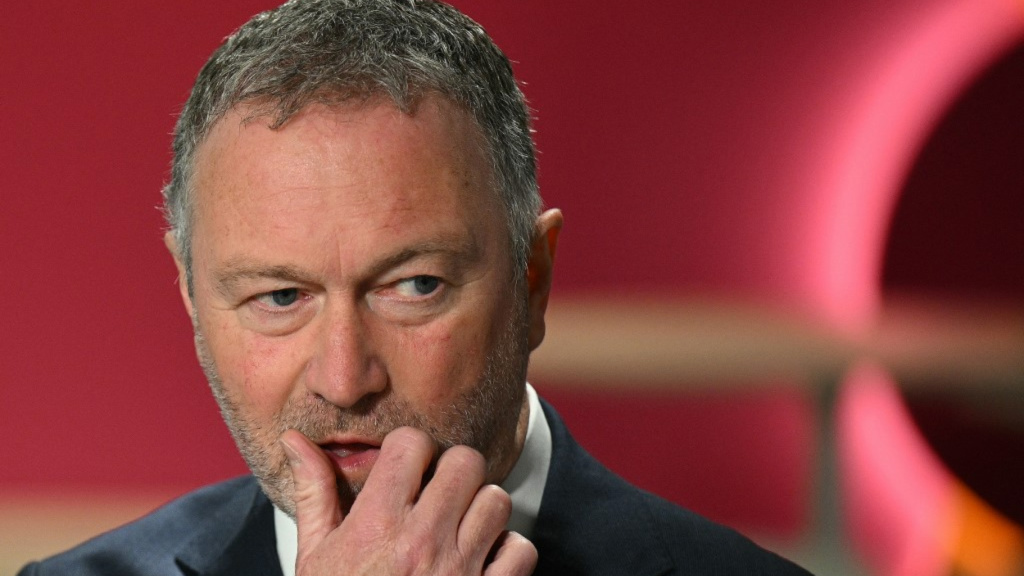
    Health Secretary Wes Streeting, recognized as a polished communicator, has gained visibility through his forthright statements on international issues including the Gaza conflict. Though he vehemently denied previous leadership speculation, calling such suggestions “nonsense,” his ambitions remain subject of ongoing political discourse.

    Former Deputy Prime Minister Angela Rayner represents a distinct political profile within Labour ranks. With a background that includes trade union activism and overcoming socioeconomic challenges, she maintains substantial party support despite recent controversies surrounding tax payments on property transactions. Rayner has notably led parliamentary efforts to transfer control of Epstein-related document releases to the Intelligence and Security Committee.

    Andy Burnham, the popular center-left Mayor of Greater Manchester, possesses previous cabinet experience as Culture and Health Secretary. However, his leadership prospects diminished after Labour blocked his parliamentary candidacy, effectively excluding him from contention under the convention that prime ministers must serve as sitting MPs.

    Home Secretary Shabana Mahmood has garnered conservative faction support through her stringent immigration policies and law enforcement measures. Meanwhile, Energy Secretary Ed Miliband—having previously led the party during its opposition years—brings substantial governmental experience despite publicly disavowing any desire to reclaim the leadership role.

    The unfolding situation demonstrates profound implications for Labour’s stability and governance approach amid one of the most significant political scandals in recent British history.

  • Maxwell won’t answer questions from Congress, lawyer says

    Maxwell won’t answer questions from Congress, lawyer says

    Convicted sex trafficker Ghislaine Maxwell will exercise her constitutional right against self-incrimination during a closed-door deposition with the U.S. House Oversight Committee on Monday, according to her legal representative. The deposition will be conducted virtually from the federal prison in Texas where Maxwell is serving a 20-year sentence for her role in Jeffrey Epstein’s exploitation network.

    Attorney David Oscar Markus confirmed to BBC that his client would “take the 5th,” referencing the Fifth Amendment protection that allows individuals to avoid answering questions that might implicate them in criminal activity. Instead of responding to committee inquiries, Maxwell will deliver a prepared statement at the commencement of the proceedings, as disclosed by Democratic Representative Ro Khanna.

    The congressional investigation seeks to explore several critical aspects of the Epstein case, including Maxwell’s previous court filing that referenced “four named co-conspirators” and 25 unindicted individuals connected to the Epstein investigation. Lawmakers also intend to question Maxwell about her social connections with former President Donald Trump and whether presidential pardons were ever discussed with her defense team.

    This deposition marks a departure from Maxwell’s previous cooperation with federal investigators. Representative Khanna noted the inconsistency with her July meeting with Deputy Attorney General Todd Blanche, where she reportedly answered questions about similar subject matter without invoking constitutional protections. During that encounter, Maxwell denied witnessing any inappropriate conduct by Trump or former President Bill Clinton and disputed the existence of Epstein’s rumored “client list.

    The long-awaited testimony coincides with the Justice Department’s release of millions of previously confidential documents from its Epstein investigation, compelled by congressional legislation passed last year. Beginning Monday, members of Congress will have access to nearly three million unredacted pages at Justice Department facilities.

    Epstein survivor advocates continue to push for greater transparency, releasing a video statement on Sunday calling for fuller disclosure of documents and reduced redactions. Federal officials have consistently denied allegations of concealing information or protecting powerful individuals connected to the case.

  • Pakistan says Afghanistan has created conditions ‘similar to or worse than’ pre-9/11 attacks

    Pakistan says Afghanistan has created conditions ‘similar to or worse than’ pre-9/11 attacks

    ISLAMABAD — Pakistani President Asif Ali Zardari has issued a grave warning that Afghanistan’s Taliban-led government has established security conditions mirroring or exceeding the perilous environment that preceded the September 11, 2001 terrorist attacks. This declaration signals escalating diplomatic tensions following last week’s devastating mosque bombing in Islamabad that killed 31 worshippers and injured 169.

    In strongly worded statements delivered Sunday, President Zardari asserted that terrorist organizations now pose renewed threats to global peace under the Taliban’s governance. While expressing gratitude for international condemnation of the attack claimed by Islamic State, Zardari pointedly accused Pakistan’s eastern neighbor India of ‘assisting the Taliban regime and threatening not only Pakistan but regional and global peace.’

    The presidential remarks represent a significant escalation in rhetoric likely to provoke responses from both Kabul and New Delhi. Both nations have previously denied involvement in the suicide bombing and rejected similar allegations from Pakistani officials.

    This diplomatic confrontation revives historical tensions reminiscent of the period between 1996-2001 when the previous Taliban administration sheltered al-Qaeda leader Osama bin Laden and permitted terrorist training camps despite international objections. Although bin Laden was ultimately eliminated by U.S. forces in Pakistan in 2011, current leadership contends that similar patterns are reemerging under the resurrected Taliban regime that regained power in August 2021.

    Interior Minister Mohsin Naqvi revealed that security forces have apprehended four suspects connected to the mosque attack, including an Afghan national allegedly linked to the militant group who helped mastermind the operation. Detainees include the bomber’s mother and brother-in-law, though Pakistani authorities haven’t disclosed full details regarding familial involvement.

    Analysts interpret Zardari’s statements as reflecting growing frustration with perceived external support for militant groups. Asif Durrani, Pakistan’s former special representative for Afghanistan, characterized the warning as ‘unambiguous: terrorism thrives where it is tolerated, facilitated, or used as a proxy.’

    The security situation remains volatile as Pakistan experiences a resurgence of militant violence attributed to Baloch separatist groups and Tehrik-e-Taliban Pakistan (TTP), which maintains separate but allied relations with Afghanistan’s Taliban leadership. Meanwhile, Islamic State’s regional affiliate continues to operate as a major Taliban rival, conducting attacks throughout Afghanistan.