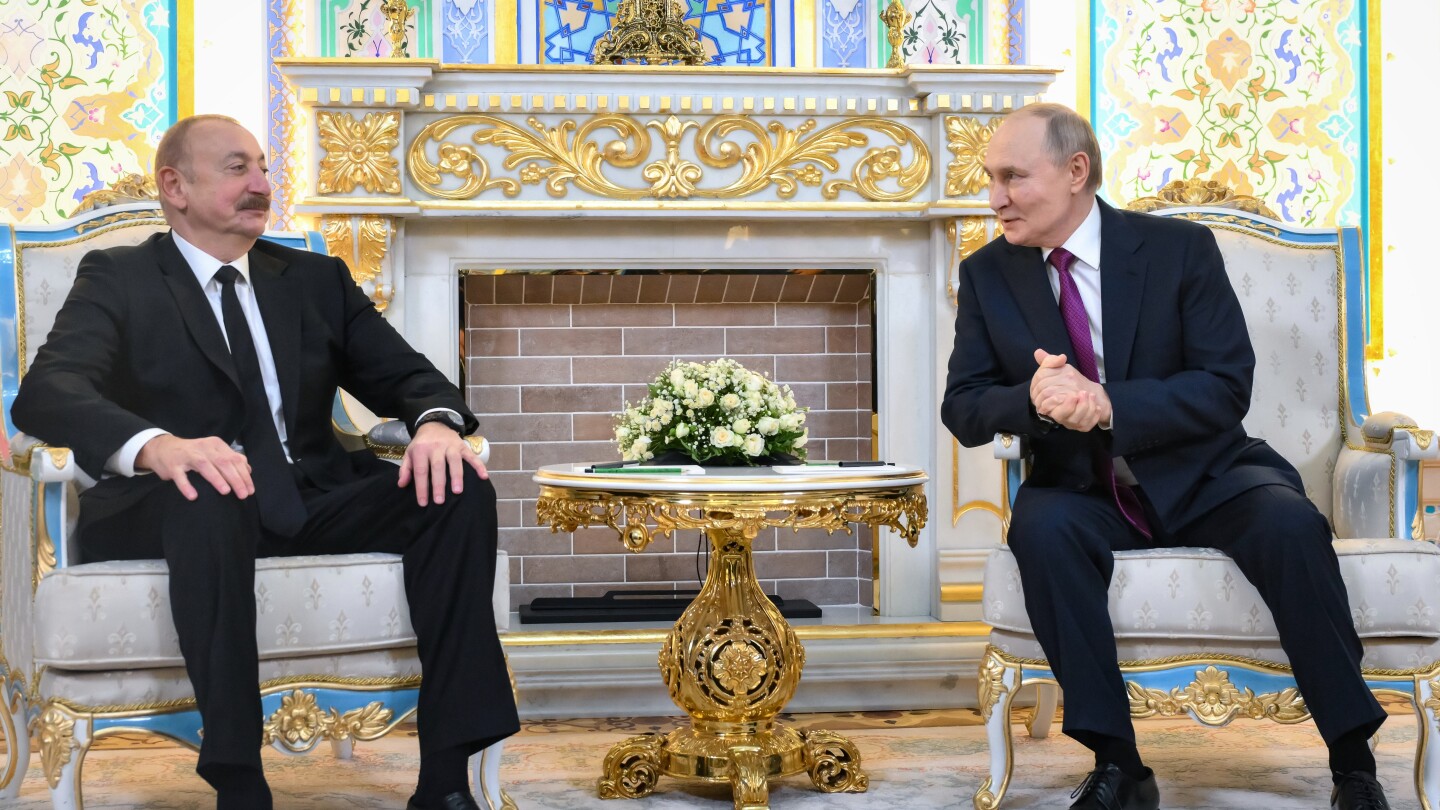
In a significant development, Russian President Vladimir Putin publicly acknowledged on Thursday that Russia’s air defense systems were responsible for the downing of an Azerbaijani jetliner in December 2024, which resulted in the tragic deaths of 38 individuals. This marks Putin’s first explicit admission of culpability, aimed at de-escalating tensions between Russia and Azerbaijan. The incident occurred when Russian air defenses, targeting a Ukrainian drone, mistakenly fired missiles that exploded near the Azerbaijan Airlines plane as it approached Grozny, the capital of Russia’s Chechen Republic. Ukrainian drones have frequently penetrated Russian airspace, prompting heightened defensive measures. Speaking during a meeting with Azerbaijani President Ilham Aliyev in Dushanbe, Tajikistan, where both leaders were attending a summit of former Soviet nations, Putin vowed to hold those responsible accountable and provide compensation to the victims’ families. Azerbaijani officials had previously attributed the crash to accidental Russian fire, which forced the Embraer 190 jet to attempt an emergency landing in western Kazakhstan, where it ultimately crashed. Putin had initially expressed regret for the “tragic incident” but refrained from accepting full responsibility, drawing criticism from Aliyev for Moscow’s perceived attempts to downplay the event. The crash has strained the historically cordial relations between Russia and Azerbaijan, further complicated by recent incidents involving ethnic Azerbaijanis in Russia and the arrests of Russians in Azerbaijan. Putin attributed the missile strike to a “technical malfunction,” revealing that the missiles detonated just 10 meters from the passenger jet. He emphasized Russia’s commitment to providing compensation and conducting a legal review of the officials involved. Aliyev expressed gratitude for Putin’s personal oversight of the investigation. The incident has underscored the delicate nature of Russia-Azerbaijan relations, particularly as Azerbaijan’s ally Turkey has become a crucial economic partner for Russia amid Western sanctions. Azerbaijan serves as a vital transport corridor for Russian trade with Iran and the Middle East, while also importing Russian energy resources and exporting its own hydrocarbons to the West. Russia, in turn, is a major market for Azerbaijani agricultural exports and hosts a significant Azerbaijani diaspora. Both leaders signaled their intent to restore and strengthen bilateral ties, with Putin expressing hope for renewed cooperation and Aliyev highlighting a “broad and positive” agenda. During his state visit to Tajikistan, Putin also sought to reinforce Russia’s strategic partnership with Central Asian nations, emphasizing military, economic, and humanitarian collaboration.
分类: politics
-
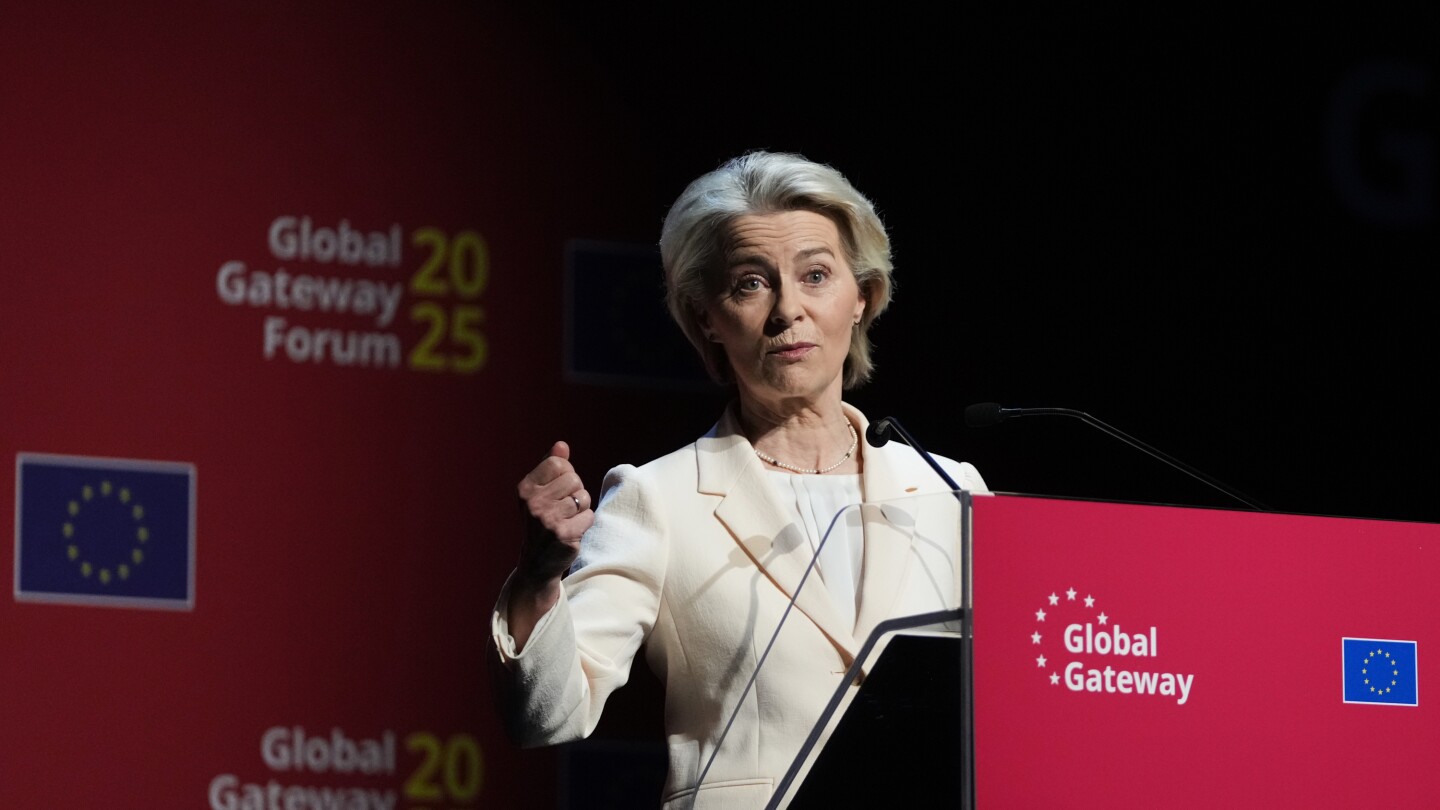
EU chief von der Leyen easily survives two more no confidence votes
BRUSSELS (AP) — European Commission President Ursula von der Leyen has once again weathered political storms, emerging unscathed from two no-confidence votes in the European Parliament on Thursday. The motions, initiated by far-right and far-left factions, were decisively rejected by a majority of lawmakers, solidifying von der Leyen’s position at the helm of the EU’s executive branch.
-
Colombia’s president says boat struck by US was carrying Colombians
Colombian President Gustavo Petro has accused the United States of bombing a vessel carrying Colombian citizens in the Caribbean, a claim the White House has dismissed as ‘baseless.’ The US has conducted at least four strikes in the region in recent weeks, resulting in 21 fatalities. The US government asserts that these operations, carried out in international waters, targeted ‘narco-traffickers.’ However, it has not provided evidence or detailed information about the individuals or cargo aboard the vessels, sparking widespread condemnation across Latin America and concerns over potential violations of international law. On Wednesday, the US Senate rejected a measure that would have required President Donald Trump to seek congressional approval before launching such strikes. The proposal, introduced by Democratic Senators Adam Schiff and Tim Kaine, was defeated in a 48-51 vote, largely along partisan lines. Petro responded to Schiff’s social media post about the measure, warning of a ‘new war scenario in the Caribbean.’ He claimed that the latest vessel bombed was Colombian and urged affected families to come forward. Petro criticized the US actions, stating, ‘There is no war against smuggling; there is a war for oil, and it must be stopped by the world. The aggression is against all of Latin America and the Caribbean.’ The White House, in a statement, denied Petro’s allegations and emphasized its commitment to cooperation with Colombia on regional security. The US has framed its strikes, which began on September 2, as part of an effort to combat drug trafficking, particularly targeting vessels off Venezuela’s coast. A leaked memo to Congress revealed that the US now considers itself in a ‘non-international armed conflict,’ a designation that could justify the use of wartime powers, including targeting ‘enemy fighters’ without immediate threats. Trump has previously labeled several cartels in Mexico, Ecuador, and Venezuela as terrorist organizations, expanding US authority to act against them.
-
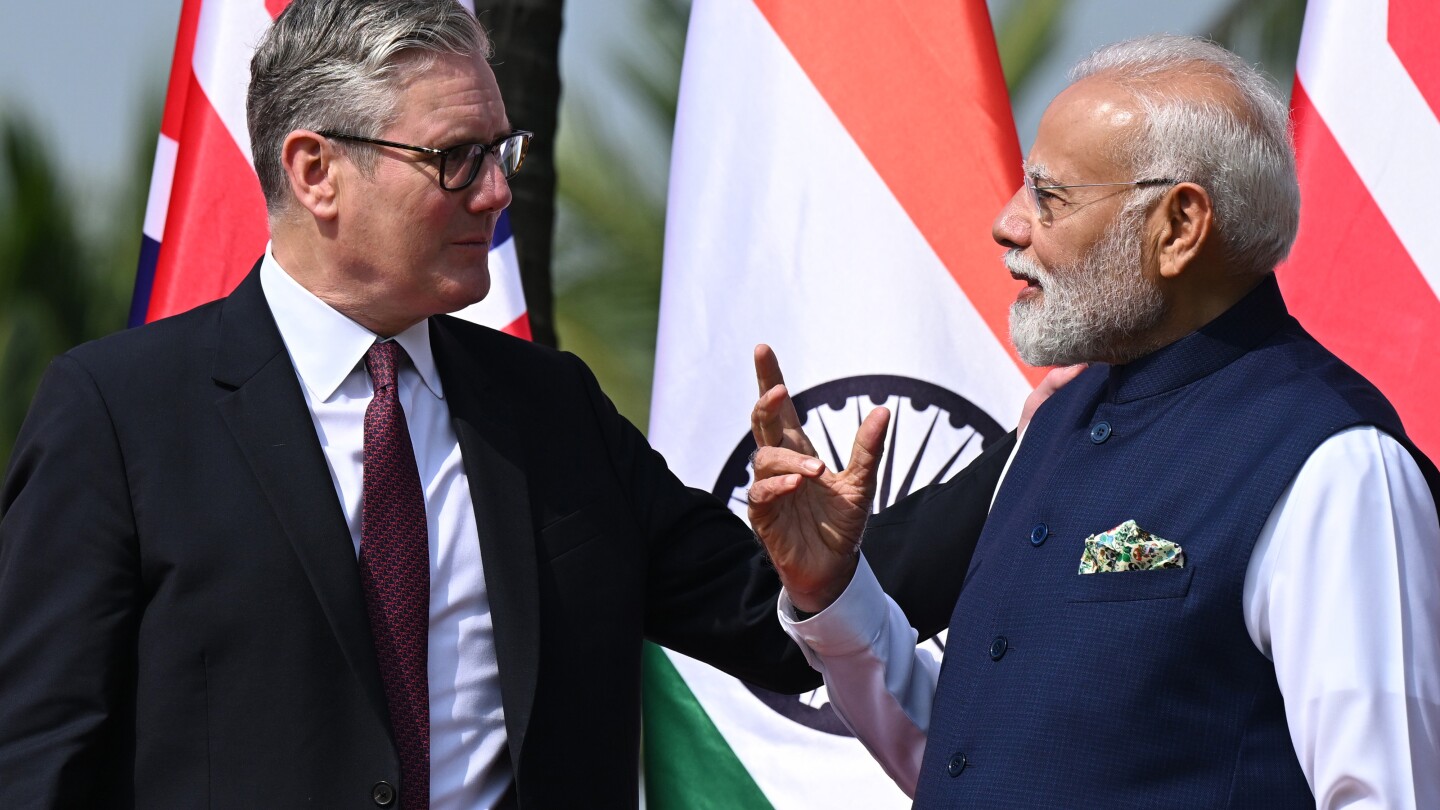
British and Indian prime ministers promote trade deal during visit by Starmer
Indian Prime Minister Narendra Modi and British Prime Minister Keir Starmer held a pivotal meeting in Mumbai on Thursday, aiming to enhance bilateral cooperation in trade, defense, and technology. This marked Starmer’s first official visit to India since assuming office in July 2024, underscoring the growing importance of India as a global economic hub. The two-day visit, which began on Wednesday, aligns with India’s intensified efforts to attract international investment to fuel its rapidly expanding economy. During the talks, the leaders emphasized advancing a trade agreement initially signed during Modi’s visit to London in July. They also explored collaboration in digital infrastructure, critical minerals, and education. A significant defense deal was inked, enabling Britain to supply India with missiles, launchers, and electric-powered engines for naval ships. Modi highlighted the natural partnership between the two nations, describing it as a cornerstone of global stability and economic progress. He announced agreements on military training cooperation and plans for nine UK universities to establish campuses in India. Starmer, accompanied by a 125-member delegation comprising business, academic, and cultural leaders, emphasized the potential of the trade deal to spur growth and job creation in both countries. The agreement, set to be implemented within a year, will reduce tariffs on key exports such as Scotch whisky, English gin, and Indian spices, potentially boosting bilateral trade by $34 billion and increasing UK exports to India by nearly 60%. The leaders also discussed Indo-Pacific stability, the Ukraine conflict, and developments in Gaza, with Starmer expressing relief over the initial phase of an Israel-Hamas peace plan.
-
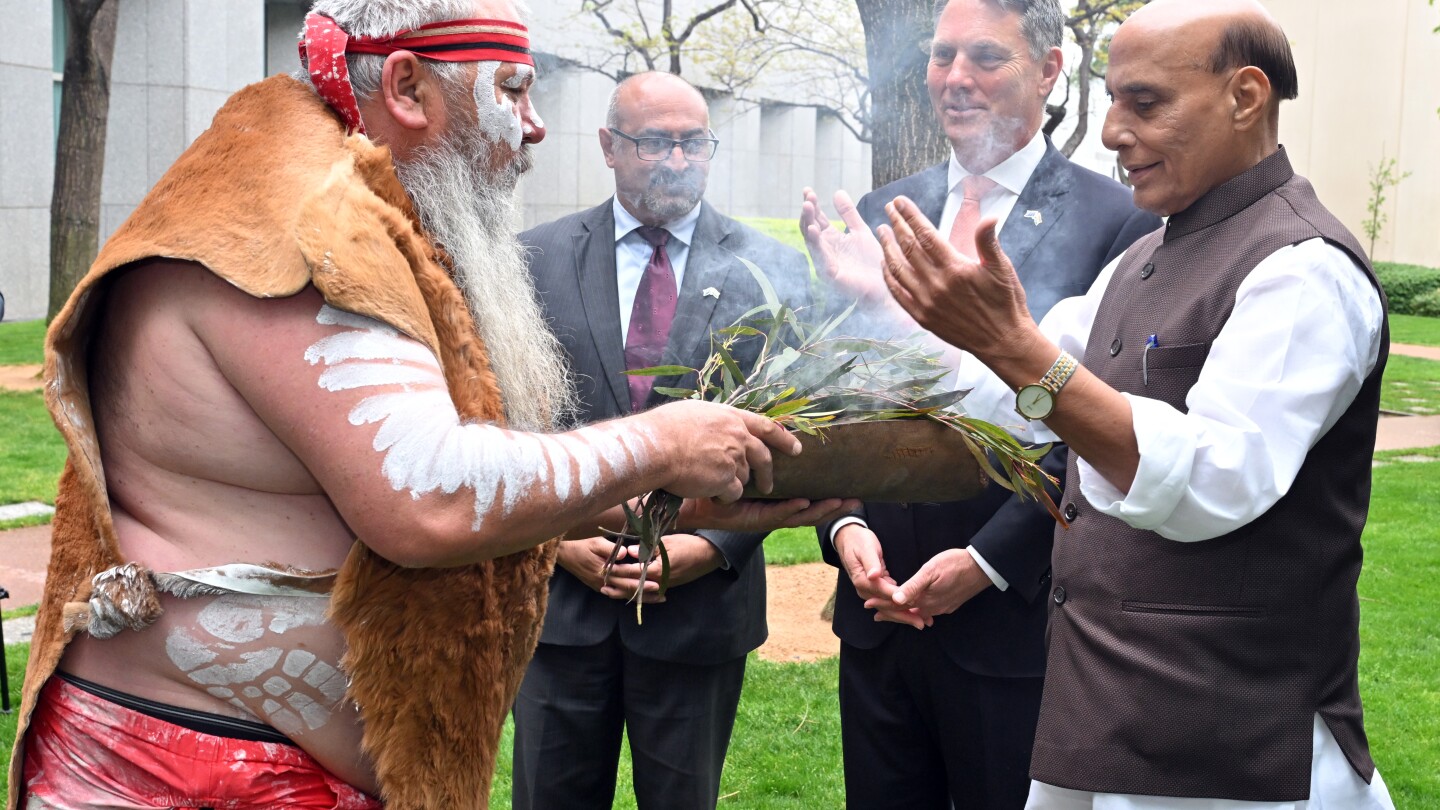
India and Australia sign a security deal that includes military talks and submarine cooperation
In a landmark move to bolster Indo-Pacific stability, Australian and Indian defense ministers inked a comprehensive bilateral security agreement on Thursday. This marks the first visit of an Indian defense minister to Australia since 2013, as highlighted by Australian Defense Minister Richard Marles. The pact includes the establishment of a joint staff forum and submarine rescue cooperation, reflecting the deepening defense partnership between the two nations. Marles emphasized the practical impact of this collaboration in maintaining regional stability. The growing ties were further evidenced by India’s inaugural participation in the multinational Talisman Sabre military exercises in Australia this July. These exercises, which began in 2005 as a U.S.-Australia initiative, this year involved over 35,000 personnel from 19 countries. Both nations are also part of the Quad alliance, alongside the United States and Japan, which focuses on enhancing maritime security in the Indo-Pacific. Raji Rajagopalan, a senior fellow at the Australian Strategic Policy Institute, noted the symbolic and practical significance of the visit, underscoring India’s strategic balancing act between China and the U.S. in the region. Additionally, Australia has been fortifying its security relationships with South Pacific neighbors, recently signing a defense treaty with Papua New Guinea, its second alliance-level security pact after the ANZUS Treaty.
-
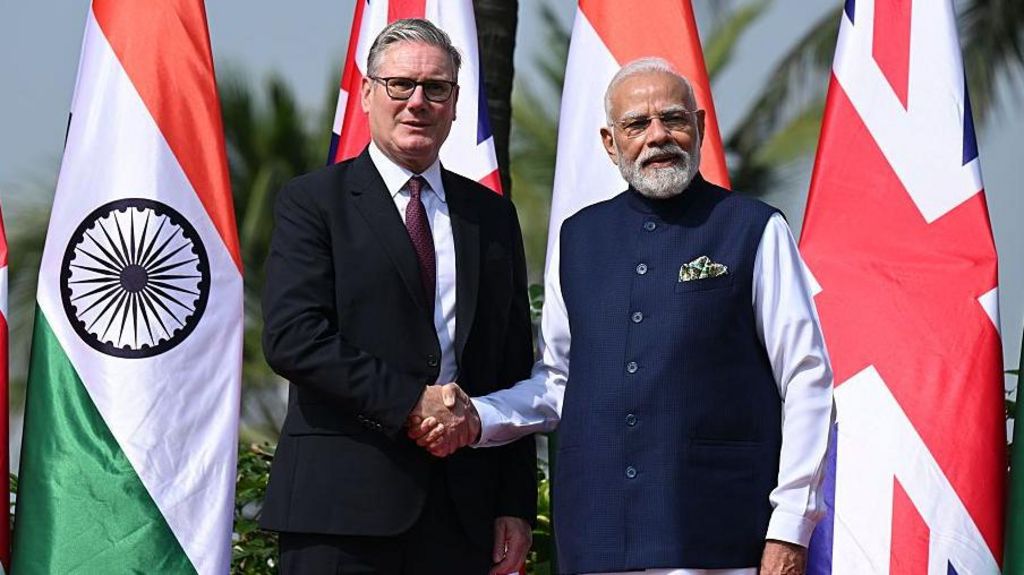
Starmer meets Modi on his first visit to India
Sir Keir Starmer, the UK Prime Minister, embarked on his inaugural visit to India, leading a substantial trade delegation comprising over 100 CEOs, entrepreneurs, university vice-chancellors, and cultural leaders. The visit, described as ‘historic’ by Indian Prime Minister Narendra Modi, took place in Mumbai, India’s financial hub. The two leaders convened to explore avenues for enhancing business and trade relations, following the landmark UK-India trade agreement signed in July. Starmer is scheduled to deliver a keynote address at a fintech conference during his stay. The visit has been marked by a warm reception, with thousands of photos of Starmer and Modi adorning the streets of Mumbai. On his first day, Starmer met with Nandan Nilekani, the founder of India’s digital ID system, amidst the UK government’s controversial plan to introduce a compulsory digital ID for workers. Despite opposition, with over 2.8 million people signing a petition against the proposal, the government remains resolute, arguing it will curb illegal migrant labor. Additionally, Starmer announced that Yash Raj Films will produce three Bollywood films in the UK starting 2026, ending an eight-year hiatus. The UK-India trade deal, yet to be implemented, has already spurred £1 billion in investment and created nearly 7,000 jobs in the UK. The agreement will reduce India’s average tariff on UK products from 15% to 3%, while the UK will lower taxes on Indian goods such as clothing, footwear, and seafood. India, in turn, will reduce duties on Scotch whisky, cosmetics, and luxury cars. The deal is projected to boost the UK’s GDP by £4.8 billion annually and increase bilateral trade by £25.5 billion by 2040. Last year, UK-India trade totaled £42.6 billion and was already on an upward trajectory. Before his visit, Starmer emphasized that the UK would not relax visa rules for India but highlighted significant opportunities to enhance trade and cultural ties. The visit occurs against the backdrop of strained India-US relations due to President Donald Trump’s imposition of 50% tariffs on India, including a 25% penalty for purchasing Russian oil. India and the US have been negotiating a trade deal for months without a major breakthrough.
-
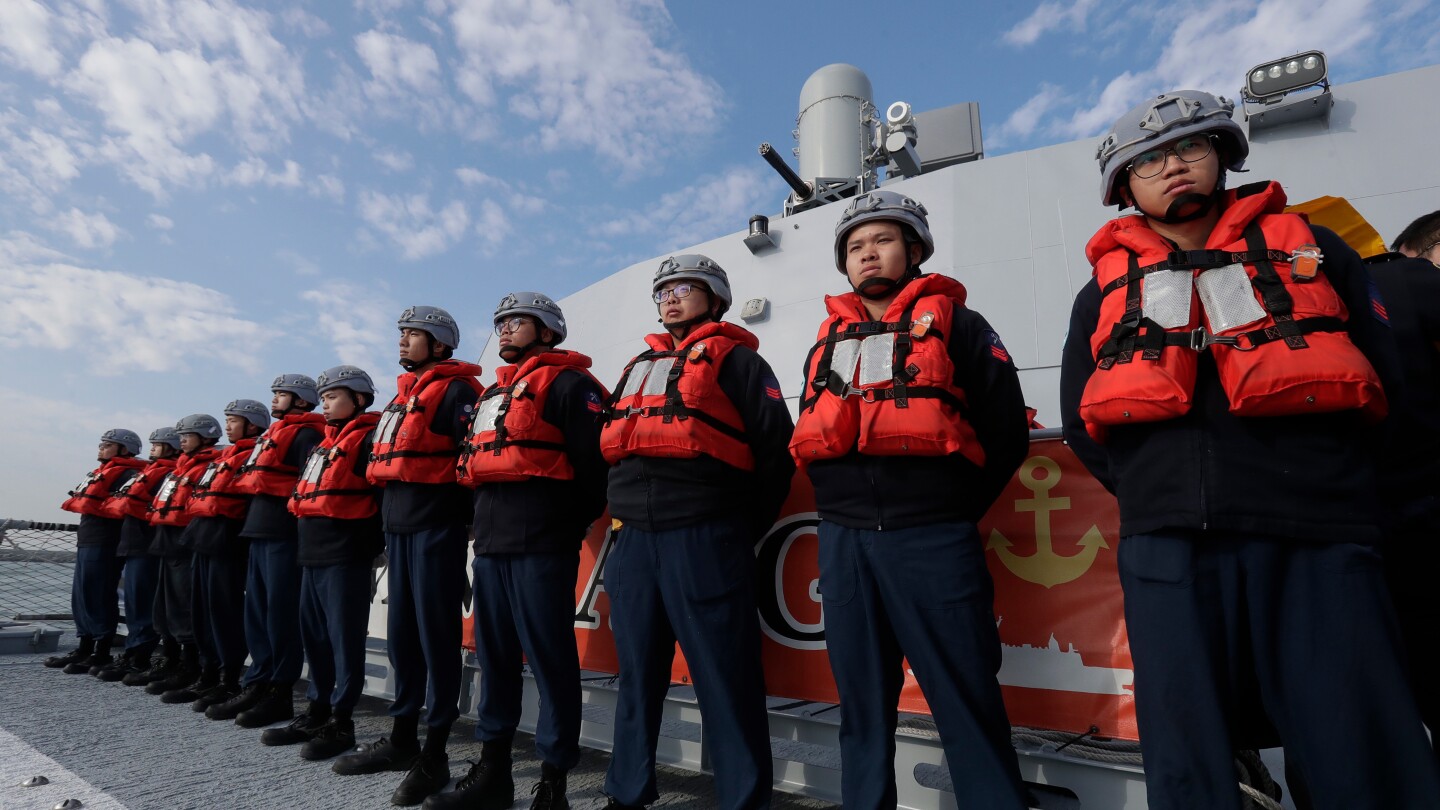
Taiwan says anti-drone measures will be a top priority in defense against China
In response to escalating Chinese drone incursions, Taiwan’s Ministry of National Defense has unveiled a comprehensive strategy to counter these threats. The ministry announced on Thursday that it is actively training soldiers to shoot down drones and is seeking to procure advanced anti-drone weaponry. This initiative comes as Chinese drones frequently encroach upon Taiwan’s outlying islands, which are geographically closer to China than the main island of Taiwan. China continues to assert its claim over Taiwan, despite the island’s de facto self-governance. Major General Sun Li-fang, a spokesperson for the defense ministry, emphasized the rapid evolution of drone and anti-drone technologies, stating, ‘Drone development and anti-drone developments are progressing rapidly, and we are prioritizing this in our military preparedness efforts.’ The report also highlighted China’s increasing use of grey-zone tactics, which include non-armed assaults such as drone surveillance and patrol exercises. Taiwan’s military is conducting night shooting drills and other training exercises to enhance its defensive capabilities. Additionally, Taiwan is strengthening its ties with the United States, its largest unofficial ally, to bolster regional security. In February, Taiwan signed a $761 million deal with the U.S. to acquire an air defense system specifically designed to counter drone threats. Defense Minister Wellington Koo reaffirmed Taiwan’s commitment to increasing defense spending to approximately 5% of GDP, up from the current 3%, to address the growing military tensions with Beijing.
-
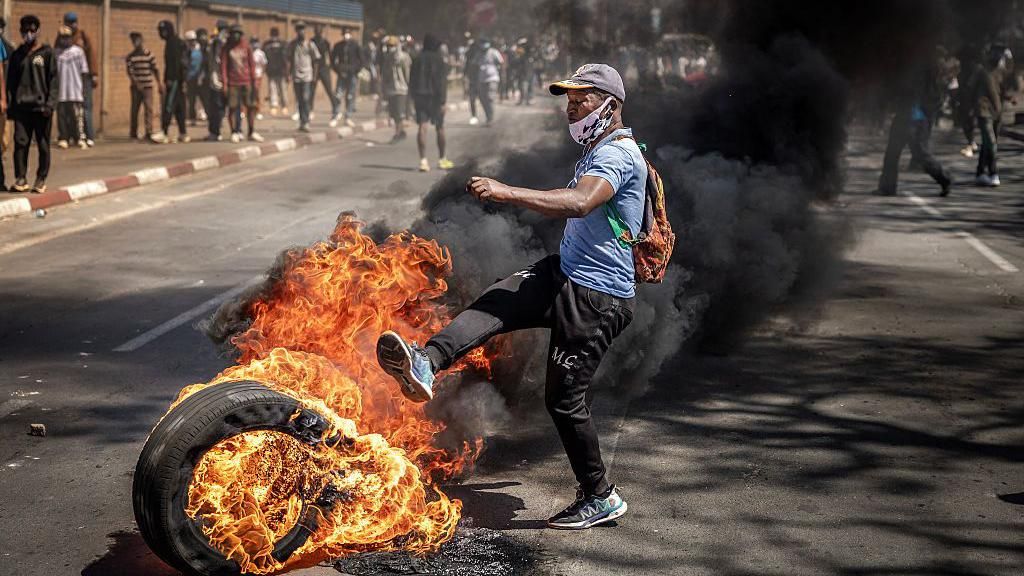
Madagascar president asks for one year to resolve problems or he will resign
Madagascar’s President Andry Rajoelina has pledged to address the nation’s pressing challenges within a year, vowing to resign if he fails to deliver. Speaking at a town-hall meeting at his palace, Rajoelina engaged with government supporters, urging honesty over flattery. ‘It’s the people who kept telling me everything was fine who are responsible for our current situation,’ he remarked. The protests, initially sparked by water and electricity shortages, have evolved into widespread discontent over corruption, unemployment, and the cost-of-living crisis. The youth-led movement, Gen Z Mada, has rejected Rajoelina’s invitation to dialogue, accusing the government of repression and vowing to continue demonstrations. Rajoelina, who came to power in 2009 after mass protests, has dismissed his cabinet and appointed an army general as prime minister, a move the protesters have dismissed. Despite the unrest, life in most parts of the capital, Antananarivo, remains normal, though some areas are heavily policed. The UN reports at least 22 deaths in clashes with security forces, a figure disputed by authorities. Rajoelina remains committed to resolving the crisis through dialogue rather than protests.
-
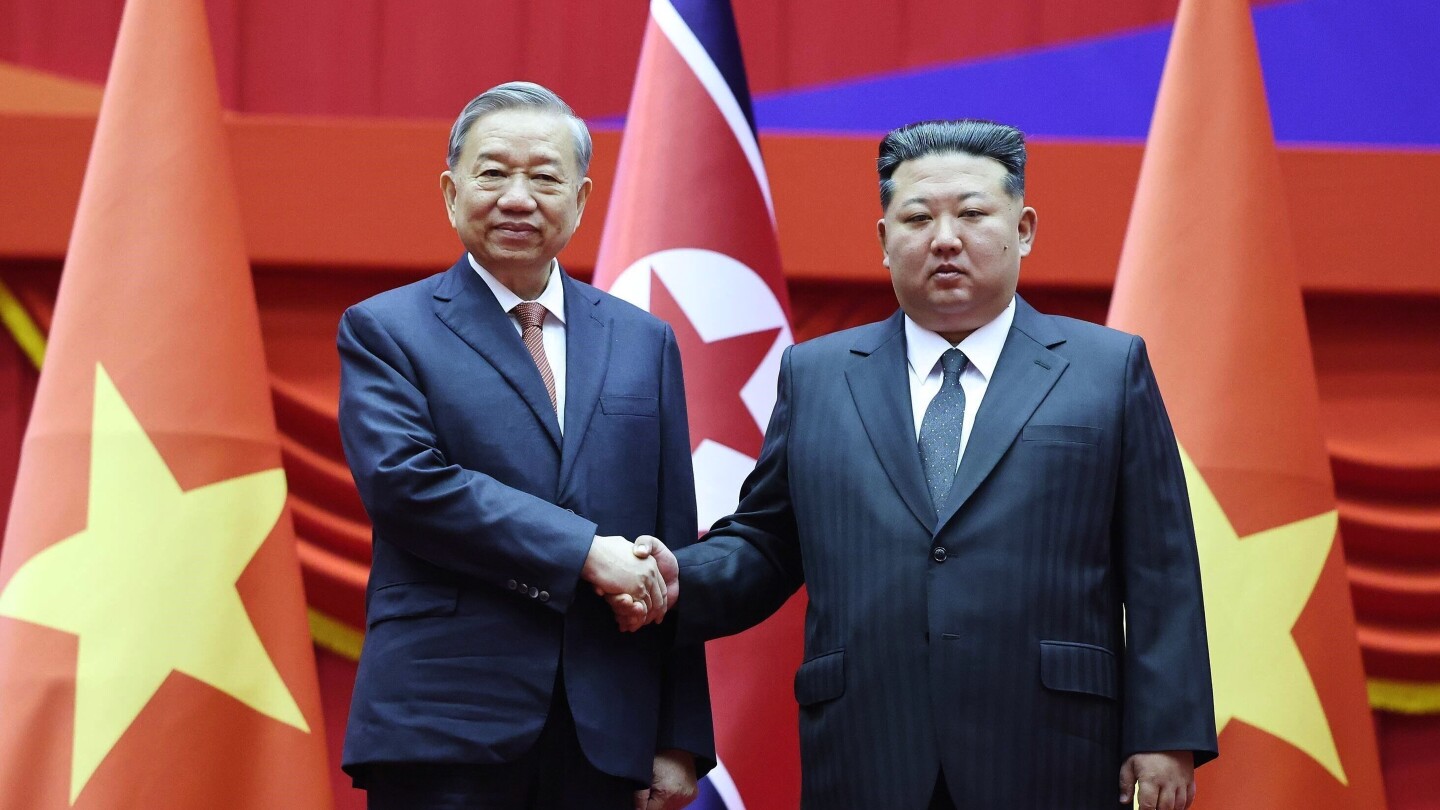
North Korea’s ruling party turns 80 with foreign leaders in attendance
North Korea is commemorating the 80th anniversary of its ruling Workers’ Party on Friday, with significant participation from foreign dignitaries and leaders. The event underscores Pyongyang’s efforts to strengthen ties with key global allies, particularly China and Russia, both of which are sending high-level representatives. Chinese Premier Li Qiang arrived in Pyongyang on Thursday, marking the highest-level visit by a Chinese leader since 2019. Li, a member of the Standing Committee of the Communist Party’s Politburo and China’s second-highest-ranking official, has been increasingly active in representing China on the global stage, including at the United Nations General Assembly in September. Russia is represented by Dmitry Medvedev, former president and deputy head of the Security Council, reflecting the deepening cooperation between North Korea and Russia, particularly in the context of the Ukraine conflict. Vietnam’s top leader, Communist Party General Secretary To Lam, also arrived in Pyongyang, where he was welcomed by North Korean leader Kim Jong Un. The visit coincides with the 75th anniversary of diplomatic relations between the two nations. Additionally, Laos’ President Thongloun Sisoulith is attending the celebrations, further highlighting the event’s international significance. The anniversary serves as a platform for North Korea to showcase its diplomatic alliances and reinforce its position on the global stage, though specific details of the commemorative activities remain undisclosed.
-
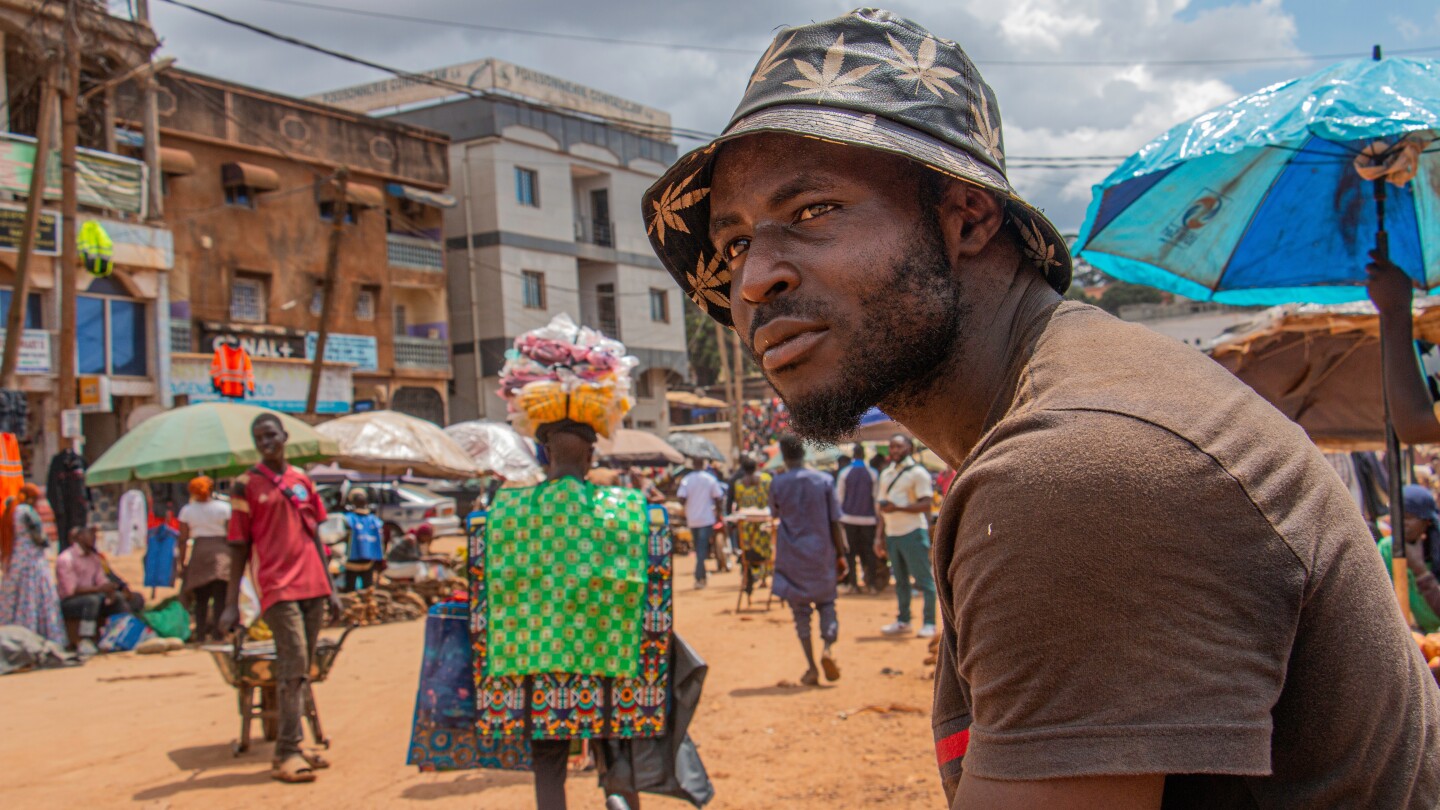
The world’s oldest president seeks an eighth term in Cameroon as youth grumble
In Cameroon, a nation where the median age is 18, the generational divide between its youthful population and its aging leadership has never been more pronounced. As the country prepares for its presidential election, 92-year-old Paul Biya, the world’s oldest president, is seeking an eighth term in office. Biya, who has ruled Cameroon for over four decades, faces widespread disillusionment among the youth, who accuse the education system of corruption and the political system of favoring the elite. Elvis Nghobo, a 34-year-old market vendor in Yaounde, exemplifies this frustration. After failing to gain admission to multiple professional schools, he blames the system for his struggles and has decided not to vote, calling the election results a foregone conclusion. Nghobo’s sentiment is echoed by millions of young Cameroonians who feel excluded from the country’s modest economic growth and are grappling with unemployment and informal employment. Despite being an oil-producing nation, Cameroon’s youth say the benefits of economic growth have not reached them. The country also faces escalating security crises, including a secessionist conflict in the English-speaking western region and Boko Haram insurgency in the north. Biya is challenged by nine opposition candidates, including former allies, but critics argue the opposition lacks credibility. Maurice Kamto, a prominent opposition figure, was barred from running, further fueling skepticism about the electoral process. Analysts suggest that Cameroon’s elites are unwilling to disrupt the status quo, with Biya’s entourage and ruling party ensuring his continued dominance. As the election approaches, many young Cameroonians, like Nghobo, have lost faith in the ballot box, believing that power change will require alternative means.