分类: politics

  • Senior CPC official stresses advancing peaceful relations across Taiwan Strait

    Senior CPC official stresses advancing peaceful relations across Taiwan Strait

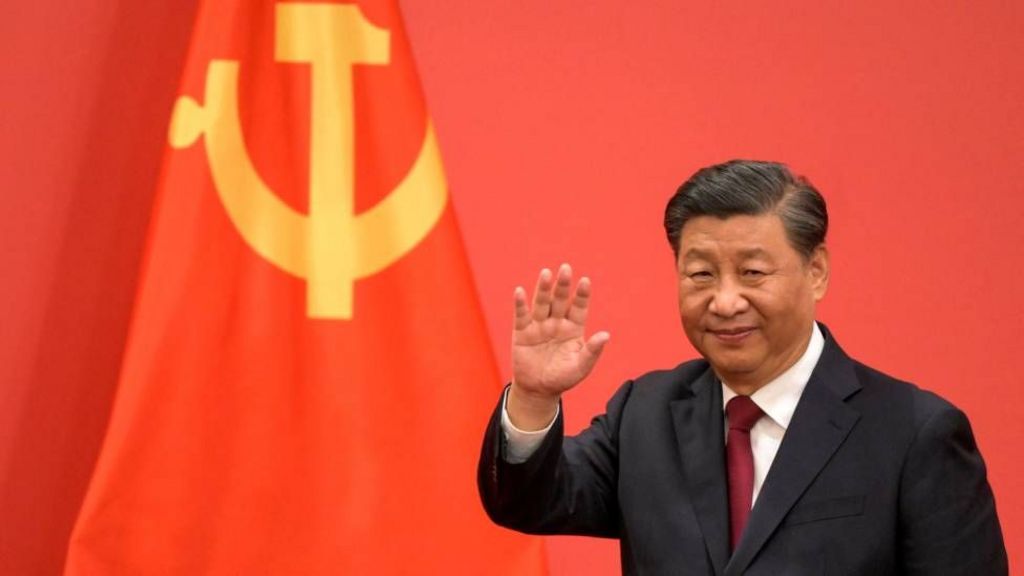
    BEIJING – In a significant address at the Taiwan affairs work conference held February 9-10, 2026, senior Communist Party of China official Wang Huning reinforced China’s commitment to fostering peaceful development across the Taiwan Strait while advancing national reunification efforts.

    Wang, who serves as a Standing Committee member of the Political Bureau of the CPC Central Committee and chairs the National Committee of the Chinese People’s Political Consultative Conference, outlined a comprehensive framework for cross-Strait relations. The high-level meeting emphasized the continued adherence to the One-China principle and the 1992 Consensus as foundational pillars of China’s Taiwan policy.

    The senior official articulated a clear stance against what he described as ‘Taiwan independence’ separatist movements and external interference in cross-Strait affairs. Wang’s address balanced these firm positions with constructive proposals for enhanced people-to-people exchanges, particularly focusing on opportunities for Taiwanese youth seeking education, employment, and residency on the mainland.

    A substantial portion of the conference addressed economic cooperation, with Wang emphasizing support for Taiwanese businesses and enterprises operating on the mainland. He highlighted the importance of ensuring that citizens on both sides of the Strait benefit equally from the opportunities presented by Chinese modernization efforts.

    The conference, presided over by Wang Yi, member of the Political Bureau of the CPC Central Committee and director of the Office of the Central Commission for Foreign Affairs, brought together key stakeholders to coordinate and implement China’s Taiwan policy framework. The meeting’s timing during the Spring Festival period underscored the cultural and historical connections between mainland China and Taiwan that the leadership seeks to emphasize.

  • EU drafts a list of concessions it says Russia must make to secure real peace in Ukraine

    EU drafts a list of concessions it says Russia must make to secure real peace in Ukraine

    BRUSSELS — The European Union is formulating a comprehensive set of demands it believes Russia must fulfill to achieve sustainable peace in Ukraine, according to statements made Tuesday by the bloc’s top diplomat. This initiative emerges as U.S.-mediated negotiations show minimal progress after four years of conflict.

    The development follows a particularly brutal Russian attack utilizing cluster munitions on a Ukrainian market, which resulted in seven fatalities. This assault occurred concurrently with last week’s diplomatic meetings between Moscow and Kyiv in Abu Dhabi, which yielded no breakthrough despite resulting in a new prisoner exchange agreement.

    EU Foreign Policy Chief Kaja Kallas revealed that the 27-nation bloc has grown increasingly skeptical about Russia’s genuine commitment to negotiations. The EU also questions whether European and Ukrainian interests are adequately represented in Trump administration-led peace efforts. President Donald Trump, who previously claimed he could end the war within a day or 100 days, has now imposed a June deadline for Ukraine and Russia to reach an agreement.

    “We have just witnessed intensified Russian bombing campaigns throughout these diplomatic engagements,” Kallas stated, highlighting targeted attacks on Ukraine’s critical electricity infrastructure during the conflict’s coldest winter period.

    While expressing gratitude for American diplomatic efforts thus far, Kallas emphasized that “sustainable peace requires European consensus among all parties involved, including Russians and Americans.”

    The proposed EU conditions reportedly include demands for Russia to repatriate thousands of children allegedly abducted from Ukraine and implement limitations on the size of Russia’s armed forces post-conflict. Kallas argued that constraints should focus on Russian military capabilities rather than Ukraine’s defenses, noting that excessive Russian military expenditure creates inherent security risks.

    A draft document outlining these conditions is expected to circulate among EU member states in coming days, with potential discussion during the February 23 foreign ministers’ meeting.

    Kallas acknowledged Ukraine’s current dependency on U.S. support but cautioned against pressuring the weaker party into concessions that might produce temporary peace declarations rather than sustainable security guarantees. The EU aims not to establish parallel negotiation channels but to “change the narrative” and create circumstances where Russia genuinely desires conflict resolution.

    Citing intelligence assessments, Kallas noted President Vladimir Putin’s recruitment challenges and pointed to EU sanctions significantly impacting Russia’s economy amid soaring inflation. Additional measures under consideration include prohibiting repair services for vessels transporting Russian oil, with plans to discuss broader G7 adoption during the upcoming Munich Security Conference.

  • Former senior Chinese defense official charged with bribery

    Former senior Chinese defense official charged with bribery

    In a significant development in China’s ongoing anti-corruption campaign, Zhang Jianhua, former deputy director of China’s State Administration of Science, Technology and Industry for National Defense, has been formally indicted on bribery charges. The Supreme People’s Procuratorate announced the charges on Tuesday, marking another high-profile case in the country’s systematic crackdown on corruption within government ranks.

    Prosecutors allege that Zhang exploited his extensive authority across multiple senior positions, including his roles as head of finance and audit, chief engineer, and ultimately deputy head of the national defense technology administration. The indictment specifies that Zhang engaged in two distinct forms of corruption: direct bribery involving illegal acceptance of substantial monetary and property benefits, and influence peddling wherein he allegedly leveraged his official status both during and after his tenure to secure improper advantages for others through fellow government officials.

    The case represents a collaborative effort between China’s disciplinary and judicial systems. Initially investigated by the National Supervisory Commission, the matter was subsequently transferred to prosecutorial authorities for formal legal proceedings. The Sichuan Provincial People’s Procuratorate, acting on behalf of national authorities, approved Zhang’s arrest, while the Dazhou People’s Procuratorate has initiated prosecution through the city’s Intermediate People’s Court.

    Zhang’s career trajectory, spanning over four decades within China’s defense establishment, adds significance to the case. The 64-year-old Jiangsu native began his government service in 1983 and joined the Communist Party of China in 1985. His lengthy tenure within the sensitive national defense technology sector ended when he was placed under disciplinary investigation in May 2025, culminating in his expulsion from the Party five months later.

  • UK leader Starmer averts a leadership challenge for now but remains damaged by Epstein fallout

    UK leader Starmer averts a leadership challenge for now but remains damaged by Epstein fallout

    British Prime Minister Keir Starmer has narrowly weathered a severe political storm following revelations connected to the Jeffrey Epstein files that threatened to terminate his premiership. The crisis emerged from Starmer’s controversial appointment of Peter Mandelson, a veteran Labour politician with documented ties to the convicted sex offender, as UK ambassador to Washington.

    Mandelson’s association with Epstein intensified when recently unsealed court documents revealed he maintained contact with the financier after Epstein’s 2008 conviction for sex offenses involving a minor. Although Starmer promptly dismissed Mandelson upon discovering the extent of these connections, the damage had been catalyzed. Compounding matters, Mandelson now faces a police investigation regarding potential misconduct in public office over allegations he shared sensitive government information with Epstein.

    The scandal triggered immediate repercussions within Starmer’s administration, culminating in the resignation of his powerful chief of staff, Morgan McSweeney, and communications director Tim Allan. The situation escalated when Scottish Labour leader Anas Sarwar publicly demanded Starmer’s resignation, creating a critical juncture for the governing party.

    However, Starmer mounted a vigorous defense during a pivotal meeting with Labour lawmakers on Monday evening. His display of resolve reportedly shifted the initially skeptical atmosphere to one of tentative support. Key potential challengers, including former Deputy Prime Minister Angela Rayner and Health Secretary Wes Streeting, subsequently issued coordinated messages backing Starmer’s leadership.

    Energy Secretary Ed Miliband characterized the moment as one where party members ‘looked over the precipice and didn’t like what they saw,’ ultimately choosing unity behind their leader—for now. Despite this temporary reprieve, underlying challenges persist, including dismal opinion polls, economic struggles, and policy reversals on welfare cuts and digital ID cards.

    Political analysts suggest Starmer has merely purchased time rather than secured a permanent solution. Professor Tim Bale of Queen Mary University London noted that potential challengers are ‘keeping their powder dry’ pending expected poor electoral performances in upcoming special and local elections. The Prime Minister’s long-term survival remains uncertain as his party balances internal discontent against the risks of midterm leadership change.

  • US lawmakers accuse justice department of ‘inappropriately’ redacting Epstein files

    US lawmakers accuse justice department of ‘inappropriately’ redacting Epstein files

    A significant dispute has erupted between U.S. lawmakers and the Department of Justice (DOJ) regarding the handling of documents related to convicted sex offender Jeffrey Epstein. Congressional representatives from both parties are alleging that the DOJ has improperly redacted critical information from approximately three million pages of evidence released under the Epstein Files Transparency Act (EFTA).

    Democratic Representative Ro Khanna and Republican Representative Thomas Massie, co-sponsors of the EFTA legislation, revealed they discovered approximately twenty individuals whose names were entirely concealed in the documents, with only Epstein and his convicted associate Ghislaine Maxwell remaining visible. Massie stated that six of these redacted names potentially belong to individuals “likely incriminated by their inclusion in these files.”

    The controversy intensified when lawmakers examined unredacted versions of the documents in a secure DOJ facility. They reported that the FBI under the Trump administration had initially processed these redactions in March, before the documents reached the current DOJ leadership. This sequence contradicts the EFTA’s requirement that the FBI—as a component of the DOJ—should have removed redactions before transmitting files to Deputy Attorney General Todd Blanche and Attorney General Pam Bondi’s office.

    In response to congressional pressure, the DOJ has begun reversing some redactions. Blanche announced via social media that his department had “unredacted all non-victim names from this document” and maintained that “DOJ is committed to transparency.” He disclosed that one document now shows only two concealed names, both belonging to Epstein victims whose identities the EFTA mandates protecting.

    The viewing process itself has drawn criticism from lawmakers. Representative Jamie Raskin characterized the arrangement—providing only four computers in a satellite office for reviewing three million documents—as effectively a “cover up,” estimating it would take Congress seven years to thoroughly examine all materials.

    The situation gained additional urgency last week when lawyers for Epstein’s victims reported that recently released files contained improperly redacted email addresses and nude photographs that could identify potential victims. Survivors issued statements condemning the disclosure as “outrageous” and expressed distress at being “named, scrutinized and retraumatized.” The DOJ acknowledged these errors resulted from “technical or human error” and removed the flagged files.

    Despite these adjustments, Khanna maintains that post-release corrections still violate the EFTA, which passed with nearly unanimous congressional support and was signed by President Trump in November. He demands complete transparency: “They need to unscrub the FBI files so we know who the rich and powerful men are who raped underage girls.”

  • Indonesia preparing to deploy up to 8,000 soldiers to Gaza

    Indonesia preparing to deploy up to 8,000 soldiers to Gaza

    In a significant development for Middle East peace efforts, Indonesia has announced preparations to deploy up to 8,000 military personnel to Gaza as part of the second phase of the ceasefire agreement negotiated by the United States. This deployment marks the first national commitment to the international stabilization initiative.

    General Maruli Simanjuntak, Army Chief of Staff, confirmed that specialized training is already underway for Indonesian forces who will primarily serve in medical and engineering capacities within the conflict zone. The deployment timeline and specific operational parameters remain under finalization.

    This military commitment aligns with Indonesia’s recent participation in President Donald Trump’s Board of Peace, established last month with a United Nations Security Council mandate. The board’s mandate includes forming an International Stabilization Force (ISF) to secure Gaza’s border regions and oversee demilitarization efforts, including the disarmament of Hamas.

    The peace board, scheduled to convene its inaugural meeting in Washington on February 19th, will additionally supervise the establishment of a technocratic Palestinian administration in Gaza and coordinate post-conflict reconstruction initiatives.

    President Prabowo Subianto has championed Indonesia’s involvement despite domestic criticism from certain Islamic groups. These factions have expressed discontent with perceived American support for Israel’s military operations in Gaza. Defending his position, President Subianto emphasized that as the world’s most populous Muslim nation, Indonesia bears responsibility to contribute to regional stabilization and advance the two-state solution framework.

    Israeli media outlet Kan has reported that a specific area between Rafah and Khan Younis in southern Gaza has been designated for constructing barracks to accommodate several thousand Indonesian personnel.

    While other Muslim-majority nations including Turkey and Pakistan contemplate similar peacekeeping contributions, they have explicitly stated their troops would not participate in Hamas disarmament operations. The viability of the international force remains uncertain given ongoing tensions, with Hamas refusing to surrender weapons while Israeli forces maintain presence in portions of Gaza.

  • Macron urges Europe to start acting like world power

    Macron urges Europe to start acting like world power

    French President Emmanuel Macron has issued a compelling call for Europe to transform into a formidable global power, emphasizing that the continent stands at a critical historical juncture. In a comprehensive interview with leading European publications ahead of an imminent EU summit in Brussels, Macron articulated that Europe confronts what he termed a definitive ‘wake-up call’ in an increasingly volatile international landscape.

    Macron delineated three fundamental domains where Europe must demonstrate enhanced sovereignty: economic and financial systems, defense and security infrastructure, and the preservation of democratic institutions. He championed the creation of mutualized EU debt instruments, proposing ‘eurobonds for the future’ as essential mechanisms to mobilize the estimated €1.2 trillion required annually for strategic investments in defense, clean energy transformation, and artificial intelligence capabilities.

    This proposition revisits previous initiatives that encountered resistance from Germany and other northern European nations, who have historically expressed reservations about collective debt arrangements that might disproportionately benefit less fiscally disciplined member states. Macron acknowledged France’s distinctive economic model, contrasting it with the ‘responsibility-based’ frameworks of northern economies and the transformative structural reforms implemented by southern European nations during the 2010s.

    The French leader presented a strategic analysis of global financial dynamics, noting growing international apprehension about over-reliance on the U.S. dollar and identifying substantial market demand for European debt alternatives. He positioned Europe’s democratic legal frameworks as a competitive advantage in attracting global investment, drawing a sharp contrast with China’s authoritarian governance and what he characterized as America’s gradual departure from rule-of-law principles.

    Macron framed Europe’s current challenges within a broader context of systemic global disorder, citing accelerated climate change, uncertain American security guarantees following decades of reliance, the cessation of affordable Russian energy supplies, and increasingly fierce competition from China. He emphasized that despite these pressures, Europe possesses unprecedented potential through its collective population of 450 million citizens.

    Addressing recent diplomatic tensions surrounding U.S. President Donald Trump’s apparent threats toward Greenland, Macron cautioned against European complacency, warning that temporary de-escalation should not be misinterpreted as resolution. He urged sustained vigilance against what he described as cyclical patterns of international ‘threats and intimidation’ followed by tactical withdrawals.

  • Eswatini angers Madagascar junta for hosting deposed leader

    Eswatini angers Madagascar junta for hosting deposed leader

    A significant diplomatic rift has emerged between Madagascar’s military government and the Kingdom of Eswatini following a controversial meeting between King Mswati III and deposed Malagasy President Andry Rajoelina. The encounter, which took place last week in Eswatini, has drawn sharp condemnation from Madagascar’s current military leadership.

    Colonel Michael Randrianirina, Madagascar’s military leader, issued a formal statement characterizing the visit as a “grave infringement of sovereignty” and “politically unacceptable.” The military government emphasized that Rajoelina had voluntarily renounced his Malagasy nationality after acquiring foreign citizenship, rendering any claims of legitimate representation “legally unfounded.”

    The backdrop to this diplomatic confrontation stems from Rajoelina’s ouster in October 2025 following widespread youth-led protests over persistent power and water shortages. The demonstrations culminated in military intervention that ultimately removed Rajoelina from power, with reports indicating approximately 30 casualties during the unrest.

    Eswatini’s monarchy has defended the meeting through spokesperson Percy Simelane, asserting that the engagement was conducted in consultation with the Southern African Development Community (SADC) and was part of Eswatini’s regional diplomatic facilitation role. “The deposed leader was not seeking protection or intervention from the Kingdom of Eswatini,” Simelane clarified, describing Madagascar’s criticism as “misguided and unfortunate.”

    The military authorities in Antananarivo expressed concern that Rajoelina’s reception could disrupt Madagascar’s ongoing national reconciliation process and constitutional restoration efforts. Colonel Randrianirina has previously committed to organizing new elections within a two-year timeframe, in alignment with SADC’s directive for Madagascar to submit a detailed roadmap for democratic restoration by February 28th.

    This meeting marks Rajoelina’s first visible diplomatic engagement since fleeing Madagascar, signaling potential complications in the region’s political dynamics as Madagascar navigates its transition back to constitutional governance.

  • Thailand’s Bhumjaithai wins election

    Thailand’s Bhumjaithai wins election

    Thailand’s political arena witnessed a dramatic conservative realignment on Monday following Prime Minister Anutin Charnvirakul’s Bhumjaithai Party achieving an unexpectedly decisive triumph in the nation’s general election. With 94% of ballots tallied, the party secured a commanding 193 out of 500 parliamentary seats according to Reuters calculations based on election commission data.

    The election outcome, which propelled Thai stocks approximately 3% higher to reach their most elevated level in over a year, positions Bhumjaithai substantially ahead of rival factions. The left-leaning People’s Party trailed significantly with 118 seats, while the Pheu Thai Party captured third position with 74 parliamentary spots.

    Prime Minister Anutin characterized the result as “a victory for all Thais” during his Monday news broadcast, though he remained circumspect regarding imminent coalition negotiations. “We need a strong government,” Anutin emphasized, indicating his intention to form an administration with substantial majority support while awaiting final election tallies.

    The conservative leader outlined key policy objectives including enhanced border security through construction of a wall along Thailand’s frontier with Cambodia and military strengthening. Anutin previously signaled that incumbent ministers of finance, foreign affairs, and commerce would retain their portfolios if his government returned to power.

    The political upset comes despite late-January polls showing the People’s Party leading significantly. Analysts attribute Bhumjaithai’s surge to heightened nationalism stemming from regional conflicts with Cambodia. In a parallel development, voters overwhelmingly endorsed constitutional reform with nearly two-thirds supporting charter replacement—a process expected to require at least two years and additional referendums.

    The People’s Party has explicitly ruled out participation in a Bhumjaithai-led coalition, with leader Natthaphong Ruengpanyawut confirming they would not pursue an alternative governing alliance. Anutin maintained that all considerations remain subject to party consultation, noting “There are still procedures to follow” regarding government formation.

  • China revises nature reserve regulations to enhance conservation, strengthen management

    China revises nature reserve regulations to enhance conservation, strengthen management

    The Chinese government has unveiled a sweeping revision of its nature reserve regulations, marking a significant advancement in the nation’s environmental governance framework. Premier Li Qiang formally endorsed the updated legislation through a State Council decree, establishing a robust five-chapter, 48-article regulatory structure scheduled for implementation on March 15, 2026.

    The newly formulated regulations provide precise functional definitions for nature reserves, characterizing them as specifically designated terrestrial and marine territories primarily established to safeguard representative ecosystems, conserve habitats for rare and endangered species, and protect sites of exceptional natural heritage value. The legislation articulates comprehensive development guidelines that prioritize ecological conservation while balancing preservation objectives with sustainable development considerations.

    A cornerstone of the regulatory overhaul involves substantial management system reforms that explicitly delineate responsibilities between supervisory authorities and administrative agencies. The updated framework standardizes establishment procedures for new protected areas while implementing enhanced protective measures, including stringent restrictions on human activities within core preservation zones and surrounding buffer areas.

    Notably, the revised regulations introduce escalated legal consequences for violations, establishing stronger deterrents against activities that threaten ecological integrity. This legislative enhancement aligns with China’s broader environmental policy objectives, particularly the Beautiful China initiative that seeks to harmonize ecological protection with national development goals.

    The regulatory update represents China’s most comprehensive environmental legislation reform in recent years, reflecting the government’s intensified focus on institutionalizing ecological conservation practices and addressing biodiversity challenges through structured legal mechanisms.