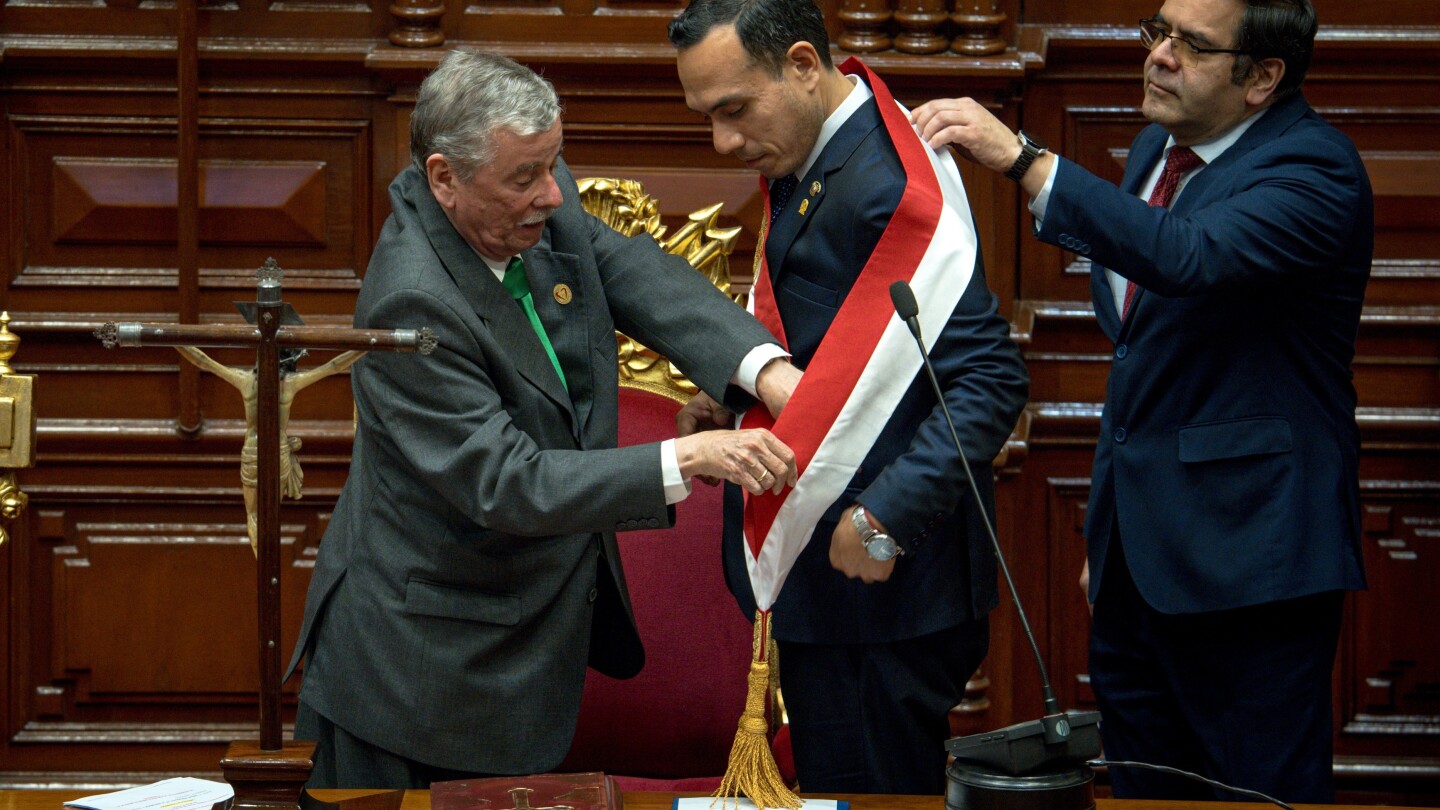
Peru has witnessed yet another dramatic political shift as 38-year-old José Jerí assumed the presidency on Friday, marking the nation’s seventh leader in less than a decade. This transition followed the overnight impeachment of President Dina Boluarte, who was removed by Congress over her administration’s failure to address rampant crime and corruption. Jerí, a young lawyer with limited political experience, was sworn in early Friday after lawmakers voted overwhelmingly to oust Boluarte, citing her inability to tackle the country’s escalating security crisis. In his inaugural address, Jerí pledged to prioritize national reconciliation, combat crime, and ensure neutrality in the upcoming April 2026 elections. Boluarte’s removal came after a heated congressional session where 124 lawmakers voted unanimously to impeach her, the ninth such attempt during her tumultuous presidency. Her tenure, which began in December 2022 after the impeachment of her predecessor Pedro Castillo, was marred by widespread protests, scandals, and accusations of corruption. Boluarte, Peru’s first female president, defended her record in a televised speech, but the broadcast was abruptly cut to air Jerí’s swearing-in ceremony. Meanwhile, the Attorney General’s Office has requested a travel ban on Boluarte as it investigates allegations of money laundering and corruption. Jerí’s rise to power, though unexpected, reflects Peru’s ongoing political instability, with the nation now looking toward the next elections for a more permanent resolution.
分类: politics
-
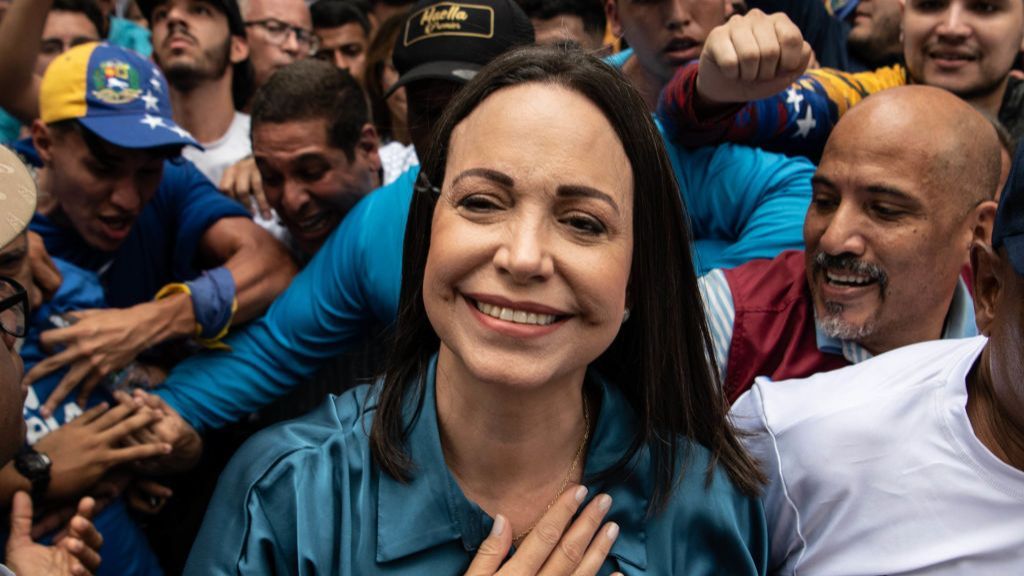
As Nobel Prize goes to Venezuela’s opposition leader, how far would Trump go to help her?
The recent Nobel Prize awarded to Maria Corina Machado, a prominent opposition figure in Venezuela, has been met with widespread acclaim by her supporters. This recognition is seen as a pivotal moment that could reignite international focus on the ongoing political and humanitarian crisis in the country. Machado, in her response, appealed directly to former U.S. President Donald Trump, urging his support to help Venezuela achieve ‘freedom and democracy.’ She emphasized the need for collaboration with the U.S., Latin American nations, and other democratic countries worldwide.
Venezuela’s current situation is dire. Millions live in poverty, with unreliable access to basic services like electricity and a healthcare system crippled by severe medicine shortages. The mass exodus of citizens, many fleeing to the U.S. and neighboring countries, underscores the gravity of the crisis. The 2023 elections were widely criticized as neither free nor fair, leading to violent crackdowns on protests and the detention of numerous political prisoners.
In recent months, the U.S. has intensified its pressure on Venezuela, conducting military strikes on boats in international waters off the Venezuelan coast, allegedly targeting drug traffickers. However, these actions have raised legal and ethical concerns, with some experts arguing they violate international law. The U.S. has also increased its military presence in the region, with thousands of troops stationed nearby and plans for potential operations.
Machado, who is in hiding, and Edmundo González, the U.S.-recognized president-elect living in exile, face significant threats from the Venezuelan government, which has accused them of treason. Despite calls for the military to abandon President Nicolás Maduro, key militia groups remain loyal to him. The opposition’s hopes now rest on the extent to which international allies, particularly the U.S., are willing to intervene.
The situation remains precarious, with Venezuela’s allies, including China, Russia, Iran, and Cuba, potentially complicating any U.S. intervention. If the U.S. decides to escalate its actions, the conflict could rapidly intensify, with far-reaching consequences for the region and beyond.
-
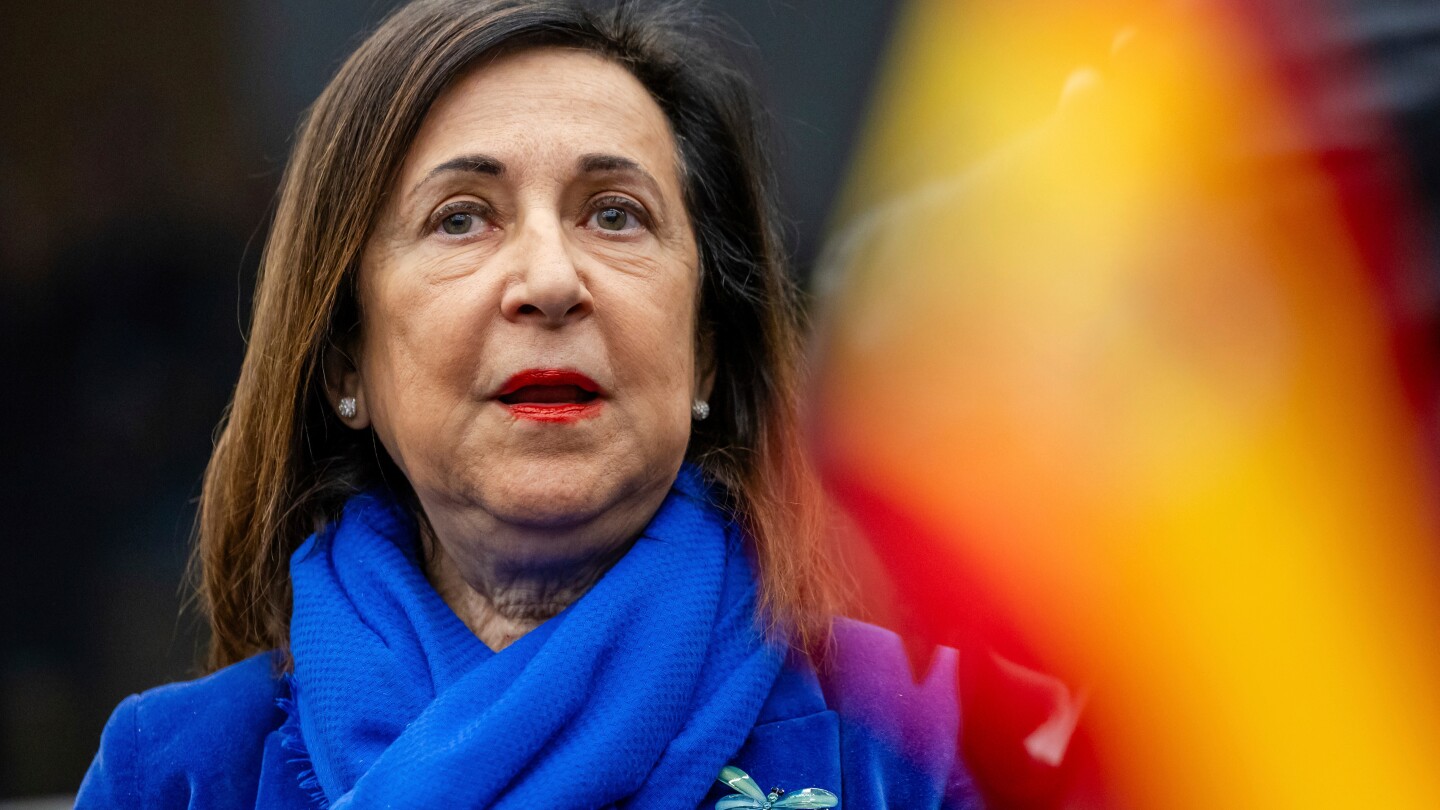
Trump blasts Spain for being NATO’s spending ‘laggard.’ Madrid replies that it is a ‘loyal’ ally
Spain’s Defense Minister Margarita Robles has robustly defended her nation’s dedication to NATO following remarks by former U.S. President Donald Trump suggesting Spain’s expulsion from the alliance due to insufficient military expenditure. Trump’s comments, made during a meeting with Finnish President Alexander Stubb in the Oval Office, labeled Spain as a ‘laggard’ and urged NATO members to pressure the country to increase its defense budget. Trump even suggested that Spain might be ousted from the alliance, citing its failure to meet the agreed-upon spending target of 5% of GDP.
-
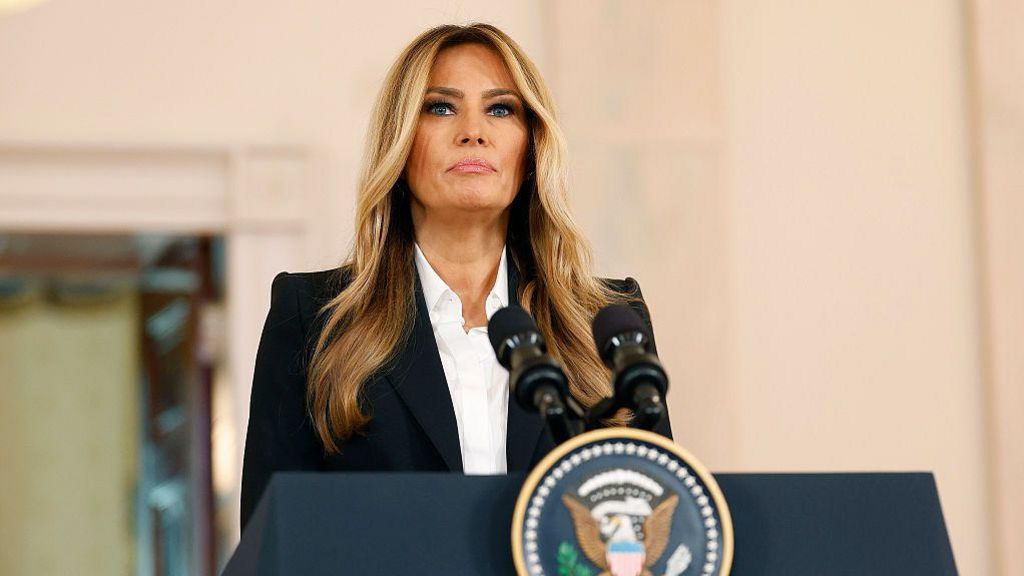
Melania Trump says Putin responded to her pleas about Ukrainian children
First Lady Melania Trump revealed on Friday that Russian President Vladimir Putin has responded to her letter concerning the plight of child victims in the ongoing Russia-Ukraine conflict. The letter, which was personally delivered to Putin during his visit to Alaska in August, urged the Russian leader to prioritize the protection of children affected by the war. Melania emphasized that safeguarding these children would not only benefit Russia but also serve humanity as a whole. President Donald Trump shared excerpts of the letter on social media, highlighting its humanitarian appeal. Following an ‘open channel of communication’ with Putin, the First Lady announced that several Ukrainian children displaced by the war have been successfully reunited with their families. This development marks a significant step in addressing the humanitarian crisis stemming from the conflict. Further updates on this story are expected shortly. For real-time updates, follow @BBCBreaking on X or download the BBC News App.
-
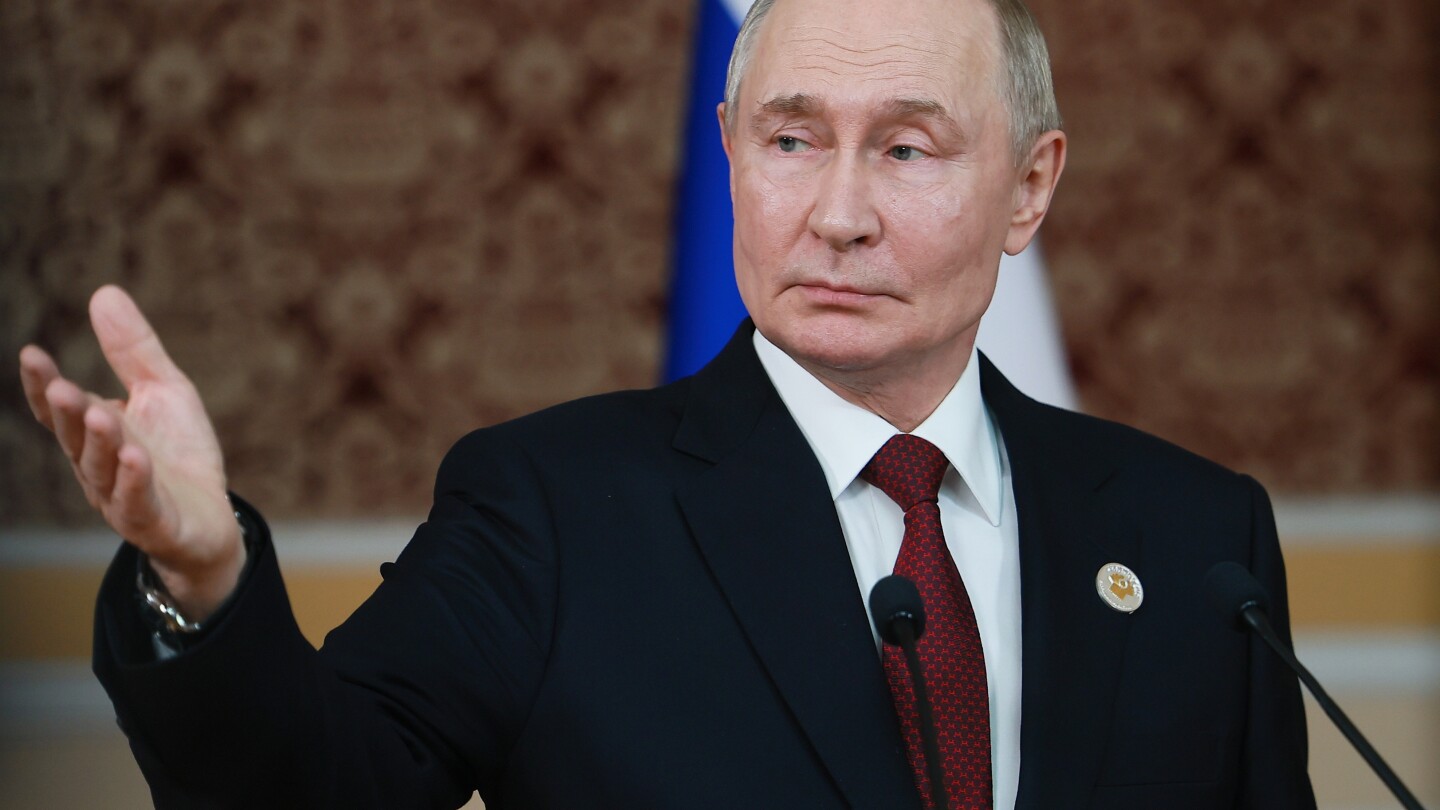
Putin praises Trump’s peace efforts despite failing to win the Nobel prize
Russian President Vladimir Putin publicly commended U.S. President Donald Trump’s peace initiatives during a summit in Dushanbe, Tajikistan, despite Trump’s failure to secure the Nobel Peace Prize. Putin highlighted Trump’s efforts to broker ceasefires in Gaza and Ukraine, describing them as significant steps toward resolving long-standing conflicts. He refrained from commenting on Venezuelan opposition leader María Corina Machado’s Nobel win but criticized the Nobel Committee for past awards to individuals he claimed contributed little to global peace. Trump expressed gratitude for Putin’s remarks on his Truth Social platform, sharing a video of the Russian leader’s comments. Putin also expressed optimism about extending the 2010 New START nuclear arms reduction treaty, which is set to expire in February. The treaty limits each country to 1,550 deployed nuclear warheads and 700 deployed missiles and bombers. Putin emphasized that while Russia is prepared to negotiate, the decision ultimately rests with the U.S. He warned that the treaty’s collapse would leave no arms control agreement between the world’s two largest nuclear powers. Belarusian President Alexander Lukashenko echoed Putin’s sentiments, calling the Nobel Committee’s decision not to award Trump the prize ‘sheer stupidity.’ Putin also revealed that he and Trump discussed potential solutions to the ongoing conflict in Ukraine during their August summit in Alaska, expressing hope for progress based on their discussions.
-
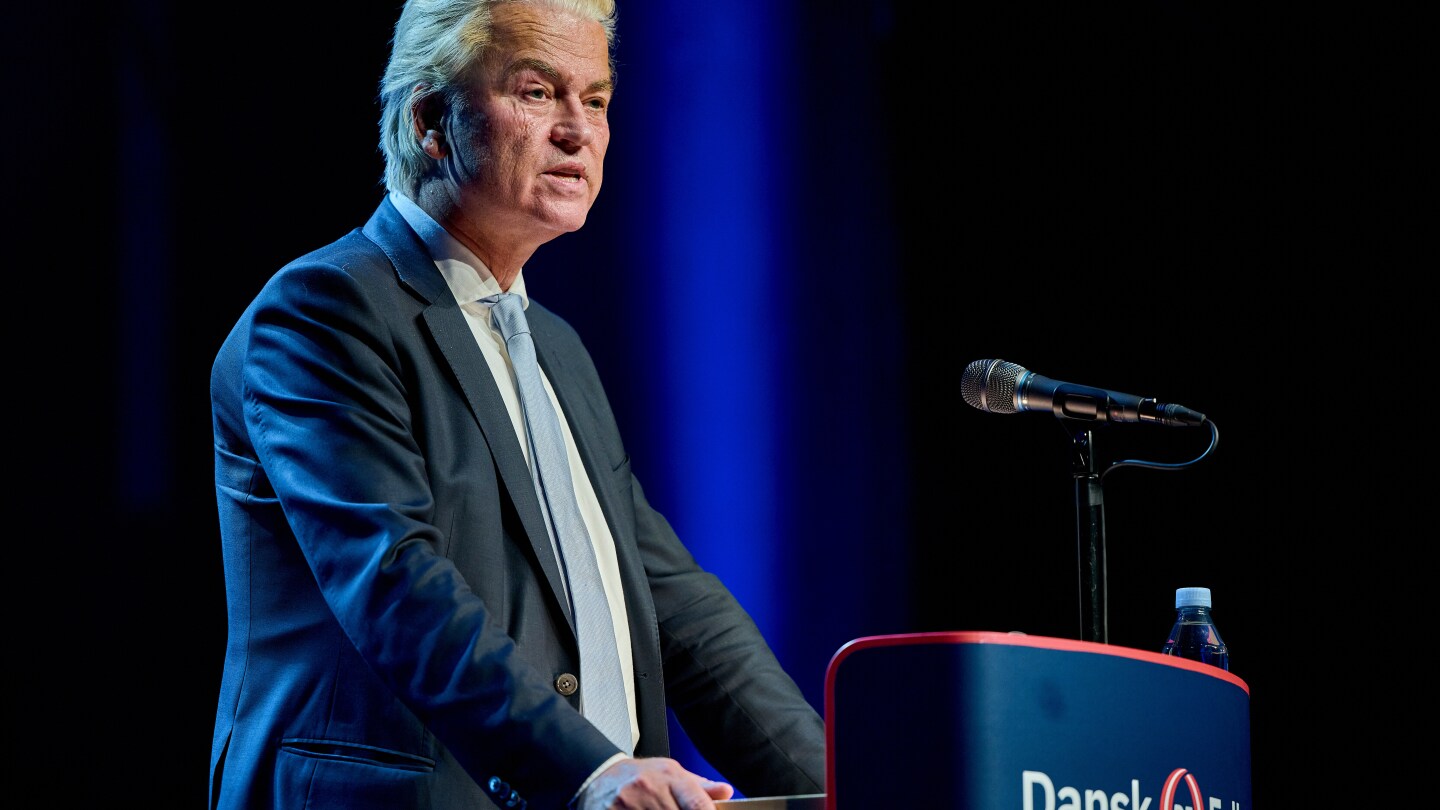
Dutch far-right politician Wilders fears he may have been a target of Belgian attack plotters
Dutch far-right politician Geert Wilders announced on Friday that he is temporarily halting his campaign for the upcoming national elections following reports of a suspected terror plot targeting politicians in Belgium. The plot allegedly involved the use of a drone equipped with explosives. Three men were arrested in Antwerp on Thursday after police raids uncovered a homemade bomb, steel balls, and a 3D printer believed to be used for constructing drone parts. Prosecutors described the investigation as focused on “attempted terrorist murder and participation in the activities of a terrorist group.” While specific targets were not officially named, Belgian government ministers indicated that Prime Minister Bart De Wever and Antwerp Mayor Els van Doesburg were among those on the hit list. Wilders, a vocal critic of Islam, confirmed via social media that he was also a potential target. He stated that Dutch counterterrorism authorities did not perceive an immediate threat but expressed personal unease, prompting his decision to suspend campaign activities. Dutch Justice Minister Foort van Oosten assured that measures were being taken to ensure Wilders’ safety and ability to resume campaigning. Wilders’ Party for Freedom is currently leading in polls ahead of the October 29 election, which was triggered by his withdrawal from the ruling coalition over migration policy disputes. Belgian prosecutors linked the plot to a “jihadi-inspired terrorist attack,” though details remain scarce. One suspect has been released, while the other two await formal charges.
-
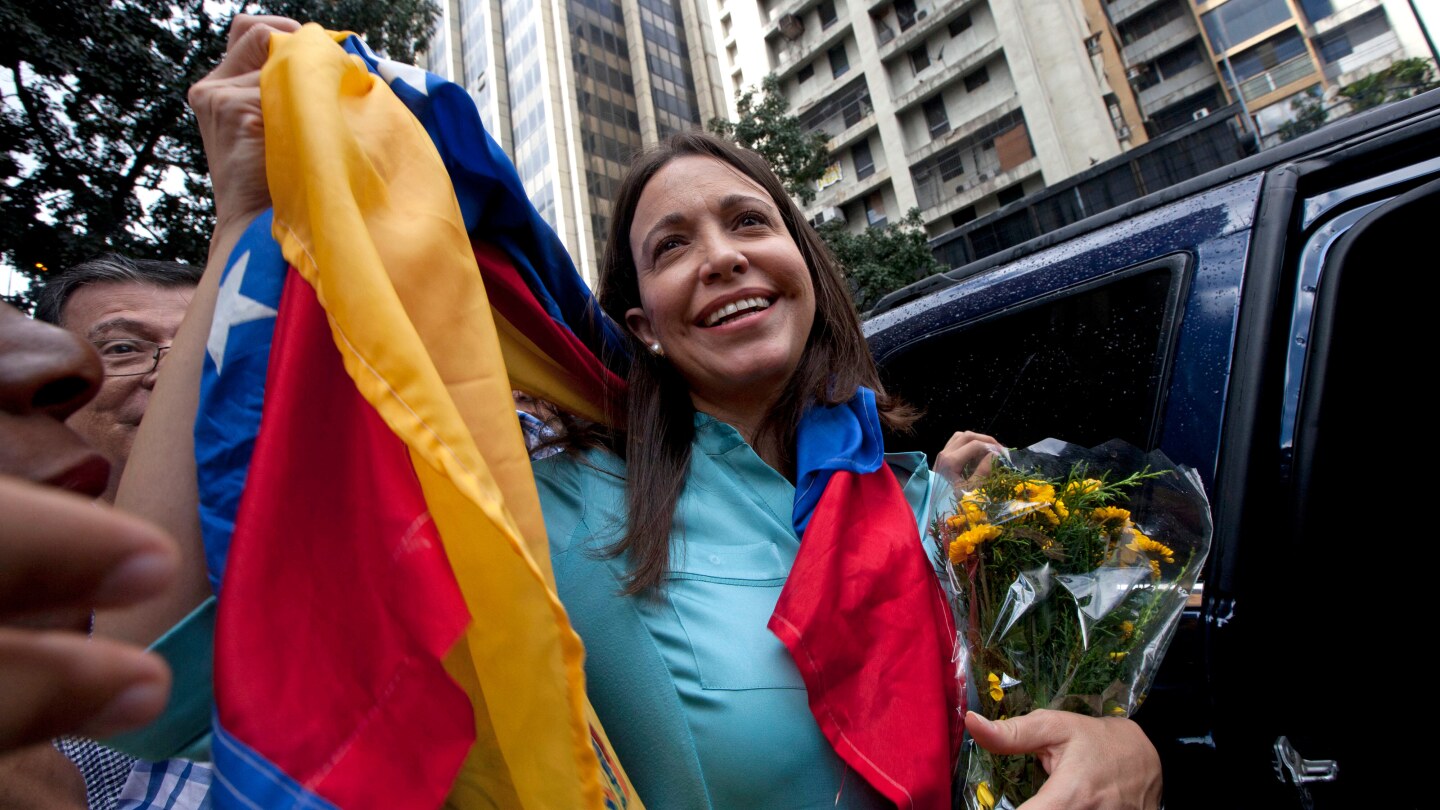
María Corina Machado, a symbol of the political resistance in Venezuela and now Nobel winner
María Corina Machado, a prominent Venezuelan opposition leader, has been awarded the Nobel Peace Prize for her relentless efforts to foster a peaceful and just transition of power in Venezuela. The Norwegian Nobel Committee recognized her as a unifying figure in the fractured opposition, which has long resisted the 26-year rule of the ruling party led by President Nicolás Maduro. Machado, a seasoned politician and industrial engineer, has been a vocal critic of Maduro’s regime, mobilizing millions of Venezuelans to reject his leadership in the 2024 elections. However, the award comes at a contentious time, as some opposition supporters question her alignment with U.S. President Donald Trump’s policies, which have led to controversial actions such as the detention of Venezuelan migrants in Central America and U.S. military strikes in the Caribbean. Machado’s political journey began in 2004 when she co-founded Súmate, an NGO that sought to recall then-President Hugo Chávez. Despite facing legal challenges and accusations of conspiracy, she rose to prominence, becoming a symbol of resistance. Her presidential aspirations in 2012 and 2023 were thwarted by the ruling party, which barred her from running. Nevertheless, she played a pivotal role in supporting opposition candidate Edmundo González, who, according to opposition records, defeated Maduro by a significant margin in the 2024 elections. However, the National Electoral Council declared Maduro the winner, sparking nationwide protests and brutal government crackdowns. Machado remains steadfast in her mission, asserting that Venezuela is on the brink of achieving freedom and peace despite the ongoing violence and repression.
-
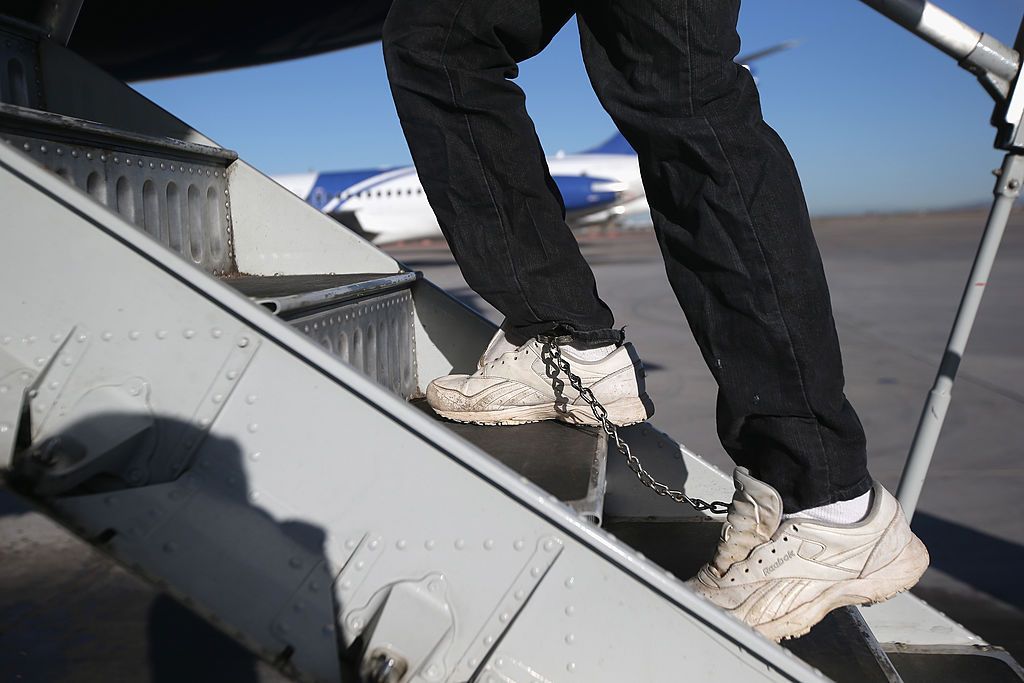
Burkina Faso refuses to take deportees as US stops issuing visas
Burkina Faso’s military government has firmly declined a US proposal to accept deportees from third countries, prompting Washington to suspend visa issuance in the West African nation. Foreign Minister Karamoko Jean-Marie Traoré, in a televised interview on state broadcaster RTB, questioned whether the US Embassy’s decision was a form of “blackmail” and emphasized Burkina Faso’s commitment to dignity, stating it is “a destination, not a place of expulsion.” The US Embassy in Ouagadougou announced a temporary halt to issuing immigrant, tourist, student, and business visas, requiring Burkinabé residents to apply at the US Embassy in neighboring Togo instead. This development follows the Trump administration’s broader strategy to deport migrants, particularly targeting African nations. While countries like Eswatini, Ghana, Rwanda, and South Sudan have accepted US deportees, Burkina Faso and Nigeria have resisted. Capt Ibrahim Traoré, Burkina Faso’s leader, has positioned himself as a pan-African advocate against Western imperialism, further straining relations with Western nations since the military coup three years ago. The US State Department and Department of Homeland Security have yet to comment on the matter.
-
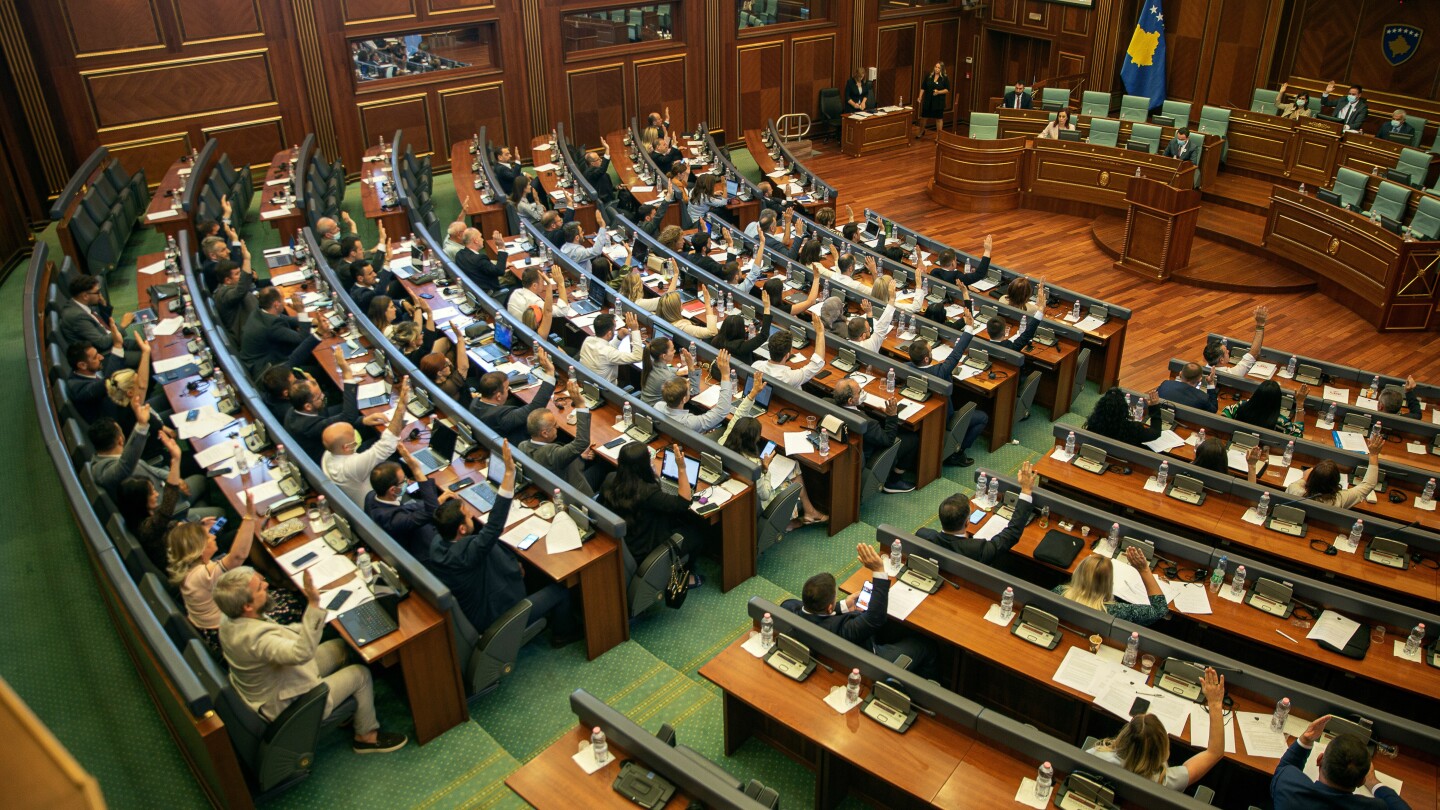
Kosovo lawmakers break 8-month deadlock with election of an ethnic Serb to the leadership team
In a significant development, Kosovo’s Parliament resolved an eight-month political impasse on Friday by electing its full leadership, including a representative from the ethnic Serb minority. This crucial step paves the way for the formation of a new government. While the Parliament had already chosen its top officials in August, including a speaker from the left-wing Self-Determination Movement (Vetevendosje!), it had previously failed to elect a Serb minority representative, a constitutional requirement. Nenad Rasic, from the small ethnic Serb party For Freedom, Justice and Survival, was elected as deputy speaker with 71 votes in favor. However, all nine lawmakers from the main Serb party, Srpska Lista, voted against, and 24 members from two smaller right-wing ethnic Albanian parties abstained. Srpska Lista, which holds nine of the ten seats reserved for the Serb minority, is closely aligned with Serbian President Aleksandar Vucic and his government in Belgrade. Many Kosovo Albanians view this relationship as a potential catalyst for ethnic tensions. The breakthrough came after a Constitutional Court ruling on Wednesday, which urged lawmakers to resolve the stalemate within 12 days. The prolonged deadlock began after inconclusive elections on February 9, where Vetevendosje!, led by acting Prime Minister Albin Kurti, won 48 out of 120 seats, falling short of the 61 needed to govern alone. Kurti, as the leader of the largest party, now has 15 days to form a Cabinet, which must then gain parliamentary approval. If he fails twice, Kosovo could face early elections. A new government is urgently needed to address economic challenges and restart EU-facilitated talks on normalizing relations with Serbia. Kosovo also faces municipal elections on October 12. The 1998-1999 Kosovo War, which claimed around 11,400 lives, mostly ethnic Albanians, ended with a 78-day NATO air campaign that forced Serbian forces out. Kosovo declared independence from Serbia in 2008, but its statehood remains unrecognized by Serbia, Russia, and China, keeping it a focal point of regional tensions.
-
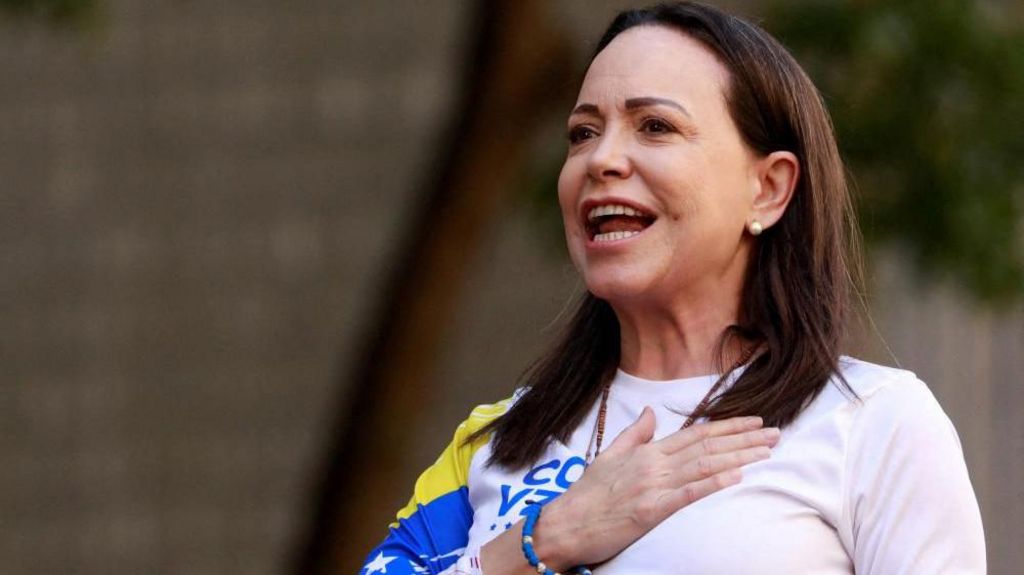
Venezuelan opposition leader María Corina Machado wins Nobel Peace Prize
Venezuelan opposition leader and pro-democracy activist María Coria Machado has been honored with the 2025 Nobel Peace Prize, recognized for her unwavering commitment to democratic rights and her courageous stand against authoritarian rule in Venezuela. The Nobel Committee lauded Machado as “one of the most extraordinary examples of civilian courage in Latin America in recent times,” highlighting her relentless efforts to foster a peaceful transition from dictatorship to democracy. Machado, 58, has faced severe threats to her life and has been forced into hiding for much of the past year, yet she remains a unifying figure in Venezuela’s deeply divided political opposition. Her work has been instrumental in addressing the humanitarian and economic crises plaguing the nation under President Nicolás Maduro’s 12-year rule, widely regarded as illegitimate by the international community. Despite being barred from running in the 2024 presidential election, Machado successfully rallied support for Edmundo González, the opposition candidate who reportedly won by a landslide, though the government-controlled National Electoral Council declared Maduro the victor. In a video message, Machado expressed humility, stating that the award was “the achievement of a whole society.” González praised the recognition as “well-deserved” for Machado and the Venezuelan people’s long struggle for freedom. Nobel Committee chairman Jørgen Watne Frydnes criticized Venezuela’s leadership and warned of global democratic decline, emphasizing the abuse of power, suppression of free media, and the rise of authoritarianism. Frydnes expressed hope that Machado could attend the December award ceremony in Oslo, despite security concerns. The 2025 Nobel Peace Prize saw 338 nominees, with U.S. President Donald Trump among those who missed out, despite his public campaign for the award. Frydnes affirmed that the committee’s decision was based solely on the criteria set by Alfred Nobel, with Machado embodying “hope for the future.”