分类: politics

  • Some key figures about Bangladesh’s parliamentary election

    Some key figures about Bangladesh’s parliamentary election

    DHAKA, Bangladesh — The nation of Bangladesh is undergoing a transformative parliamentary election that could redefine its political trajectory following years of instability. This landmark vote marks the first electoral test since the 2024 uprising that unseated former Prime Minister Sheikh Hasina through mass protests.

    With approximately 170 million citizens, Bangladesh has mobilized its massive electorate of 127 million eligible voters—including 5 million first-time participants—across 42,779 polling stations. Official statistics reveal a diverse electorate: 64.8 million male voters, 62.9 million female voters, and 1,234 transgender voters. Young voters, who played instrumental roles in the 2024 demonstrations, are anticipated to significantly influence the outcome.

    The interim administration under Nobel Peace Prize laureate Muhammad Yunus has deployed 800,000 electoral officials alongside 900,000 security personnel to ensure electoral integrity. International oversight includes 500 foreign observers and journalists from organizations including the European Union and Commonwealth.

    The electoral contest features 2,028 candidates competing for 299 of the 350 parliamentary seats (polling in one constituency was postponed following a candidate’s death). The political landscape has shifted dramatically with the banning of Hasina’s Awami League, creating a predominantly two-way contest between the Bangladesh Nationalist Party (BNP) and an 11-party alliance led by Jamaat-e-Islami, the country’s largest Islamist party.

    BNP’s Tarique Rahman, son of former Prime Minister Khaleda Zia, emerges as a potential governing leader. The alliance includes the newly formed National Citizen Party (NCP), established by student leaders from the 2024 uprising.

    This election represents the 13th since Bangladesh’s 1971 independence and follows three controversial elections under Hasina (2014, 2018, 2024) that faced widespread allegations of rigging and opposition boycotts. Under Bangladesh’s first-past-the-post system, any party or coalition must secure 151 seats to form a government for the standard five-year term.

  • Polls open for Bangladesh’s first election since the 2024 uprising that ousted Hasina

    Polls open for Bangladesh’s first election since the 2024 uprising that ousted Hasina

    DHAKA, Bangladesh — Bangladesh commenced a landmark parliamentary election on Thursday, marking the nation’s first electoral test since the dramatic collapse of Sheikh Hasina’s government following widespread protests in 2024. With over 127 million eligible voters, this electoral process represents a critical juncture for South Asia’s eighth-most populous nation.

    The political landscape has undergone significant transformation since Hasina’s departure into exile in India and the subsequent banning of her party from participation. The electoral contest features Tarique Rahman of the Bangladesh Nationalist Party (BNP) as a prominent contender. Having returned from 17 years of self-exile in London, Rahman—son of former Prime Minister Khaleda Zia—has committed to democratic restoration, institutional rebuilding, and economic revitalization.

    A significant development emerges from the resurgence of Jamaat-e-Islami, the country’s largest Islamist party previously banned under Hasina’s administration. Now leading an 11-party alliance, the conservative religious group’s growing influence has raised concerns among women and minority communities about potential restrictions on social freedoms should they achieve power.

    The interim government, headed by Nobel Peace Prize laureate Muhammad Yunus, has emphasized its commitment to electoral transparency. International oversight includes approximately 500 observers and journalists, with delegations from the European Union and Commonwealth monitoring proceedings.

    Notably, this election incorporates a referendum on political reforms addressing prime ministerial term limits, enhanced checks on executive power, and safeguards against parliamentary power consolidation. Young voters, including 5 million first-time participants who played instrumental roles in the 2024 uprising, are positioned to significantly influence the outcome.

    Bangladesh’s complex political history since its 1971 independence from Pakistan—characterized by military coups, entrenched party politics, and electoral integrity questions—provides the backdrop for this democratic test. The 350-seat parliament includes 300 directly elected members and 50 seats reserved for women, with lawmakers serving five-year terms.

  • Trump ‘insisted’ Iran talks continue in meeting with Netanyahu

    Trump ‘insisted’ Iran talks continue in meeting with Netanyahu

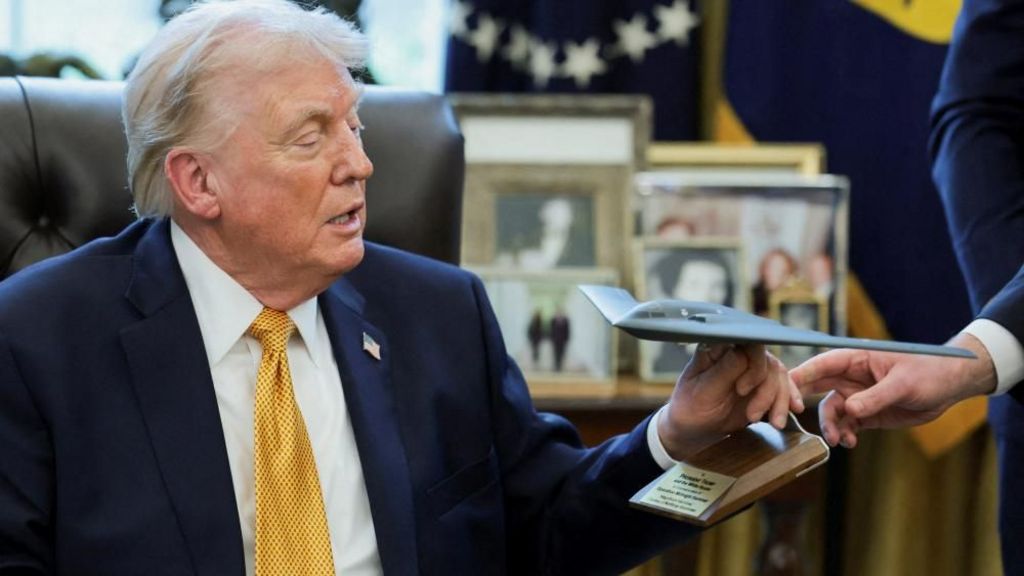
    In a significant White House meeting lasting nearly three hours, U.S. President Donald Trump and Israeli Prime Minister Benjamin Netanyahu convened to address critical regional issues, with Iran’s nuclear program dominating discussions. President Trump explicitly communicated his preference for continued diplomatic engagement with Iran, while simultaneously acknowledging military preparedness through the deployment of a second aircraft carrier strike group to the Middle East.

    The leaders emerged from their extended dialogue with agreements on enhanced coordination mechanisms between their administrations. Netanyahu’s office confirmed via social media that the Prime Minister emphasized Israel’s fundamental security requirements within the context of ongoing negotiations. This meeting occurred against the backdrop of substantial U.S. military reinforcement in the region since protests emerged in Iran from December through mid-January.

    A notable development occurred as Netanyahu formally endorsed Trump’s ‘Board of Peace’ initiative during his Washington visit. The ceremonial signing took place at Blair House with U.S. Secretary of State Marco Rubio, though the document appeared backdated to January 19. This affiliation has drawn sharp criticism from Israeli political experts, including former National Security Council deputy Eran Etzion, who condemned the move as undemocratic and dictatorial without Knesset approval.

    The Board of Peace, established under UN Security Council Resolution 2803, has generated international skepticism. Several NATO members, including Canada, the UK, and Germany, have expressed reservations about joining an entity that includes leaders facing international arrest warrants. Meanwhile, 25 American organizations have petitioned lawmakers to restrain administration war posturing, emphasizing constitutional requirements for military authorization and rejecting military solutions to Iranian challenges.

  • Three issues that matter to voters in the Bangladesh election

    Three issues that matter to voters in the Bangladesh election

    Bangladesh stands at a historic crossroads as it prepares for its first national election following the seismic 2024 Gen Z uprising that precipitated the fall of Prime Minister Sheikh Hasina’s enduring administration. This watershed political moment has fundamentally reshaped the nation’s democratic trajectory, creating an unprecedented opportunity for genuine political transformation.

    The electoral process unfolds against a backdrop of heightened public engagement, with citizens demonstrating remarkable political awareness following the youth-led movement that captured global attention. Three critical issues have emerged as dominant concerns among the electorate that will likely determine the election’s outcome.

    First, economic revitalization dominates voter concerns, with particular emphasis on employment generation for the massive youth demographic and controlling the spiraling inflation that has eroded household purchasing power. The new administration will face immense pressure to deliver immediate economic improvements.

    Second, institutional reform represents a core demand, particularly regarding the restoration of electoral integrity and judicial independence. The protest movement highlighted deep-seated public frustration with perceived systemic corruption and governance deficiencies that characterized the previous era.

    Third, climate resilience and environmental sustainability have emerged as unexpected priority issues in this delta nation increasingly vulnerable to ecological challenges. Coastal communities and agricultural sectors are demanding concrete policy solutions to address environmental degradation and climate-induced displacement.

    This election marks a dramatic departure from Bangladesh’s recent political history, offering the potential for substantial democratic renewal. International observers are monitoring the proceedings closely, recognizing that Bangladesh’s political evolution could significantly influence regional stability and democratic development patterns across South Asia.

  • US House votes to overturn Trump’s tariffs on Canada

    US House votes to overturn Trump’s tariffs on Canada

    In a notable bipartisan move, the U.S. House of Representatives has passed a resolution seeking to overturn former President Donald Trump’s tariffs on Canadian goods. The measure passed with a 219-211 vote, with six Republican lawmakers breaking ranks to join a unified Democratic front in supporting the repeal.

    The resolution, introduced by Democratic Representative Gregory Meeks, condemns the tariffs as economically damaging and strategically counterproductive. Meeks argued that these trade barriers have ‘weaponized tariffs against allies,’ strained U.S.-Canada relations, driven up domestic prices, and inadvertently pushed Canada closer to China.

    Despite its passage, the resolution remains largely symbolic. It now moves to the Senate, where Republicans hold a majority. Even if it passes there, President Trump has vowed to veto it, declaring on Truth Social that any Republican supporting the measure would ‘seriously suffer the consequences come Election time.’ He defended tariffs as vital for ‘Economic and National Security.’

    The vote followed an unsuccessful attempt by House Speaker Mike Johnson, a Trump ally, to block debate on the measure. Republican defectors, such as Representative Dan Bacon of Nebraska, called the tariffs a ‘net negative’ and a significant tax burden on American consumers, manufacturers, and farmers.

    Concurrently, the legal foundation of Trump’s tariff authority faces a separate challenge, with the U.S. Supreme Court poised to rule on a case examining the president’s legal power to impose such levies. Meeks has announced that this is the first in a series of resolutions aimed at rolling back Trump’s tariffs on other nations, including Mexico and Brazil.

  • In rebuke of Trump, US House opens the door to votes against tariffs

    In rebuke of Trump, US House opens the door to votes against tariffs

    In a significant legislative maneuver, a small faction of House Republicans joined Democratic colleagues on Tuesday to block a procedural measure that would have preserved restrictions on congressional challenges to former President Donald Trump’s emergency tariffs. The 214-217 vote marked a pivotal moment in the ongoing power struggle between the legislative and executive branches over trade policy authority.

    The rebellion was led by Representatives Don Bacon (R-Nebraska), Thomas Massie (R-Kentucky), and Kevin Kiley (R-California), who crossed party lines to prevent the extension of a prohibition on House votes contesting Trump’s unprecedented use of emergency powers to impose import taxes. Representative Gregory Murphy (R-North Carolina) abstained from the vote.

    Congressman Bacon justified his decisive action in a post-vote statement on social media platform X, asserting that ‘tariffs have been a net negative for the economy’ and represent ‘a significant tax burden on American consumers, manufacturers, and farmers.’ He emphasized constitutional principles, noting that ‘Article I of the Constitution deliberately assigns authority over taxes and tariffs to Congress, yet we have progressively relinquished this power to the executive branch. The time has come for Congress to reclaim its rightful responsibilities.’

    The defeated provision, embedded within a procedural vote advancing three unrelated bills, would have maintained the ban on congressional action against Trump’s tariffs until July 31. These emergency tariffs, declared throughout 2025 under the International Economic Emergency Powers Act (IEEPA), targeted imports from multiple trading partners including Canada, Mexico, China, Brazil, and India.

    The legal foundation of Trump’s novel application of IEEPA to immediately implement global tariffs is currently under scrutiny at the U.S. Supreme Court. The justices heard oral arguments in November in a case brought by a coalition of small businesses challenging the presidential authority, with a decision anticipated imminently.

    This development signals growing congressional resistance to executive overreach in trade policy and sets the stage for potential legislative challenges to the controversial tariff measures that have reshaped international trade relationships.

  • Four takeaways from Pam Bondi’s fiery Epstein testimony

    Four takeaways from Pam Bondi’s fiery Epstein testimony

    A congressional hearing featuring US Attorney General Pam Bondi descended into chaos on Wednesday as lawmakers grilled the Justice Department’s handling of Jeffrey Epstein case files and recent immigration enforcement actions. The House Judiciary Committee session, which lasted over four hours, frequently erupted into shouting matches and dramatic confrontations.

    Bondi opened her testimony by addressing Epstein’s victims directly, labeling the convicted sex offender a ‘monster’ and expressing sympathy for their suffering. However, the hearing quickly turned contentious when Democratic representatives challenged the Justice Department’s management of document releases related to the Epstein investigation.

    Representative Pramila Jayapal confronted Bondi about the department’s failure to properly redact victim identities, alleging that some documents contained nude images of survivors whose privacy had been protected for decades. In a powerful moment, Jayapal asked all Epstein victims present to stand if they had been unable to meet with Justice Department officials—a request to which every victim responded.

    The attorney general dismissed these criticisms as ‘theatrics,’ refusing to apologize and stating she wouldn’t ‘get in the gutter’ with her questioner. Bondi defended the department’s efforts, explaining that officials were working within legislative timelines to protect victims and immediately redacting any names inadvertently released.

    The hearing further intensified when Republicans joined the criticism regarding over-redaction. Representative Thomas Massie accused the Justice Department of improperly concealing names of individuals not entitled to protection, calling the situation ‘bigger than Watergate’ and spanning multiple administrations. Bondi dismissed these claims as a ‘political joke.’

    The discussion expanded to include Prince Andrew’s connections to Epstein, with Representative Ted Lieu displaying controversial photographs from the files. While the images showed the royal in compromising positions, their context and legality remained unclear.

    Beyond the Epstein case, Bondi faced sharp questioning about recent immigration enforcement actions in Minneapolis where federal agents fatally shot two individuals, sparking nationwide demonstrations. Democratic representatives characterized the shootings as ‘executions’ that warranted investigation, while Bondi defended the actions and blamed elected officials for obstructing law enforcement.

    Committee Chair Jim Jordan and other Republicans praised Bondi’s implementation of President Trump’s immigration policies, creating a stark partisan divide that characterized the entire proceedings.

  • Cross-Strait affairs should be settled ‘like family’, official says

    Cross-Strait affairs should be settled ‘like family’, official says

    A senior Chinese official has framed cross-Strait relations as internal family matters that should be resolved through mutual consultation, during a special Lunar New Year gathering with approximately 200 Taiwanese compatriots in Fuzhou, Fujian province.

    Song Tao, who leads both the Taiwan Work Office of the Communist Party of China Central Committee and the Taiwan Affairs Office of the State Council, addressed business representatives and residents from Jinmen and Matsu islands at Wednesday’s symposium. He emphasized that matters between the mainland and Taiwan constitute domestic affairs that must be settled “like family” without external interference.

    The official pledged enhanced economic opportunities for Taiwanese enterprises during China’s forthcoming 15th Five-Year Plan period (2026-2030), promising expanded market access and deeper reform initiatives to help Taiwan businesses establish stronger roots on the mainland.

    Striking a firm tone on national sovereignty, Song underscored the imperative of protecting what he termed the “common home” and preserving its assets. He explicitly called for opposition to what he characterized as separatist “Taiwan independence” activities, urging compatriots on both sides of the Strait to uphold national interests and work collectively toward the goal of reunification.

    The festive gathering, which brought together Taiwanese compatriots to celebrate the approaching Lunar New Year, served as both a symbolic gesture of cross-Strait kinship and a platform for reinforcing Beijing’s consistent position on Taiwan relations.

  • Milei takes on Argentina’s unions, drawing protests as senators debate his labor overhaul

    Milei takes on Argentina’s unions, drawing protests as senators debate his labor overhaul

    BUENOS AIRES, Argentina — Argentina’s capital witnessed intense confrontations on Wednesday as thousands of unionized workers mobilized against President Javier Milei’s proposed labor reforms, creating a volatile atmosphere outside the National Congress where senators engaged in heated debates over the controversial legislation.

    The massive demonstration, organized by the country’s most influential trade unions, resulted in significant traffic disruptions and violent clashes with security forces. Police deployed water cannons and rubber bullets to disperse protesters who responded with petrol bombs, stones, and other projectiles. According to Security Minister Alejandra Monteoliva, two individuals were apprehended for assaulting police officers during the confrontations.

    This dramatic showdown highlights the profound sensitivity surrounding workers’ rights in Argentina, a nation where Peronism—a populist movement that has consistently positioned itself as the defender of labor interests—has dominated political discourse since the 1940s.

    Proponents of Milei’s labor modernization initiative attribute Argentina’s stagnant private sector job creation over the past two decades to excessively high payroll taxes, an overly complex severance payment system, and national wage agreements that restrict company-level negotiations. The proposed legislation seeks to introduce greater flexibility by limiting strike rights, extending employee trial periods, diminishing the influence of national trade federations in collective bargaining, and reducing severance compensation.

    Business organizations contend these changes would stimulate critically needed foreign investment and promote formal employment in a country where approximately half of all workers operate in the informal economy without legal protections.

    However, the reforms face vehement opposition from labor unions and their political allies, who argue the measures would dismantle essential worker protections developed over decades. The General Confederation of Labour, the nation’s largest trade union grouping that coordinated Wednesday’s protests, condemned the legislation as ‘austerity for the workers’ rather than genuine modernization.

    The Senate deliberation was anticipated to continue through the night, with the legislation scheduled to advance to the lower house of Congress for further debate next month if approved.

  • China’s grip slips as Trump squeezes Latin America

    China’s grip slips as Trump squeezes Latin America

    In a landmark decision with significant geopolitical implications, Panama’s Supreme Court has nullified the operating contract of Hong Kong-based CK Hutchison subsidiary Panama Ports Company, effectively ending its 27-year management of two strategic ports along the Panama Canal. The late January ruling declared the original 1997 authorization laws unconstitutional, marking a pivotal moment in the ongoing power competition between the United States and China in Latin America.

    The court’s decision arrives precisely one year after former US President Donald Trump threatened direct intervention to limit Chinese influence over the critical waterway. Beijing responded with unusually strong language, denouncing the judgment as “absurd, shameful and pathetic” while warning Panama would face “heavy political and economic price” for the eviction.

    This development represents the latest indicator that China’s regional ambitions are facing headwinds in what has traditionally been considered America’s backyard. Since the 1823 Monroe Doctrine declared the Western Hemisphere closed to European colonization, the US maintained predominant influence until the post-Cold War era created opportunities for emerging superpowers.

    China has since become South America’s top trading partner and a major source of foreign direct investment, often providing loans with fewer conditions than international financial institutions but requiring commodity-backed repayment guarantees. However, Chinese investments have frequently been criticized for lower environmental and labor standards, with a 2023 UN analysis identifying patterns of serious rights abuses across 14 major projects.

    The port ruling follows Panama’s February 2025 withdrawal from China’s Belt and Road Initiative, a decision made after meetings with US Secretary of State Marco Rubio. Panamanian President Jose Raul Mulino publicly questioned what the initiative had actually brought to his country.

    Simultaneously, China appears to be deprioritizing Latin American investments due to mediocre growth and repayment delays, reducing sovereign lending since 2020. The US capture of Venezuelan leader Nicolas Maduro further demonstrates Washington’s willingness to reshape the regional political environment, potentially jeopardizing China’s ability to collect on approximately $10 billion in Venezuelan debt that could be challenged as “odious debt” by the new government.

    Panama Ports Company has announced international arbitration proceedings that may continue for years, leaving the future ownership of the critical infrastructure uncertain. This convergence of events suggests the zenith of Chinese economic domination in Latin America may have passed, signaling a new chapter in hemispheric power dynamics.