分类: politics

  • Legislator highlights AI, tech and awareness to reduce weather risks

    Legislator highlights AI, tech and awareness to reduce weather risks

    Amid escalating climate volatility, National People’s Congress deputy Zheng Yongguang has outlined a comprehensive strategy integrating artificial intelligence, infrastructure modernization, and public education to bolster China’s disaster response capabilities. The veteran meteorologist’s proposal, designated for priority handling by the NPC Standing Committee, responds to what he characterizes as a “particularly prominent” disaster situation throughout 2025.

    Scientific data reveals a significant northward migration of China’s summer rain belt, a trend that intensified dramatically last year. Instead of lingering over the Yangtze River Basin as historically observed, the precipitation system advanced unexpectedly into northern provinces including Hebei, Shanxi, and Inner Mongolia by early July. This climatic shift triggered sustained torrential rains that caused widespread flooding and casualties across northern regions.

    Zheng emphasizes that traditional forecasting methods struggle to address the increasing frequency and intensity of extreme weather events. His proposal advocates for substantial investment in three critical areas: advanced research into meteorological mechanisms, modernization of observational infrastructure, and development of AI-enhanced prediction models. The National Development and Reform Commission and China Meteorological Administration are already advancing a national program to enhance short-term forecasting and imminent warnings for extreme weather.

    Beyond technological solutions, Zheng highlights the human dimension of disaster preparedness. Following field research in Beijing’s Mentougou district—where elderly residents disregarded flood warnings due to lack of historical precedent—he stresses the necessity of public education to combat overreliance on past experience. The legislator also calls for mandatory safety measures in high-risk tourism scenarios, referencing multiple weather-related accidents on hiking routes and in remote areas.

    The proposal extends to specialized meteorological support for emerging economic sectors, including tailored weather services for drone operations in the low-altitude economy and enhanced marine monitoring for ocean-based industries. Zheng’s recommendations follow extensive consultations with meteorological departments across Shandong, Henan, and Xinjiang, alongside engagements with academic and industry stakeholders.

    “As China’s economy continues to expand, the demand for sophisticated disaster prevention mechanisms grows correspondingly,” Zheng stated. “Strengthening our meteorological capabilities isn’t merely about weather prediction—it’s fundamental to safeguarding both human lives and the nation’s sustainable development trajectory.”

  • Kim Jong Un chooses teen daughter as heir, says Seoul

    Kim Jong Un chooses teen daughter as heir, says Seoul

    In a significant development regarding North Korea’s political future, the country’s leader Kim Jong Un has reportedly designated his daughter, Kim Ju Ae, as his successor according to assessments from South Korea’s National Intelligence Agency (NIA). The agency informed lawmakers on Thursday that it reached this conclusion after analyzing multiple factors, particularly noting her increasingly prominent appearances at high-profile official events.

    Kim Ju Ae, believed to be approximately 13 years old and the only officially acknowledged child of Kim Jong Un and his wife Ri Sol-Ju, has gradually emerged from obscurity to become a regular fixture in North Korean state media. Her first documented public appearance occurred in 2022 when she was shown inspecting the nation’s latest intercontinental ballistic missile while holding her father’s hand—a powerful image broadcast across state television.

    Since that initial appearance, Kim Ju Ae has accompanied her father to numerous significant events, including a September visit to Beijing for China’s largest-ever military parade. Her presence has notably softened the image of her father, often portrayed internationally as a ruthless dictator. Observers have documented subtle shifts in her positioning during public appearances, with recent photographs showing her standing taller than her father and walking beside him rather than following—a significant symbolic departure in a country where media imagery carries profound political meaning.

    The timing of this development coincides with North Korea’s impending party congress, the nation’s most important political event held once every five years. This gathering is expected to outline Pyongyang’s priorities regarding foreign policy, military strategy, and nuclear ambitions for the coming five-year period.

    The potential succession raises several intriguing questions about North Korea’s future. The selection of a female heir appears contradictory within North Korea’s deeply patriarchal society, where many defectors and analysts had previously dismissed the possibility of a woman leading the country. Additionally, Kim Jong Un’s relatively young age and apparent good health make the early designation of a teenage successor particularly noteworthy.

    The international community now watches with interest to determine what changes, if any, Kim Ju Ae’s eventual leadership might bring to the isolated nation. Previous hopes that Kim Jong Un’s Western education might lead to openness were ultimately unfulfilled, leaving observers to wonder whether his daughter might chart a different course for North Korea’s future.

  • Spy agency says Kim Jong Un’s daughter is close to being designated North Korea’s future leader

    Spy agency says Kim Jong Un’s daughter is close to being designated North Korea’s future leader

    South Korea’s National Intelligence Service (NIS) has presented lawmakers with a significant assessment regarding the political future of Kim Jong Un’s teenage daughter, indicating she is approaching formal designation as North Korea’s successor. The intelligence briefing, conducted Thursday, revealed that Kim Ju Ae (approximately 13 years old) has advanced from what was previously termed ‘successor training’ to the ‘successor-designate stage’—a meaningful shift in terminology that signals her evolving status within the authoritarian regime.

    The assessment comes as North Korea prepares to convene its most substantial political conference later this month, where Kim Jong Un is anticipated to outline major policy objectives for the upcoming five-year period while further consolidating his authoritarian control. Intelligence officials are particularly monitoring whether Kim Ju Ae will appear alongside her father before thousands of delegates at the Workers’ Party Congress, which would represent a substantial symbolic gesture regarding her political positioning.

    Since her initial public appearance at a November 2022 long-range missile test, Kim Ju Ae has accompanied her father with increasing frequency to strategically significant events including weapons demonstrations, military parades, factory inspections, and even diplomatic engagements. Her September 2023 accompaniment to Beijing for Kim Jong Un’s first summit with Chinese leader Xi Jinping in six years demonstrated her growing integration into high-level affairs.

    The most compelling indication of her heir status emerged during a New Year’s Day visit to Pyongyang’s Kumsusan Palace of the Sun—the sacred mausoleum housing the embalmed remains of her grandfather and great-grandfather, North Korea’s first two leaders. This symbolic family presentation before previous generations of leadership represented what analysts consider the clearest signal yet regarding her succession trajectory.

    South Korean officials initially expressed skepticism about a female successor given North Korea’s deeply conservative, male-dominated political culture. However, her escalating visibility in state media and involvement in policy discussions has prompted a substantial reassessment within intelligence circles. The NIS noted that Kim Jong Un appears to be seeking her input on certain policy matters, further reinforcing her developing role.

    The upcoming party congress may provide the platform for Kim Jong Un to formalize succession plans, though analysts suggest any designation would likely involve subtle symbolic gestures rather than explicit appointment to high-ranking party positions due to age restrictions requiring members to be at least 18. Instead, the regime might emphasize narratives regarding successful revolutionary inheritance within party communications—a potential indicator that Kim Ju Ae’s position has been solidified as the prospective fourth-generation leader of the Kim dynasty.

  • Trump says talks with Iran will continue to see whether deal can be consummated

    Trump says talks with Iran will continue to see whether deal can be consummated

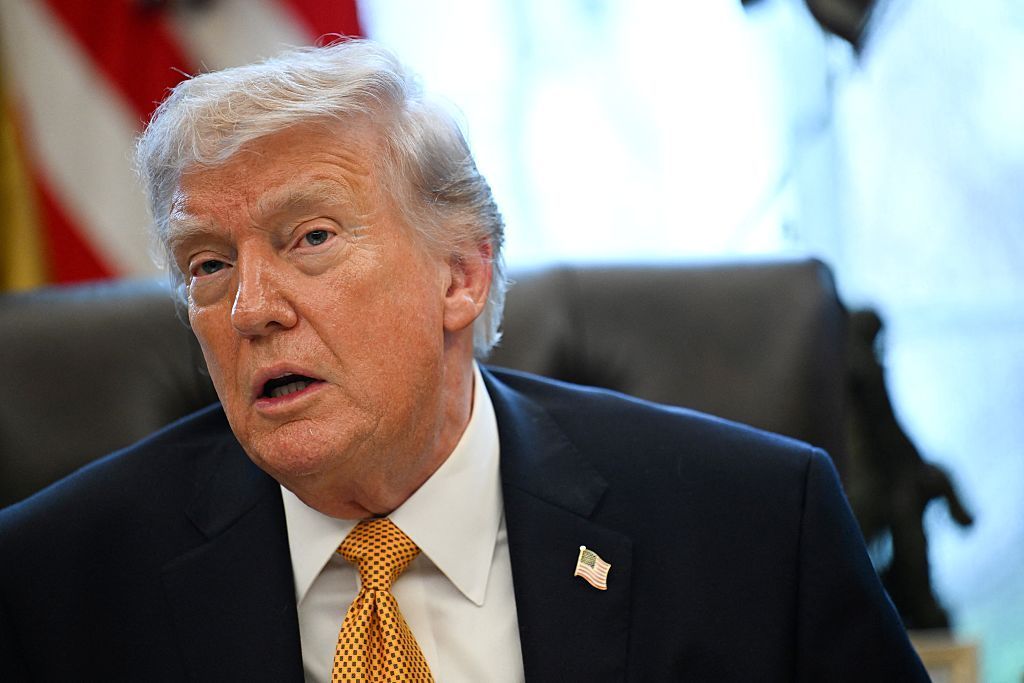
    In a significant development in Middle East diplomacy, U.S. President Donald Trump has announced that negotiations with Iran will proceed conditionally, following an extensive three-hour private meeting with Israeli Prime Minister Benjamin Netanyahu at the White House on Wednesday. The closed-door discussion, marking their seventh encounter since Trump’s second term began, concluded without a press conference or official statement.

    Trump revealed through his Truth Social platform that while no definitive agreements were reached during the Netanyahu meeting, he emphasized the continuation of U.S.-Iran negotiations. The President articulated a clear preference for achieving a diplomatic resolution, while simultaneously maintaining military options should talks falter. “I insisted that negotiations with Iran continue to see whether or not a Deal can be consummated,” Trump stated, adding that he informed Netanyahu that a successful agreement “will be a preference.”

    The meeting occurred against a backdrop of heightened regional tensions and substantial U.S. military deployments near Iran. Earlier discussions between Washington and Tehran took place indirectly in Muscat, Oman, on Friday, attempting to bridge substantial differences. Trump acknowledged in a Fox Business Network interview that any agreement must meet strict conditions: “No nuclear weapons, no missiles.”

    Netanyahu’s office outlined Israel’s non-negotiable principles for any Iran agreement, including stringent limits on Tehran’s ballistic missile program and the severance of Iranian ties with militant groups Hamas and Hezbollah. Before traveling to Washington, Netanyahu emphasized his intention to present “essential principles that are important not only to Israel but to anyone who wants peace and security in the Middle East.”

    Meanwhile, Iranian leadership presented a contrasting perspective during celebrations marking the 47th anniversary of the Islamic Revolution. President Masoud Pezeshkian denounced what he characterized as a “wall of distrust” created by Western powers, vowing that Iran “will never surrender to excessive demands and aggression.” Iranian Foreign Minister Seyed Abbas Araghchi expressed optimism about reaching a superior agreement compared to the 2015 Joint Comprehensive Plan of Action, while firmly rejecting negotiations on Iran’s missile program or regional alliances.

    The diplomatic maneuvering occurs alongside continued U.S. military preparations, with Trump confirming consideration of deploying a second aircraft carrier strike group to the region for potential military actions should negotiations ultimately fail.

  • Israeli president ends a fraught Australia visit to comfort Jews as Gaza war protests follow

    Israeli president ends a fraught Australia visit to comfort Jews as Gaza war protests follow

    MELBOURNE, Australia — Israeli President Isaac Herzog concluded a polarizing four-day state visit to Australia on Thursday, marking the first trip by an Israeli head of state in six years. The visit unfolded against a backdrop of dual purposes: offering solace to Sydney’s Jewish community following December’s antisemitic mass shooting while simultaneously drawing widespread protests against Israel’s military actions in Gaza.

    Herzog’s itinerary included stops in Sydney, Canberra, and Melbourne, where he faced persistent demonstrations from activists labeling him a war criminal. Under heightened police security in Melbourne, Herzog addressed a Jewish community gathering, stating, “We came here to be with you, to look you in the eye, to embrace, to remember and weep together.” He emphasized how the visit had left him “feeling empowered” despite the emotional toll, praising the resilience of Australian Jewish communities.

    The Australian government maintained that the primary invitation extended to Herzog aimed to support a community still reeling from the December 14 Bondi Beach attack, where 15 festival attendees were killed in an assault allegedly inspired by Islamic State. Jeremy Leibler, President of the Zionist Federation of Australia, noted that Sydney’s Jewish community felt “extremely uplifted and seen” following Herzog’s visits, while appealing to protesters to consider the community’s trauma.

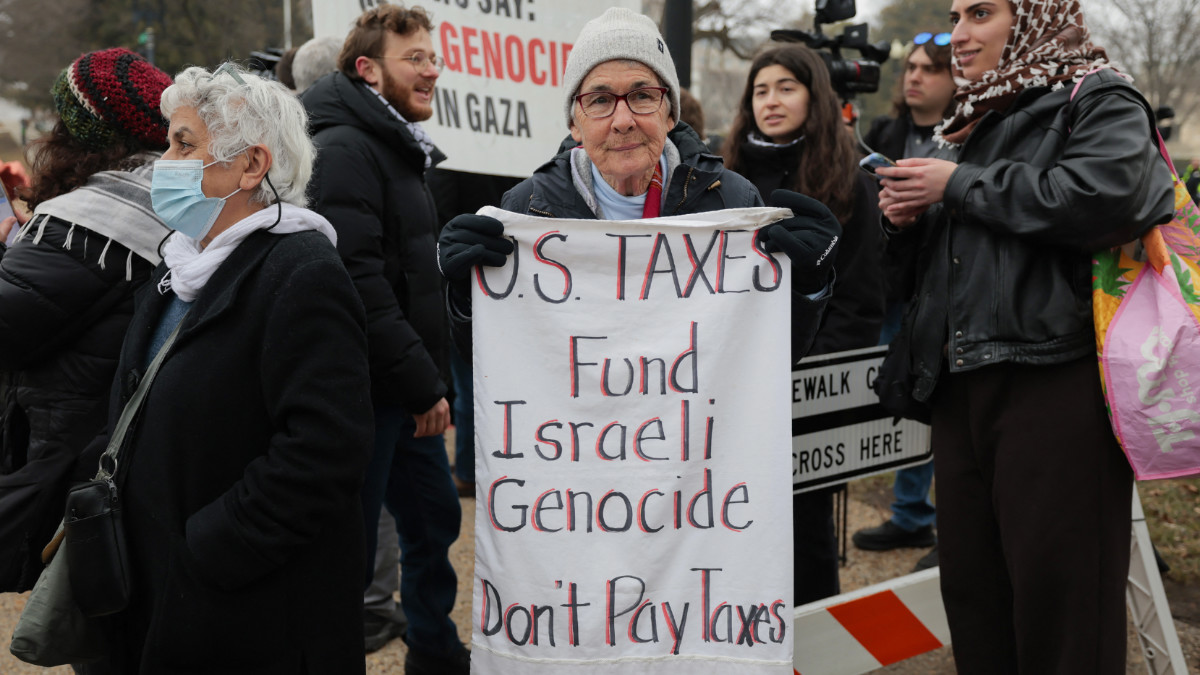
    However, the visit exposed significant diplomatic tensions. Herzog told The Associated Press that another objective was to “reinvigorate bilateral relations” and counter “lies and misinformation” about Israel. This statement drew criticism from Australian human rights lawyer Chris Sidoti, who argued the visit had transformed into political propaganda rather than purely a mourning mission. Sidoti referenced a September UN Human Rights Council report that accused Herzog, along with Israeli Prime Minister Benjamin Netanyahu and former Defense Minister Yoav Gallant, of inciting genocide in Gaza.

    Australia-Israel relations have been strained since the Israel-Hamas war began in 2023, particularly after Australia’s decision to recognize Palestinian statehood six months ago. Herzog described his discussions with Australian leaders as conducted with “candor, open-mindedness and mutual respect,” characterizing them as “serious partners” willing to address antisemitism and misinformation.

    Security concerns led to the cancellation of Herzog’s planned visit to the ruins of Melbourne’s Adass Israel Synagogue, destroyed by arson in late 2024 in an attack Australia attributed to Iran. The visit concluded with the removal of anti-Herzog graffiti at Melbourne University, where administrators reaffirmed their stance against antisemitism.

  • South Korea’s former interior minister gets 7-year sentence for aiding martial law

    South Korea’s former interior minister gets 7-year sentence for aiding martial law

    In a landmark ruling with profound political implications, Seoul’s Central District Court has sentenced former Interior Minister Lee Sang-min to seven years imprisonment for his instrumental role in facilitating ex-President Yoon Suk Yeol’s controversial 2024 martial law declaration. The verdict arrives just days before a separate judicial panel determines whether Yoon’s actions constituted rebellion—a capital offense for which prosecutors demand the ultimate penalty.

    Presiding Judge Ryu Kyung-jin established that Lee, while heading the Ministry of Interior and Safety, actively implemented the martial law directive and transmitted presidential orders to police and fire authorities to sever utility services to news outlets critical of Yoon’s administration. Security footage and corroborative testimony from high-ranking officials, including former National Fire Agency Commissioner General Heo Seok-gon, demonstrated Lee’s central coordination role despite his denial of issuing or receiving such instructions.

    The court determined that Lee’s actions represented a systematic attempt to suppress press freedom through coercive measures, though the utility disruption orders were never executed due to the rapid collapse of martial law. Legislators breached military and police barricades at the National Assembly, achieving unanimous consensus to rescind the declaration within hours of its implementation.

    While convicting Lee on primary charges, the judiciary acquitted him of ancillary power abuse allegations citing insufficient evidence. The sentenced former minister maintained composure following the verdict, while his legal team deliberates appeal options—contrasting sharply with prosecutors’ initial demand for a 15-year term.

    This case marks the second conviction within Yoon’s cabinet concerning the martial law episode, following former Prime Minister Han Duck-soo’s 23-year sentence currently under appeal. Yoon himself, removed from office and incarcerated since July, faces multiple criminal proceedings including the rebellion charge that could potentially carry death penalty consequences. The ex-president continues to defend the martial law declaration as necessary governance against what he characterized as ‘anti-state’ forces obstructing his political agenda.

  • EU leaders meet to counter pressure from Russia, China and Trump

    EU leaders meet to counter pressure from Russia, China and Trump

    BILZEN-HOESELT, Belgium — European Union leaders convened Thursday at the historic Alden Biesen castle amid mounting external challenges that have forced a fundamental reassessment of the bloc’s strategic positioning. The 27-nation coalition finds itself navigating antagonistic relations with former U.S. President Donald Trump, economic coercion from China, and multifaceted hybrid threats from Russia, creating unprecedented pressure for institutional adaptation.

    The emergency gathering revealed deepening ideological divisions between two competing visions for Europe’s future. German Chancellor Friedrich Merz and Italian Prime Minister Giorgia Meloni lead a conservative faction advocating for widespread deregulation, rebuilt transatlantic relations with Washington, and expanded trade agreements such as the recently negotiated Mercosur pact with South American nations.

    This approach faces strong opposition from French President Emmanuel Macron, who champions ‘European preference’ protections for key industries including cleantech, chemicals, steel, automotive manufacturing, and defense procurement. Macron argues that without such safeguards against unfair competition from China and the United States, European industries risk being ‘swept aside’ in the global marketplace.

    The defense procurement debate has emerged as a particular flashpoint, with Macron insisting EU arms manufacturers receive priority in military spending while Merz and Meloni advocate for purchasing from both foreign and European suppliers.

    Financial architecture reforms also feature prominently in discussions, with Macron renewing his call for ‘Eurobonds for the future’ to challenge dollar hegemony. Meanwhile, the Merz-Meloni alliance emphasizes cutting bureaucratic red tape, strengthening the single market, and pursuing ambitious trade policies based on standardized rules.

    European Commission President Ursula von der Leyen, aligned with Merz’s European People’s Party, has emphasized that economic security forms the foundation of global influence. ‘Our power on the global stage depends greatly on our strength on the economic front,’ she stated during addresses in Strasbourg and Antwerp.

    According to recent Eurobarometer polling, citizens across the bloc increasingly demand more unified and ambitious leadership amid military threats, economic pressures, and climate instability. This summit aims to formulate concrete proposals for a more comprehensive meeting scheduled for late March.

  • Europe warily awaits Rubio at Munich Security Conference as Trump roils transatlantic ties

    Europe warily awaits Rubio at Munich Security Conference as Trump roils transatlantic ties

    WASHINGTON — Secretary of State Marco Rubio heads a substantial U.S. delegation to the Munich Security Conference this week, where European leaders seek reassurance following President Donald Trump’s disruptive foreign policy approach that has strained transatlantic alliances and challenged the post-WWII international framework.

    This year’s conference carries particular significance after Vice President JD Vance’s confrontational address at the same venue last year, where he accused European allies of endangering Western civilization through left-leaning domestic policies and inadequate defense spending. While officials indicate Rubio will adopt a less combative tone, his message is expected to align philosophically with the administration’s America First agenda.

    The State Department has released minimal details about Rubio’s itinerary, which includes stops in Slovakia and Hungary following the conference. Anonymous officials familiar with his plans state the secretary will emphasize areas of mutual cooperation regarding shared global concerns, particularly addressing challenges in the Middle East, Ukraine, and China’s growing influence amid current geopolitical uncertainties.

    European apprehension has intensified following Trump’s recent remarks about acquiring Greenland from Denmark and his repeated criticism of various allied leaders. These developments have prompted serious doubts among European partners about America’s reliability as an ally, leaving Rubio with the substantial task of rebuilding confidence.

    Claudia Major, senior vice president at the German Marshall Fund in Berlin, characterized Vance’s previous speech as “a shock moment” that signaled a fundamental shift in U.S. policy toward Europe. “There is a big doubt whether the basis of trust is still there,” Major noted, warning that prolonged estrangement would make relationship repair increasingly difficult.

    Munich Security Conference chairman Wolfgang Ischinger echoed these concerns, acknowledging “a significant crisis of confidence and credibility” in transatlantic relations while expressing hope that Rubio and accompanying U.S. lawmakers might offer a more optimistic outlook.

    European responses to Trump’s administration vary significantly. German Chancellor Friedrich Merz, whom Rubio will meet separately, advocates for Europe to embrace “power politics” by assuming greater security responsibility, pursuing technological independence, and stimulating economic growth. Merz emphasized that European nations should act as “partners and allies, not subordinates” to the United States.

    Conversely, French President Emmanuel Macron and Canadian Prime Minister Mark Carney have adopted more confrontational positions. Macron described the Trump administration as “openly anti-European” and accused it of seeking the European Union’s “dismemberment.” Both France and Canada recently opened consulates in Nuuk, Greenland’s capital, demonstrating support for Danish sovereignty following Trump’s acquisition comments.

    Carney has emerged as a leading voice for countering U.S. influence, advocating expanded trade relationships with China and other nations to ensure commercial stability. This approach has drawn further criticism from the Trump administration.

    Analysts draw parallels between Trump’s Greenland interests and broader geopolitical patterns. Fiona Hill, former White House National Security Council official, observed that “Greenland is to Trump as Ukraine is to Putin,” highlighting how power politics continues to influence international relations.

    European unease extends to Trump’s proposed “Board of Peace,” a 27-member group initially focused on Gaza but envisioned as a mechanism for resolving multiple conflicts. Several key European nations, including Germany, France, Britain, Italy, Norway, and Sweden, have either declined participation or not yet committed to the initiative ahead of its first meeting scheduled for February 19th in Washington.

  • In blunt warning, the US says Peru could lose its sovereignty to China

    In blunt warning, the US says Peru could lose its sovereignty to China

    The United States has issued a stark warning to Peru regarding potential sovereignty erosion in its oversight of a Chinese-constructed megaport, highlighting escalating geopolitical tensions in Latin America. The Trump administration expressed grave concerns following a Peruvian court decision that limited local regulatory authority over the $1.3 billion deepwater port facility in Chancay, located north of Lima.

    This strategic port development has emerged as both a symbol of China’s expanding influence across Latin America and a focal point for Washington-Beijing rivalry in the Western Hemisphere. The U.S. State Department’s Bureau of Western Hemisphere Affairs publicly cautioned that Peru risked becoming ‘powerless to oversee’ one of its largest ports under ‘predatory Chinese ownership.’

    The Chancay port represents a cornerstone of Beijing’s Belt and Road Initiative, through which Chinese state-owned financial institutions provide substantial loans for global infrastructure projects. As the deepest port in Latin America, Chancay possesses capacity to accommodate the world’s largest cargo vessels traveling between Asian and South American markets, solidifying China’s position as Peru’s dominant trading partner for over ten consecutive years.

    China’s state-owned Cosco Shipping, which holds majority ownership in the port, vehemently rejected U.S. allegations. The company asserted that the court ruling ‘in no way involves aspects of sovereignty’ and maintained that Peruvian authorities retain full jurisdiction and control over the facility. Cosco emphasized that multiple Peruvian agencies—including police, environmental regulators, and customs officials—continue to monitor port operations.

    The controversial January 29 court order restricts Peru’s national transport infrastructure regulator Ositran from exercising standard regulatory, supervisory, and sanctioning powers over Chancay port. Ositran President Verónica Zambrano announced plans to appeal the decision, noting that Cosco Shipping would become ‘the only company providing public services exempt from supervision’ despite occupying 445 acres of Peruvian territory.

    Peru’s Foreign Ministry declined commentary, while Chinese officials did not respond to requests for statement. The diplomatic exchange occurs amid broader U.S. efforts to counter China’s growing hemispheric influence through substantial loans and trade relationships.

  • Signs US-China ties warmer after Trump-Xi call as tech curbs loom

    Signs US-China ties warmer after Trump-Xi call as tech curbs loom

    The geopolitical landscape between the United States and China has entered a period of calculated stability, according to recent assessments from U.S. Treasury Secretary Scott Bessent. Following a comprehensive two-hour diplomatic exchange between President Donald Trump and Chinese President Xi Jinping, bilateral relations are now characterized as “productive” and positioned in “a very comfortable place.”

    During his official visit to São Paulo, Brazil, Secretary Bessent articulated America’s refined approach toward China: “We are going to be rivals, but we want the rivalry to be fair. We do not want to decouple from China, but we do need to de-risk.” This statement signals a strategic pivot from complete separation to managed competition, with particular emphasis on reclaiming sovereignty in critical sectors including semiconductors, essential minerals, and pharmaceutical supplies—industries where vulnerabilities in U.S. supply chains became starkly evident during the COVID-19 pandemic.

    The Treasury Secretary expressed confidence in American technological supremacy, particularly in artificial intelligence, while simultaneously addressing trade imbalances: “In the long run, China must rebalance. The world cannot have a situation where China persistently runs a US$1 trillion trade surplus.”

    This diplomatic thaw follows significant tensions from October 2025, when China’s imposition of sweeping export controls on rare earth minerals prompted President Trump to threaten additional 100% tariffs on Chinese imports. Both nations subsequently engaged in de-escalation efforts, culminating in their October 30 face-to-face meeting in South Korea.

    Recent developments indicate tangible progress, with China fulfilling approximately 90% of its commitments on rare earth magnet supplies and purchasing 12 million metric tons of American soybeans. President Trump’s February social media statement revealed further agricultural negotiations, with China considering increased soybean purchases up to 25 million tons for the coming season.

    Analysts from Eurasia Group suggest China’s agricultural procurement strategy serves dual purposes: bolstering Trump’s political standing among rural voters ahead of midterm elections while creating favorable conditions for April’s anticipated Xi-Trump summit. The semiconductor industry has already witnessed policy adjustments, with the Trump administration approving exports of Nvidia’s H200 GPUs to China.

    The February 4 leadership call notably addressed multiple geopolitical flashpoints including Taiwan, the Russia-Ukraine conflict, and Iran’s regional activities. Chinese commentators observed the timing coincided strategically with the expiration of the New START nuclear treaty, positioning China as a stabilizing force in great power relations.

    While the current atmosphere reflects improved diplomatic tones, analysts emphasize that sustained progress will require concrete actions beyond rhetorical assurances, particularly regarding Taiwan and trade practices.