分类: politics

  • US border tsar: Minneapolis immigration enforcement surge ending

    US border tsar: Minneapolis immigration enforcement surge ending

    The Department of Homeland Security has officially announced the conclusion of its heightened immigration enforcement initiative in Minneapolis, Minnesota. This operation, which deployed over 2,000 federal agents to the region, sparked intense national debate and widespread public demonstrations. The controversy reached a critical point last month following two separate fatal incidents involving U.S. citizens and federal immigration officers. While official reports on these encounters remain limited, the tragic outcomes ignited protests across multiple major cities, with participants demanding increased accountability and transparency in immigration enforcement procedures. The so-called ‘border tsar’ overseeing the operation confirmed its termination without specifying whether the move was directly connected to the public pressure. Immigration advocacy groups have welcomed the withdrawal as a victory for community activism, though they continue to call for comprehensive investigations into the agents’ use of force. The Department maintains that all operations were conducted within established protocols.

  • Former chairwoman of Inner Mongolia autonomous region expelled from CPC, public office

    Former chairwoman of Inner Mongolia autonomous region expelled from CPC, public office

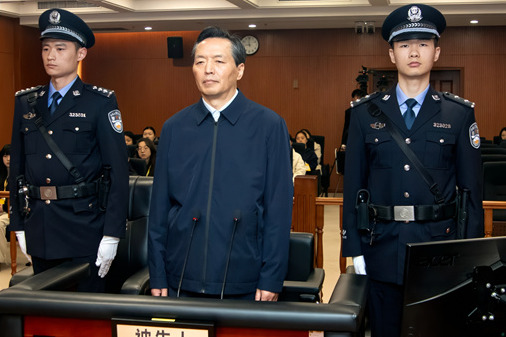
    In a significant demonstration of China’s ongoing anti-corruption campaign, Wang Lixia, the former chairwoman of Inner Mongolia Autonomous Region, has been permanently expelled from the Communist Party of China and removed from all public positions. The decisive action follows an extensive investigation authorized by the CPC Central Committee and conducted jointly by the Central Commission for Discipline Inspection and the National Commission of Supervision.

    The disciplinary bodies determined that Wang committed severe violations of Party discipline and national laws, including abandoning her ideological convictions and merely paying lip service to central Party directives while pursuing her own agenda. The investigation revealed her obsession with vanity and indulgence in extravagant living, alongside accepting substantial monetary gifts and valuable presents in exchange for facilitating promotions, project approvals, and construction contracts for others.

    According to the official statement released on Thursday, all illicit assets obtained by Wang will be confiscated. Her case has been transferred to prosecutorial authorities for formal legal examination and subsequent criminal prosecution, marking another high-profile case in China’s relentless fight against corruption within its political system.

  • Minnesota immigration enforcement surge is ending, Trump border tsar says

    Minnesota immigration enforcement surge is ending, Trump border tsar says

    WASHINGTON – The Trump administration’s high-profile immigration enforcement surge in Minnesota, known as Operation Metro Surge, is being formally concluded following a personal approval from the President. Tom Homan, the administration’s border czar, announced the operational drawdown during a press briefing on Thursday.

    Homan stated that he will remain in the state to personally oversee the transition, ensuring a successful conclusion to the controversial initiative. The operation, which deployed over 2,000 federal immigration officers to Minnesota, had ignited nationwide protests last month following the fatal shootings of two U.S. citizens by federal agents.

    The border official hailed the operation as a ‘great success,’ crediting increased cooperation from local Minnesota officials for transforming the state into ‘less of a sanctuary state.’ Homan reported that this collaboration enabled authorities to ‘greatly reduce the number of targets’ for enforcement actions.

    Highlighting specific enforcement outcomes, Homan pointed to the arrest of numerous undocumented immigrants, whom he classified as ‘illegal aliens.’ Among those apprehended were individuals convicted of serious crimes, including rape and other sexual misconduct offenses.

    While the surge is ending, Homan emphasized that Immigration and Customs Enforcement (ICE) will maintain a permanent presence in Minnesota. ‘A small footprint of personnel will remain for a period of time to close out and transition full command and control back to the field office,’ he explained, indicating a return to standard operational procedures rather than a complete withdrawal of federal immigration enforcement from the region.

  • Trump’s defamation lawsuit against the BBC is set to go to trial in 2027, US judge says

    Trump’s defamation lawsuit against the BBC is set to go to trial in 2027, US judge says

    A Florida federal judge has authorized former President Donald Trump’s monumental $10 billion lawsuit against the British Broadcasting Corporation to proceed toward trial in February 2027. Judge Roy K. Altman of the Southern District of Florida denied the BBC’s petition to delay legal proceedings, establishing a definitive timeline for the high-stakes litigation.

    The legal confrontation originates from a December filing by Trump, who alleges the BBC manipulated his January 6, 2021 speech through deceptive editing in their documentary “Trump: A Second Chance?” aired shortly before the 2024 presidential election. The lawsuit contends the broadcaster spliced three distinct quotes from segments delivered nearly an hour apart, creating the false impression of a continuous statement where Trump explicitly encouraged supporters to “fight like hell” while omitting his concurrent advocacy for peaceful demonstration.

    Trump seeks $5 billion in defamation damages and an additional $5 billion for alleged unfair trade practices, arguing the editorial manipulation deliberately misrepresented his actions preceding the Capitol unrest. The BBC has subsequently apologized for the editing approach but maintains its position that the documentary did not constitute defamation. The controversy prompted significant organizational changes within the broadcaster, including the resignation of both its chief executive and head of news.

    The BBC intends to challenge the lawsuit’s validity through a motion to dismiss, citing jurisdictional concerns and insufficient legal grounds. However, Judge Altman characterized the broadcaster’s request to postpone discovery processes—which would compel the production of internal emails and editorial materials—as premature at this preliminary stage of litigation.

  • Swiss to vote on proposal by anti-immigration party to cap population at 10 million

    Swiss to vote on proposal by anti-immigration party to cap population at 10 million

    Switzerland will conduct a national referendum on June 14th to determine whether to implement a permanent population ceiling of 10 million residents, a controversial proposal spearheaded by the right-wing Swiss People’s Party (SVP). The initiative has gathered sufficient petition signatures to advance to the ballot, potentially setting the stage for renewed tensions with European neighbors.

    According to federal statistics, Switzerland’s current population stands at approximately 9.1 million people, with foreign-born residents constituting nearly 30% of the total demographic composition. Most immigrants originate from European Union nations, with many subsequently obtaining Swiss citizenship.

    The proposed legislation would constitutionally mandate that Switzerland’s permanent resident population—encompassing both citizens and foreign nationals holding residency permits—must not surpass 10 million before 2050. Should the population approach 9.5 million prior to this deadline, the government would be compelled to implement restrictive measures including asylum limitations, family reunification constraints, residency permit restrictions, and renegotiation of international agreements.

    Proponents argue that population containment is essential for environmental preservation, resource conservation, infrastructure maintenance, and social welfare system protection. The initiative emerges within Switzerland’s unique direct democracy framework, which enables citizens to directly influence policy through quarterly ballots.

    The SVP party, which holds the largest parliamentary representation, has historically advocated for immigration restrictions with varying success. This proposal reflects broader anti-immigration sentiments observed across numerous Western nations.

    Opposition critics contend that the measure oversimplifies complex demographic realities, noting Switzerland’s considerable economic dependence on foreign labor across critical sectors including healthcare, hospitality, construction, and academia. Additionally, such restrictions would potentially violate Switzerland’s international commitments, particularly within the Schengen zone—a 29-nation agreement facilitating visa-free movement among 450 million Europeans. While not an EU member, Switzerland participates alongside Norway, Iceland, and Liechtenstein in this border-free arrangement.

  • Bangladesh votes in landmark election after Gen Z uprising

    Bangladesh votes in landmark election after Gen Z uprising

    Bangladesh commenced a historic national election on Thursday, marking its first electoral process since the 2024 Gen Z-led uprising that ousted long-serving Prime Minister Sheikh Hasina. This pivotal moment represents a critical test for democratic renewal in the South Asian nation of 175 million people.

    The electoral contest features two primary coalitions: the Bangladesh Nationalist Party (BNP) and the Islamist Jamaat-e-Islami, with opinion polls indicating a slight advantage for the BNP. Over 2,000 candidates from at least 50 political parties are competing for 300 parliamentary seats in the Jatiya Sangsad (House of the Nation), setting a national record for political participation.

    Voters expressed unprecedented enthusiasm, with Mohammed Jobair Hossain, 39, noting he hadn’t voted since 2008. “I am feeling excited because we are voting in a free manner after 17 years,” Hossain stated. “Our votes will matter and have meaning.”

    The election occurs alongside a constitutional referendum proposing significant reforms, including establishing a neutral interim government during election periods, creating a bicameral legislature, enhancing women’s representation, strengthening judicial independence, and implementing a two-term limit for prime ministers.

    Nobel laureate Muhammad Yunus, heading the interim government installed after Hasina’s ouster, emphasized the election’s significance: “The public awakening we witnessed against long-standing anger, inequality, deprivation and injustice finds its constitutional expression in this election.”

    Security measures were extensive with approximately 958,000 personnel from police, army, and paramilitary forces deployed nationwide. Despite the high stakes, the campaign period remained largely peaceful with minimal incidents.

    Thomas Kean of the International Crisis Group noted: “The crucial test for Bangladesh now will be to ensure the election is conducted fairly and impartially, and for all parties to then accept the result. If that happens, it will be the strongest evidence yet that Bangladesh has indeed embarked on a period of democratic renewal.”

    With nearly 128 million registered voters (49% women) and nearly half aged 18-35, this election represents a generational shift in Bangladeshi politics. Results are anticipated by Friday morning, potentially reshaping the nation’s political landscape and international alliances, particularly as China seeks expanded influence amid Dhaka’s deteriorating relations with New Delhi.

  • India moves a step closer to buying Rafale fighter jets and maritime patrol aircraft

    India moves a step closer to buying Rafale fighter jets and maritime patrol aircraft

    NEW DELHI — In a significant move to bolster its national security infrastructure, India’s Defence Acquisition Council granted preliminary authorization on Thursday for substantial defense procurements totaling approximately $39.74 billion. The comprehensive package includes additional Rafale multi-role fighter jets from France and P-8I maritime patrol aircraft from the United States.

    Defense Ministry officials confirmed the approval without disclosing specific quantities or financial details. However, sources familiar with the deliberations revealed the council, chaired by Defense Minister Rajnath Singh, endorsed acquisition plans for 114 Rafale fighters and six Boeing P-8I surveillance platforms.

    This strategic enhancement addresses India’s pressing security requirements along its contentious borders with nuclear-capable neighbors China and Pakistan. The Indian Air Force currently maintains 29 fighter squadrons—substantially below the government’s recommended strength of 42 squadrons, each comprising 16-18 aircraft.

    The preliminary clearance represents the initial phase in India’s defense procurement process, with final approval required from the Cabinet Committee on Security headed by Prime Minister Narendra Modi. Timing suggests the Rafale agreement may be formally announced during French President Emmanuel Macron’s upcoming visit for an international artificial intelligence summit.

    Defense analysts note the Rafale acquisition will substantially strengthen India’s aerial deterrence capabilities, with most aircraft scheduled for domestic manufacturing. Concurrently, the P-8I aircraft will enhance maritime surveillance operations in the Indian Ocean region, where Chinese naval presence has been increasingly observed.

    India already operates two Rafale squadrons and recently procured 26 marine variants for naval operations. The nation also maintains an existing fleet of P-8I aircraft conducting reconnaissance missions across critical Indian Ocean waterways.

  • Jailed Imran Khan loses most of his vision in right eye, says lawyer

    Jailed Imran Khan loses most of his vision in right eye, says lawyer

    Pakistan’s Supreme Court has received alarming medical reports concerning former Prime Minister Imran Khan’s deteriorating eyesight while in incarceration. According to legal counsel Salman Safdar, Khan’s right eye has suffered severe damage from an untreated blood clot, leaving him with merely 15% remaining vision.

    Safdar, who became Khan’s first external visitor in seven weeks this Tuesday, detailed how the former cricket star began experiencing blurred and hazy vision several months ago. Despite repeated complaints to prison authorities, medical response was limited to basic eye drops without addressing the underlying condition.

    The legal representative presented a comprehensive report to Chief Justice Yahya Afridi and Justice Shahid Bilal Hasan, describing Khan as “visibly perturbed and deeply distressed by the loss of vision and the absence of timely and specialized medical intervention.” The document urgently requested expert ophthalmological examination, improved prison conditions, and family access.

    In response, the court ruled that Khan should receive visits from his personal physicians at Adiala Jail and permitted telephone communication with his sons, Kasim and Sulaiman.

    The submitted report painted a contrasting picture to official statements about Khan’s detention conditions. While Interior Minister Ata Tarar previously described Khan as “the most privileged prisoner in Pakistan” with access to gym equipment and a cook, the legal document revealed a room with basic furniture, non-functional television, and problematic conditions including summer heat, humidity, and insect infestations that allegedly caused multiple episodes of food poisoning.

    Khan, who led Pakistan from 2018 to 2022 before his imprisonment in August 2023, faces over 100 charges that he maintains are politically motivated. His incarceration has sparked significant civil unrest, resulting in thousands of arrests and numerous injuries during clashes between supporters and security forces.

  • EU legal adviser says billions in funding for Hungary were wrongly released

    EU legal adviser says billions in funding for Hungary were wrongly released

    In a significant development within the European Union’s legal framework, the Advocate General for the EU’s highest court has recommended overturning the European Commission’s controversial 2023 decision to release billions in suspended funds to Hungary. Tamara Ćapeta, representing the European Court of Justice, presented a non-binding opinion on Thursday arguing that the Commission prematurely disbursed approximately €10.2 billion ($12.1 billion) despite Hungary’s failure to implement required judicial reforms addressing rule-of-law deficiencies and corruption concerns.

    The funds had been initially suspended in 2022 following extensive concerns about democratic backsliding under Prime Minister Viktor Orbán’s right-wing populist government. The Commission had identified systemic issues including inadequate corruption prevention measures, compromised judicial independence, and problematic public procurement processes that potentially allowed EU funds to be channeled to politically connected businesses.

    While Advocate General opinions are not legally binding, they typically influence the court’s final rulings. The case was brought forward by the European Parliament in 2024, challenging the Commission’s assessment that Hungary had implemented sufficient reforms to justify fund release.

    The ongoing dispute occurs against the backdrop of Hungary’s significant reliance on EU funds as a major net recipient, with additional billions remaining frozen amid continued concerns about democratic standards. Orbán, who has governed since 2010, consistently rejects criticisms as foreign interference in national sovereignty, while his government faces mounting domestic political challenges from center-right opposition leader Péter Magyar, who promises democratic restoration and improved EU relations.

  • U.S. allies at NATO focus on Europe as the Trump administration steps back

    U.S. allies at NATO focus on Europe as the Trump administration steps back

    BRUSSELS — NATO’s European members demonstrated a unified front on Thursday, downplaying concerns about waning U.S. engagement after American Defense Secretary Pete Hegseth skipped the alliance’s defense ministerial meeting. This marked the second consecutive high-level absence following Secretary of State Marco Rubio’s December no-show at foreign ministers’ talks.

    The pattern of substituted representation—with Under Secretary of Defense Elbridge Colby attending in Hegseth’s place—has raised questions about Washington’s commitment to the transatlantic alliance. Yet European officials maintained diplomatic composure. Icelandic Foreign Minister Þorgerður Katrín Gunnarsdóttir remarked, ‘Sadly for him, he is missing a good party,’ while German Defense Minister Boris Pistorius noted, ‘Each of us has a full agenda… it’s his decision and his duties he has to fulfill.’

    This recalibration of responsibilities reflects a fundamental shift in NATO’s dynamics. Where the alliance once sought to ‘keep the Americans in, the Russians out and the Germans down,’ according to its first secretary-general, today’s reality shows Germany emerging as a major defense contributor. Following Russia’s invasion of Ukraine four years ago, Berlin committed €100 billion to military modernization.

    NATO Secretary-General Mark Rutte acknowledged the changing landscape: ‘They have to take care of the whole world. This is the United States. They have always consistently pleaded for Europe doing more, Canada doing more.’ This transition sees European nations increasing conventional defense spending while the U.S. maintains nuclear deterrence guarantees.

    The meeting produced concrete initiatives, including the launch of ‘Arctic Sentry’—a collective response to U.S. security concerns in the High North and a diplomatic effort to deter former President Trump’s ambitions regarding Greenland. The program will coordinate existing national exercises under NATO oversight, with participation from Denmark, France, Germany, and likely Finland and Sweden.

    Meanwhile, European allies are filling gaps in Ukrainian support as U.S. military aid diminishes. The UK announced an additional £500 million in air defense packages, while Sweden pledged funds for American weapons purchases and the Netherlands committed flight simulators for F-16 training. The Ukraine Defense Contact Group, once led by the Pentagon, is now chaired by the UK and Germany.

    Dutch Defense Minister Ruben Brekelmans emphasized the importance of ‘the no-surprise policy’ between NATO and the U.S., reflecting lingering concerns about unpredictable American actions. The Greenland annexation threat particularly rattled allies, with Belgian Defense Minister Theo Francken calling it ‘a crisis that was not needed’ and hoping the new Arctic security arrangement would prevent future ‘food fights over the Atlantic.’