分类: politics

  • US lawmakers accuse Pam Bondi of hiding names of Epstein associates

    US lawmakers accuse Pam Bondi of hiding names of Epstein associates

    A contentious hearing before the House Judiciary Committee on Wednesday revealed deep fractures between US lawmakers and Attorney General Pam Bondi regarding the Justice Department’s handling of Jeffrey Epstein investigation documents. Republican Representative Thomas Massie of Kentucky leveled sharp accusations against Bondi, alleging deliberate concealment of powerful associates connected to the late financier and convicted sex offender.

    The confrontation centered on apparent excessive redactions within recently released files. Massie specifically highlighted the case of billionaire Leslie Wexner, whose name appeared obscured in an FBI document listing potential co-conspirators in the Epstein sex trafficking investigation. The lawmaker characterized this as part of a “massive failure” to comply with legislation passed nearly unanimously by Congress in November, which mandated transparency with limited exemptions.

    Bondi countered that Wexner’s name appeared numerous times in other released documents and claimed the Department unredacted his name within “40 minutes” of Massie identifying the issue. This prompted the representative’s retort: “Forty minutes of me catching you red-handed.”

    The hearing grew increasingly heated as lawmakers from both parties expressed frustration with the volume of redacted and withheld material. Several Epstein victims observed the proceedings from the public gallery, adding gravity to the discussions about transparency versus privacy concerns.

    The Justice Department released what it termed a final tranche of over 3 million pages of Epstein-related documents late last month, reigniting scrutiny of wealthy and influential individuals who maintained associations with Epstein following his conviction for soliciting prostitution from a minor.

    Rather than addressing concerns directly, Bondi frequently responded with personal attacks against committee members, accusing Democrats of indifference toward crime victims in their districts and labeling the panel’s top Democrat a “washed-up lawyer”—an unusually partisan tone from the nation’s chief law enforcement officer.

    Bondi defended the Department’s approach, noting that more than 500 Justice Department lawyers worked under compressed timelines to review extensive material. She maintained that any disclosure of victims’ identities was inadvertent and emphasized her career-long commitment to victim advocacy.

    The Epstein files have presented an ongoing challenge throughout Bondi’s tenure as Attorney General. The Department’s initial decision last summer not to release additional material provoked strong reactions from various quarters, including some of former President Trump’s online supporters. This has drawn renewed attention to Trump’s past friendship with Epstein, who died by suicide in 2019 while awaiting trial on sex trafficking charges.

    The hearing occurred against a backdrop of heightened political tensions, taking place just one day after a federal grand jury declined to indict six Democratic lawmakers over a video urging military personnel not to comply with unlawful orders.

  • Judge blocks US military from demoting Mark Kelly over ‘illegal orders’ video

    Judge blocks US military from demoting Mark Kelly over ‘illegal orders’ video

    In a landmark constitutional ruling, U.S. District Judge Richard Leon has issued a decisive injunction preventing Defense Secretary Pete Hegseth from proceeding with the demotion of Senator Mark Kelly, a retired Navy captain and former astronaut. The judicial rebuke represents a significant legal setback for the Trump administration’s campaign against six Democratic lawmakers who publicly encouraged military personnel to refuse unlawful orders.

    Judge Leon’s emphatic ruling condemned Secretary Hegseth’s actions as unconstitutional retaliation against Senator Kelly’s protected speech. The case originated from a video published last year featuring Kelly and five fellow Democratic legislators—all with military or intelligence backgrounds—advising service members that they retain the legal right to disobey illegal orders. President Trump subsequently labeled the video ‘seditious’ and called for the lawmakers’ arrest and potential execution, though he later walked back the death penalty suggestion.

    The Justice Department’s parallel criminal investigation collapsed earlier this week when a grand jury declined to approve seditious conspiracy charges against the legislators. Simultaneously, Secretary Hegseth had initiated retirement-grade determination proceedings that threatened to substantially reduce Kelly’s military pension while issuing a formal censure describing the senator’s comments as ‘seditious in nature.’

    In his unusually forceful opinion, Judge Leon established that retired service members retain full First Amendment protections, rejecting the government’s argument that Kelly should challenge the demotion through military channels rather than civilian courts. ‘Defendants have trampled on Senator Kelly’s First Amendment freedoms and threatened the constitutional liberties of millions of military retirees,’ Leon wrote, adding that retired veterans deserve greater respect from their government.

    The ruling emphasized that while active-duty personnel operate under more limited speech protections, no legal precedent extends those restrictions to military retirees. Judge Leon’s decision effectively protects the right of former service members to contribute to public discourse on military matters without fear of governmental retaliation.

  • South Africa will deploy troops to fight illegal mining and gang violence, president says

    South Africa will deploy troops to fight illegal mining and gang violence, president says

    In an unprecedented move to address escalating security crises, South African President Cyril Ramaphosa has authorized military deployment to support police operations against organized criminal networks. During his annual State of the Nation address to Parliament on Thursday, Ramaphosa identified criminal syndicates as the most immediate threat to the nation’s democracy, emphasizing their detrimental impact on both economic stability and public safety.

    The deployment will focus on Gauteng and Western Cape provinces—home to Johannesburg and Cape Town respectively—where communities face distinct security challenges. In Western Cape, gang warfare has reached alarming levels with children frequently caught in crossfire, while Gauteng residents suffer displacement by armed illegal miners operating in abandoned mining sites.

    South Africa’s homicide statistics remain among the world’s highest, with approximately 63 daily killings recorded in 2025. Firearms, particularly illegal weapons, serve as the primary instrument in these violent crimes despite strict gun control regulations.

    The illegal mining epidemic represents a particularly complex challenge, with authorities struggling to prevent armed groups from accessing the nation’s estimated 6,000 closed or abandoned mines. These miners, locally known as ‘zama zamas’ (Zulu for ‘hustlers’), are typically undocumented foreign nationals operating within sophisticated crime syndicates. The government estimates that illegal gold trading cost the economy over $3 billion in 2024 alone.

    Ramaphosa outlined a strategic shift toward technology-driven intelligence gathering and coordinated law enforcement operations targeting criminal networks. The Minister of Police and South African National Defence Force have been tasked with developing immediate technical plans for security force deployment within coming days.

  • US security firm that oversaw deadly aid sites in Gaza in talks for future role: Report

    US security firm that oversaw deadly aid sites in Gaza in talks for future role: Report

    A controversial American security contractor implicated in fatal incidents at Gaza aid distribution points is negotiating an expanded operational role within the territory, according to a Reuters investigation. UG Solutions (UGS), a North Carolina-based firm operated by a former Green Beret with multiple security industry connections, is reportedly recruiting Arabic-speaking combat veterans for unspecified missions in the region.

    Informed sources confirm the company is engaged in direct negotiations with the Board of Peace regarding future operations in Gaza. UGS previously provided security for the Gaza Humanitarian Foundation (GHF), an Israeli- and US-backed aid organization that managed distribution centers where approximately 2,000 Palestinians died from gunshot wounds or crushing incidents before the foundation’s closure following ceasefire agreements.

    The potential expansion of UGS’s responsibilities has raised significant concerns among Palestinian communities. Previous reports from Channel 12 featured whistleblower accounts alleging security personnel fired upon unarmed civilians seeking food assistance. Associated Press investigations have corroborated claims that UGS and another US firm, Safe Reach Solutions, employed live ammunition and stun grenades in Gaza operations.

    Prior to its shutdown, the GHF faced formal warnings from 15 human rights and legal organizations about potential complicity in international law violations, including war crimes and crimes against humanity. The Israeli military acknowledged some Palestinian casualties at aid centers but withheld specific numbers while claiming procedural improvements.

    Additional reporting reveals concerning connections between UGS personnel and extremist groups. One team leader, Johnny ‘Taz’ Mulford, was identified as a member of the Infidels Motorcycle Club, a US organization known for Islamophobic rhetoric.

    Following GHF’s dissolution, UGS announced intentions to continue as a primary security provider for reconstruction and aid delivery initiatives aligned with former President Trump’s peace plan. The company’s current recruitment drive seeks Arabic speakers for roles including ‘international humanitarian officers’ requiring small arms proficiency and female-exclusive positions focused on ‘culturally appropriate aid distribution.’

    The Board of Peace is scheduled to convene its inaugural meeting on February 19th, with Indonesian President Prabowo Subianto recently confirming attendance while preparing to deploy up to 8,000 troops as part of an international stabilization force. Board membership requires $1 billion contributions, with initial meetings expected to prioritize fundraising for Gaza’s reconstruction under ongoing Israeli military control.

  • Corbyn asks Streeting why he did not resign over Israeli ‘war crimes’ admission

    Corbyn asks Streeting why he did not resign over Israeli ‘war crimes’ admission

    Former Labour Party leader Jeremy Corbyn has launched a scathing critique against current Health Secretary Wes Streeting, labeling his position on Israel’s military actions in Gaza as a “shameful failure” and demanding his resignation. The criticism emerged through a confidential letter dated Thursday, obtained by Middle East Eye, in which Corbyn—now representing the Your Party—directly challenged Streeting’s ethical standing within the government.

    The controversy stems from recently revealed private text exchanges between Streeting and former British Ambassador to the US Peter Mandelson, made public on Monday. In these July 2025 communications, Streeting privately characterized Israel’s operations in Gaza as clear “war crimes,” describing witnessed “chilling and distressing scenes of calculated brutality against women and children” and accusing the Israeli government of employing “the language of ethnic cleansing.”

    Corbyn’s letter presents a damning logical argument: once a government acknowledges war crimes are occurring, continued military or political support constitutes deliberate complicity. He notes this creates “a matter of public record” that Streeting chose to serve in a cabinet providing military, economic and diplomatic support to a state breaching international law.

    Despite strained UK-Israel relations under Prime Minister Keir Starmer’s administration—including a partial arms embargo—military collaboration continued throughout the Gaza conflict. Corbyn posed several piercing questions regarding Streeting’s failure to resign, his view on government complicity, his willingness to cooperate with International Criminal Court investigations, and specific actions taken to halt support for Israel.

    The Health Secretary, considered a potential successor to Starmer, privately advocated for treating Israel as a “pariah” state with comprehensive sanctions in his messages. However, he has never publicly endorsed sanctions or explicitly accused Israel of war crimes, though he previously suggested Israeli President Isaac Herzog should answer allegations last September.

    This revelation follows Starmer’s March 2025 reversal of then-Foreign Secretary David Lammy’s characterization of Israel’s actions as a “breach of international law.” Corbyn concluded with a historical warning that government ministers who remained silent despite having power to intervene would be “shamed” in history books.

  • Trump revokes landmark ruling that greenhouse gases endanger public health

    Trump revokes landmark ruling that greenhouse gases endanger public health

    In a sweeping environmental policy reversal, the Trump administration has dismantled the foundational 2009 “endangerment finding” that established greenhouse gases as threats to public health. This scientific determination, originally issued by the Environmental Protection Agency during President Obama’s first term, had served as the legal cornerstone for federal climate regulations across multiple sectors including transportation, energy production, and manufacturing.

    The White House heralded the move as “the largest deregulation in American history,” projecting substantial economic benefits including $1 trillion in savings and reduced vehicle manufacturing costs of approximately $2,400 per automobile. Administration officials contend these changes will lower energy and transportation expenses for American consumers.

    Environmental organizations have mobilized against the policy shift, characterizing it as the most significant climate regulation rollback attempted to date. The Environmental Defense Fund projects devastating public health consequences, estimating up to 58,000 additional premature deaths and 37 million more asthma attacks resulting from increased pollution. Critics also anticipate American drivers facing $1.4 trillion in additional fuel costs due to less efficient vehicles.

    The automotive industry faces particular uncertainty, as manufacturing less fuel-efficient vehicles could potentially limit international market access. Climate law expert Michael Gerrard of Columbia University noted, “This really puts US automakers in a bind because nobody else is going to want to buy American cars.”

    Legal challenges are anticipated as the administration’s reversal relies on a controversial scientific report commissioned by the Department of Energy. Climate experts have criticized the report’s methodology and composition, noting the panel included disproportionate representation from climate science skeptics. A federal judge recently ruled the department violated legal procedures in forming the expert team.

    Former EPA attorney Meghan Greenfield emphasized the finding’s comprehensive role: “The endangerment finding has served as the lynchpin of US regulation of greenhouse gases across motor vehicles, power plants, the oil and gas sector, methane from landfills, and even aircraft.”

    The administration appears prepared for judicial review, with many legal experts believing they seek Supreme Court validation before the end of Trump’s term. A favorable ruling could permanently cement the policy shift, preventing future administrations from reinstating climate regulations without congressional action.

    The policy reversal occurs amid growing climate concerns, including recent wildfires in Los Angeles that scientists linked to climate change conditions.

  • Kenya’s border with Somalia set to re-open after almost 15 years

    Kenya’s border with Somalia set to re-open after almost 15 years

    After nearly 15 years of closure due to security concerns, Kenya will reopen its border with Somalia in April, President William Ruto announced during a visit to the border town of Mandera. The decision follows extensive security assessments and comes despite persistent threats from the al-Shabab militant group.

    The border closure was initially implemented in response to a series of devastating attacks orchestrated by the Somalia-based extremist organization. These included the 2013 Westgate shopping mall siege in Nairobi that claimed 67 lives and the 2015 Garissa University assault that resulted in 148 fatalities. Other significant incidents include the 2014 Mandera bus attack that killed 28 passengers and a 2019 hotel assault in Nairobi that left at least 21 dead.

    President Ruto emphasized that security remains paramount, with plans for heavy deployment of security forces to monitor the two designated crossing points. ‘It is unacceptable that fellow Kenyans in Mandera remain cut off from their kin and neighbors in Somalia due to the prolonged closure,’ Ruto stated on social media platform X.

    The reopening initiative, previously announced in 2023 but postponed due to continued security concerns, aims to revitalize cross-border trade and reunite communities separated by the closure. The president called on local residents to collaborate in combating al-Shabab, describing the militants as ‘useless criminals and terrorists.’

    Kenya had previously initiated construction of a 680-kilometer (423-mile) border barrier in 2015 to counter militant infiltration, but the project was suspended after nearly three years of work. Ongoing concerns about weapons smuggling and contraband trade have complicated border management efforts throughout the closure period.

  • Now, Mike Tyson is healthy eating advocate for Trump administration

    Now, Mike Tyson is healthy eating advocate for Trump administration

    In a striking departure from conventional health advocacy, the Trump administration has appointed former heavyweight boxing champion Mike Tyson as its official healthy-eating ambassador. The 59-year-old sports icon, whose life has traversed extraordinary peaks and valleys, now fronts a national campaign urging Americans to reject ultra-processed foods under the slogan “Eat Real Food.”

    The initiative gained massive exposure through a Super Bowl commercial that featured Tyson’s personal journey with nutrition and weight struggles. During a Wednesday event alongside Health Secretary Robert F. Kennedy Jr., Tyson characterized this advocacy as “the biggest fight of my life,” drawing parallels between his boxing career and his current mission.

    Tyson’s appointment represents a calculated alignment with the administration’s broader health policy overhaul, which includes Kennedy’s recent inversion of the traditional food pyramid to prioritize meat and whole-milk dairy products over fiber-rich whole grains. This structural change has drawn criticism from nutrition experts who suspect agricultural industry influence.

    The boxing legend brings visceral credibility to the campaign, recounting how his sister Denise died of a heart attack at 25 due to obesity-related complications. He described his childhood in Brownsville, Brooklyn—”the most violent, poverty-struck neighborhood in New York City”—where ultra-processed foods dominated dietary patterns. Tyson revealed reaching 345 pounds during his darkest periods, confessing in the campaign ad: “I had so much self-hate. I just wanted to kill myself.”

    Government statistics confirm Americans consume disproportionately high amounts of ultra-processed foods compared to other nations, contributing to elevated rates of obesity, diabetes, and cardiovascular disease. The campaign directly challenges this status quo through Tyson’s compelling narrative of transformation and redemption.

  • As Guatemala begins high-stakes court elections, agents raid voting sites

    As Guatemala begins high-stakes court elections, agents raid voting sites

    Guatemala’s fragile democracy faced renewed strain on Thursday as prosecutors from the internationally criticized Attorney General’s office raided voting locations during crucial judicial elections. The operation, occurring simultaneously with the election of magistrates to the country’s highest court, sparked immediate condemnation from President Bernardo Arévalo and international observers.

    Prosecutor Leonor Morales, who faces U.S. sanctions for previously attempting to overturn Arévalo’s 2023 presidential victory, led the controversial raids. Morales refused to disclose details about the investigation, ordering media removal from the premises while her team temporarily blocked lawyers attempting to vote.

    President Arévalo characterized the actions as “a new attempt to undermine institutions and disrupt the normal functioning of the rule of law” in a social media address. He urged citizens not to be intimidated, declaring that “Guatemala’s democracy is not negotiable, it will not be intimidated, and it will not be taken away.”

    The Constitutional Court subsequently issued an injunction limiting the Attorney General’s office from intervening in the election process while permitting their investigation to continue. The Organization of American States observation mission condemned the raids as “an extremely high constitutional risk” that represents a “pattern of institutional instrumentalization” eroding public trust and judicial independence.

    These elections determine the composition of Guatemala’s Constitutional Court, the nation’s highest judicial body whose decisions are final. The court has served as both a democratic safeguard and a subject of corruption concerns throughout Guatemala’s prolonged anti-corruption struggle. Current magistrates are seeking reelection despite criticism from human rights advocates who describe recent court composition as comprising “dark characters” who have hindered justice system advances.

    The judicial appointments occur alongside the impending replacement of Attorney General Consuelo Porras, who faces international sanctions for undermining democracy. Porras, accused of protecting former presidents from corruption investigations, is ironically seeking election as a Constitutional Court magistrate. President Arévalo has previously emphasized that these selections represent an “important and critical” moment for Guatemalan democracy, with the nation’s democratic development hanging in the balance.

    International observers from both the Organization of American States and European Union are closely monitoring the process, recognizing its profound implications for judicial independence and the rule of law in Central America’s most populous nation.

  • Iranian press review: Calls grow for sanctions relief across political divide

    Iranian press review: Calls grow for sanctions relief across political divide

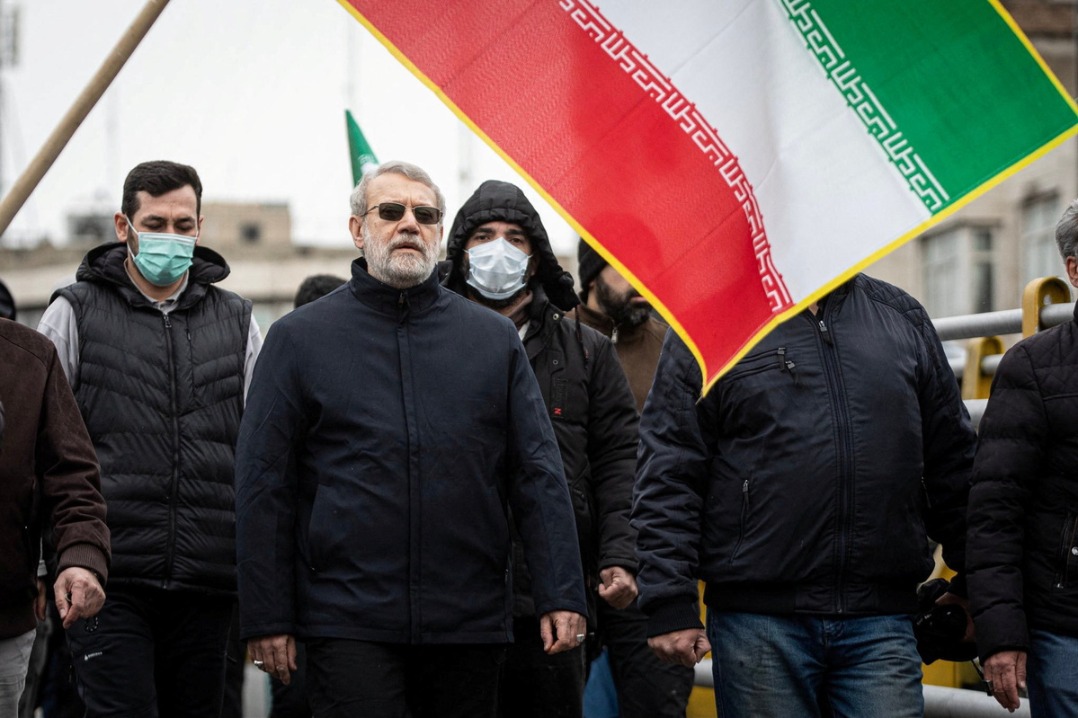
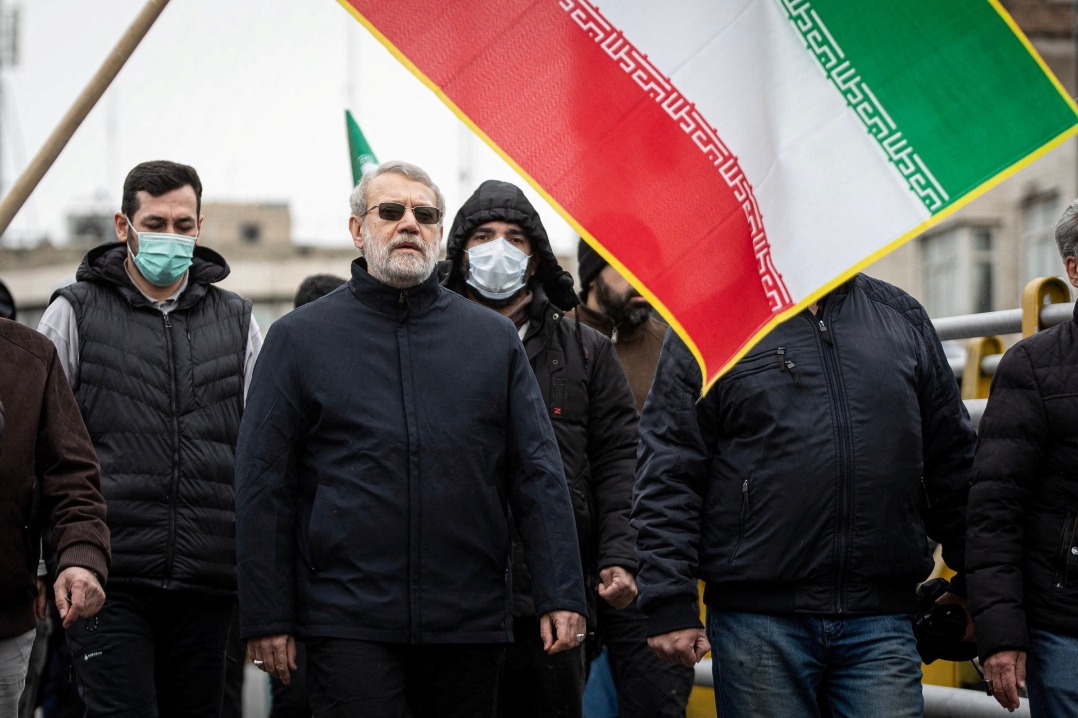
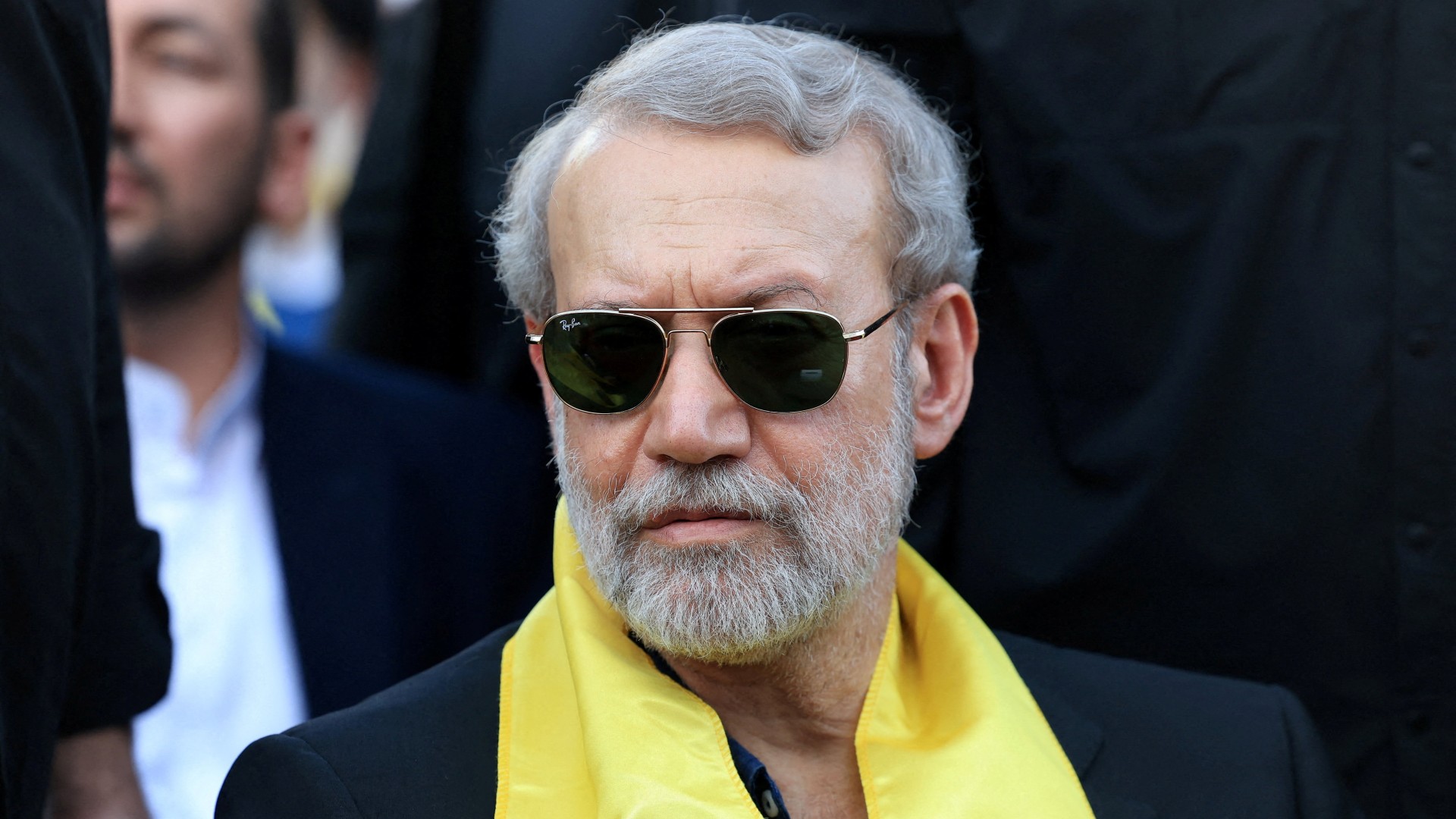
    A profound internal schism has emerged within Iran regarding renewed diplomatic engagement with the United States, set against a backdrop of severe economic sanctions and recent military tensions in the Gulf. This division marks a significant shift from the pre-war period preceding last year’s 12-day conflict with Israel, when opposition to dialogue was more dominant.

    Prominent voices are now advocating for a pragmatic approach to lift crippling international sanctions. Gholamhossein Karbaschi, former Tehran mayor and moderate political figure, issued a direct appeal to President Masoud Pezeshkian, stating the government must prioritize relief for the Iranian people. “The world is cruel. America is a bully, and Europe is even worse,” Karbaschi acknowledged in comments to Etemad Online, while emphasizing the necessity of addressing citizens’ economic and security needs.

    International affairs analyst Ali Bigdeli similarly urged officials to conclude current negotiations, criticizing previous strategies as obsolete. “The old strategy no longer works, and the signs of its failure are clear,” Bigdeli stated in Saazan Degi newspaper, advocating for talks grounded in “today’s realities, not yesterday’s illusions.”

    The debate unfolds as Supreme Leader Ayatollah Ali Khamenei, who retains ultimate authority over foreign policy decisions, has remained conspicuously silent on the current negotiations—a silence many interpret as tacit approval.

    Meanwhile, figures within Iran’s establishment are acknowledging a deepening social crisis following the violent suppression of nationwide protests three weeks prior. Official reports cite 3,117 fatalities, though independent human rights organizations estimate the death toll exceeds 6,000. This violence has created what analysts describe as a state of “collective grief” throughout the nation.

    Saeed Khademi, advisor to the national Welfare Organization, warned in Arman Meli newspaper that unrecognized social trauma combined with economic hardship and fears of military conflict could fuel renewed unrest. “If the true grief and pain of the victims and their families is not recognized,” Khademi wrote, “a wounded and irritable mind is formed that can lead to anger and social tension.”

    This concern was echoed by Pirouz Hanachi, former member of the Islamic Revolutionary Guard Corps, who cautioned in Etemad daily that “ignoring public grief or trying to quickly and carelessly overcome it can lead to the accumulation of resentment” that eventually manifests as “anger and distrust.”

    In a concerning development, Iranian authorities have recently expanded their crackdown beyond ordinary citizens to target prominent reformist figures. Recent days have witnessed arrests of several high-profile individuals including Javad Imam, Ghorban Behzadiannejad, Hossein Karroubi, and Ali Shakouri-Rad—a former parliament member and Iran-Iraq War veteran who had recently criticized security forces for allegedly instigating violence during protests.

    The scope of these arrests, which now includes senior members of the Reform Front coalition, represents the most significant suppression of dissent since the 2009 Green Movement protests.

    Simultaneously, Iranian lawyers are mounting unprecedented challenges against the judicial treatment of detainees. Legal professionals have published open letters protesting what they describe as “extralegal restrictions” on defendants’ rights, including denied access to counsel, abbreviated trials, and coerced confessions broadcast on state media.

    Hamidreza Haji Esfandiari, a lawyer writing in Etemad, criticized the systematic violation of constitutional protections, warning that such practices risk “an even greater destruction of the manifestations of the rule of law.”