分类: politics

  • US border chief says not ‘surrendering’ immigration mission

    US border chief says not ‘surrendering’ immigration mission

    In his inaugural press conference in Minneapolis, newly appointed border chief Tom Homan committed to continuing federal immigration operations while implementing significant tactical changes. The event followed weeks of escalating tensions and deadly protests against undocumented migrant roundups in the Minnesota city.

    Homan, appointed by President Donald Trump to oversee immigration enforcement operations, emphasized a recalibrated approach focused on ‘targeted enforcement operations’ rather than mission abandonment. ‘We are not surrendering our mission at all,’ Homan stated. ‘We’re just doing it smarter.’

    The border czar called for reduced hostilities against federal agents, denouncing what he characterized as ‘hateful rhetoric.’ This conciliatory tone marked a distinct departure from previous leadership under Border Patrol commander Greg Bovino, who has since been replaced following public outrage over the shooting deaths of two American protestors.

    Homan acknowledged operational deficiencies, noting that ‘certain improvements could and should be made’ in consultation with President Trump and administration officials. He pledged accountability for agents violating conduct codes, referencing the ongoing investigation into agents involved in the fatal shooting of 37-year-old Veterans Hospital nurse Alex Pretti.

    The political confrontation extends beyond Minneapolis to Congressional chambers, where Democrats threaten to block government funding authorizations without immigration agency reforms. Meanwhile, federal judiciary interventions have complicated enforcement efforts, with one judge halting refugee detentions in Minnesota and another criticizing ICE leadership for allegedly violating court orders.

    The administration’s focus on Minnesota connects to an ongoing probe into alleged corruption among Somali immigrants, which Trump and conservative allies have highlighted as emblematic of broader immigration concerns. The political climate has intensified with repeated targeting of Somali-born Congresswoman Ilhan Omar, including a recent incident where an assailant sprayed her with an unknown substance during a public speech.

  • Xi calls on China, Britain to jointly advocate, practice true multilateralism

    Xi calls on China, Britain to jointly advocate, practice true multilateralism

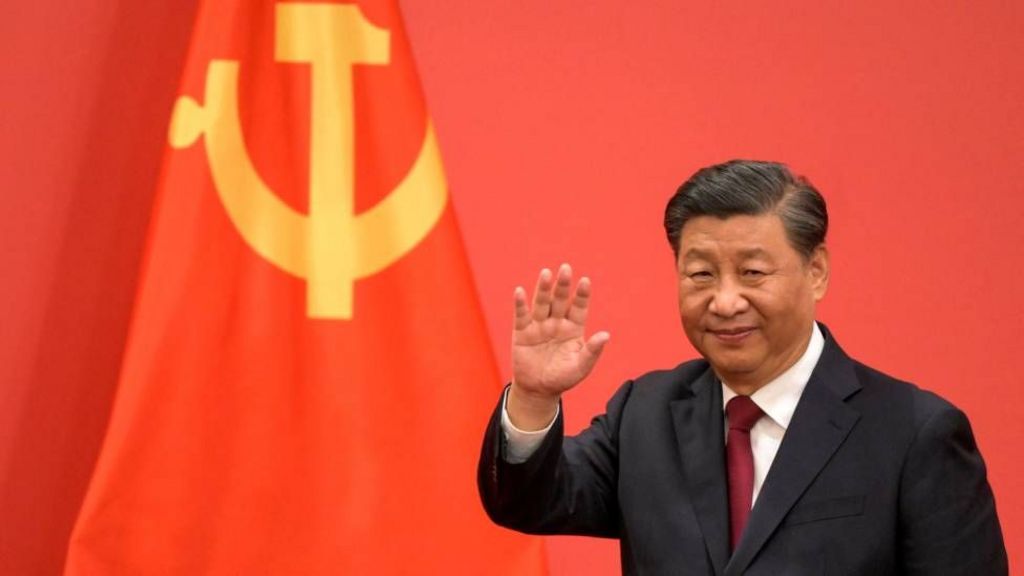
    In a significant diplomatic engagement at Beijing’s Great Hall of the People on January 29, 2026, Chinese President Xi Jinping held substantive talks with visiting British Prime Minister Keir Starmer, emphasizing the critical importance of authentic multilateral cooperation between their nations.

    President Xi articulated that as two major global powers with established commitments to multilateral frameworks and free trade principles, China and Britain bear special responsibility in advancing genuine international collaboration. The Chinese leader underscored that multilateral systems can only maintain effectiveness when all nations, particularly major powers, demonstrate consistent adherence to established international laws and norms.

    ‘The integrity of international law depends entirely on universal compliance,’ President Xi stated during the meeting. ‘When major countries lead by example in respecting these frameworks, we create stability. Without such leadership, we risk reverting to a destructive ‘law of the jungle’ paradigm that benefits no nation.’

    The discussions between the two leaders covered broad aspects of the China-UK relationship, with both expressing commitment to strengthening bilateral ties through constructive dialogue and mutual respect. The meeting marked Prime Minister Starmer’s first official visit to China since assuming office, representing a significant moment in contemporary Sino-British relations.

    Observers noted that the emphasis on ‘true multilateralism’ reflects both nations’ interest in maintaining a rules-based international order amid global challenges. The leadership meeting signals potential for enhanced cooperation between China and Britain on multilateral platforms including trade, climate action, and global security matters.

  • US ambassador warns of China’s growing manufacturing dominance

    US ambassador warns of China’s growing manufacturing dominance

    In a significant address to business and government leaders in Beijing, U.S. Ambassador David Perdue articulated growing international concerns regarding China’s expanding manufacturing supremacy while advocating for equitable trade relations between the world’s two largest economies. Speaking at the American Chamber of Commerce in China’s annual gathering on Thursday, the Trump-appointed diplomat acknowledged China’s remarkable transformation into a global manufacturing powerhouse but emphasized the detrimental effects of its export policies on industrial sectors and employment worldwide.

    Ambassador Perdue’s remarks highlighted the fundamental tension in Sino-American economic relations, noting that while China has substantially benefited from international free trade agreements, American enterprises continue encountering substantial market access barriers within China. The ambassador explicitly stated that the United States seeks neither confrontation nor trade warfare but insists on establishing mutually beneficial, balanced commercial exchanges characterized by fairness and reciprocity.

    This diplomatic communication occurs against the backdrop of previously escalating tariff impositions, wherein both nations engaged in retaliatory trade measures that drove import duties to unprecedented levels before agreeing to successive temporary suspensions. The current détente follows the October agreement between President Trump and Chinese leader Xi Jinping during the Asia-Pacific nations summit in South Korea, which established a one-year pause in tariff escalations.

    Looking toward future diplomatic engagements, Perdue confirmed ongoing preparations for President Trump’s anticipated visit to China in 2026, concurrently revealing expectations for President Xi to undertake an official visit to the United States within the current year. While President Trump has previously suggested a potential April visit to China, both governments have maintained cautious ambiguity regarding specific dates, reflecting the complex nature of ongoing negotiations.

  • Photos: Sheikh Mohammed meets Pakistan President in UAE

    Photos: Sheikh Mohammed meets Pakistan President in UAE

    In a significant diplomatic engagement, His Highness Sheikh Mohammed bin Rashid Al Maktoum, Vice President and Prime Minister of the UAE and Ruler of Dubai, held a high-profile meeting with President Asif Ali Zardari of Pakistan on January 29, 2026. The meeting, held at Qasr Al Watan in Abu Dhabi, marked a pivotal moment in UAE-Pakistan relations, focusing on strengthening strategic partnerships across multiple sectors.

    The leaders engaged in comprehensive discussions covering bilateral cooperation, economic partnerships, and regional stability. Key agenda items included enhancing trade relations, exploring new investment opportunities, and addressing mutual concerns in the South Asian and Middle Eastern regions. Both leaders emphasized the historical ties between their nations and expressed commitment to deepening collaboration in energy, infrastructure, and technology sectors.

    This high-level diplomatic engagement comes at a crucial time for both nations, with Pakistan seeking to bolster its economic partnerships amid regional challenges and the UAE continuing to expand its international diplomatic outreach. The meeting also addressed cultural exchanges and people-to-people connections, acknowledging the significant Pakistani diaspora contributing to the UAE’s development.

    The timing of this summit suggests both countries are prioritizing economic diplomacy, with particular attention to joint ventures in renewable energy and digital infrastructure development. The outcomes of this meeting are expected to influence not only bilateral relations but also regional economic dynamics in the coming years.

  • Iran vows ‘crushing response’, EU targets Revolutionary Guards

    Iran vows ‘crushing response’, EU targets Revolutionary Guards

    Tensions between Iran and Western powers escalated dramatically as Tehran promised a forceful retaliation against potential military action while the European Union advanced plans to designate Iran’s Revolutionary Guards as a terrorist organization. The confrontation emerged amid ongoing protests in Iran that have drawn international condemnation and threats of intervention.

    Iran’s Army Chief Amir Hatami declared Thursday that the nation stands prepared to deliver a ‘crushing response’ to any aggression, with state television reporting the deployment of 1,000 strategic drones to combat regiments. This show of force comes in direct response to President Donald Trump’s warnings that time is running out for nuclear negotiations and his deployment of a naval strike group to Middle Eastern waters.

    The EU is expected to formally classify the Islamic Revolutionary Guard Corps (IRGC) as a terrorist entity following widespread crackdowns on protests that human rights groups say resulted in thousands of civilian casualties. EU diplomat Kaja Kallas emphasized that organizations acting as terrorists ‘should be treated as terrorists,’ placing the IRGC on par with extremist groups like Al-Qaeda and ISIS.

    While largely symbolic given existing EU sanctions against IRGC leadership, the designation represents a significant diplomatic condemnation. Iran has warned of ‘destructive consequences’ should the measure proceed.

    Regional actors have intensified calls for de-escalation, with Gulf states expressing concern about potential economic chaos and skyrocketing energy prices should military conflict erupt. Turkey announced plans to mediate between Washington and Tehran during an upcoming visit by Iranian Foreign Minister Abbas Araghchi, with Turkish Foreign Minister Hakan Fidan stating ‘Iran is ready to negotiate on the nuclear file again.’

    Russia similarly emphasized that ‘the potential for negotiations is not exhausted,’ with Kremlin spokesman Dmitry Peskov warning that any use of force could create regional chaos with ‘very dangerous consequences.’

    The diplomatic standoff occurs against the backdrop of continued internet restrictions in Iran and disputed casualty figures from recent protests. While US-based HRANA reports over 6,000 killed and 40,000 arrested, Iranian authorities acknowledge approximately 3,000 deaths, claiming most were security personnel or bystanders killed by ‘rioters.’

  • Canada’s conservative leader faces leadership test – and grapples with widening his appeal

    Canada’s conservative leader faces leadership test – and grapples with widening his appeal

    Conservative Party delegates are preparing for a pivotal leadership review of Pierre Poilievre this Friday in Calgary, following the party’s electoral defeat last April. While internal support appears robust, with expectations of a decisive victory, the leader confronts a profoundly divided Canadian electorate that questions his capacity to govern the nation through uncertain geopolitical times.

    Polling data from Abacus Data reveals a stark contrast in perceptions: while a strong majority of Conservative base voters endorse Poilievre’s leadership—particularly praising his effectiveness in highlighting Liberal government failures on housing affordability and his appeal to younger demographics—over half of the general Canadian public maintains negative views. Critics frequently characterize his political tone as excessively confrontational, creating what pollster David Coletto describes as a “deeply polarised” perception that poses significant electoral challenges.

    The geopolitical landscape presents particular complications. Poilievre has faced persistent scrutiny regarding his approach to U.S. President Donald Trump, who remains deeply unpopular among Canadians. Many view Trump’s tariff policies and references to Canada as a “51st state” as existential threats. Poilievre’s populist style has occasionally drawn comparisons to Trump, further complicating his public appeal.

    Prime Minister Mark Carney’s recent address at the World Economic Forum in Davos highlighted this contrast. Widely praised by international observers for its clear articulation of Canada’s stance toward Trump’s administration, the speech boosted Liberal polling numbers to 47% among decided voters according to Léger’s latest survey. Meanwhile, Conservatives gained two points to reach 38%, indicating solid base support despite the Liberal surge.

    Former communications director Ben Woodfinden acknowledges the need for clearer Conservative positioning on Trump, noting that the next election will likely occur during Trump’s presidency. However, strategists emphasize Poilievre’s success in revitalizing the party and expanding its base to record numbers despite electoral setbacks.

    Recent developments suggest potential tonal shifts. Poilievre offered rare praise for Carney’s Davos speech while criticizing Liberal economic policies, and signaled willingness to collaborate on domestic issues like grocery tax rebates and bail reform. His upcoming address to party delegates will be closely watched for indications of how he plans to bridge the polarization gap and position Conservatives for future electoral success.

  • Tensions remain high between federal and local officials in Minneapolis

    Tensions remain high between federal and local officials in Minneapolis

    Minneapolis has become the epicenter of a deepening constitutional crisis as federal authorities and local leadership remain locked in a dangerous standoff over immigration enforcement. The conflict reached a boiling point when President Donald Trump publicly warned Mayor Jacob Frey that he was “playing with fire” for declaring that city police would not enforce federal immigration laws.

    The presidential rebuke came despite earlier administration promises to de-escalate tensions following two fatal shootings involving federal agents. The victims include Alex Pretti, a 37-year-old ICU nurse at a VA hospital, killed during a Department of Homeland Security raid on Saturday. While DHS initially claimed Pretti brandished a weapon, video evidence appears to contradict this narrative.

    This incident follows the January 7th shooting of Renee Good, another case where cellphone footage raised serious questions about the official federal account. In response to the Pretti shooting, two border patrol agents have been placed on administrative leave according to DHS spokesperson Tricia McLaughlin.

    The situation has created an impossible position for local law enforcement. Minneapolis police, already overwhelmed by competing demands from protesters and federal agents both calling 911 for assistance, report plummeting morale as they find themselves caught between powerful political forces. With only 600 city officers attempting to maintain order amid 3,000 federal agents, the department struggles to provide adequate protection for demonstrators.

    Behind the scenes, attempts at reconciliation are underway. President Trump and Minnesota Governor Tim Walz have agreed on “the need for an ongoing dialogue,” while border czar Tom Homan has met with Walz to explore de-escalation strategies. Homan will assume control of operations from Gregory Bovino, whose aggressive tactics drew widespread criticism.

    An administration official indicated this leadership change would signal a shift toward more targeted operations rather than the broad street sweeps previously conducted. However, skepticism remains regarding how substantially tactics will change in a city where regular clashes between federal agents and protesters have become commonplace.

    This confrontation represents the latest manifestation of the ongoing battle between sanctuary jurisdictions and federal immigration authorities, with Trump threatening to cut funding to states that limit cooperation with immigration enforcement.

  • Talks ramp up to avert US government shutdown after Minneapolis shooting

    Talks ramp up to avert US government shutdown after Minneapolis shooting

    Washington D.C. finds itself embroiled in intense budgetary negotiations as lawmakers race against the clock to prevent a potential federal government shutdown. The political standoff centers on Democratic demands for substantial reforms within the Department of Homeland Security (DHS) following the controversial fatal shooting of 37-year-old nurse Alex Pretti by federal immigration agents in Minneapolis.

    Democratic legislators are leveraging their position to withhold support from the comprehensive $1.2 trillion spending package unless significant oversight measures are incorporated. These proposed restrictions would mandate federal agents to obtain warrants before making arrests and establish clearer identification protocols during operations. The White House and Senate Democratic leadership appear to be converging on an agreement that would address these security concerns while avoiding complete governmental paralysis.

    The current strategy under discussion would involve passing five of the six spending bills before Friday’s midnight deadline while granting DHS a temporary funding extension. This approach would provide additional negotiation time for implementing proposed operational changes, including regulations surrounding agents’ use of masks during operations.

    Senate Minority Leader Chuck Schumer has taken a firm stance, declaring, “I will vote no on any legislation that funds ICE until it is reined in and overhauled,” emphasizing that Senate Democrats remain “overwhelmingly united on this issue.” This position has been further reinforced by escalating demands from some Democratic senators calling for DHS Secretary Kristi Noem’s removal and structural changes to both Immigration and Customs Enforcement (ICE) and US Border Patrol.

    Republican Senate Majority Leader John Thune has characterized the ongoing negotiations as “productive,” though Texas Senator John Cornyn has cautioned that “any changes must not come at the expense of shutting down the government.”

    The potential shutdown would not affect the entire federal government, as legislation has already been enacted to fund numerous agencies through September 30, 2026. However, critical departments including Defense, Health and Human Services, Treasury, and the federal court system would face operational disruptions. The Internal Revenue Service would also be impacted, potentially delaying tax processing and refund distributions.

    Essential employees within affected agencies would continue working without pay until funding is restored, mirroring arrangements made during previous shutdowns. The most recent government closure in late 2025 lasted 43 days—the longest in U.S. history—leaving approximately 1.4 million federal employees without compensation and severely disrupting air travel and food assistance programs nationwide.

  • Trump terror policy massively expands US list of bad guys

    Trump terror policy massively expands US list of bad guys

    In a dramatic shift from established norms, the Trump administration has executed the most substantial expansion of the US Foreign Terrorist Organization (FTO) list since its inception in 1997. Within the first year of his second term, President Trump has designated 26 new groups as terrorist organizations—a staggering increase compared to the historical average of approximately two additions annually.

    The FTO list now exceeds 90 designated groups, surpassing the previous peak of 60 during the Islamic State’s dominance in the mid-2010s. This designation carries severe consequences: providing material support to listed groups becomes a felony offense, financial institutions must freeze associated assets, and alleged associates face entry bans or deportation from the United States.

    Most controversially, the administration has expanded the terrorist designation beyond traditional ideological groups to include numerous drug cartels and criminal organizations. Groups such as Mexico’s Sinaloa cartel, Haiti’s Gran Grif, and Ecuador’s Los Lobos now appear alongside organizations like Iran’s Revolutionary Guard Corps, which continues to direct international attacks.

    This policy shift has enabled military actions traditionally reserved for counterterrorism operations. The administration has conducted 35 missile strikes against alleged drug trafficking operations, resulting in approximately 120 casualties. These actions culminated in the January overthrow of Venezuelan President Nicolas Maduro, whom the administration accused of leading the Cartel de los Soles—though the Justice Department subsequently dropped claims of the cartel’s existence just two days after his capture.

    The expansion has created significant strain on enforcement resources and drawn criticism from analysts who question the strategic wisdom of applying counterterrorism frameworks to criminal organizations. Research indicates that such approaches often backfire, potentially increasing violence rather than containing it.

    Notably, this transformation represents a decoupling from traditional US allies on counterterrorism policy. While historically following US designations, major allies including the United Kingdom and Australia have declined to similarly expand their terrorist lists to include criminal organizations. Instead, some allies have focused on designating far-right extremist networks—a category conspicuously absent from the US expansion.

    The policy shift reflects broader changes in US foreign policy alignment, with only a few Trump-aligned Latin American countries and Canada (reportedly for trade considerations) following the US lead in designating cartels as terrorist organizations.

  • White House backtracks on Minneapolis claims

    White House backtracks on Minneapolis claims

    MINNEAPOLIS — The Trump administration has acknowledged potential procedural violations by immigration agents during operations in Minneapolis that resulted in the fatal shooting of a nurse, signaling a shift in tone amid growing national outcry. White House deputy chief of staff Stephen Miller stated Tuesday that Customs and Border Protection (CBP) agents may have failed to adhere to established protocols during the incident that claimed the life of 37-year-old Alex Pretti.

    The administration’s conciliatory stance emerged alongside a disturbing security breach targeting Minnesota Congresswoman Ilhan Omar, who was assaulted with an unknown liquid from a syringe during a town hall meeting where she had been criticizing the administration’s immigration policies. The simultaneous developments underscore the volatile atmosphere in the city following weeks of escalating tensions between federal authorities and local communities.

    President Trump, in comments to Fox News, indicated his administration would “de-escalate a little bit” its operations in Minneapolis while emphasizing the move did not constitute a full withdrawal. The president distanced himself from previous inflammatory rhetoric, specifically rejecting the “assassin” label previously applied to Pretti by Miller, and called for “a very honorable and honest investigation” into the shooting.

    The administration’s reassessment includes the expected departure of Border Patrol commander Gregory Bovino, whom Trump characterized as “a pretty out-there kind of a guy” whose presence may have exacerbated tensions. Top border security official Tom Homan has been dispatched to Minneapolis for meetings with local officials, including Mayor Jacob Frey, who reiterated the city’s position that it “will not enforce federal immigration laws.”

    The Pretti shooting marks the second fatal incident involving federal immigration agents in Minneapolis in recent weeks, following the death of US citizen Renee Good. Both cases have drawn national attention to the tactics employed by masked, heavily armed immigration agents operating in urban centers, with multiple video recordings contradicting initial official accounts that portrayed Pretti as a threatening “domestic terrorist.”