分类: politics

  • South Korea prosecutors seek 10-year jail term for ex-president Yoon Suk Yeol

    South Korea prosecutors seek 10-year jail term for ex-president Yoon Suk Yeol

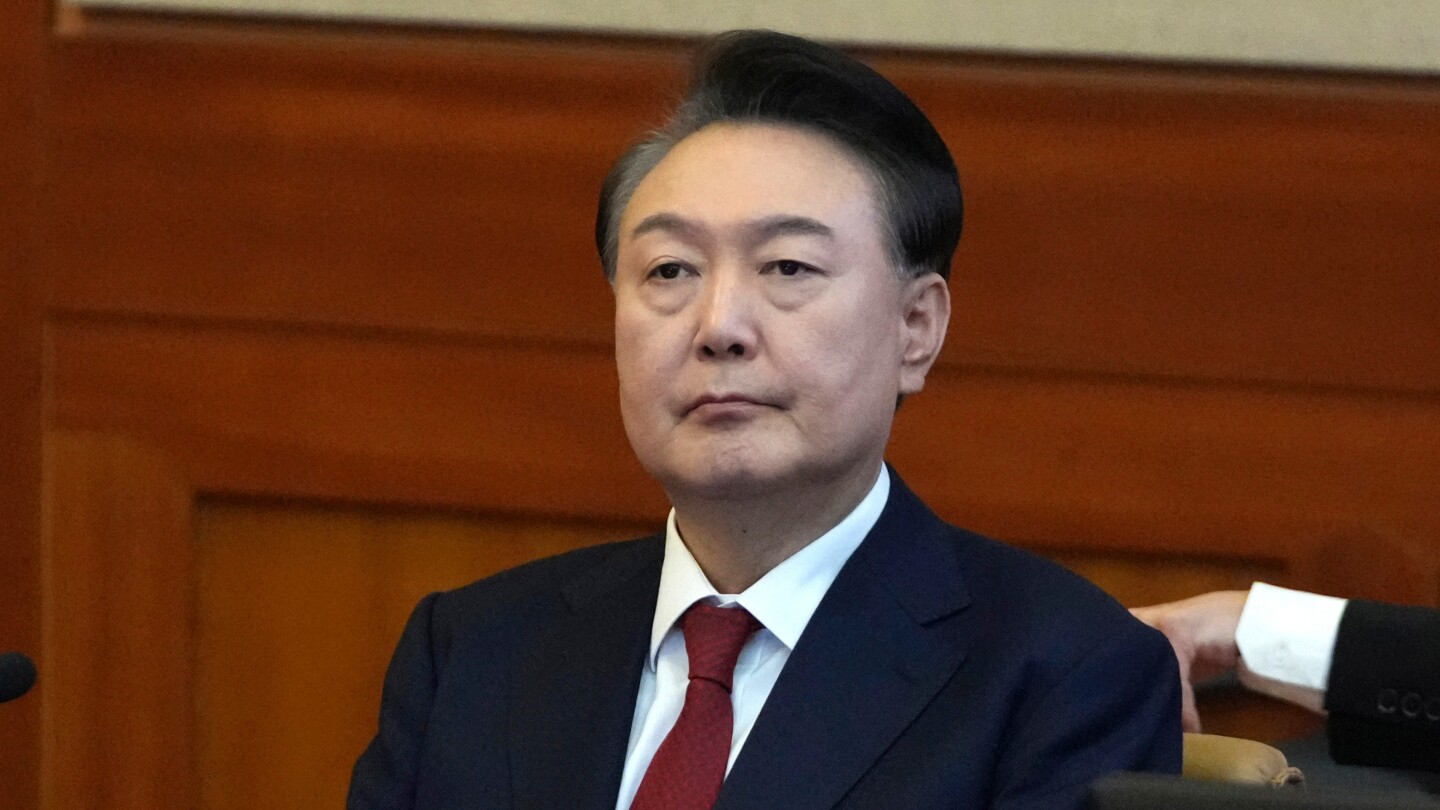
    In a landmark legal proceeding, South Korean prosecutors have formally requested a 10-year prison sentence for former President Yoon Suk Yeol regarding his controversial imposition of martial law in December 2024. The Seoul Central District Court heard arguments on Friday, December 26, 2025, marking a significant development in the ongoing judicial scrutiny of Yoon’s presidential actions.

    The prosecution’s case centers on charges of obstruction of justice, alleging that Yoon systematically excluded cabinet members from critical martial law discussions and subsequently obstructed investigative procedures aimed at detaining him in January. This unprecedented declaration of martial law—the first in over four decades—triggered massive public demonstrations and precipitated a constitutional crisis within the National Assembly.

    Yoon’s legal troubles escalated following his April removal from office by the Constitutional Court, which initiated multiple judicial proceedings against the former leader. In a statement earlier this month, Yoon defended his actions as necessary measures against what he characterized as ‘pro-China, pro-North Korea, and traitorous activities’ threatening national security.

    The judicial panel is anticipated to deliver its verdict in January 2026, according to reports from Yonhap News Agency. Concurrently, Yoon faces three additional trials, including allegations of leading an insurrection—a charge that carries the potential for capital punishment upon conviction. These proceedings represent the most significant political reckoning in South Korea’s modern democratic history, testing the resilience of the nation’s constitutional framework and accountability mechanisms.
  • China sanctions 20 US defense companies and 10 executives over massive arms sales to Taiwan

    China sanctions 20 US defense companies and 10 executives over massive arms sales to Taiwan

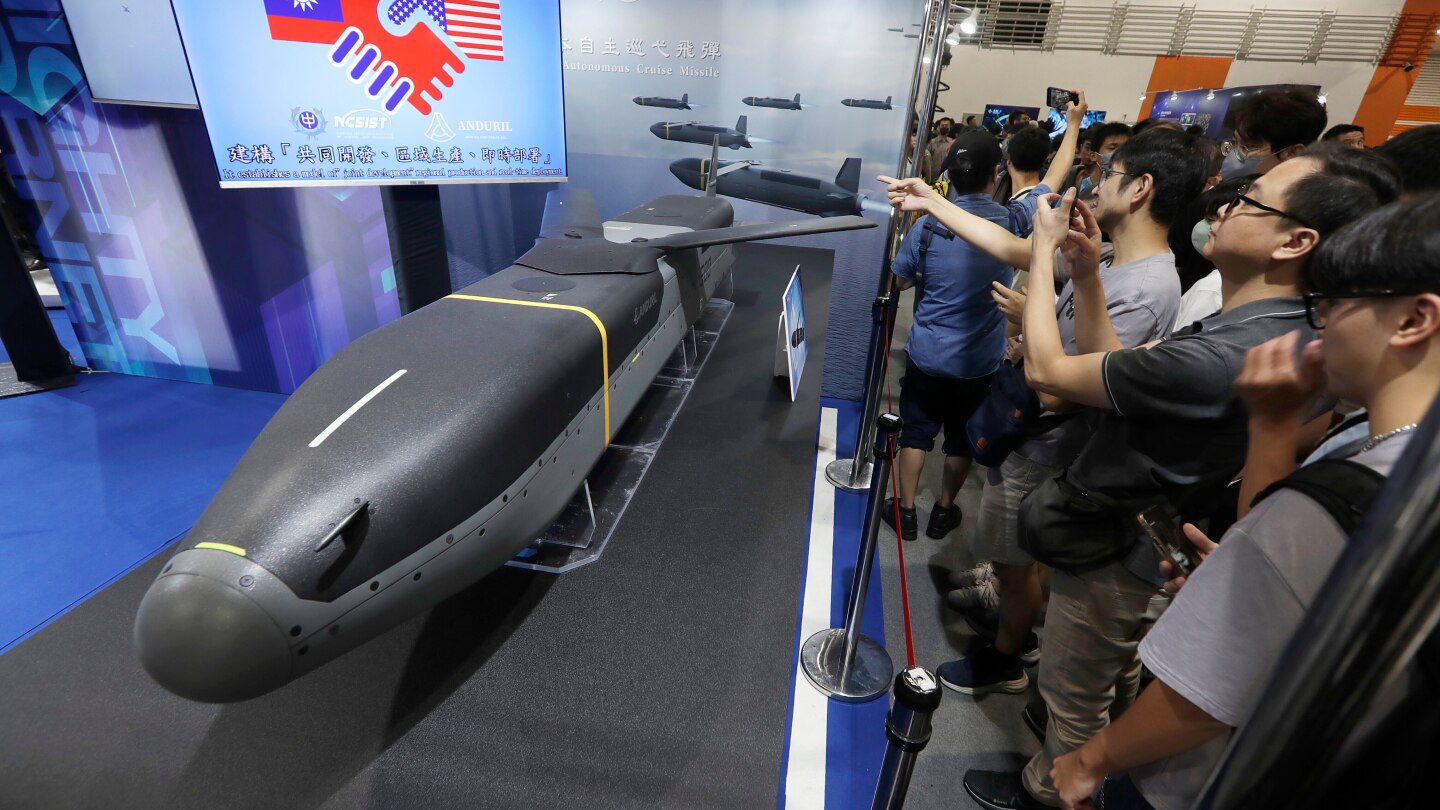
    In a significant escalation of diplomatic tensions, China has enacted sweeping sanctions against twenty American defense corporations and ten senior executives in response to Washington’s recently announced $10 billion arms package for Taiwan. The punitive measures, unveiled by China’s Foreign Ministry on Friday, include complete asset freezes within Chinese territory and comprehensive business prohibitions.

    The sanctions list encompasses major defense contractors including Northrop Grumman Systems Corporation, L3Harris Maritime Services, and Boeing’s St. Louis division. Notably targeted is Palmer Luckey, founder of defense technology firm Anduril Industries, who now faces entry bans and business restrictions in China alongside the other sanctioned executives.

    This decisive action comes precisely one week after the United States revealed its intention to proceed with what would become the largest-ever weapons transfer to Taiwan should it receive Congressional approval. Chinese authorities have characterized the proposed arms sale as ‘dangerous moves of arming Taiwan’ that violate established diplomatic agreements between the two nations.

    The Chinese Foreign Ministry emphasized in an official statement: ‘The Taiwan question resides at the very core of China’s fundamental interests and represents the primary red line that must not be crossed in China-U.S. relations. Any entity or individual participating in arms sales to Taiwan will face consequences for their actions.’

    Taiwan continues to serve as the most volatile flashpoint in Sino-American relations, with analysts expressing concern that the escalating tensions could potentially erupt into military confrontation. China has significantly intensified its military presence around Taiwan in recent years, conducting near-daily exercises involving warships and fighter jets in proximity to the island.

    This development further strains already tense bilateral relations, which have been tested by ongoing disputes spanning trade, technology transfer restrictions, and human rights issues. The United States maintains its position that federal law obligates Washington to provide Taiwan with necessary self-defense capabilities, a stance that Beijing consistently challenges as interference in China’s internal affairs.

  • White House orders military to focus on ‘quarantine’ of Venezuela oil, reports say

    White House orders military to focus on ‘quarantine’ of Venezuela oil, reports say

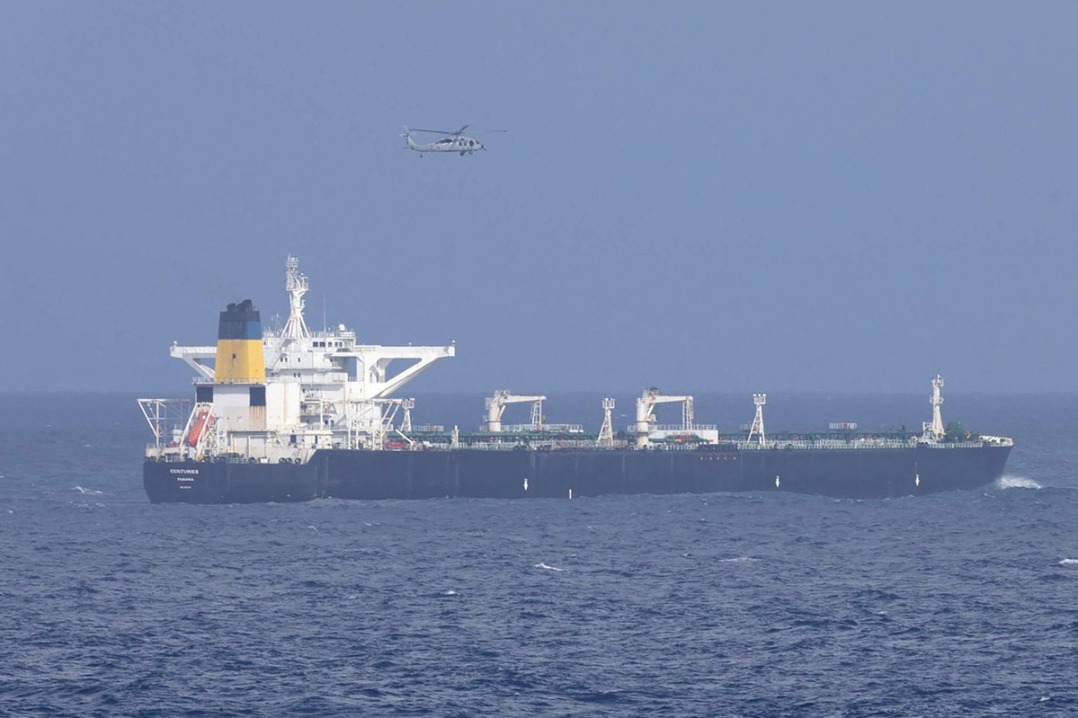
    The White House has directed American military forces to prioritize enforcing a comprehensive maritime quarantine against Venezuelan oil shipments for the coming two months, according to a Reuters report citing an anonymous U.S. official. This strategic shift emphasizes economic pressure through stringent sanctions enforcement as the primary tool to achieve Washington’s objectives regarding Venezuela.

    The official indicated that current measures have substantially increased pressure on President Nicolás Maduro’s administration, potentially pushing Venezuela toward economic crisis by late January without significant concessions to U.S. demands. This development follows President Donald Trump’s declaration last week of a “full and total blockade” against all sanctioned tankers operating in Venezuelan waters, characterizing Maduro’s government as a designated foreign terrorist organization.

    Recent operational successes include the diversion of the oil tanker Bella I, which abandoned its Venezuela-bound course and retreated into Atlantic waters after pursuit by U.S. forces. This marks the third such vessel intercepted this month, with two previous tankers already detained in Caribbean operations.

    Venezuela has consistently denounced these actions as acts of “piracy” and accused the United States of pursuing regime change and military expansionism in Latin America. The situation prompted an emergency United Nations Security Council session where most member states advocated for adherence to the UN Charter and urged restraint to prevent further escalation.

    President Trump has repeatedly justified the measures by alleging Venezuela facilitates drug trafficking into the United States. His administration has conducted maritime operations against suspected drug vessels and authorized covert CIA activities targeting Caracas, while repeatedly threatening strikes against narcotics infrastructure on Venezuelan territory.

    Venezuelan UN Ambassador Samuel Moncada countered these allegations, stating unequivocally that “The threat is not Venezuela. The threat is the U.S. government.” The escalating situation represents one of the most significant applications of naval power for economic coercion in recent Western Hemisphere relations.

  • Former Malaysia PM Najib Razak found guilty in state funds scandal

    Former Malaysia PM Najib Razak found guilty in state funds scandal

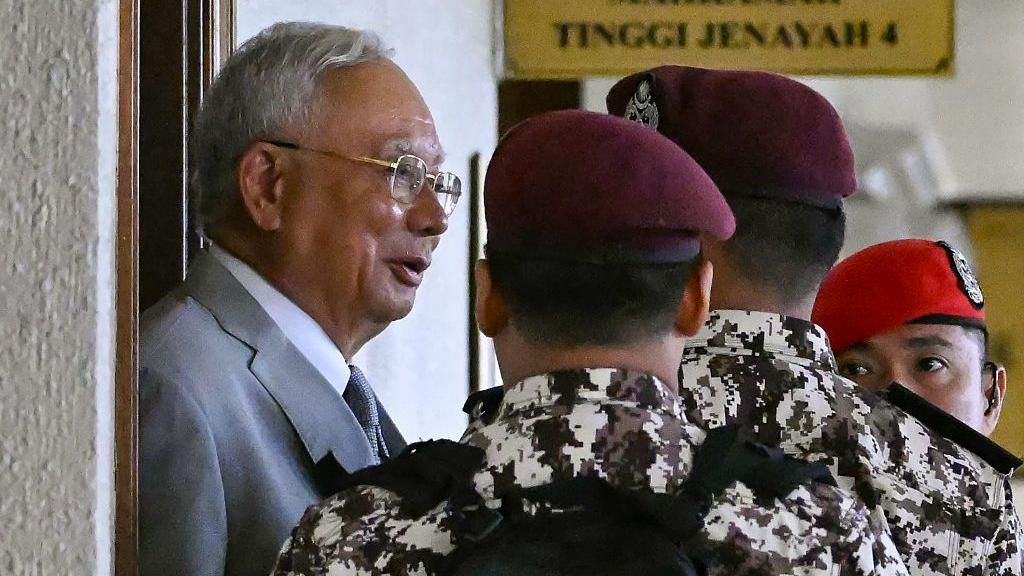
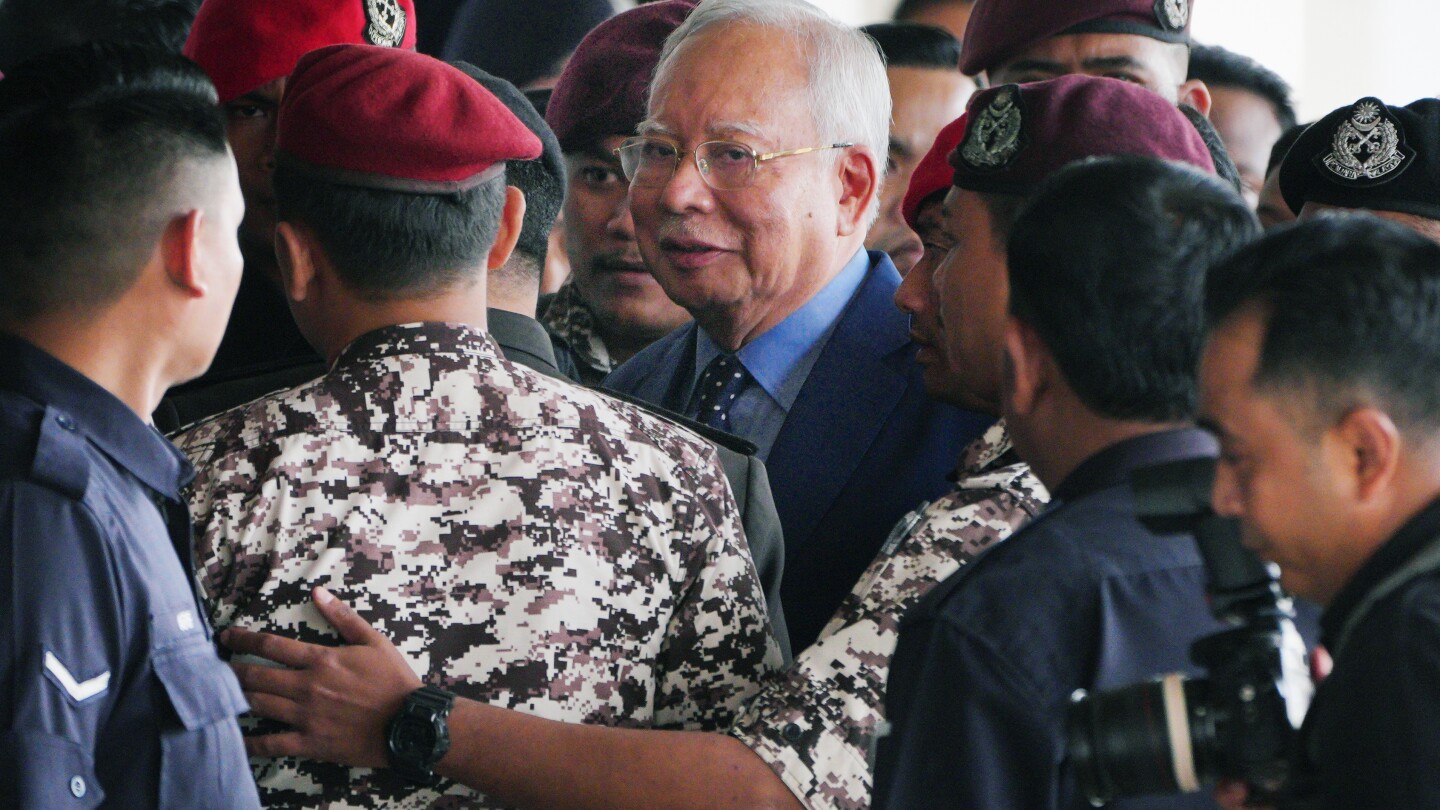
    In a landmark ruling that marks another chapter in Malaysia’s extensive 1MDB corruption saga, former Prime Minister Najib Razak has been found guilty on multiple criminal charges. The High Court in Putrajaya delivered convictions on Friday against the 72-year-old leader for abuse of power and money laundering offenses involving approximately 2.3 billion Malaysian ringgit ($569 million).

    The verdict represents the second major legal setback for Najib within a single week and his second conviction overall in connection with the massive sovereign wealth fund scandal. Presiding Judge Justice Collin Lawrence Sequerah found the former leader culpable on four counts of abuse of power and twenty-one counts of money laundering following a protracted seven-year trial that heard testimony from 76 witnesses.

    This latest conviction adds to Najib’s existing legal troubles—he is already serving a six-year prison term from a 2020 conviction involving the misappropriation of 42 million ringgit from SRC International, a former subsidiary of 1MDB. That sentence was subsequently reduced by half last year through a controversial royal pardon.

    The current case centers on substantially larger sums that entered Najib’s personal accounts in 2013, which he maintained were legitimate donations from the late Saudi monarch King Abdullah. The court systematically rejected this defense during proceedings.

    Despite his legal predicament, Najib retains considerable political support. Dozens of loyalists gathered outside the courthouse during the verdict, echoing his legal team’s assertions that he was misled by financial advisers including fugitive financier Jho Low. The scandal’s ripple effects extend beyond Najib to his wife, Rosmah Mansor, who received a ten-year bribery sentence in 2022 and currently remains free on bail pending appeal.

    The 1MDB affair—which involved an estimated $4.5 billion diverted from state coffers—triggered profound political repercussions including the historic 2018 electoral defeat of Najib’s Barisan Nasional coalition, which had governed Malaysia since independence in 1957. The recent verdict has exposed tensions within the current ruling coalition that includes Najib’s United Malays National Organisation (UMNO).

    Prime Minister Anwar Ibrahim has called for universal respect of judicial decisions, while anti-corruption advocate Cynthia Gabriel of the Center to Combat Corruption and Cronyism cautioned that systemic reforms remain incomplete despite high-profile convictions. The case continues to serve as both a warning to powerful figures and a benchmark for Malaysia’s ongoing anti-corruption efforts.

  • Zelenskyy says meeting with Trump to happen ‘in the near future’

    Zelenskyy says meeting with Trump to happen ‘in the near future’

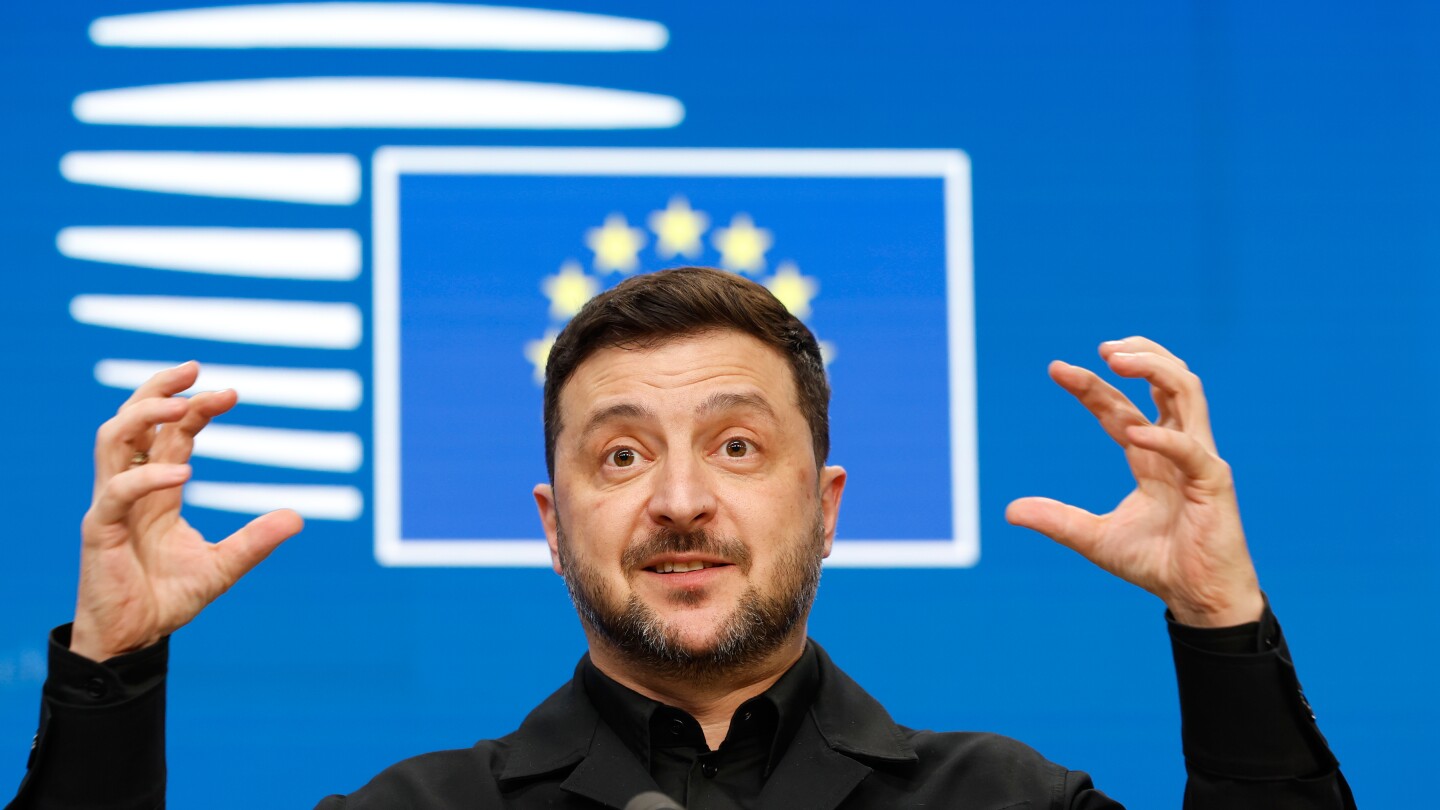
    Ukrainian President Volodymyr Zelenskyy announced Friday that a high-level meeting with U.S. President Donald Trump is scheduled to occur “in the near future,” marking a significant development in diplomatic efforts to resolve the protracted Russo-Ukrainian conflict. The declaration came via Zelenskyy’s social media platform X, where he emphasized the urgency of negotiations by stating “We are not losing a single day” and suggesting substantial progress could be achieved before year’s end.

    This diplomatic breakthrough follows Zelenskyy’s Thursday discussions with U.S. special envoy Steve Witkoff and presidential advisor Jared Kushner, which he characterized as a “good conversation.” The Trump administration has intensified its diplomatic offensive to mediate the nearly four-year war, though negotiations confront fundamentally incompatible positions between Moscow and Kyiv.

    In a notable concession, Zelenskyy indicated Tuesday his willingness to withdraw Ukrainian forces from the eastern Donbas region—provided Russia reciprocates with troop withdrawals and establishes an internationally monitored demilitarized zone. However, Russian Foreign Ministry spokeswoman Maria Zakharova offered tempered optimism, acknowledging “slow but steady progress” while maintaining Moscow’s uncompromising stance on retaining captured territories.

    Meanwhile, military operations persist on both sides. Russian drone strikes targeted Mykolaiv and surrounding areas overnight, causing partial power outages. Ukraine retaliated with precision strikes using British-supplied Storm Shadow missiles against the Novoshakhtinsk oil refinery in Russia’s Rostov region, with Ukraine’s General Staff confirming “multiple explosions” and successful target engagement. Regional governor Yuri Slyusar reported one firefighter wounded during subsequent firefighting operations.

    The strategic exchange reflects competing wartime objectives: Ukraine seeks to disrupt Russia’s oil export revenue financing its invasion, while Russia continues targeting civilian infrastructure to compromise Ukraine’s energy grid during winter months—a tactic Kyiv officials condemn as weaponizing seasonal conditions against civilian populations.

  • Militarism revival efforts criticized

    Militarism revival efforts criticized

    China’s Ministry of National Defense has issued a stern warning against Japan’s accelerating military ambitions, including controversial discussions about nuclear weapons acquisition. Defense Spokesperson Zhang Xiaogang articulated deep concerns on Thursday regarding what Beijing characterizes as Tokyo’s dangerous shift toward remilitarization.

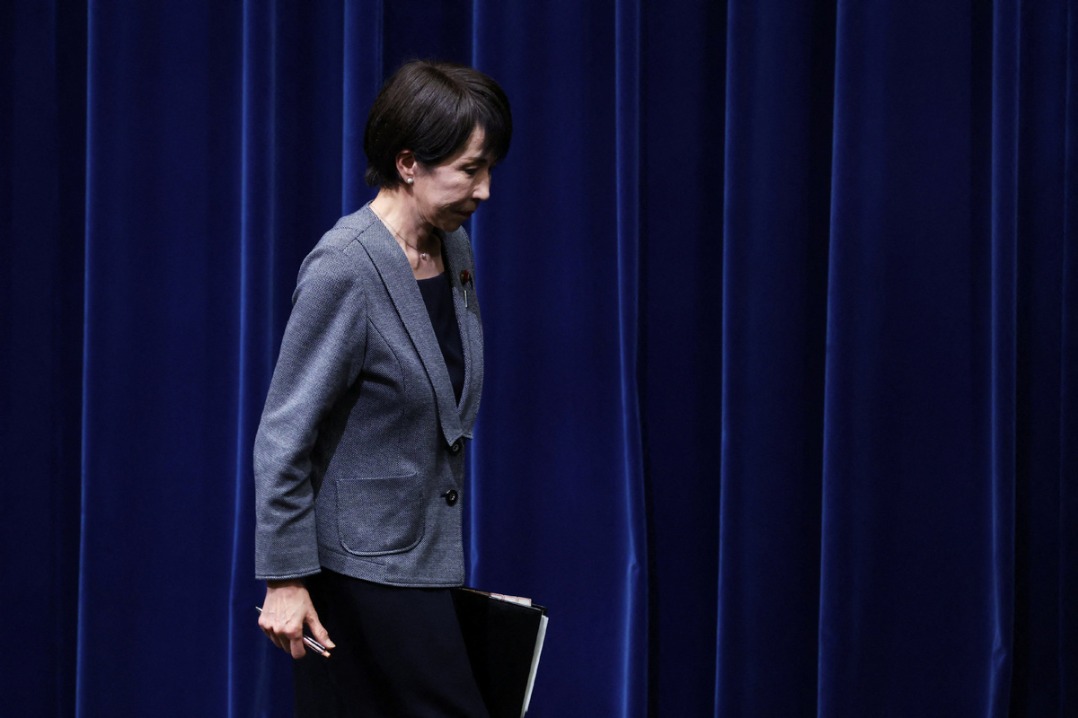
    The comments came in direct response to reports from Japanese media outlet Yomiuri Shimbun indicating Prime Minister Sanae Takaichi’s administration would not exclude the possibility of obtaining nuclear-powered submarines. More alarmingly, officials within the Prime Minister’s Office have recently advocated for Japan to develop nuclear weapons capability.

    Zhang condemned these developments as representing a blatant challenge to the post-World War II international order and the global nuclear nonproliferation framework. “These moves represent a blatant challenge to the post-World War II international order and pose a serious threat to regional and global peace stability,” the defense spokesman stated.

    The Chinese defense official further criticized Japan’s pattern of using the “China threat” narrative to justify its military expansion while simultaneously making provocative statements on sensitive issues including Taiwan. Zhang emphasized that Japan’s right-wing forces are openly testing the boundaries of international justice through their nuclear advocacy and increased military posturing.

    Addressing Japan’s recent defense reports that criticized China’s military activities and spending, Zhang provided counterarguments highlighting that China’s defense expenditures remain reasonable and moderate by international standards. He noted that China’s military activities comply fully with international law and practice.

    The spokesman concluded with a call to action for the international community: “We call on all peace-loving countries and people to take action to firmly curb the revival of militarism by Japan’s right-wing forces, and to prevent the world from being plunged into turmoil and a repeat of historical tragedies.”

  • Korean prosecutors seek 10-year sentence for ousted President Yoon in first martial law trial

    Korean prosecutors seek 10-year sentence for ousted President Yoon in first martial law trial

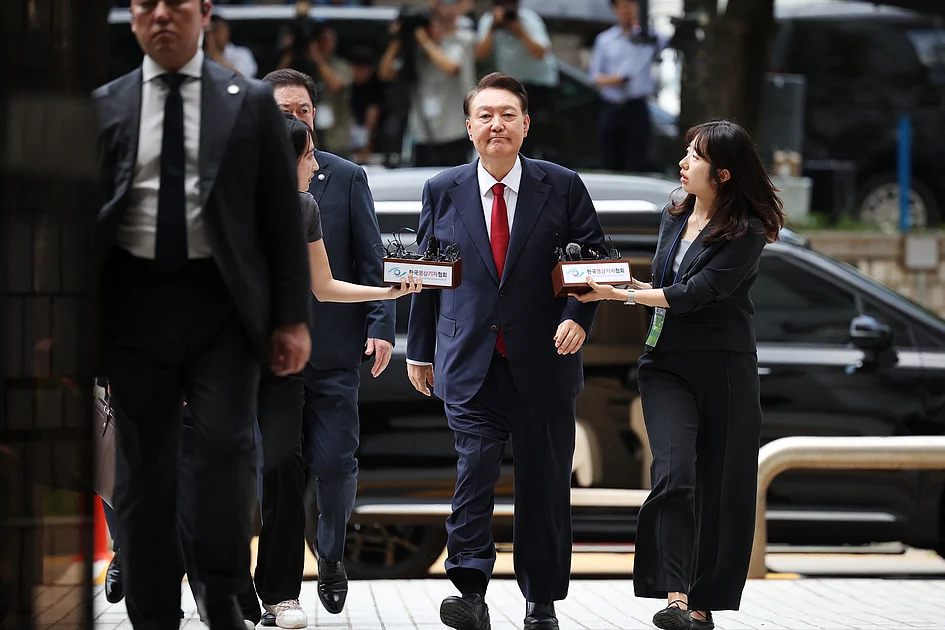
    SEOUL — In a dramatic courtroom development, South Korea’s special prosecution team has formally demanded a decade-long prison sentence for former President Yoon Suk Yeol. The sentencing request marks the conclusion of the first among seven criminal cases against the ousted leader, centering on his controversial attempt to impose martial law in 2024 and subsequent allegations during his presidency.

    Prosecutor Cho Eun-suk’s team presented their final arguments before the Seoul Central District Court on Friday, charging Yoon with multiple offenses including obstruction of official duties, abuse of power, document falsification, and evidence destruction. The case specifically addresses Yoon’s resistance against investigative authorities attempting to execute a detention warrant following his impeachment.

    Senior investigator Park Eok-su characterized Yoon’s actions as “an unprecedented obstruction of official duties” during the court proceedings. The prosecution alleges that Yoon barricaded himself at his residence for weeks, creating a tense standoff that raised concerns about potential armed conflict between presidential security forces and law enforcement.

    The failed martial law declaration in 2024 represents one of South Korea’s most severe political crises in decades. Yoon’s decree deployed armed troops onto Seoul streets, though the measure was overturned within hours when lawmakers convened an emergency session to nullify the order. The incident ultimately led to Yoon’s impeachment by the opposition-controlled parliament in December 2024 and his formal dismissal by the Constitutional Court in April.

    Beyond the current trial, Yoon faces six additional criminal proceedings including charges of rebellion—a capital offense carrying potential life imprisonment or death penalty. Prosecutors allege the former president orchestrated martial law for over a year to eliminate political opponents and consolidate power. Other accusations include ordering unauthorized drone flights over North Korea to justify military escalation, manipulating investigations into a marine’s drowning, and receiving illegal campaign assistance.

    The court is expected to deliver its verdict as early as next month, setting a precedent for subsequent trials against the former president.

  • Former Malaysian Prime Minister Najib Razak convicted in trial over 1MDB corruption scandal

    Former Malaysian Prime Minister Najib Razak convicted in trial over 1MDB corruption scandal

    PUTRAJAYA, Malaysia — In a landmark ruling with profound political implications, Malaysia’s High Court convicted imprisoned former Prime Minister Najib Razak on Friday for corruption charges directly linked to the multibillion-dollar plundering of the 1MDB state investment fund. The 72-year-old former leader was found guilty on three counts of abuse of power, adding to his existing prison sentence from previous convictions in the same sprawling financial scandal.

    The court determined that Najib had illicitly diverted over $700 million from the state fund into his personal bank accounts during his tenure as prime minister from 2009 to 2018. This latest conviction represents another chapter in one of history’s most extensive financial fraud cases, which ultimately precipitated the shocking electoral defeat of Najib’s long-ruling coalition government in 2018.

    Currently incarcerated since August 2022 following the exhaustion of his final appeals, Najib made history as Malaysia’s first former prime minister to be imprisoned. Although the Pardons Board reduced his original 12-year sentence by half in 2024 and substantially lowered his financial penalty, this new conviction potentially extends his time behind bars.

    The 1MDB scandal generated international shockwaves, triggering comprehensive investigations across multiple continents. According to the U.S. Justice Department, between 2009 and 2014, high-ranking executives and associates connected to Najib systematically embezzled approximately $4.5 billion from the fund. The laundered money financed extravagant acquisitions including luxury real estate, Hollywood film productions, art masterpieces, and even a superyacht—a spending spree that former U.S. Attorney General Jeff Sessions denounced as “kleptocracy at its worst.”

    Najib has consistently maintained his innocence, asserting that the funds constituted legitimate political donations from Saudi Arabian sources and blaming rogue financiers including the fugitive Low Taek Jho, alleged to be the scandal’s mastermind. Prosecutors countered that Najib served as the central architect and primary beneficiary of the elaborate scheme, with other participants merely executing his directives.

    The scandal’s repercussions extended to Wall Street, where Goldman Sachs incurred billions in penalties for its involvement in raising capital for 1MDB. Meanwhile, Najib’s recent petition to complete his sentence under house arrest was rejected by the High Court, which invalidated a rare royal order from the former king on constitutional grounds. His legal team has announced plans to appeal this decision.

    In a related development, Najib’s wife, Rosmah Mansor, received a ten-year prison sentence in 2022 for separate corruption charges, though she remains free on bail pending appeal proceedings.

  • Plan’s focus on tech reliance to aid Africa

    Plan’s focus on tech reliance to aid Africa

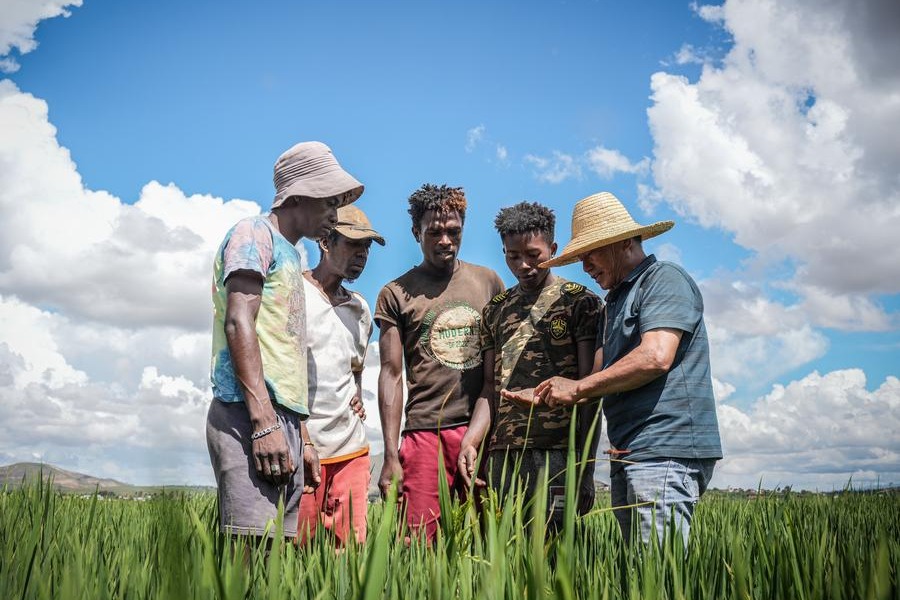
    As China advances toward implementing its 15th Five-Year Plan (2026-2030), African analysts anticipate significant opportunities emerging from China’s governance model and technological development strategies. The plan, adopted by the 20th CPC Central Committee in October, emphasizes enhanced governance mechanisms and strengthened technological self-reliance—priorities that resonate across African nations seeking development partnerships.

    Benedict Wachira, Secretary-General of the Communist Party of Kenya, highlighted the efficiency of China’s long-term planning framework, noting that “CPC leadership enables more effective decision-making, faster project approvals and broader access to technological, agricultural and infrastructure support.” This governance approach benefits African countries dependent on Chinese financing and technological expertise, facilitating quicker implementation of development initiatives.

    Emmanuel Matambo, Senior Researcher at the University of Johannesburg’s Centre for Africa-China Studies, emphasized China’s unique combination of domestic prioritization with multilateral engagement. “Even if China prioritizes its domestic interests—which is expected of any country—it still commits itself to multilateralism,” Matambo observed, contrasting this approach with Western inward-looking trends.

    African nations are already witnessing practical benefits from China’s technological advancement. South Africa’s adoption of Huawei technologies demonstrates growing confidence in Chinese innovation despite external pressures. China’s push for technological self-reliance and renewable energy leadership creates opportunities for skills transfer, industrial development, and indigenous technology ecosystem growth across Africa.

    Matambo urged African policymakers to learn from China’s competitive advantages, particularly in strategic resource utilization and workforce development. Critical opportunities exist in artificial intelligence, digital infrastructure, and renewable energy—sectors where Africa can leverage its vast population and mineral wealth through coordinated continental approaches using platforms like the African Continental Free Trade Area.

    Both experts concur that while Africa cannot replicate China’s governance model entirely, valuable lessons exist in long-term strategic planning, technological sovereignty, and multilateral engagement. By investing in skills development, particularly in STEM fields through increased educational exchanges with China, and strategically leveraging resources, Africa can transform Sino-African cooperation into sustainable development outcomes.

  • US launches deadly strikes against Islamic State in Nigeria, says Trump

    US launches deadly strikes against Islamic State in Nigeria, says Trump

    In a significant international security development, the United States has conducted coordinated military strikes against Islamic State (IS) positions in northwestern Nigeria’s Sokoto state. President Donald Trump announced the operation via Truth Social, characterizing it as a ‘powerful and deadly strike’ against what he termed ‘terrorist scum’ allegedly targeting Christian communities.

    The operation represents the culmination of strategic preparations initiated in November when President Trump directed military planning for counterterrorism actions in Nigeria. The U.S. Africa Command (Africom) confirmed the strikes were executed in coordination with Nigerian authorities, with Defense Secretary Pete Hegseth expressing gratitude for ‘Nigerian government support & cooperation’ in a social media post that concluded with ‘Merry Christmas!’

    Nigerian Foreign Minister Yusuf Maitama Tuggar provided crucial context to the BBC, clarifying this was a ‘joint operation’ targeting ‘terrorists’ without religious specificity. He emphasized the action ‘has nothing to do with a particular religion’ and indicated potential future operations would depend on ‘decisions to be taken by the leadership of the two countries.’

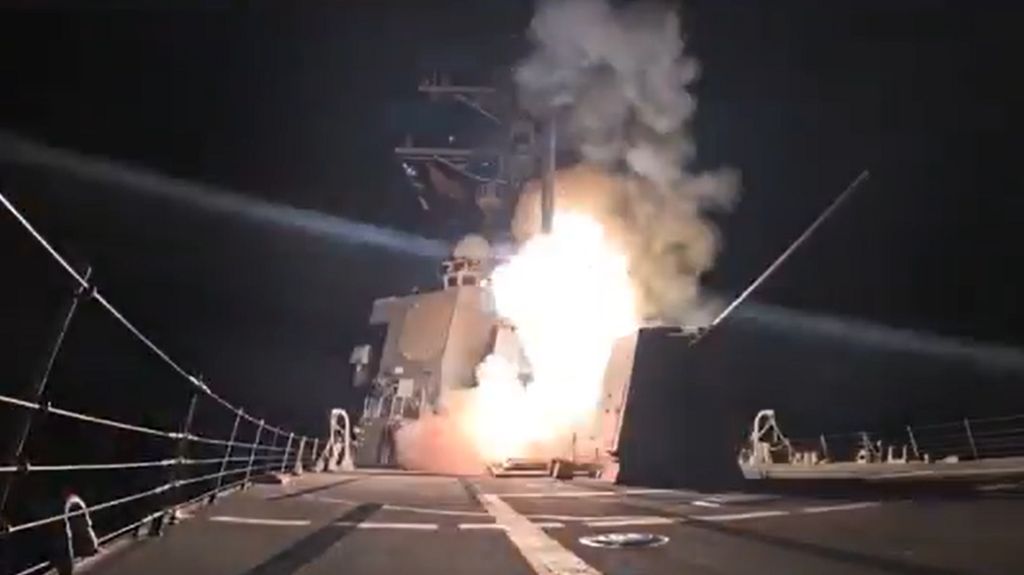
    The U.S. Department of Defense subsequently released an unclassified video showing a missile launch from a military vessel, providing visual documentation of the operation. Nigeria’s foreign ministry issued an official statement acknowledging ‘structured security co-operation with international partners’ that resulted in ‘precision hits on terrorist targets in Nigeria by air strikes in the North West.’

    This military action follows Trump’s controversial designation of Nigeria as a ‘Country of Particular Concern’ based on alleged threats to Christian populations, though monitoring groups including Acled report no evidence supporting claims of disproportionate targeting of Christians. Research indicates most victims of jihadist violence in Nigeria’s prolonged conflict have actually been Muslims.

    President Bola Tinubu’s administration has maintained that security challenges affect all Nigerians ‘across faiths and regions,’ with adviser Daniel Bwala stressing Nigeria’s sovereignty while welcoming international cooperation against insurgent groups that have killed people ‘from all faiths, or none.’

    The Nigeria operation coincides with recent U.S. military actions against IS in Syria, where Central Command reported ‘massive strikes’ involving fighter jets, attack helicopters, and artillery against more than 70 targets in central Syria with Jordanian participation.