分类: politics

  • Iran looking to change nuclear talks venue to Oman, regional diplomat says

    Iran looking to change nuclear talks venue to Oman, regional diplomat says

    Iran is actively pursuing a relocation of its upcoming nuclear negotiations with the United States from Istanbul to Oman, according to a regional diplomat’s disclosure on Tuesday. The talks, initially scheduled for Friday in Turkey, now face potential restructuring in both location and diplomatic focus. Iranian authorities are reportedly advocating for a narrowed agenda that would concentrate exclusively on nuclear matters, while simultaneously seeking to exclude direct participation from other regional nations. This development follows Iranian President Masoud Pezeshkian’s confirmation that he had authorized the initiation of dialogue with Washington. In a social media statement, Pezeshkian emphasized his instruction to the Foreign Minister to pursue “fair and equitable negotiations” within a framework protecting Iran’s national interests, provided such discussions occur in an environment “free from threats and unreasonable expectations.” The diplomatic maneuvering occurs against a backdrop of heightened military posturing, including the recent deployment of a US aircraft carrier group to the Middle East following Iran’s lethal crackdown on anti-government protests. While US President Donald Trump expressed optimism about reaching an agreement, he concurrently issued a stark warning that “bad things would happen” should diplomacy fail. Tehran maintains its commitment to diplomatic solutions while reserving the right to deliver an uncompromising response to any perceived aggression.

  • Trump accused of distorting history of Mexican-American War to justify heavy hand in Latin America

    Trump accused of distorting history of Mexican-American War to justify heavy hand in Latin America

    The Trump administration has ignited a firestorm of criticism from historians and political observers for its controversial commemoration of the Mexican-American War, which experts characterize as a deliberate attempt to reshape historical narrative to justify current foreign policy approaches toward Latin America.

    In an unsigned statement released Monday, the White House portrayed the 1846-1848 conflict as a “legendary victory that secured the American Southwest, reasserted American sovereignty, and expanded the promise of American independence.” The administration drew direct parallels between this historical period and its contemporary policies, asserting that its aggressive stance toward Latin America would “ensure the Hemisphere remains safe.”

    Historical scholars quickly identified multiple inaccuracies and omissions in the statement. Notably absent was any acknowledgment of slavery’s central role in provoking the conflict, nor mention of the devastating consequences for Native American populations displaced during the Manifest Destiny era. The statement instead glorified the territorial expansion while framing current border policies as continuations of this historical legacy.

    Alexander Aviña, a Latin American history professor at Arizona State University, condemned the revisionism: “U.S. political leaders have traditionally viewed this as an ugly aspect of U.S. history—a clear instance of imperialism against its southern neighbor. The Trump administration is embracing it as positive and framing it inaccurately as defensive measures.”

    The controversy gained diplomatic dimensions when Mexican President Claudia Sheinbaum responded with sarcastic disbelief during her news briefing, emphasizing the need to “defend sovereignty.” This response reflects the ongoing tension between the two nations as the Trump administration has increasingly intervened in Latin American affairs, including attempts to depose Venezuela’s president, alleged election meddling, and threatened military action in Mexico.

    The original conflict itself emerged from border disputes following the U.S. annexation of Texas in 1845, resulting in Mexico ceding over 525,000 square miles of territory. Former President Ulysses S. Grant later described the war as “one of the most unjust ever waged by a stronger against a weaker nation.”

    Stanford University history professor Albert Camarillo characterized the White House statement as part of a broader pattern of historical revisionism, noting similar efforts to alter Smithsonian exhibits and scrub government websites of uncomfortable historical facts, including references to slavery, Native American cultural destruction, and climate change.

    This incident represents the latest confrontation in the ongoing cultural battle over historical interpretation, with critics accusing the administration of attempting to “whitewash and reframe U.S. history while erasing generations of historical scholarship.”

  • Trump hails White House talks with ‘terrific’ Petro, after months of mutual insults

    Trump hails White House talks with ‘terrific’ Petro, after months of mutual insults

    In a remarkable diplomatic turnaround, U.S. President Donald Trump and Colombian President Gustavo Petro concluded a surprisingly cordial meeting on Tuesday, setting aside months of mutual criticism to find common ground on regional security and energy cooperation.

    The two-hour closed-door discussion at the White House focused primarily on combating drug trafficking and exploring potential energy exports from Venezuela through Colombian territory. President Trump emerged from the meeting praising his Colombian counterpart as ‘terrific,’ while Petro characterized the exchange as ‘optimistic and constructive.’

    This positive outcome contrasted sharply with previous tensions that had seen Trump label Petro a ‘sick man’ and the Colombian leader comparing Trump’s immigration policies to those of ‘the Nazis.’ These earlier exchanges had raised concerns that the meeting might mirror Trump’s contentious 2019 Oval Office encounter with Ukrainian President Zelensky.

    Significant progress was announced on several fronts. Trump revealed he was working to lift sanctions imposed on Petro last year over alleged drug trade connections—charges the Colombian president has consistently denied as ‘slander.’ Both leaders committed to joint efforts against the ELN rebel group and agreed to collaborate on targeting senior drug traffickers operating internationally, including those based in the United Arab Emirates, Europe, and the United States.

    On regional energy cooperation, Petro proposed a trilateral initiative involving Venezuela, Colombia, and the United States to facilitate Venezuelan oil and gas exports, arguing that all three nations have suffered economically from current sanctions and competition. Additionally, Trump agreed to mediate an ongoing trade dispute between Colombia and Ecuador.

    Despite the productive dialogue, both leaders acknowledged their fundamental policy differences remain. Petro noted that while their approaches to drug enforcement differ significantly—with Colombia favoring targeting high-level traffickers rather than aggressive interdiction methods—they focused on ‘what brings us together rather than what separates us.’

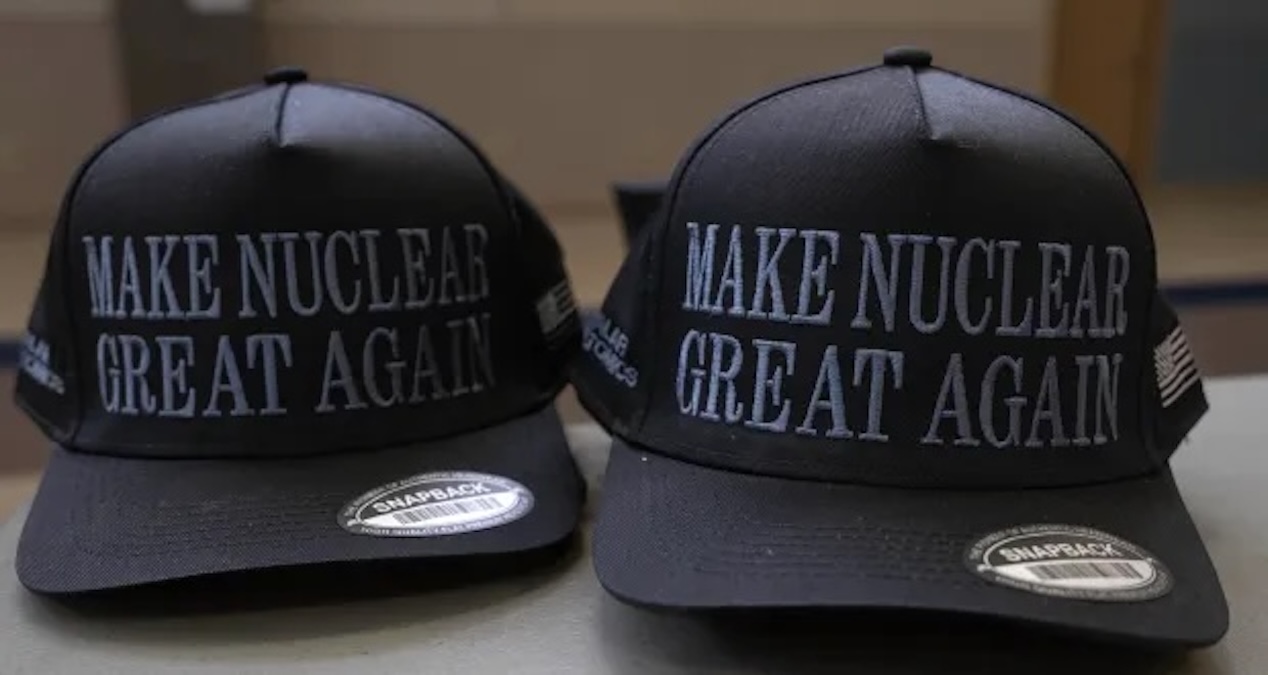
    The Colombian president concluded by proposing a ‘pact for life’ to ‘make the Americas great again,’ adapting Trump’s signature campaign slogan to frame a vision for regional cooperation between political opponents seeking common ground.

  • Epstein files: Bannon accused UAE’s MBZ of ‘coughing up’ paedophile George Nader

    Epstein files: Bannon accused UAE’s MBZ of ‘coughing up’ paedophile George Nader

    Newly unsealed Department of Justice documents from the Jeffrey Epstein case reveal a startling exchange between former Trump advisor Steve Bannon and the convicted financier regarding the arrest of Middle Eastern businessman George Nader.

    On June 4, 2019, Epstein shared a CNN report with Bannon detailing Nader’s arrest at New York’s JFK airport on child pornography charges. Bannon responded with apparent surprise, stating “Not cool,” while Epstein noted the mandatory minimum sentence of 15 years. In a significant allegation, Bannon suggested that Mohammed bin Zayed (MBZ), the ruler of the United Arab Emirates, had deliberately surrendered Nader to American authorities, commenting “MBZ must have coughed him up.”

    Epstein contradicted this theory, explaining that Nader hadn’t been formally extradited but rather “duped” into returning to the United States. The messages show Epstein criticizing Nader’s possession of extreme child abuse material involving animals and minors.

    The documents illuminate Nader’s complex role as a liaison between Trump’s inner circle and Middle Eastern leadership. According to the Mueller investigation into Russian election interference, Nader facilitated communications between Trump transition team members and Russian businessman Kirill Dmitriev, a known ally of Vladimir Putin. He additionally arranged a meeting between Dmitriev and Erik Prince, founder of the controversial private military company Blackwater.

    Nader’s 2020 conviction and 10-year sentence primarily stemmed from a 2000 incident where he transported a 14-year-old boy from the Czech Republic to the United States for sexual exploitation. This marked the culmination of a decades-long pattern of sexual offenses against minors dating back to 1984, including previous convictions in both the United States and Czech Republic for child pornography and abuse crimes.

  • Turkey says location of Iran-US meeting still unknown

    Turkey says location of Iran-US meeting still unknown

    A highly anticipated diplomatic meeting between Iranian Foreign Minister Abbas Araghchi and US negotiators Jared Kushner and Steve Witkoff faces uncertainty as Turkish officials indicate the venue may relocate from Istanbul. While initially planned for Friday in the Turkish metropolis, Ankara government sources now suggest alternative locations are under consideration.

    The potential shift follows cautious statements from Iranian officials who maintain a guarded stance toward the prospective negotiations. An Iranian diplomatic source characterized Tehran’s position as “neither optimistic nor pessimistic,” emphasizing that the meeting would demonstrate whether Washington intends to engage in “serious and result-orientated” discussions.

    Iranian President Masoud Pezeshkian confirmed his authorization for negotiations via social media, but established clear preconditions requiring “a suitable environment free from threats and unreasonable expectations.” The president emphasized that any talks must operate within Iran’s national interests framework, following requests from regional allies.

    The diplomatic engagement occurs against a backdrop of heightened military tensions. US President Donald Trump recently referenced a “massive armada” deployed toward Iran, warning of potential military action unless Tehran agrees to nuclear negotiations. Iranian officials responded by placing forces at “maximum defensive readiness” while Supreme Leader Ayatollah Ali Khamenei cautioned that any US strike would trigger regional conflict.

    Regional mediators including Qatar, Turkey, and Egypt have facilitated the diplomatic efforts to prevent open warfare between the US and Iran. The United Arab Emirates’ diplomatic adviser Anwar Gargash echoed the regional consensus that “the region does not need an Iran-US war,” while simultaneously urging Iran to pursue a negotiated settlement.

    The prospective talks would represent the first direct engagement since US airstrikes targeted Iranian nuclear facilities last summer, following Israel’s surprise attack on Iran in June 2025. Previous indirect nuclear negotiations between the parties occurred in April and May of 2025 before the military escalation.

  • Reform UK’s treasurer dined with Epstein associate, contacted Ghislaine Maxwell

    Reform UK’s treasurer dined with Epstein associate, contacted Ghislaine Maxwell

    Newly unsealed court documents have revealed connections between Reform UK’s honorary treasurer, billionaire property developer Nick Candy, and associates of the convicted sex offender Jeffrey Epstein. The records detail communications from 2004, showing Candy had contact with both Sarah Kellen, a named Epstein associate, and Ghislaine Maxwell, who is currently serving a 20-year sentence for child sex trafficking.

    The correspondence occurred years before Epstein’s 2008 conviction for child sex offenses and Maxwell’s 2021 conviction for recruiting and grooming underage girls. The documents include email exchanges where Candy discussed social plans with Kellen, who identified herself as Maxwell’s friend. In one message, Kellen expressed Maxwell’s disappointment that Candy hadn’t informed them of his travel plans.

    Candy, a former Conservative Party donor who joined Nigel Farage’s Reform UK party before the July 2024 election and contributed £1 million, inquired about Maxwell’s contact information during these exchanges. The emails show discussions about meeting in New York and reference social activities, including Kellen’s mention of time spent on Epstein’s private island.

    The documents reveal no allegations of wrongdoing by Candy. Middle East Eye, which published the findings, has reached out to both Reform UK and Candy for comment. The revelations emerge as Reform UK seeks to establish itself as a significant political force following the recent general election.

    These documents form part of the latest release of materials related to the Epstein case, continuing to shed light on the social networks connected to the financier before his criminal activities became public knowledge.

  • Tunisian opposition leader Rached Ghannouchi handed longer sentence

    Tunisian opposition leader Rached Ghannouchi handed longer sentence

    In a significant escalation of Tunisia’s political crackdown, an appeals court has increased the prison sentence of prominent opposition leader Rached Ghannouchi to 20 years. The verdict, delivered Tuesday, centers on allegations of “conspiracy against the internal security of the state” in what authorities term the “Conspiracy 2” case targeting President Kais Saied’s opponents.

    Ghannouchi, who has been incarcerated since 2023, initially received a 14-year sentence. This latest judicial decision brings his cumulative prison term to over four decades. According to legal representatives, the 81-year-old intellectual has opted against appealing to the supreme court, citing profound concerns about judicial impartiality and what he characterizes as politically motivated proceedings.

    The case forms part of a broader pattern of suppression since President Saied’s consolidation of executive powers in July 2021. Approximately twenty individuals face similar charges, including Saied’s former chief of staff Nadia Akacha and ex-Prime Minister Youssef Chahed, who currently resides abroad. These defendants stand accused of establishing a “secret security apparatus” allegedly operating through Ghannouchi’s Ennahda party.

    Parallel sentencing developments include retired military officer Kamel Bedoui, whose punishment similarly increased from 14 to 20 years. Absentee defendants Akacha and Rafik Abdessalem (Ghannouchi’s son-in-law) received upheld sentences of 35 years imprisonment.

    This ruling follows a previous major conspiracy trial concluded in November, which resulted in prison terms ranging from 5 to 45 years for 34 political opponents. Until Saied’s power consolidation, Ghannouchi’s Ennahda movement—which emerged victorious following Tunisia’s 2011 revolution—played a dominant role in the nation’s political landscape. The former parliament speaker saw his institution dissolved when Saied dismissed the prime minister and suspended legislative operations.

    International and local human rights organizations have consistently condemned these proceedings as lacking due process guarantees, warning of significant democratic backsliding and erosion of civil liberties in the North African nation.

  • Israel’s Shin Bet ‘downgrades settler assault from terror attacks to serious incidents’

    Israel’s Shin Bet ‘downgrades settler assault from terror attacks to serious incidents’

    Israel’s domestic intelligence agency Shin Bet has systematically reclassified violent acts committed by settlers against Palestinians, downgrading numerous incidents from “terror attacks” to “serious incidents” according to reports from Israel’s Kan 11 public broadcaster. This policy shift, implemented approximately one year ago, has significantly altered how security forces prioritize cases and allocate investigative resources.

    Under the revised classification framework, only attacks demonstrating “clear intent to kill” Palestinians now qualify as terrorism according to the Shin Bet’s Jewish Division. Common violent acts including arson attacks against buildings and unmanned vehicles—frequent occurrences across the occupied West Bank—now typically receive the lower classification of “serious incidents.”

    Statistical evidence reveals the practical impact of this policy: of ten documented arson attacks by masked settlers during the past month, only three were designated as terror attacks while the remaining seven were recorded as serious incidents. This reclassification occurs alongside a documented surge in settler violence throughout the West Bank.

    Critics highlight concerning patterns of impunity, noting that perpetrators are rarely detained or questioned by Israeli security forces. Numerous reports document instances where soldiers either actively participated in assaults or remained passive observers during attacks on Palestinian communities.

    One recent incident in Masafer Yatta, south of Hebron, saw dozens of settlers attacking Palestinian communities while Israeli forces reportedly stood by. Witness accounts describe soldiers encouraging settlers during acts that included setting livestock on fire and stealing property.

    Official data indicates a 25% increase in what the Israeli army terms “Israeli-Jewish terror attacks” in 2025 compared to the previous year, with 845 documented attacks resulting in four fatalities and approximately 200 injuries. Israeli rights organization B’Tselem reported in November that settlers killed at least 21 Palestinians in the two years following the October 2023 attacks, with no documented cases resulting in accountability for the perpetrators.

  • Former Chinese Arts Academy president under investigation for alleged Party violations

    Former Chinese Arts Academy president under investigation for alleged Party violations

    China’s top anti-corruption authorities have initiated a comprehensive disciplinary review and supervisory investigation into Lian Ji, the former president of the Chinese National Academy of Arts. The Central Commission for Discipline Inspection (CCDI) and National Supervisory Commission formally announced the probe on Tuesday, citing suspicions of serious violations of Party discipline and national laws.

    Lian Ji, 70, whose career spans decades of public service, joined the Communist Party of China in 1975. The Shanxi native dedicated nearly thirty years of his professional life to administrative roles within the Inner Mongolia autonomous region, eventually ascending to the position of regional government vice chairman in 2003.

    His political trajectory continued with significant appointments, including his 2011 role as Standing Committee member of the CPC Gansu Provincial Committee and head of its publicity department. Lian assumed leadership of the prestigious Chinese National Academy of Arts in February 2016, overseeing the institution’s cultural and artistic development until his retirement in 2018.

    The investigation represents the latest development in China’s ongoing anti-corruption campaign, demonstrating the authorities’ continued commitment to maintaining disciplinary standards within Party ranks regardless of an individual’s retirement status or previous positions held. This case particularly highlights the scrutiny placed on cultural and educational institutions, which have recently faced increased oversight regarding compliance with Party regulations and ethical standards.

  • Ethiopia’s prime minister accuses Eritrea of mass killings during Tigray war

    Ethiopia’s prime minister accuses Eritrea of mass killings during Tigray war

    ADDIS ABABA, Ethiopia — In a landmark parliamentary address on Tuesday, Ethiopian Prime Minister Abiy Ahmed formally acknowledged for the first time that Eritrean military forces participated extensively in the Tigray conflict, leveling serious allegations of mass killings and systematic destruction against them. This declaration marks a dramatic reversal from the government’s previous stance and significantly escalates diplomatic tensions between the neighboring nations.

    The two-year Tigray war, which concluded with a peace agreement in 2022, resulted in an estimated 400,000 fatalities according to international observers. Prime Minister Ahmed detailed specific atrocities, asserting that Eritrean troops “demolished houses in Shire, massacred our youth in Axum, and looted factories in Adwa” during joint operations with Ethiopian forces against Tigrayan regional fighters.

    Eritrea’s Information Minister Yemane Gebremeskel swiftly dismissed these allegations as “cheap and despicable lies” unworthy of formal response. This exchange occurs amidst reports of renewed hostilities in the Tigray region, prompting Ethiopia’s national carrier to suspend flights to the area last week due to security concerns.

    The underlying conflict extends beyond wartime allegations to fundamental geopolitical interests. Landlocked Ethiopia has increasingly expressed its need for sovereign access to sea ports, with Prime Minister Ahmed asserting that “The Red Sea and Ethiopia cannot remain separated forever.” Ethiopia lost its Red Sea coastline when Eritrea gained independence in 1993 following decades of armed struggle.

    Gebremeskel countered that Ahmed’s accusations represent a recent rhetorical shift motivated by maritime ambitions, noting that Ethiopian leadership had previously decorated Eritrean military officials with state medals. The minister characterized Ethiopia’s position as developing a “delusional malaise of ‘sovereignty access to the sea.’”

    The deteriorating relationship represents a stark reversal from the diplomatic breakthrough achieved in 2018, when Abiy received the Nobel Peace Prize for reconciling with Eritrea. Current intelligence assessments suggest Eritrea may be forming alliances with Tigrayan forces, while both nations accuse each other of preparing for renewed conflict. Regional analysts warn that these developments threaten to destabilize the entire Horn of Africa.