分类: politics

  • Japan, Britain to boost cybersecurity and critical minerals cooperation as China’s influence grows

    Japan, Britain to boost cybersecurity and critical minerals cooperation as China’s influence grows

    TOKYO — In a significant diplomatic move, Japan and the United Kingdom have committed to deepening their strategic cooperation on cybersecurity and securing supply chains for critical minerals. This agreement was reached during British Prime Minister Keir Starmer’s official visit to Tokyo on Saturday, highlighting a shared commitment to address growing geopolitical challenges in the Indo-Pacific region.

    Prime Minister Starmer characterized his visit as occurring during an era of profound ‘geopolitical, economic and technological shocks’ that are fundamentally reshaping global dynamics. The discussions with Japanese leadership focused on strengthening collective security frameworks across both the Atlantic and Indo-Pacific regions while enhancing economic resilience against external pressures.

    A cornerstone of the new partnership involves establishing a comprehensive cyber strategic initiative designed to bolster both nations’ defenses against digital threats. This cybersecurity collaboration comes amid increasing concerns about vulnerabilities in Japan’s digital infrastructure, particularly as the country accelerates its military modernization program and deepens security ties with the United States and other regional partners.

    The bilateral talks also addressed urgent concerns regarding global export restrictions on critical minerals, which include rare earth elements and other materials vital for economic and military applications. Both nations acknowledged the pressing need for like-minded countries to collaborate in building more diversified and resilient supply chains, reducing dependence on single sources for these strategically important resources.

    This strengthened partnership occurs against the backdrop of regional tensions, particularly regarding China’s growing influence and recent comments by Japanese officials concerning potential involvement in Taiwan-related scenarios. While Prime Minister Starmer recently pursued a ‘strategic partnership’ with China during his visit to Beijing, the UK-Japan agreement demonstrates a parallel effort to build security cooperation among democratic nations.

    As Japan’s sole treaty ally remains the United States, the East Asian nation has been actively expanding its network of security partnerships with other friendly nations including Australia and Britain in response to uncertainties about Washington’s long-term security commitments in the region.

    The two major trading and defense partners further agreed to collaborate in supporting institutions that maintain a free and predictable multilateral trade system, including potential expansion of the Comprehensive and Progressive Agreement for Trans-Pacific Partnership and enhanced cooperation with the European Union.

    Japanese officials expressed optimism about the future of bilateral relations, with one representative stating, ‘I hope to elevate Japan-British relations even higher,’ signaling commitment to continued partnership development in facing shared challenges.

  • US government enters partial shutdown but quick resolution expected

    US government enters partial shutdown but quick resolution expected

    The United States federal government commenced a partial shutdown early Saturday morning after Congress failed to approve fiscal year 2026 budget allocations before the midnight funding deadline. This development marks the second government shutdown of President Donald Trump’s second term, though congressional leaders from both parties indicate the disruption will likely be brief.

    The budgetary stalemate originated from a dramatic breakdown in negotiations, primarily fueled by Democratic outrage over the killing of two protesters in Minneapolis by federal immigration agents. This incident critically derailed discussions regarding new funding allocations for the Department of Homeland Security (DHS).

    Senate Democratic Minority Whip Dick Durbin publicly condemned the administration’s priorities, stating on social media, ‘Instead of going after drug smugglers, child predators, and human traffickers, the Trump Administration is wasting valuable resources targeting peaceful protestors in Chicago and Minneapolis. This Administration continues to make Americans less safe.’

    Approximately 75% of federal operations are impacted by the funding lapse, potentially activating shutdown protocols across a vast spectrum of agencies encompassing education, health, housing, and national defense. Federal departments were mandated to initiate their contingency plans overnight.

    However, the practical impact on government services, federal contractors, and employees is projected to be limited. The Senate has already advanced a bipartisan deal, which has received endorsement from President Trump. The House of Representatives, currently out of session until Monday, is expected to ratify this package early next week, thereby restoring funding within days.

    While a prolonged impasse could force tens of thousands of federal workers into furloughs or unpaid work, congressional leadership expresses strong confidence in a swift resolution, aiming to avoid a repeat of the record-length shutdown that occurred last fall.

  • US approves potential $9 billion sale of Patriot missiles to Saudi Arabia

    US approves potential $9 billion sale of Patriot missiles to Saudi Arabia

    In a significant move reinforcing US-Saudi defense cooperation, the Pentagon has announced State Department approval for a potential $9 billion arms sale to Riyadh. The transaction, disclosed on Friday, involves the provision of 730 Patriot Advanced Capability-3 Missile Segment Enhancement (PAC-3 MSE) interceptor missiles and associated equipment, with defense giant Lockheed Martin serving as the principal contractor.

    This substantial military package responds to Saudi Arabia’s formal request to bolster its air defense capabilities. Pentagon officials emphasized that the proposed transfer would not disrupt the regional military equilibrium or compromise US defense readiness. The advanced missile system represents a critical component of modern aerial defense infrastructure, capable of intercepting tactical ballistic missiles, cruise missiles, and advanced aircraft.

    The approval comes amid ongoing regional security challenges and demonstrates continued US commitment to Middle Eastern allies’ defense needs. This transaction marks one of the largest potential foreign military sales to Saudi Arabia in recent years, reflecting the strategic partnership between the two nations despite periodic diplomatic tensions over human rights concerns and regional policies.

    Defense analysts note that such sales contribute to maintaining stability in the Gulf region while ensuring interoperability between US and allied forces. The PAC-3 MSE system represents the latest evolution of the Patriot missile platform, offering enhanced range and accuracy over previous generations.

  • Danish veterans stage protest outside US Embassy

    Danish veterans stage protest outside US Embassy

    COPENHAGEN — Hundreds of Danish military veterans assembled in a solemn silent demonstration outside the U.S. Embassy in Copenhagen on Saturday, expressing profound dismay over the Trump administration’s controversial remarks regarding Greenland and perceived disrespect toward Denmark’s combat contributions to joint international operations.

    The gathering, organized by Danish Veterans & Veteran Support, commenced at a memorial dedicated to fallen Danish service members before participants marched silently to the embassy grounds. There, they observed five minutes of symbolic silence—each minute honoring a different branch of Denmark’s defense and security forces: army, air force, navy, emergency management agency, and police.

    In an official statement, the veterans’ organization articulated deep disappointment with the current U.S. administration: “Denmark has consistently stood alongside the United States, responding to calls for support in global crisis zones. We now feel both betrayed and mocked by a White House that deliberately overlooks Denmark’s combat partnership with American forces.”

    The statement further emphasized the emotional impact: “No words can adequately convey our pain at seeing Denmark’s sacrifices in the struggle for democracy, peace, and freedom being dismissed in Washington.”

    The protest reflects escalating tensions between the two NATO allies, particularly regarding U.S. suggestions about acquiring Greenland and questioning Denmark’s capability to protect Western security interests in the Arctic region. These diplomatic frictions intensified earlier in the week when U.S. Embassy staff removed 44 Danish flags placed to honor each Danish soldier killed in Afghanistan—the highest per capita casualty rate among coalition forces. While the State Department explained the removal as standard protocol following demonstrations, the action further aggravated diplomatic sensitivities.

  • US Justice Dept releases documents, images, videos from Epstein files

    US Justice Dept releases documents, images, videos from Epstein files

    The U.S. Justice Department initiated the substantial release of documents from the Jeffrey Epstein case on Friday, disclosing millions of pages alongside photographs and video evidence. This development intensifies the politically charged atmosphere surrounding President Donald Trump, who has been persistently linked to the controversial financier.

    Deputy Attorney General Todd Blanche emphasized the administration’s non-interference during a press conference, stating, “The White House played no role in directing our review process—including decisions regarding redactions.” He further asserted that no protective measures were extended to President Trump or any other individuals mentioned in the files.

    Among the released materials are over three million documents, 180,000 images, and 2,000 videos. The Justice Department noted that some submissions contained what it characterized as “untrue and sensationalist claims” about the 79-year-old president, which were presented to the FBI prior to the 2020 election.

    Blanche confirmed that all images of female victims, except those of convicted accomplice Ghislaine Maxwell, have been redacted to protect identities. However, a coalition of 19 survivors issued a statement contending that their identifying information remains inadequately protected, while the men implicated in the abuse continue to be shielded.

    Jeffrey Epstein, the financier accused of orchestrating a widespread sex trafficking operation, died in prison in 2019 under circumstances ruled a suicide. Previous document releases have revealed associations with high-profile figures including business leaders, celebrities, and politicians such as Bill Gates, Woody Allen, and former President Bill Clinton.

    Notably, a draft email within the files contained allegations about Gates’ personal life, which the Gates Foundation vehemently denied as “absurd and false.” Other communications detailed Epstein’s introductions involving Steve Tisch, a prominent film producer and co-owner of the New York Giants.

    The disclosure follows the Epstein Files Transparency Act, which mandated full document release by December 19. Blanche attributed delays to the extensive redaction process necessary to safeguard the identities of Epstein’s alleged victims, believed to number over 1,000.

  • In an increasingly hostile world, migrants are hopeful as Spain moves to integrate them

    In an increasingly hostile world, migrants are hopeful as Spain moves to integrate them

    In a landmark policy shift that diverges from restrictive immigration trends elsewhere in Europe and the United States, Spain has unveiled a sweeping regularization program for its undocumented population. The Spanish government announced this week it will grant residency and work permits to all foreign nationals who entered the country before December 31, 2025, provided they have resided in Spain for at least five months and maintain a clean criminal record.

    Prime Minister Pedro Sánchez, in a social media address, characterized the move as recognizing the substantial contributions of immigrants who have ‘built progress in this country together with us.’ The policy directly addresses the plight of an estimated half-million ‘sin papeles’ (without papers) who form an invisible workforce in agriculture, domestic care, and hospitality sectors—jobs typically shunned by Spanish citizens.

    This humanitarian approach stands in stark contrast to the intensified deportation measures and anti-immigrant rhetoric gaining traction elsewhere. The policy’s implementation window is notably brief, with applications accepted only between April and June 2024, creating both urgency and administrative challenges.

    The human impact is illustrated through several narratives: Ale Castañeda, a Colombian asylum-seeker fleeing anti-LGBTQ+ violence, expressed relief after living with ‘constant anxiety’ about his expiring permit. Paulina Valenzuela, a Chilean architect reduced to cleaning jobs after her professional credentials went unrecognized, described the announcement as hope she ‘didn’t have before.’ Hussain Dar, a Pakistani graduate left homeless after exhausting his savings, celebrated the opportunity to work legally and contribute taxes to the Spanish economy.

    Despite widespread celebration among immigrant communities, significant practical hurdles remain. Consulates face unprecedented demand for documentation, particularly criminal record certificates. Immigration offices, already notorious for appointment backlogs exploited by criminal networks selling slots for €50, must process hundreds of thousands of applications within months. Migration Minister Elma Saiz has pledged additional resources to ensure smooth implementation, stating ‘We want this to be a success.’

  • Venezuela’s Rodriguez announces mass amnesty proposal, plans to close El Helicoide prison

    Venezuela’s Rodriguez announces mass amnesty proposal, plans to close El Helicoide prison

    In a landmark address at Venezuela’s Supreme Court, Acting President Delcy Rodriguez unveiled transformative national reconciliation measures, including a comprehensive amnesty proposal and the planned closure of the notorious El Helicoide prison. The announcement marks the most significant reform initiative since the U.S.-led ouster of authoritarian leader Nicolas Maduro just weeks ago.

    Rodriguez detailed legislation that would grant general amnesty covering the entire period of political violence from 1999 to present, encompassing both the Hugo Chavez presidency and Maduro’s subsequent authoritarian rule. “This law will serve to heal the wounds left by political confrontation, fueled by violence and extremism,” Rodriguez declared before assembled government officials, framing the measure as essential for restoring judicial integrity.

    The acting president simultaneously announced plans to convert the infamous El Helicoide detention facility—where human rights organizations documented systematic torture of political prisoners—into a multipurpose community center. The massive structure, originally constructed as a shopping mall, will be repurposed as a “sports, cultural and commercial centre for police families and neighboring communities.”

    The reforms generated immediate emotional responses from affected families. Betsy Orellana, 63, expressed overwhelming joy at the prospect of her son’s release after six months without communication: “It’s wonderful! This is a huge joy, it’s an amnesty, my God, it’s total liberation.”

    These developments follow Rodriguez’s rapid implementation of U.S.-backed reforms since assuming power less than four weeks ago. The government has already passed legislation opening Venezuela’s critical oil sector to private investment—a key Washington demand—prompting the immediate rollback of U.S. sanctions targeting Venezuelan petroleum.

    However, opposition figures remain cautiously optimistic. Nobel Peace Prize laureate Maria Corina Machado characterized the amnesty as a response to American pressure rather than voluntary regime action, while opposition lawmaker Tomas Guanipa expressed hope that the measure would terminate “an era of repression” and initiate a genuine democratic transition.

    Concurrently, U.S. authorities confirmed the release of all known American prisoners in Venezuela, including Peruvian-American Arturo Gallino Rullier. In further normalization steps, the Trump administration lifted flight bans to Venezuela and prepared to reestablish diplomatic presence in Caracas, with seasoned diplomat Laura Dogu appointed as charge d’affaires.

  • PLA conducts combat readiness patrols around China’s Huangyan Island

    PLA conducts combat readiness patrols around China’s Huangyan Island

    The People’s Liberation Army of China has executed comprehensive combat readiness patrols in the maritime vicinity of Huangyan Island, according to an official announcement dated January 31, 2026. This strategic military operation demonstrates China’s ongoing commitment to safeguarding national sovereignty and maintaining regional stability in the South China Sea.

    The patrols, characterized as routine exercises, form part of the PLA’s regular training schedule aimed at enhancing operational preparedness. Military analysts indicate these maneuvers serve multiple purposes: testing rapid response capabilities, validating defense coordination systems, and asserting China’s territorial claims in accordance with international law.

    Defense experts note that such patrols represent standard practice for naval forces worldwide to maintain combat readiness. The timing coincides with increased regional military activities by various nations, though Chinese officials emphasized these exercises are defensive in nature and not targeted at any specific country.

    Historical context reveals that Huangyan Island has been administered by China for decades, with the PLA regularly conducting lawful activities in surrounding waters. The latest patrols align with China’s long-standing policy of peaceful development and maritime security maintenance through measured military presence.

    Regional security observers have documented increased naval diplomacy and confidence-building measures between China and neighboring countries in recent years, suggesting these patrols represent continuity rather than escalation in China’s defense posture.

  • US-Iran tensions raise regional concerns as Tehran signals willingness for talks

    US-Iran tensions raise regional concerns as Tehran signals willingness for talks

    Amid escalating US-Iran tensions that have triggered regional alarm, diplomatic channels show signs of activation as Tehran conditionally expresses willingness to return to negotiation tables. The situation has prompted urgent calls for de-escalation from Middle Eastern leaders who fear broader regional instability.

    Turkish President Recep Tayyip Erdogan has positioned Ankara as a potential mediator, offering facilitation services during a phone conversation with Iranian President Masoud Pezeshkian. Erdogan emphasized Turkey’s commitment to constructive diplomacy aimed at resolving the mounting crisis.

    President Pezeshkian articulated Iran’s diplomatic stance, emphasizing “dignity-based diplomacy” grounded in international law and mutual respect. In separate discussions with UAE President Sheikh Mohamed bin Zayed Al Nahyan, the Iranian leader clarified that Tehran seeks engagement rather than confrontation, while simultaneously criticizing Western powers for their perceived lack of genuine diplomatic commitment.

    Iran’s Foreign Minister Seyed Abbas Araghchi, during meetings in Istanbul with Turkish counterpart Hakan Fidan, reiterated Tehran’s conditional openness to negotiations. “We are prepared for talks with the United States,” Araghchi stated, “but only if they are fair and not conducted under threat.” He emphasized that Iran would not negotiate its defensive capabilities while acknowledging that logistical details regarding format, location, and agenda remain unresolved.

    The diplomatic movements coincide with heightened military posturing. US President Donald Trump announced the deployment of a “massive armada” toward Iranian waters, larger than the fleet recently sent to Venezuela and led by the aircraft carrier Abraham Lincoln. Simultaneously, the US guided-missile destroyer USS Delbert D. Black made a port call in Eilat, highlighting continued US-Israeli military coordination.

    Regional leaders expressed grave concerns about potential consequences. Egyptian President Abdel-Fattah al-Sisi warned that military confrontation could yield severe security and economic repercussions across the region. Azerbaijan’s Foreign Minister Jeyhun Bayramov, in discussions with Araghchi, committed to preventing Azerbaijani territory or airspace from being used against Iran or neighboring states.

    Despite the tensions, regional analysts suggest that direct military conflict may not be inevitable. Qatari political analyst Faleh Al Hajri observed that current indicators suggest the Trump administration is “using time as a weapon, brandishing force to raise the cost of Iran’s refusal” rather than having made a definitive decision to wage war.

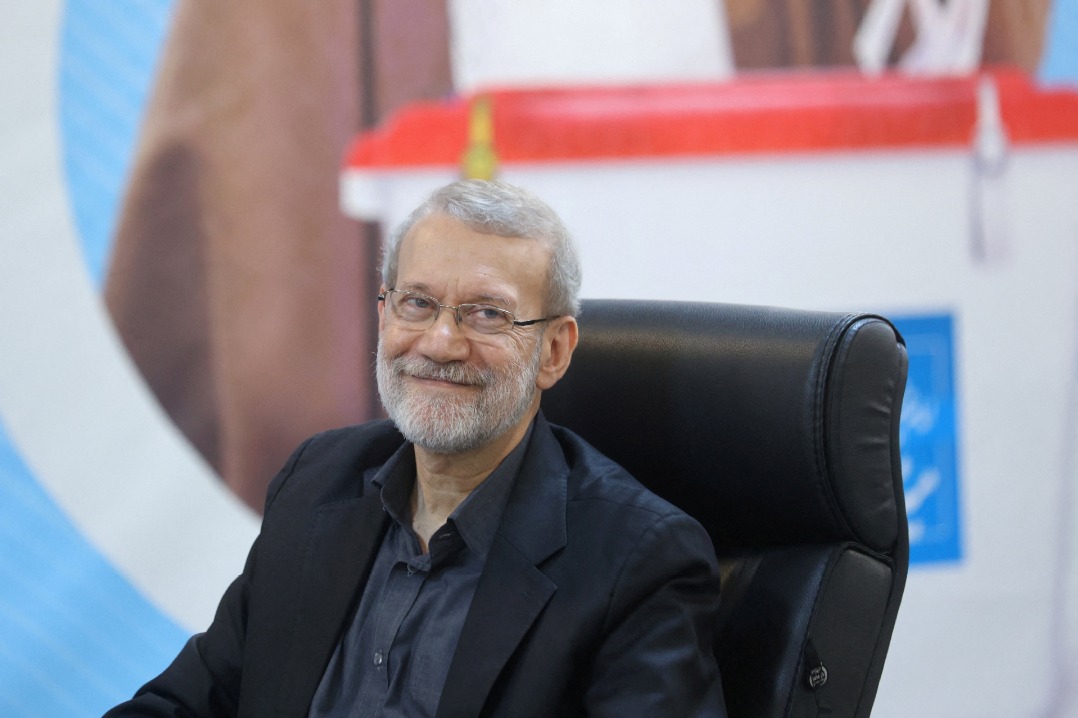
    The diplomatic landscape further complicated as Iran’s top security official Ali Larijani visited Moscow for discussions with Russian President Vladimir Putin, focusing on economic cooperation and significant regional issues, though specific details remained limited.

  • Japanese PM’s provocations condemned

    Japanese PM’s provocations condemned

    Tokyo witnessed significant domestic opposition to Prime Minister Sanae Takaichi’s controversial Taiwan statements and military expansion policies during a Thursday gathering of Japanese societal leaders. The event highlighted growing concerns that Takaichi’s refusal to retract her provocative comments regarding Taiwan Strait contingencies has substantially elevated regional tensions and damaged bilateral relations with China.

    Former Prime Minister Yukio Hatoyama delivered a stern warning that Takaichi’s remarks fundamentally undermine the 1972 Japan-China Joint Statement, which explicitly recognizes Taiwan as China’s internal affair. He characterized her statements as essentially declaring military intervention intentions regarding Taiwan, representing a severe departure from established diplomatic foundations that have normalized and sustained Japan-China relations for decades.

    The controversy originated from Takaichi’s January 26th television appearance on TV Asahi, where she asserted that the US-Japan security alliance would ‘collapse’ if Japan failed to respond to hypothetical attacks on US forces in the Taiwan Strait. These comments echoed her earlier November 7th Diet statements suggesting potential Japanese military involvement in Taiwan scenarios, made shortly before dissolving the House of Representatives and calling snap elections.

    Takakage Fujita, secretary-general of the Association for Inheriting and Propagating the Murayama Statement, expressed alarm that Japan is pursuing military buildup along an ‘extremely dangerous road.’ He suggested Takaichi’s dissolution of parliament aimed primarily to consolidate her political base and advance her agenda of transforming Japan into a ‘military power.’

    Yuko Tanaka, former president of Hosei University, warned that Japan faces resurgence of ‘new militarism’ manifested through rapidly expanding defense budgets without stable fiscal foundations. She noted discussions have progressed beyond the 2% GDP defense spending target to proposals reaching 3.5% or even 5%, funded primarily through government bond issuance that accelerates national debt growth.

    Experts cautioned that deteriorating China-Japan relations, combined with yen depreciation and precarious public finances, could push Japan toward economic recession even before potential military conflicts materialize. The gathering participants unanimously emphasized that China-Japan friendship remains Japan’s most crucial guarantee for peace and security, urging withdrawal of Takaichi’s statements and opposing any attempts to provoke aggressive military actions.