分类: politics

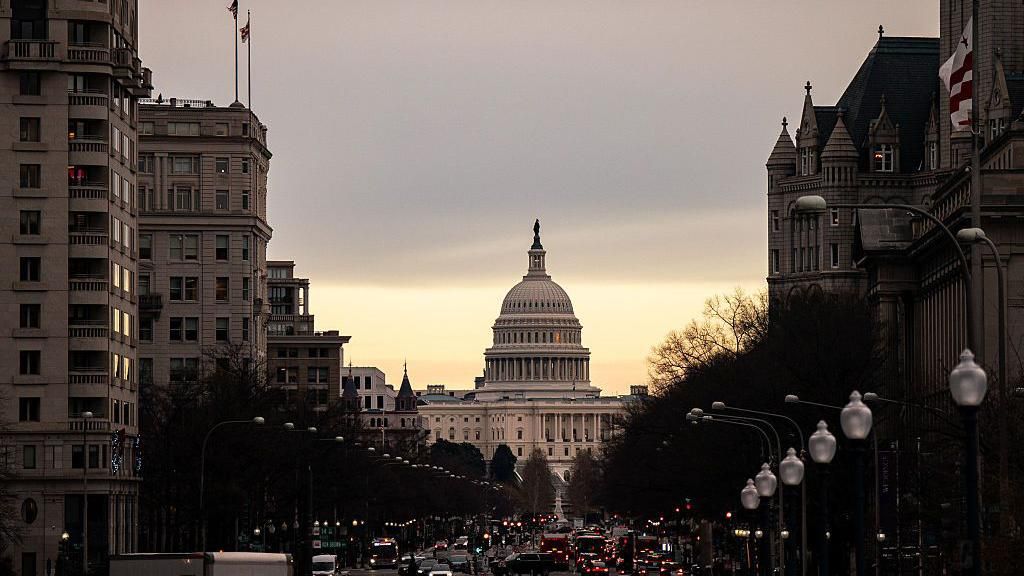
  • US Senate advances measure to curb Trump’s war-making powers on Venezuela

    US Senate advances measure to curb Trump’s war-making powers on Venezuela

    In a significant bipartisan move, the U.S. Senate advanced a measure on Thursday to curtail President Donald Trump’s autonomous war-making powers concerning Venezuela. The procedural vote passed 52-47, with five Republican senators breaking ranks to support the Democratic-led initiative.

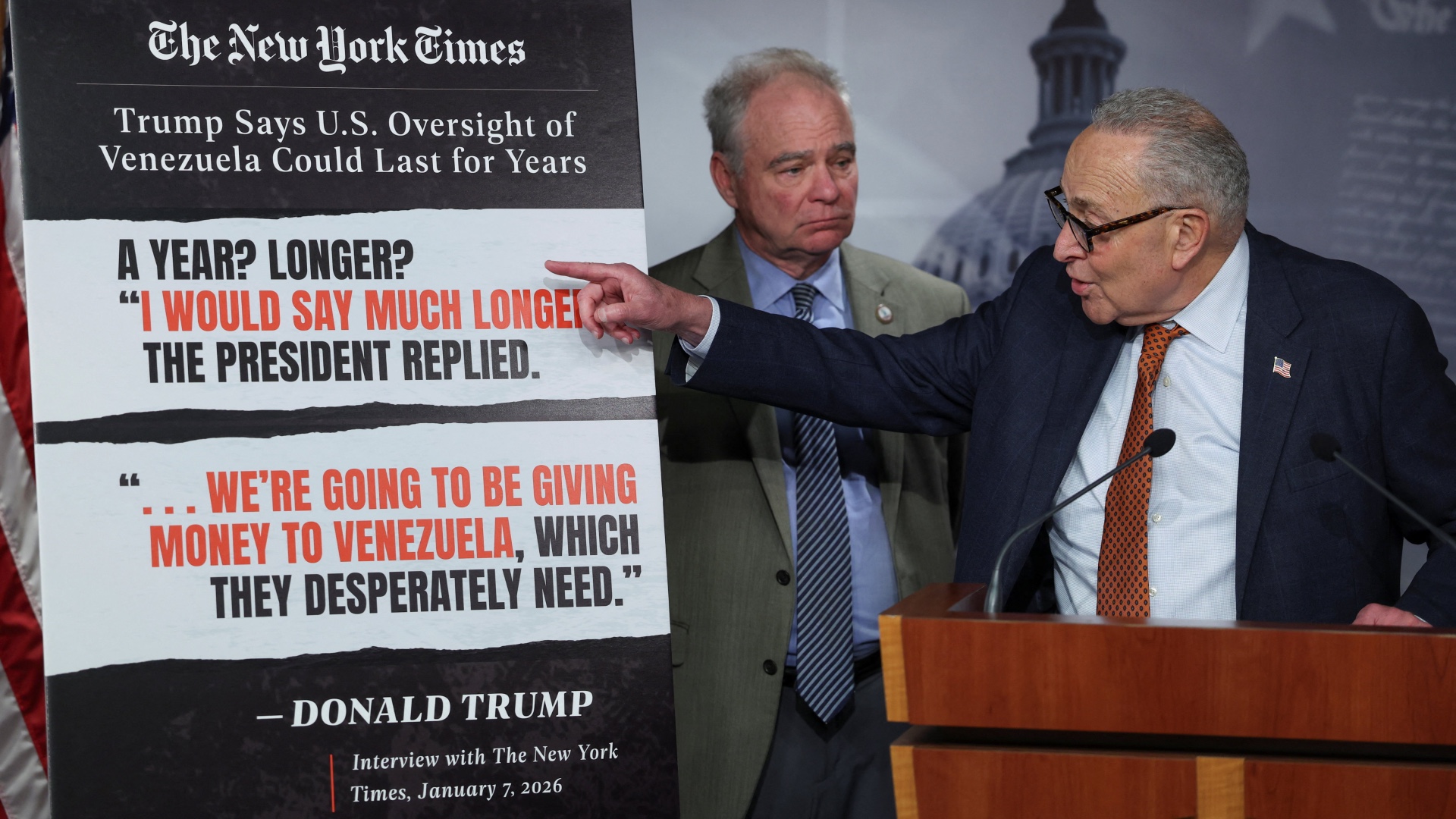
    The resolution, championed by Democratic Senator Tim Kaine and Libertarian Republican Rand Paul, invokes the 1973 War Powers Act. This legislative maneuver enables any senator to propose the withdrawal of U.S. armed forces from conflicts lacking explicit congressional authorization. The move comes amid heightened tensions following recent U.S. military operations in Venezuela that resulted in approximately 80 casualties and the controversial abduction of President Nicolas Maduro.

    Senator Kaine articulated the resolution’s urgency in a social media statement: ‘For God’s sake, let’s not let Trump wage war all over the world without us.’ His sentiment reflects growing congressional concern over executive overreach in military matters, particularly since the post-9/11 era enabled presidents to conduct strikes from Somalia to Pakistan without formal war declarations.

    The vote revealed remarkable political dynamics, with traditionally pro-Trump Republicans like Josh Hawley supporting the measure. Hawley justified his vote constitutionally, stating that future military deployment to Venezuela would require congressional approval. This defiance prompted immediate retaliation from Trump, who threatened electoral opposition against the dissenting Republicans through his TruthSocial platform.

    The advocacy group Demand Progress hailed the development as ‘a rare ray of good news for the nation and our Constitution,’ emphasizing public opposition to unauthorized military engagements. The resolution now moves toward an official Senate vote next week, after which it would face the Republican-controlled House. This action follows last year’s failed attempt by Kaine to restrict U.S. strikes in the Caribbean, which resulted over 100 fatalities despite unsubstantiated White House claims about drug trafficking.
  • Two wounded in shooting involving federal agents in Portland

    Two wounded in shooting involving federal agents in Portland

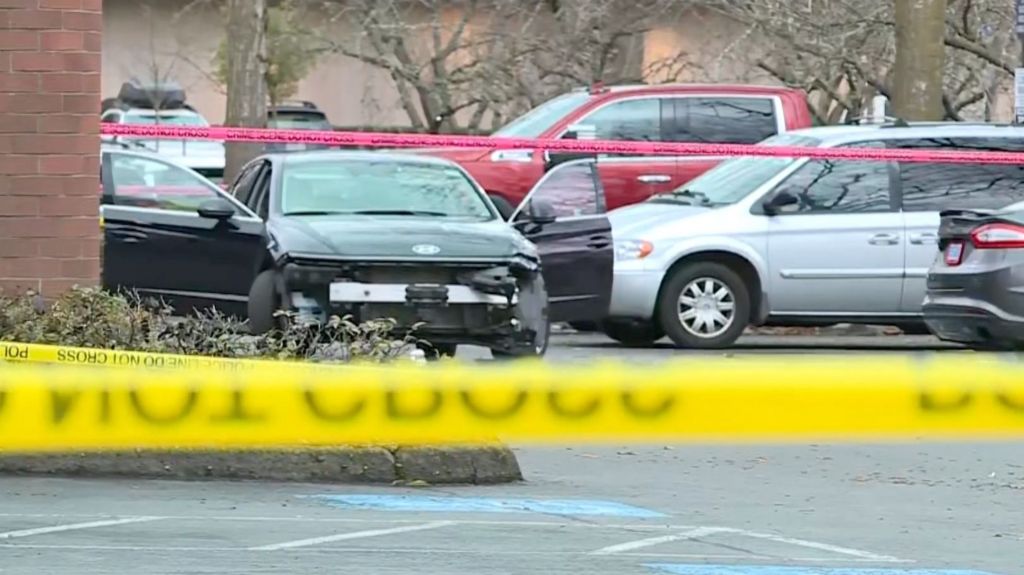
    A contentious shooting incident involving federal agents has intensified the political climate in Portland, Oregon, leaving two individuals wounded and sparking demands for the suspension of federal immigration operations. According to the Department of Homeland Security (DHS), the altercation occurred during a traffic stop targeting a Venezuelan national allegedly affiliated with the transnational Tren de Aragua criminal network. DHS claims the individual attempted to use his vehicle as a weapon against agents, prompting one officer to fire a defensive shot. The wounded driver and passenger fled the scene but were later discovered several blocks away by Portland Police, who administered emergency medical aid before transporting them to the hospital. Their current conditions remain undisclosed. Media sources indicate the victims are a married couple. This event follows closely on the heels of a fatal shooting by federal agents in Minneapolis, which has ignited nationwide protests against aggressive federal law enforcement tactics. In response, Portland Mayor Keith Wilson, a Democrat, has publicly called for Immigration and Customs Enforcement (ICE) to cease all operations within the city pending a full investigation. He accused the federal administration of attempting to ‘divide us and pit communities against each other.’ The FBI has assumed control of the investigation, a move that has raised concerns about transparency and impartiality among local leaders. Democratic State Senator Lew Frederick emphasized that without local oversight, the community is unlikely to trust the investigation’s outcomes. The incident underscores the escalating tensions between local governments and federal agencies, reflecting broader national debates over immigration enforcement and police accountability.

  • US withdrawal from 66 international organisations reasserts America First policy

    US withdrawal from 66 international organisations reasserts America First policy

    In a decisive move underscoring its America-first foreign policy, the Trump administration formally withdrew from 66 multilateral institutions through an executive order signed Wednesday. Approximately half of these entities operate under the United Nations umbrella, spanning critical areas from climate governance to counterterrorism initiatives.

    Secretary of State Marco Rubio justified the unprecedented withdrawal in an official statement, characterizing these organizations as “redundant, mismanaged, wasteful, and poorly run.” He further asserted that many had been “captured by interests advancing agendas contrary to our own” and posed threats to “our nation’s sovereignty, freedoms, and general prosperity.” The administration declared an end to the era of American taxpayer dollars flowing to foreign interests with minimal tangible returns.

    The list of exited organizations reflects established policy priorities, including withdrawals from climate-focused bodies like the UN Framework Convention on Climate Change and the 24/7 Carbon-Free Energy Compact, aligning with the administration’s promotion of traditional energy sources. However, the withdrawal extended beyond predictable targets to include entities with historically bipartisan American support, such as the UN register of conventional arms and the office dedicated to children in armed conflict.

    Paolo Von Schirach of the Global Policy Institute interpreted the move as a logical extension of the administration’s preference for bilateral engagement over multilateral forums, which it views as inefficient and ineffective. This action continues a pattern of disengagement from international institutions that began during Trump’s first term with exits from UNESCO, the UN Human Rights Council, and the termination of funding for UNRWA, primarily citing anti-Israel bias.

    The implications extend beyond symbolism. Organizations like Civicus, a global civil society alliance, warned the order “poses severe implications for people of the US and the world,” stalling progress on human rights and sustainable development. Analysts noted the withdrawal creates a strategic vacuum, potentially allowing powers like China, which openly champions multilateralism, to exert greater influence within these UN bodies. Daniel Forti of The Crisis Group highlighted the particular significance of abandoning the Peace Building Commission, noting the striking symbolism of a founding architect of the post-WWII order stepping back from the very institutions it helped establish.

  • US Senate advances resolution to limit Trump’s war powers following Venezuela strike

    US Senate advances resolution to limit Trump’s war powers following Venezuela strike

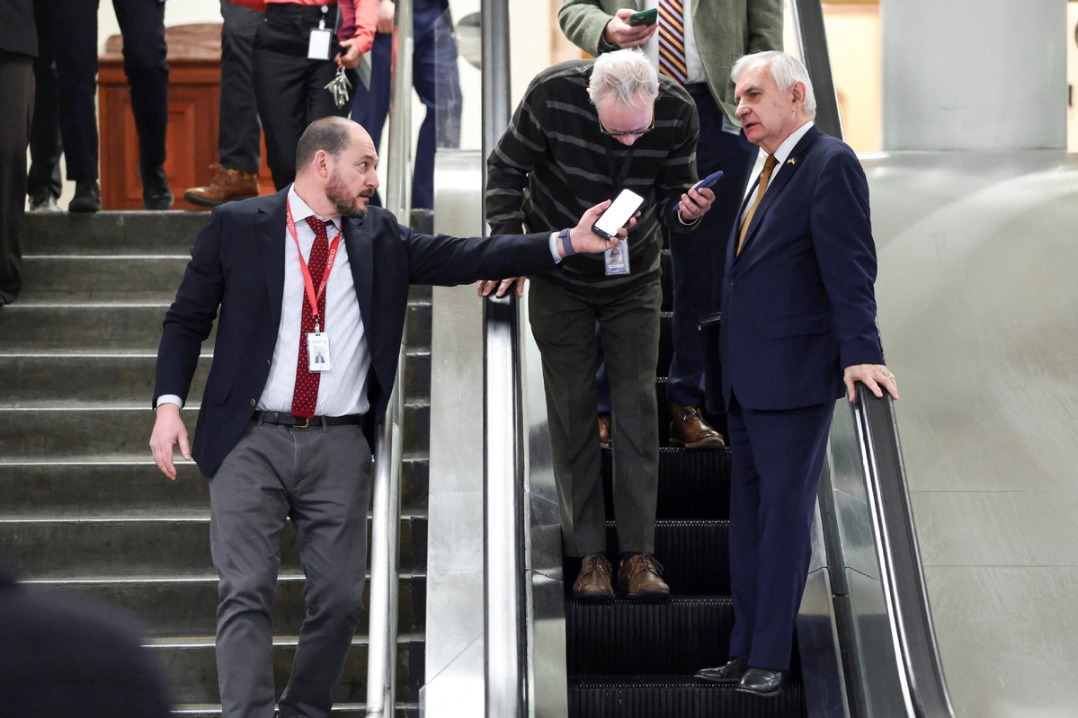
    The United States Senate has taken decisive steps to constrain presidential military authority following recent strikes in Venezuela. On Thursday, legislators advanced a significant resolution designed to limit President Donald Trump’s capacity to initiate further armed engagement against the South American nation without explicit congressional approval.

    The legislative action emerged as a direct response to military operations authorized by the administration, signaling growing congressional concern over executive branch war powers. The resolution, spearheaded by Senator Jack Reed (D-RI), represents a notable assertion of legislative authority in matters of military engagement and foreign policy.

    Following the Senate vote, Senator Reed addressed reporters on Capitol Hill, emphasizing the constitutional responsibility of Congress to oversee military commitments. “This measure reaffirms the fundamental principle that decisions of war and peace must reflect the collective judgment of the representatives of the American people,” Reed stated.

    The resolution development follows reports of significant casualties from recent military actions in Venezuela, with the country’s interior ministry claiming approximately 100 fatalities resulting from US operations. These events have intensified existing tensions between the two nations and prompted renewed scrutiny of presidential war powers.

    The legislative measure continues a longstanding tension between executive and legislative branches regarding military authorization that has persisted across multiple administrations. The resolution’s advancement suggests a reassertion of congressional authority in security matters that could establish significant precedents for future military engagements.

    International observers have closely monitored the development, with several European allies expressing concern over escalating tensions in Venezuela and the broader implications for regional stability in Latin America. The Senate’s action demonstrates increasing congressional willingness to shape foreign policy direction through legislative mechanisms.

  • Significant number of Venezuelan, foreign prisoners to be freed, says top lawmaker

    Significant number of Venezuelan, foreign prisoners to be freed, says top lawmaker

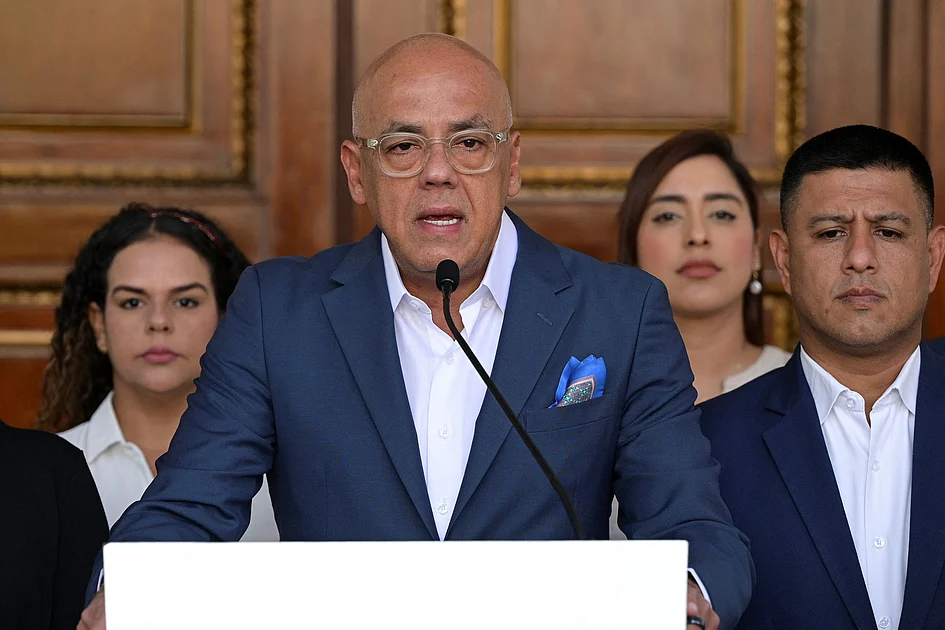
    In a significant political development, Venezuela’s National Assembly President Jorge Rodriguez declared on Thursday that authorities would imminently release a substantial number of detainees, including both Venezuelan nationals and foreign citizens. The announcement marks a notable concession to opposition demands and represents what Rodriguez characterized as a unilateral peace initiative by the Bolivarian government.

    Rodriguez emphasized that this prisoner release operation was already underway during his Thursday announcement, describing it as a sovereign decision made independently without negotiations or agreements with external parties. The move addresses longstanding calls from Venezuela’s political opposition for prisoner releases, though Rodriguez did not specify the exact number of individuals to be freed or provide detailed identification of those included in the amnesty.

    This development occurs within Venezuela’s complex political landscape, where prisoner releases have frequently served as both confidence-building measures and bargaining chips in past political dialogues. The inclusion of foreign nationals suggests potential diplomatic dimensions to the decision, possibly affecting Venezuela’s international relations amid ongoing economic challenges and political tensions.

    The government’s framing of this action as a ‘gesture of peace’ indicates a possible strategic shift in its approach to domestic opposition and international observers, though the ultimate impact and motivations behind this unilateral move remain to be fully assessed as implementation proceeds.

  • Minneapolis ICE shooting: FBI, DOJ exit cooperation on probe, says state crime bureau

    Minneapolis ICE shooting: FBI, DOJ exit cooperation on probe, says state crime bureau

    In a significant development for a high-profile law enforcement case, the Minnesota Bureau of Criminal Apprehension (BCA) announced on Thursday, January 8, 2026, that it has been compelled to withdraw from its investigation into a fatal shooting involving a federal immigration agent. The decision came after the Federal Bureau of Investigation (FBI) and the U.S. Department of Justice (DOJ) abruptly terminated their cooperative agreement with the state-level agency.

    The case centers on the death of a 37-year-old woman in Minneapolis, who was fatally shot by an agent from U.S. Immigration and Customs Enforcement (ICE). The BCA, which had been leading the probe, stated that the federal withdrawal of support created an insurmountable obstacle. The federal agencies’ exit means the BCA no longer has access to critical evidence, witness testimonies, and case information gathered under the federal purview.

    In an official statement, the BCA expressed profound frustration with the turn of events, emphasizing that its standards for a transparent and thorough investigation, as mandated by Minnesota state law and public expectation, could no longer be met. ‘Without complete access to the evidence, witnesses, and information collected, we cannot proceed,’ the Bureau stated, characterizing its withdrawal as ‘reluctant.’ This move halts the state’s independent inquiry and casts serious doubt on the future of accountability in the case, effectively leaving the investigation in the hands of the federal agencies that were subjects of the probe. The incident raises urgent questions about jurisdictional conflicts and oversight in cases involving federal law enforcement officers.

  • Chief Trump ideologue Miller, an unabashed meanie from the get-go

    Chief Trump ideologue Miller, an unabashed meanie from the get-go

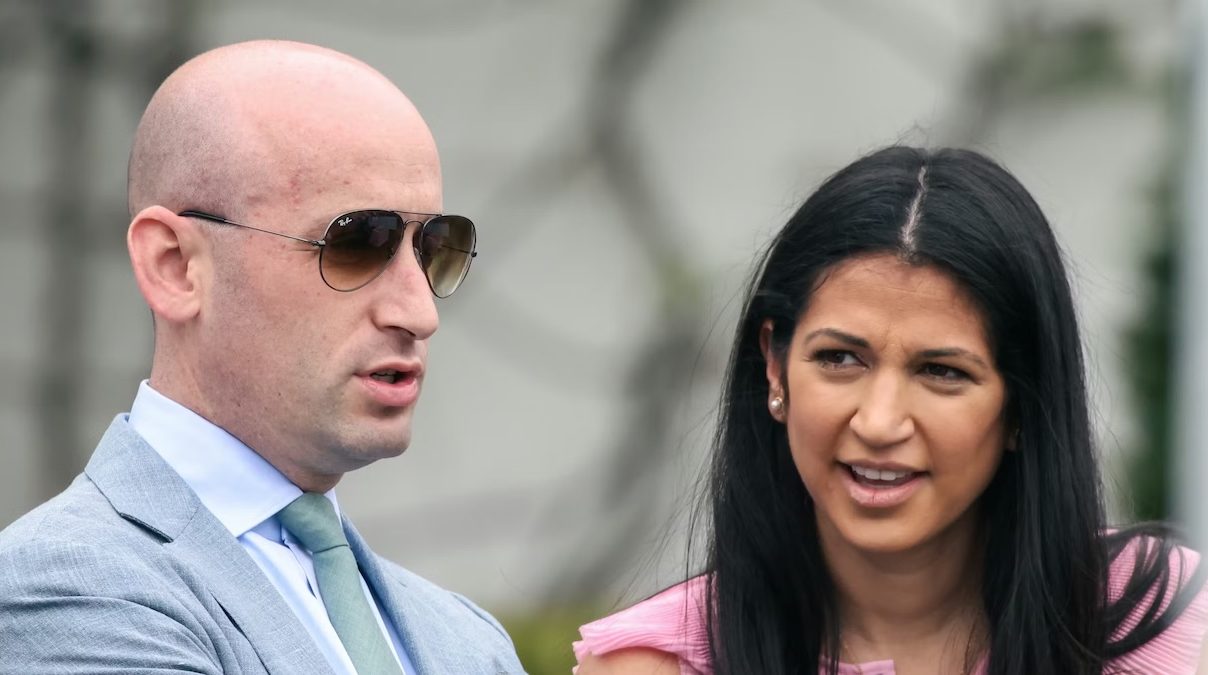
    Stephen Miller, the White House deputy chief of staff and one of President Trump’s most enduring advisers, has articulated a radical foreign policy doctrine centered on raw power dynamics during a recent CNN interview. Speaking with Jake Tapper, Miller asserted that the United States would embrace its superpower status under Trump’s leadership, explicitly framing international relations through the lens of strength and force rather than diplomatic conventions.

    The interview notably addressed the administration’s controversial aspirations regarding Greenland, with Miller dismissing “international niceties” in favor of realpolitik considerations. This worldview aligns with Miller’s decades-long advocacy for extreme policies, tracing back to his teenage years in California where he first expressed contentious views about immigration and multiculturalism.

    Miller’s influence has expanded significantly from his initial role as speechwriter to becoming a key policy interpreter and executor for Trump. He maintains daily coordination with the president and chief of staff Susie Wiles, while also serving as a critical liaison between the White House and Capitol Hill.

    His ideological development reveals consistent extremism: from criticizing Hispanic classmates’ language skills in high school, to attacking multiculturalism at Duke University, to developing the Trump administration’s most severe immigration policies including family separation—a practice condemned internationally as cruel. In Trump’s second term, Miller continues pushing radical initiatives including ending birthright citizenship and challenging constitutional norms regarding habeas corpus and judicial oversight.

    The Millers have become increasingly prominent, with wife Katie Miller generating controversy through social media posts about Greenland acquisition and hosting a podcast platforming administration officials. Their growing visibility presents both an asset for mobilizing Trump’s base and a liability for appealing to independent voters, with critics like California Governor Gavin Newsom comparing Miller to the villain Voldemort from Harry Potter.

    As the administration continues implementing its “America First” agenda, Miller’s philosophy of might-makes-right governance appears positioned to shape U.S. foreign and domestic policy fundamentally, despite concerns about its constitutional implications and electoral consequences.

  • US House expands healthcare subsidies but bill faces battle in Senate

    US House expands healthcare subsidies but bill faces battle in Senate

    In a significant legislative maneuver, a coalition of seventeen moderate Republicans joined unanimous Democratic members in the U.S. House of Representatives to pass a bill extending crucial healthcare subsidies for millions of Americans. The measure cleared the lower chamber with a 230-196 vote, representing a notable rebuke to House Speaker Mike Johnson and Republican leadership who had opposed renewal of the pandemic-era tax credits.

    The legislation aims to reinstate Affordable Care Act subsidies that expired at the end of last year, potentially providing three additional years of financial relief for approximately 20 million Americans who have faced premium increases exceeding 100% since the benefits lapsed. These tax credits, originally established under President Barack Obama’s signature healthcare legislation in 2014 and expanded during the COVID-19 pandemic, have become essential for making health insurance affordable through ACA marketplaces.

    The bill’s passage was forced through an unusual procedural tactic known as a discharge petition, initiated last month when four Republican members crossed party lines to demand a floor vote. This legislative strategy circumvented traditional leadership channels and demonstrated growing dissent within the Republican ranks regarding healthcare policy.

    Despite its House success, the legislation faces substantial obstacles in the Senate, where it currently lacks the necessary 60 votes for passage. Senate leaders have indicated they are developing their own bipartisan compromise, with legislative text expected to be released next week. The House vote, while largely symbolic given Senate opposition, strategically positions healthcare affordability as a central issue ahead of November’s midterm elections.

  • Venezuela helps vault Rubio to quarterback of Trump’s foreign policy team

    Venezuela helps vault Rubio to quarterback of Trump’s foreign policy team

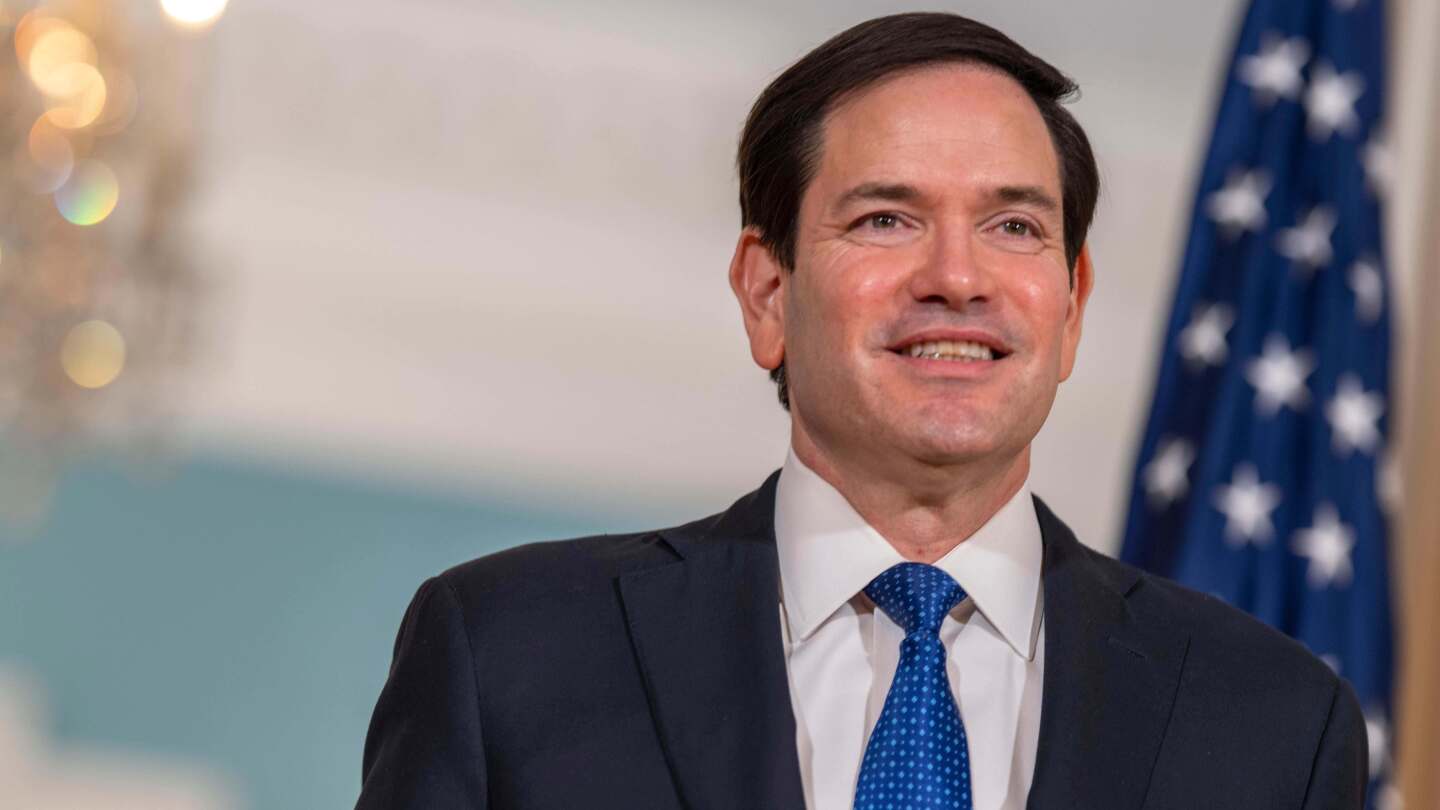
    In the turbulent arena of the Trump administration’s foreign policy, Secretary of State Marco Rubio has assumed a pivotal role as a stabilizing force. The administration’s recent audacious moves—including the military operation that deposed Venezuelan President Nicolás Maduro and controversial musings about annexing Greenland—have sent shockwaves through the international community. Yet Rubio, a former Florida senator with deep personal and political ties to Latin America, has skillfully positioned himself as an interpreter and moderator of the President’s more incendiary rhetoric.

    Drawing on his background as the child of Cuban immigrants and his collegiate football experience, aides now describe Rubio as the ‘quarterback’ of Trump’s advisory team. He operates at the intersection of Secretary of State and national security adviser, translating broad presidential directives into actionable, if contentious, policy. His influence extends across multiple hotspots, with key players including Defense Secretary Pete Hegseth, Energy Secretary Chris Wright, and Vice President JD Vance on Venezuela, while Vance, alongside special envoy Steve Witkoff and Jared Kushner, handle fragile peace efforts in Gaza and Ukraine.

    Following the Caracas raid that extracted Maduro, President Trump’s vague declaration that the U.S. would ‘run’ Venezuela sparked fears of another prolonged occupation. Rubio moved quickly to clarify, emphasizing that American strategy would leverage oil sanctions and the threat of further military action rather than direct governance. Similarly, he has sought to reframe the Greenland discussion, stating the administration’s intent is purchase, not invasion.

    On Capitol Hill, Rubio has taken the lead in closed-door briefings, facing lawmakers’ questions and criticisms. He outlined a three-phase plan for Venezuela: selling seized oil to fund reconstruction, restoring civil society, and transitioning to a new government—currently led by interim President Delcy Rodríguez with U.S. support.

    However, Rubio’s strategy faces a tight timeline and bipartisan scrutiny. Lawmakers demand more details and public oversight, with Democrats expressing disappointment over the lack of consultation. For Rubio, whose family history and Miami upbringing deeply inform his views, Venezuela represents a long-standing personal crusade against what he sees as a continuation of Castro-style communism. His once-surprising partnership with Trump—following their 2016 primary rivalry—now appears seamless, with the President echoing Rubio’s decade-old rhetoric on the region.

  • US: Killing of unarmed woman by ICE agent triggers national backlash

    US: Killing of unarmed woman by ICE agent triggers national backlash

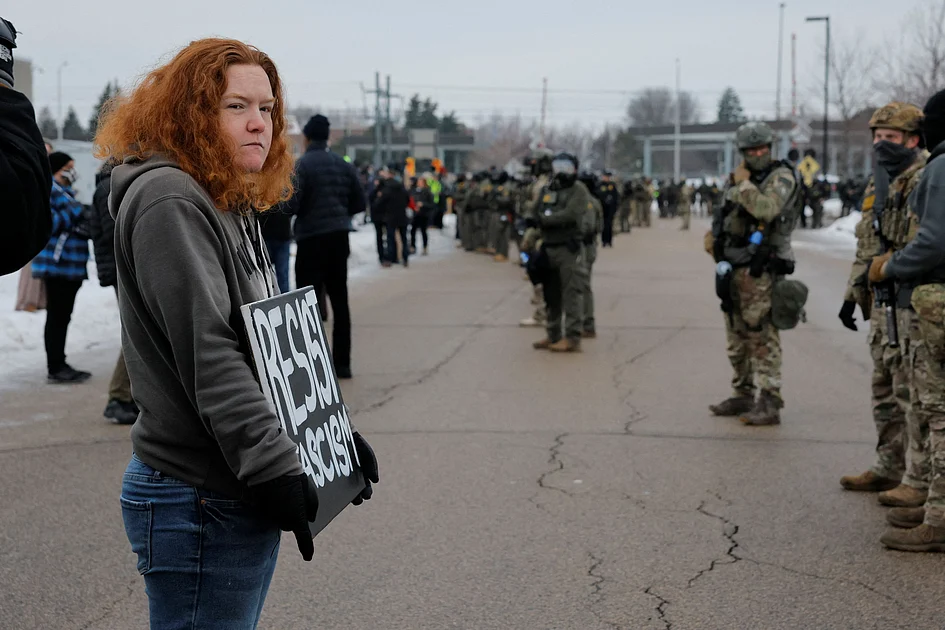
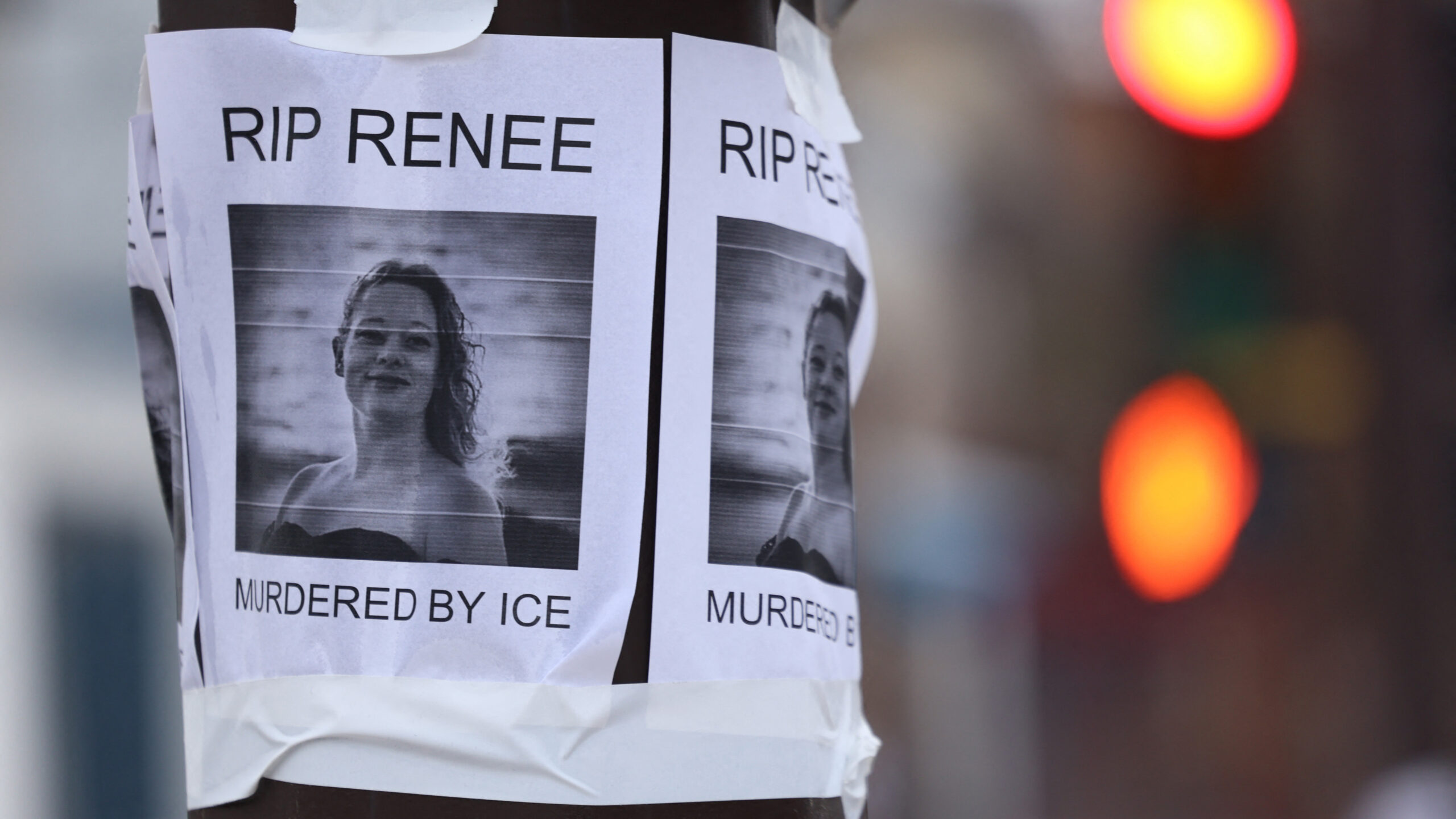
    The fatal shooting of 37-year-old mother and poet Renee Nicole Good by an Immigration and Customs Enforcement (ICE) officer during a federal operation in Minneapolis has erupted into a major political controversy, exposing deep divisions in American society. The incident occurred on Wednesday when ICE agents approached Good’s vehicle during what the Department of Homeland Security described as its “largest DHS operation ever.”

    Bystander footage circulating on social media shows the tense encounter: one officer approaches Good’s vehicle demanding she open the door while a second agent, positioned in front of the car, suddenly moves to the side and discharges his weapon through the driver’s side window at close range. The vehicle subsequently careens out of control and collides with nearby cars.

    The Trump administration immediately defended the shooting, asserting the officer perceived an imminent threat and acted in self-defense. This justification was vehemently challenged by Minneapolis Mayor Jacob Frey, who dismissed the claims as “bullshit,” and by hundreds of protesters who filled Minneapolis streets on Thursday.

    The victim’s background adds layers to the controversy. Good was a creative writing graduate from Old Dominion University, an awarded poet, and according to reports, had just dropped off her six-year-old child at school before the incident. City officials identified her as a legal observer of ICE activities, while her mother described her as “extremely compassionate” and loving.

    Vice President JD Vance escalated the political rhetoric, characterizing Good as “part of a broader left-wing network” and accusing her of attempting to ram the officer with her car. During a White House press briefing, Vance condemned media coverage of the incident as “an absolute disgrace” and framed the shooting as necessary defense against what he called “domestic terror techniques” aimed at undermining immigration enforcement.

    The operation itself involved up to 2,000 officers targeting what authorities described as “fraudsters, murderers, rapists, and gang members,” with particular focus on Minnesota’s Somali community following allegations of welfare fraud. The killing has reignited contentious debates about ICE’s expanded presence nationwide and accusations of harassment against both citizens and non-citizens alike.