分类: politics

  • US power politics creates volatile environment for Chinese investment: report

    US power politics creates volatile environment for Chinese investment: report

    A comprehensive security assessment has identified the United States as the predominant factor influencing overseas risk landscapes for Chinese interests throughout 2026. The China Overseas Security Risk Blue Book (2026), collaboratively produced by Renmin University’s National Security Institute and the China Overseas Security Research Institute, reveals that intensifying great-power competition, deteriorating global governance mechanisms, and persistent regional conflicts are generating unprecedented complexities for China’s international operations.

    The report details how Washington’s strategic approach toward China has evolved into increasingly institutionalized and sophisticated forms of high-intensity competition. These geopolitical maneuvers are simultaneously eroding the foundations of the international order while creating destabilizing effects across multiple regions where China maintains substantial economic interests.

    Recent financial data from China’s Ministry of Commerce underscores the scale of these exposures, with total outbound direct investment reaching $158.21 billion during the first eleven months of 2025. Chinese enterprises have established non-financial direct investments across 153 countries worldwide, accumulating $132.09 billion in committed capital.

    The analysis specifically references the recent US military intervention in Venezuela, including the detention of President Nicolas Maduro and his spouse, as demonstrating the operationalization of what the report terms the ‘Donroe Doctrine’ – an evolved interpretation of the historic Monroe Doctrine emphasizing hemispheric control and resource acquisition. This doctrine has effectively obstructed regional cooperation initiatives involving China.

    Now in its tenth annual edition, the Blue Book concludes that such interventions demonstrate America’s continued adherence to hegemonic power politics throughout Latin America, consequently generating volatile conditions for Chinese investment projects and cooperative ventures across the region.

    Liu Qing, Vice-President and senior research fellow at the China Institute of International Studies, notes that while China’s Belt and Road Initiative continues to expand the overseas interests and requirements of Chinese corporations, corresponding security capabilities have failed to maintain pace with this growth. This emerging discrepancy represents a critical vulnerability demanding urgent attention.

    The assessment further identifies additional global risk factors including deepening US security collaborations with Japan and South Korea, Japan’s political rightward shift and resurgent militarism, ongoing Middle Eastern conflicts, and the protracted Ukraine crisis. Deficits in global governance architectures are simultaneously increasing the costs and complexities associated with protecting China’s overseas assets.

    The Blue Book ultimately recommends enhanced monitoring of evolving geopolitical situations to mitigate risks, alongside strengthened technological reserves to address non-traditional security challenges. It further advocates for China’s constructive participation in global governance frameworks and the provision of high-quality international public goods.
  • DPRK official demands S. Korea clarify drone incident: KCNA

    DPRK official demands S. Korea clarify drone incident: KCNA

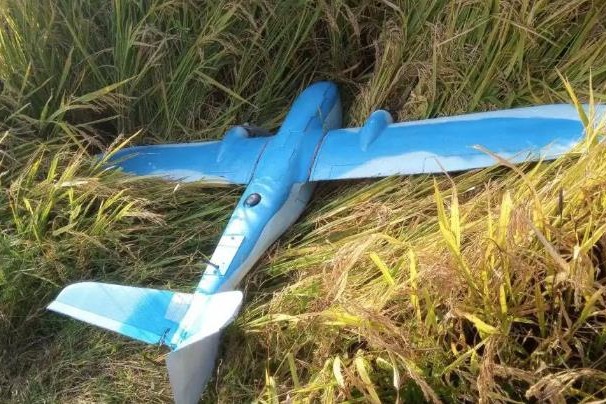
    PYONGYANG – A high-ranking North Korean official has formally demanded that South Korea provide a comprehensive explanation regarding an unmanned aerial vehicle that allegedly penetrated North Korean airspace earlier this month, according to a report published Sunday by the Korean Central News Agency (KCNA).

    Kim Yo Jong, who serves as vice department director of the Central Committee of the Workers’ Party of Korea, issued the statement through an official press release on Saturday. The prominent political figure and sister of North Korean leader Kim Jong Un expressed measured appreciation for South Korea’s recent commitment to avoid provocation, characterizing the Defense Ministry’s public declaration as “a wise choice.”

    However, Kim maintained that this diplomatic gesture must be accompanied by transparent accountability concerning the January 4 incident where a drone reportedly crossed the military demarcation line separating the two nations. “A detailed explanation should be made about the actual case of a drone that crossed the southern border of our Republic from the ROK,” Kim stated, employing the formal acronym for the Republic of Korea.

    The North Korean official specifically challenged attempts within South Korea to minimize the significance of the event by attributing it to civilian activity. Kim emphasized that the fundamental concern transcends whether the drone originated from military or civilian sources, noting that the aircraft had captured visual data of sensitive locations including a uranium mining facility, its settling pond, the former Kaesong Industrial Zone, and several border security installations.

    “Regardless of who the perpetrator is or whether the act was carried out by any civilian organization or individual, the authorities responsible for national security can never evade their responsibility for it,” Kim asserted, directly implicating South Korean leadership in the alleged security breach.

    In response to these allegations, South Korean President Lee Jae-myung has reportedly ordered a comprehensive investigation, directing military and police task forces to verify the circumstances surrounding the incident. The South Korean Defense Ministry has formally denied involvement, stating that no military drones were operational on the dates specified by North Korean authorities and that the drone in question does not correspond to any models currently deployed by South Korean armed forces.

  • Nepalese royalists demand monarchy restoration ahead of March elections

    Nepalese royalists demand monarchy restoration ahead of March elections

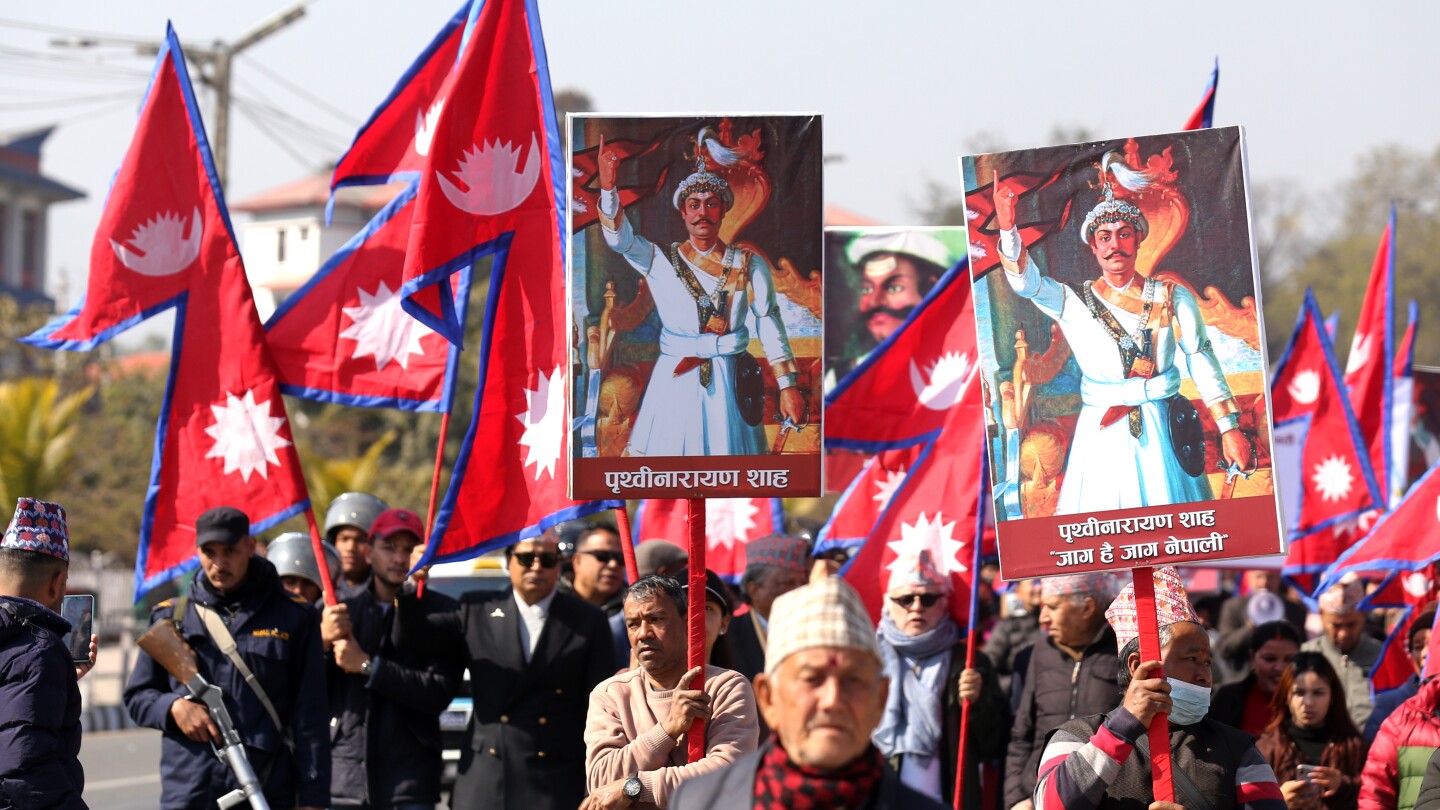
    KATHMANDU, Nepal — In a significant display of political sentiment, supporters of Nepal’s abolished monarchy gathered in the capital on Sunday, vocally demanding the reinstatement of the royal institution just months before scheduled parliamentary elections. This marked the first major demonstration by monarchists since September’s youth-led protests that precipitated governmental upheaval.

    Chanting “We love our king. Bring back the king,” hundreds of protesters assembled around the statue of King Prithvi Narayan Shah, the 18th-century founder of the Shah dynasty. The rally coincided with the birth anniversary of the historic monarch, an occasion that has previously witnessed violent confrontations between demonstrators and security forces. Last March, two fatalities occurred during similar pro-monarchy gatherings.

    The current political landscape stems from widespread September demonstrations led by disillusioned Gen Z activists protesting systemic corruption, limited opportunities, unemployment, and poor governance. These protests, initially triggered by a short-lived social media ban, ultimately led to the establishment of an interim government under Nepal’s first female prime minister, retired Supreme Court Justice Sushila Karki.

    Samrat Thapa, one of the demonstrators, articulated the movement’s conviction: “The last and only alternative for this country is king and monarchy only. Given the current context and the path taken after the Gen Z movement, monarchy must be restored to manage the situation.”

    Despite the historical tensions associated with such gatherings, Sunday’s event proceeded peacefully under the close surveillance of riot police. The monarchy’s abolition in 2008 forced the last Shah king, Gyanendra, to abdicate, establishing Nepal as a republic. Nevertheless, the royal family continues to command substantial support among certain segments of the population.

    The interim government faces its own challenges, including criticism over perceived delays in pursuing corruption cases. As the nation prepares for March elections, the persistent royalist movement introduces another complex dimension to Nepal’s evolving political narrative.

  • Trump briefed on options for military strikes in Iran: NYT

    Trump briefed on options for military strikes in Iran: NYT

    President Donald Trump has been presented with detailed military options for potential strikes against Iranian targets, according to a New York Times report citing anonymous administration officials. The briefing occurred amid escalating tensions between Washington and Tehran, triggered by widespread anti-government demonstrations across Iran.

    The military proposals include potential strikes on non-military facilities in Tehran, though officials emphasized the President has not yet authorized any action. The development follows Trump’s repeated warnings that the United States would respond if Iranian authorities used lethal force against peaceful protesters.

    Trump amplified his position through social media, declaring that “Iran is looking at FREEDOM, perhaps like never before” while offering American assistance. This rhetoric aligns with the administration’s pattern of confrontational language toward the Iranian regime.

    Iranian leadership has responded with defiance. Foreign Ministry officials condemned what they characterized as “interventionist and deceptive” statements from Washington, interpreting them as continued hostility toward the Iranian people. Supreme Leader Ali Khamenei delivered a televised address urging national unity while directing Trump to focus on domestic American problems rather than Iranian affairs.

    The civil unrest originated from economic grievances, particularly the sharp devaluation of Iran’s currency and persistent financial hardships. While acknowledging legitimate economic concerns, Iranian authorities have characterized some demonstrators as “saboteurs” and “rioters,” reporting deadly clashes between security forces and protesters. No official casualty figures have been released.

    The situation presents a complex international dilemma, balancing human rights concerns against sovereignty principles, with potential military action carrying significant implications for regional stability and global security.

  • New law bans China-based IT engineers from Pentagon cloud access

    New law bans China-based IT engineers from Pentagon cloud access

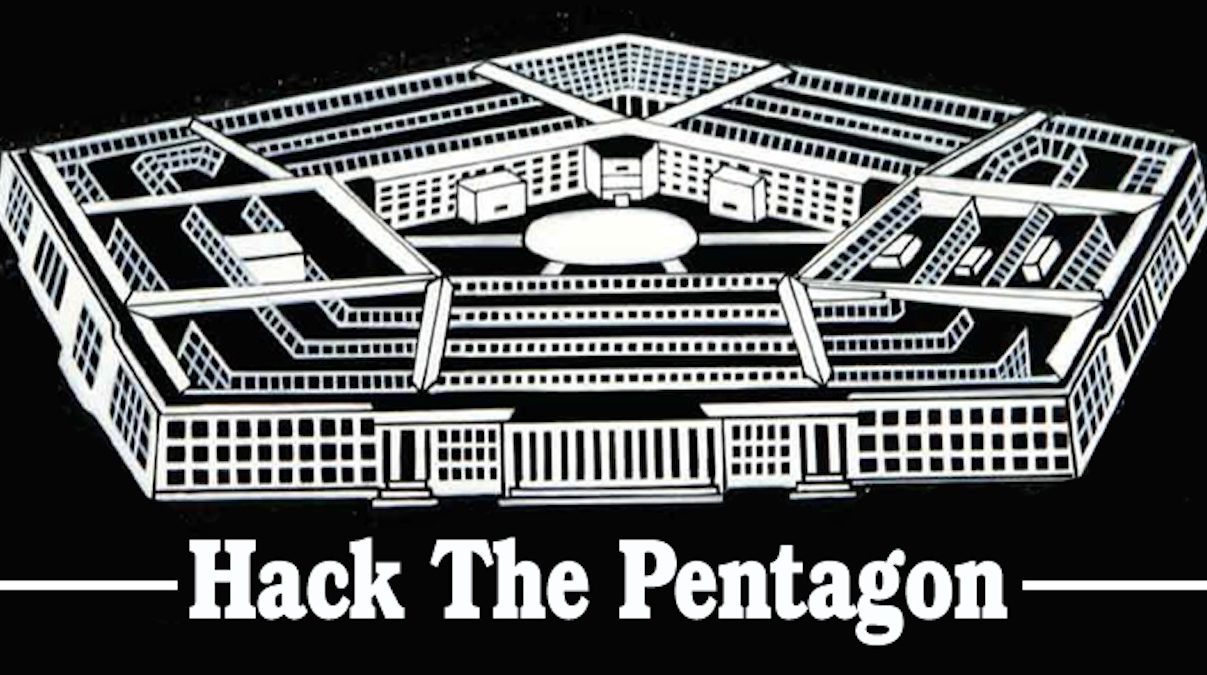
    President Donald Trump has enacted sweeping cybersecurity legislation explicitly prohibiting individuals from China and other adversarial nations from accessing the Pentagon’s cloud computing infrastructure. This decisive action, embedded within the $900 billion National Defense Authorization Act, represents the government’s formal response to critical security vulnerabilities exposed earlier this year.

    The legislative measure follows a ProPublica investigation revealing that Microsoft had utilized China-based engineers to maintain Defense Department computer systems for nearly ten years. This arrangement potentially compromised some of the nation’s most sensitive military data to foreign access. While Microsoft implemented a ‘digital escort’ program with US-based supervisors intended to monitor foreign engineers, investigators found these escorts frequently lacked the technical expertise to effectively oversee their more skilled Chinese counterparts.

    Cybersecurity experts and intelligence officials consistently warned that such practices created unacceptable national security risks, particularly given China’s legal framework that grants authorities broad data collection powers. The revelation prompted bipartisan concern in Congress, with some Republican members condemning Microsoft’s practices as ‘a national betrayal.’

    Defense Secretary Pete Hegseth publicly denounced the practice in July, prompting Microsoft to voluntarily cease using Chinese engineers for Pentagon cloud systems. The Department of Defense subsequently updated its cybersecurity requirements in September, formally banning IT contractors from utilizing China-based personnel. The newly signed legislation codifies these changes into federal law, extending prohibitions to personnel from Russia, Iran, and North Korea.

    The law significantly enhances congressional oversight mechanisms, mandating that the Defense Secretary brief congressional defense committees on implementation progress by June 1, 2026, with annual follow-up briefings scheduled through 2029. These sessions will evaluate control effectiveness, security incidents, and recommend additional legislative or administrative actions.

    Microsoft declined to comment specifically on the legislation but previously committed to collaborating with national security partners to adjust security protocols. Congressional leaders including Representative Elise Stefanik and Senator Tom Cotton praised the legislation for closing dangerous contractor loopholes and protecting critical infrastructure from foreign adversaries.

    The Pentagon has initiated both an investigation into potential national security compromises by China-based engineers and a third-party audit of Microsoft’s digital escort program. Defense officials have stated they were unaware of the full extent of Microsoft’s foreign engineer program until the ProPublica disclosure, despite Microsoft’s claims of having disclosed the arrangement to the Pentagon.

  • Venezuelan acting president vows to realize return of Maduro, his wife

    Venezuelan acting president vows to realize return of Maduro, his wife

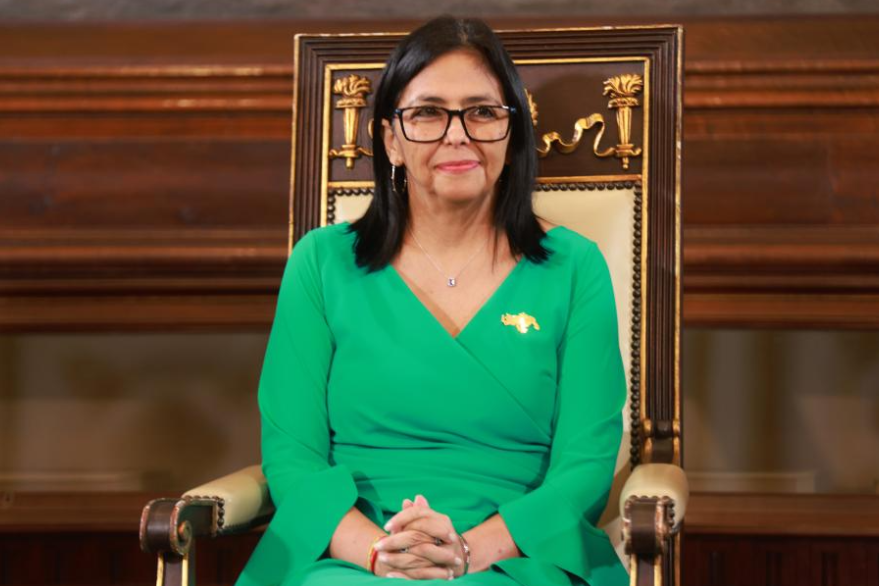
    Venezuela’s interim President Delcy Rodríguez has issued a resolute pledge to secure the return of President Nicolás Maduro and First Lady Cilia Flores, who were apprehended by United States forces during a controversial military operation earlier this month.

    Addressing a community gathering in Miranda state on Saturday, Rodríguez emphatically dismissed any notions of leadership uncertainty within the South American nation. “There is no uncertainty here. The Venezuelan people are in charge, and there is a government, that of President Nicolás Maduro,” she declared before assembled supporters.

    The acting leader framed the recovery effort as a national priority, vowing not to rest “for a single minute” until both Maduro and Flores are safely returned to Venezuelan territory. Rodríguez invoked symbolic significance in her remarks, noting that exactly one year prior, she had been sworn in alongside Maduro at the commencement of his third presidential term. “Today, one year later, we are swearing for his freedom,” she proclaimed.

    Rodríguez emphasized that national unity would prove decisive in what she characterized as the mission to “rescue” the captured leadership. She further reaffirmed her administration’s commitment to continuing implementation of the seven strategic action lines previously established by Maduro’s government, signaling continuity in governance despite the unprecedented circumstances.

    The crisis stems from January 3rd military strikes conducted by US forces in Caracas and three additional Venezuelan cities—an operation that resulted in the detention of both Maduro and Flores. These actions have triggered widespread international condemnation and expressions of concern from numerous nations and global organizations.

  • Greenland’s harsh environment and lack of infrastructure have prevented rare earth mining

    Greenland’s harsh environment and lack of infrastructure have prevented rare earth mining

    The Trump administration’s controversial proposition to acquire Greenland faces monumental geological and infrastructural obstacles that transcend political ambition. Despite the president’s assertion that “We are going to do something on Greenland whether they like it or not,” experts confirm that the island’s rare earth mineral deposits remain largely inaccessible due to extreme environmental conditions and technological limitations.

    Greenland’s formidable challenges include its remote Arctic location, complete absence of transportation infrastructure, complex mineralogy, and fragile ecosystem. The rare earth elements—crucial for manufacturing high-tech products ranging from electric vehicles to military equipment—are encased within a particularly stubborn rock formation called eudialyte, from which no commercially viable extraction method has been developed.

    Industry analysts suggest geopolitical positioning rather than practical resource acquisition drives the administration’s interest. “The fixation on Greenland has always been more about geopolitical posturing—a military-strategic interest and stock-promotion narrative—than a realistic supply solution for the tech sector,” stated Tracy Hughes of the Critical Minerals Institute.

    The timeline for potential production stretches years into the future, with current exploration activities remaining in preliminary stages. Even the most advanced projects would require hundreds of millions in additional funding and technological breakthroughs to become operational.

    Environmental concerns present additional complications, as the toxic chemicals necessary for mineral separation could damage Greenland’s burgeoning tourism industry and fragile Arctic ecosystems. The frequent presence of radioactive uranium alongside rare earth deposits further complicates extraction prospects.

    Alternative solutions are emerging elsewhere, with established mining operations in the United States, Australia, and other accessible locations offering more immediate potential to reduce dependence on Chinese rare earth exports, which currently dominate over 90% of global supply.

  • Fresh protests in Iran as internet blackout persists

    Fresh protests in Iran as internet blackout persists

    Iran’s capital witnessed renewed anti-government demonstrations Saturday night as a nationwide internet blackout entered its third day, raising international concerns about the severity of the regime’s crackdown on protesters. The protests, which began two weeks ago over economic grievances, have evolved into the most significant challenge to Iran’s theocratic government since the 2019 unrest, now featuring explicit calls for regime change.

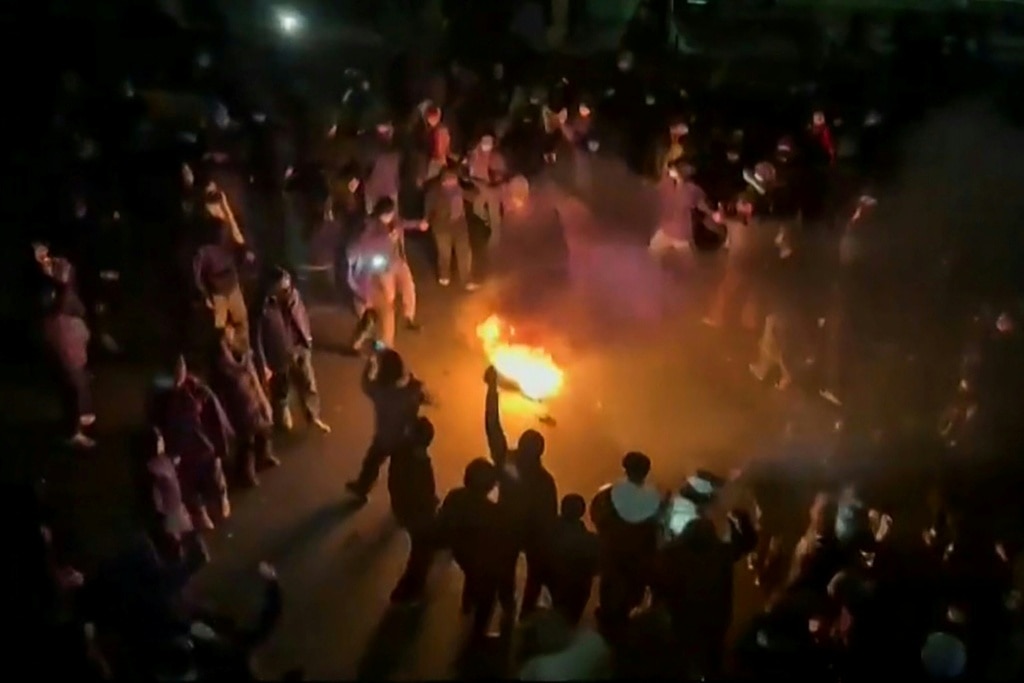
    Verified footage from Tehran’s northern districts showed protesters igniting fireworks, banging pots, and chanting slogans supporting the ousted monarchy. Additional unverified videos circulating on social media indicated similar demonstrations occurring across multiple cities including Mashhad, Tabriz, Qom, and Hamedan, where one individual waved the pre-revolutionary lion-and-sun flag—a potent symbol of opposition.

    The digital blackout, described by internet monitor NetBlocks as a near-total connectivity shutdown since Thursday, has severely limited information flow, prompting rights organizations to warn of escalating violence. Amnesty International reported analyzing ‘distressing reports’ of security forces intensifying lethal measures against demonstrators, while Norway-based Iran Human Rights documented at least 51 fatalities, with actual numbers potentially higher based on hospital imagery from eastern Tehran.

    International reactions have intensified, with U.S. President Donald Trump proclaiming on Truth Social that ‘Iran is looking at FREEDOM, perhaps like never before’ and offering American assistance. The New York Times reported that Trump had received briefings on potential military options, though no decisions have been made regarding intervention.

    Iran’s leadership has responded with increasing defiance. Supreme Leader Ayatollah Ali Khamenei condemned protesters as ‘vandals’ doing America’s bidding during a Friday address, while the Iranian army issued statements vowing to ‘vigorously protect national interests’ against enemies seeking to ‘disrupt order and peace.’

    European leaders have called for restraint, with EU Commission President Ursula von der Leyen expressing support for Iranian protesters and condemning the ‘violent repression’ by authorities. The situation remains volatile as citizens report inability to conduct basic communications or work, with one Tehran resident characterizing the internet shutdown as ‘the price to pay before the victory of the people.’

  • Trump renews threats against Iran, saying US ‘ready to help’

    Trump renews threats against Iran, saying US ‘ready to help’

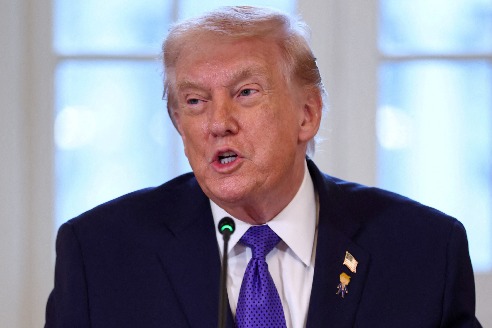
    Former U.S. President Donald Trump has intensified his confrontational stance toward Iran, declaring that the United States stands prepared to assist the country amid ongoing civil unrest. Through his Truth Social platform on Saturday, Trump asserted that Iran is \”looking at FREEDOM, perhaps like never before,\” accompanied by his unambiguous pledge: \”The USA stands ready to help!!!\”\n\nThis declaration follows repeated warnings from Trump and senior U.S. officials that Washington would intervene should Iranian authorities respond violently to peaceful demonstrations. Trump elaborated on Friday, stating that while U.S. involvement wouldn’t entail \”boots on the ground,\” it would involve \”hitting them very, very hard where it hurts\” if protesters faced lethal force.\n\nThe Iranian Foreign Ministry has condemned these statements as \”interventionist and deceptive,\\” characterizing them as reflective of Washington’s enduring hostility toward the Iranian people. The current wave of protests, emerging in multiple Iranian cities since late December, stems primarily from severe economic deterioration—including the sharp depreciation of the rial—and longstanding financial hardships.\n\nIranian authorities have acknowledged the demonstrations and expressed commitment to addressing economic grievances while simultaneously cautioning against violent acts and vandalism. The escalating exchange between Trump and Iranian officials highlights renewed tensions in U.S.-Iran relations, with Trump adopting characteristically aggressive rhetoric that challenges diplomatic norms.

  • Trump signs order declaring national emergency to ‘safeguard Venezuelan oil revenue’: White House

    Trump signs order declaring national emergency to ‘safeguard Venezuelan oil revenue’: White House

    In a significant escalation of US policy toward Venezuela, President Donald Trump issued an executive order on Friday declaring a national emergency to protect Venezuelan oil revenues held in United States Treasury accounts. The White House announced this unprecedented measure aims to shield these funds from legal claims and judicial processes, ensuring they serve American foreign policy objectives rather than private creditors.

    The executive order specifically blocks all forms of judicial action—including attachments, judgments, liens, executions, and garnishments—against what are termed Foreign Government Deposit Funds. These assets comprise revenues generated from Venezuelan oil and diluent sales currently held within US Treasury accounts. The order further prohibits any transfers or dealings involving these funds unless explicitly authorized, effectively overriding any previous executive orders that might have restricted or regulated them.

    According to the presidential declaration, the potential seizure of these assets through legal channels represents “an unusual and extraordinary threat to the national security and foreign policy of the United States,” originating primarily from outside the country. The White House emphasized that these funds constitute sovereign property of Venezuela maintained in US custody strictly for governmental and diplomatic purposes, explicitly excluding them from private claims.

    The administration clarified that the United States government will maintain these funds “solely in a custodial and governmental capacity, and not as a market participant,” with no intention of utilizing them for commercial activities within the country. This development follows recent statements by US Energy Secretary Chris Wright indicating that the United States plans to not only market Venezuela’s stored oil but also indefinitely control sales of the country’s oil output, signaling a prolonged American oversight of Venezuela’s primary economic resource.