分类: politics

  • Senate readies vote on Venezuela war powers as Trump pressures GOP defectors

    Senate readies vote on Venezuela war powers as Trump pressures GOP defectors

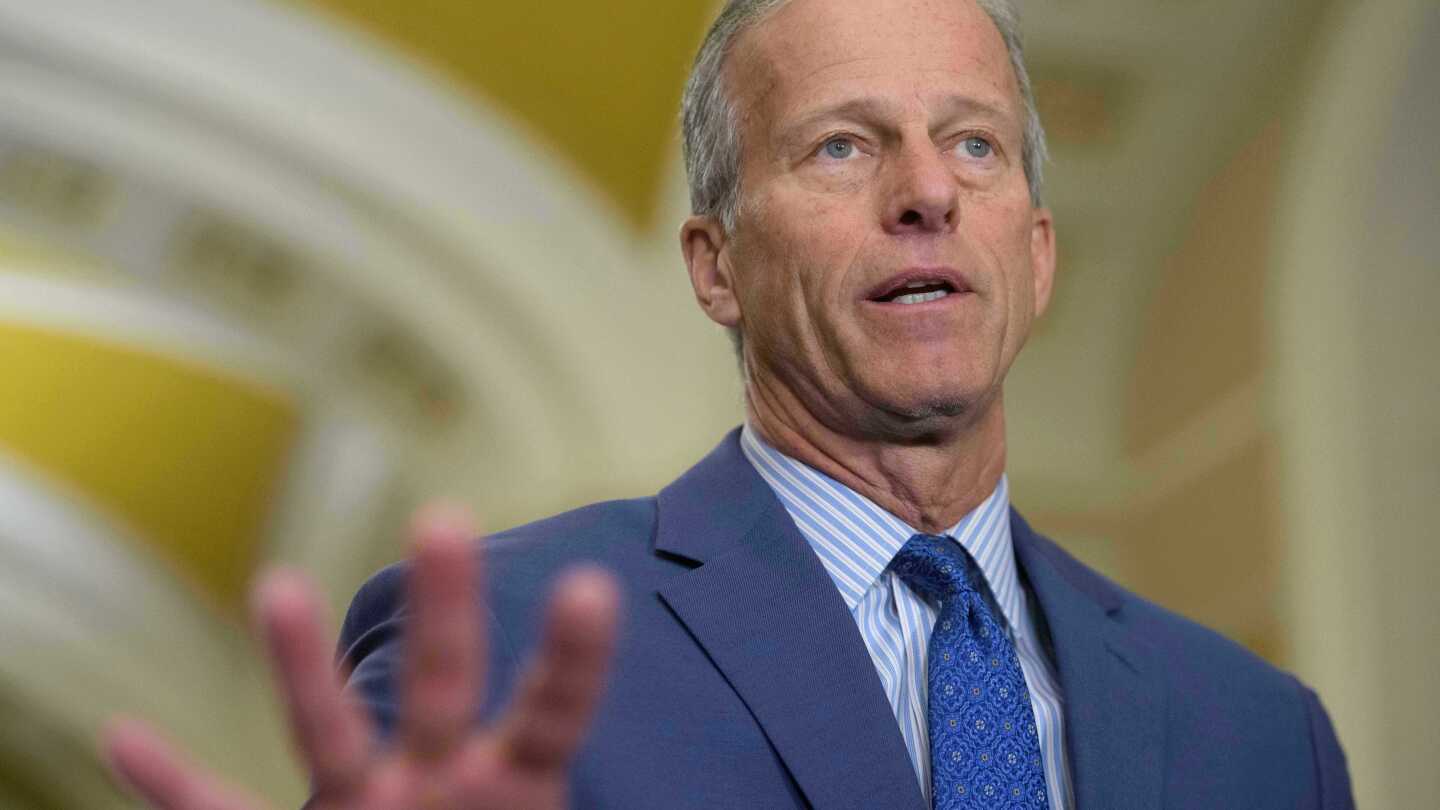
    WASHINGTON — A significant political confrontation is unfolding in the Senate as Republican lawmakers face mounting pressure from President Donald Trump regarding a war powers resolution that would restrict presidential authority to initiate military action against Venezuela. The resolution advanced last week with support from five Republican senators joining Democrats, prompting vehement criticism from the president.

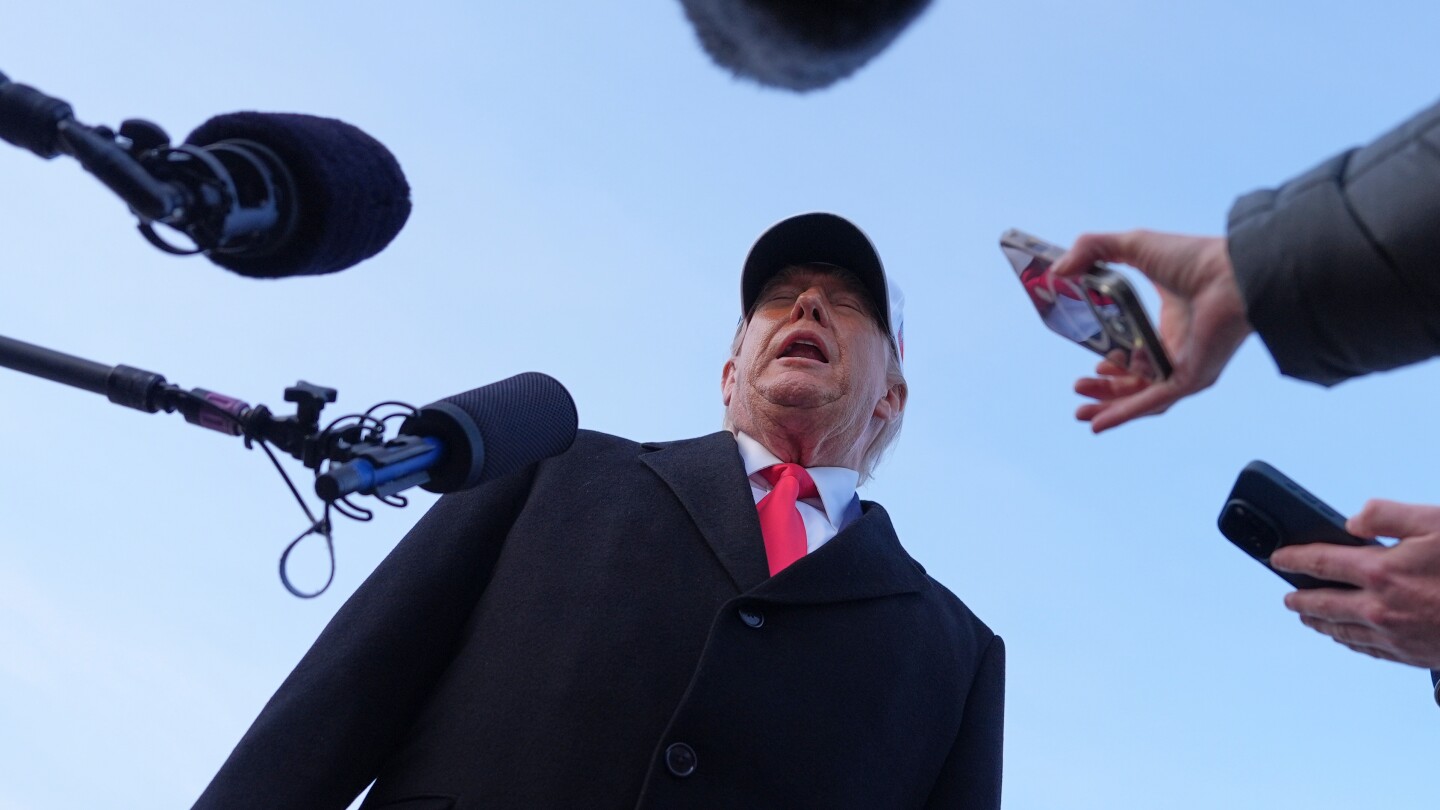
    During a Tuesday speech in Michigan, Trump expressed frustration with the dissenting Republicans, stating, “Here we have one of the most successful attacks ever and they find a way to be against it. It’s pretty amazing. And it’s a shame.” The president specifically targeted Senators Rand Paul (R-KY), Lisa Murkowski (R-AK), and Susan Collins (R-ME), describing them with derogatory terms that underscore the deepening rift within the party.

    The legislative measure gained momentum following U.S. military operations that resulted in the capture of Venezuelan leader Nicolás Maduro earlier this month. Despite its advancement, the resolution faces insurmountable obstacles as it would ultimately require Trump’s signature to become law, creating a constitutional paradox that highlights the measure’s symbolic importance in testing Republican loyalty to the president.

    Senator Josh Hawley (R-MO), one of the Republicans who initially supported advancing the resolution, has indicated he may reconsider his position after discussions with administration officials. Hawley reported receiving assurances from Secretary of State Marco Rubio that no ground troops would be deployed to Venezuela and that the administration would adhere to constitutional requirements for any future military actions.

    The Trump administration has employed multiple legal justifications for its Venezuela operations, including designating drug cartels as terrorist organizations under global war on terror authorities and characterizing Maduro’s capture as a law enforcement operation rather than military action. Senators received a classified briefing on the administration’s legal rationale, though some lawmakers criticized the secrecy surrounding these arguments.

    This political confrontation occurs against the backdrop of Trump’s expanded foreign policy ambitions, including recent statements about U.S. involvement in Venezuela, interest in Greenland, and comments regarding Iran. Democratic Senator Tim Kaine, who has introduced multiple war powers resolutions, observed that the administration appears “furious at the notion that Congress wants to be Congress.”
  • South Korean court to deliver verdict in ex-president Yoon’s insurrection trial on Feb 19

    South Korean court to deliver verdict in ex-president Yoon’s insurrection trial on Feb 19

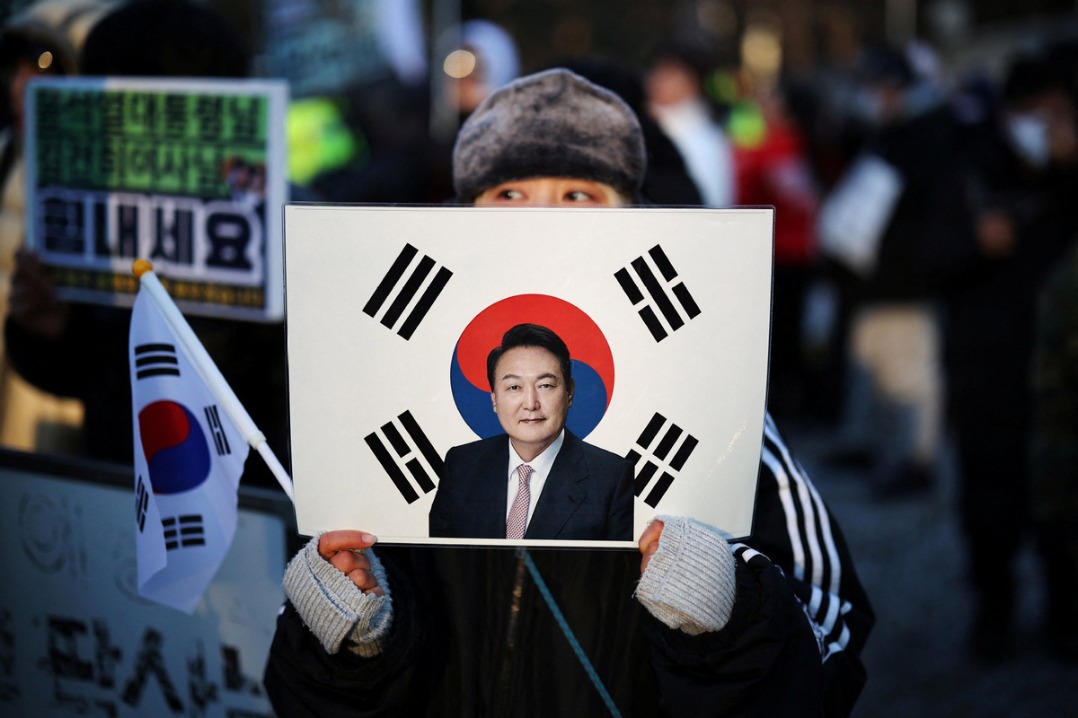
    A Seoul court has scheduled February 19, 2026, as the verdict date in the unprecedented insurrection trial of former South Korean President Yoon Suk-yeol, marking a critical juncture in the nation’s political and judicial history. The Seoul Central District Court’s announcement comes after prosecutors made the extraordinary request for capital punishment against the former head of state.

    The case centers on Yoon’s controversial declaration of emergency martial law on December 3, 2024, despite the absence of war or equivalent national crises. The National Assembly swiftly revoked the declaration within hours, setting in motion a constitutional crisis that ultimately led to Yoon’s impeachment by the Constitutional Court in April 2025 and his subsequent removal from office.

    Prosecutors allege Yoon masterminded an insurrection plot, coordinating with seven senior military and police officials who face related charges. The court consolidated three separate trials last month, creating a unified proceeding against all eight defendants. Yoon, who was indicted while in detention in January 2025, holds the distinction of being the first sitting South Korean president to be arrested and formally charged.

    The upcoming verdict represents a watershed moment for South Korea’s democratic institutions, testing the judiciary’s independence and the principle that all citizens, regardless of position, are subject to the rule of law. The case has drawn intense domestic and international attention, with implications for the nation’s political stability and constitutional order.

  • Greenlanders brace for summit that could shape the Arctic’s future – and their own

    Greenlanders brace for summit that could shape the Arctic’s future – and their own

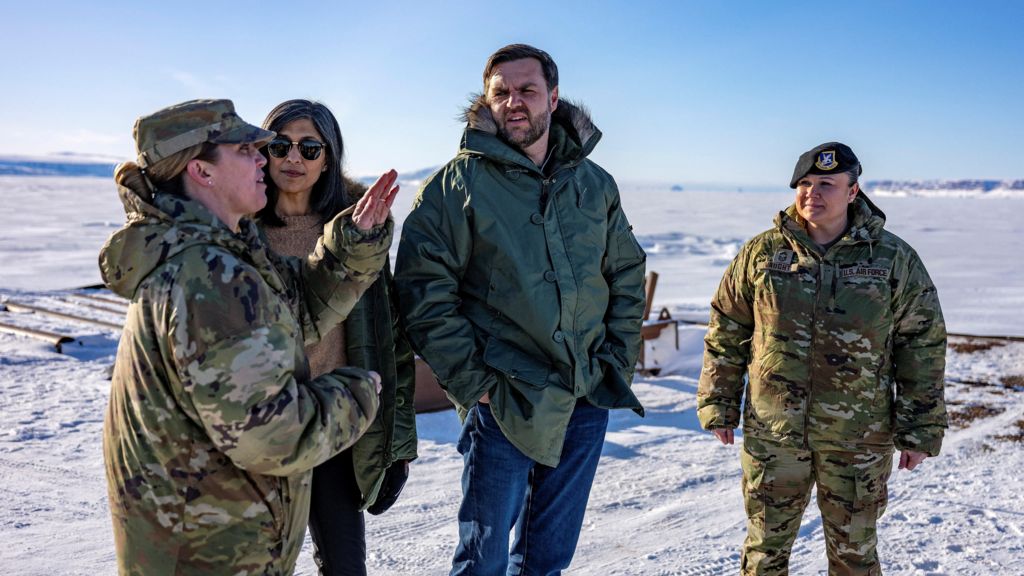
    A high-stakes diplomatic confrontation is unfolding as U.S. Vice President JD Vance prepares to host Danish and Greenlandic foreign ministers alongside Secretary of State Marco Rubio at the White House. The extraordinary meeting centers on Donald Trump’s controversial pursuit of Greenland, which he has vowed to acquire through “the easy way or the hard way” following his administration’s aggressive military maneuvers in Venezuela.

    In Nuuk, Greenland’s capital, digital news tickers blaze with urgent messages about sovereignty and Trump’s intentions. Local residents express profound concern about their future. “We are not for sale. Our country is not for sale,” asserts Amelie Zeeb, emphasizing her point by removing traditional sealskin mittens. Writer Sivnîssoq Rask echoes this sentiment: “My hope is for our country to be independent and well-managed and not be bought.”

    The geopolitical implications extend far beyond the island itself. Danish Prime Minister Mette Frederiksen has warned that any forced acquisition would effectively terminate NATO, the transatlantic defense alliance that has underpinned European security for decades. This comes at a critical juncture when European leaders seek U.S. support for Ukraine peace negotiations.

    European powers are responding with heightened military proposals. Germany and Britain are leading efforts to bolster NATO’s Arctic presence, with German Chancellor Friedrich Merz stating, “We share the U.S. concerns that this part of Denmark needs better protection.” Concrete suggestions include establishing a maritime NATO “Arctic Sentry” force, mirroring the Baltic Sea security framework implemented after Russia’s invasion of Ukraine.

    Greenland’s strategic significance dates to World War II when the U.S. occupied the island to prevent Nazi advancement. The 1951 defense agreement between Washington and Copenhagen permits American military bases but maintains Danish sovereignty. Today, Greenland’s location on the shortest route between the continental U.S. and Russia makes it crucial for missile defense, while its waters contain critical underwater infrastructure vulnerable to hybrid attacks.

    Analysts question Trump’s stated security rationale. Ian Lesser of the German Marshall Fund notes that Alaska’s Arctic region represents a more sensitive security zone, suggesting economic motivations drive Trump’s interest. Greenland possesses vast rare earth minerals essential for high-tech industries and defense technologies, alongside emerging shipping routes as Arctic ice recedes.

    Greenlandic Prime Minister Jens-Frederik Nielsen has declared a geopolitical crisis, stating his nation would choose Denmark over U.S. control if forced. Security expert Sara Olvig warns that coercive acquisition would fundamentally alter America’s global standing: “The United States will no longer be the land of the free. It will be the end of NATO and of the democratic world as we know it.” With Russia and China closely monitoring developments, Wednesday’s meeting could redefine Arctic geopolitics for generations.

  • Vance to meet Danish and Greenlandic officials in Washington as locals say Greenland is not for sale

    Vance to meet Danish and Greenlandic officials in Washington as locals say Greenland is not for sale

    NUUK, Greenland — Greenland finds itself at the epicenter of an escalating geopolitical confrontation as U.S. President Donald Trump’s persistent campaign to acquire the Arctic territory has triggered international alarm and local resistance. The situation has reached such intensity that Denmark’s Prime Minister has cautioned it could potentially destabilize the NATO alliance.

    Along the snow-covered streets of Nuuk, Greenland’s capital, residents express unified opposition to American overtures. Tuuta Mikaelsen, a 22-year-old student, conveyed to The Associated Press her hope that U.S. officials would understand the clear message: “back off.”

    The White House has notably declined to rule out forceful measures to obtain control of the strategically vital island, which operates as a semi-autonomous territory within the Kingdom of Denmark. This stance sets the stage for high-level discussions scheduled for Wednesday between U.S. Vice President JD Vance and diplomatic representatives from both Denmark and Greenland.

    Greenland’s Prime Minister Jens-Frederik Nielsen articulated the territory’s firm position during a Copenhagen news conference: “If we have to choose between the United States and Denmark here and now, we choose Denmark. We choose NATO. We choose the Kingdom of Denmark. We choose the EU.”

    The island’s significance stems from its emerging strategic value as climate change transforms Arctic geography. Melting ice opens potential shorter trade routes to Asia and facilitates access to substantial deposits of critical minerals essential for technology manufacturing.

    While President Trump justifies his pursuit through national security concerns—specifically citing perceived threats from Russian and Chinese vessels—local experts and residents challenge this narrative. Lars Vintner, a heating engineer who frequently navigates Greenlandic waters, stated: “The only Chinese I see is when I go to the fast food market.” His friend Hans Nørgaard dismissed Trump’s claims as “fantasy.”

    Vintner suggested security concerns merely provide “a cover” for economic ambitions, noting the U.S. already maintains military presence and could expand existing bases without ownership transfer.

    The confrontation has prompted extraordinary civilian responses, including Nørgaard filing a police complaint in Nuuk against Trump’s “aggressive” behavior, which he characterized as threatening both Greenlanders and NATO stability.

    Greenland’s Minister for Business and Mineral Resources Naaja Nathanielsen ahead of Wednesday’s meeting called U.S. discussions about taking over a NATO ally “unfathomable” and urged the Trump administration to respect the will of the island’s population.

  • Japan, South Korea leaders drum up viral moment with K-pop jam

    Japan, South Korea leaders drum up viral moment with K-pop jam

    In an unconventional display of diplomatic camaraderie, Japanese Prime Minister Sanae Takaichi and South Korean President Lee Jae Myung engaged in an impromptu drumming session featuring K-pop hits following their bilateral summit in Nara. The two leaders, adorned in personalized blue athletic tops, created a viral moment that symbolized their commitment to strengthening ties between the historically divided nations.

    The musical interlude came after substantive discussions where both leaders affirmed enhanced cooperation on economic security and regional stability matters. Prime Minister Takaichi, drawing from her background as a former heavy metal band drummer, orchestrated the surprise performance specifically for President Lee, who had previously expressed his aspiration to play drums during last year’s APEC gathering.

    Their repertoire included BTS’s global phenomenon “Dynamite” and “Golden” from the Golden Globe-winning animated feature “KPop Demon Hunters.” Video footage captured Takaichi demonstrating vigorous drumming technique with visible enthusiasm, while Lee acknowledged initial awkwardness that gradually transformed into rhythmic synchronization.

    Beyond the cultural exchange, the leaders addressed pressing geopolitical concerns, particularly regarding China’s regional influence and the ongoing diplomatic tensions following Takaichi’s November remarks about potential military intervention in Taiwan. Both emphasized the critical importance of Japan-South Korea collaboration amidst complex international dynamics.

    The meeting occurred against the historical backdrop of Japan’s 1910-1945 occupation of the Korean peninsula, which has long strained bilateral relations. While Lee’s predecessor had pursued improved ties, the current administration appears to be building upon this foundation through both symbolic gestures and substantive policy alignment, with Lee characterizing the relationship as “neighbors sharing a front yard.”

  • From Minneapolis to Venezuela, Trump piles up the risks as he faces midterm verdict

    From Minneapolis to Venezuela, Trump piles up the risks as he faces midterm verdict

    NEW YORK — Within the initial fortnight of the new year, President Donald Trump has dramatically intensified his governance approach, asserting authority over Venezuela’s political landscape, renewing threats to acquire Greenland, and deploying masked immigration agents across American urban centers. These developments occur alongside an extraordinary criminal investigation targeting the Federal Reserve—a fundamental pillar of the national economy that Trump seeks to influence.

    Even for a presidency characterized by constant disruption, Trump is generating exceptional levels of political turbulence as the nation approaches midterm elections that will determine congressional control. Each presidential decision carries substantial risks, ranging from potential foreign entanglements to destabilizing the financial system, yet Trump continues his aggressive approach with an intensity that has unsettled even some Republican allies.

    Yale University historian Joanne B. Freeman characterized the situation as a “rogue presidency,” noting this represents an unprecedented development in American political history. Despite potential repercussions, Trump appears undeterred, frequently escalating his positions rather than retreating.

    The Federal Reserve investigation has proven particularly contentious. Following Chair Jerome Powell’s disclosure that the central bank faces criminal scrutiny regarding testimony about building renovations, some conservative voices expressed unusual criticism. Fox Business host Maria Bartiromo, typically a Trump supporter, noted that Wall Street largely opposes such confrontations with the monetary policy institution.

    Concurrently, Trump has expanded U.S. involvement in complex international matters, seemingly contradicting his promised “America First” foreign policy. The military operation to remove Venezuelan leadership has been reframed from targeting drug trade figures to presenting economic opportunities for the United States, with Trump even declaring himself “acting president of Venezuela” in social media posts.

    Domestically, immigration enforcement operations have sparked violent confrontations, including a fatal shooting in Minneapolis involving federal agents. Administration officials claim self-defense, while local authorities dispute these accounts based on circulating video evidence.

    As November’s midterm elections approach, Democratic campaigns focus primarily on economic concerns, with recent AP-NORC polls showing only 31% approval of Trump’s economic management—his lowest rating yet. Some progressive activists argue their party should emphasize Trump’s unprecedented power consolidation more prominently, with Indivisible co-founder Ezra Levin warning that authoritarians typically escalate when cornered rather than conceding power.

    Republican leadership remains largely unified, with RNC spokesperson Kiersten Pels asserting that voters will reward the party for Trump’s America-first policies in the upcoming elections.

  • Japanese and South Korean leaders jam to K-pop hits at a summit

    Japanese and South Korean leaders jam to K-pop hits at a summit

    In an unprecedented display of cultural diplomacy, Japanese Prime Minister Sanae Takaichi and South Korean President Lee Jae Myung transformed their bilateral summit in Nara into an impromptu musical collaboration. The leaders, following Tuesday’s formal discussions in Takaichi’s hometown, surprised observers by engaging in a joint drumming performance to popular K-pop anthems.

    Dressed in customized athletic jackets, the two heads of state seated themselves at a drum kit for a session featuring BTS’s global hit “Dynamite” and Kpop Demon Hunters’ “Golden.” The spontaneous performance, captured in an official video released by the Prime Minister’s office on Wednesday, showcased a rare moment of camaraderie between the neighboring nations’ leaders.

    The musical initiative was personally orchestrated by Takaichi, who revealed her background as an avid drummer during her university years and confessed her enduring passion for heavy metal music. President Lee expressed profound gratitude for the unique diplomatic gesture, noting on his social media platform that drumming had represented a long-cherished personal aspiration.

    Reflecting on the symbolic nature of their musical synchronization, Lee drew parallels to international relations, observing that just as they gradually aligned their rhythms while respecting individual differences, so too could Japan and South Korea enhance their cooperation through progressive steps.

    Takaichi praised her counterpart’s rapid musical acquisition, noting in her video commentary that Lee mastered basic drumming techniques within minutes. The Japanese leader reaffirmed her commitment to advancing bilateral relations through continued close communication and proactive implementation of their ‘shuttle diplomacy’ framework, emphasizing the importance of stable and forward-looking development in Japan-South Korea relations.

  • Qatar joins US ‘Pax Silica’ as it races to catch up with Gulf neighbours on AI

    Qatar joins US ‘Pax Silica’ as it races to catch up with Gulf neighbours on AI

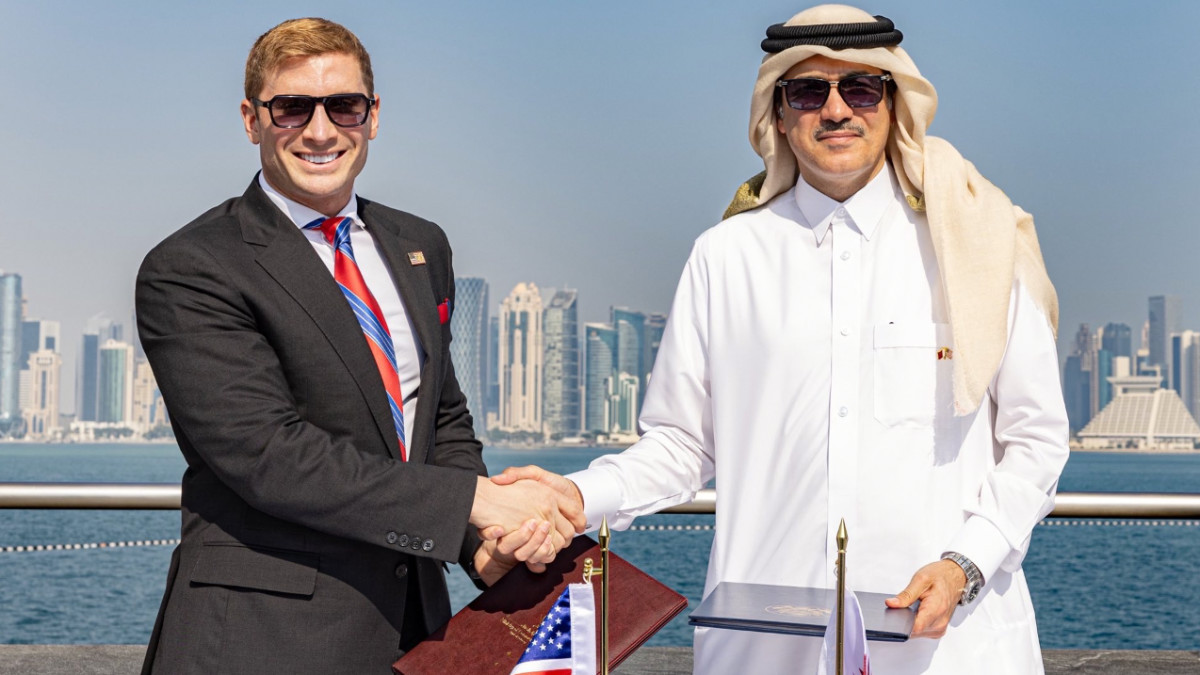
    In a significant move to bolster its technological standing, Qatar has officially entered the United States’ “Pax Silica” initiative, a coalition focused on securing global artificial intelligence and semiconductor supply chains. The agreement, formalized on Monday, positions the gas-rich Gulf nation as the first regional partner in this strategic framework, which includes close US allies such as Australia, Israel, Japan, South Korea, and the United Kingdom, alongside financial hub Singapore.

    The US State Department heralded the partnership as emblematic of a “new geopolitical consensus” where economic security is inextricably linked to national security. The department’s statement emphasized Qatar’s commitment to investing in secure energy, advanced technology, and critical minerals supply chains, deeming the nation an “indispensable partner.” This collaboration is expected to unlock joint ventures in digital infrastructure, advanced manufacturing, logistics, mineral refining, and energy projects.

    This development highlights the US’s increasing reliance on its oil and gas-rich Gulf partners to fuel its ambition to dominate the burgeoning AI industry, a strategic pivot at a time when many Western nations face fiscal constraints. While neighbors Saudi Arabia and the United Arab Emirates (UAE) have been more aggressive early movers in AI, lobbying the previous Trump administration for advanced chips, Qatar has been methodically building its capacity. Together, these Gulf states command trillions in sovereign wealth capital ready for deployment.

    Qatar’s recent initiatives signal a determined catch-up effort. In December, it established Qai, a dedicated AI development and investment company under the umbrella of its massive $524 billion Qatar Investment Authority (QIA). This followed a September investment in leading AI firm Anthropic by the QIA. Furthermore, a landmark $20 billion joint investment agreement was signed in December between Qai and US asset manager Brookfield to develop AI infrastructure within Qatar and on a global scale.

    The Gulf’s competitive advantage extends beyond capital. Nations like Saudi Arabia are leveraging ultra-cheap energy—with commercial electricity prices 30-50% below the global average—to attract energy-intensive AI companies and data centers, a compelling offer amid rising energy costs frustrating US consumers.

  • US official says Venezuela freeing Americans in ‘important step’

    US official says Venezuela freeing Americans in ‘important step’

    In a significant diplomatic development, Venezuela’s interim government has initiated the release of multiple American detainees from its prisons. The move comes just days after U.S. military operations resulted in the capture of former president Nicolás Maduro and his wife on January 3rd, an operation that reportedly resulted in over 100 casualties according to official accounts.

    The U.S. State Department, through an anonymous official, characterized the prisoner release as ‘an important step in the right direction’ by Venezuela’s transitional authorities. While specific details regarding the number of freed individuals or their identities remain undisclosed, confirmation has been provided that multiple American citizens are involved in this humanitarian gesture.

    This development occurs against the backdrop of Venezuela’s tumultuous political landscape following the controversial 2024 presidential election. Maduro had been declared victorious amid widespread allegations of electoral manipulation, leading to substantial protests and subsequent detentions of demonstrators. The recent U.S. military intervention that apprehended Maduro and his spouse, who now confront drug trafficking charges in American courts, precipitated this diplomatic shift.

    Concurrently, Venezuela has restored access to the social media platform X, ending a blockade imposed by Maduro’s administration in August 2024 following his contested reelection. The platform had served as a crucial communication channel until its suspension, which occurred after Elon Musk, X’s owner, engaged in public disputes with the Venezuelan leadership.

    Delcy Rodríguez, previously Maduro’s vice president and now acting president, has signaled a transitional approach. Her updated social media profile emphasizes national unity and economic stability while the Maduro account continues to display messages supporting the deposed leader.

    The United States has consistently prioritized the liberation of citizens detained abroad, having previously negotiated similar arrangements with Maduro’s government. This latest prisoner release represents a tangible outcome of the shifting power dynamics in Caracas following the change in leadership.

  • At least 100,000 foreign national visas revoked since Trump took office

    At least 100,000 foreign national visas revoked since Trump took office

    The United States Department of State has officially confirmed the revocation of more than 100,000 visas since President Donald Trump assumed office nearly one year ago. This significant figure, announced through the Department’s social media channels on Monday, includes approximately 8,000 student visas and 2,500 specialized visas belonging to individuals who had encounters with U.S. law enforcement for criminal activities.

    The Department emphasized its commitment to national security, stating, “We will continue to deport these thugs to keep America safe.” This declaration aligns with President Trump’s reinforced stance during a recent address at the Detroit Economic Club, where he asserted that any naturalized citizens convicted of defrauding American citizens would face citizenship revocation, explicitly mentioning Somali citizens and individuals from “anywhere else.”

    According to a CNN report from December 8th, the State Department had previously revoked 85,000 visas, indicating that an additional 15,000 visas were canceled in just over a month. The targeting of both legal and illegal immigrants has become a cornerstone policy of Trump’s second term, manifesting through increased deportations, visa cancellations, and the implementation of stricter regulations and more extensive vetting procedures for U.S. visa applicants.

    This aggressive immigration policy has ignited national controversy, particularly following the January 7th shooting death of Renee Nicole Good, a U.S. citizen and mother of three, by an Immigration and Customs Enforcement (ICE) officer during a crackdown in Minneapolis, Minnesota.

    In a statement to Middle East Eye, Tommy Pigott, Principal Deputy Spokesperson at the U.S. State Department, elaborated that the administration has revoked visas from thousands of foreign nationals charged or convicted of crimes, including assault, theft, and driving under the influence. Pigott also highlighted the recent launch of the “Continuous Vetting Center,” an initiative designed to ensure compliance with U.S. laws and swiftly revoke visas of those deemed a threat.

    This center subjects all 55 million individuals holding valid U.S. visas to ongoing review, encompassing scrutiny of social media activity and potential deportation for violations. While this expansion signifies an escalation in the surveillance of legal immigrants, some legal experts question the efficacy and limitations of technological systems tasked with monitoring such a vast population.

    Notably, the crackdown has extended to international students engaged in campus activism, particularly concerning Israel’s military actions in Gaza. An executive order signed on January 29th labeled such “alien students” as antisemitic, authorizing actions for their removal. Students like Ranjani Srinivasan, Rumeysa Ozturk, and permanent legal resident Mahmoud Khalil have been targeted for their pro-Palestinian advocacy. Critics argue that deportation for expressing political opinions violates the First Amendment, and several students have successfully challenged these actions.

    The scope of scrutiny is not limited to those already in the country. Since June, prospective student visa applicants have faced increased examination of their political views. Further measures include plans for enhanced vetting of H1-B visa holders, re-interviewing refugees admitted under the previous administration, and expanding the list of countries subject to full or partial travel bans, which now totals 39 nations.

    Additional policies involve increased H-1B visa fees to deter foreign workers, a refined iteration of the so-called “Muslim ban,” a drastic reduction in refugee admissions, and attempts to revoke Temporary Protected Status (TPS) for citizens from nations like Afghanistan, Syria, Haiti, and Somalia. Consequently, the number of people entering through U.S. borders has dropped precipitously.