分类: politics

  • US Congress members visit Denmark as Trump’s pressure on Greenland rises

    US Congress members visit Denmark as Trump’s pressure on Greenland rises

    A bipartisan congressional delegation from the United States has arrived in Denmark amidst escalating tensions over President Donald Trump’s persistent efforts to acquire Greenland. The 11-member group, comprising both Senate and House representatives, is scheduled to meet with Danish Prime Minister Mette Frederiksen and Greenlandic leader Jens-Frederik Nielsen in a demonstration of diplomatic solidarity.

    This diplomatic mission follows unsuccessful high-level discussions in Washington aimed at discouraging President Trump from pursuing his controversial territorial ambitions. The president has repeatedly asserted Greenland’s strategic importance to US national security, claiming Denmark lacks adequate defense capabilities against potential Russian or Chinese aggression in the Arctic region.

    Despite Greenland’s sparse population, the territory possesses substantial natural resources and occupies a geostrategic position between North America and the Arctic, making it invaluable for missile detection systems and regional surveillance operations. The United States already maintains approximately 100 permanent military personnel at its Pituffik base, operating under existing bilateral agreements that permit unlimited troop deployments.

    President Trump has escalated the situation by not only renewing purchase offers—previously rejected by both Danish and Greenlandic authorities—but also openly contemplating military seizure of the territory. These suggestions have prompted Denmark to issue stark warnings about potential consequences for NATO’s integrity, noting the alliance has never confronted scenarios involving armed conflict between member states.

    European NATO members have mobilized in support of Denmark, with multiple nations including France, Germany, Sweden, Norway, Finland, the Netherlands, and the United Kingdom deploying reconnaissance forces to Greenland. French President Emmanuel Macron has pledged additional land, air, and naval assets to reinforce regional security cooperation.

    The congressional delegation, led by Senator Chris Coons, includes both Democratic and Republican members, reflecting rare bipartisan concern over the administration’s approach. While most delegates oppose Trump’s proposals, legislative efforts have emerged from both sides—with some lawmakers seeking to prevent military action while others have proposed bills supporting annexation.
  • China and Canada announce tariffs relief after a high-stakes meeting between Carney and Xi

    China and Canada announce tariffs relief after a high-stakes meeting between Carney and Xi

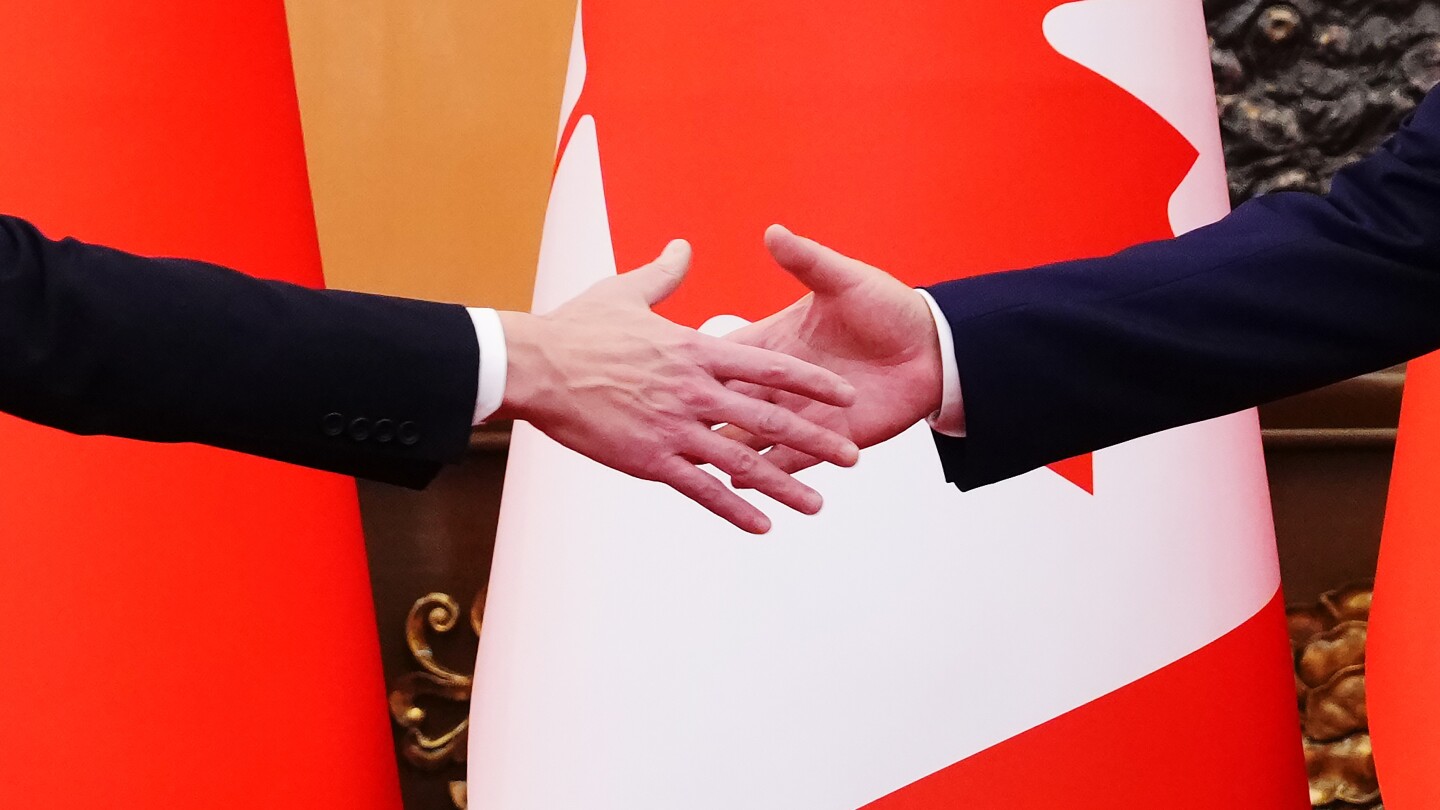
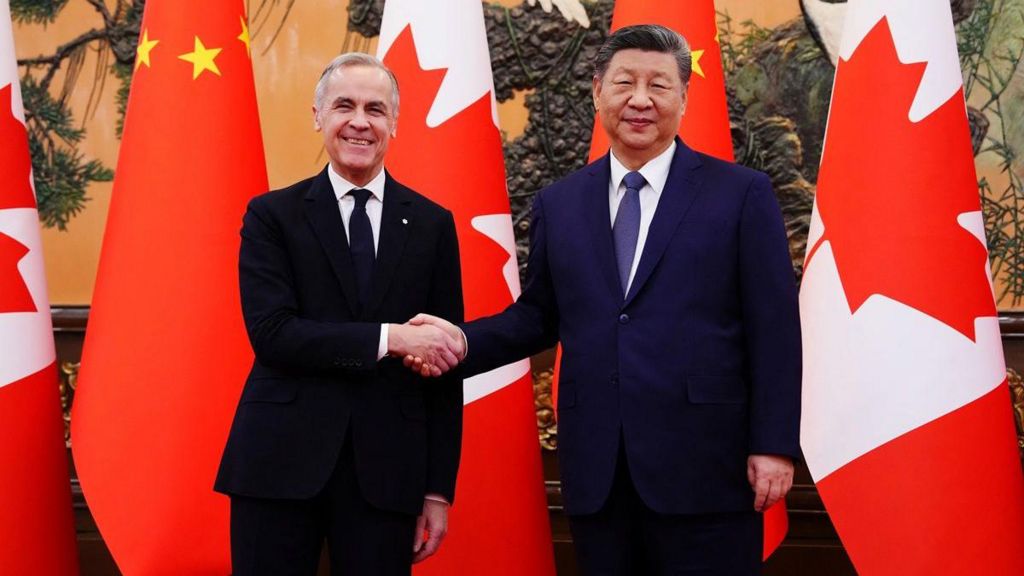
    In a historic diplomatic breakthrough, Chinese President Xi Jinping and Canadian Prime Minister Mark Carney have announced a comprehensive tariff reduction agreement, signaling a dramatic thaw in bilateral relations during the first Canadian leadership visit to Beijing in nearly a decade. The landmark deal, finalized during intensive negotiations at the Great Hall of the People, will see China slash tariffs on Canadian canola oil from 85% to 15% effective March 1st, while Canada will apply most-favored-nation rates of 6.1% on Chinese electric vehicles.

    This economic détente represents a significant reversal from years of escalating trade tensions that began in 2018 with the arrest of Huawei executive Meng Wanzhou and China’s subsequent detention of two Canadian citizens. The relationship further deteriorated in 2024 when Canada imposed 100% tariffs on Chinese EVs following similar U.S. measures, prompting Beijing to retaliate with tariffs exceeding $2 billion on Canadian agricultural products.

    Prime Minister Carney characterized the negotiations as “realistic and respectful” while emphasizing that Canada maintained clear “red lines” regarding human rights concerns, election interference allegations, and the need for diplomatic “guardrails.” The Canadian leader acknowledged the fundamentally different political systems between the nations but advocated for direct dialogue rather than “megaphone diplomacy.”

    Analysts view this diplomatic reset as part of Canada’s broader strategy to diversify trade relationships amid uncertainty in U.S.-Canada relations following the reinstatement of Trump-era tariffs. The agreement potentially opens doors for increased Chinese investment in Canada while positioning Beijing as a stable alternative trading partner on the global stage.

    The reconciliation has already inspired similar diplomatic movements, with South Korean, Irish, and expected British and German leaders scheduling Beijing visits. As Carney noted, this reorientation reflects how “the world has changed dramatically” and how nations are recalibrating relationships in response to evolving global power dynamics.

  • Concerns raised over US stance on Iran

    Concerns raised over US stance on Iran

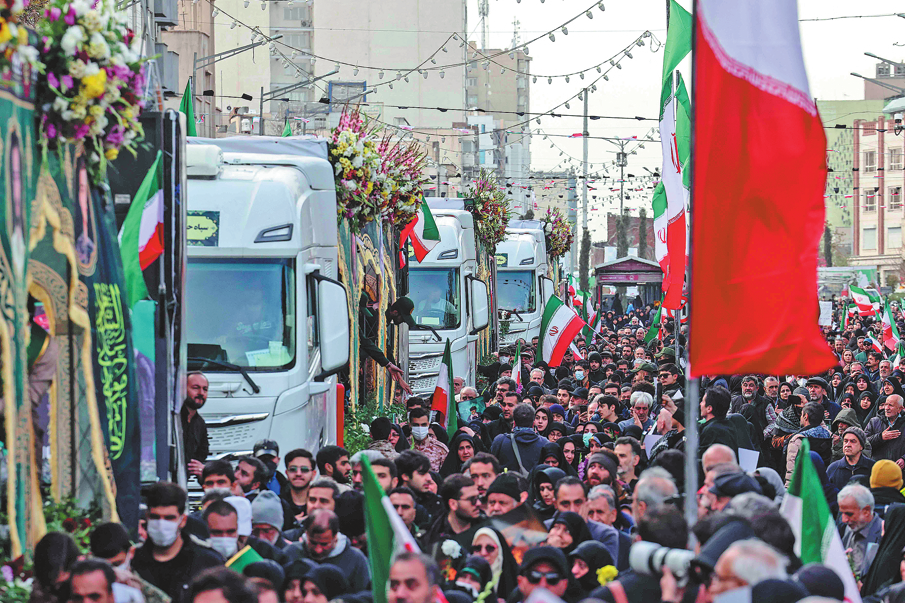
    International observers are closely monitoring escalating tensions in the Middle East as conflicting signals from the Trump administration regarding potential military action against Iran create widespread diplomatic uncertainty. The situation remains fluid with recent developments suggesting both escalation and de-escalation simultaneously.

    Earlier this week, Washington initiated precautionary measures including ordering personnel evacuations from Al Udeid Air Base in Qatar—the largest U.S. military installation in the region. The Pentagon additionally deployed the USS Abraham Lincoln Carrier Strike Group toward the Middle East, a transit expected to require nearly one week for completion.

    President Trump introduced considerable ambiguity into the crisis when he repeatedly stated that he ‘understands the killing of protesters has stopped’ in Iran based on received intelligence. When questioned whether this development would prevent previously threatened military intervention, Trump maintained an opaque position, responding that Washington would ‘watch and see’.

    Tehran has responded with defensive preparations, briefly closing its airspace and announcing that Iranian forces have reached ‘peak defensive readiness’ to counter potential aggression. Iranian Foreign Minister Abbas Araghchi simultaneously advocated for diplomatic solutions, telling Fox News that ‘between war and diplomacy, diplomacy is a better way’ despite acknowledging limited positive experiences with U.S. negotiations.

    Analysts interpret Trump’s comments as potentially providing ‘a face-saving way’ to avoid military engagement while preserving strategic options, according to Sina Toossi, senior nonresident fellow at the Center for International Policy. Former State Department official Mark Kimmitt noted the administration appears intentionally ‘remaining ambiguous’ about military possibilities after demonstrating greater willingness for intervention than previous administrations.

    The geopolitical uncertainty immediately impacted global markets, with crude oil prices dropping approximately 3% following Trump’s tempered rhetoric—reversing previous gains driven by escalation fears that had raised concerns about potential disruptions to worldwide energy supplies.

    The United Nations Security Council scheduled emergency consultations regarding the Iranian situation as regional powers including Qatar implemented responsive measures to heightened tensions. A Western military official summarized the administration’s approach to Reuters: ‘All signals indicate an imminent U.S. attack, but unpredictability constitutes part of their strategy.’

  • Uganda’s president leads in tense election marred by internet shutdown and voting interference

    Uganda’s president leads in tense election marred by internet shutdown and voting interference

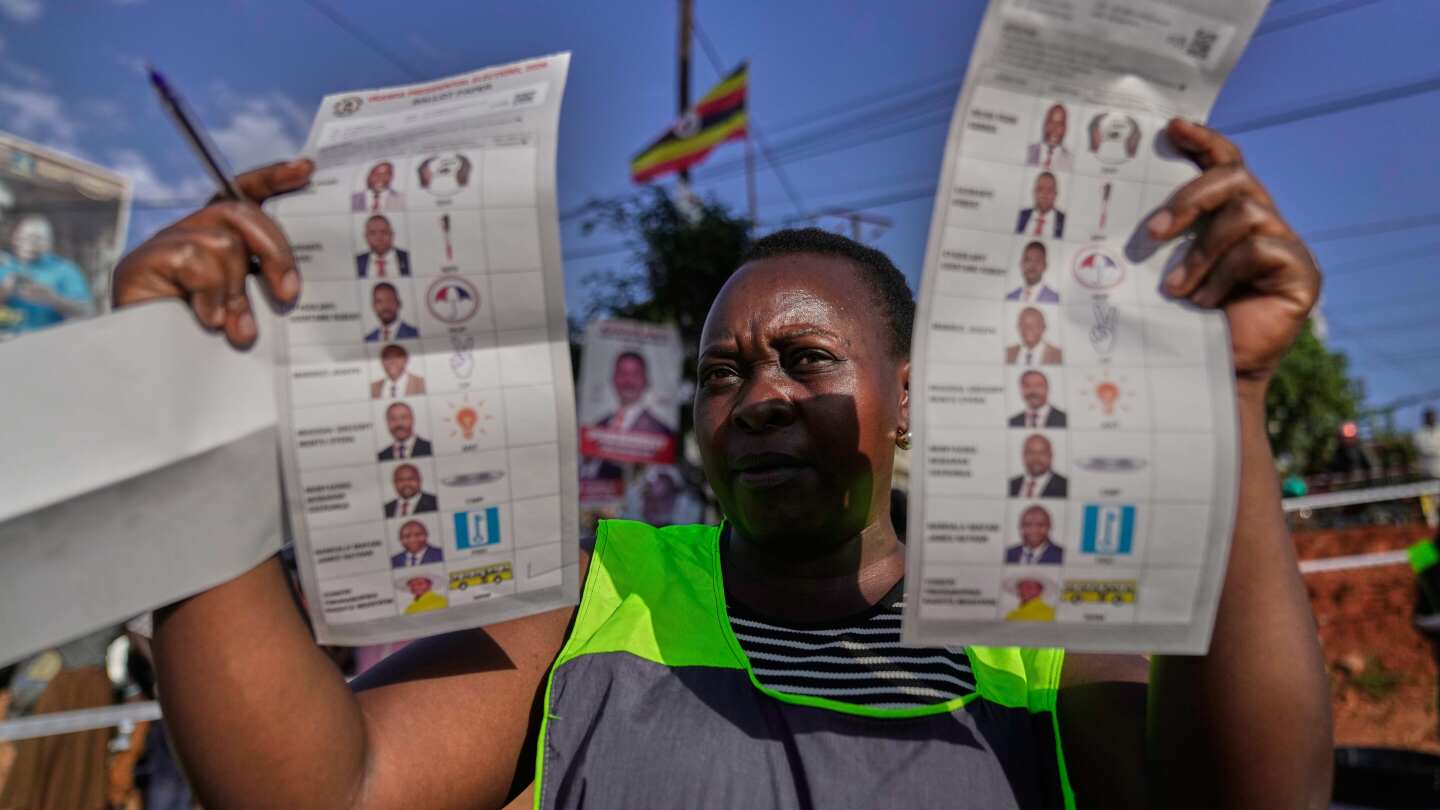
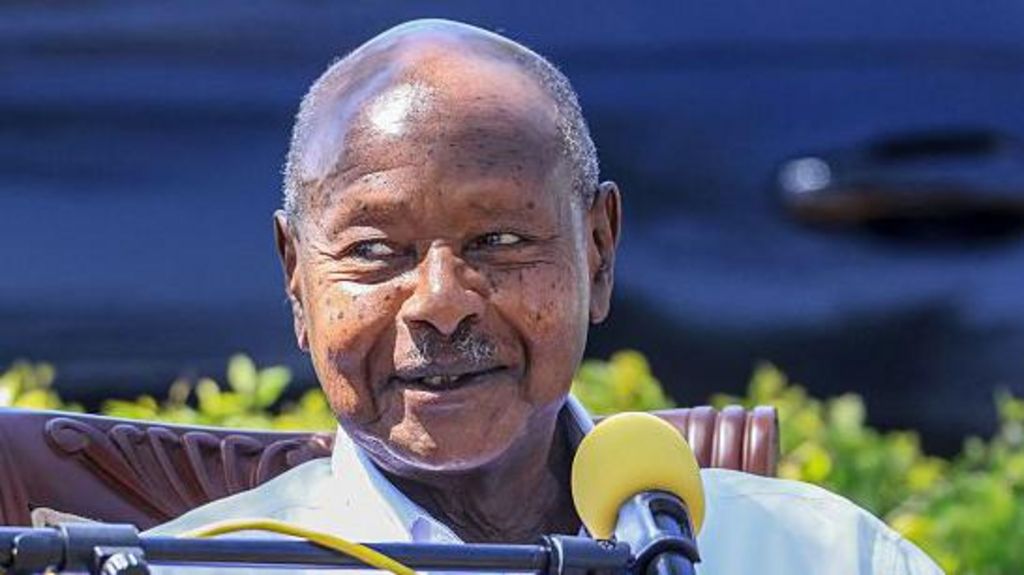
    KAMPALA, Uganda — Preliminary results from Uganda’s contentious presidential election indicate President Yoweri Museveni maintains a substantial lead as he seeks to extend his four-decade rule. With approximately half of polling stations reporting, the 81-year-old incumbent has secured over 70% of votes, while his primary challenger, opposition leader Robert Kyagulanyi (known as Bobi Wine), trails with approximately 19%.

    The electoral process has been shrouded in controversy, featuring nationwide internet blackouts, significant voting delays, and widespread allegations of systematic electoral manipulation. Opposition figures have reported massive ballot stuffing incidents and the detention of polling agents by security forces, particularly in rural strongholds of the ruling party.

    Bobi Wine, the musician-turned-politician advocating for political transformation, reported being confined to his residence during voting and stated that his electoral monitors in western regions were abducted prior to ballot counting. The opposition leader campaigned under extraordinary security measures, frequently wearing protective gear due to persistent safety concerns.

    The military presence throughout the election has been notably pervasive, with armed forces deployed extensively across the capital and surrounding areas. Security personnel maintained a constant vigil outside Wine’s residence near Kampala, which authorities justified as necessary protective measures for a ‘person of interest.’

    Museveni, Africa’s third-longest serving leader, has increasingly relied on military support to maintain authority, with the armed forces currently commanded by his son, Muhoozi Kainerugaba. The president defended the electoral process after casting his ballot, asserting that biometric verification systems had secured the election’s integrity against opposition infiltration attempts.

    This electoral contest marks the second presidential challenge between Museveni and Wine, who previously contested the 2021 election. Official results from that race awarded Museveni 58% against Wine’s 35%, results the opposition leader denounced as systematically rigged. Uganda has not experienced a peaceful presidential transition since gaining independence from British colonial administration in 1962.

  • Museveni takes strong lead in early results of Uganda presidential race

    Museveni takes strong lead in early results of Uganda presidential race

    Ugandan President Yoweri Museveni has established a formidable advantage according to provisional election results released by the nation’s electoral commission. The 81-year-old leader, who has governed Uganda since 1986, secured approximately 76% of tallied votes based on returns from nearly half of polling stations nationwide.

    His primary challenger, opposition figure and former musical artist Bobi Wine, trailed significantly with roughly 20% of counted votes. The election occurred under tense conditions following a campaign period marked by violence and culminating in a government-imposed internet blackout during voting.

    Wine’s National Unity Platform party has leveled serious allegations of electoral manipulation, claiming widespread fraud occurred during Thursday’s polling. The opposition leader provided no immediate documentary evidence to support these claims, and Ugandan authorities have yet to formally respond to the accusations.

    In a concerning development, Wine’s party reported through social media channels that security forces had encircled the opposition leader’s Kampala residence late Thursday, effectively placing him and his wife under house arrest without legal justification. According to party statements, military and police personnel breached the property’s perimeter to establish a presence within the compound.

    The electoral process itself faced substantial operational challenges, with numerous polling stations experiencing delays of up to four hours due to logistical failures. Many locations reported malfunctioning biometric verification systems and delayed delivery of essential voting materials, complications that some observers connected to the nationwide internet suspension.

    This security response mirrors events following the 2021 election, when Wine was similarly confined to his home for several days after challenging Museveni’s victory.

  • In their words: Greenlanders talk about Trump’s desire to own their Arctic island

    In their words: Greenlanders talk about Trump’s desire to own their Arctic island

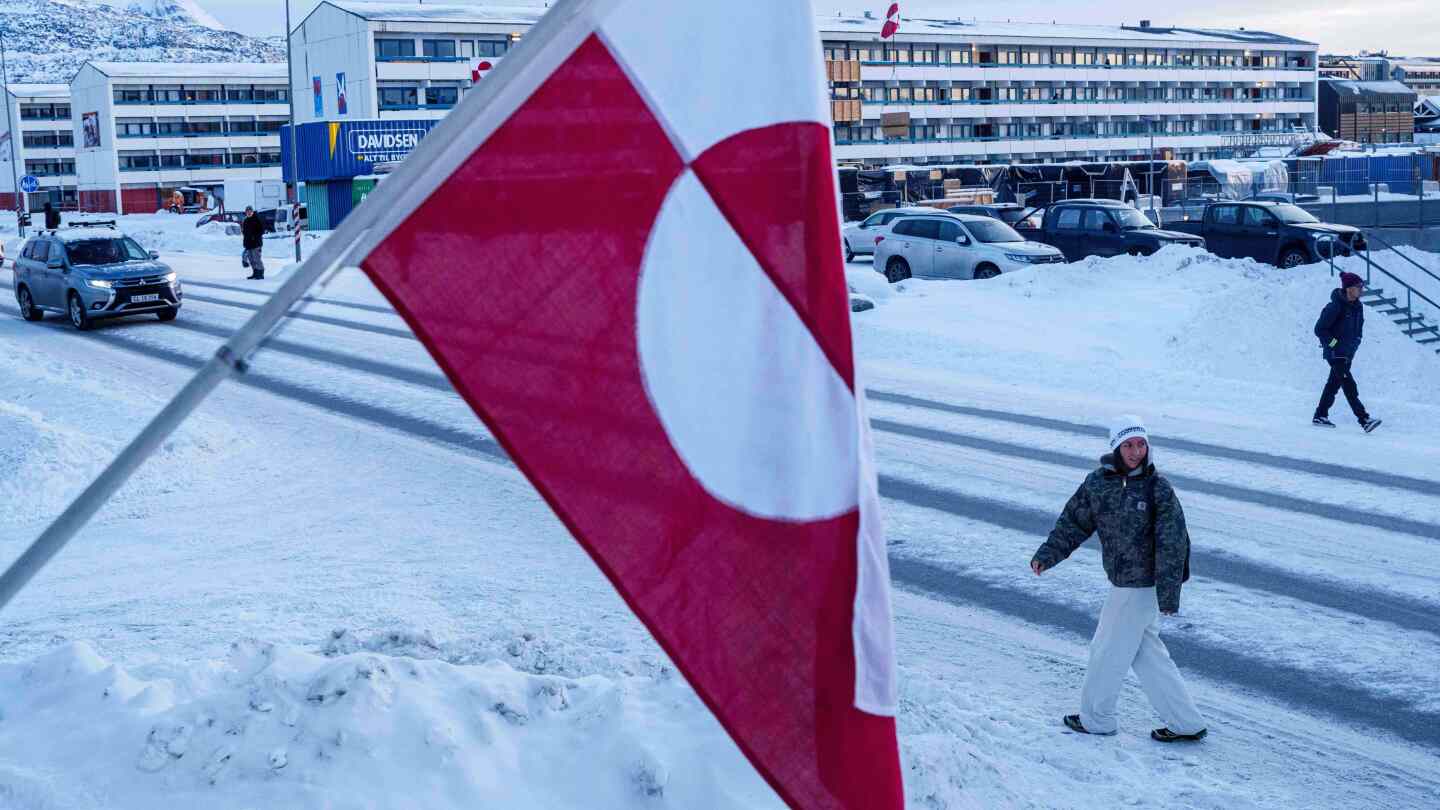
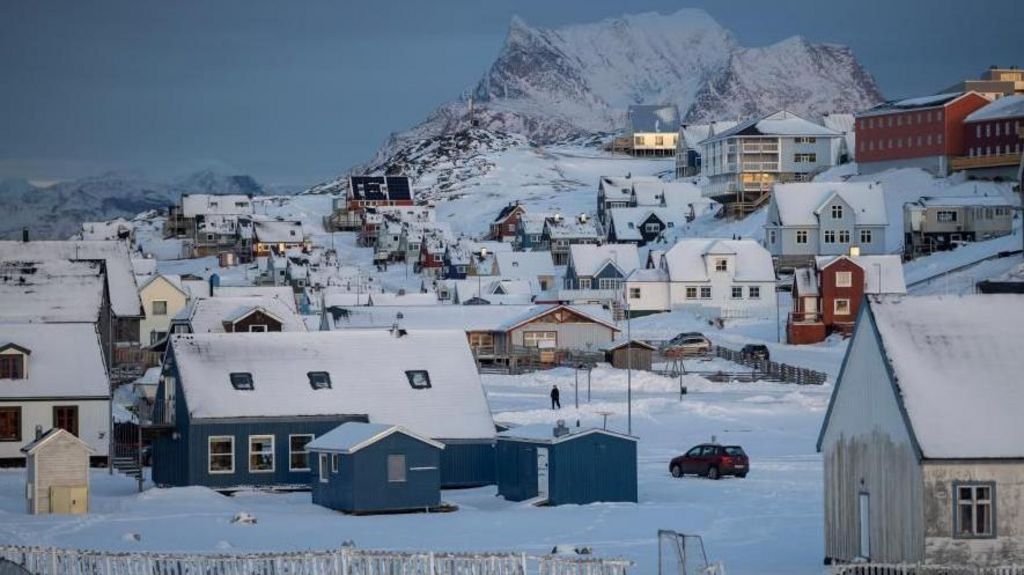
    NUUK, Greenland — The Arctic island of Greenland has become an unexpected focal point in international diplomacy following U.S. President Donald Trump’s expressed interest in acquiring the territory, including suggestions of potential military action. This semiautonomous Danish territory finds itself at the center of a geopolitical storm that has profoundly impacted its citizens.

    Greenlandic Minister Naaja Nathanielsen revealed the psychological toll on the population, stating that anxiety has become pervasive with “people not sleeping, children are afraid, and it just fills everything these days” during a parliamentary meeting in London.

    The situation escalated following a White House meeting between Trump and Danish officials, where a “fundamental disagreement” regarding Greenland’s status was acknowledged. Trump’s dismissive characterization of Denmark’s defensive capabilities in Greenland as “two dog sleds” has been particularly damaging to Greenlandic cultural pride.

    Mari Laursen, a law student and former fishing trawler worker, criticized Trump’s remarks as “undermining us as a people,” highlighting the historical cooperation between Greenlandic hunters and U.S. forces during World War II when dog sled teams helped detect Nazi German presence. “The Arctic climate and environment is so different from maybe what Americans are used to,” Laursen explained. “A dog sled is more efficient. It can go where no warship and helicopter can go.”

    Greenlanders uniformly rejected Trump’s claims of Russian and Chinese naval activity in their waters. Lars Vintner, a heating engineer, stated bluntly: “I think he should mind his own business. We are only 57,000 people. The only Chinese I see is when I go to the fast food market.” Fisherman Gerth Josefsen corroborated this assessment, noting he had only seen “a Russian fishing boat ten years ago.”

    Many Greenlanders perceive economic motivations behind American interest, particularly regarding the island’s untapped mineral resources and oil reserves. Shop worker Maya Martinsen, 21, asserted: “I know it’s not national security. I think it’s for the oils and minerals that we have that are untouched,” suggesting Americans were treating her homeland as a “business trade.”

    The potential loss of Greenland’s social benefits under American administration concerns many residents. Student Tuuta Mikaelsen, 22, emphasized: “There are laws and stuff, and health insurance…we can go to the doctors and nurses…we don’t have to pay anything. I don’t want the U.S. to take that away from us.”

    Greenlandic parliament member Juno Berthelsen, whose opposition party campaigns for independence, reported conducting multiple daily media interviews throughout the crisis. He advocated for diplomatic solutions, noting that “a lot of Republicans as well as Democrats are not in favor of having such an aggressive rhetoric and talk about military intervention.”

    Berthelsen concluded with a definitive statement on Greenland’s sovereignty: “It is our country. Greenland belongs to the Greenlandic people.”

  • A South Korean court sentences Yoon to 5 years in prison on charges related to martial law decree

    A South Korean court sentences Yoon to 5 years in prison on charges related to martial law decree

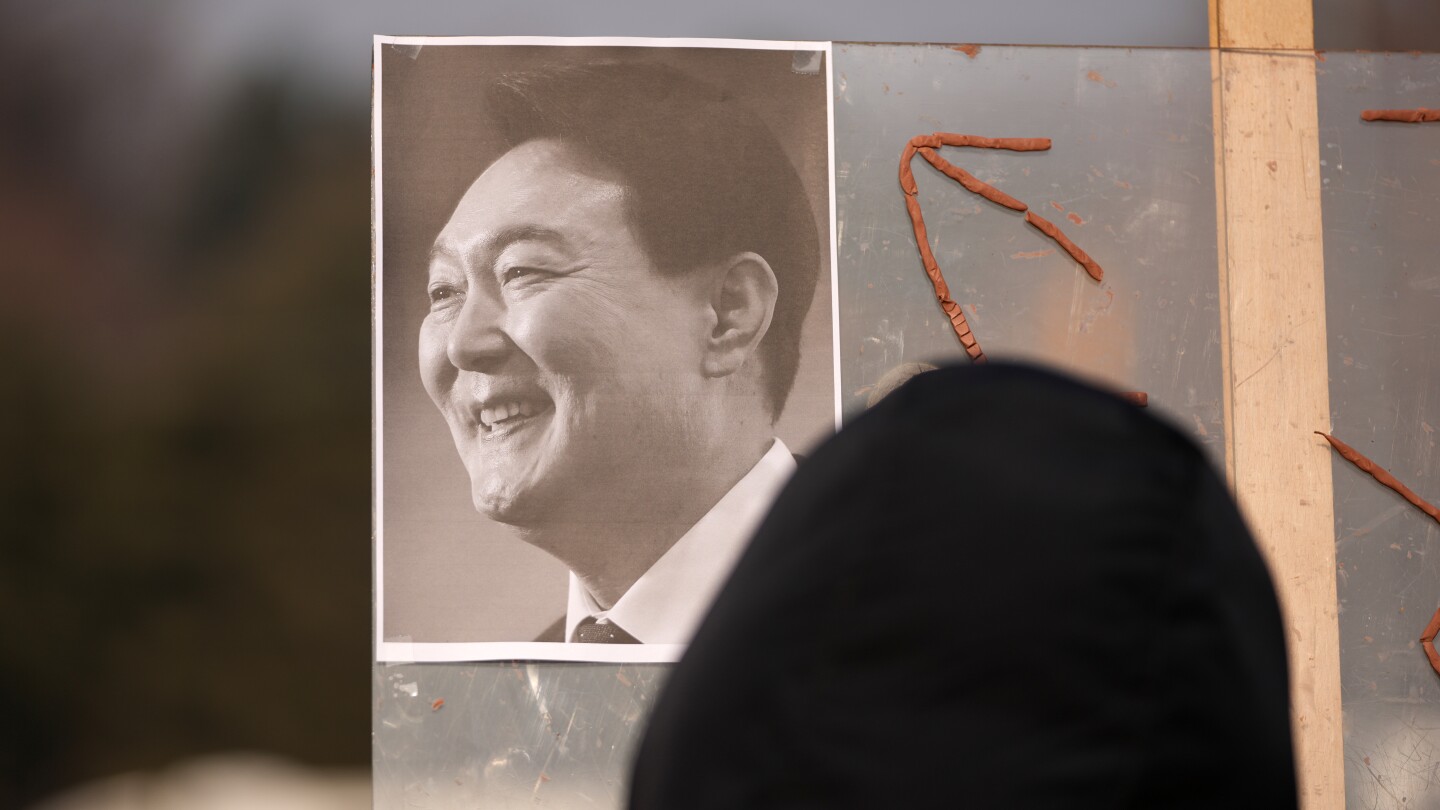
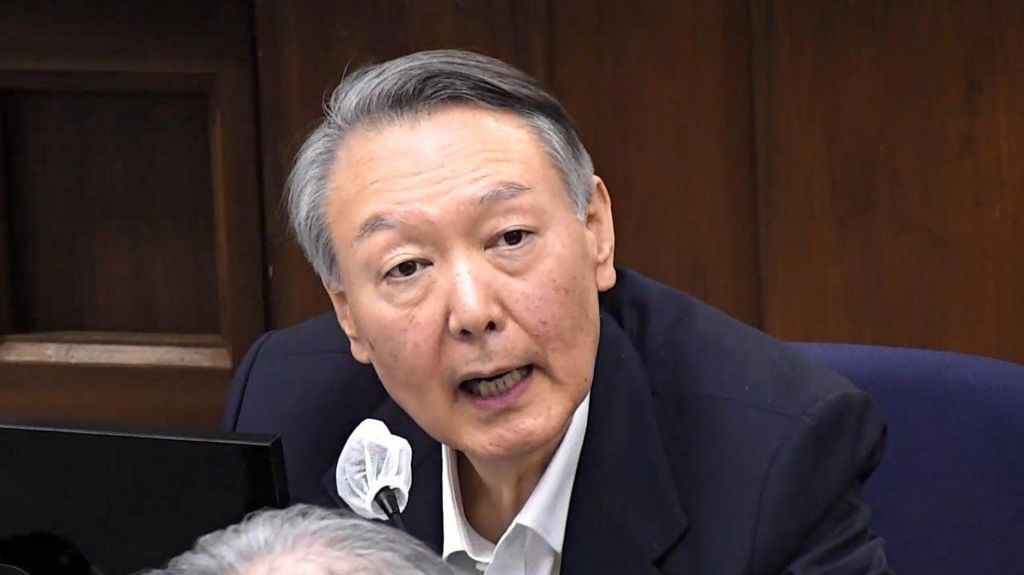
    SEOUL, South Korea — In a landmark judicial decision, South Korea’s Seoul Central District Court has imposed a five-year prison term on former President Yoon Suk Yeol. This verdict, delivered on Friday, represents the initial outcome in a series of eight criminal proceedings against the ousted leader, stemming primarily from his controversial imposition of martial law in December 2024.

    The court convicted Yoon on multiple charges including obstruction of justice by resisting detention orders, falsification of official documents related to the martial law proclamation, and circumventing legally required full Cabinet approval procedures. Presiding Judge Baek Dae-hyun emphasized during the televised ruling that severe punishment was warranted due to Yoon’s demonstrated lack of remorse and his continued presentation of ‘hard-to-comprehend excuses’ regarding his actions.

    This sentencing occurs against the backdrop of more serious pending charges, notably a rebellion case where prosecutors have sought the death penalty. Independent counsel alleges that Yoon’s martial law declaration constituted an attempted rebellion aimed at consolidating and extending his presidential authority. The rebellion trial verdict, expected next month, could potentially result in life imprisonment or capital punishment despite South Korea’s de facto moratorium on executions since 1997.

    Yoon’s defense team has previously characterized prosecution demands as politically motivated and legally unfounded. The former president maintains that his martial law decree was merely intended to alert citizens about parliamentary obstructionism rather than establish prolonged military rule. Legal experts suggest that while the death penalty appears unlikely given the absence of casualties and brief duration of martial law, substantial prison terms across multiple cases remain probable.

  • Trump’s Fed fight looks like something from another country

    Trump’s Fed fight looks like something from another country

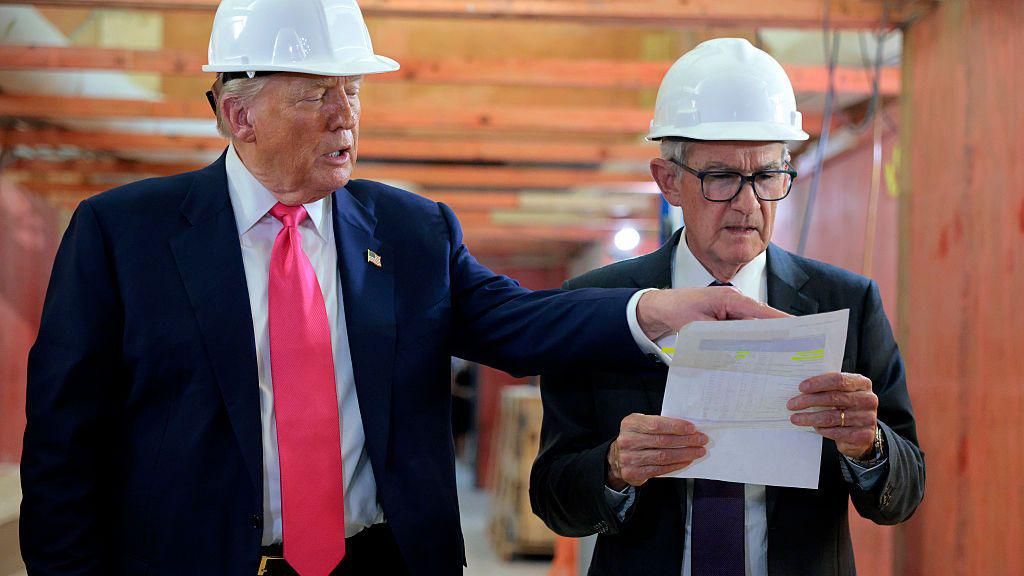
    A remarkable political confrontation unfolding between former President Donald Trump and Federal Reserve Chair Jerome Powell bears striking resemblance to emerging market crises, according to global economists and former central bankers. The escalating tension has drawn comparisons to Argentina’s economic turmoil and Turkey’s inflationary spiral, raising questions about the resilience of U.S. institutions.

    Martin Redrado, Argentina’s former central bank chief who was fired in 2010 for resisting government pressure to use reserves for debt payments, recognizes the pattern. ‘This seems more like an emerging market story,’ Redrado told the BBC, expressing surprise at seeing similar dynamics in the United States, traditionally considered a global model of institutional stability.

    The conflict has intensified through multiple fronts: Trump’s public accusations that Powell has mishandled the economy by keeping interest rates too high, his August move to dismiss top policymaker Lisa Cook (now challenged at the Supreme Court), and the recent revelation that the Fed faces a Department of Justice criminal probe regarding property renovation cost overruns—which Powell has dismissed as ‘pretext.’

    Prominent economists have used unusually strong language to describe the situation. Jason Furman, former head of Barack Obama’s Council of Economic Advisers, stated: ‘This is what you do in banana republics, not what should happen in the United States of America.’ Former Fed Chair Janet Yellen echoed this concern in a CNBC interview, warning that Trump’s approach represents ‘the road to a banana republic.’

    Academic research supports these concerns. A study of 118 central banks between 2010-2018 found approximately 10% faced political pressure for lower rates each year, particularly in countries with nationalist or populist leaders. University of Texas economist Carola Binder’s research shows such pressure typically precedes higher inflation, as seen in Turkey where President Erdogan cycled through three central bank heads in three years while inflation soared past 50%.

    While market reaction remains muted—interpreted as confidence in the Fed’s ability to maintain independence—analysts warn the situation could test investor faith. The dollar has already fallen 8% against a basket of currencies over the past year, with some analysts linking this to concerns about institutional integrity.

    The Fed’s independence rests more on convention than legal design, with global rankings placing it in the bottom third for legal independence features. However, its committee structure—with 12 members having staggered terms—provides some insulation from political pressure.

    As the Supreme Court prepares to hear arguments about Cook’s firing and Trump considers whether to reappoint Powell when his term ends in May, the world watches whether U.S. institutions will withstand pressures that have damaged economies elsewhere.

  • South Korea’s ex-president Yoon guilty of abuse of power in martial law bid

    South Korea’s ex-president Yoon guilty of abuse of power in martial law bid

    In a landmark judicial ruling, former South Korean President Yoon Suk Yeol has been convicted on charges of abuse of power and document falsification related to his controversial 2024 martial law declaration. The Seoul Central District Court delivered the verdict while continuing deliberations on additional obstruction of justice charges for his alleged evasion of arrest.

    This conviction represents the first judicial outcome in a series of four distinct trials stemming from Yoon’s abrupt martial law proclamation, which briefly plunged the nation into political chaos and triggered mass demonstrations. Although the emergency measures were swiftly overturned by parliamentary intervention, the episode created profound national division.

    Prosecutors have recommended a decade-long prison sentence for these initial charges, with the court’s Friday decision providing critical indications about potential outcomes in Yoon’s remaining cases. The most severe allegation—insurrection—carries a potential death penalty, with that verdict anticipated next month.

    Central to Friday’s proceedings was the examination of whether Yoon improperly deployed presidential security personnel to avoid arrest, failed to consult his full cabinet before implementing martial law, and orchestrated the creation and subsequent destruction of fabricated documents suggesting endorsement from the prime minister and defense minister.

    The former leader has maintained his innocence across all proceedings, contending that the original arrest warrant lacked legal validity and that constitutional provisions didn’t require full cabinet consultation for emergency powers. His defense argues that investigators lacked proper jurisdiction from the outset and that the martial law declaration followed appropriate procedures.

    Legal observers note that South Korean courts traditionally show leniency when defendants demonstrate remorse, but prosecutors emphasize Yoon’s persistent denial of wrongdoing as justification for enhanced punishment. The case evokes memories of former President Park Geun-hye’s 20-year sentence for corruption in 2021, though she received a presidential pardon shortly thereafter.

    The convictions reactivate deep political fractures within South Korean society, where Yoon retains substantial support despite his impeachment. A December survey revealed nearly 30% of citizens disagreed that his martial law attempt constituted insurrection, reflecting persistent national divisions that previously manifested in competing street demonstrations between supporters and opponents.

    As the judicial process continues, approximately 100 pro-Yoon demonstrators assembled outside the Seoul courthouse during Friday’s proceedings, underscoring the ongoing political polarization surrounding the case.

  • China’s Xi Jinping and Canada’s Mark Carney seek new chapter in relations

    China’s Xi Jinping and Canada’s Mark Carney seek new chapter in relations

    In a significant diplomatic development, Chinese President Xi Jinping and Canadian Prime Minister Mark Carney committed to revitalizing bilateral relations during their Friday meeting in Beijing, signaling a potential end to years of diplomatic friction between the two nations.

    The landmark discussion, marking the first Canadian prime ministerial visit to China in eight years, centered on rebuilding cooperative frameworks across multiple sectors including agriculture, energy, and financial services. President Xi characterized their previous October encounter during a regional economic conference in South Korea as having “opened a new chapter in turning China-Canada relations toward improvement.”

    Prime Minister Carney emphasized the critical timing of this diplomatic reset, noting that the global governance system faces “great strain” requiring renewed international partnerships. The Canadian leader advocated for a relationship “adapted to new global realities” that acknowledges shifting geopolitical dynamics.

    This diplomatic thaw occurs against the backdrop of significant trade disruptions stemming from former U.S. President Donald Trump’s protectionist policies. Both nations have suffered economic consequences from Trump’s tariff impositions, prompting Canada to pursue reduced economic dependence on the United States.

    Notably absent from the discussions were resolutions regarding existing tariff disputes. Canada maintains substantial tariffs on Chinese electric vehicles (100%) and steel/aluminum (25%), implemented under previous leadership, while China retaliated with equivalent tariffs on Canadian canola products and additional duties on agricultural exports including pork and seafood.

    Analysts suggest China perceives current U.S. pressure on allies as an opportunity to encourage nations like Canada to pursue foreign policies less aligned with American interests, particularly following Trump’s controversial suggestion that Canada could become “America’s 51st state.”