分类: politics

  • New reforms simplify access to public services

    New reforms simplify access to public services

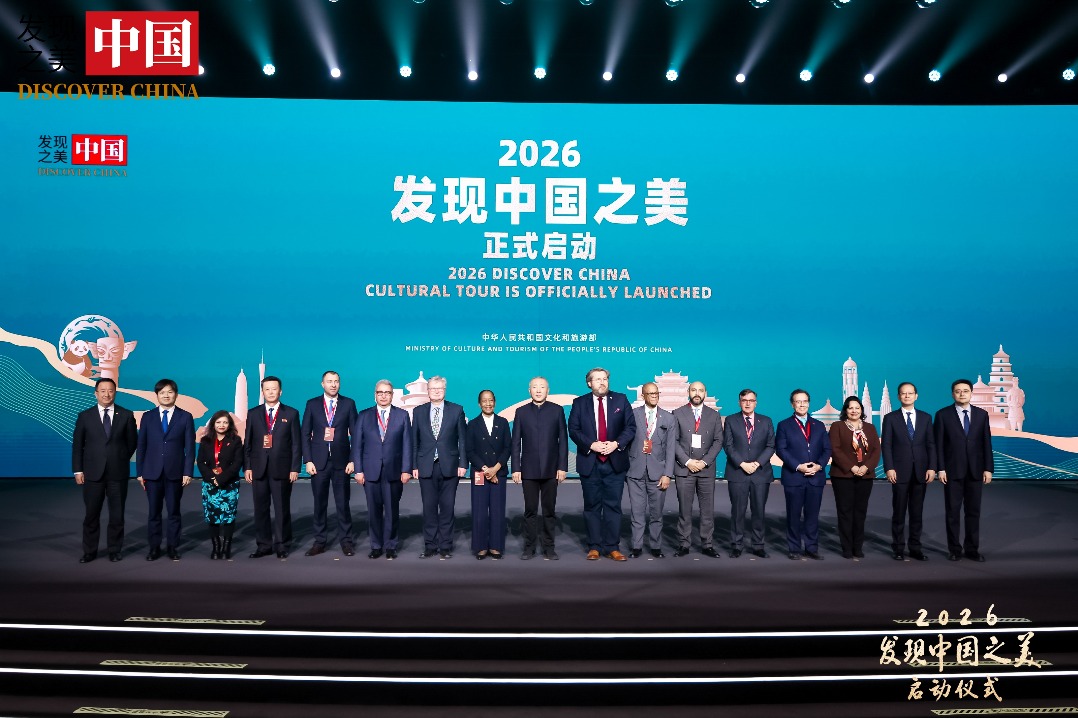
    Chinese authorities have launched a significant new package of administrative reforms aimed at reducing bureaucratic hurdles and enhancing economic vitality. This latest initiative, comprising 13 specific measures, represents the first batch of reforms for 2026 and the fifth overall since the comprehensive campaign began in 2024, bringing the total number of streamlined procedures to 55.

    The reforms target high-frequency service needs for both individuals and enterprises, transforming traditionally fragmented, multi-step processes into seamless, intelligent experiences through improved inter-departmental data sharing. Key improvements include simplified nursing home registration procedures, easier mobile phone access for international visitors, streamlined annual reviews for technology innovation companies, and more efficient intellectual property transfers.

    Other notable enhancements cover public event security clearances, childcare and elderly welfare subsidies, social insurance payments for flexible workers, and maritime vessel departure procedures. The changes demonstrate a shift from simple physical combination of services toward what Xinhua News Agency describes as a ‘chemical reaction’ of deeply integrated administration.

    The reforms respond to contemporary social trends including pro-fertility policies and increased foreign visitation following relaxed visa transit rules. One particularly impactful change involves streamlined approvals for public events, accelerated by the remarkable success of Jiangsu province’s ‘Suchao’ amateur soccer league, which attracted record crowds of over 28,000 per match and generated 38 billion yuan in consumption revenue last year.

    Academic experts emphasize the broader significance of these measures. Huang Huang, Deputy Dean of Peking University’s School of Government, notes that the campaign serves as a critical driver of high-quality development by reducing institutional costs and improving business efficiency. Professor Zheng Lei from Fudan University’s School of International Relations and Public Affairs adds that these streamlined procedures liberate the public from bureaucratic constraints while enabling businesses to refocus on core activities like research, market expansion, and product innovation.

  • Confrontation still shadows potential talks

    Confrontation still shadows potential talks

    The prospect of US-Iran negotiations remains clouded by escalating military threats and diplomatic uncertainty. Recent developments indicate that while diplomatic channels remain theoretically open, the environment for productive dialogue has deteriorated significantly due to heightened military posturing.

    According to reports from news website Axios, US President Donald Trump’s special envoy Steve Witkoff and Iranian Foreign Minister Seyyed Abbas Araghchi were planning to meet in Istanbul on Friday to discuss potential nuclear agreements. However, Iranian media outlets including Tasnim News Agency quickly challenged these reports, characterizing any potential talks as being in their preliminary stages without finalized details or framework.

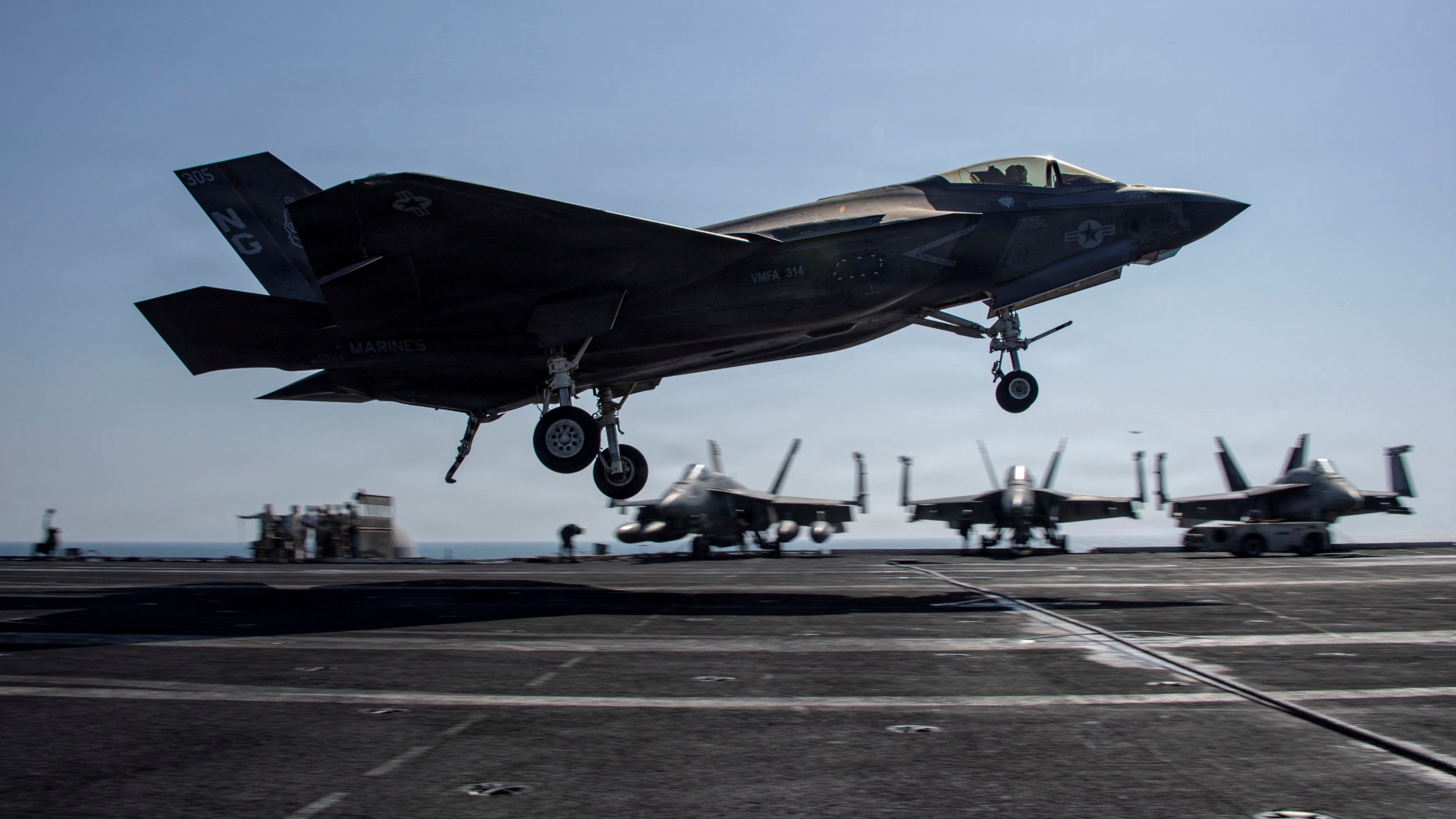
    The diplomatic uncertainty coincides with increased US military activity in the region. The Pentagon deployed an aircraft carrier strike group and multiple warships to the Middle East in late January, while Israel announced joint naval exercises with US forces in the Red Sea. President Trump himself hinted at potential military action if Iran refuses to negotiate terms regarding its nuclear program.

    Regional security experts warn that the current situation creates substantial risks for broader conflict. Professor Sun Degang, Director of the Center for Middle Eastern Studies at Fudan University, notes that the US appears fully prepared for potential military action against Iran. Such action could involve precision strikes on high-value targets, followed by systematic degradation of Iran’s missile capabilities, drone production facilities, and air defense systems.

    Iran maintains multiple response options, including targeting US naval assets in the Gulf, striking US military bases throughout the region, or disrupting maritime traffic through the strategically critical Strait of Hormuz. Such actions could severely impact global energy supplies and destabilize markets.

    Academic analysts suggest that Washington’s approach reflects a strategy of “maximum pressure” and brinkmanship designed to force Tehran back to negotiations. However, this approach carries significant risks for regional stability and international law. Military action against Iran would represent a serious breach of the post-World War II global governance framework centered on the United Nations, potentially eroding the authority of international institutions and creating a more power-driven international order.

    The current tensions highlight the complex interplay between diplomatic efforts and military posturing in one of the world’s most volatile regions, with potential consequences for global security architecture and economic stability.

  • Muammar Gaddafi’s son, Saif al-Islam, killed in Libya

    Muammar Gaddafi’s son, Saif al-Islam, killed in Libya

    Saif al-Islam al-Gaddafi, the once-presumed heir to Libya’s former leader Muammar Gaddafi, has been assassinated by a commando unit at his residence in Zintan, according to his political advisor. The 53-year-old was killed on Tuesday at approximately 2:00 pm local time (1200 GMT) in an operation that saw four unidentified assailants disable security systems before executing the attack.

    His French legal representative, Marcel Ceccaldi, confirmed to AFP that Gaddafi had received security warnings in recent days from close associates about potential threats to his safety. The assassination occurs against the backdrop of Libya’s deeply fractured political landscape, where competing governments in Tripoli and the east vie for control and oil revenues.

    Saif al-Islam had resided in Zintan since his 2017 pardon and release from imprisonment, following his capture during the 2011 Arab Spring uprising that resulted in his father’s death. During the Gaddafi regime, he was widely regarded as the successor-in-waiting and positioned himself as a reformist figure, notably negotiating Libya’s nuclear program abandonment.

    The London School of Economics-educated politician faced serious international charges, including an ICC arrest warrant issued in 2011 for alleged torture of protesters and dissidents. Though convicted in absentia in 2015 for war crimes, he was scheduled to face trial within Libya’s judicial system.

    His death comes at a particularly volatile moment in Libyan politics. Prime Minister Abdul Hamid Dbeibeh’s internationally recognized government, which came to power in 2021 with a mandate to organize democratic elections, has struggled to maintain stability while competing with Khalifa Haftar’s eastern-based administration for control of the country’s valuable oil resources. No official government statement has yet been issued regarding the assassination.

  • Khalifa Haftar makes landmark visit to Pakistan for security cooperation

    Khalifa Haftar makes landmark visit to Pakistan for security cooperation

    In a significant diplomatic development, Libyan Field Marshal Khalifa Haftar undertook an unusual visit to Pakistan this Monday, signaling a potential strategic realignment in regional security partnerships. The eastern Libyan leader, accompanied by his son Saddam Haftar—viewed as his likely successor—and Eastern Libyan Prime Minister Osama Saad Hamad, engaged in high-level talks with Pakistani military and civilian leadership.

    The delegation met with Pakistan’s Army Chief Field Marshal Asim Munir at the General Headquarters in Rawalpindi, where both parties discussed mutual security interests and professional cooperation frameworks. This meeting followed reports by Reuters indicating a substantial $4 billion arms agreement between Haftar’s administration and Pakistan—potentially Islamabad’s largest defense contract—initiated during Munir’s December visit to Benghazi.

    Subsequent discussions with Pakistani Prime Minister Shehbaz Sharif in Islamabad emphasized strengthening bilateral relations and enhancing cooperation in areas of common concern. Both governments expressed commitment to promoting regional peace, stability, and development through deepened partnership.

    Haftar’s journey to South Asia marks a notable expansion of his diplomatic outreach beyond his regular visits to Egypt and Russia. The development occurs against the backdrop of Libya’s political division between the internationally recognized government in Tripoli led by Prime Minister Abdul Hamid Dbeibeh and Haftar’s eastern-based administration.

    This emerging Pakistan-Libya security relationship introduces complex dynamics to regional alliances. Haftar maintains close ties with the UAE and has supported the Abu Dhabi-backed Rapid Support Forces in Sudan, creating tensions with Saudi Arabia and Egypt—both traditional Haftar supporters who now back the opposing Sudanese Armed Forces. Pakistan’s evolving position, balancing relationships with Riyadh, Abu Dhabi, and Ankara while pursuing new partnerships with Libyan factions, reflects the ongoing recalibration of Middle Eastern and North African security architectures.

  • Trump signs funding package, ending brief partial government shutdown

    Trump signs funding package, ending brief partial government shutdown

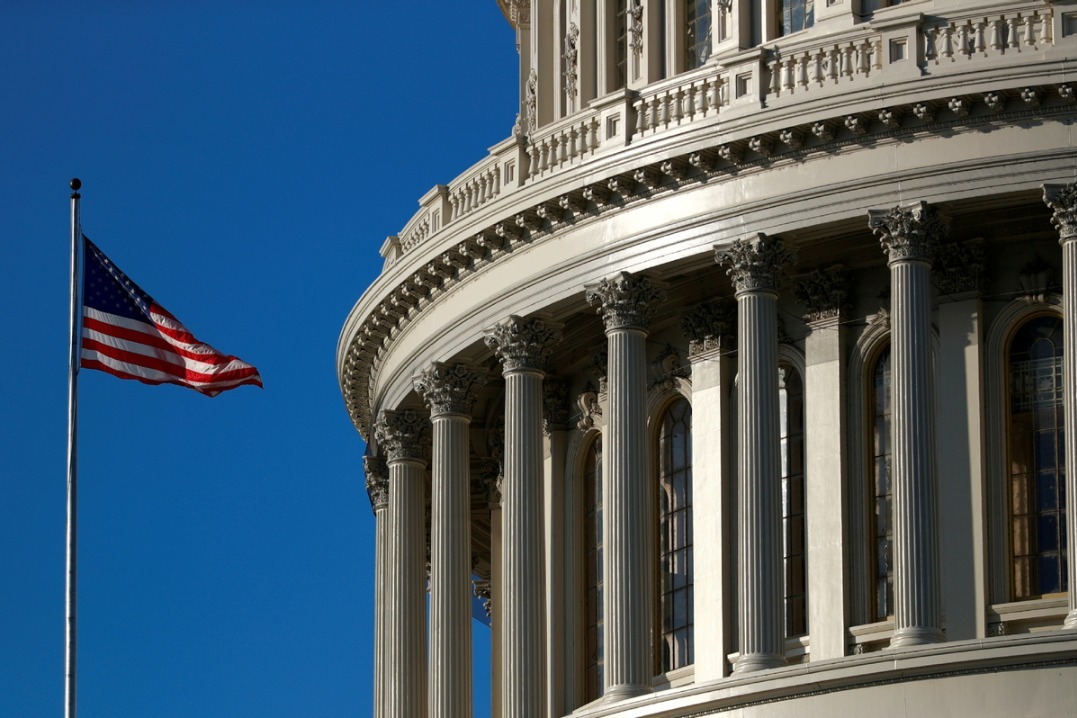
    President Donald Trump enacted a comprehensive funding legislation on Tuesday, effectively terminating a partial government shutdown that had commenced just days earlier. The presidential signing ceremony at the White House marked the resolution of a budgetary standoff that threatened federal operations.

    The funding package successfully cleared the House of Representatives by a narrow margin earlier Tuesday, following its Senate approval last Friday. This legislative measure allocates financial resources to numerous federal departments through the remainder of the current fiscal year, extending until September 30.

    Among the agencies receiving full-year funding are the Departments of Defense, Education, Health and Human Services, Labor, Transportation, and Housing and Urban Development. However, in a significant compromise, Homeland Security funding was excluded from the omnibus package. Instead, the department will operate under a two-week continuing resolution at existing funding levels, providing additional negotiation time for immigration enforcement discussions.

    The decision to separate Homeland Security funding stems from heightened Democratic concerns regarding immigration agency operations, particularly following two fatal shootings involving federal enforcement personnel in Minneapolis. Senate Minority Leader Chuck Schumer has emphasized that without legislative reforms to Immigration and Customs Enforcement procedures, Department of Homeland Security funding lacks sufficient support for Senate passage.

    This episode represents the latest manifestation of increasingly polarized partisan politics in Washington, where federal government operations have repeatedly faced shutdown threats or actual closures in recent years. The current brief shutdown occurred merely two months after the conclusion of a historic 43-day government closure, underscoring the ongoing budgetary tensions within the American political landscape.

  • Forum underlines cross-Strait exchanges

    Forum underlines cross-Strait exchanges

    In a significant diplomatic development, the Communist Party of China (CPC) and the Chinese Kuomintang (KMT) successfully reconvened a major think tank forum in Beijing on February 3, 2026, marking the revival of interparty exchanges after a nearly ten-year hiatus. The high-level gathering brought together approximately 100 participants, including policymakers, industry representatives, and academic experts from both sides of the Taiwan Strait.

    Song Tao, Director of the CPC Central Committee’s Taiwan Work Office, inaugurated the forum by emphasizing the historical responsibility both parties bear in fostering peaceful cross-Strait relations. “Our shared commitment to upholding the 1992 Consensus and opposing Taiwan independence forms the essential political foundation for constructive dialogue,” Song stated, referencing the October message exchange between CPC General Secretary Xi Jinping and KMT Chairwoman Cheng Li-wun.

    The forum organized its deliberations around three comprehensive panels examining tourism revitalization, industrial innovation, and environmental sustainability. These discussions yielded 15 concrete proposals across five critical cooperation areas: normalization of personnel exchanges, emerging industry collaboration, healthcare innovation, environmental protection, and disaster mitigation strategies.

    KMT Vice Chairman Hsiao Hsu-tsen echoed the necessity of prioritizing civilian welfare through practical cooperation. “The vibrant people-to-people exchanges we witness today genuinely reflect Taiwanese public sentiment,” Hsiao noted, advocating for setting aside differences while seeking common ground.

    Industry representatives presented specific cooperation opportunities during the proceedings. Lai Seh-jen of the Taiwan Tourism Interchange Association urged lifting restrictions on group travel to mainland China, while business leader Chen Yung-feng highlighted synergistic potential in artificial intelligence and smart manufacturing. The joint proposals specifically called for removing barriers imposed by Taiwan’s Democratic Progressive Party authorities and restoring full direct transportation links across the Strait.

  • ‘We have a text’: US says peace plan for Sudan to be revealed this week

    ‘We have a text’: US says peace plan for Sudan to be revealed this week

    The United States has finalized the text of a comprehensive peace proposal aimed at resolving Sudan’s nearly three-year civil war, with senior presidential advisor Massad Boulos announcing the plan has secured approval from the Quad nations coalition. The diplomatic bloc, comprising the US, Saudi Arabia, the UAE, and Egypt, has been developing this framework for at least three months as a mutually acceptable solution for both the Sudanese army and the paramilitary Rapid Support Forces (RSF).

    Boulos revealed the five-pillar structure during a humanitarian fundraising event, outlining components addressing immediate crisis response, civilian protection, ceasefire transition, political processes toward civilian governance, and post-conflict reconstruction funding. While expressing encouragement from engagements with military leader General Abdel Fattah al-Burhan, Boulos declined to identify specific implementation obstacles despite reporter inquiries.

    The diplomatic landscape reveals significant complexities, with Sudan’s ambassador to the US previously rejecting UAE involvement in mediation efforts due to Abu Dhabi’s alleged support for the RSF. This tension surfaced despite the UAE’s announcement of a $500 million aid package at the same event where Washington pledged an additional $200 million toward a projected $1.5 billion total humanitarian commitment.

    The peace process architecture involves multiple international layers, with plans for UN Security Council endorsement followed by review through President Trump’s Board of Peace—a mechanism originally designed for Gaza conflicts. Boulos characterized the two bodies as “complementary” rather than competitive, emphasizing the Board’s enthusiastic engagement capacity.

    Humanitarian urgency underscores these diplomatic efforts, with UN officials reporting over 21 million Sudanese facing acute shortages amid what the US Under Secretary of State termed “the world’s worst humanitarian crisis.” With approximately 10 million internally displaced and four million refugees, the UN targets visible aid progress by Ramadan’s commencement in mid-February.

  • Epstein said Qatar had to ‘sing and dance’ for Israel like Modi, to escape blockade

    Epstein said Qatar had to ‘sing and dance’ for Israel like Modi, to escape blockade

    Newly released U.S. Justice Department documents reveal convicted sex offender Jeffrey Epstein’s attempts to mediate the 2017 Gulf diplomatic crisis through unofficial channels. The emails, made public over the weekend, show Epstein advising Qatari royalty on how to improve relations with the Trump administration by normalizing ties with Israel.

    During the June 2017 blockade of Qatar by Saudi Arabia and the UAE—which received backing from President Trump—Epstein corresponded with Jabor Yousef Jassim Al Thani, a Qatari businessman and royal family member. In a July 9, 2017 email, Epstein suggested Qatar could end its isolation by either recognizing Israel or establishing a $1 billion fund for terrorism victims, with a matching contribution request to other Gulf Cooperation Council members.

    Epstein pointed to India’s approach as a model, writing: ‘The Indian Prime Minister Modi took advice and danced and sang in Israel for the benefit of the US president. They had met a few weeks ago. IT WORKED!’ He advised that Qatar needed to ‘sing and dance’ for Israel rather than ‘kicking and arguing’ to gain Trump’s favor.

    The correspondence reveals Epstein’s significant connections to Middle Eastern intelligence networks and political figures, particularly former Israeli Prime Minister Ehud Barak. Despite his 2019 jail cell death—ruled a suicide—Epstein maintained active diplomatic engagement until the end.

    Epstein correctly assessed that Turkey’s military deployment to Qatar in summer 2017 made a military invasion ‘no longer viable.’ He subsequently positioned himself as a mediator, attempting to arrange meetings between Saudi Crown Prince Mohammed bin Salman (MBS) and former Qatari Prime Minister Hamad bin Jassim bin Jaber Al Thani (HBJ).

    The emails confirm Epstein successfully brokered a December 2018 meeting in London’s exclusive One Hyde Park between Barak and the former Qatari official, facilitated by Jabor Al Thani. Follow-up correspondence indicated discussions about a ‘security company’ and mutual satisfaction with the encounter, offering rare insight into track II diplomacy orchestrated by a controversial figure.

  • Middle East needs long-term solution, UAE says ahead of US-Iran crisis talks

    Middle East needs long-term solution, UAE says ahead of US-Iran crisis talks

    The United Arab Emirates has issued a compelling call for sustained diplomatic engagement between Iran and the United States as the two nations prepare for crucial nuclear negotiations in Turkey this Friday. Dr. Anwar Gargash, diplomatic adviser to the UAE president, emphasized the critical need for lasting solutions during his address at the World Governments Summit in Dubai, stating the Middle East has endured enough catastrophic confrontations without requiring additional conflict.

    The upcoming dialogue marks a significant development in the prolonged nuclear standoff, with both nations dispatching high-level delegations. The American contingent will reportedly include Presidential son-in-law Jared Kushner and Special Envoy Steve Witkoff, while Iranian Foreign Minister Abbas Araghchi will lead Tehran’s representation. Several regional powers, including Pakistan, Saudi Arabia, Qatar, Egypt, Oman, and the UAE, have received invitations to participate in what observers describe as a multilateral effort to prevent military escalation.

    This diplomatic initiative follows heightened tensions triggered by recent U.S. naval movements toward Iranian waters and mutual threats of aerial strikes. President Trump previously cautioned that ‘bad things’ might occur should negotiations fail, while Iranian officials maintain their defensive capabilities remain non-negotiable. Satellite imagery analysis of previously targeted nuclear facilities at Isfahan and Natanz reveals preliminary reconstruction efforts but no evidence of resumed uranium enrichment activities.

    The UAE, maintaining its strategic position as both a key U.S. ally and regional mediator, advocates for a comprehensive geo-strategic agreement that would address nuclear concerns while enabling Iran to rebuild its sanction-damaged economy. Gulf Arab states particularly fear becoming collateral damage should Iran follow through on threats to target U.S. bases within their territories in retaliation for American attacks.

    Internal assessments within Iran’s leadership indicate growing concerns that additional U.S. military action could potentially destabilize their governance by reigniting recent public unrest. Meanwhile, diplomatic channels explore potential compromises, including possible limitations on uranium enrichment and ballistic missile programs, though Tehran continues to reject preconditions that violate its sovereignty claims.

  • Dubai Ruler honours Gambia’s Minister of Tourism with Best Minister Award at WGS 2026

    Dubai Ruler honours Gambia’s Minister of Tourism with Best Minister Award at WGS 2026

    DUBAI, UAE – In a ceremony highlighting global governmental excellence, Sheikh Mohammed bin Rashid Al Maktoum, Vice President and Prime Minister of the UAE and Ruler of Dubai, presented Gambia’s Minister of Tourism and Culture Abdoulie Jobe with the distinguished Best Minister Award during the World Governments Summit 2026. The recognition celebrates transformative leadership and innovative approaches to public service that create substantial community impact.

    Sheikh Mohammed emphasized the award’s significance beyond individual achievement, stating: “This honor represents a celebration of governmental efficiency and acknowledges the positive role embodied by the world’s most effective ministers. It recognizes exceptional leaders dedicated to advancing public service sectors and enhancing quality of life through innovation, sustainable development, and diligent effort.”

    Minister Jobe’s recognition stems from his groundbreaking work in transforming Gambia’s tourism landscape through two pioneering initiatives. The Tourism Diversification and Resilience Enhancement Project has successfully promoted inclusive growth by providing comprehensive support to micro-, small-, and medium-sized tourism enterprises. Through the Yokuté Accelerator program, local entrepreneurs received extensive training in business development, entrepreneurship, and access to joint funding opportunities.

    A cornerstone of Jobe’s strategy involves building climate resilience within the tourism sector by developing ecotourism and domestic tourism assets, thereby reducing dependence on vulnerable coastal tourism. Under his leadership, the ministry conducted thorough assessments of potential riverfront and ecotourism projects, identifying and prioritizing ten climate-resilient tourism centers in collaboration with technical partners.

    Concurrently, Jobe oversaw the Digital Transformation and Evidence-Based Tourism Planning Project, which modernized tourism governance through advanced technology and enhanced data systems. By working with national institutions, the ministry significantly improved tourism statistics capabilities, establishing digital infrastructure that supports data-driven planning, strengthens transparency, and improves service delivery across the entire tourism value chain.

    The Best Minister Award, organized by the World Governments Summit Organisation in partnership with PricewaterhouseCoopers (PwC), aims to celebrate exceptional ministerial contributions that foster excellence in public service and implement sustainable initiatives driving socio-economic advancement. The award also recognizes efforts to inspire fellow government leaders to embrace innovation and foresight in addressing pressing global challenges.