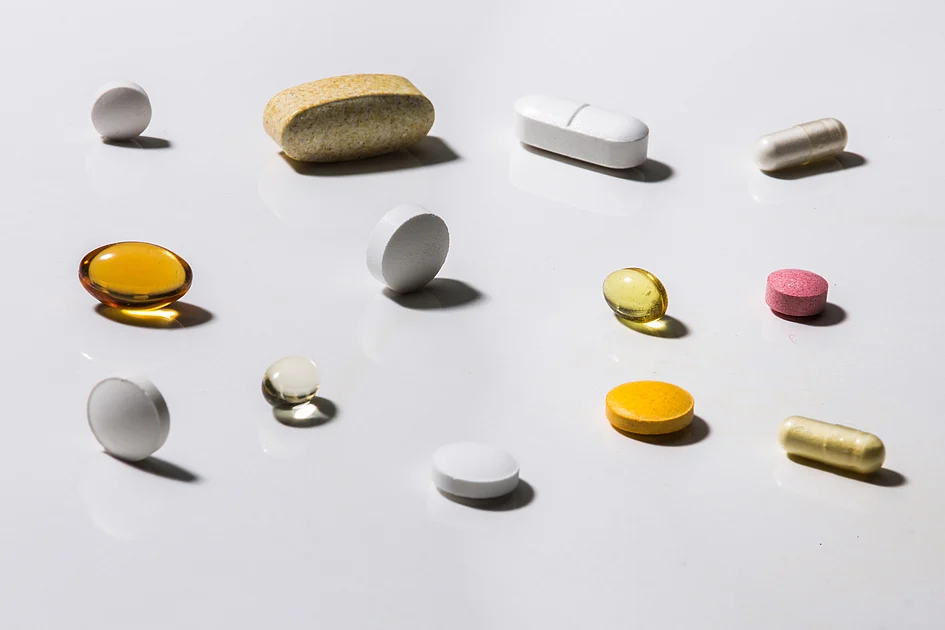
As the quest for longevity gains momentum, NAD+ supplements have emerged as a popular yet controversial therapy. Nicotinamide adenine dinucleotide (NAD+), a molecule crucial for cellular repair and energy production, naturally declines with age. Proponents argue that boosting NAD+ levels through infusions or supplements could slow aging, but scientists remain cautious, citing a lack of conclusive evidence in humans.
分类: health
-
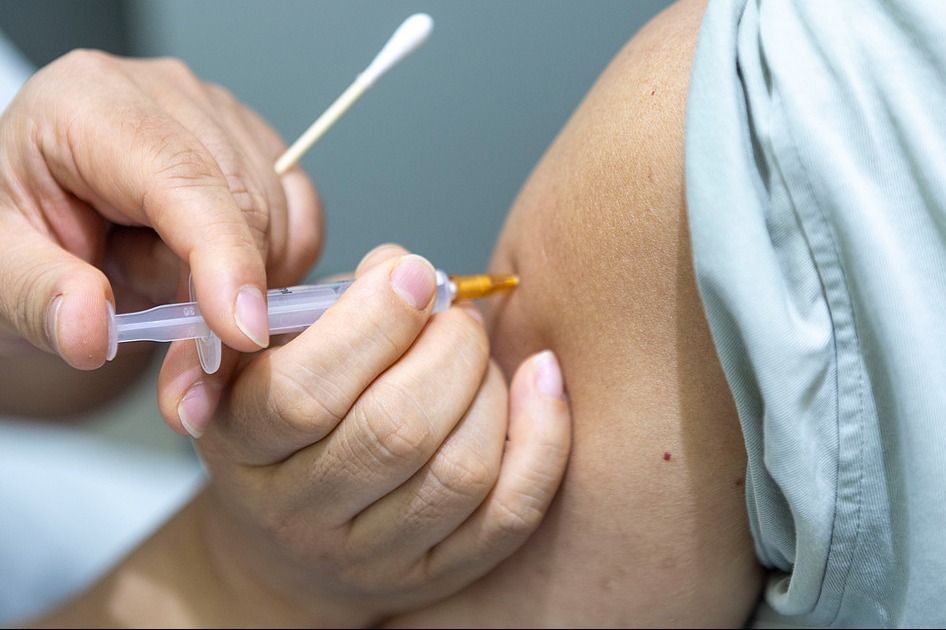
High-risk groups better protected against shingles
In a significant move to enhance public health, the China National Medical Products Administration (NMPA) has granted approval for Shingrix, a recombinant zoster vaccine developed by GSK, to prevent shingles in adults aged 18 and above who are at heightened risk due to immunodeficiency or immunosuppression. This decision addresses a critical gap in healthcare, as shingles affects approximately six million people annually in China, with severe cases leading to debilitating pain and long-term complications. Shingles, caused by the reactivation of the varicella zoster virus (VZV), manifests as a painful rash and can result in post-herpetic neuralgia (PHN), a condition that persists for weeks, months, or even years. The approval of Shingrix marks a pivotal step in safeguarding vulnerable populations, particularly those with compromised immune systems. Sanjay Gurunathan, GSK’s senior vice-president of Vaccines and Infectious Diseases R&D, emphasized the importance of this milestone in expanding access to preventive healthcare. Sherman Yu, vice-president and general manager of GSK China, highlighted the vaccine’s role in strengthening China’s adult immunization system and advancing public health literacy. GSK remains committed to its mission of disease prevention and treatment, aligning with the Healthy China 2030 initiative through collaborative efforts across sectors.
-

UAE: Fit, young adults may have hidden heart issues, doctors say
The sudden death of 18-year-old Vaishnav Krishnakumar in Dubai has sparked widespread concern among families and medical professionals. While such cases are rare, doctors in the UAE are warning of a growing trend of cardiac arrests among young, seemingly healthy individuals. This alarming phenomenon is attributed to a combination of stress, poor lifestyle habits, and undiagnosed heart conditions.
-

‘Nothing has changed’: Gaza health workers report almost no medical aid entering the strip
The healthcare crisis in Gaza remains dire despite a fragile ceasefire, as Israeli restrictions continue to block the entry of essential medical supplies and equipment, aid groups have warned. Lena Dajani, a volunteer coordinating medical aid in Gaza, reported that healthcare conditions have seen no improvement since the ceasefire began on October 10. While health workers are no longer overwhelmed by casualties from bombardments, they face severe shortages of basic medical supplies and equipment. The World Health Organization revealed that only 10% of requested medical supplies have entered Gaza since the ceasefire. Dajani highlighted the prevalence of sepsis due to a lack of disinfectants, describing hospitals as breeding grounds for viruses and bacteria. Overcrowding persists, with patients forced to sleep on floors or in makeshift tents. Cases like Saab, a child evacuated from northern Gaza who lost half his skull, underscore the dire conditions. Medications for genetic disorders, such as Keppra syrup for epilepsy, are unavailable, and refrigeration-dependent drugs like insulin cannot be stored due to infrastructure and electricity shortages. Bahaa Zaqout, director of external relations at PARC, a Palestinian NGO, stated that almost no medical equipment or medicine has entered Gaza since the ceasefire. Items classified as ‘dual-use,’ including most medical equipment, are barred. Zaqout noted that the list of restricted items has expanded from 1,400 to around 4,000 since Israel’s military assault began. Only 90 trucks enter Gaza daily, far fewer than promised, with aid trucks comprising just 15% of deliveries. Zaqout emphasized the unavailability of even basic medications like paracetamol and assistive devices such as wheelchairs. A report by the Atfaluna Society for Deaf Children found that 58,000 people in Gaza are living with disabilities, with 22,500 requiring rehabilitation services. The NGO estimated that 35,000 people are at risk of temporary or permanent hearing loss. Medical delegations, including British plastic surgeon Victoria Rose, continue to face entry denials. Rose, part of a delegation denied entry on October 9, noted that medical workers are limited to five seats per month on convoys entering Gaza. Since October 2023, 17,000 Palestinian medical workers have been killed, with 95 still detained by Israel. The healthcare system remains critically understaffed, with urgent needs in orthopaedic and plastic surgery.
-
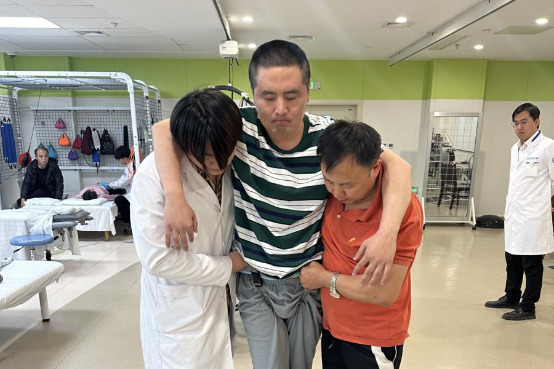
Chinese hospital achieves breakthrough in quadriplegia treatment
A groundbreaking advancement in the treatment of quadriplegia has been achieved at the Rehabilitation Medicine Center of the Second Norman Bethune Hospital at Jilin University in Changchun, Jilin province. Liu Boqi, a 35-year-old traffic officer who suffered severe injuries in a car accident in December 2024, is now relearning how to walk thanks to an innovative spinal cord interface technology. Initially, Liu was diagnosed with severe lung damage, fluid in his chest, and a fracture and dislocation of the third cervical vertebra. Although surgery saved his life, he was left paralyzed with no movement in his limbs. Professor Wu Minfei, a spinal surgery specialist, introduced Liu’s family to an experimental technology involving an implanted device that reconnects damaged nerve pathways and provides precise electrical stimulation to restore communication between the brain and the body. The device was implanted in January 2025, and within six hours, Liu’s fingers and toes began to twitch. Over the following months, his muscle strength and sensation gradually improved. By combining the interface therapy with an exoskeleton robot, Liu was able to take his first steps. After three months of intensive rehabilitation, he achieved the remarkable milestone of walking independently with a walker. This case represents a significant breakthrough in treating high-level quadriplegia, and the hospital has since applied the method to other patients with promising results. Professor Wu expressed optimism, stating, ‘I believe more paralyzed patients will have a chance of standing up and walking again in the future.’
-

Kim Kardashian says she was diagnosed with brain aneurysm
Kim Kardashian, the renowned reality TV star and entrepreneur, has disclosed her diagnosis of a brain aneurysm. The 45-year-old made the revelation during a teaser for the seventh season of her popular reality series, ‘The Kardashians,’ which premiered on Hulu on Thursday. In the clip, Kardashian mentions, ‘There’s, like, a little aneurysm,’ prompting a surprised reaction from her sister, Kourtney Kardashian Barker, who exclaims, ‘Whoa.’ Kardashian suggests that stress may have contributed to her condition, as footage in the teaser shows her undergoing a brain scan. Brain aneurysms, which are bulging areas on blood vessels in the brain, are relatively common, affecting about 1 in 50 people. Many individuals remain unaware of their condition, as unruptured aneurysms often do not present symptoms. However, if an aneurysm grows large or ruptures, it can lead to severe complications such as intense headaches, speech difficulties, or even life-threatening strokes. Dr. Shazam Hussain, director of the Cerebrovascular Center at the Cleveland Clinic, likened aneurysms to ‘a weak spot on a tire.’ While not all aneurysms require treatment, factors such as size, location, and family history influence medical decisions. Dr. Aditya Pandey, chair of the Department of Neurosurgery at University of Michigan Health, emphasized that smoking and uncontrolled high blood pressure increase the risk of aneurysms. Kardashian’s publicist has not yet commented on whether she is experiencing symptoms or undergoing treatment. The star has previously advocated for full-body MRI scans, despite medical warnings about their limited utility for all patients.
-
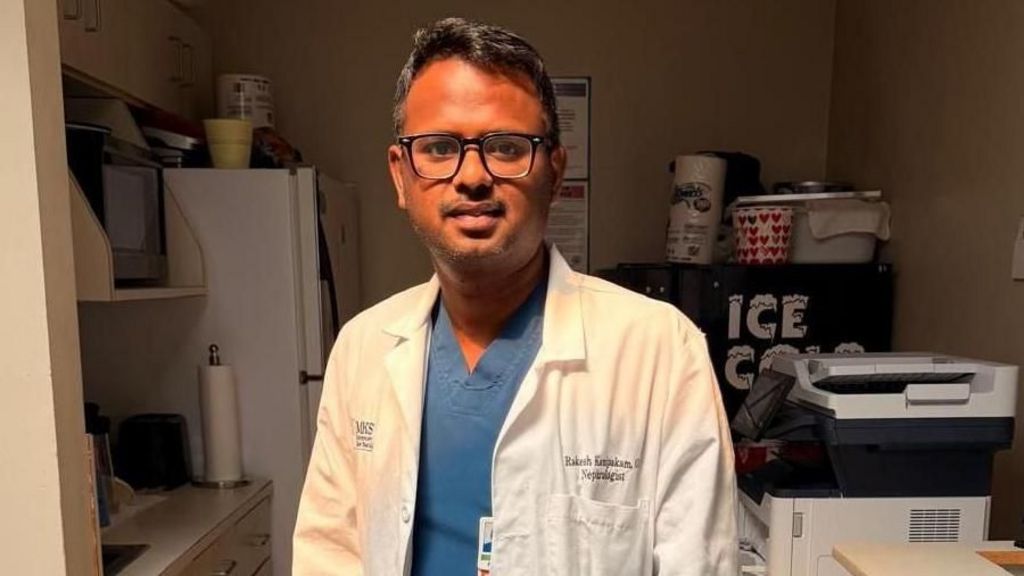
Indian doctors in US worry higher H-1B fee may destroy rural healthcare
In the heart of rural America, immigrant doctors like Dr. Mahesh Anantha are indispensable to communities that would otherwise struggle to access critical healthcare services. Based in Batesville, Arkansas, a town of 11,000 surrounded by farmland and small industries, Dr. Anantha is one of the few interventional cardiologists in the region. His practice serves as a lifeline for nearby villages and cities, with no other medical facilities within an hour or two’s drive. A gold medallist from Madras Medical College in India, Dr. Anantha is among the thousands of foreign-trained doctors who fill crucial gaps in the U.S. healthcare system, particularly in underserved rural areas. Recent data reveals that 25% of U.S. doctors are foreign-trained, with 64% working in rural regions where American graduates are reluctant to practice. Many of these doctors, including Dr. Anantha, are on H-1B visas, which allow them to work in the U.S. but leave them vulnerable to job instability and long waits for green cards. Last month, the Trump administration’s announcement of a $100,000 fee hike for new H-1B visa applicants sparked widespread fear among the roughly 50,000 India-trained doctors in the U.S. While the White House later clarified that the fee would not apply to existing H-1B visa holders, concerns remain about the future supply of foreign medical professionals. Experts warn that the fee hike could deter hospitals from hiring H-1B doctors, exacerbating the already critical shortage of physicians in rural areas. The American Medical Association (AMA) and other groups have emphasized that immigrant doctors are not taking jobs from U.S. graduates but are instead filling essential roles in communities that need them most. Dr. Rakesh Kanipakam, a nephrologist from Andhra Pradesh, India, exemplifies this contribution, traveling hundreds of miles weekly to treat patients with kidney failure in rural Alabama. The Conrad waiver, which allows foreign doctors to work in Health Professional Shortage Areas (HPSAs), has been instrumental in addressing acute doctor shortages. However, the proposed visa fee hike threatens to disrupt this vital pipeline. Dr. Anantha’s hospital credits him with transforming their facility into a center of excellence, generating over $40 million annually and earning numerous healthcare awards. While the AMA remains cautiously optimistic about potential exemptions for medical professionals, the urgency for action is clear. As Dr. Bobby Mukkamala, the first Indian-origin president of the AMA, warns, ‘International medical graduates are determining their next steps now, and the possibility of this fee hike could deter highly qualified physicians from working in the U.S.’
-

Why some Brazilians have stopped drinking alcohol
Brazil is witnessing a concerning rise in methanol poisoning incidents, particularly in São Paulo, which has resulted in multiple fatalities. This alarming trend has prompted a significant number of Brazilians to reconsider their alcohol consumption habits. Methanol, a toxic substance often found in counterfeit or illegally produced alcoholic beverages, has been identified as the primary cause of these poisoning cases. Authorities have intensified efforts to crack down on the production and distribution of illicit alcohol, but the damage has already taken a toll on public health. The situation has also sparked widespread awareness campaigns urging citizens to avoid unregulated alcohol products. This health crisis underscores the importance of stringent regulatory measures and public vigilance in combating the dangers of counterfeit alcohol.
-
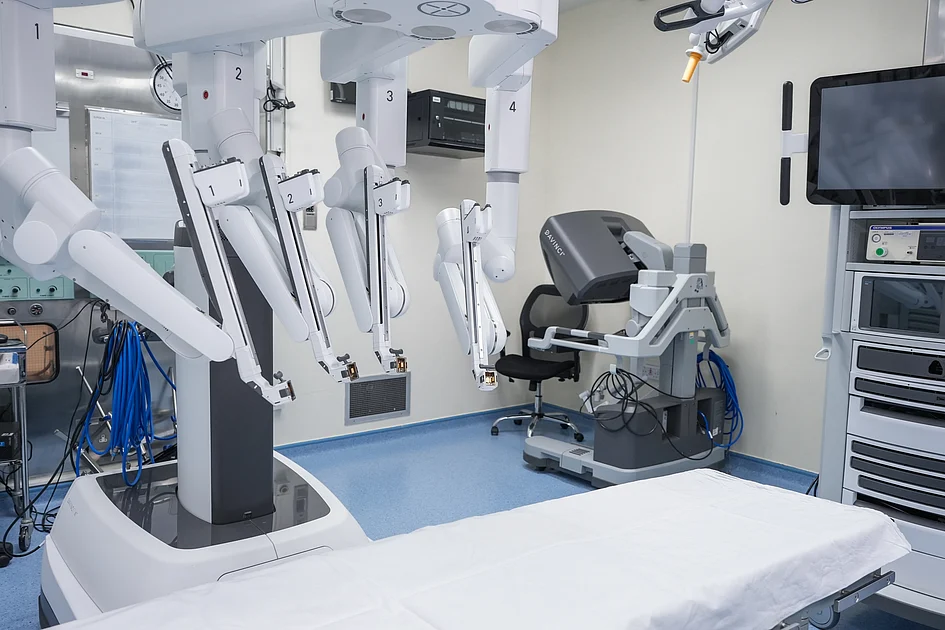
Over 145 successful robotic surgeries performed at Dubai Hospital in 3 years
Dubai Hospital has marked a significant achievement in healthcare innovation, having successfully performed over 145 robotic surgeries since the launch of its robotic surgery programme in late 2022. This milestone underscores the hospital’s commitment to integrating advanced medical technologies to enhance patient care and outcomes. Dr. Amer Sharif, CEO of Dubai Health, emphasized that this progress aligns with the organization’s vision to ‘Advance Health for Humanity’ and reflects its ongoing digital transformation efforts. The robotic surgeries have demonstrated remarkable clinical results, including a reduction in hospital stays from two weeks to less than three days, and a significant decrease in blood loss, complications, and pain. Dr. Yaser AlSaeedi, Head of Urology and Director of the Robotic Surgery programme, highlighted the precision and safety benefits of these procedures, which span multiple specialties such as urology, general surgery, and gynaecology. The minimally invasive approach, utilizing 3D visualization and robotic arms, allows surgeons to perform complex operations with greater accuracy and control. Dubai Health also prioritizes training medical staff in robotic surgical systems, combining theoretical knowledge with hands-on practice to ensure safe and effective implementation. This initiative solidifies Dubai’s position as a leader in quality healthcare and sets a benchmark for the future of medical innovation.
-

Does joy feel out of reach? There’s a word for that
Anhedonia, the inability to experience pleasure, is a symptom often associated with mental health disorders such as depression, schizophrenia, and PTSD. While it is not a standalone diagnosis, its impact on individuals can be profound, affecting mood, motivation, and overall quality of life. Dr. Judith F. Joseph, a clinical assistant professor at NYU Grossman School of Medicine, emphasizes that anhedonia is an existential crisis, often overlooked because it doesn’t present as an immediate emergency. For Michela, a 49-year-old woman living with major depressive disorder, anhedonia has made even simple celebrations feel like insurmountable tasks. She describes feeling numb and devoid of energy, a sentiment echoed by many who experience this condition. Anhedonia can manifest in various ways, from reduced enjoyment of once-loved activities to complete emotional detachment. It can also lead to withdrawal from social interactions and exacerbate feelings of emptiness. Research suggests that anhedonia may be linked to disruptions in neurotransmitter activity, particularly dopamine, which plays a key role in motivation and reward. Chronic stressors, genetic factors, and even certain medications like selective serotonin reuptake inhibitors (SSRIs) can contribute to its development. While there is no FDA-approved treatment specifically for anhedonia, addressing underlying conditions like depression can help alleviate symptoms. Behavioral activation therapy, which encourages individuals to engage in meaningful activities, has shown promise in rekindling joy and motivation. Experts urge those experiencing anhedonia to seek professional help, emphasizing that joy is not a luxury but a fundamental aspect of well-being.