分类: health

  • China has over 7.3m voluntary organ donors

    China has over 7.3m voluntary organ donors

    China has achieved a monumental milestone in its healthcare system, with national records now indicating over 7.33 million citizens have voluntarily registered as organ donors. This remarkable figure was officially confirmed by the China Organ Donation Administrative Center, highlighting a significant advancement in the country’s medical donation framework.

    The national program has facilitated more than 65,000 cases of posthumous organ donations following circulatory death, resulting in life-saving transplants for over 200,000 patients suffering from critical organ failure. Additionally, these donations have enabled vision restoration procedures for more than 100,000 individuals through corneal transplants.

    Beyond organ-specific donations, the program has also recorded more than 69,000 whole-body donations to medical science, contributing substantially to medical education and research advancement throughout the country.

    In recognition of these extraordinary contributions, China has established a network of more than 380 memorial sites dedicated to honoring organ donors nationwide. These memorials host annual commemorative ceremonies coinciding with the Qingming Festival, a traditional Chinese period for honoring ancestors and the deceased.

    China’s formal organ donation initiative began with pilot programs in 2010, culminating in a nationwide expansion by 2013. The program represents one of the world’s most rapidly growing voluntary donation systems, demonstrating increasing public participation in life-saving medical philanthropy.

  • China approves innovative breast cancer therapy by Daiichi Sankyo, AstraZeneca

    China approves innovative breast cancer therapy by Daiichi Sankyo, AstraZeneca

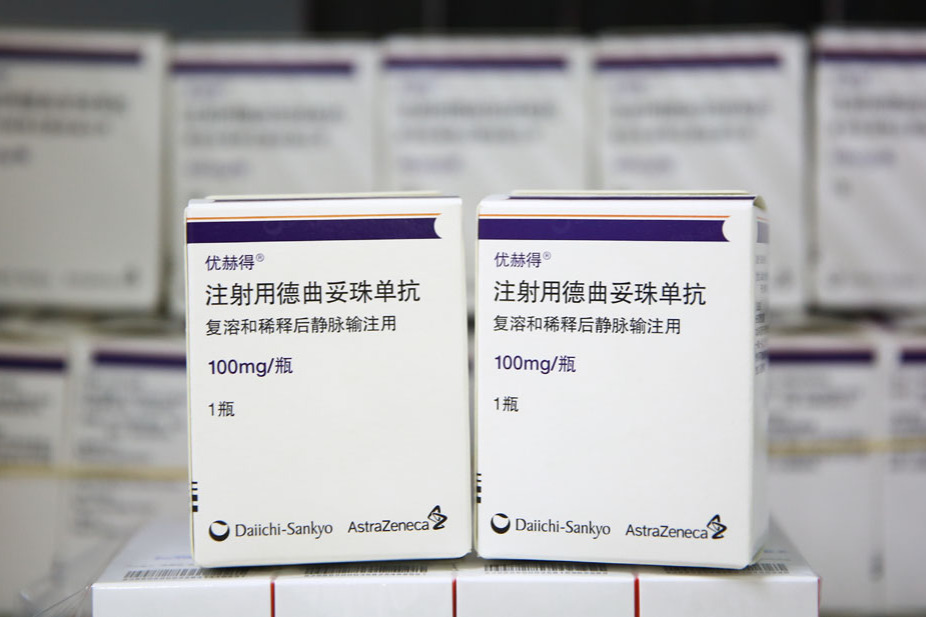
    In a landmark decision for oncology treatment, China has become the first nation worldwide to approve Enhertu, an innovative antibody-drug conjugate (ADC) therapy, for neoadjuvant treatment of early-stage breast cancer. The breakthrough medication, co-developed by pharmaceutical giants Daiichi Sankyo of Japan and AstraZeneca of the United Kingdom, received regulatory authorization on March 27, 2026.

    This approval represents a significant advancement in cancer care, introducing ADC technology to early-stage breast cancer treatment protocols. The development underscores China’s evolving role as a critical launch market for global pharmaceutical innovations, reflecting the accelerated pace of the country’s drug approval reforms and its growing importance in multinational companies’ strategic planning.

    Medical experts emphasize that effective preoperative neoadjuvant treatment plays a crucial role in reducing disease recurrence risks, maximizing potential cure rates, and potentially enabling less intensive surgical interventions. Professor Wu Jiong, Party Secretary of Fudan University Shanghai Cancer Center and lead researcher for relevant clinical studies in China, highlighted the therapy’s significance: ‘This innovative injection provides both a new treatment alternative and renewed hope for clinical cure among early-stage breast cancer patients nationwide.’

    The approval demonstrates China’s commitment to embracing cutting-edge medical technologies and accelerating patient access to advanced therapies, positioning the country at the forefront of oncological innovation and treatment accessibility.

  • Two infectious diseases added to Category B for close monitoring

    Two infectious diseases added to Category B for close monitoring

    China’s National Health Commission has announced the reclassification of two viral diseases—chikungunya fever and severe fever with thrombocytopenia syndrome (SFTS)—as Category B infectious diseases effective April 1. This strategic move enhances national monitoring protocols and mandates standardized reporting mechanisms across healthcare institutions.

    The designation places both diseases under China’s rigorous infectious disease management framework, which requires coordinated prevention measures and immediate case reporting to public health authorities. While not subject to the extreme containment protocols of Category A diseases like plague and cholera, Category B status places chikungunya and SFTS alongside COVID-19, AIDS, and viral hepatitis in surveillance priority.

    Chikungunya fever, transmitted primarily through Aedes mosquito bites, causes high fever, severe joint pain, and skin rashes. Since its initial importation to China in 2008, the country has experienced periodic outbreaks, with several provinces reporting localized transmission clusters in 2025 linked to international travel.

    SFTS presents different epidemiological challenges as a tick-borne illness prevalent in rural mountainous regions. Characterized by fever, thrombocytopenia, and leukopenia, the disease first emerged in China in 2009 and remains endemic in areas with established tick populations.

    Health authorities express particular concern about chikungunya’s transmission potential. Liu Qing, deputy director of infectious disease control at the National Disease Control and Prevention Administration, warned that 2026 brings elevated risks for local outbreaks of mosquito-borne diseases due to increased international travel and expanding mosquito habitats driven by climate change.

    The reclassification enables enhanced surveillance capabilities through China’s national infectious disease intelligent monitoring system, which employs advanced algorithms to detect potential outbreaks. Additional measures include public education campaigns, intensified environmental sanitation programs targeting mosquito breeding grounds, and improved diagnostic protocols.

    For SFTS prevention, health experts recommend protective clothing and insect repellent in endemic areas. Liu Qiyong, chief vector-borne disease expert at China CDC, emphasized proper tick removal techniques and urged immediate medical attention for any post-bite fever symptoms.

  • Australia’s sunscreen regulator wants new rules after recent product scandal

    Australia’s sunscreen regulator wants new rules after recent product scandal

    In response to mounting evidence of widespread sunscreen efficacy failures, Australia’s Therapeutic Goods Administration (TGA) has unveiled comprehensive regulatory reforms targeting the nation’s sun protection industry. This decisive action follows alarming revelations that numerous popular brands failed to deliver their promised protection levels in a country grappling with the world’s highest skin cancer rates.

    The regulatory overhaul was prompted by dual investigations: consumer advocacy group Choice’s testing discovered 16 of 20 sunscreens—including premium products—fell short of their advertised SPF ratings. Concurrently, an Australian Broadcasting Corporation investigation uncovered potential issues with both a leading testing laboratory and a manufacturer producing common base formulas.

    Under the proposed framework, Australia will implement enhanced oversight mechanisms for testing laboratories, including mandatory accreditation requirements. The reforms will focus particularly on cosmetic sunscreens claiming high protection levels, addressing concerns about ingredient quality and formula efficacy. Notably, the review excludes safety assessments of sunscreen ingredients and children-specific products.

    A controversial proposal involves replacing numerical SPF ratings with simplified categorical labels—low, medium, high, and very high—despite consumer advocates advocating for retaining the globally recognized numbering system with improved accuracy.

    The urgency for reform is underscored by Australia’s stark skin cancer statistics: approximately 2,000 annual deaths from melanoma and skin cancer, with two-thirds of Australians expected to undergo at least one skin cancer removal procedure during their lifetime. Despite Australia’s existing stringent regulations—classifying sunscreens as medicines with post-market monitoring—the TGA concluded current safeguards proved insufficient.

    Industry accountability measures have already commenced, with Ultra Violette voluntarily recalling its Lean Screen product after testing revealed an SPF of 4 instead of the claimed 50+. The TGA’s subsequent investigation identified similar concerns with nearly two dozen products sharing the same base formula.

    Consumer advocates have welcomed the proposed enhancements to testing requirements and transparency measures, noting these changes could restore public confidence in sun protection products essential for combating Australia’s extreme ultraviolet radiation levels.

  • Heart drug interest surges after college entrance tutor’s death

    Heart drug interest surges after college entrance tutor’s death

    The sudden cardiac death of prominent Chinese postgraduate entrance examination tutor Zhang Xuefeng has triggered an unprecedented wave of public concern about heart health across the nation. The 41-year-old educator collapsed while running in Suzhou, Jiangsu province, on Tuesday, sparking immediate and dramatic increases in online searches for cardiovascular medications and equipment.

    According to data from JD Health, one of China’s leading online healthcare platforms, search volumes for heart-related medications skyrocketed thirtyfold year-on-year following the tragedy. Defibrillators (AEDs) and cardiac monitoring devices witnessed a tenfold surge in public interest, while searches for heart health supplements like coenzyme Q10 increased more than eight times normal levels.

    Medical experts have seized this teachable moment to clarify misconceptions about heart health. Dr. Wang Jian of JD Health Internet Hospital explained that while vigorous exercise can serve as a trigger for cardiac events, it is rarely the root cause. “The risk is greatest for people with underlying heart conditions,” Wang noted. “Intense running may present immediate danger for those with undiagnosed issues, whereas for individuals with healthy hearts, proper running actually serves as a protective factor.”

    The physiological mechanisms behind exercise-induced cardiac events involve sympathetic nervous system activation during strenuous activity, which increases heart rate and oxygen demand. This stress can easily induce irregular heartbeats and sudden death in individuals with hidden heart conditions.

    Medical professionals emphasize that preventive measures including pre-exercise screening represent the most effective approach to risk reduction. Those recovering from recent infections or myocarditis should rest for three to six months before resuming intense physical activity. Long-term runners are advised to undergo regular electrocardiograms and echocardiograms to monitor heart rhythm and blood flow.

    Warning signs requiring immediate cessation of exercise include chest pain, unexplained shortness of breath, dizziness, or pale skin accompanied by cold sweats. Experts recommend maintaining a target heart rate during exercise of approximately 170 minus one’s age and avoiding running when sleep-deprived, intoxicated, or recovering from serious illness.

    Cardiologist Dr. Chen Mulei from Beijing Chaoyang Hospital addressed widespread misconceptions about emergency heart medications, noting that fast-acting heart pills and nitroglycerin have limited effectiveness during actual heart attacks. “Once a blood vessel becomes completely blocked, these medications may no longer be effective,” Chen explained. “For patients experiencing arrhythmias, such drugs provide little therapeutic effect and cannot reliably prevent sudden cardiac death.”

    In emergency situations where someone collapses and becomes unresponsive, bystanders should immediately initiate CPR and utilize available defibrillators. Survival chances decrease by 7-10 percent with each minute of delay without intervention, making rapid response critical.

  • Experts call for broader AI integration in healthcare at national conference

    Experts call for broader AI integration in healthcare at national conference

    BEIJING – At the inaugural China Intelligent Medicine Conference held Saturday, leading medical researchers and policymakers issued a compelling call for expanded integration of artificial intelligence technologies throughout the nation’s healthcare ecosystem. The high-profile gathering highlighted both the remarkable progress and remaining challenges in China’s push to transform medical services through digital innovation.

    Medical authorities presented compelling evidence of AI’s growing impact on healthcare delivery. According to data from Beijing’s prestigious Fuwai Hospital, AI-assisted systems have achieved over 95% accuracy in medical record documentation, while sophisticated evaluation models now provide objective performance metrics for surgical teams. These technologies are driving significant improvements in standardizing medical practices, optimizing patient experiences, and enhancing disease management capabilities at primary care facilities.

    Professor Ji Xunming, President of the Chinese Academy of Medical Sciences and Peking Union Medical College, emphasized that artificial intelligence is fundamentally reshaping medical understanding and practice. “We are witnessing a paradigm shift from reactive treatment to proactive health management,” Ji noted, underscoring the transformative potential of smart technologies in preventive care.

    The conference particularly highlighted AI’s role in strengthening grassroots medical services. Pilot programs in hypertension management have demonstrated substantially improved treatment and control rates when primary care physicians receive AI-supported decision assistance. This advancement addresses critical needs in community healthcare delivery.

    However, significant challenges remain. Professor Wang Zhenchang, an academician at Beijing Friendship Hospital, identified limitations in current AI applications, noting that most products focus on single diseases rather than addressing complex, multifaceted clinical scenarios. Wang advocated for more comprehensive imaging systems seamlessly integrated into clinical workflows and called for accelerated regulatory pathways to keep pace with technological innovation.

    A comprehensive research report released during the event outlined persistent bottlenecks in computing infrastructure, data quality, and ethical considerations. The document proposed a systematic framework emphasizing domestic innovation capabilities and strengthened oversight mechanisms.

    Progress is also evident in educational development, with the first national textbooks for intelligent medical engineering scheduled for publication. This advancement supports China’s 15th Five-Year Plan (2026-30), which mandates the structured application of digital technologies in assisted diagnosis, precision medicine, health management, and elderly care services.

    Liu Dengfeng, a senior National Health Commission official, confirmed the government’s commitment to accelerating digital technology adoption across both major hospitals and grassroots facilities. The NHC will prioritize policy and regulatory improvements in ethical governance to foster a conducive environment for intelligent medicine development.

  • China issues standards for TCM services at primary level

    China issues standards for TCM services at primary level

    Chinese health authorities have unveiled comprehensive new guidelines mandating the standardization and expansion of Traditional Chinese Medicine (TCM) services at grassroots healthcare institutions nationwide. The National Administration of Traditional Chinese Medicine, in collaboration with the National Health Commission and National Disease Control and Prevention Administration, jointly issued the framework on Tuesday to enhance primary healthcare delivery through systematic TCM integration.

    The groundbreaking standards require township health centers and community clinics to provide minimum service packages including at least six categories encompassing ten distinct TCM treatment modalities. These specifically include acupuncture, moxibustion therapy, cupping, and therapeutic massage among other techniques. Facilities must maintain pharmaceutical inventories of no fewer than 80 varieties of Chinese patent medicines and a minimum of 300 types of decoction pieces to ensure comprehensive treatment capabilities.

    The guidelines emphasize the strategic application of TCM methodologies in chronic disease management, particularly for conditions including hypertension, diabetes mellitus, and chronic obstructive pulmonary disease. The framework advocates for integrated service models combining preventive care, therapeutic intervention, and rehabilitation services through TCM approaches.

    Notably, the standards establish workforce requirements stipulating that TCM practitioners must constitute at least 20% of medical staff at primary healthcare institutions. This structural reinforcement aims to bolster the high-quality development of TCM services at community level, representing a significant advancement in China’s healthcare system modernization while preserving traditional medical practices.

  • Canadian man praises China’s medical efficiency after knee surgery in Yichang

    Canadian man praises China’s medical efficiency after knee surgery in Yichang

    A Canadian national has become an unexpected advocate for China’s healthcare system following an exceptionally efficient surgical experience in Yichang, Hubei province. Guy Francis Bennett, a 66-year-old journalist and filmmaker, suffered a torn meniscus in his right knee during a soccer match two months ago. When medical authorities in Vancouver informed him he would face a minimum one-year waiting period for routine minimally invasive surgery, Bennett grew concerned about the potential deterioration of his condition and disruption to his professional life.

  • Health insurance customers urged to pre-pay now to avoid major price hike

    Health insurance customers urged to pre-pay now to avoid major price hike

    Australian consumers are facing a critical deadline to secure their current health insurance rates before the most substantial premium increase in nearly a decade takes effect. Financial comparison platform Canstar has issued urgent warnings that policyholders must act promptly to mitigate the coming cost-of-living impact.

    Health Minister Mark Butler has approved an average 4.41% premium rise effective April 1st, marking the fastest rate increase since 2017. However, many insurers will begin charging customers as early as March 25th, creating a narrow window for financial planning. According to Canstar’s data insights director Sally Tindall, ‘The clock is ticking if Australians want to change these plans ahead of the deadline. If you wait until March 31st to decide, the decision might well be made for you.’

    Most insurance providers permit advance payments at current rates for up to 12 months, with some funds like HCF and HBF allowing prepayments for 18 months. Three major insurers require BPAY payments by March 26th, while smaller insurers have even earlier deadlines of March 25th.

    The premium increases vary significantly across coverage tiers. While the government cites a 4.41% average increase, gold-level policies with major insurers face staggering 13.3% hikes. Consumer advocacy group Choice reveals that over the past five years, government-approved cumulative increases reached 14.8% overall, with gold coverage experiencing a devastating 71.1% increase.

    Choice health insurance expert Mark Blades attributes portion of these dramatic increases to ‘phoenixing’ practices, where insurers close older policies to new members and open identical policies under the same name at higher prices. Although the government introduced legislation last month to outlaw this loophole, premium affordability continues to deteriorate for comprehensive coverage.

    Financial experts recommend that consumers use this period to compare policies and consider prepayment options, while noting that advance payments don’t lock customers into their current insurer indefinitely. Unused portions of prepaid premiums are typically refunded if policyholders switch providers later.

  • Kazakh man facing life-threatening complications saved by Chongqing doctors

    Kazakh man facing life-threatening complications saved by Chongqing doctors

    A complex medical rescue operation spanning international borders has concluded successfully at the First Affiliated Hospital of Chongqing Medical University, where a 60-year-old Kazakh national received life-saving treatment following a failed intestinal cancer operation in his home country.

    The patient, identified under the pseudonym Mirza, arrived at the Chinese medical facility in critical condition after his initial surgery resulted in severe complications including respiratory arrest and incomplete removal of diseased intestinal tissue. The case was further complicated by the patient’s pre-existing health conditions including obesity, abdominal adhesions, hypertension, and cardiac issues.

    Under the leadership of Dr. Qian Kun, Deputy Director of Gastrointestinal Surgery, a multidisciplinary medical team devised a comprehensive treatment strategy utilizing cutting-edge 3D high-definition laparoscopic technology. The advanced surgical approach, combined with enhanced recovery protocols, allowed the medical team to successfully complete the complex intestinal procedure that had previously failed.

    “The integration of sophisticated technology with personalized patient care enabled us to navigate this medically challenging case,” stated Dr. Qian. “Our objective extends beyond technical excellence to encompass complete patient support throughout the treatment journey.”

    The patient’s family expressed profound gratitude for the comprehensive care received, noting that the medical team alleviated their anxieties throughout the treatment process. Mirza’s remarkable recovery enabled his discharge and return to Almaty, Kazakhstan, merely five days post-operation, with the hospital arranging continuous follow-up care to ensure sustained recovery.

    This successful international medical collaboration highlights China’s growing prominence in providing world-class healthcare services and advanced medical technology to international patients, particularly in complex surgical cases that require highly specialized expertise.