分类: health

  • China sees rise in influenza, rhinovirus, and other respiratory infectious diseases

    China sees rise in influenza, rhinovirus, and other respiratory infectious diseases

    China is currently grappling with a significant uptick in respiratory and intestinal infectious diseases, according to the National Disease Control and Prevention Administration. During a recent press briefing, spokesperson Xi Jingjing highlighted the rising prevalence of influenza, respiratory syncytial virus, rhinovirus, and other acute respiratory infections. Additionally, norovirus infections, hand, foot, and mouth disease, and other intestinal illnesses are circulating at elevated levels, particularly in schools and childcare facilities. Wang Dayan, director of the Chinese National Influenza Center, noted that flu activity is increasing nationwide, with the H3N2 subtype of influenza A dominating over 95% of cases. The remaining cases are attributed to the H1N1 influenza A strain and influenza B. With 23 provincial-level regions reaching a medium level of influenza activity, the administration anticipates a continued rise in cases as the peak flu season approaches from late December to early January. Authorities are urging the public, especially vulnerable groups such as the elderly, children, and individuals with underlying health conditions, to get vaccinated promptly and enhance personal protection in crowded spaces. Meanwhile, the risk of imported vector-borne diseases like chikungunya fever and dengue fever persists, particularly in southern provinces.

  • Chinese medical team sets up health education column in PNG newspaper

    Chinese medical team sets up health education column in PNG newspaper

    In a groundbreaking initiative to enhance public health awareness, the 15th Chinese medical team in Papua New Guinea (PNG) has introduced a health education column in the Post-Courier, one of the nation’s leading newspapers. This marks the first time in the 62-year history of Chinese medical aid abroad that such a collaboration has been established. The column’s debut aligns with Movember, a global campaign focused on raising awareness about prostate and testicular cancer, addressing significant gaps in knowledge and screening for prostate diseases among PNG’s male population. Dr. Zhang Teng, the team’s urology specialist, authored the inaugural piece, detailing the causes, early symptoms, screening methods, and preventive measures for prostate cancer. The article also provides practical self-care advice, such as maintaining a healthy diet and regular exercise, and underscores the importance of seeking medical attention for symptoms like blood in urine, difficulty urinating, and lower back pain. Team leader Xu Wei highlighted the column’s role in deepening public health services in PNG, with plans for monthly updates covering various medical fields, including thoracic surgery, neurosurgery, gynecology, cardiology, neonatology, dentistry, and traditional Chinese medicine. The 15th Chinese medical team, comprising eight experts from top-tier hospitals led by the Chongqing University Cancer Hospital, arrived in PNG on October 13 for a one-year mission at the Port Moresby General Hospital. This initiative builds on a longstanding medical collaboration that began in 2002 when Chongqing first dispatched a medical team to PNG, marking China’s first medical mission in the South Pacific region.

  • Empowering wellness through AI-driven healthcare solution

    Empowering wellness through AI-driven healthcare solution

    Artificial Intelligence (AI) is reshaping the healthcare landscape by offering personalized wellness solutions that cater to individual needs. By analyzing data from wearables, mobile apps, and health records, AI provides tailored health insights, predicts risks, and recommends preventive measures in real-time. This technological advancement is not only enhancing diagnostics and treatment planning but also empowering individuals to take proactive control of their health. Industry experts highlight that AI-driven platforms are revolutionizing mental health support by offering adaptive therapy options and personalized wellness programs. These platforms assist healthcare professionals in making informed decisions, leading to targeted interventions that improve patient outcomes. The global AI healthcare market is projected to grow from $32.3 billion in 2024 to $208.2 billion by 2030, driven by increasing adoption across hospitals, clinics, and health systems. Investments are focused on predictive analytics, telemedicine, personalized medicine, and robotic surgery, reflecting a growing recognition of AI’s potential to enhance patient care and reduce costs. However, challenges such as data privacy, integration into clinical workflows, and ensuring accuracy across diverse populations remain. Experts emphasize the need for multidisciplinary collaboration and continuous validation to address these issues. AI’s role in healthcare is set to expand, with 75% of leading healthcare companies testing or planning to expand AI applications, and 64% of patients ready to use AI-powered virtual nurse assistants. This transformative approach fosters a proactive healthcare ecosystem, reducing costs associated with late-stage interventions and empowering patients to manage their health more effectively.

  • Dundee and US surgeons achieve world-first stroke surgery using robot

    Dundee and US surgeons achieve world-first stroke surgery using robot

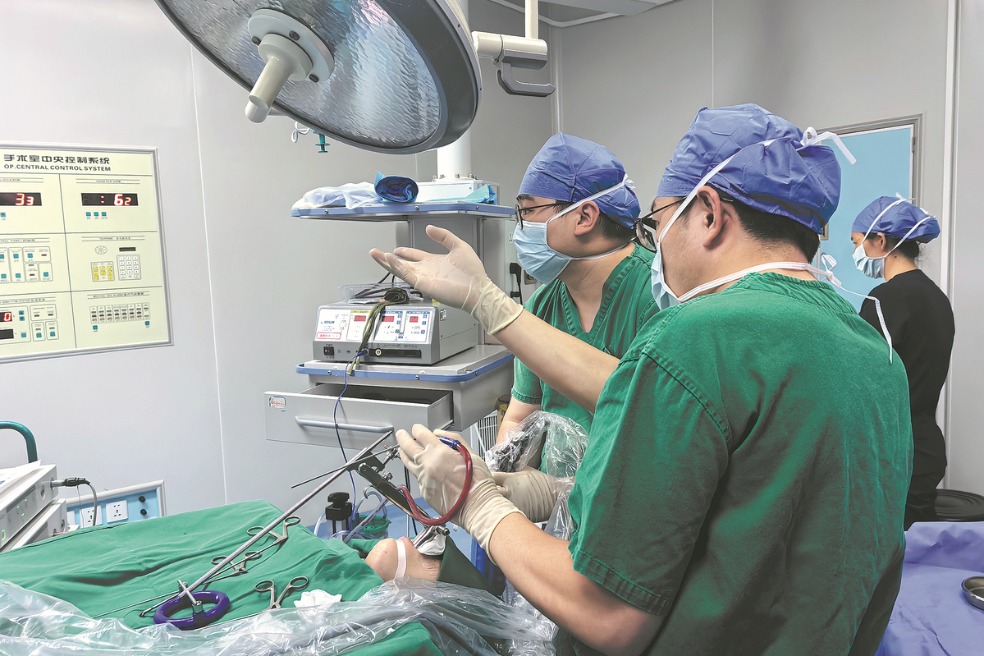
    In a groundbreaking medical achievement, doctors from Scotland and the United States have successfully completed what is believed to be the world’s first remote stroke procedure using robotic technology. The pioneering procedure, known as a thrombectomy, involves the removal of blood clots from stroke patients. Led by Professor Iris Grunwald of the University of Dundee, the team performed the surgery on a human cadaver donated to medical science. Prof. Grunwald operated from Ninewells Hospital in Dundee, while the cadaver was located at the university’s facility across the city. Hours later, Dr. Ricardo Hanel, a neurosurgeon based in Jacksonville, Florida, replicated the procedure, performing the first-ever transatlantic thrombectomy on a body in Dundee, over 4,000 miles away. The team utilized robotics developed by Lithuanian firm Sentante, marking a significant leap in remote medical intervention. The procedure, described as a potential ‘game changer,’ could revolutionize stroke care by eliminating geographical barriers to accessing specialist treatment. Prof. Grunwald emphasized the transformative potential of the technology, stating, ‘It felt as if we were witnessing the first glimpse of the future.’ The University of Dundee, a global training center for stroke treatment, is the only UK facility where doctors can practice on cadavers with circulated human blood to simulate live procedures. The experiment involved four cadavers, with human blood used to mimic real-life conditions. The team now aims to proceed with clinical trials in 2026. Stroke treatment is highly time-sensitive, with delays significantly impacting recovery chances. Currently, only a small percentage of stroke patients in the UK receive thrombectomies due to limited access to specialists. This innovation could democratize access to life-saving treatment, particularly for those in remote areas. Juliet Bouverie of the Stroke Association hailed the development as ‘a remarkable innovation,’ highlighting its potential to address inequities in stroke care. The Sentante robotics system, supported by tech giants Nvidia and Ericsson, ensures minimal lag time, enabling precise real-time operations. Dr. Hanel described the 120-millisecond delay as ‘truly remarkable.’ Prof. Grunwald and Sentante CEO Edvardas Satkauskas expressed optimism about the technology’s future, with Satkauskas noting, ‘Sometimes, the future is way closer than we think.’

  • Should you ‘feed a cold and starve a fever’? Find out if the adage is true

    Should you ‘feed a cold and starve a fever’? Find out if the adage is true

    The age-old adage ‘feed a cold and starve a fever’ has been passed down through generations as a piece of sick-day wisdom. However, experts now reveal that this advice is little more than an old wives’ tale. Dr. David Schneider, chair of the department of family and community medicine at the University of Texas Southwestern Medical Center, emphasizes that there is no scientific basis for this claim. Instead, the focus should be on maintaining proper nutrition and hydration to support the body’s immune system during illness.

    Benjamin Hurrell, an assistant professor of nutrition and immunology at the University of California, Davis, points out the logical flaw in the adage: it’s possible to have both a cold and a fever simultaneously, making the advice impractical. Research shows that being well-nourished is crucial for immune function. Chronic undernutrition or severe nutritional deficiencies can impair the body’s ability to fight infections, such as pneumonia or gastrointestinal illnesses, by reducing the production of infection-fighting immune cells.

    Dr. Geeta Sood, assistant professor of medicine at Johns Hopkins University, notes that while eating nutritious foods like fruits and vegetables can help meet the body’s energy needs during illness, there is no strong evidence that specific foods significantly impact recovery. If you lack appetite for a day or two, it’s generally safe to rely on your body’s energy reserves. However, prolonged weakness warrants medical attention.

    Supplements like zinc or vitamin C have limited proven benefits. While some studies suggest zinc may slightly reduce the duration of colds, others show no effect. Honey, on the other hand, has been shown to soothe coughs, according to a 2021 review of clinical trials.

    Hydration is critical during illness, especially when experiencing a fever or cold. Dr. Michael Hanak, a family medicine physician at Rush University Medical Center, recommends drinking two to four liters of fluids daily to thin mucus and replenish lost fluids. Electrolyte drinks can be particularly helpful for fever-related dehydration.

    Ultimately, the best advice for recovering from a cold or fever is to stay hydrated, rest, and let time do its work. As Dr. Hanak aptly puts it, ‘Time heals all wounds.’

  • TCM’s role in addressing global health challenges highlighted at Thai forum

    TCM’s role in addressing global health challenges highlighted at Thai forum

    The pivotal role of Traditional Chinese Medicine (TCM) in addressing global health challenges was underscored at the ‘We Are The World’ Bangkok 2025 Summit, which convened from November 9 to 11. The event, organized by the nonprofit global health platform We Are The World, brought together international experts to explore the fusion of TCM with cutting-edge technologies like biotechnology, regenerative medicine, and artificial intelligence (AI).

    Adrian Cheng Chi-kong, a Hong Kong entrepreneur and co-founder of We Are The World, emphasized the growing global recognition of TCM’s millennia-old wisdom in the face of rapid technological advancements. He highlighted the urgent need to integrate TCM with modern technologies to combat pressing health issues such as cancer and noncommunicable diseases (NCDs), which claimed millions of lives globally in recent years.

    Phinij Jarusombat, former Thai Deputy Prime Minister and Minister of Public Health, stressed the importance of collaboration in bridging the gap between advanced medical technologies and patients suffering from chronic and neurodegenerative diseases. He advocated for a ‘Health Silk Road’ to facilitate the free flow of medical knowledge and innovation, building on Thailand’s existing cooperation with China in digital health and medical training.

    Yan Lijin, Chairman of the China Silk Road Group, announced a collaboration between the Traditional Chinese Medicine Culture Congress and We Are The World, emphasizing the potential of TCM’s integration with biotechnology, regenerative medicine, and AI to address health challenges across the human life cycle. He noted TCM’s accessibility and affordability make it a valuable supplement to healthcare systems in less developed regions, while offering personalized solutions in chronic disease management in developed areas.

    Personal testimonies, such as that of Michael Chin, co-founder of We Are The World, highlighted the practical benefits of combining TCM with modern treatments. Sranyoo Chanate, CEO of Kluaynamthai Hospital, and Sorapoj Techakraisri, founder of Pace Development Corp, echoed the sentiment, envisioning a future where the integration of traditional and modern medicine revolutionizes healthcare.

    The summit served as a platform for sharing innovative healthcare solutions and fostering global cooperation to build a healthier future.

  • UAE: Travelling for Umrah? How to get mandatory vaccine; health tips to stay safe

    UAE: Travelling for Umrah? How to get mandatory vaccine; health tips to stay safe

    As millions of Muslims prepare for the spiritual journey of Umrah, Saudi Arabian authorities have introduced stringent health measures to ensure the safety of pilgrims. These measures include mandatory vaccinations and health advisories to prevent the spread of infectious diseases in crowded areas. The UAE has also emphasized the importance of vaccinations for its residents traveling to Saudi Arabia for Umrah. The seasonal influenza vaccine is mandatory for all UAE residents planning to undertake the pilgrimage. It is recommended that travelers receive this vaccination at least 10 days before departure to ensure adequate immunity. The vaccine is available at Emirates Health Services (EHS) general health centers for Dh50, with an additional Dh20 fee for a vaccination card required at travel hubs. Certain groups, including UAE citizens, individuals over 50, people of determination, children under 5, pregnant women, students, and healthcare workers, are exempt from the vaccination fee. Previously, the meningococcal vaccine was mandatory for all Umrah travelers aged 1 and above, but Saudi Arabia recently announced that this is no longer a requirement. However, those who still wish to receive the vaccine must book a doctor’s consultation, which costs Dh150 unless they possess an EHS health card. The Saudi Ministry of Health also recommends the SARS-COV-2 (Covid-19) vaccine for travelers to Umrah areas, which include Makkah, Madinah, Jeddah, and Taif. Pilgrims with chronic conditions are advised to carry detailed medical documentation and sufficient medication in its original packaging. In addition to vaccinations, travelers are encouraged to follow general health tips, such as frequent handwashing, using face masks in crowded areas, maintaining food hygiene, staying hydrated, and protecting against mosquito bites. These precautions are essential for ensuring a safe and healthy pilgrimage experience.

  • Newborn with congenital heart disease receives life-saving surgery in Yunnan

    Newborn with congenital heart disease receives life-saving surgery in Yunnan

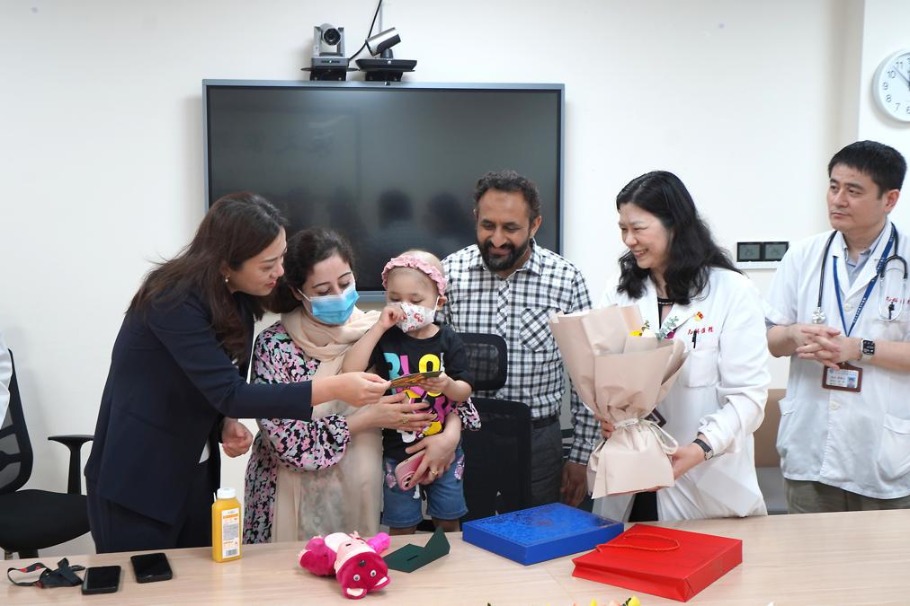
    A newborn diagnosed with a severe congenital heart defect has been given a new lease on life following a high-risk surgical procedure at Fuwai Yunnan Cardiovascular Hospital in Kunming, Yunnan Province. The infant, weighing a mere 2.9 kilograms at birth, was found to have transposition of the great arteries (TGA), a rare condition where the heart’s two main arteries are reversed, severely impairing blood circulation and oxygen supply. Shortly after birth, the baby exhibited critically low blood oxygen levels, exacerbated by the near-closure of the foramen ovale, a vital passage for blood flow in newborns. A multidisciplinary medical team, led by Wang Xiaoqi, the hospital’s vice-president, and Dong Shuo, director of pediatric surgery, performed an arterial switch operation to correct the defect. Four days post-surgery, the infant was successfully weaned off the ventilator and showed signs of steady recovery. The baby has since been moved from intensive care to a general ward and is expected to be discharged soon. ‘This was an exceptionally high-risk procedure for a one-day-old baby weighing less than three kilograms,’ Wang remarked. ‘However, the team’s precision and collaboration ensured a successful outcome.’

  • UAE recalls Hong Thai inhaler due to microbial contamination

    UAE recalls Hong Thai inhaler due to microbial contamination

    The Emirates Drug Establishment (EDE) has announced an immediate recall of Hong Thai Herbal Inhaler (Yadom) from UAE markets due to confirmed microbial contamination in several batches. The decision follows laboratory tests that revealed contamination levels exceeding international safety standards for inhalation products. The affected batch, identified as 000332, was manufactured on December 9, 2024, and is set to expire on December 8, 2027. Approximately 200,000 units from this batch have been recalled in the UAE. The EDE has urged the public to cease using the product and safely dispose of any units they possess. Consumers experiencing symptoms such as shortness of breath, nasal irritation, or persistent dizziness after use are advised to seek medical attention. The recall is being coordinated with municipalities and regulatory authorities to ensure the product is removed from all points of sale, including online platforms. This action follows a similar recall in Thailand, where the product failed microbial contamination tests. Hong Thai, the manufacturer, has emphasized that customer safety remains their top priority.

  • Experts urge disease prevention awareness to boost HPV vaccination

    Experts urge disease prevention awareness to boost HPV vaccination

    In a concerted effort to combat cervical cancer, health experts are emphasizing the need to increase public awareness and dispel misconceptions surrounding the Human Papillomavirus (HPV) vaccine. HPV, the primary cause of cervical cancer, claimed nearly 350,000 lives globally in 2022, with China accounting for 16% of these fatalities. Starting Monday, China will integrate the HPV vaccine into its national immunization program, offering free bivalent vaccines to 13-year-old girls, administered in two doses six months apart. This initiative, announced by seven government agencies on October 30, aims to bolster public health and reduce cervical cancer rates. As of June, 18 provincial-level regions in China have already provided free HPV vaccinations to eligible girls, benefiting approximately 5 million annually, according to a State Council white paper released on September 19. In Beijing, for instance, seventh-grade girls are eligible for free domestically developed bivalent vaccines targeting HPV strains 16 and 18, which are responsible for 70-80% of cervical cancer cases. Despite these efforts, some parents remain hesitant. Li Yun, a Beijing mother, opted for an imported nine-valent vaccine for her daughter, citing reliability concerns. However, she noted that some parents declined the vaccine, citing fears of adverse effects or the belief that their children were too young to need it. Health experts like Tan Xianjie from Peking Union Medical College Hospital stress the importance of early vaccination, particularly before sexual activity begins, to maximize protection. The World Health Organization has set a global target to ensure 90% of girls receive full HPV vaccination by age 15 by 2030, as part of its strategy to eliminate cervical cancer. In China, the free vaccination policy has already made significant strides, covering many eligible girls and promoting health equity across the nation. Experts like Qiao Youlin from Peking Union Medical College and Zhao Fanghui from the National Cancer Center highlight the long-term benefits of vaccination and the need for continued public education to overcome hesitancy and ensure widespread uptake.