分类: business

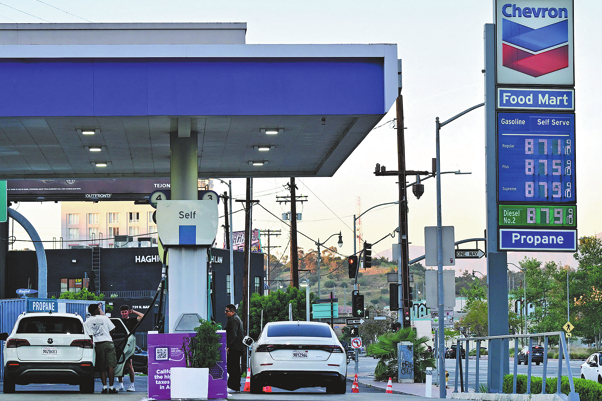
  • Oil prices tumble more than $1 as IEA cuts demand forecast

    Oil prices tumble more than $1 as IEA cuts demand forecast

    Global oil markets experienced significant downward pressure on Thursday following a sobering demand forecast revision from the International Energy Agency. The Paris-based organization substantially lowered its 2026 global oil consumption projections, triggering a swift market reaction that erased earlier geopolitical risk premiums.

    Benchmark crude indices registered pronounced declines throughout the trading session. Brent crude futures plummeted by $1.26, representing a 1.82% decrease to settle at $68.14 per barrel. Simultaneously, US West Texas Intermediate crude witnessed a $1.24 drop, equating to a 1.92% decline, closing at $63.39 per barrel.

    The IEA’s monthly market report indicated that demand growth would underperform previous estimates despite January supply disruptions. The agency projected a substantial market surplus would persist throughout the year, fundamentally altering trader sentiment. This revision prompted investors to reassess the balance between geopolitical tensions and fundamental supply-demand dynamics.

    Market analysts observed that the earlier price support derived from US-Iran tensions had rapidly dissipated. Phil Flynn, senior analyst at Price Futures Group, noted that the market ‘just ran out of steam’ as participants prioritized the weakened demand outlook over Middle Eastern geopolitical concerns.

    Concurrently, substantial US inventory data exacerbated the bearish sentiment. The Energy Information Administration reported an 8.5 million barrel crude stockpile increase, dramatically exceeding analyst expectations of a 793,000-barrel build. Refinery utilization rates concurrently declined by 1.1 percentage points to 89.4%, indicating reduced processing demand.

    On the supply front, Russian seaborne oil product exports climbed 0.7% month-over-month to 9.12 million metric tons in January, driven by elevated fuel production and seasonal domestic consumption patterns. This additional supply further contributed to the global surplus scenario outlined by the IEA.

  • The US economy is growing – so where are all the jobs?

    The US economy is growing – so where are all the jobs?

    The American labor market is presenting a paradoxical scenario that defies conventional economic wisdom. While macroeconomic indicators show robust growth with the economy expanding at a 4.4% annual pace, job seekers like Jacob Trigg face unprecedented challenges. The 42-year-old Texan project manager, previously accustomed to quick employment transitions, has submitted over 2,000 applications without securing permanent professional work, instead relying on package delivery and landscaping jobs to survive.

    This personal struggle reflects a broader national phenomenon where job openings and hiring rates have plummeted to multi-year lows. Recent data reveals the US added merely 15,000 jobs monthly last year—a strikingly low figure by historical standards. Yet simultaneously, the unemployment rate remains stable at 4.3%, layoffs stay limited outside notable exceptions like Amazon and UPS, and economic expansion continues.

    Economists describe this combination as highly unusual. Jed Kolko of the Peterson Institute for International Economics notes: ‘It’s actually very hard to point to another moment in the last 25 years where you have the combination we see today.’

    The situation has sparked intense debate about potential structural shifts in the economy. Goldman Sachs’ widely cited October report suggested the US might be entering a period of ‘jobless growth,’ driven particularly by artificial intelligence adoption enabling companies to achieve more with reduced human resources. This concern resonated through World Economic Forum discussions in Davos, contributing to widespread economic anxiety.

    Professor Constantin Burgi of University College Dublin observes that such decoupling of job gains from overall growth typically occurs during fundamental economic transformations. While he views the situation as potentially temporary, he acknowledges it could persist for years if jobs are permanently lost to AI or outsourcing.

    The human impact is profound. James Richardson, a 33-year-old information security analyst from Pittsburgh, has applied to over 1,200 positions since October, sometimes receiving rejections within 15 minutes. ‘It feels like there is no-one on the other side even bothering to look at your experiences,’ he lamented, noting he would be homeless without parental support.

    Multiple factors beyond technology may contribute to the hiring slowdown. Many companies, especially in tech, still carry surplus workers hired during pandemic-era booms. The Trump administration’s immigration crackdown simultaneously reduces both available workers and demand for them. Economic uncertainty from government spending cuts and tariff programs may also suppress hiring appetite.

    Despite stronger-than-expected January job gains offering some hope, economists like Indeed’s research director Laura Ullrich caution against declaring a ‘new normal.’ She maintains current conditions are unsustainable long-term, as low hiring, low firing, and low quit rates during economic growth cannot persist indefinitely.

    For job seekers like Amy Beson, laid off from the University of Arizona amid government funding cuts, the situation feels desperately permanent. Even expanding her search to healthcare—typically a resilient sector—has yielded nothing, leading her to worry this challenging environment represents a permanent shift rather than a temporary anomaly.

  • Emaar posts strongest-ever results as revenues climb 44%

    Emaar posts strongest-ever results as revenues climb 44%

    Dubai’s premier real estate developer Emaar Development has announced unprecedented financial achievements for the fiscal year 2025, marking its most successful performance since inception. The property giant, operating as a majority-controlled subsidiary of Emaar Properties, demonstrated remarkable growth across all key metrics amid soaring demand for residential properties throughout Dubai.

    The company’s annual property sales reached an extraordinary Dh71.1 billion, representing a 9% increase from the previous year and establishing a new benchmark in the company’s history. This exceptional performance has been attributed to strategic project expansions and sustained market confidence in Dubai’s real estate landscape, driven by demographic expansion, increased international investment, and supportive regulatory frameworks.

    Financial indicators revealed spectacular progress with revenues skyrocketing 44% to Dh27.5 billion, while pre-tax net profit experienced a substantial 52% leap to Dh15.5 billion. These figures reflect enhanced operational efficiency and favorable market conditions. The revenue backlog—representing future earnings from sold but undelivered properties—expanded significantly to Dh125.2 billion, ensuring strong financial visibility for forthcoming years.

    In a move rewarding investor confidence, the board has proposed a record dividend distribution of Dh4 billion, a 47% increase from the previous year, subject to shareholder ratification.

    Strategic expansion efforts in 2025 included the acquisition of 36 million square feet of land with an estimated development value of Dh120 billion. The company launched over 48 residential developments within its master-planned communities, featuring new phases in The Valley, Bristol at Emaar Beachfront, and the Grand Polo Club and Resort.

    A landmark announcement included Emaar Hills, an ambitious new district featuring Dubai Mansions—ultra-luxury residences targeting high-net-worth international buyers, signaling the company’s intensified focus on the premium property segment.

    Founder Mohamed Alabbar emphasized that these achievements demonstrate the robustness of Dubai’s development ecosystem and the UAE government’s forward-looking policies. “The stable regulatory environment, strategic long-term planning, and openness to global investment enable developers like Emaar to execute large-scale projects with confidence,” Alabbar stated, noting the company’s continued commitment to creating communities that elevate living standards.

    Since 2002, Emaar Development has delivered more than 80,500 residential units and currently maintains approximately 51,000 units under development across Dubai’s most prestigious communities, including Dubai Hills Estate, Arabian Ranches, Downtown Dubai, Dubai Marina, and Emaar Beachfront.

  • Presight reports sharp rise in revenue and continued international expansion

    Presight reports sharp rise in revenue and continued international expansion

    Abu Dhabi-based artificial intelligence firm Presight has demonstrated exceptional financial performance throughout 2025, reporting substantial revenue growth and significant international market penetration. The company’s latest financial disclosures reveal a remarkable 36.9% year-over-year revenue increase, reaching Dh3.03 billion, surpassing analyst projections and establishing new benchmarks in the AI solutions sector.

    The fourth quarter of 2025 emerged as Presight’s strongest final-quarter performance to date, generating Dh1.29 billion in revenue—a 23.6% increase compared to the same period in 2024. EBITDA showed robust growth at 23.5%, totaling Dh785 million annually, while net profit reached Dh665.5 million despite the full implementation of the UAE’s revised corporate tax structure. Without the tax impact, profit growth would have reached 16.7% rather than the reported 8.6%.

    International expansion has become a cornerstone of Presight’s growth strategy, with non-UAE revenue more than doubling to Dh1.17 billion—accounting for nearly 39% of total annual revenue compared to just 23% in 2024. The fourth quarter saw international markets contribute almost half of total revenue, demonstrating rapidly accelerating global demand for sovereign AI solutions. Major multi-year deployments are currently advancing in Jordan, Kazakhstan, and Albania, reflecting the company’s strategic focus on emerging markets.

    His Excellency Dr. Sultan Al Jaber, Presight’s Chairman, emphasized that the company’s performance reflects the UAE’s commitment to establishing intelligence as critical national infrastructure. CEO Thomas Pramotedham highlighted twelve consecutive quarters of growth since the company’s 2023 initial public offering, underscoring Presight’s capacity to deliver intelligence-led infrastructure at scale while maintaining responsible global expansion.

    The company’s order intake remained strong throughout 2025, with Dh3.4 billion in new contracts signed and an equivalent amount recorded as year-end backlog—representing a 13% annual increase and an 85% growth over three years. Presight concluded the year with no debt, strengthening its position to invest in innovation, talent development, and strategic expansion initiatives. Subsidiary AIQ contributed significantly to this success, particularly within the energy sector.

    Based on this performance, Presight has elevated its medium-term guidance through 2029, projecting revenue compound annual growth of 20-25%, EBITDA growth of 23-28%, and profit after tax growth of 21-26%. These targets are supported by the company’s expanding contract backlog, diversified global presence, and robust innovation pipeline.

  • Adnoc Drilling net profit tops $1.45b as it sets sights on regional expansion

    Adnoc Drilling net profit tops $1.45b as it sets sights on regional expansion

    Abu Dhabi National Oil Company’s drilling subsidiary has announced unprecedented financial performance for the 2025 fiscal year, achieving a landmark net profit of $1.45 billion. The exceptional results stem from strategic regional expansion, technology-driven operational enhancements, and consistently high fleet utilization rates across all operational segments.

    The company demonstrated remarkable revenue growth, climbing 22% annually to reach $4.9 billion. This financial upswing was propelled by substantial increases in both onshore and offshore drilling activities, complemented by a significant surge in oilfield services operations. The integration of artificial intelligence systems, predictive maintenance protocols, and automated workflows contributed substantially to cost reduction, safety improvements, and enhanced drilling efficiency.

    Chief Executive Officer Abdulla Ateya Al Messabi characterized 2025 as a transformative period marked by operational discipline and technological innovation. Under his leadership, the organization is rapidly evolving into the Gulf region’s premier energy services provider through expanded GCC operations, AI-powered operational enhancements, and new sustainability benchmarks.

    Segment analysis reveals diversified growth patterns: the onshore division generated $2.04 billion in revenue (8% increase), the offshore segment reached $1.40 billion through capacity enhancements, while oilfield services experienced an extraordinary 80% revenue surge to $1.46 billion due to expanded integrated drilling services and unconventional operations.

    The company achieved several industry milestones, including drilling the world’s longest well at 55,000 feet using advanced digital systems from offshore artificial islands. Additionally, regional performance records were shattered with over 5,300 feet drilled within a 24-hour period.

    Shareholders will benefit from the robust financial position through a $250 million fourth-quarter dividend recommendation, bringing total 2025 distributions to $1 billion. For 2026, the board has established a higher minimum annual dividend of $1.05 billion, supported by substantial free cash flow generation of $1.47 billion.

    Future projections indicate sustained momentum through 2026, with expectations of stable revenue growth, maintained high utilization rates, and continued operational efficiencies through digital transformation. The company plans to scale integrated drilling services to approximately 70 rigs by year-end 2026, reinforcing its critical role in supporting the UAE’s long-term energy expansion strategies.

  • Panvel’s Aerotropolis moment: Why NRIs are tracking Mumbai’s next airport‑led growth hub

    Panvel’s Aerotropolis moment: Why NRIs are tracking Mumbai’s next airport‑led growth hub

    The emergence of Navi Mumbai International Airport (NMIA) has catalyzed a profound transformation in the regional real estate landscape, with Non-Resident Indians establishing themselves as the primary drivers of this infrastructure-led investment boom. Industry analysts confirm that speculative interest has evolved into conviction-based acquisitions as the airport transitions from conceptual planning to operational reality.

    Market data reveals extraordinary appreciation patterns in the Panvel region, with residential apartment prices escalating by 74% between fiscal years 2021 and 2025, currently commanding rates between ₹10,000–12,000 per square foot. Concurrently, plotted land valuations have experienced a dramatic 93% surge, substantially outperforming other Navi Mumbai submarkets.

    Bhavesh Shah, Joint Managing Director at Today Group, observes: “We’re witnessing consistently strengthening engagement from the NRI community, particularly from the Middle East, Southeast Asia, and United Kingdom. This interest has matured from preliminary inquiries to decisive, early-phase capital commitments.”

    The development community emphasizes the region’s transition from theoretical potential to tangible performance. Samyag M. Shah, Director of Marathon Nextgen Realty, notes: “Panvel has definitively arrived as a investment destination. The operationalization of NMIA combined with transformative connectivity infrastructure like Atal Setu—which reduces South Mumbai travel duration to approximately 40 minutes—has fundamentally altered investment psychology.”

    Global parallels demonstrate that airport-anchored urban centers—from Amsterdam’s Schiphol to Paris’s Charles de Gaulle—historically exhibit patterns of sustained appreciation and resilient rental demand. Panvel now demonstrates analogous early indicators, with rental demand materializing ahead of projections.

    Marathon Nexzone’s operational data indicates approximately 45% of residential units currently maintain rental occupancy, primarily housing aviation specialists, logistics professionals, and corporate employees from neighboring business parks. This rental absorption is anticipated to intensify as NMIA expands its route network and complementary infrastructure projects advance.

    The valuation proposition presents particular appeal for international investors. Panvel offers substantially larger, contemporary residential configurations (3-4 bedroom units) at price points comparable to compact apartments in established Mumbai suburbs. This value differential, combined with early-entry positioning in an emerging aerotropolis, creates compelling long-term appreciation potential.

    Industry projections indicate the forthcoming decade will establish Panvel as a self-sustaining urban ecosystem. The convergence of NMIA’s global connectivity, proposed Metro Line 8, logistics hubs, and the envisioned BKC 2.0 at Kharghar positions the region as Mumbai’s next multidimensional growth engine, transitioning from peripheral suburb to strategic global gateway.

  • Quadria Capital steps up focus on GCC healthcare investments

    Quadria Capital steps up focus on GCC healthcare investments

    Asia’s premier healthcare-focused private equity firm Quadria Capital is intensifying its strategic focus on the Gulf Cooperation Council (GCC) healthcare market, positioning itself to capitalize on the region’s substantial growth potential. With assets under management exceeding $4.2 billion, the firm is establishing enhanced regional presence to develop scaled healthcare platforms across GCC nations.

    The GCC healthcare sector, valued at approximately $120 billion, demonstrates robust annual growth between 5-13%, significantly outpacing regional GDP expansion. This growth trajectory is fueled by multiple structural factors including rising chronic disease prevalence, aging demographics, mandatory insurance implementation, and predictable healthcare utilization patterns. Despite these favorable demand drivers, the region faces substantial supply constraints with hospital bed density languishing at approximately 50% of OECD standards, persistent workforce shortages, fragmented provider networks, and significant outbound medical tourism indicating gaps in specialized care capacity and quality.

    According to Abrar Mir, Co-Founder and Managing Partner at Quadria, “The GCC stands at a healthcare inflection point. Demand characteristics show large, paying, and long-term requirements while supply remains constrained across both infrastructure and clinical capacity dimensions. Policy support demonstrates both depth and durability.”

    The firm’s leadership emphasizes the region’s readiness for modern healthcare delivery models. Amit Varma, Co-Founder and Managing Partner, notes that “near-universal digital penetration combined with supportive regulatory frameworks positions technology as a core enabler for accelerated scaling, enhanced operational efficiency, and improved patient outcomes.”

    Sunil Thakur, Partner leading GCC initiatives, highlighted Quadria’s hands-on approach: “We maintain close collaboration with management teams focusing on value creation, strategic partnerships, and implementation of digital and AI-driven healthcare models. Our physical presence enables more intensive engagement.”

    Quadria’s expansion strategy leverages existing portfolio companies operating within or entering Middle Eastern markets, providing support through partnership development, market entry assistance, and talent acquisition. The firm will additionally utilize HealthQuad—India’s largest healthtech-focused venture growth fund—to facilitate digital healthcare expansion throughout the GCC region as governments increasingly transition toward regulatory and ecosystem-building roles.

  • Anthropic hits a $380B valuation as it heightens competition with OpenAI

    Anthropic hits a $380B valuation as it heightens competition with OpenAI

    Artificial intelligence firm Anthropic has achieved a monumental $380 billion valuation, positioning itself alongside industry rivals OpenAI and Elon Musk’s SpaceX as the world’s most valuable private companies. This valuation milestone follows Anthropic’s successful $30 billion funding round, spearheaded by Singapore’s sovereign wealth fund GIC and U.S. investment firm Coatue, with participation from numerous prominent investors.

    The substantial investment includes a segment of the $15 billion commitment announced by Nvidia and Microsoft in November, forming part of a strategic arrangement that obligates Anthropic to purchase approximately $30 billion in computing capacity from Microsoft. This infrastructure is essential for developing and operating advanced AI systems like Claude, Anthropic’s flagship chatbot. The company has also received significant backing from cloud computing giants Amazon and Google.

    According to Renaissance Capital, which specializes in IPO research, Anthropic now ranks as the third most valuable private company globally. OpenAI leads with a $500 billion valuation, while SpaceX maintains the top position following its recent merger with Musk’s AI venture xAI, creator of the Grok chatbot.

    Despite not yet achieving profitability, Anthropic projects remarkable revenue growth, anticipating $14 billion in sales over the coming year. This represents an extraordinary acceleration from generating its first revenue less than three years ago. Unlike OpenAI’s diversified revenue approach, which includes digital advertising, Anthropic has concentrated on developing Claude as a specialized workplace assistant for tasks such as software engineering.

    Founded in 2021 by former OpenAI employees, Anthropic has distinguished itself through its commitment to artificial general intelligence safety. The company recently established a $20 million bipartisan organization aimed at influencing AI regulation in the United States, reinforcing its focus on responsible AI development.

    Financial experts note that whichever company initiates an initial public offering first will gain significant advantages in capital raising and public recognition. However, this transition will also subject their business models to intensified scrutiny from public markets, where quarterly earnings reports could substantially impact stock performance.

  • Central govt to help build Shanghai into a green global shipping hub

    Central govt to help build Shanghai into a green global shipping hub

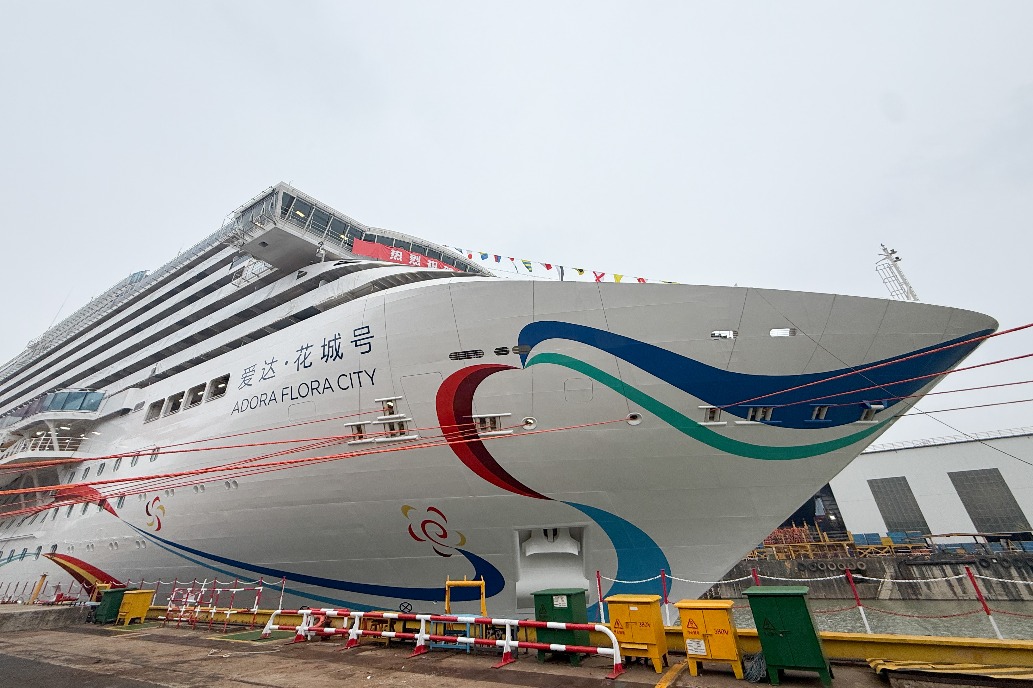
    In a significant move to position China at the forefront of maritime sustainability, ten central government ministries have jointly launched an ambitious action plan to transform Shanghai into a global green shipping hub by 2030. The comprehensive strategy, spearheaded by the Ministry of Transport, represents a major step in China’s decarbonization efforts within the international shipping industry.

    The initiative outlines specific quantitative targets, including developing Shanghai Port’s capacity to provide one million cubic meters of bonded liquefied natural gas (LNG) bunkering alongside achieving one million tons of methanol and biofuel bunkering capability. These infrastructure developments will establish Shanghai as a primary refueling station for vessels transitioning to cleaner energy sources worldwide.

    The action plan focuses on seven critical areas: green energy supply chain development, innovative service models, international standard implementation, operational safety protocols, technological innovation, market mechanisms, and regulatory frameworks. This multidimensional approach ensures Shanghai’s comprehensive transformation into a sustainable maritime center.

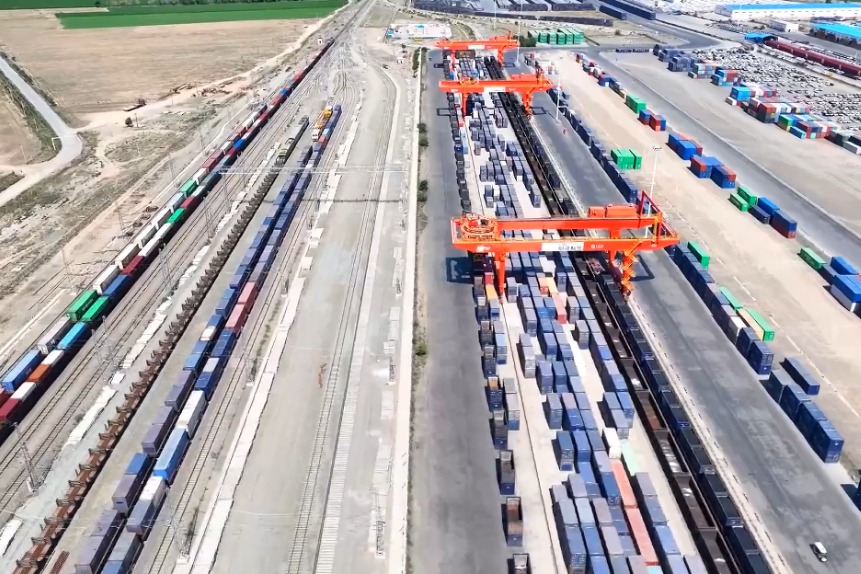
    According to the Shanghai Municipal Transportation Commission, this national support underscores China’s commitment to leading the global shipping industry’s green transition. The initiative aligns with broader environmental goals while enhancing Shanghai’s competitive position in international maritime trade. The development comes as Shanghai Port, already one of the world’s busiest container terminals, continues to demonstrate robust activity with constant vessel and truck movements throughout its operations.

    The green shipping hub project represents a strategic fusion of environmental stewardship and economic development, potentially creating new international partnerships and establishing China as a rule-maker in maritime sustainability standards. This development may influence global shipping routes and energy procurement decisions as major carriers seek compliant bunkering facilities for their fleets.

  • Jeffrey Epstein and the Emirati tycoon

    Jeffrey Epstein and the Emirati tycoon

    Newly disclosed correspondence from the U.S. Department of Justice reveals a decades-long professional and personal relationship between Sultan Ahmed bin Sulayem, chairman and CEO of global logistics giant DP World, and convicted sex offender Jeffrey Epstein. The emails, spanning from 2007 until weeks before Epstein’s 2019 death, depict a complex alliance between one of the United Arab Emirates’ most powerful business figures and the disgraced financier.

    Sulayem, who has played a pivotal role in Dubai’s economic transformation and leads the world’s fourth-largest port operator, maintained extensive communication with Epstein even after his 2008 conviction for soliciting prostitution from a minor. The correspondence reveals discussions ranging from business ventures and political connections to explicit conversations about women and sexual encounters.

    The documents indicate Sulayem visited Epstein’s private Caribbean island, Little Saint James, with the Emirati executive writing in June 2013: “I really had a very nice time at your island.” Following Hurricane Irma in 2017, Sulayem offered engineering resources to make the property “hurricane proof,” describing his UAE national engineer as “the best” for the job.

    Business collaborations extended to Sulayem assisting Epstein’s attempts to acquire additional private islands. Evidence suggests Epstein purchased Great St James Cay through a shell company with Sulayem as beneficial owner after the original owner refused to sell directly to Epstein due to his criminal record. In a 2016 email to an architecture firm, Sulayem described Epstein as “a very dear friend and a business associate” seeking to develop a private resort.

    The relationship provided mutual access to powerful networks. Epstein facilitated introductions between Sulayem and former Israeli Prime Minister Ehud Barak, right-wing strategist Steve Bannon, and former UK Business Secretary Peter Mandelson. Correspondence shows Sulayem lobbied the UK government regarding a £1.8 billion port project on the Thames, which DP World ultimately developed as London Gateway.

    Sulayem regularly updated Epstein on DP World’s global dealings, including sensitive negotiations involving bilateral agreements between UAE and Russia. In one email, he mentioned receiving “an official invitation from Putin office for a one on one meeting to get the green light directly from him.”

    The personal correspondence contains explicit content, with Sulayem frequently using degrading language about women, sharing details of sexual encounters, and making jokes about infidelity. In one message, he wrote: “After several attempts for several months we managed to meet in NY. there is a misunderstanding she wanted some BUSINESS! while i only wanted some PUSSYNESS!” Epstein responded: “Praise Allah, there are still people like you.”

    The relationship has prompted recent consequences, with firms in the UK and Canada suspending future ties with DP World. Quebec’s La Caisse pension fund, which holds a 45% stake in DP World Canada, and British International Investment have both paused future investments pending “necessary actions” from DP World.

    While there is no suggestion Sulayem participated in criminal activity, the extensive correspondence reveals a deeply personal friendship that blended business, political networking, and inappropriate personal discourse between a global business leader and a convicted sex offender.