分类: business

  • Shanghai eases residency requirements for homebuyers

    Shanghai eases residency requirements for homebuyers

    In a significant policy shift aimed at revitalizing its real estate sector, Shanghai has announced comprehensive reforms to its property purchasing regulations. The new measures, effective February 26, 2026, substantially reduce residency requirements for non-local homebuyers seeking properties within the city’s Outer Ring Road.

    Under the revised framework, non-local families and individual buyers without Shanghai household registration (hukou) now qualify for residential purchases after just one year of tax payments in the municipality—a considerable reduction from previous requirements. Those maintaining three years of tax contributions gain eligibility for additional property acquisitions.

    The policy package further eliminates income tax prerequisites for long-term residents, permitting families and single adults holding Shanghai residence permits for five or more years to purchase one housing unit regardless of income tax status.

    Beyond residency adjustments, the seven-point initiative includes lowered thresholds for housing provident fund loan applications and modifications to property tax exemption criteria. These coordinated measures aim to address diverse housing needs while stimulating market activity.

    Jointly issued by multiple municipal authorities including the Shanghai Municipal Commission of Housing and Urban-Rural Development and the Shanghai Municipal Tax Service, these reforms represent a strategic effort to balance housing supply with evolving demand patterns. The policy framework explicitly targets the promotion of stable, healthy real estate market development while accommodating legitimate residential requirements.

  • Virgin Australia to expand Pets in Cabin scheme ahead of 1000th furry passenger

    Virgin Australia to expand Pets in Cabin scheme ahead of 1000th furry passenger

    Virgin Australia is significantly expanding its groundbreaking Pets in Cabin initiative, announcing plans to extend the service to additional airports following overwhelming public response. The program, which launched as an Australian aviation first in October 2023, enables travelers to bring small cats and dogs into the aircraft cabin on designated domestic routes.

    The expansion will incorporate flights servicing Adelaide, South Australia and Launceston, Tasmania, pending final regulatory approval from airport authorities. Service on these new routes is anticipated to commence shortly after the Easter holiday period. The initiative currently operates exclusively between Melbourne, the Gold Coast, and the Sunshine Coast.

    Virgin Australia Chief Marketing and Customer Operations Officer Libby Minogue revealed the program’s remarkable success, noting it will soon welcome its 1,000th animal passenger. “The response to our Australian-first Pets in Cabin offering has far surpassed our expectations,” Minogue stated. “For many Australians, pets are family, and being able to travel together removes a major barrier to taking a holiday or visiting loved ones.”

    The service operates under stringent safety and comfort protocols. Each participating flight accommodates a maximum of four pets, all of which must remain securely housed in approved carriers throughout the journey. Combined weight of the animal and its carrier must not exceed 8 kilograms, ensuring compatibility with cabin storage requirements.

    This expansion reflects the growing trend of pet-inclusive travel services and addresses increasing consumer demand for transportation options that accommodate companion animals. The airline’s decision to broaden the program demonstrates its commitment to evolving customer needs within the competitive domestic aviation market.

  • DoorDash exits 4 markets, including Japan, to focus on growth elsewhere

    DoorDash exits 4 markets, including Japan, to focus on growth elsewhere

    DoorDash Inc. announced on Wednesday its strategic decision to cease operations across four international markets: Qatar, Singapore, Japan, and Uzbekistan. This move follows an extensive multi-month evaluation of market-specific conditions and competitive landscapes.

    The San Francisco-based food delivery giant stated that this consolidation will enable the company to concentrate its investment resources on territories where it can achieve sustainable scaling and establish long-term market dominance. Miki Kuusi, Head of DoorDash International, emphasized that the company’s immediate priority is ensuring a structured transition process for affected employees and partner networks.

    DoorDash entered several of these markets considerably later than established competitors. Its 2021 launch in Japan placed it five years behind rival Uber Eats, while its acquired subsidiary Deliveroo (purchased in 2023) only commenced Qatar operations in 2022—nearly a decade after regional leader Talabat began serving the Qatari market.

    The company faces intensely competitive environments in these exiting markets, including opposition from GrabFood and Foodpanda in Singapore, and Russia’s Yandex Eats in Uzbekistan.

    Despite these operational withdrawals, DoorDash confirmed that the closures will not affect its existing financial guidance. Investor response appeared positive, with company shares rising approximately 5% during midday trading following the announcement.

    While DoorDash maintains market leadership in the United States, it continues to pursue international expansion through strategic acquisitions, including the 2021 purchase of Finland’s Wolt Enterprises Oy which facilitated its European market entry.

  • Gucci criticised for ‘AI slop’ images ahead of major fashion show

    Gucci criticised for ‘AI slop’ images ahead of major fashion show

    Italian luxury fashion house Gucci has ignited significant controversy by deploying artificial intelligence to create promotional imagery for its upcoming Milan Fashion Week presentation. The AI-generated visuals, prominently featured across social media platforms, have drawn sharp criticism from users questioning the alignment between this technological approach and the brand’s celebrated commitment to ‘creativity and Italian craftsmanship.’

    One particularly discussed image features a glamorous older Italian woman adorned in classic 1976 Gucci attire, which prompted sarcastic commentary about the company’s apparent inability to source authentic human models. While clearly labeled as ‘created with AI,’ detractors have categorized these visuals as representative of ‘AI slop’—a term describing the flood of often low-quality synthetic content proliferating across digital platforms.

    The controversy emerges as Creative Director Demna Gvasalia prepares to unveil his latest vision on Friday’s runway. This incident marks neither Gucci’s inaugural venture into AI integration nor the industry’s broader exploration of generative technology. The Kering-owned brand previously commissioned digital artists to produce AI-generated content auctioned as NFTs through Christie’s, and released an AI-generated video last December depicting photographers literally falling over themselves to capture a model.

    Industry peers including Valentino and H&M have similarly experimented with AI tools, frequently framing these endeavors as creative exercises. However, Dr. Priscilla Chan, senior lecturer at Manchester Metropolitan University’s Fashion Institute, cautions that luxury brands risk significant reputational damage when implementing such technologies. While previous digital innovations often generated positive publicity, Dr. Chan notes AI currently carries heightened potential for negative backlash.

    Not all feedback has been critical, with some observers praising Gucci’s preservation of ‘Milano glam’ essence. Professional photographer Tati Bruening (known online as illumitati) offered nuanced perspective, suggesting limited, non-invasive AI applications—such as retouching or mood board creation—might coexist with traditional creative processes. Bruening alternatively proposed that Gucci might be intentionally provoking discourse about luxury’s definition in the AI era, potentially positioning the campaign as parody rather than pure marketing.

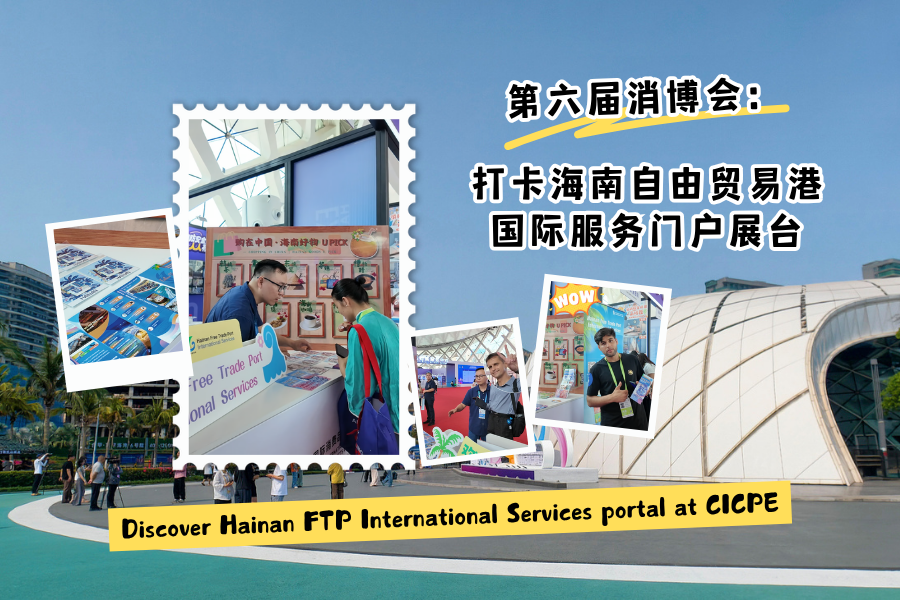
  • Intl arrivals, spending soar in Hainan

    Intl arrivals, spending soar in Hainan

    Hainan Province is witnessing a remarkable transformation into a global tourism and consumption hub, with recent data revealing substantial growth in international visitor numbers and duty-free spending. This surge follows the implementation of island-wide special customs operations just two months ago, demonstrating the immediate impact of China’s ambitious free trade port policies.

    During the recent Spring Festival holiday period, border inspection agencies processed over 86,000 exit and entry trips—a striking 43.3% increase compared to the same period last year. The Haikou General Station of Exit and Entry Frontier Inspection reported significant inbound traffic from Russia, Malaysia, Indonesia, South Korea, Kazakhstan, and Singapore.

    Travel platform Qunar provided further evidence of this international tourism boom, noting that arrivals to Sanya carrying non-Chinese passports increased more than fourfold. Particularly notable were the quadrupled arrivals from Australia and Spain, while international air arrivals in Haikou doubled during the holiday period.

    This growth trajectory is largely attributed to Hainan’s expanded visa-free policies, which form a crucial component of China’s strategy to develop the island into a globally connected free trade port. The policy framework includes visa-free entry for citizens from 86 countries, supplemented by special arrangements such as 144-hour visa-free entry for foreign tour groups from Hong Kong and Macao, and 15-day visa-free entry for cruise tour groups.

    Enhanced visitor services have been implemented to support this international influx. Hainan’s three major airports now operate 24-hour multilingual inquiry hotlines, while popular attractions like Sanya’s Wuzhizhou Island feature multilingual service posts staffed by Russian and English-speaking volunteers assisting with tour routes and ticketing.

    Tourists are responding positively to these improvements. Piotrowski Robert, a Polish traveler visiting China for the first time, noted that “customs clearance was very convenient.” Yaroslava Pateychuk from Belarus highlighted both the hospitality and improved connectivity, citing new weekly direct flights between Minsk and Sanya that have significantly eased travel logistics.

    Beyond traditional beach tourism, international visitors are increasingly seeking cultural and wellness experiences. Traditional Chinese medicine health tourism has gained particular popularity among Russian visitors, with acupuncture and cupping services widely available throughout Sanya’s Dadonghai scenic area—many clinics feature Russian-language signage to accommodate this growing demographic.

    The cultural programming has also expanded significantly. The Hainan Ocean Paradise Resort in Lingshui Li autonomous county is currently hosting an international New Year carnival through March 3. According to resort chairman Liu Xiaoou, this event serves as a “window demonstration” conveying Hainan’s new image as “open, inclusive and connected to the world” in this inaugural year following the special customs operations.

    This tourism surge has directly translated into robust duty-free sales, a critical component of Hainan’s free trade port development. From February 15-18, Haikou’s offshore duty-free stores recorded total sales of 428 million yuan ($62 million), with China Duty Free Group’s Haikou International Duty-Free City alone accounting for 233 million yuan—a 24.6% year-on-year increase.

    In Sanya, daily offshore duty-free sales consistently exceeded 200 million yuan during the holiday period. The Sanya International Duty-Free Shopping Complex reported customer traffic surpassing 80,000 for three consecutive days starting from Chinese New Year’s first day. Shopping at duty-free stores has become an integral part of the holiday experience, with popular brand counters experiencing wait times exceeding 30 minutes during peak hours according to Duan Nanlan, sales department director at the complex.

  • Guangdong targets ‘smart’ industries

    Guangdong targets ‘smart’ industries

    Guangdong Province, China’s economic powerhouse, has unveiled a comprehensive strategy to accelerate its transition into a global smart manufacturing hub through the deep integration of artificial intelligence and advanced technologies. The initiative was formally announced by Huang Kunming, Provincial Party Secretary and member of the Political Bureau of the Communist Party of China Central Committee, during the Guangdong Provincial High-quality Development Conference in Guangzhou on Tuesday.

    The strategic vision centers on creating synergistic development between manufacturing and service sectors, leveraging the province’s substantial advantages in digital infrastructure, massive data resources, and diverse application scenarios. With a population exceeding 129 million and a regional GDP of 14.58 trillion yuan in 2025, maintaining its position as China’s top provincial economy for 37 consecutive years, Guangdong aims to achieve a GDP of approximately 25.8 trillion yuan by 2035, reaching development levels comparable to moderately developed regions.

    Huang emphasized that embracing the intelligent era represents a crucial opportunity to gain future competitive advantages. “Promoting coordinated development between manufacturing and service industries is essential for harnessing technological advancement and securing strategic initiative,” he stated. This integration has already demonstrated multiplicative growth effects in both manufacturing capacity and service efficiency, significantly advancing new quality productive forces.

    The provincial strategy includes cultivating multiple trillion-yuan and hundred-billion-yuan industrial clusters through scaling traditional competitive industries, strengthening emerging sectors, and fostering new industrial pillars via integrated cluster development. Major technology companies have responded enthusiastically to this vision.

    Huawei Technologies Chairman Liang Hua committed to expanding research investment and addressing computing power demands through comprehensive product solutions. The company will establish an open AI ecosystem centered on its Ascend AI chip series while developing industry-specific agent platforms to support partners in enabling intelligent transformation across societal sectors.

    Shein Founder Xu Yangtian demonstrated how deep manufacturing-service integration has shaped the company’s global fashion leadership. By leveraging cross-border e-commerce models and data-driven insights, Shein has created a dual competitive advantage of “speed plus precision.” The company pledged over 10 billion yuan to establish intelligent supply chain headquarters in Guangdong, collaborating to build world-class fashion industrial clusters and promote “Made with Intelligence in Guangdong” as a global benchmark.

    The conference gathered more than 200 influential entrepreneurs, business representatives, and over 60 experts and scholars, signaling broad consensus for Guangdong’s intelligent industrial transformation.

  • Will UAE petrol prices rise in March as oil gains due to US-Iran tensions?

    Will UAE petrol prices rise in March as oil gains due to US-Iran tensions?

    Escalating geopolitical friction between the United States and Iran continues to exert significant pressure on global oil markets, creating substantial volatility that may impact fuel prices in the United Arab Emirates for March 2026. The ongoing tensions have injected a considerable risk premium into crude valuations, with Brent benchmark briefly surpassing the $71 per barrel threshold during February trading sessions.

    Market analysts observe that the current climate of uncertainty has created an unusually volatile trading environment. As of Tuesday evening, Brent crude traded at $66.31 per barrel while West Texas Intermediate reached $71.38. The monthly average for Brent stood at $68.90 per barrel, marking a noticeable increase from January’s average of $63.47.

    Norbert Rücker, Head of Economics and Next Generation Research at Julius Baer, provided critical insight: ‘The US-Iran conflict dominates oil market dynamics, with prices currently inflated by substantial geopolitical risk premiums. While military escalation appears increasingly probable, historical precedent suggests such developments don’t automatically translate to oil supply disruptions.’

    Rücker further emphasized the market’s current resilience: ‘Today’s oil landscape demonstrates remarkable supply stability, supported by ample storage capacities, production exceeding consumption patterns, and significant spare output capacity. Although uncertainty persists regarding whether prices will peak in the high $70s or high $80s range, we anticipate risk premiums diminishing with prices returning below $60 by mid-year.’

    The strategic significance of the Strait of Hormuz adds another dimension to market concerns. Recent temporary closures by Iranian authorities caused insurance premiums for this critical shipping channel to increase substantially. Daniela Hathorn, Senior Market Analyst at Capital.com, noted: ‘Iran’s geographical position adjacent to the Strait—through which approximately 20% of global oil shipments pass—means any sustained disruption could have profound consequences for energy markets worldwide.’

    Despite February’s price reduction of 8-9 fils per liter for UAE consumers, bringing Super 98, Special 95 and E-Plus 91 to Dh2.45, Dh2.33 and Dh2.26 respectively, market watchers remain cautious about March pricing. The complex interplay between geopolitical tensions and market fundamentals continues to create an unpredictable pricing environment for both crude and refined petroleum products.

  • Australian sharemarket soars to new record high as tech stocks rebound, Woolworths hits 17-month high

    Australian sharemarket soars to new record high as tech stocks rebound, Woolworths hits 17-month high

    Australia’s financial markets achieved a historic milestone on Wednesday as the S&P/ASX 200 index surged to an unprecedented peak, closing at 9,128.3 points with a remarkable 1.18% gain. This performance eclipsed previous records set in October, demonstrating remarkable resilience against recent inflationary pressures.

    The technology sector emerged as the primary catalyst for this rally, posting an impressive 5.9% advancement despite widespread concerns about artificial intelligence disruption. This substantial growth was complemented by a robust 5.7% upswing in consumer staples, with only three of the eleven market sectors experiencing declines during the trading session.

    Market analysts observed a significant reversal from weeks of sell-offs on both Wall Street and domestic exchanges, as investor confidence in AI capabilities grew. Notable performers included Xero, which recovered 5.5% of its value, while Technology One regained 14% of its 52-week losses. Megaport and Iress demonstrated particularly strong performances with gains of 9.8% and 9.6% respectively.

    WiseTech Global emerged as a standout performer, witnessing an 11% share price increase following its strategic announcement to eliminate 2,000 positions in favor of AI integration. This decision helped mitigate approximately half of the company’s losses accumulated over the previous six months.

    The consumer sector witnessed extraordinary movements with Woolworths reaching a 17-month high, adding $3.2 billion to its market capitalization following exceptionally strong half-year results. The supermarket giant’s shares climbed 13%, achieving a new 52-week peak that significantly contributed to the market’s overall performance.

    Resources companies demonstrated substantial strength with Fortescue Metals Group advancing 4.6% amid climbing profits, while BHP reached its own record high with a 3.2% gain. Tabcorp exceeded market expectations with its half-year results, propelling shares upward by 23.5%.

    Defense technology firm DroneShield reported soaring revenue and profits, resulting in a 12.6% share price increase. Treasury Wine Estates, proprietor of the Penfolds brand, recovered 3.1% of recent losses, while agricultural enterprises including Cobram Estate Olives and Ricegrowers posted gains of 3.3% and 2.3% respectively.

    Market analysts highlighted the significance of this broad-based recovery. eToro analyst Josh Gilbert noted regarding Woolworths’ performance: “While today’s result isn’t the definitive response to skeptics, it indicates a positive directional shift. The upgraded guidance demonstrates renewed confidence from management after two years of tempered expectations.”

    Investors now await forthcoming results from major companies including Qantas, Ramsay Health Care, and Super Retail Group, scheduled for release on Thursday, which will provide further indication of market trajectory.

  • Asian stocks gain after optimism about AI sends Wall Street higher

    Asian stocks gain after optimism about AI sends Wall Street higher

    Asian financial markets experienced broad gains during Wednesday’s trading session, propelled by renewed Wall Street momentum and sustained enthusiasm for artificial intelligence technologies. Japan’s Nikkei 225 index achieved a historic milestone, climbing 1.3% to reach 58,081.62 points despite ongoing trade complications with China.

    The market performance demonstrated notable complexity as export restrictions imposed by China on 40 Japanese entities failed to derail the overall bullish sentiment. Corporate reactions varied significantly with Subaru Corporation and Mitsubishi Materials Corporation recording share price increases, while Eneos Corporation and Sumitomo Heavy Industries experienced declines. Market analysts attributed the export sector’s strength primarily to the persistently weak Japanese yen, which benefited major exporters including Honda Motor Company and Panasonic Corporation.

    Regional benchmarks followed the upward trajectory with Australia’s S&P/ASX 200 advancing 1.1% to 9,122.50 points. South Korea’s Kospi index surged 1.7% to 6,069.36, while Hong Kong’s Hang Seng gained 0.3% and Shanghai Composite added 0.7%.

    The currency markets witnessed modest fluctuations as the U.S. dollar traded at 155.78 yen, representing a slight decrease from the previous 155.83 yen. This level remains substantially stronger than the 160 yen range observed several months earlier. The euro demonstrated minimal movement, trading at $1.1784 compared to $1.1779.

    Investor attention remained divided between market fundamentals and political developments, particularly President Donald Trump’s scheduled State of the Union address. Market participants anticipated reassurances regarding economic stability and policy continuity supporting domestic employment and manufacturing sectors.

    The current market enthusiasm stems from Tuesday’s Wall Street recovery where the S&P 500 registered a 0.8% gain, reclaiming nearly three-quarters of Monday’s substantial losses. This reversal was significantly influenced by Advanced Micro Devices’ 8.8% surge following announcement of a multiyear agreement to supply artificial intelligence chips to Meta Platforms. The comprehensive arrangement includes provisions for Meta to acquire up to 160 million AMD shares at nominal pricing, contingent upon procurement volumes.

    Industry analysts interpreted these developments as validating sustained confidence in AI investment, contrasting sharply with previous concerns about potential technology sector disruptions. Anthropic’s introduction of new AI implementation tools for corporate applications further reinforced optimism that artificial intelligence would complement rather than replace existing software ecosystems.

    Corporate earnings continued to exceed expectations with Keysight Technologies leading S&P 500 performers through a 23.1% rally, while Home Depot advanced 2% following better-than-anticipated profit and revenue reports.

    Fixed income markets maintained stability as Treasury yields held steady following improved consumer confidence indicators. Benchmark crude prices saw moderate increases with West Texas Intermediate gaining 45 cents to $66.08 per barrel and Brent crude advancing 47 cents to $71.24.

  • German chancellor lands in Beijing for inaugural China trip

    German chancellor lands in Beijing for inaugural China trip

    German Chancellor Friedrich Merz arrived in Beijing on Tuesday facing mounting pressure from domestic industries to address a record trade deficit with China, now standing at nearly €90 billion. This inaugural visit comes amid growing alarm from German business leaders who warn that the massive imbalance is fundamentally eroding the nation’s industrial core.

    Official statistics reveal a stark contrast in trade flows: German imports from China surged 8.8% in 2025 to €170.6 billion, while exports to China declined 9.7% to €81.3 billion. This widening gap has solidified China’s position as Germany’s top trading partner, surpassing the United States, but at a concerning cost to Europe’s largest economy.

    Jürgen Matthes, Head of International Economic Policy at the German Economic Institute, attributes this imbalance to what he describes as “massive Chinese subsidies” and currency undervaluation. “These price advantages cannot just come from more innovation and efficiency,” Matthes stated, highlighting how Chinese manufacturing overcapacity and deflationary pressures are creating what economists term a new “China shock” for European industries.

    The visit carries significant geopolitical dimensions beyond trade. Chancellor Merz is expected to urge Chinese leadership to leverage its influence with Moscow to help resolve the ongoing conflict in Ukraine. However, the substantial business delegation accompanying him signals that economic concerns will dominate the agenda.

    Germany’s automotive, machinery, and chemical sectors—traditional pillars of its economy—are particularly vulnerable to what industry federations describe as “distortions” in competition. The Federation of German Industries has specifically called for addressing export controls on critical rare earths, while engineering groups advocate for restoring “fair competitive conditions.

    This tension represents a strategic challenge to Germany’s longstanding “change through trade” approach with authoritarian nations. While Merz emphasized that Germany would continue its “de-risking” policy rather than pursue full decoupling, the visit underscores a fundamental reassessment of economic dependencies that have accumulated over decades of deepening ties.