分类: business

  • Desert to dairy farm: Inside Mleiha’s Sharjah factory that produces 600 tonnes of milk daily

    Desert to dairy farm: Inside Mleiha’s Sharjah factory that produces 600 tonnes of milk daily

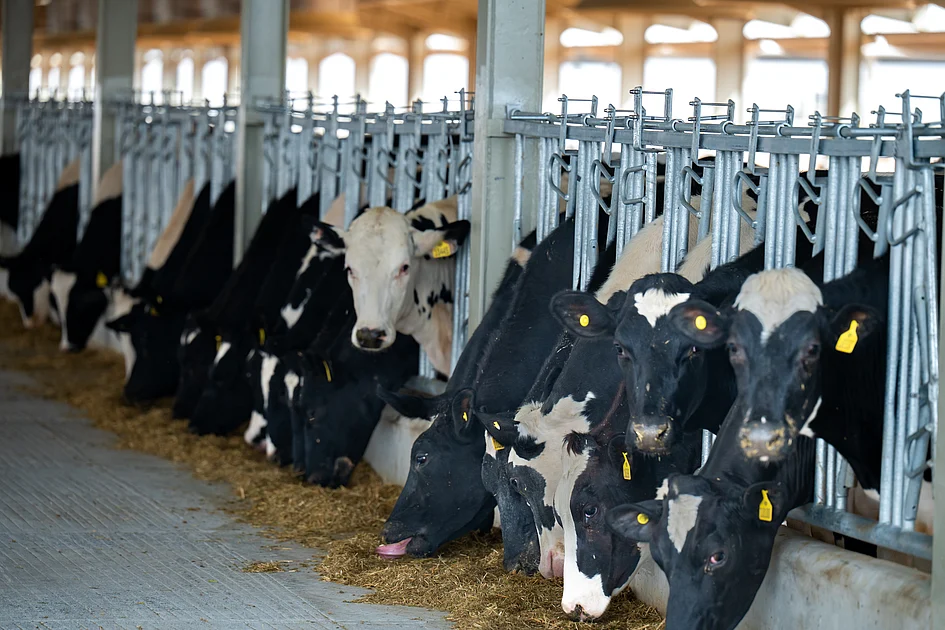
    In an extraordinary feat of agricultural innovation, Sharjah’s central region has witnessed the transformation of arid desert into the world’s largest A2A2 cattle breeding facility. The Mleiha Dairy Factory, spanning 20,000 square meters, now produces approximately 600 tonnes of milk daily through cutting-edge technology and rigorous quality control measures.

    The production process exemplifies modern agricultural excellence, beginning with automated milking systems that minimize human contact while maintaining superior hygiene standards. Fresh milk is immediately transferred to temperature-regulated stainless-steel tanks, preserving quality from the outset. Insulated tanker trucks maintain an unbroken cold chain during transportation to the processing facility.

    Upon arrival, the milk undergoes comprehensive safety assessments before progressing through automated filtration and treatment units. Technicians continuously monitor the process to ensure consistency and food safety standards. The packaging phase utilizes automated filling and sealing machines, with quality control personnel overseeing production lines. Finished products are stored in climate-controlled environments before rapid distribution to retailers.

    The facility’s A2A2 genetic cattle lineage produces milk renowned for its enhanced digestibility compared to conventional dairy, containing natural fat and protein content without artificial additives. This nutritional profile has driven significant consumer demand since the brand’s 2024 launch.

    Beyond fresh milk production, Mleiha has expanded its product range to include flavored milk, yogurt, laban, and labneh, all manufactured within the same controlled environment. Distribution has grown from Sharjah to encompass Dubai and other emirates, with plans for further expansion as production capacity increases.

    This project represents a landmark achievement in food resilience strategy, demonstrating how technological investment and sustainable practices can convert challenging environments into productive agricultural centers while supporting local manufacturing initiatives.


  • Travel surge signals ‘strong start’ for  tourism

    Travel surge signals ‘strong start’ for tourism

    China’s tourism industry has launched into 2026 with exceptional momentum, demonstrating robust consumer activity through record-breaking New Year holiday bookings that signal a vibrant recovery for the sector.

    The three-day holiday period spanning Thursday to Saturday has emerged as a critical indicator of consumer sentiment following December’s Central Economic Work Conference, which emphasized domestic demand expansion as a key priority for the year ahead.

    Domestic tourism has spearheaded this remarkable rebound. Leading online travel platforms reported unprecedented growth, with Meituan Travel documenting a nearly fivefold surge in bookings compared to the previous year. Competitor Tongcheng Travel observed booking momentum accelerating throughout December, recording an average 30 percent year-on-year increase for flight and hotel products. The holiday’s opening day alone witnessed domestic hotel bookings skyrocketing over threefold year-on-year, fueled by converging demand for seasonal travel, family reunions, and celebratory gatherings.

    Travel patterns revealed a distinctive ‘north-south exchange’ phenomenon, with ice-and-snow destinations in Northeast China attracting winter sports enthusiasts while southern havens like Hainan drew visitors seeking warmer climates and shopping experiences. Data indicated Heilongjiang and Hainan ranked as each other’s primary sources of tourist departures on Thursday.

    Cultural and entertainment events significantly influenced travel decisions, with New Year’s Eve celebrations, fireworks displays, music festivals, and performances driving both local excursions and short-distance trips. Tongcheng reported doubled year-on-year ticket sales for holiday performances, while Guangzhou and Shenzhen hosted over 100 major concerts and sporting events, some selling out two weeks in advance and consequently boosting hotel demand.

    Professor Wu Liyun from Beijing International Studies University’s China Academy of Culture and Tourism Industry noted: ‘Travelers increasingly prioritize emotional tourism, seeking cultural resonance and ceremonial significance. Activities like museum visits, concerts, and New Year countdowns now rival traditional sightseeing in popularity.’

    The outbound market has accelerated its recovery pace, with Beijing-based Utour Group reporting approximately 90 percent of its holiday products sold out. Demand for Australia and New Zealand packages surged 310 percent year-on-year, while European travel increased 178 percent. Premium customized tours to the Middle East rose 60 percent.

    Corporate travel has shown tentative signs of recovery, with Utour noting a 40 percent month-on-month increase in team-building package inquiries—interpreted by industry experts as companies preparing for productive operations ahead.

    While acknowledging the sector’s ‘strong start,’ Professor Wu emphasized the industry’s transition from volume-focused to quality-driven growth: ‘Service quality and brand reputation will become decisive competitive factors,’ she stated, advocating for consumer-centric evaluation systems to enforce elevated standards.

    China’s inbound tourism continues its robust recovery, supported by relaxed visa requirements and enhanced tax refund policies. The consolidated visa-free transit policy implemented December 17, 2024—now offering a unified 240-hour stay—has already driven a 60.8 percent surge in foreign arrivals under the transit scheme, according to National Immigration Administration data.

  • Shares climb in Asia, and South Korea’s Kospi hits a record close, in an upbeat start to 2025

    Shares climb in Asia, and South Korea’s Kospi hits a record close, in an upbeat start to 2025

    Asian financial markets launched 2026 with substantial gains, propelled by sustained optimism surrounding artificial intelligence infrastructure demands. South Korea’s benchmark Kospi index closed Friday at an unprecedented peak of 4,309.63, marking a 2.3% surge. This performance was largely driven by semiconductor giants Samsung Electronics and SK Hynix, which soared 7.2% and 4% respectively, reflecting investor confidence in AI-related chip manufacturing.

    Hong Kong’s Hang Seng index demonstrated remarkable strength with a 2.6% advance to 26,283.53, powered by robust technology sector performance. E-commerce leader Alibaba climbed 3.7%, while Baidu—developer of the Ernie chatbot—jumped 9.5% following its announcement to spin off its AI chip unit Kunlunxin for a potential Hong Kong listing in early 2027, pending regulatory approvals.

    Regional markets showed broad positivity with Australia’s S&P/ASX 200 edging 0.2% higher to 8,727.30, Taiwan’s Taiex gaining 1.3%, and India’s Sensex adding 0.6%. Trading remained suspended in Tokyo, Shanghai, Bangkok, and Wellington markets.

    This bullish opening continues 2025’s exceptional performance where the S&P 500 achieved 39 record highs with a 16.4% annual gain, while the Nasdaq and Dow Jones posted advances of 20.4% and 13% respectively. Market analysts attribute this sustained growth to AI-driven profit expectations, Federal Reserve interest rate reductions, and stabilized trade policies.

    Commodity markets mirrored equity enthusiasm with silver rebounding 4% after a previous session decline, having gained over 140% throughout 2025. Gold advanced 1% following its 63.7% annual increase, while U.S. benchmark crude oil rose to $57.88 per barrel amid broader market optimism.

  • China’s BYD set to overtake Tesla as world’s top EV seller

    China’s BYD set to overtake Tesla as world’s top EV seller

    In a landmark development for the global automotive industry, Chinese electric vehicle manufacturer BYD has dethroned Elon Musk’s Tesla as the world’s premier electric vehicle seller by annual sales volume. This represents the first occasion where the Shenzhen-based automaker has outperformed its American competitor in yearly deliveries.

    BYD’s official figures released Thursday revealed a substantial 28% year-over-year increase in battery-electric vehicle sales, culminating in over 2.25 million units sold throughout 2025. Meanwhile, Tesla is anticipated to report approximately 1.65 million vehicle sales for the same period when it discloses its official results Friday, according to previously published analyst projections.

    Tesla’s challenging year has been characterized by several compounding factors, including tepid market reception to its latest vehicle offerings, growing apprehension regarding Musk’s political engagements, and increasingly fierce competition from Chinese EV manufacturers. In response to mounting competitive pressures, Tesla implemented strategic pricing adjustments in October, introducing more affordable variants of its top-selling models in the American market.

    The leadership transition occurs amid Musk’s pursuit of an unprecedented compensation package potentially worth up to $1 trillion, contingent upon his ability to dramatically elevate Tesla’s sales performance and market valuation over the coming decade. Shareholders initially approved this ambitious incentive structure in November.

    BYD’s remarkable ascent to global EV dominance has been fueled by its competitive pricing strategy and rapid international expansion across Latin America, Southeast Asia, and European markets. This growth persists despite numerous nations implementing substantial tariffs on Chinese-manufactured electric vehicles. Notably, the United Kingdom emerged as BYD’s largest overseas market in October, with sales skyrocketing by 880% through September, primarily driven by robust demand for the plug-in hybrid version of its Seal U SUV.

    Musk continues to oversee his diverse portfolio of ventures beyond Tesla, including social media platform X, aerospace manufacturer SpaceX, and infrastructure firm The Boring Company.

  • Global Islamic finance set to hit $6 trillion in 2026 as industry posts strong double‑digit growth

    Global Islamic finance set to hit $6 trillion in 2026 as industry posts strong double‑digit growth

    The global Islamic finance industry is demonstrating remarkable resilience and expansion, with projections indicating assets will surpass the $6 trillion threshold by the conclusion of 2026. This surge follows a year of substantial growth in 2025, during which industry assets escalated to $5.2 trillion, marking a robust 14.9% increase year-on-year, as reported by the AlHuda Centre of Islamic Banking and Economics.

    Islamic banking continues to form the cornerstone of the sector, commanding 72% of total assets, which translates to over $2.7 trillion. The year 2025 witnessed financing activities grow by more than 17%, while deposits saw an expansion of nearly 9%. This vigor was particularly evident in the Gulf Cooperation Council (GCC) nations, Asia, and an emerging cluster of African markets, where several jurisdictions reported growth rates exceeding 20%.

    The sukuk market emerged as a standout performer, with global issuance eclipsing $230 billion in 2024 and maintaining its upward trajectory throughout 2025. This growth was fueled by sovereign borrowing requirements and extensive infrastructure financing initiatives. New entrants from Africa, including Tanzania, Zambia, and Kenya, have begun to integrate more firmly into the global Islamic capital markets.

    Despite these positive trends, the industry faces significant structural challenges. CEO Zubair Mughal highlighted concerns over limited Shariah-compliant liquidity instruments, an overreliance on sovereign sukuk, and a lack of sufficient diversification beyond traditional banking activities. The report cautioned that without deeper and more liquid Islamic capital markets, banking-led growth alone may be inadequate for ensuring long-term financial resilience.

    The most dynamic growth is occurring in the Islamic FinTech sector, which, while currently representing only 3% of total assets, is expanding at a pace far exceeding that of traditional segments. Innovations in digital payments, Shariah-compliant buy-now-pay-later (BNPL) services, embedded finance, and applications of artificial intelligence and blockchain are driving financial inclusion across Africa and South Asia.

    Geographically, Asia and the GCC remain the dominant forces, collectively accounting for over half of all Islamic finance assets. However, Africa is now the fastest-growing frontier, with expectations for Ethiopia, Ghana, Uganda, and Somalia/Somaliland to formally enter the market in 2026. European interest is also renewing, with Italy, Switzerland, Portugal, and the Netherlands exploring Islamic banking frameworks.

    Looking forward, 2026 presents significant opportunities in capital-market deepening, cross-border FinTech expansion, and Africa-focused infrastructure finance. Mughal emphasized that addressing regulatory gaps, concentration risks, and market fragmentation will be crucial for harnessing innovation and ensuring the industry’s transition into a mainstream pillar of ethical and inclusive global finance.

  • Bulgaria adopts the euro, nearly 20 years after joining the EU

    Bulgaria adopts the euro, nearly 20 years after joining the EU

    Bulgaria has officially transitioned to the euro, becoming the 21st member of the eurozone nearly two decades after joining the European Union. The historic move, effective January 1, 2026, marks a significant milestone for the Balkan nation of 6.4 million people—the EU’s poorest member state.

    The adoption ceremony witnessed the projection of Bulgarian euro coins onto the central bank’s building at midnight, symbolically retiring the lev currency that had been in circulation since the 19th century. European Central Bank President Christine Lagarde welcomed Bulgaria into the “euro family,” describing the currency as a “powerful symbol” of European unity and collective strength.

    Despite governmental enthusiasm for the transition, which successive administrations have promoted as an economic catalyst and safeguard against Russian influence, the Bulgarian public remains deeply divided. Nearly half the population opposes the switch, according to recent Eurobarometer surveys, primarily fearing inflationary pressures and price increases that could exacerbate existing economic challenges.

    The political backdrop adds complexity to the transition, with the country experiencing its eighth election in five years following anti-corruption protests that ousted a conservative-led government in mid-December. President Rumen Radev acknowledged the achievement as Bulgaria’s “final step” in EU integration while criticizing the lack of public consultation through referendum, highlighting the “deep divide between the political class and the people.”

    Practical challenges have emerged during the transition, including reports of insufficient euro currency availability and concerns among business owners about inadequate preparation. The National Statistical Institute reports food prices rose 5% year-on-year in November—more than double the eurozone average—fueling public anxiety about further cost-of-living increases.

    European Commission President Ursula von der Leyen emphasized the benefits of euro adoption, noting it would “facilitate trade, enhance market transparency and competitiveness, and simplify travel and living abroad.” The expansion brings the total number of Europeans using the euro to over 350 million, strengthening the currency’s global position.

  • Gold to $4,900, oil to $50s: Goldman’s big 2026 trade call

    Gold to $4,900, oil to $50s: Goldman’s big 2026 trade call

    In a comprehensive 2026 commodities outlook, Goldman Sachs has presented a strikingly divergent forecast for global markets, advocating a strategic pivot toward precious metals while cautioning against energy sector investments. The analysis, spearheaded by lead strategist Daan Struyven, identifies two powerful macroeconomic forces—dubbed the ‘Power Race’ and ‘Supply Waves’—as primary drivers reshaping commodity landscapes.

    The ‘Power Race’ encapsulates the intensifying technological and geopolitical competition between major powers, particularly the United States and China, across artificial intelligence development, energy security initiatives, and military modernization programs. This competition generates substantial demand for strategic metals essential for data center construction, electrical grid modernization, and defense applications. Conversely, ‘Supply Waves’ describes the phenomenon of sustained energy investment finally delivering substantial new production volumes to markets experiencing declining demand fundamentals.

    Goldman’s analysis positions gold as its premier commodity investment for 2026, projecting prices could reach $4,900 per ounce by December 2026. This bullish outlook stems primarily from unprecedented central bank acquisition, with institutions expected to purchase approximately 70 tons monthly—quadruple pre-2022 acquisition rates. Notably, this institutional demand occurs alongside remarkably limited retail participation, with gold ETFs representing merely 0.17% of U.S. private portfolio assets, suggesting significant room for price appreciation.

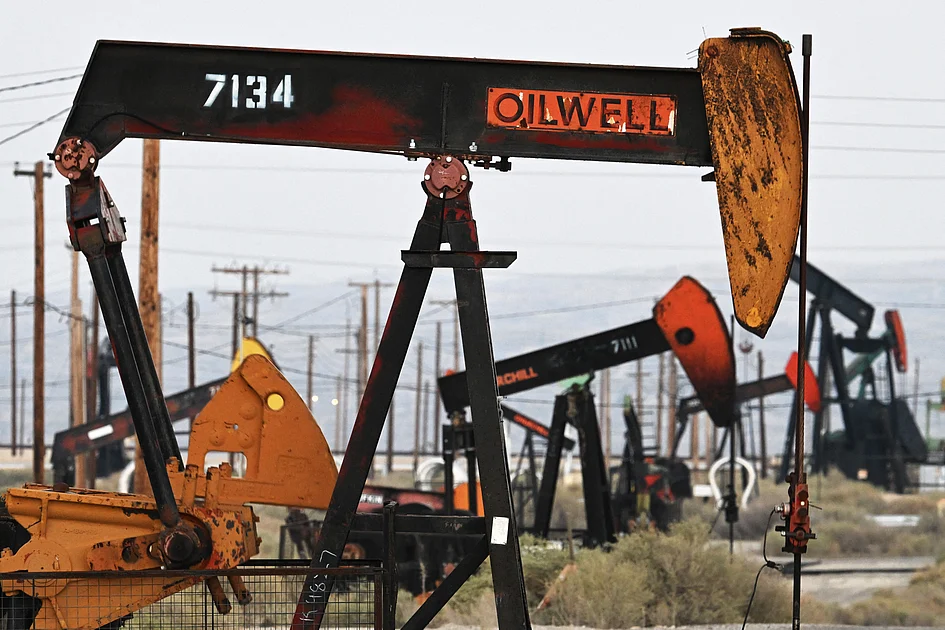
    The energy sector presents a contrasting picture. Goldman anticipates Brent crude averaging $56 per barrel in 2026, with West Texas Intermediate around $52—substantially below current spot prices. This bearish outlook reflects resilient U.S. production, expanding non-OPEC output, and inventory builds that likely will cap prices absent major geopolitical disruptions or substantial OPEC+ intervention.

    Copper occupies an intermediate position, expected to consolidate around $11,400 per ton throughout 2026 following previous gains. Goldman maintains long-term confidence in copper driven by ongoing electrification trends and infrastructure development, with potential Chinese stockpiling initiatives providing additional price support.

    Battery metals face particular challenges, with lithium and nickel prices projected to decline further due to substantial Chinese investment in overseas production capacity. Goldman anticipates lithium prices falling an additional 25% by late 2026 as supply expansion outpaces electric vehicle demand growth.

    Natural gas markets demonstrate regional variations within broader trends. While global LNG markets face potential oversupply with capacity increasing approximately 50% by 2030, the United States may experience price support as growing export volumes tighten domestic supply balances.

    The report concludes that commodities have entered a period of structural divergence, where electricity, data infrastructure, and security considerations have become the new determinants of value, fundamentally decoupling traditional relationships between energy and metals markets.

  • Higher US tariffs on imported furniture take effect

    Higher US tariffs on imported furniture take effect

    The United States has enacted significant increases on import duties for specific furniture categories, effective January 1, 2026. These measures represent the implementation of previously scheduled tariff escalations originally established under the Trump administration’s sector-specific trade policies.

    The updated tariff structure imposes a 30 percent duty on certain upholstered furniture items, marking a 5 percentage point increase from previous levels. Meanwhile, import charges on kitchen cabinets and vanities have doubled to 50 percent, substantially raising costs for these household goods. These changes form part of broader trade measures affecting various sectors including steel, automobiles, and wood products.

    This policy development primarily impacts furniture imports from Vietnam and China, nations that serve as major suppliers to the American market. However, differential tariff rates apply to products originating from other trading partners. Wood imports from Britain face a maximum 10 percent duty, while goods from European Union countries and certain other negotiated partners are subject to a 15 percent ceiling.

    The Trump administration has consistently justified these protectionist measures as necessary for revitalizing domestic manufacturing capabilities and safeguarding national security interests. These sector-specific tariffs operate independently from the broader countrywide ‘reciprocal’ levies that the administration has simultaneously implemented, though the Supreme Court is currently reviewing the legal validity of those comprehensive tariffs under the International Emergency Economic Powers Act.

    Market analysts anticipate these increased costs will ultimately transfer to American consumers, potentially exacerbating existing financial pressures from sustained elevated living expenses. The furniture industry now faces significant pricing adjustments as importers and retailers adapt to the new trade landscape.

  • Why Indian millionaire flow to the UAE keeps growing

    Why Indian millionaire flow to the UAE keeps growing

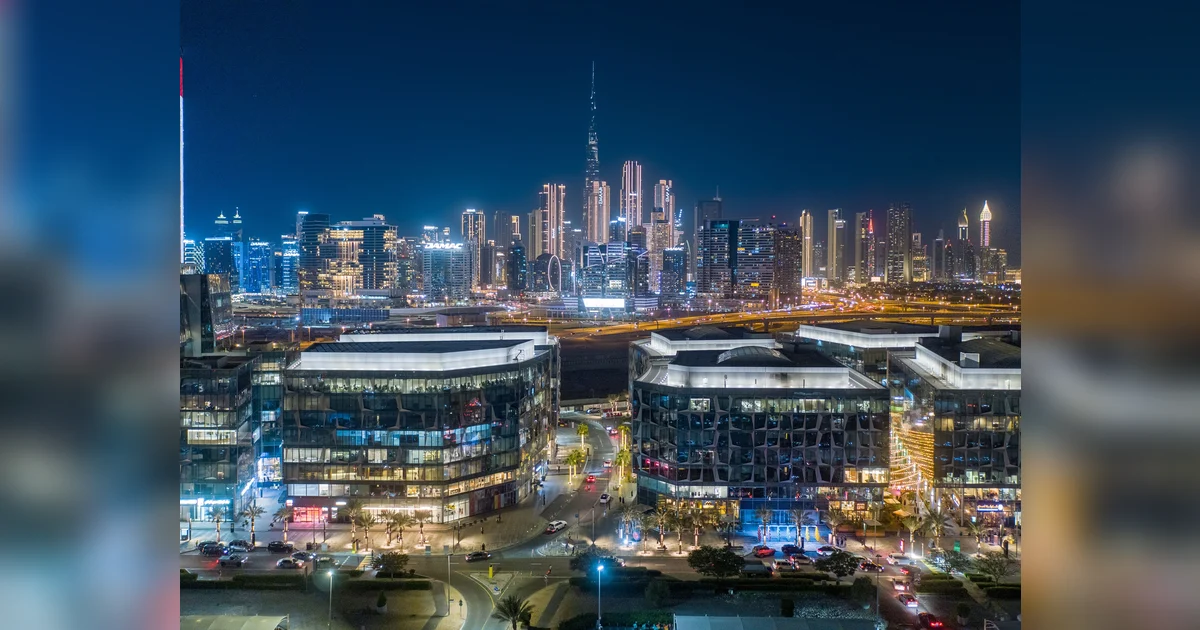
    The United Arab Emirates is solidifying its position as the world’s foremost destination for migrating high-net-worth individuals, with Indian millionaires constituting one of the most substantial and consistent demographic flows. According to Henley & Partners’ latest private wealth migration estimates, the UAE recorded a net inflow of approximately 9,800 millionaires in 2025, translating to roughly $63 billion (Dh231 billion) in investable assets. This follows the country’s top global ranking in 2024, when it attracted about 6,700 millionaires.

    The Indian wealth migration pattern reveals a sustained trend rather than a temporary phenomenon. Estimates indicate approximately 5,100 Indian millionaires departed in 2023, followed by 4,300 in 2024, with nearly 3,500 projected for 2025. This consistent outflow signals a strategic, long-term capital repositioning rather than a reactive response to transient political or economic conditions.

    Surveys conducted by Kotak Private Banking and EY reveal that over 20% of ultra-high-net-worth Indians (those possessing assets exceeding Rs250 million) have either planned or executed relocation strategies. While surface-level factors like taxation, pollution, and quality of life are frequently mentioned, analysts identify deeper structural drivers including constrained competitive space in traditional industries, sluggish regulatory processes, inconsistent policy implementation, and perceived insufficient rewards for innovation and risk-taking.

    The UAE addresses these concerns through a compelling combination of zero personal income tax, absence of capital gains and inheritance taxes, and the Golden Visa system providing long-term residency security. The jurisdiction offers predictable regulatory enforcement, efficient business processes, and strategic geographic positioning bridging Asian, European, and African markets. Dubai and Abu Dhabi have consequently evolved into operational headquarters for numerous Indian entrepreneurs rather than mere lifestyle destinations.

    Healthcare economics have emerged as a critical consideration in relocation decisions. The SIP Health Cost Index 2025 ranks the UAE approximately 10th globally for healthcare affordability, with comprehensive family insurance typically ranging between Dh50,000 to Dh100,000 annually. This contrasts sharply with the United States ($17,969 per person), Hong Kong ($16,175), and Singapore ($14,231), where elevated medical insurance costs can significantly impact long-term financial planning.

    International residence and citizenship planning surged by 43% in 2025, with affluent individuals from 92 nationalities pursuing cross-border mobility strategies. Rising healthcare inflation, alongside education expenses and intergenerational security concerns, has transitioned from peripheral considerations to central drivers in migration decisions.

    While alternative destinations including the United States, Singapore, Portugal, Australia, and Canada offer various advantages, each presents trade-offs regarding taxation, healthcare costs, immigration complexity, or regional connectivity. The UAE’s distinctive appeal lies in its integrated offering combining fiscal efficiency, business opportunity, premium healthcare, educational excellence, safety, and global mobility within a stable administrative framework.

    For Indian millionaires, this migration represents not a rejection of India’s economic potential but a strategic adaptation to structural limitations domestically and enhanced flexibility internationally. As global competition for mobile wealth intensifies, the UAE’s leadership position appears both secure and likely to expand in coming years.

  • AI held up Wall Street in 2025. Will that continue?

    AI held up Wall Street in 2025. Will that continue?

    Wall Street concluded 2025 with remarkable gains largely fueled by an artificial intelligence investment frenzy, though the path was marked by significant volatility and underlying economic concerns. The S&P 500 finished the year with a 16.4% increase, primarily driven by massive investments in AI infrastructure and technology.