分类: business

  • Nation’s annual parcel volume hits nearly 200 billion

    Nation’s annual parcel volume hits nearly 200 billion

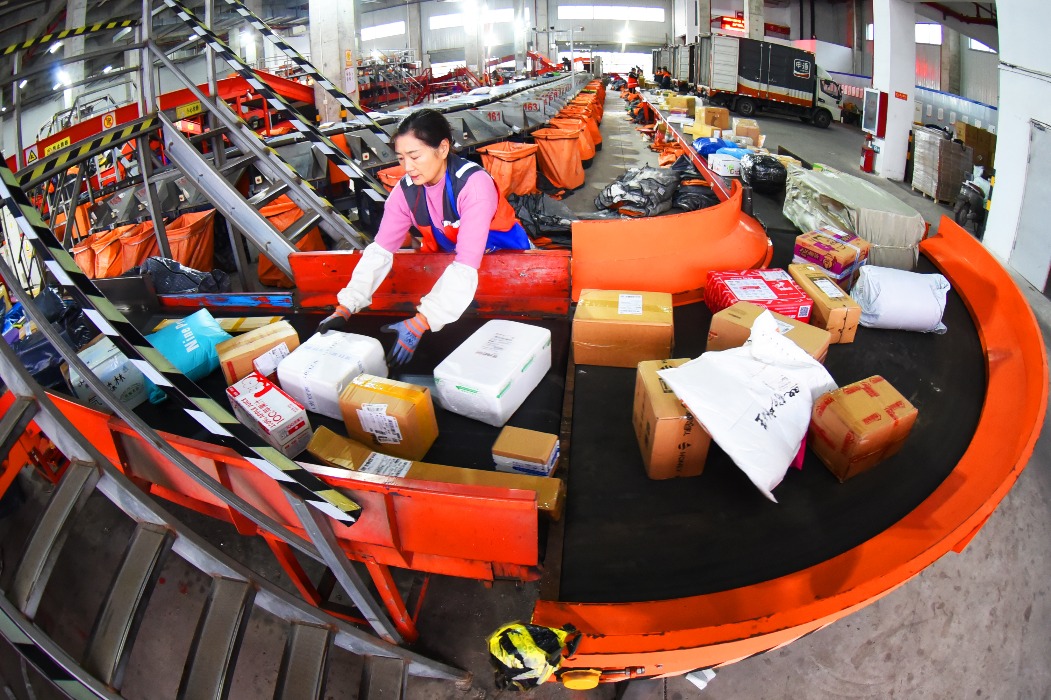
    China has reinforced its global dominance in express delivery services, achieving an unprecedented milestone of 199 billion parcels handled in 2025. This represents a substantial 13.7% year-on-year growth, while sector revenue climbed to 1.5 trillion yuan ($214 billion), marking a 6.5% increase from the previous year.

    The State Post Bureau of China, announcing these figures at its annual conference in Beijing, revealed the industry has now led global parcel volumes for twelve consecutive years. The nation has developed the world’s most extensive delivery network, serving the largest consumer base while continuously enhancing both technological capabilities and geographical coverage.

    During the 14th Five-Year Plan period (2021-2025), China’s parcel volume skyrocketed from over 80 billion to nearly 200 billion items, accounting for more than 60% of worldwide courier growth. The peak daily processing capacity reached 777 million parcels, with annual per capita parcel usage surging from 59 to 141 items between 2020 and 2025.

    Bureau head Zhao Chongjiu emphasized how the sector’s prosperity reflects both growing public demand for convenient postal services and the underlying resilience of China’s economy. “We’ve established the planet’s largest delivery network, penetrating deep into rural communities while expanding international connections to major global economies,” Zhao stated.

    Significant infrastructure expansion has brought postal services to all border villages, with nationwide service outlets increasing nearly 1.5 times. Central and western regions saw their shares of express delivery revenue and volume rise by 5.4 and 7.5 percentage points respectively, facilitating better integration into the national unified market.

    In Xinjiang Uygur Autonomous Region, daily mail and parcel deliveries increased nearly fivefold since 2020. Resident Aikeremu Tula from Gonglati village noted the transformation: “Previously we traveled to town pickup points, but now we have a local station just minutes from home.”

    Technological advancements have been equally impressive. The 180 billionth parcel milestone in November 2025—a smart learning device ordered by Shenzhen resident Li Xiaojun—was processed through fully automated JD.com facilities and delivered via unmanned vehicle. Li praised the “much faster and more precise” service, highlighting the logistics system’s growing efficiency.

    JD’s Pingshan warehouse head An Jixing reported unmanned vehicles now handle approximately 15,000 parcels daily, boosting capacity while reducing staff workload. Nationwide, over 450 drones delivered nearly 4 million parcels in 2025.

    Looking ahead, the sector anticipates handling 214 billion parcels in 2026, maintaining an estimated 8% growth trajectory. Bureau researcher Liu Jiang identified technology as “a strong engine injecting lasting vitality into the market,” while Zhao confirmed expectations for continued revenue growth across both postal and express services.

  • CSL and tech giants lift Australian sharemarket against falling global stocks

    CSL and tech giants lift Australian sharemarket against falling global stocks

    In a striking divergence from regional trends, Australia’s sharemarket demonstrated remarkable resilience on Thursday, posting solid gains while broader Asian indices faced significant sell-offs. The benchmark S&P/ASX 200 advanced 25.20 points (0.29%) to close at 8,720.80, with the All Ordinaries index climbing 28.50 points (0.32%) to reach 9,046.50.

    The technology sector emerged as the standout performer, surging 1.72% amid strong investor confidence. Healthcare stocks followed closely with a robust 1.64% gain, while consumer discretionary shares added 1.35% to the market’s upward momentum.

    Leading the charge in technology, WiseTech Global jumped 2.22% to $68.28, while Codan soared an impressive 4.71% to $31.56. Life360 continued the positive trend with a 3.93% gain to $32.79. Healthcare giant CSL, a market heavyweight, climbed 2.62% to $174.45, signaling a potential recovery after recent challenges.

    According to eToro market analyst Zavier Wong, the Australian market’s performance contrasted sharply with broader Asian trends where the Hang Seng and Nikkei both retreated more than 1%. ‘Today’s sell-off in Asian markets is primarily driven by concerns over escalating tensions between Japan and China,’ Wong noted. ‘For investors, this appears to represent a breather after a strong start to the year rather than a fundamental shift in market dynamics.’

    The positive sentiment extended across most sectors, with ten of eleven industry groups finishing in positive territory. Wesfarmers shares added 1.23% to $80.96, while The Lottery Corporation jumped 1.59% to $5.10. Breville Group closed up 2.65% at $30.26.

    However, not all segments shared in the market’s success. Gold and silver shares weighed on the materials sector following strong gains in the previous session. Northern Star Resources fell 3% to $24.60, while Evolution Mining dropped 1.92% to $12.74.

    Company-specific developments also created notable movers. Personal protective equipment manufacturer Ansell saw its shares slump 6.24% to $33.36 following the announcement that Managing Director and CEO Neil Salmon would retire after 13 years with the company. Bluescope Steel declined 1.57% to $29.40 after rejecting a takeover offer from a consortium comprising SGH Limited and Steel Dynamics, which the company described as ‘very significantly undervalued.’

    The Australian dollar experienced mild pressure, slipping 0.30% against the US dollar to trade at 67.01 US cents.

  • Lidl to drop broadcast TV ads in France

    Lidl to drop broadcast TV ads in France

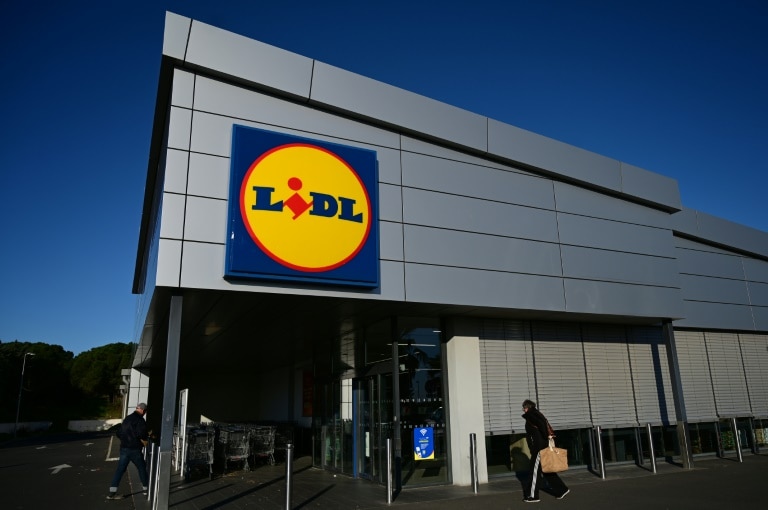
    In a seismic shift for French advertising, German discount retail giant Lidl has declared it will completely cease broadcast television advertisements in France. This strategic withdrawal comes as a direct consequence of a devastating legal ruling that found the company engaged in deceptive marketing practices.

    The decision follows a Paris appeals court judgment last July that ordered Lidl to pay rival supermarket chain Intermarche a staggering €43 million ($50 million) in damages. The court determined that over 370 television commercials aired by Lidl between 2017 and 2023 were materially misleading to consumers and constituted a severe case of unfair competition. Lidl, currently ranked as France’s sixth-largest food retailer and its second-biggest advertiser across all sectors, is continuing its appeal against this ruling.

    Jassine Ouali, Chief Customer Officer at Lidl France, explicitly linked the withdrawal to the heightened regulatory environment. In an interview with trade publication Strategies, Ouali stated, “We will not invest in linear TV for as long as the regulatory risks remain excessively high, which is the situation today.” He further criticized the existing French consumer protection framework, which mandates that promoted products must be available at the advertised price for a minimum of 15 weeks, labeling these rules as “antiquated” and biased in favor of traditional media.

    The financial impact of this move is substantial. A company spokeswoman confirmed to AFP that linear television, defined as traditional scheduled broadcast channels, represented 22% of Lidl’s total French advertising expenditure last year. This budget is projected to drop to “zero” by 2026. Ouali issued a stark warning about the broader implications for media financing in France, noting that diverting its massive advertising budget from French broadcasters to global digital platforms like Google, Meta, Netflix, and Amazon could severely disrupt the funding model for the entire national media landscape.

  • Asian shares are mixed after Wall Street’s strong start to the year cools

    Asian shares are mixed after Wall Street’s strong start to the year cools

    Asian financial markets presented a fragmented performance on Thursday, reflecting a cooling momentum from Wall Street’s robust year-opening rally. Investor sentiment across the region displayed notable divergence as markets digested multiple economic and political developments.

    Japan’s Nikkei 225 index declined 1% to 51,660.50 during early trading sessions, with technology equities leading the downward trend. Conversely, South Korea’s Kospi gained 0.6% to reach 4,576.95, maintaining proximity to its recent record highs. Hong Kong’s Hang Seng benchmark dropped 1.2% to 26,136.49, despite Chinese AI firm Zhipu—a recognized competitor to OpenAI—commencing trading with an encouraging 3.3% surge during its market debut.

    Mainland China’s Shanghai Composite index edged upward by nearly 0.1% to 4,089.45, while Australia’s S&P/ASX 200 advanced 0.2% to 8,712.90. Taiwan’s Taiex similarly recorded a 0.2% gain, demonstrating regional variability in market responses.

    The cooling pattern originated from Wall Street, where Wednesday’s trading saw the S&P 500 retreat 0.3% from its historic peak to 6,920.93. The Dow Jones Industrial Average experienced a more pronounced decline of 0.9% to 48,996.08, though the Nasdaq Composite managed a modest 0.2% gain to 23,584.27.

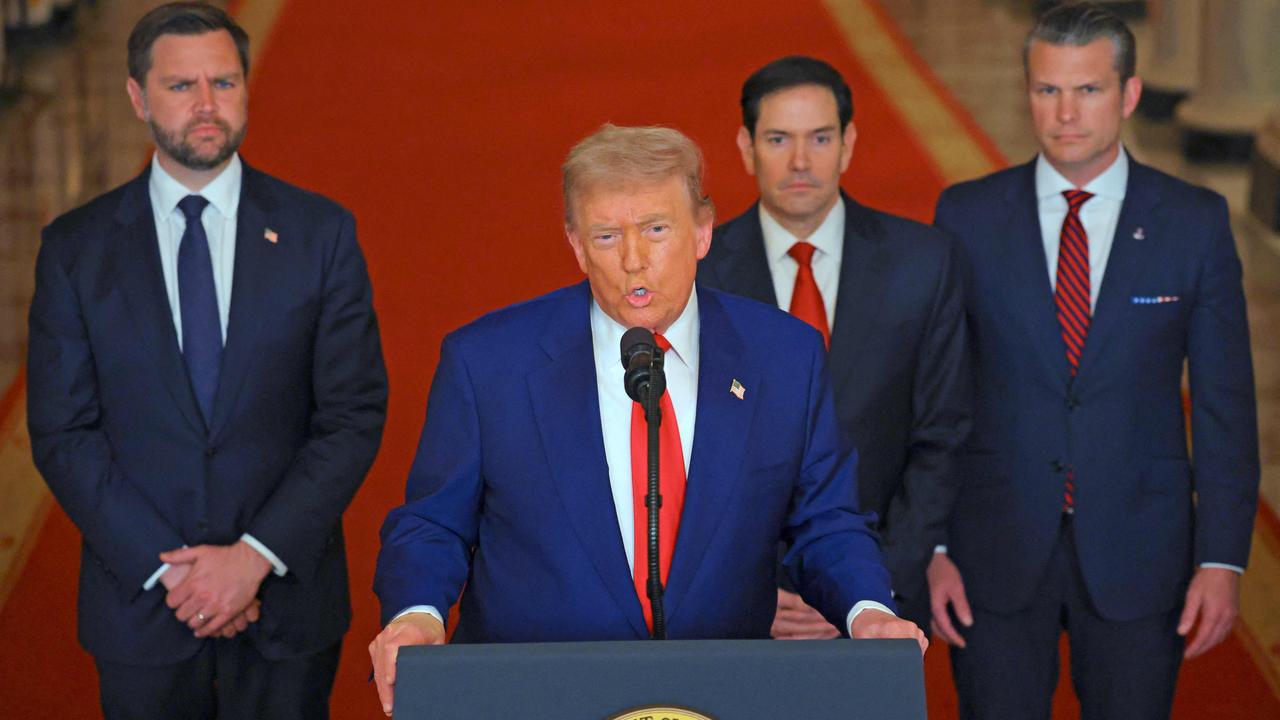
    Market analysts identified multiple contributing factors to the shift, including former President Donald Trump’s social media statement regarding potential restrictions on institutional investors purchasing single-family homes. This announcement triggered significant declines in homebuilder stocks, with D.R. Horton dropping 3.6% and PulteGroup falling 3.2%.

    Concurrently, energy markets witnessed upward movement as U.S. crude benchmark prices increased 0.2% to $56.22 per barrel, while Brent crude rose 0.3% to $60.22. This movement followed geopolitical developments involving Venezuela’s oil exports and administrative changes within the country’s leadership.

    Bond markets exhibited volatility as U.S. Treasury yields fluctuated amid contradictory economic indicators. The 10-year Treasury yield decreased to 4.14% from 4.18%, while the two-year yield remained stable at 3.46%. Economic reports revealed stronger-than-anticipated service sector growth in December alongside mixed employment data, with businesses reporting fewer November job openings but adding 41,000 positions in December.

    Currency markets saw minimal changes, with the dollar slightly declining against the yen to 156.66 from 156.77, while the euro strengthened modestly against the dollar to $1.1683 from $1.1677. Market participants now await the U.S. Labor Department’s comprehensive December employment report, scheduled for release on Friday, for further directional signals.

  • Optus poaches senior Telstra executive for top technology chief role

    Optus poaches senior Telstra executive for top technology chief role

    In a strategic move to strengthen its technological leadership, Australian telecommunications provider Optus has secured the appointment of Sri Amirthalingam as its new Chief Technology Officer. Mr. Amirthalingam joins Optus after an extensive 36-year tenure with rival telco Telstra, where he held significant responsibilities in investment strategy, technology development, and the planning and construction of both fixed and mobile networks.

    This executive transition comes at a critical juncture for Optus as it continues efforts to restore consumer confidence following a catastrophic 14-hour triple-0 emergency service outage in September 2025. The network failure, which has been connected to multiple fatalities, severely damaged the company’s reputation for reliability.

    Outgoing CTO Tony Baird will depart the company following a transition period, with Amirthalingam formally assuming his new position in January. The appointment signals Optus’s commitment to leveraging extensive industry experience as it works to overhaul its network infrastructure and operational resilience.

    Industry analysts view this recruitment as a significant coup for Optus, bringing onboard one of Telstra’s most experienced network infrastructure veterans. Amirthalingam’s deep understanding of Australia’s telecommunications landscape is expected to play a crucial role in Optus’s ongoing recovery strategy and future technological development.

  • ‘Stars aligned’ for Australian beef exports, but China tariff sparks concern

    ‘Stars aligned’ for Australian beef exports, but China tariff sparks concern

    Australian beef exporters are confronting a severe market reversal following China’s imposition of substantial tariffs, abruptly ending an unprecedented export boom. Recent data from the Australian Bureau of Statistics reveals meat and meat preparations surged 12.4% between October and November 2025, reaching a monthly export value of $2.537 billion—a $280 million increase from October.

    The sector’s remarkable performance stemmed from a convergence of exceptional circumstances. According to Commonwealth Bank agricultural economist Dennis Voznesenski, Australia temporarily became the primary supplier to both the United States and China simultaneously. The US faced constrained domestic production with cattle herds at multi-decade lows, compounded by import restrictions. Mexico’s live cattle exports were halted due to sanitary concerns about parasites, while former President Donald Trump’s administration imposed prohibitive tariffs on Brazilian beef and engaged in tariff disputes with Canada.

    Concurrently, China shifted its beef sourcing patterns amid trade tensions with Washington, allowing US export licenses to lapse and turning to Australian producers instead. This created dual demand streams: American purchases of grinding beef for hamburger production and Chinese acquisition of premium grain-fed beef.

    However, the trade landscape has dramatically shifted in 2026. The United States has withdrawn many trade barriers that previously favored Australian exporters, while China’s commerce ministry has implemented a 55% tariff on beef imports exceeding quota levels, effective January 1 for three years. Agriculture Minister Julie Collins expressed ‘serious concerns’ about the measure, emphasizing Australian officials are engaged in discussions with Chinese counterparts to secure favorable terms.

    The Australian Meat Industry Council condemned the tariff as ‘unfair,’ warning it would disrupt trade flows, undermine longstanding relationships established under the China-Australia Free Trade Agreement, and limit Chinese consumers’ access to reliable Australian beef. Industry representatives argue the measure disproportionately rewards competitors who recently increased export volumes to China.

  • Nestle infant formula recall widens beyond Europe; dozens of countries issue warnings

    Nestle infant formula recall widens beyond Europe; dozens of countries issue warnings

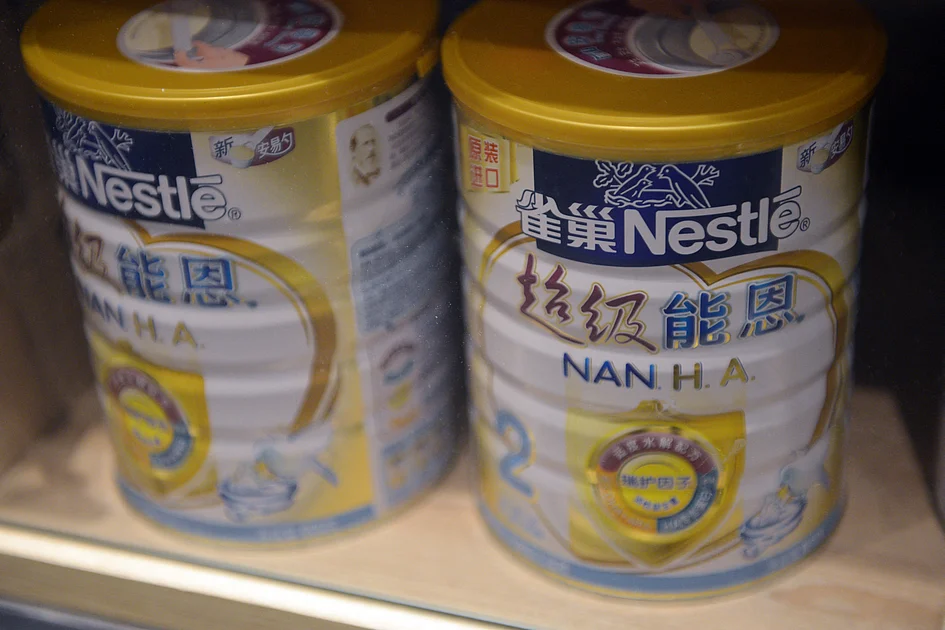
    Nestle’s massive infant formula recall has escalated into a worldwide safety alert, expanding beyond European markets to affect consumers across Africa, the Americas, and Asia. Regulatory authorities in at least 37 countries—including Australia, Brazil, China, Mexico, and South Africa—have issued health warnings regarding potentially contaminated batches of SMA, BEBA, NAN, and Alfamino products.

    The voluntary recall was initiated after quality control checks detected possible cereulide contamination, a toxin produced by bacteria that can induce severe nausea and vomiting. While no confirmed illnesses have been reported in connection with the affected batches, the precautionary measure represents one of Nestle’s most extensive product recalls in recent history.

    According to national food safety statements, the contamination originated from ingredients supplied by a third-party provider. Nestle has identified the issue in arachidonic acid oil and corresponding oil mixes used in manufacturing. The company has since intensified production with alternative suppliers to minimize supply chain disruptions.

    The recall affects products manufactured across more than 10 facilities worldwide, with production dates as recent as June 2025. South African authorities noted that affected products had been exported to neighboring Namibia and Eswatini, while Nestle China confirmed recalling European-imported batches.

    This development compounds challenges for newly appointed CEO Philipp Navratil, who has been conducting a comprehensive portfolio review amid recent management restructuring. Nestle’s shares have declined approximately 5.7% this week, reflecting investor concerns over the recall’s financial impact and potential reputational damage to the world’s largest food and beverage company.

  • How tariff disruption will continue reshaping the global economy in 2026

    How tariff disruption will continue reshaping the global economy in 2026

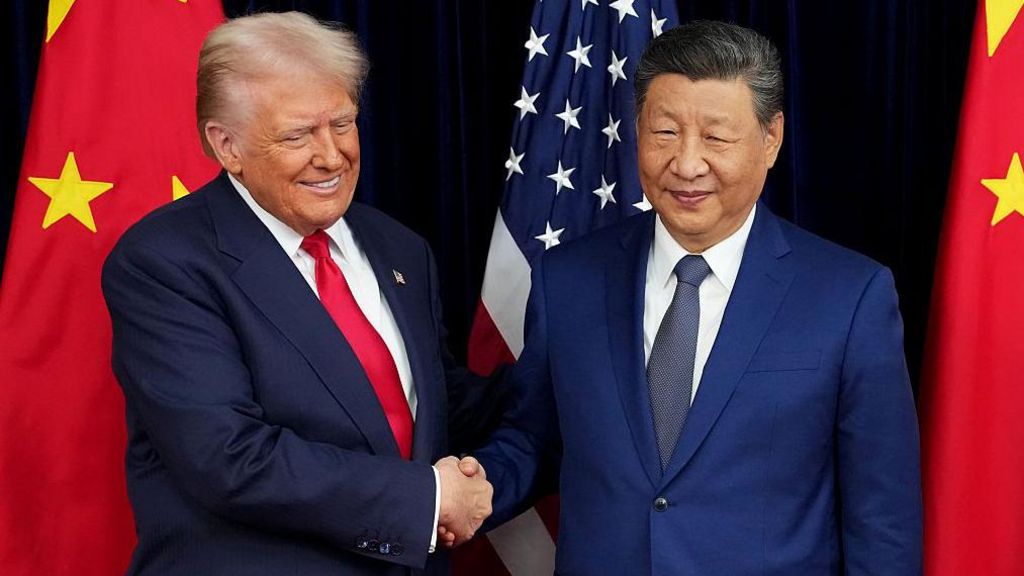
    The global economic landscape continues to be reshaped by Trump administration tariffs as the world anticipates the April summit between President Trump and China’s Xi Jinping. While Trump maintains that tariffs have boosted U.S. jobs, wages, and economic growth, international economists present a more nuanced assessment of their worldwide impact.

    The International Monetary Fund has revised its 2026 global growth forecast downward to 3.1%, citing trade tensions as a contributing factor. IMF head Kristalina Georgieva characterized the situation as “better than we feared, worse than it needs to be,” noting that current growth rates remain insufficient to meet global aspirations for improved living standards.

    According to Maurice Obstfeld, former IMF chief economist now with the Peterson Institute, the global economy avoided worst-case scenarios primarily because most nations refrained from aggressive retaliation against U.S. tariffs. China’s forceful response did prompt quick U.S. concessions, preventing full-scale trade disaster. Nevertheless, after five negotiation rounds, the world’s two largest economies maintain more trade restrictions than when Trump began his second term.

    The economic consequences have been multifaceted: increased business costs, investment uncertainty, and efficiency losses that accumulate over time. These effects have been partially offset by lower interest rates, dollar depreciation, creative corporate workarounds, and extensive tariff exemptions. This complex dynamic helps explain why UNCTAD reported global trade values reached over $35 trillion in 2025 despite the tensions.

    U.S. economic performance shows resilience with 4.3% growth in the third quarter of 2025—the strongest in two years. Bank of America senior economist Aditya Bhave attributes 0.3-0.5% of U.S. inflation to tariffs, noting that the full impact may not yet be realized in the consumer-driven economy that constitutes 26% of global GDP.

    Beyond U.S.-China relations, other significant trade developments include the potential renegotiation of the USMCA agreement, EU member states’ vote on a South American trade deal, and an impending U.S. Supreme Court ruling on tariff legality.

    Commodity markets also factor into the economic equation, with Goldman Sachs predicting an 8% decline in Brent crude prices to approximately $56 per barrel due to robust U.S. and Russian production. Meanwhile, Red Sea shipping disruptions linked to regional conflicts have forced rerouting around Africa, increasing transport costs.

    As preparation continues for the April summit, American Chamber of Commerce in China chair James Zimmerman notes that while expectations remain modest, sustained dialogue is crucial. Key issues extend beyond tariffs to include rare earth metals sourcing, semiconductor access, Chinese manufacturing overcapacity, and EU concerns about growing dependence on cheap Chinese imports.

    Despite Trump’s emphasis on reindustrialization, U.S. manufacturing employment has slightly declined to just under 12.7 million since his second term began. Obstfeld suggests that consumer resilience and massive AI investments—not tariffs—have primarily driven stock market highs and economic growth, indicating that trade restrictions will likely remain a persistent feature of policy discussions.

  • Thyssenkrupp weighs phased sale of steel unit to Jindal Steel, sources say

    Thyssenkrupp weighs phased sale of steel unit to Jindal Steel, sources say

    German industrial conglomerate Thyssenkrupp is exploring a multi-phase divestiture of its steel manufacturing subsidiary to Indian steel giant Jindal Steel International, according to sources familiar with negotiation details. The potential transaction, currently under advanced discussion, would represent a significant strategic shift for both corporations within the global steel industry landscape.

    Jindal Steel International, the global steel division of the Naveen Jindal Group, initiated formal due diligence procedures in October following preliminary acquisition proposals for Thyssenkrupp Steel Europe (TKSE), currently ranked as Europe’s second-largest steel production entity. This development follows Jindal’s previous European market expansion through its 2024 acquisition of Czech steel producer Vitkovice Steel.

    The contemplated acquisition framework involves an initial transfer of majority ownership, potentially comprising 60% of TKSE equity, with subsequent phased acquisitions of the remaining stake. This incremental approach would enable Thyssenkrupp to systematically address approximately €2.5 billion in pension liabilities associated with the steel unit, historically identified as a substantial obstacle in previous divestiture attempts.

    Market response to the potential transaction manifested immediately through Thyssenkrupp’s equity performance, with shares surging 4.9% to lead Frankfurt’s midcap index following reports of the progressing negotiations. Financial analysts noted this development suggests concrete progress after years of unsuccessful attempts to identify suitable acquisition partners for the industrial asset.

    Thyssenkrupp’s corporate leadership has publicly characterized Jindal Steel as an optimal strategic partner, attributing renewed acquisition interest to comprehensive restructuring initiatives implemented at TKSE facilities. The conglomerate maintains alternative strategic options should current negotiations prove unsuccessful, though specific details regarding contingency plans remain undisclosed.

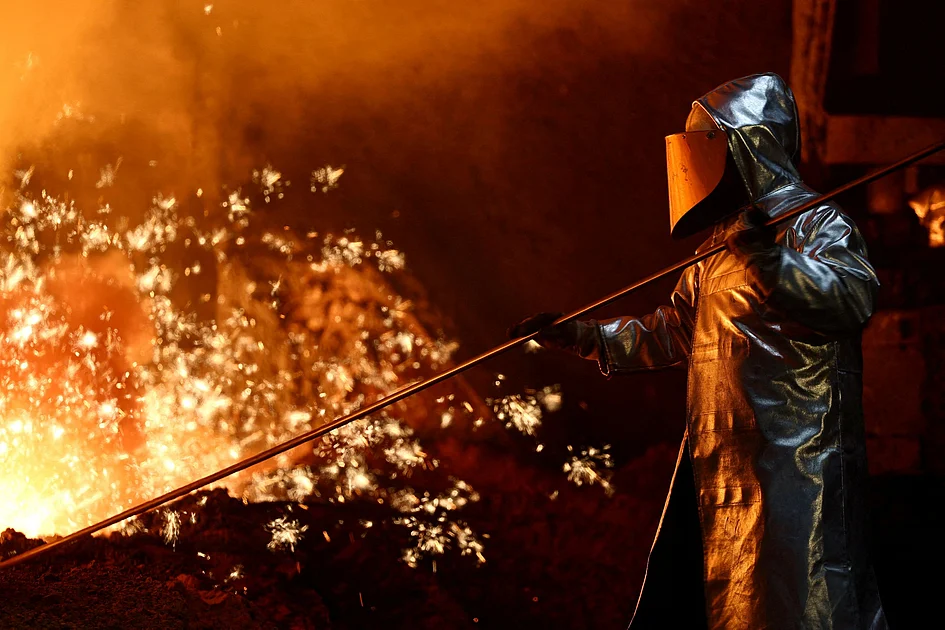
    A Jindal Steel technical delegation is scheduled for January site evaluations at TKSE’s primary Duisburg manufacturing complex, following rescheduling from originally planned December visits. Both corporations have declined to elaborate on specific negotiation terms, emphasizing the preliminary nature of current discussions and ongoing due diligence examinations.

  • Global leaders from tech, sports, and social media to lead discussions at the SEF

    Global leaders from tech, sports, and social media to lead discussions at the SEF

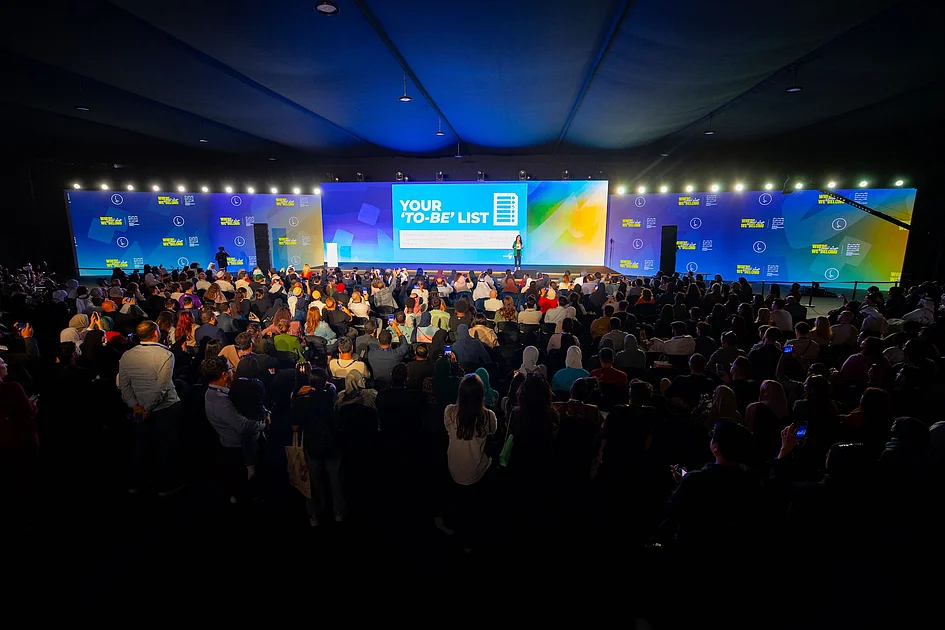
    The Sharjah Entrepreneurship Festival (SEF) has announced its inaugural speaker roster for the upcoming 2026 edition, featuring over 300 internationally renowned founders, CEOs, investors, and thought leaders. Scheduled for January 31 to February 1 at Sharjah Research, Technology, and Innovation Park (SPARK), this ninth iteration positions itself as the region’s premier entrepreneurial convergence point.

    Organized by the Sharjah Entrepreneurship Center (Sheraa), the two-day event will assemble entrepreneurs, professionals, and investors worldwide to address contemporary business challenges in an rapidly evolving economic landscape. The festival’s programming will comprehensively explore the entrepreneurial lifecycle, from startup creation and scaling strategies to leadership development and workplace wellbeing.

    The newly revealed speakers represent diverse sectors including technology, sports, social media, foodtech, and biotechnology, reflecting SEF’s commitment to presenting a multidimensional perspective on modern entrepreneurship. These industry pioneers will provide practical insights on innovation, adaptive leadership, and operational resilience required to thrive in markets transformed by technological acceleration and shifting consumer expectations.

    Sheraa CEO H.E. Sara Abdelaziz Al Nuaimi emphasized the strategic value of cross-disciplinary collaboration: “Today’s economic environment demands entrepreneurial thinking that transcends traditional boundaries. Founders must integrate insights across disciplines while building adaptable, responsible enterprises. SEF creates an ecosystem where knowledge exchange challenges perspectives and generates practical solutions.”

    Notable speakers include four-time Formula One World Champion Sebastian Vettel, who will discuss environmental and sustainability initiatives; Ghanim Al-Muftah, serial entrepreneur and disability rights advocate; and Heather Hasson, first female Co-CEO to lead a company through NYSE IPO with medical apparel company FIGS.

    The roster also features Shahzad Younas of Muslim marriage app Muzz; Hamad Al Hajri, CEO of Qatari super app Snoonu; former basketball player Vadim Fedotov of personalized supplement company Bioniq; and Amna Al Qubaisi, first Emirati female racing driver in international competitions.

    Additional speakers include Souad Al Serkal of CommCation Consultancy, Tom Hale of ŌURA smart ring, Ahmed Al Rawi of foodtech app Calo, Simran Kaur of investment education platform Friends That Invest, and Kareem Esmail of Mental Health Hub for Learning and Development.

    Anticipating 14,000 attendees, SEF 2026 will establish an interactive environment where industry leaders provide actionable guidance for startups, professionals, and graduates seeking to maximize their potential and contribute to economic advancement through innovation and sustainable business practices.