分类: business

  • India regulator alleges Bank of America breached rules in 2024 stock deal, document shows

    India regulator alleges Bank of America breached rules in 2024 stock deal, document shows

    India’s securities regulator has formally charged a Bank of America subsidiary with significant regulatory breaches during a 2024 stock offering, according to an official notice reviewed by Reuters. The Securities and Exchange Board of India (SEBI) alleges that the bank’s domestic securities unit violated insider trading protocols and compromised internal information barriers while managing a March 2024 share sale for Aditya Birla Sun Life Asset Management (ABSL AMC).

    The regulatory investigation uncovered that Bank of America’s deal team, while possessing confidential price-sensitive information, improperly coordinated with potential investors through both direct and indirect channels. According to the October 30-dated notice, the bank’s broking division, research analysts, and Asia-Pacific syndicate team contacted investors at the deal team’s request, sharing valuation reports and other protected details.

    SEBI’s findings indicate a systemic failure in maintaining ‘Chinese walls’ – the internal barriers designed to prevent information sharing between different divisions of financial institutions. The regulator stated that the bank’s conduct demonstrated inadequate safeguards for confidential information and deficient internal controls throughout the transaction process.

    The case originated from a 2024 whistleblower complaint that triggered both an internal bank investigation and subsequent regulatory scrutiny, resulting in the departure of several senior officials. Bank of America has reportedly submitted a settlement application to SEBI seeking resolution without admitting guilt, though the proposal remains under review according to sources familiar with the matter.

    While the notice references interactions with three specific investors – HDFC Life, Norges Bank, and Enam Holdings – regulatory officials emphasized they found no evidence of actual exchange of specific price-sensitive information. Legal experts characterize the case as primarily concerning internal governance failures rather than traditional insider trading, though such violations can still warrant substantial regulatory penalties.

  • India plans to scrap curbs on Chinese firms bidding for government contracts, sources say

    India plans to scrap curbs on Chinese firms bidding for government contracts, sources say

    India’s Finance Ministry is preparing to dismantle significant restrictions that have prevented Chinese companies from bidding on government contracts since 2020, according to sources familiar with the matter. The proposed policy shift signals a substantial warming of commercial relations between the two Asian powers following years of diplomatic tension.

    The restrictions, originally implemented after deadly border clashes between Indian and Chinese troops, mandated that Chinese bidders undergo rigorous registration processes with a specialized government committee and obtain comprehensive political and security clearances. These measures effectively created a substantial barrier to entry, resulting in Chinese firms being excluded from government contracts collectively valued between $700 billion and $750 billion.

    Two government officials, speaking on condition of anonymity, revealed that ministry officials are actively working to eliminate the registration requirements for bidders from nations sharing borders with India. The final decision rests with Prime Minister Narendra Modi’s office, which will evaluate the proposal’s broader implications.

    The 2020 restrictions produced immediate tangible effects. China’s state-owned CRRC Corporation was disqualified from competing for a $216 million train manufacturing contract shortly after the rules were implemented. According to a 2024 Observer Research Foundation report, the value of new projects awarded to Chinese bidders plummeted 27% year-over-year to $1.67 billion in 2021.

    The push for policy revision stems from multiple government departments experiencing significant project delays and equipment shortages directly attributable to the restrictions. Particularly affected is India’s power sector, where import constraints on Chinese equipment have hampered plans to expand thermal power capacity to approximately 307 gigawatts over the coming decade.

    A high-level committee chaired by former Cabinet Secretary Rajiv Gauba has endorsed easing the restrictions, adding weight to the Finance Ministry’s proposal. The diplomatic context surrounding this potential policy shift includes Prime Minister Modi’s first visit to China in seven years, during which both nations committed to enhancing commercial cooperation. This rapprochement occurred against the backdrop of former U.S. President Donald Trump’s imposition of 50% punitive tariffs on Indian goods and warming relations between Washington and Pakistan.

    Despite these positive developments, India maintains a cautious approach, with foreign direct investment restrictions on Chinese companies remaining firmly in place. The United States continues to send ambiguous signals regarding a potential Washington-New Delhi trade agreement, creating geopolitical conditions that experts suggest may facilitate improved India-China relations.

  • Nvidia’s Jensen Huang: no problem with California billionaire tax

    Nvidia’s Jensen Huang: no problem with California billionaire tax

    Nvidia CEO Jensen Huang, ranked as the world’s eighth-wealthiest individual with a net worth of $165 billion, has expressed surprising support for a proposed one-time wealth tax targeting California’s billionaire residents. In a recent Bloomberg interview, Huang demonstrated remarkable equanimity toward the potential 5% levy that would cost him approximately $8 billion, stating he is “perfectly fine” with the proposal.

    The tech magnate’s response stands in stark contrast to the alarmed reactions from other wealthy Californians. “We chose to live in Silicon Valley, and whatever taxes, I guess, they would like to apply, so be it,” Huang remarked with notable nonchalance. When questioned about the tax initiative, he revealed that “it never crossed my mind once.”

    The proposed ballot measure, if approved by California voters in November, would impose a one-time tax on approximately 200 billionaires residing in the state as of January 1, 2026. Affected individuals would have payment flexibility, allowing them to settle their tax obligation either immediately or across a five-year period. The estimated $100 billion revenue generated would be allocated to bolster the state’s healthcare infrastructure, food assistance programs, and educational resources.

    This wealth tax proposal emerged as a direct response to substantial Medicaid cuts implemented by President Donald Trump and the Republican-controlled Congress during summer 2025. The initiative has garnered support from labor organizations, including the Service Employees International Union-United Healthcare Workers West, whose chief of staff Suzanne Jimenez applauded Huang’s pragmatic stance.

    Huang’s position diverges significantly from other tech elites like David Sacks, the White House cryptocurrency czar who relocated to Texas in late 2025 apparently to avoid potential tax implications. Sacks predicted that Austin would replace San Francisco as America’s tech capital in response to what he termed “socialism.”

    Matt Bruenig, founder of the left-leaning People’s Policy Project, characterized Huang’s reaction as appropriate given the minimal impact relative to his substantial wealth: “‘Who cares?’ is absolutely the appropriate reaction. It means nothing to him.”

  • Pakistanis in UAE, GCC allowed to import used cars under new rules

    Pakistanis in UAE, GCC allowed to import used cars under new rules

    In a significant policy shift, Pakistan has officially authorized its overseas citizens residing in the UAE, GCC nations, and other countries to import used vehicles under revised regulatory frameworks. The federal cabinet has ratified a decision from the Economic Coordination Committee, dated December 9, 2025, which specifically permits the import of cars up to three years old. This provision is exclusively available through two channels: the Gift Scheme and the Transfer of Residence Scheme.

    The Federal Board of Revenue (FBR) has issued clarifications, stating that eligibility is restricted to non-resident Pakistanis utilizing these specific schemes. A notable condition mandates that any imported vehicle cannot be sold or transferred to a new owner for a minimum period of one year after importation. Conversely, the government has explicitly excluded the Personal Baggage scheme from this new allowance, maintaining previous restrictions on that category.

    This legislative amendment addresses long-standing requests from the vast Pakistani diaspora, which includes over 1.7 million individuals in the UAE and more than 5.5 million across GCC member states. The global community of overseas Pakistanis exceeds nine million. Many families seeking to repatriate after extended periods abroad have expressed a desire to bring personal assets, including vehicles, with them. The policy revision aims to facilitate their return while mitigating concerns among some officials about potential misuse of such import facilities, which had previously led to calls for the program’s discontinuation.

  • India defends antitrust penalty law in Apple fight

    India defends antitrust penalty law in Apple fight

    India’s Competition Commission (CCI) has formally defended its controversial antitrust penalty legislation before the Delhi High Court, pushing back against Apple’s legal challenge to the 2024 measure that allows fines based on global revenue. The regulatory body asserts that the law brings Indian competition enforcement in line with international standards and serves as a crucial deterrent against violations by multinational corporations.

    In court documents dated December 15, the CCI argued that calculating penalties based solely on India-specific turnover would fail to adequately penalize global digital giants for anti-competitive behavior. The regulator emphasized that this approach ensures penalties ‘retain real deterrent value in complex, digital and cross-border markets’ rather than becoming ‘nominal or easily absorbable for large multinational players.’

    Apple initiated legal proceedings in November 2025, seeking to invalidate the law which it claims could expose the company to disproportionate penalties reaching up to $38 billion in a separate case involving alleged App Store dominance. The technology giant contends the CCI is illegally applying the legislation retroactively and that penalties should reflect only India-based operations.

    The CCI countered that the legislation merely clarifies existing powers that always allowed penalties of up to 10% of a company’s turnover, and that clarificatory provisions operate retrospectively as they ‘explain the true intent of the legislature.’ The regulator accused Apple of attempting to misguide the court, noting it had specifically requested only India-specific financial details despite its broader authority.

    The high-stakes legal battle, scheduled for hearing on January 27, 2026, carries significant implications for other multinational corporations including Pernod Ricard, Publicis, and Amazon, all of which face ongoing antitrust scrutiny in India.

  • China’s railway passenger trips exceed 4.5 billion in 2025

    China’s railway passenger trips exceed 4.5 billion in 2025

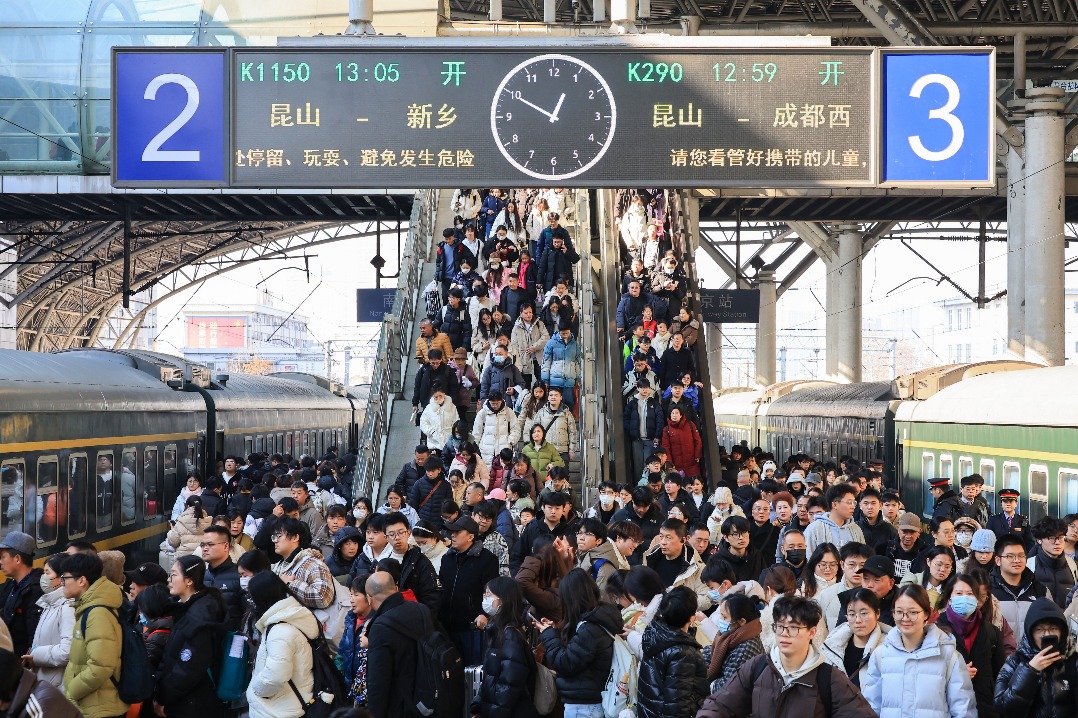
    China’s national railway system achieved unprecedented operational milestones in 2025, handling a record-breaking 4.59 billion passenger journeys alongside substantial freight volume growth, according to official data released at Thursday’s national railway work conference. The comprehensive performance metrics underscore China’s position as the global leader in railway transportation efficiency and technological innovation.

    The passenger volume represents a significant 6.4% year-on-year increase, while freight transportation simultaneously reached 5.27 billion tonnes, marking a 2% growth from previous year figures. These achievements occurred within an expanding infrastructure network that now spans 165,000 kilometers of operational railway lines, including over 50,000 kilometers dedicated to high-speed rail connectivity.

    National Railway Administration Director Song Xiude emphasized that China maintains world leadership across multiple critical indicators including passenger turnover, freight volume, and transport density. The country has pioneered advanced railway technologies adapted for diverse operational environments, from high-speed corridors to plateau regions, cold-climate areas, and heavy-haul transportation systems.

    Technological advancements in intelligent railway systems and green transportation solutions have accelerated throughout 2025, contributing to what Song described as “continuously improving modern railway infrastructure” that actively supports China’s high-quality economic and social development objectives. The integrated rail network has demonstrated remarkable capacity in facilitating both passenger mobility and commercial logistics across the nation’s vast territory.

  • Canadian business leader’s take: See China, know China

    Canadian business leader’s take: See China, know China

    Ron Horton, Vice President of the Canada-China Business Association, has become a prominent advocate for strengthened Sino-Canadian relations, crediting his firsthand experiences with transforming his understanding of the nation. Contrary to common perceptions formed from a distance, Horton emphasizes that true comprehension of China only emerges from direct engagement within the country.

    An avid daily reader of China Daily, Horton has developed a profound appreciation for Chinese society, which he describes as composed of intelligent, hard-working, and exceptionally friendly people. His professional advocacy extends beyond mere observation to active bridge-building between the two nations.

    Currently, Horton is channeling his efforts into reinforcing the sister city partnership between Edmonton, Canada and Harbin, China. This initiative represents a practical application of his belief that people-to-people connections and municipal-level cooperation form the foundation of stronger international business relationships. His work exemplifies a growing trend among business leaders who recognize that geopolitical complexities require grassroots engagement and cultural understanding to foster successful economic partnerships.

  • WhatsApp panic vs reality: Will health insurance really jump 25% for UAE residents in 2026?

    WhatsApp panic vs reality: Will health insurance really jump 25% for UAE residents in 2026?

    Amid circulating WhatsApp messages forecasting substantial health insurance premium increases of 18-25% for UAE residents starting January 2026, industry authorities have moved to clarify the situation, characterizing the alarm as largely unfounded. According to insurance specialists, the notion of a blanket price surge is misleading, with actual adjustments expected to reflect individual circumstances rather than arbitrary calendar-year hikes.

    Toshita Chauhan, Chief Business Officer for General Insurance at Policybazaar.ae, emphasized the personalized nature of premium calculations, stating: “Health insurance pricing in the UAE is individualized and depends on factors such as age, claims history, benefits chosen, and renewal timing. For most residents, premiums are expected to remain stable for now.”

    While acknowledging the reality of medical inflation, Anas Mistareehi, CEO of eSanad, placed current healthcare cost increases at approximately 4-8% annually—significantly below the panic-inducing figures circulating through digital channels. He noted that competitive market dynamics are helping moderate price adjustments, with some insurers actually enhancing policy terms to maintain customer loyalty.

    The UAE’s basic health insurance scheme remains unaffected by any increases, maintaining its fixed annual rate of Dh320 as confirmed by regulatory authorities. However, families and senior citizens may experience more noticeable adjustments due to higher healthcare utilization patterns, with potential annual increases ranging from Dh1,200-2,500 for typical families and Dh1,600-4,000+ for elderly residents.

    Industry experts caution that panic-driven decisions—such as downgrading coverage or delaying renewals—could prove more financially damaging than moderate premium adjustments. Such actions may result in reduced hospital access, compromised emergency coverage, or inadequate chronic care protection.

    For those renewing policies in early 2026, specialists recommend initiating the process well before year-end 2025 to secure optimal terms and avoid last-minute constraints. Beyond premium amounts, consumers should vigilantly monitor changes to co-payment requirements, outpatient limits, pharmacy caps, and hospital network compositions that may effectively increase out-of-pocket expenses.

    The consensus among insurance professionals underscores the critical importance of selecting coverage based on comprehensive benefits rather than price alone, as inadequate protection can ultimately generate substantially higher personal healthcare costs when medical attention becomes necessary.

  • Tianjin town is top in trumpets

    Tianjin town is top in trumpets

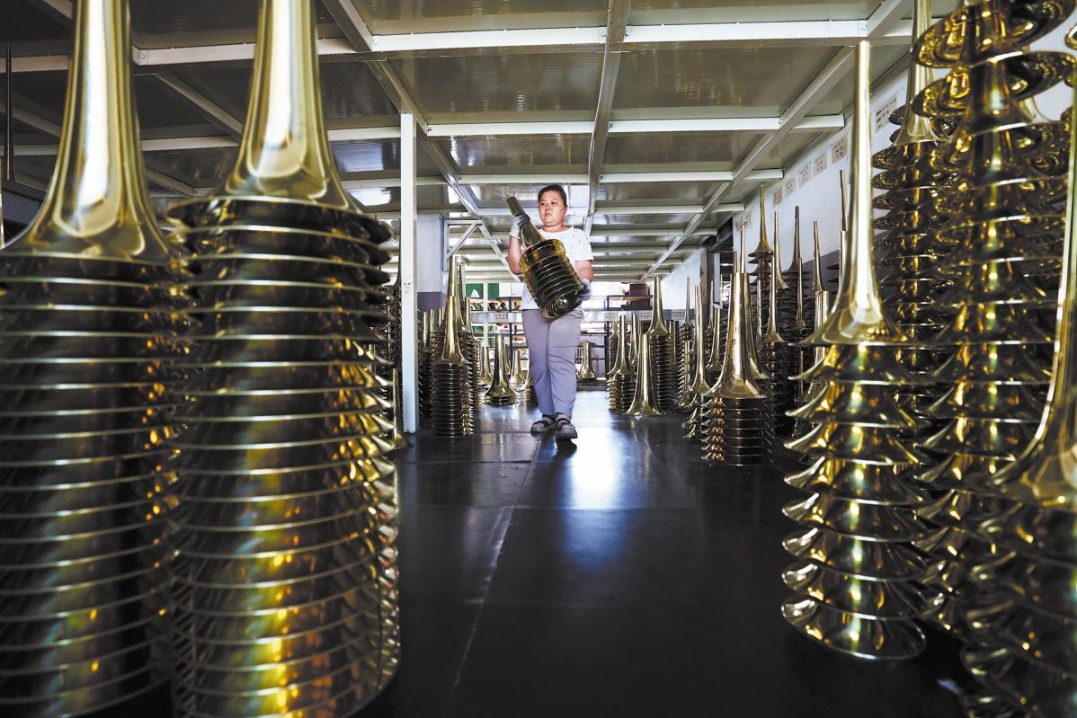
    Nestled within Tianjin’s Jinghai district, the modest town of Caigongzhuang has quietly emerged as the world’s predominant manufacturing hub for brass and woodwind instruments, accounting for over 50% of global production. This unassuming Chinese community serves as the unseen craftsmanship behind saxophones, trumpets, flutes, piccolos, and clarinets played by musicians across continents.

    The industry thrives through a unique blend of family-operated workshops and expansive manufacturing facilities that have perfected their craft over decades. Tianjin Shengyue Music Instrument, one of the established enterprises in the region, exemplifies this successful model. Manager Liu Xuehong, a veteran with extensive experience in the field, reports a significant shift toward premium international orders. “We’ve been receiving sophisticated custom requests from Germany, Spain, Singapore, and numerous other countries,” Liu revealed.

    This evolution toward high-value craftsmanship is demonstrated through collaborations with internationally recognized musicians. The town recently fabricated a custom saxophone for Jay Metcalf, the distinguished saxophonist and founder of the BetterSax educational platform, signaling Caigongzhuang’s growing reputation for excellence rather than merely quantity.

    The town’s industrial dominance remains relatively unknown to end consumers, creating an intriguing paradox where artists worldwide perform with instruments originating from this specialized Chinese manufacturing center without awareness of their provenance. This disconnect highlights both the globalization of specialized manufacturing and the silent efficiency of Caigongzhuang’s production ecosystem.

  • China expects huge surge in winter tourism

    China expects huge surge in winter tourism

    China’s winter tourism sector is experiencing unprecedented growth, with snow sports rapidly evolving from specialized activities into mainstream economic drivers. According to the China Tourism Academy’s latest report, the December 2025-February 2026 season is projected to witness 360 million winter tourism excursions, generating approximately 450 billion yuan ($64 billion) in revenue.

    The transformation reflects a fundamental shift in consumer behavior, as evidenced by Yang Lezhi, a 27-year-old Beijing resident who represents the new generation of winter sports enthusiasts. “Skiing makes me feel like Elsa from Frozen—it’s almost addictive once you master the slopes,” she remarked, highlighting how winter activities have transitioned from niche pursuits to popular recreational trends.

    This remarkable expansion stems from multiple factors: the successful legacy of the 2022 Beijing Winter Olympics, substantial government support, and strategic infrastructure investments. In November 2024, China’s State Council issued comprehensive guidelines targeting a 1.2 trillion yuan winter economy by 2027 and 1.5 trillion yuan by 2030.

    Industry analyst Yang Jinsong from the China Tourism Academy identifies several growth catalysts: “Post-Olympic awareness has significantly increased public interest in winter activities, while supportive policies have encouraged broader industry participation. Both naturally advantaged northern regions and southern provinces with artificial facilities are contributing to this expansion.”

    Remarkably, southern China—including Guangdong province—has emerged as the national leader in winter tourism infrastructure investment, exceeding 30 billion yuan annually. The industry’s structural development is equally impressive, with 1,423 new winter tourism companies established in 2025, bringing the national total to over 14,000 enterprises—an 11% increase from 2024.

    Supporting data reveals consistent industry expansion, with winter-related consumption reaching 187.5 billion yuan between late 2024 and early 2025. The sector has demonstrated remarkable growth trajectory, expanding from 270 billion yuan in 2015 to 980 billion yuan in 2024, and is projected to surpass 1 trillion yuan for the first time in 2025.

    Consumer surveys indicate strong continued demand, with 75% of respondents expressing interest in winter travel, over 40% planning increased participation frequency, and a similar percentage intending to boost winter activity spending—signaling sustained momentum for China’s burgeoning winter economy.