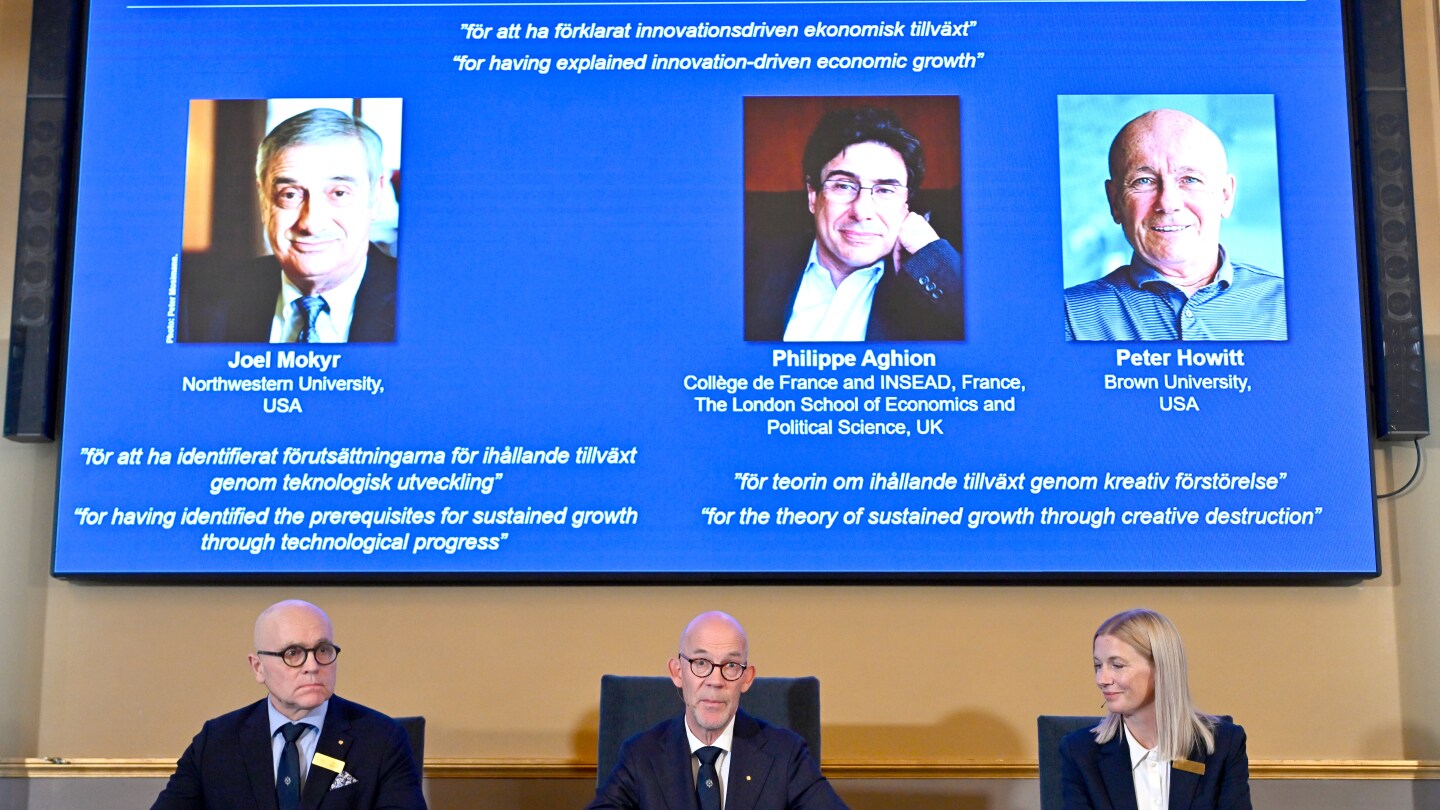
STOCKHOLM (AP) — The 2023 Nobel Memorial Prize in Economic Sciences has been awarded to Joel Mokyr, Philippe Aghion, and Peter Howitt for their pioneering contributions to understanding innovation-driven economic growth. The trio’s work has shed light on the mechanisms of ‘creative destruction,’ a concept central to economic progress, where new innovations displace older technologies and businesses. Mokyr, from Northwestern University, Aghion, affiliated with the College de France and the London School of Economics, and Howitt, from Brown University, were recognized for their efforts to quantify and explain this phenomenon. The Nobel Committee highlighted their research as essential for sustaining long-term economic growth and avoiding stagnation. Aghion, expressing his astonishment at the honor, emphasized his commitment to reinvesting the prize money into his research laboratory. He also voiced concerns about protectionist policies, particularly in the U.S., warning that such measures could hinder global growth and innovation. The laureates’ work builds on the foundational ideas of economist Joseph Schumpeter, who first articulated the concept of creative destruction in his 1942 book, ‘Capitalism, Socialism and Democracy.’ Aghion and Howitt’s 1992 mathematical model further advanced the understanding of this process. The prize, valued at 11 million Swedish kronor (approximately $1.2 million), was split equally between Mokyr and the duo of Aghion and Howitt. The award, formally known as the Bank of Sweden Prize in Economic Sciences in Memory of Alfred Nobel, was established in 1968 and has since been awarded to 96 laureates, only three of whom have been women. While technically not one of the original Nobel Prizes, it is presented alongside them on December 10, the anniversary of Alfred Nobel’s death. Last year’s economics prize honored researchers who explored the disparities between rich and poor nations, emphasizing the role of open societies in fostering prosperity. This year’s announcement follows last week’s Nobel honors in medicine, physics, chemistry, literature, and peace.
分类: business
-
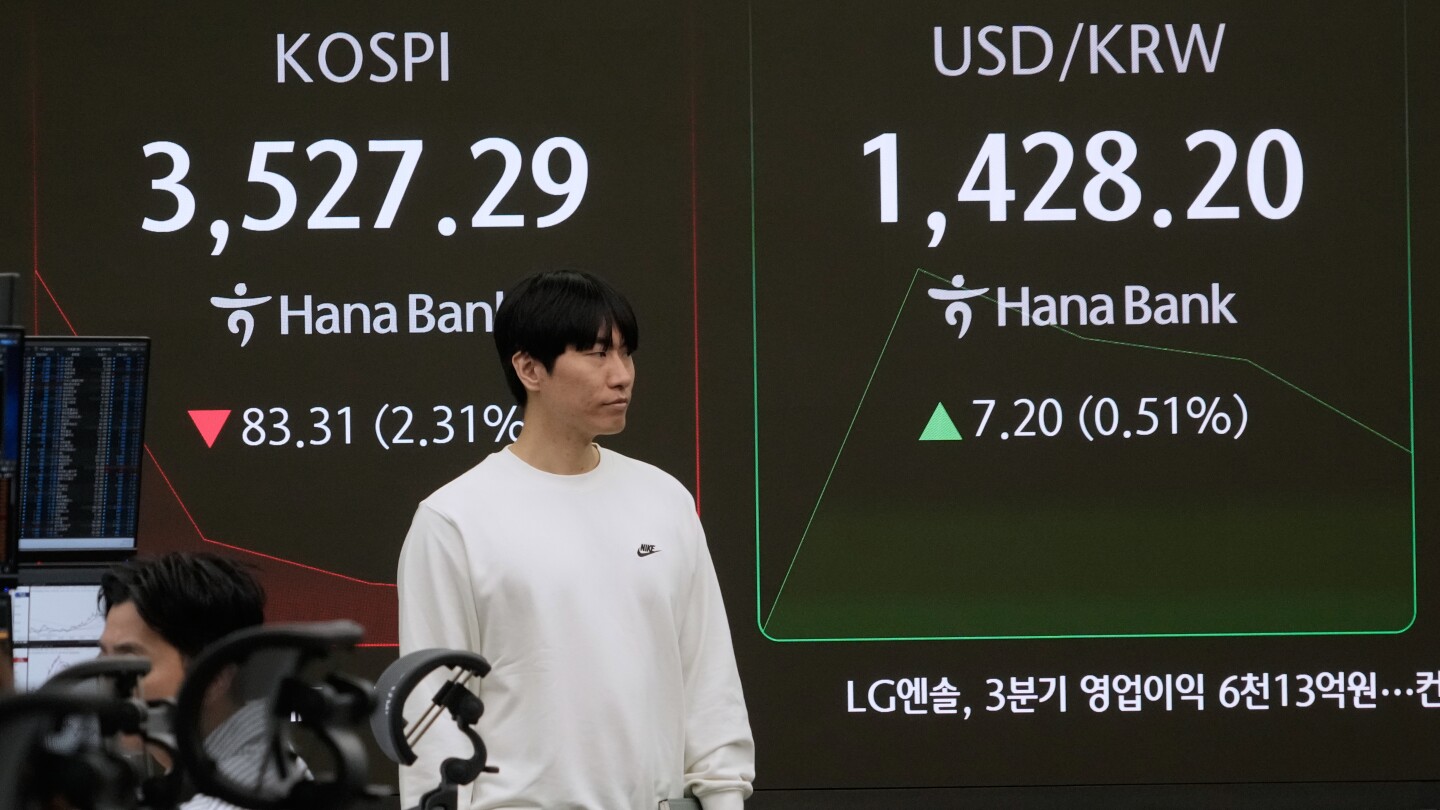
Asian shares skid after Wall Street tumbles to its worst day since April as China trade woes worsen
Asian stock markets experienced a sharp decline on Monday as renewed trade tensions between the United States and China disrupted a period of relative calm on Wall Street. The downturn followed President Donald Trump’s threat to impose higher tariffs on Chinese goods, signaling a potential escalation in the ongoing trade conflict between the world’s two largest economies. This move came in response to Beijing’s restrictions on the export of rare earth materials, which are essential for manufacturing a wide range of products, from consumer electronics to jet engines. Despite the turmoil, U.S. futures showed signs of recovery, with the S&P 500 contract rising 1.2% and the Dow Jones Industrial Average gaining 0.8%. Meanwhile, China reported a 8.3% year-on-year increase in global exports for September, marking the strongest growth in six months. However, exports to the U.S. plummeted by 27%, according to customs data. In Hong Kong, the Hang Seng Index fell 3.5%, while other major regional markets, including the Shanghai Composite and South Korea’s Kospi, also recorded significant losses. The S&P 500 had already suffered its worst day since April, dropping 2.7% on Friday, as investors reacted to the renewed trade hostilities. Trump’s comments on Truth Social further fueled concerns, as he hinted at canceling a planned meeting with Chinese President Xi Jinping during an upcoming trip to South Korea. The market’s decline was widespread, with nearly all sectors, including Big Tech and smaller companies, experiencing losses. Critics have warned that stock prices, particularly in the artificial intelligence sector, may be overvalued, drawing comparisons to the dot-com bubble of 2000. In the oil market, prices initially fell due to a ceasefire between Israel and Hamas but later rebounded. The bond market also saw a drop in yields, reflecting broader economic uncertainty. The dollar weakened slightly against the yen, while the euro gained ground.
-

Netherlands cracks down on China-owned chip firm over security risk
The Dutch government has made a rare decision to intervene in the operations of Nexperia, a Chinese-owned semiconductor manufacturer based in the Netherlands, citing potential risks to Dutch and European economic security. The move, announced on Sunday, underscores growing tensions between the European Union and China, particularly in the realm of trade and technology. Nexperia, which produces chips for automobiles and consumer electronics, has faced scrutiny in recent months, including being forced to sell its silicon chip plant in Newport, Wales, due to national security concerns raised by UK officials. The Dutch government invoked its Goods Availability Act, a legal mechanism designed to address serious governance issues and ensure the supply of critical goods. While Nexperia’s production will continue as usual, the intervention aims to safeguard crucial technological knowledge and capabilities in the Netherlands and Europe. The decision has already impacted Nexperia’s parent company, Wingtech, whose Shanghai-listed shares dropped by 10% on Monday. Wingtech, which is on the US ‘entity list,’ faces restrictions on importing American-made goods without special approval. This development highlights the escalating geopolitical tensions surrounding semiconductor supply chains and China’s global tech ambitions.
-
China’s exports to US drop in September, while rise in global shipments hits a 6-month high
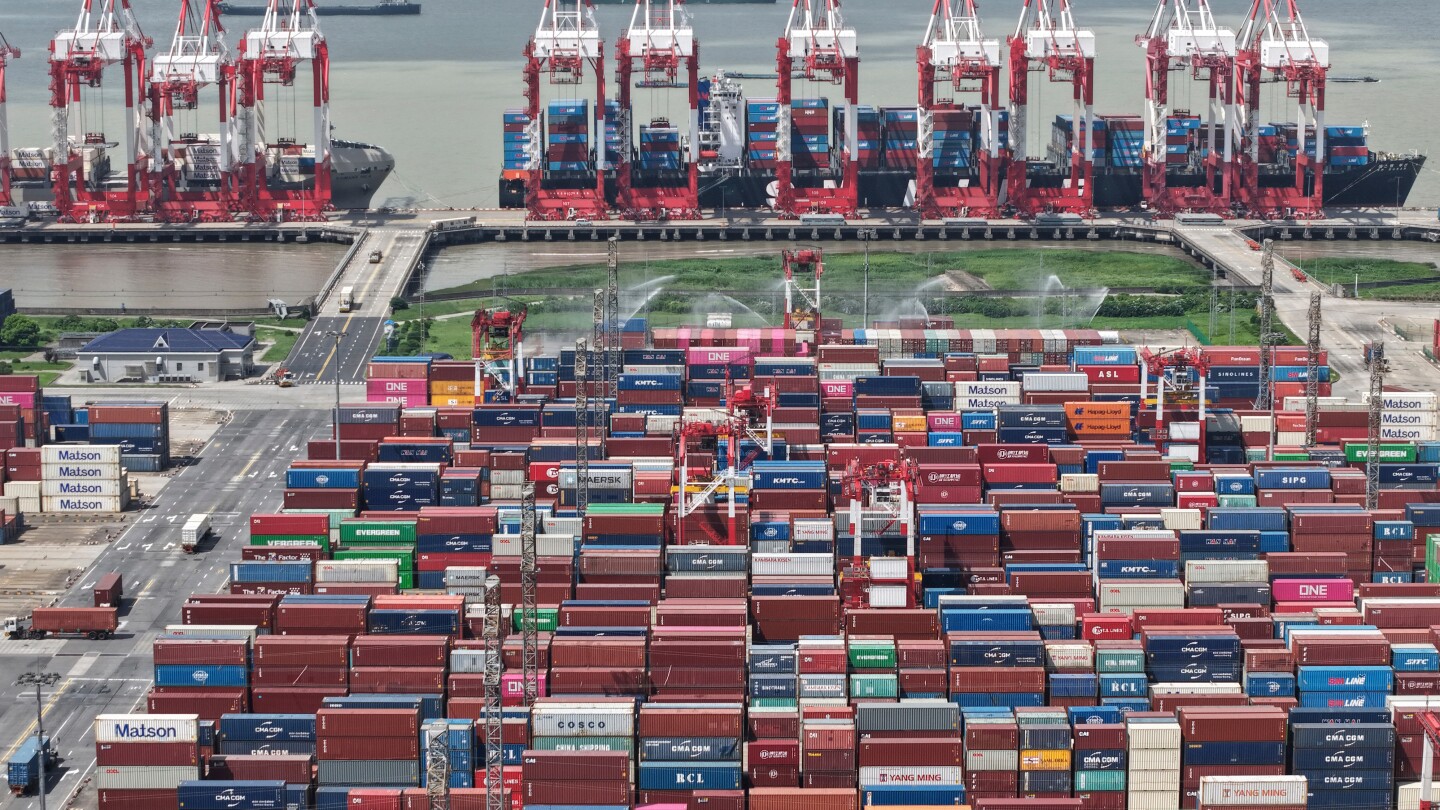
China’s trade dynamics in September presented a mixed picture, with global exports surging to a six-month high while exports to the United States continued their downward spiral. According to customs data released on Monday, China’s worldwide exports rose by 8.3% year-on-year, reaching $328.5 billion, significantly exceeding economists’ expectations and marking a notable improvement from August’s 4.4% growth. However, exports to the U.S. plummeted by 27% compared to the previous year, marking the sixth consecutive month of decline and following a 33% drop in August. Imports also showed improvement, growing by 7.4% in September, up from a modest 1.3% increase in August, though domestic economic challenges and a struggling real estate sector continue to dampen demand. The ongoing trade tensions between Beijing and Washington have cast a shadow over the outlook, with both sides imposing new tariffs and retaliatory measures. U.S. President Donald Trump’s policies aimed at reshoring manufacturing have pressured Chinese exports to the U.S., prompting China to diversify its markets. Shipments to Southeast Asia grew by 15.6%, while exports to Latin America and Africa surged by 15% and 56%, respectively. Despite these efforts, the external environment remains fraught with uncertainty, as highlighted by Wang Jun, vice minister of China’s customs agency, who emphasized the need for sustained efforts to stabilize trade in the fourth quarter. Analysts like Gary Ng of Natixis point to the resilience of China’s exports due to low costs and limited global alternatives but warn that escalating export controls could have a more prolonged impact on supply chains. Recent developments, including Trump’s threats of additional tariffs and export controls on critical software, coupled with China’s retaliatory measures such as new port fees and extended export controls on lithium-ion batteries and rare earths, have further strained relations. These tensions could jeopardize a planned meeting between Trump and Chinese President Xi Jinping in late October and underscore the lack of progress in reaching a comprehensive trade agreement.
-

Trump says inflation is ‘defeated’ and the Fed has cut rates, yet prices remain too high for many
Inflation has shown a persistent upward trend in three of the last four months, slightly exceeding levels from a year ago. This issue, which played a role in derailing then-Vice President Kamala Harris’ presidential campaign, remains a significant concern. However, recent statements from President Donald Trump and Federal Reserve Chair Jerome Powell suggest a more optimistic outlook. Trump recently declared at the United Nations General Assembly that grocery prices and mortgage rates have declined, claiming victory over inflation. Similarly, Powell noted in August that inflation, though still elevated, has significantly decreased from its post-pandemic highs and that upside risks have diminished. Despite these reassurances, inflation remains above the Federal Reserve’s 2% target, posing risks for both the White House and the Fed. Surveys indicate that many Americans still view high prices as a major financial burden, and the Fed’s credibility in managing inflation could be at stake if its assumptions about temporary tariff-induced inflation prove incorrect. The Fed recently cut its key interest rate, prioritizing concerns over unemployment rather than inflation. However, economists warn that ongoing tariffs and corporate price hikes could lead to more than just a temporary inflation spike. For instance, tariffs on imported goods like furniture, appliances, and toys have driven up costs, with long-lasting manufactured goods seeing a 2% increase in August—a notable shift after decades of declining prices. Grocery prices rose 2.7% in August, the largest non-pandemic increase since 2015, while coffee prices surged nearly 21% due to tariffs on Brazilian imports and climate-related droughts. Despite these pressures, some Fed officials believe other factors, such as slowing rental costs and reduced immigration, will help mitigate inflation in the coming months. Nonetheless, the interplay between tariffs, consumer confidence, and inflation remains a critical issue for policymakers.
-

China-US biz travel shows signs of recovery
The business travel sector between China and the United States is showing signs of recovery, as evidenced by the bustling activity at IMEX America 2025 in Las Vegas. Despite lingering challenges such as visa processing delays, limited flight capacity, and high travel costs, companies from both nations are eager to reestablish in-person communication and business exchanges. China, as the world’s second-largest economy, continues to attract international visitors for business purposes, including participation in major exhibitions like the China International Import Expo and exploration of its expanding consumer market. Travelers are increasingly combining professional activities with cultural experiences, spending time in cities like Beijing, Shanghai, and Shenzhen. Alex Mortensen of HiSEAS International noted the growing momentum for US outbound travel to China, citing improvements in infrastructure and hospitality. However, he highlighted that visa policies remain a critical factor for sustaining this growth. Linda Wang of Asia Concierge pointed out the limited number of direct flights as a significant barrier, with only about 80 weekly flights compared to 300 pre-pandemic. Patrick Sudlow of American Express Global Business Travel echoed concerns about US visa processing delays for Chinese professionals. On a positive note, China has implemented measures to facilitate business visits, including visa-free policies for certain countries and a 240-hour visa-free transit policy. Industry professionals like G.V. Schloss of Maritz Global Events remain optimistic about expanding cooperation with China, emphasizing the importance of mutual respect and understanding in navigating the current geopolitical climate.
-
Trump: US will add extra 100% tariffs on China
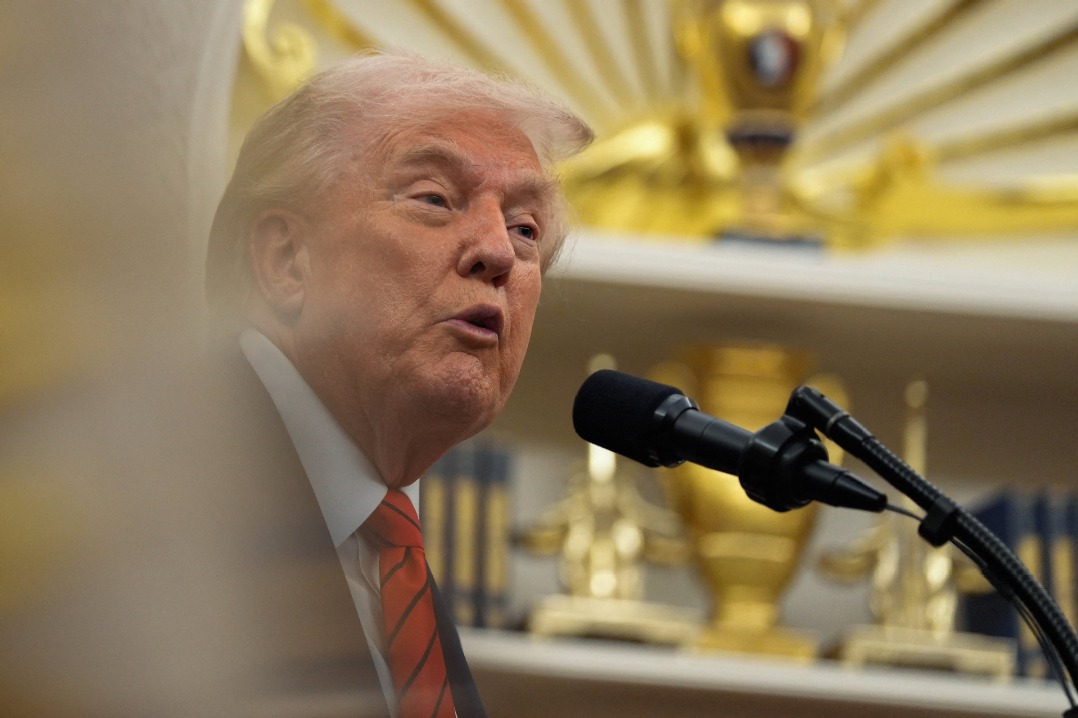
In a significant escalation of trade tensions, former US President Donald Trump announced on Friday that the United States will impose an additional 100% tariff on all imports from China starting November 1, 2025. The move, which could be implemented sooner depending on China’s actions, will apply on top of existing tariffs. Trump also revealed plans to enforce export controls on all critical US-made software from November. The announcement was made via his Truth Social account, where he emphasized that these measures are part of broader countermeasures under consideration. This decision comes despite recent trade talks between Chinese and US teams in Madrid, Spain, following earlier discussions in Switzerland, Britain, and Sweden. The announcement triggered a sharp decline in US stocks, marking the worst single-day performance since the height of the tariff war in April. Trump’s aggressive stance underscores the ongoing economic rivalry between the two nations, with potential ripple effects on global trade and markets.
-
Trump appointee’s case for bigger rate cuts fails to move Fed
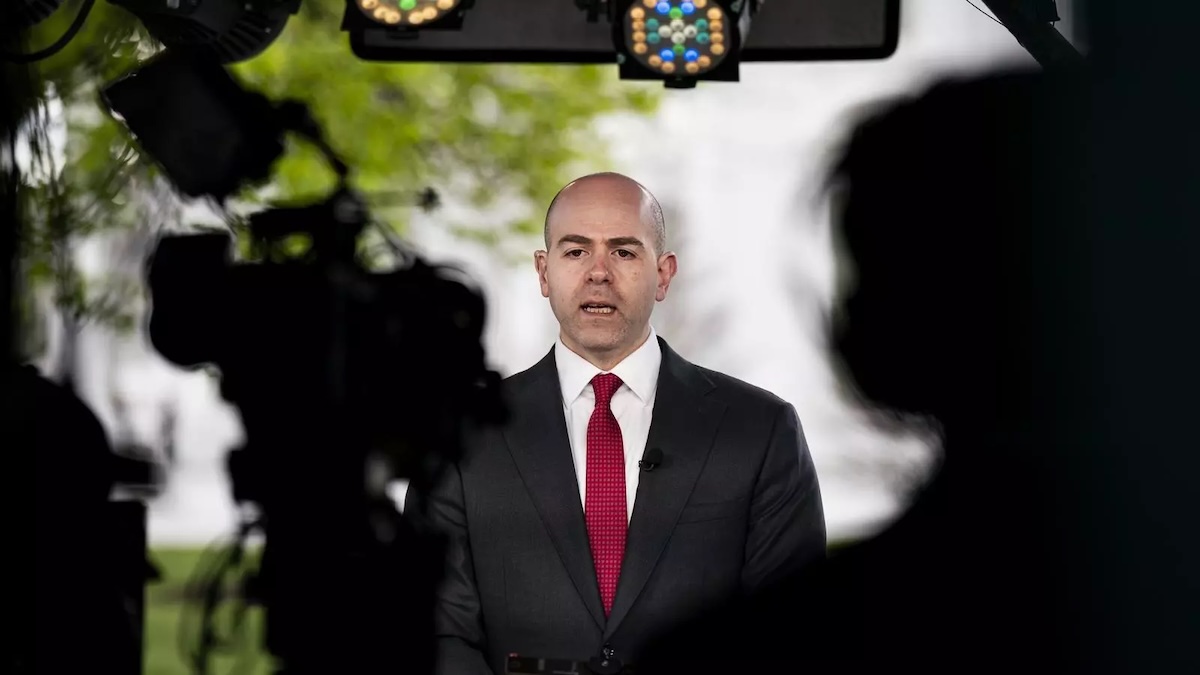
Stephen Miran, recently appointed to the Federal Reserve Board by President Trump, is pushing for more substantial and rapid interest-rate cuts than his colleagues. Miran, who joined the board last month and is currently on leave from his role as chair of Trump’s Council of Economic Advisors, argues that the federal funds rate should be significantly lower than its current range of 4% to 4.25%. While Trump has called for a three-percentage-point reduction, Miran advocates for a mid-2% range, about two points below today’s rate. His stance was evident during the Fed’s recent vote, where he was the sole dissenter against a modest quarter-point cut, instead favoring a half-point reduction. Miran’s projections, as indicated in the Fed’s September ‘dot plot,’ suggest a federal funds rate below 3% by year-end, a stark contrast to the majority forecast of 3.75%. His rationale centers on the ‘neutral rate of interest’ (r-star), which he believes is much lower than his peers estimate, warning that the Fed’s current policy risks exacerbating unemployment. Miran attributes his outlook to Trump’s policies, including tariffs, tax changes, and deregulation, which he claims will alter the supply and demand dynamics of money. However, his arguments face skepticism from economists and bond investors, with many questioning the feasibility of his projections. Despite his outlier position, Miran’s detailed justifications, supported by 28 footnotes, offer a rare depth in policy discourse. Yet, with inflation concerns and a softening job market, the Fed remains cautious, favoring gradual quarter-point cuts over Miran’s aggressive approach.
-

China tightens rules to block Pakistan rare earths exports to US
China has introduced stringent measures to restrict the export of rare-earth extraction technologies, following revelations that Pakistan is utilizing Chinese equipment to produce specialized metals for the United States. The new regulations, issued by the Chinese Commerce Ministry, encompass rare-earth production, processing, and separation equipment, along with related raw and auxiliary materials. Overseas producers must now obtain export licenses from the Chinese government to access these technologies and equipment.
-
Wall Street tumbles to its worst day since April after Trump threatens more tariffs on China
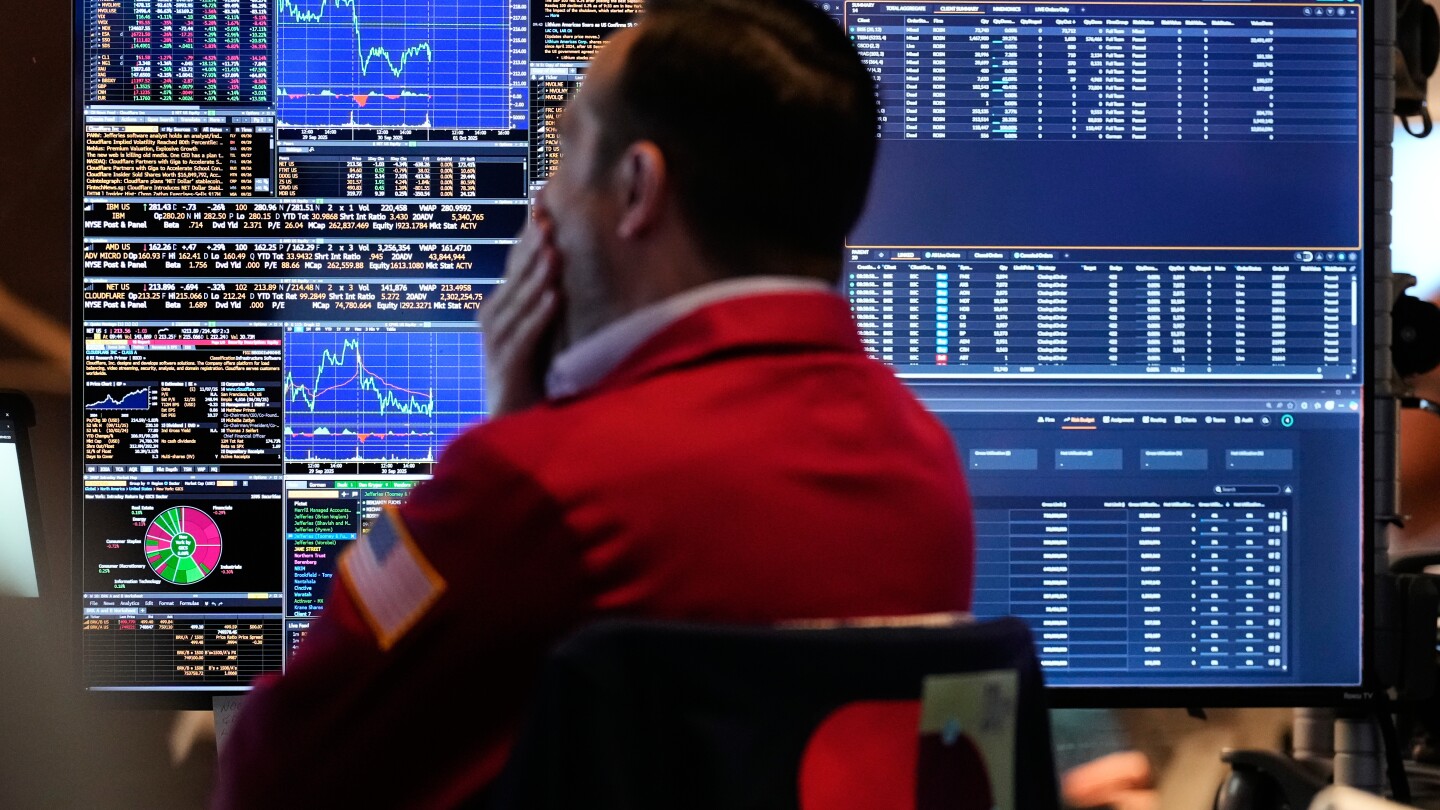
The tranquility that had enveloped Wall Street for months was abruptly shattered on Friday as U.S. stocks experienced a significant downturn. This dramatic shift was triggered by President Donald Trump’s announcement that he is considering a substantial increase in tariffs on Chinese imports. The S&P 500 plummeted by 2.7%, marking its worst performance since April. Similarly, the Dow Jones Industrial Average dropped by 878 points, or 1.9%, and the Nasdaq composite fell by 3.6%. The market had initially been on a path to modest gains in the morning, but Trump’s social media post on Truth Social, where he expressed his discontent with China’s restrictions on rare earth exports, sent shockwaves through the financial world. Rare earths are crucial for manufacturing a wide range of products, from consumer electronics to jet engines. Trump’s post also indicated that a planned meeting with Chinese President Xi Jinping during an upcoming trip to South Korea might no longer be necessary. The escalation in tensions between the two largest global economies led to widespread declines across Wall Street, with nearly six out of every seven stocks in the S&P 500 falling. The downturn affected a broad spectrum of companies, from tech giants like Nvidia and Apple to smaller firms grappling with the uncertainty surrounding tariffs and trade. The market’s vulnerability to a downturn was already a topic of discussion, as the S&P 500 had experienced a nearly relentless 35% rise from its low in April, leading some critics to argue that stock prices had become excessively high. Concerns were particularly pronounced in the artificial intelligence sector, where some saw parallels to the dot-com bubble of 2000. For stock prices to appear more reasonable, either a decline in prices or an increase in corporate profits would be necessary. Levi Strauss, for instance, saw its stock price drop by 12.6% despite reporting stronger-than-expected quarterly profits. The company’s full-year profit forecast was within Wall Street’s estimates, but it faced the challenge of heightened expectations following a significant surge in its stock price earlier in the year. The S&P 500 closed at 6,552.51, down by 182.60 points, while the Dow Jones Industrial Average ended at 45,479.60, a drop of 878.82 points. The Nasdaq composite finished at 22,204.43, down by 820.20 points. The oil market also saw significant movement, with the price of benchmark U.S. crude falling by 4.2% to $58.90 per barrel. This decline was partly attributed to a ceasefire between Israel and Hamas in Gaza, which alleviated concerns about potential disruptions to oil supplies. Brent crude, the international standard, dropped by 3.8% to $62.73 per barrel. In the bond market, the yield on the 10-year Treasury fell to 4.05% from 4.14% the previous day. This decline was influenced by a report from the University of Michigan indicating that consumer sentiment remains subdued, with concerns about high prices and weakening job prospects at the forefront. The Federal Reserve had recently cut its main interest rate for the first time this year, with further cuts anticipated to provide the economy with additional support. However, Fed Chair Jerome Powell has cautioned that the central bank may adjust its course if inflation remains high. A preliminary survey from the University of Michigan offered a glimmer of hope, showing that consumers’ expectations for inflation in the coming year had slightly decreased to 4.6% from 4.7% the previous month. While still elevated, this downward trend could help the Fed manage inflationary pressures. Internationally, stock markets in Europe and Asia also experienced declines, with Hong Kong’s Hang Seng falling by 1.7% and France’s CAC 40 dropping by 1.5%. However, South Korea’s Kospi surged by 1.7% following the reopening of trading after a holiday.