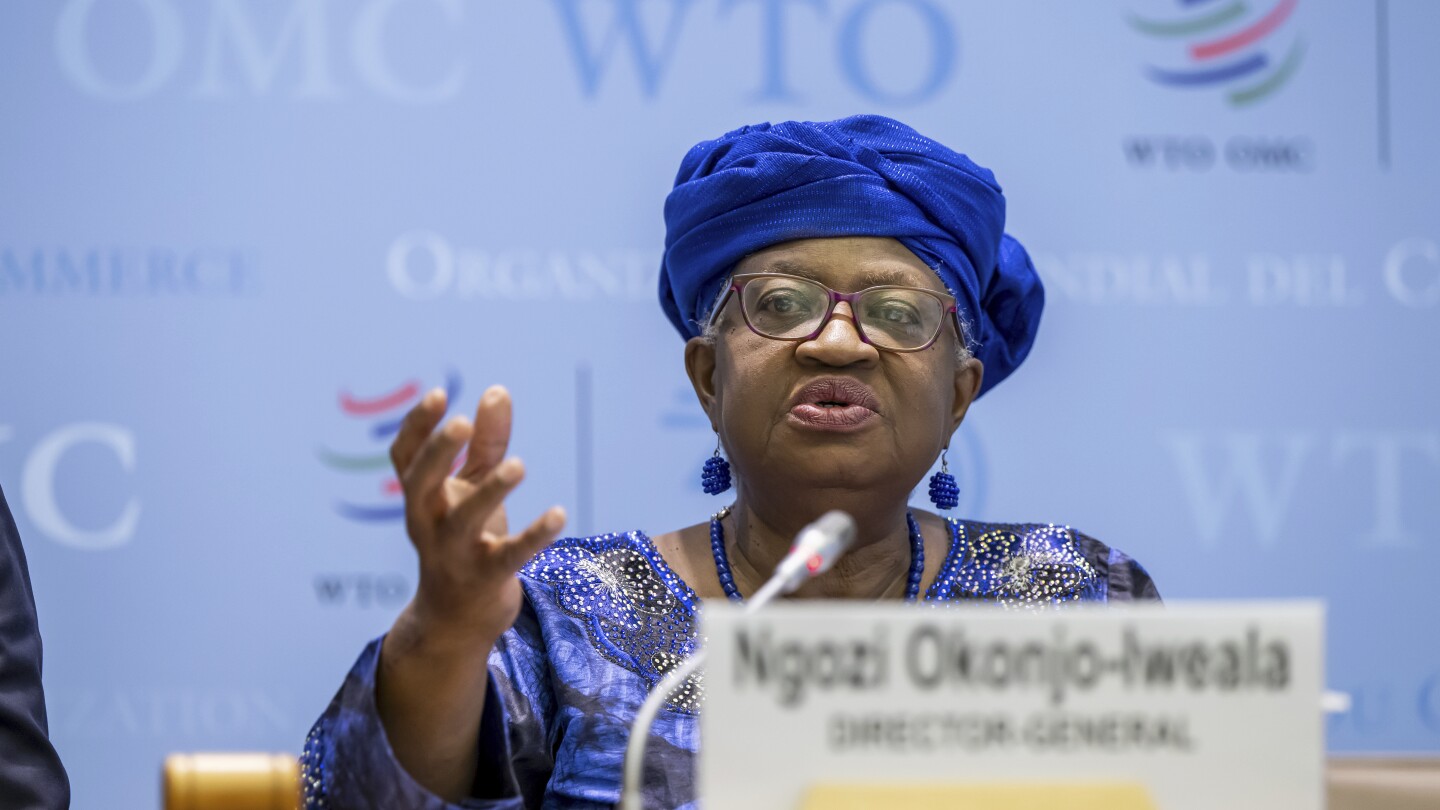
The World Trade Organization (WTO) has projected a 0.2% decline in global goods trade for this year, attributing the downturn to U.S. President Donald Trump’s fluctuating tariff policies and the ongoing trade tensions with China. The WTO cautioned that the situation could worsen significantly if Trump implements his most stringent reciprocal tariffs. The global trade forum highlighted that North America would experience the sharpest decline, with exports expected to plummet by 12.6% and imports by 9.6% this year, even without the harshest tariffs. The WTO’s report, based on the tariff landscape as of Monday, initially anticipated continued trade expansion in 2025 and 2026. However, Trump’s trade war has compelled WTO economists to drastically revise their forecasts. If Trump enacts the toughest tariffs on most nations, global trade in goods could slump by 1.5%, primarily due to the uncertainty unsettling businesses. Earlier this month, Trump temporarily suspended the most severe tariffs for 90 days, allowing over 70 countries to address U.S. trade concerns. Concurrently, he has escalated taxes on Chinese imports to 145% and is embroiled in protracted tariff negotiations with Canada and Mexico. WTO Director-General Ngozi Okonjo-Iweala emphasized that the persistent uncertainty threatens to hinder global growth, with particularly adverse effects on the most vulnerable economies. WTO Chief Economist Ralph Ossa noted that trade policy uncertainty significantly dampens trade flows, reducing exports and weakening economic activity. He stressed the importance of understanding the wide-ranging and often unintended consequences of tariffs in an increasingly tense global trade environment.
分类: business
-

Trump’s reciprocal tariffs will overturn decades of trade policy
President Donald Trump is poised to upend decades of established global trade norms with his anticipated announcement of reciprocal tariffs on April 2, a date he has dubbed “Liberation Day.” This bold move, aimed at reducing America’s reliance on foreign goods, is expected to create significant disruptions for global businesses and strain relations with both allies and adversaries. Since the 1960s, tariffs have been the product of multilateral negotiations, but Trump’s unilateral approach seeks to redefine this process. Richard Mojica, a trade attorney, warns that this strategy will necessitate widespread adjustments across industries. Trump’s rationale centers on America’s persistent trade deficits, which he attributes to higher tariffs imposed by other countries on U.S. exports. His solution? Raise U.S. tariffs to match those of trading partners. Economists, however, caution that tariffs often burden consumers and may not achieve the desired outcomes. While some, like Christine McDaniel, suggest that reciprocal tariffs could incentivize other nations to lower their tariffs, the broader consensus is that Trump’s approach introduces significant uncertainty into global trade. The White House has yet to clarify key details, such as whether tariffs will be adjusted on a product-by-product basis or averaged across countries. Critics argue that Trump’s grievances overlook the fact that many high foreign tariffs were agreed upon during the Uruguay Round of trade negotiations and are not uniquely targeted at the U.S. Moreover, the U.S. economy has outperformed other advanced economies in recent years, raising questions about the urgency of Trump’s trade policies. Beyond tariffs, Trump is also targeting foreign practices like subsidies and value-added taxes (VATs), further complicating the trade landscape. While VATs are applied equally to domestic and imported goods, Trump views them as a trade barrier, a stance most economists dispute. Ultimately, Trump’s tariffs have not significantly narrowed the U.S. trade deficit, which economists attribute to broader macroeconomic factors like low savings rates and high consumer spending. As the global trade environment grows increasingly chaotic, businesses and governments alike are bracing for the ripple effects of Trump’s protectionist agenda.
-
Asian shares slip in cautious trading, shrug off US rally
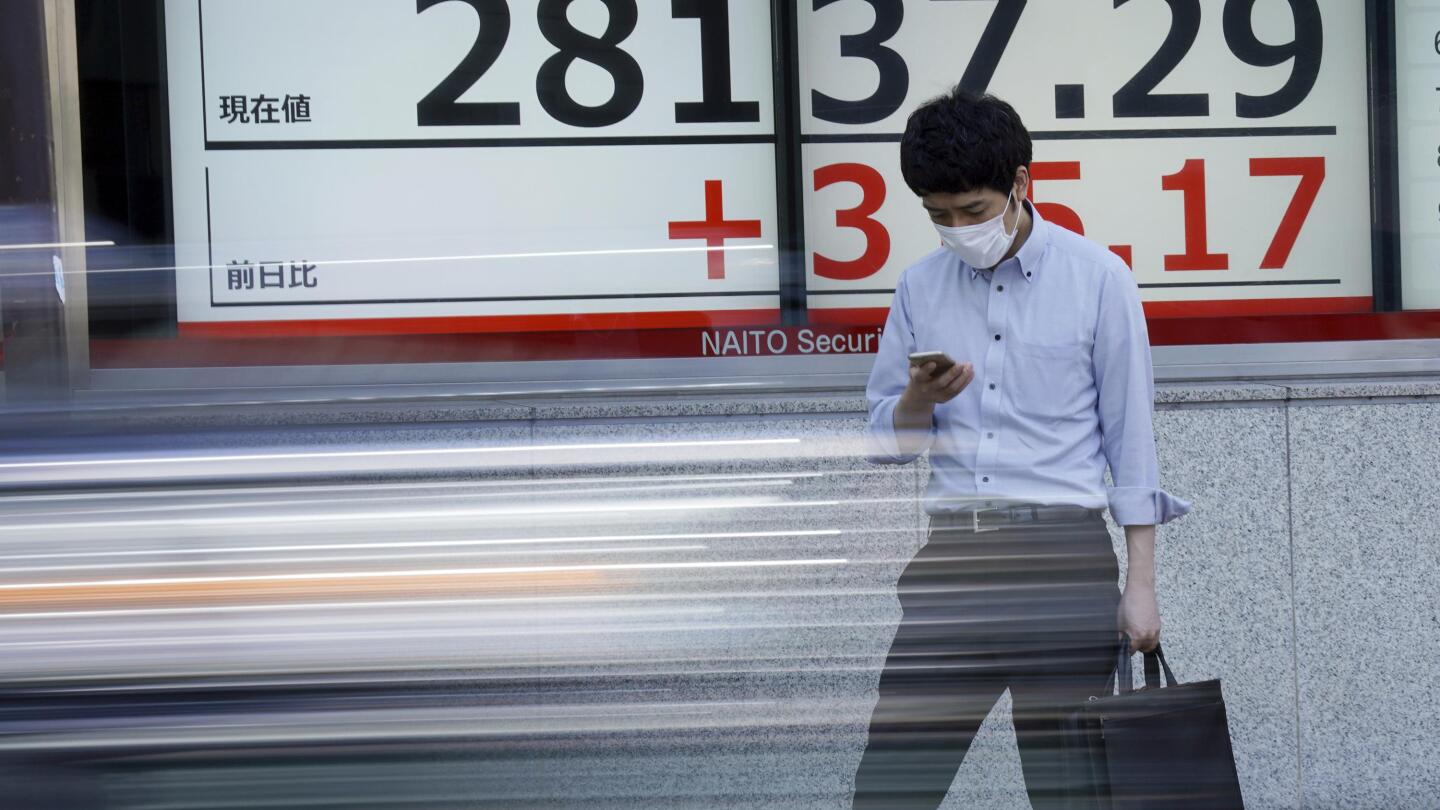
Asian markets experienced a downturn on Wednesday, despite a robust recovery on Wall Street led by technology and banking sectors. Japan’s Nikkei 225 dropped 1% to 27,544.06, while South Korea’s Kospi fell 1.0% to 2,932.15. Australia’s S&P/ASX 200 declined 0.5% to 7,209.40, and Hong Kong’s Hang Seng slid nearly 0.9% to 23,899.34. Trading in Shanghai was suspended due to national holidays. Persistent concerns over COVID-19 infections and China’s economic slowdown, particularly the debt crisis of China Evergrande Group, have kept investors cautious. Tan Boon Heng of Mizuho Bank noted that risks from China’s credit issues and real estate sector remain unresolved. In Japan, the new finance minister’s commitment to traditional economic policies has provided some reassurance, though Fitch Ratings maintains a negative outlook due to pandemic-related macroeconomic risks. Meanwhile, New Zealand’s central bank raised interest rates for the first time in seven years, signaling a shift from pandemic-era support measures. Wall Street saw gains, with the S&P 500 rising 1.1%, the Dow Jones Industrial Average up 0.9%, and the Nasdaq climbing 1.3%. Despite recent volatility, analysts anticipate strong corporate earnings in the upcoming third-quarter reports, which could bolster market confidence. Energy markets saw slight declines, with U.S. crude dropping to $78.81 a barrel and Brent crude falling to $82.48 a barrel. The U.S. dollar strengthened against the Japanese yen and the euro.
-
Cruise giant Norwegian threatens to skip Florida’s ports
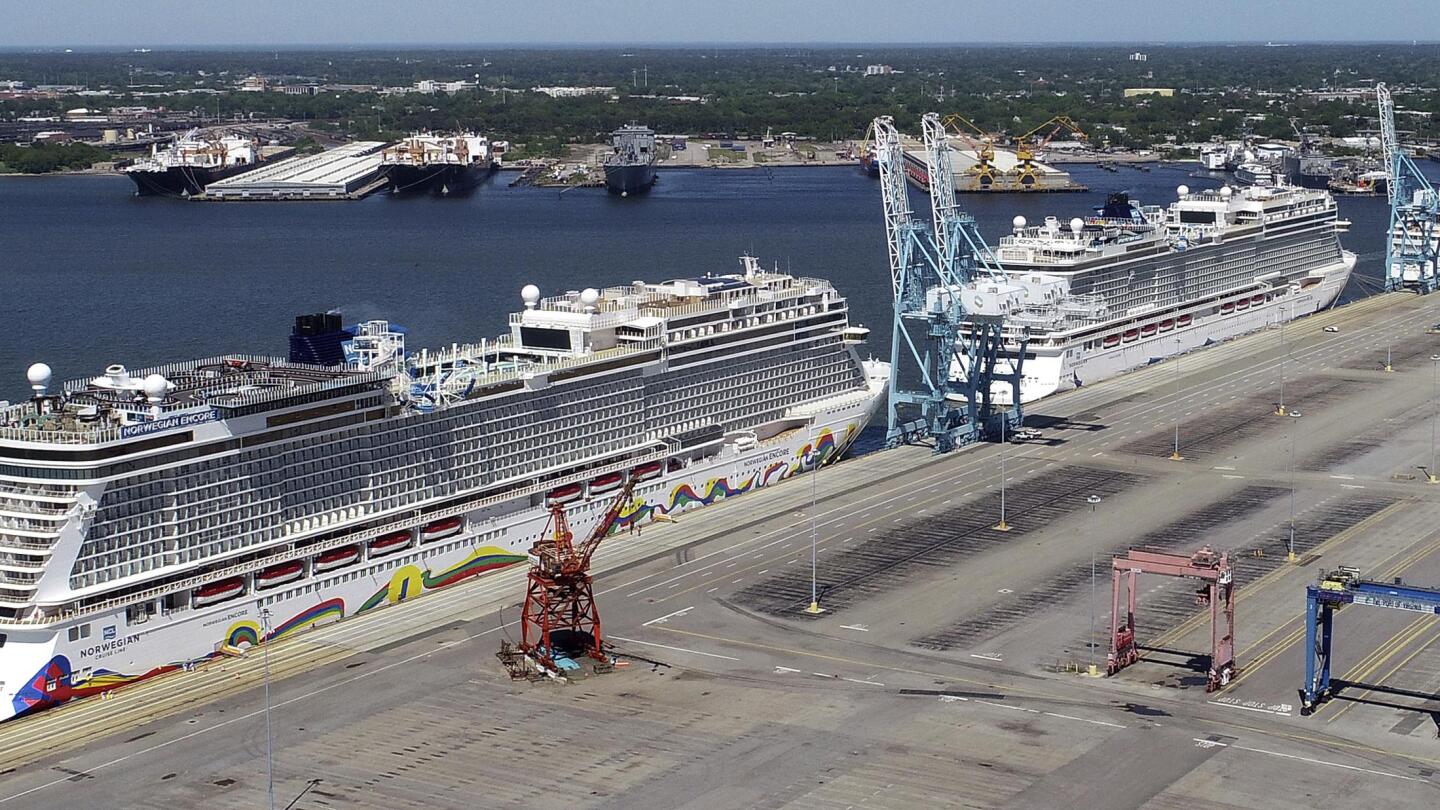
Norwegian Cruise Line Holdings, headquartered in Miami, has issued a stern warning to Florida, threatening to relocate its ships following Governor Ron DeSantis’s enactment of a law prohibiting businesses from mandating proof of COVID-19 vaccination. The company argues that this state legislation conflicts with federal health guidelines, which permit cruise operations in U.S. waters provided nearly all passengers and crew are vaccinated. CEO Frank Del Rio emphasized the tension between state and federal jurisdictions, stating, “Lawyers believe federal law supersedes state law, but we hope this doesn’t escalate into a legal or political battle.” Norwegian Cruise Line Holdings, which also owns Oceania Cruises and Regent Seven Seas Cruises, is exploring alternative bases in other states or the Caribbean if Florida remains inhospitable. Del Rio revealed these plans during the company’s quarterly earnings call, expressing optimism that a resolution could still be reached through ongoing discussions with DeSantis’s office. The governor’s recent executive order and subsequent legislation, which also grants him authority to override local pandemic-related measures, were framed as efforts to protect individual freedoms and privacy. However, the cruise industry, which has been grounded in U.S. waters since March 2020, is eager to resume operations. Federal guidelines from the CDC allow vaccinated cruises to bypass trial voyages and commence regular trips, provided 98% of crew and 95% of passengers are vaccinated. Despite these challenges, Norwegian reported a surge in bookings, signaling potential recovery by early 2022, even as the company posted a $1.37 billion loss in the first quarter of 2021.