分类: business

  • India accelerates free trade agreements to counter US tariffs and expand exports

    India accelerates free trade agreements to counter US tariffs and expand exports

    In a strategic move to mitigate the impact of escalating U.S. import tariffs and navigate mounting global trade volatilities, India has intensified efforts to conclude multiple free trade agreements within coming months. This accelerated diplomatic push aims to diversify export markets and reinforce the nation’s position within international supply chains.

    Government officials, speaking anonymously due to the sensitive nature of ongoing negotiations, revealed that New Delhi is in advanced discussions with the European Union, New Zealand, and Chile. The first tangible outcome of this renewed initiative will materialize this Thursday with the anticipated signing of a comprehensive FTA with Oman. Prime Minister Narendra Modi is scheduled to be present in Muscat for the ceremonial signing event.

    The India-Oman pact specifically targets enhanced bilateral trade flows, with particular focus on boosting Indian exports across several key sectors including engineering goods, textiles, pharmaceuticals, and agricultural products. This agreement represents a critical component of India’s broader economic strategy seeking deeper global supply chain integration, sustained export growth, and substantial job creation.

    Trade analyst Ajay Srivastava notes that India is strategically deploying FTAs as instruments to counterbalance the disruptive effects of steep and unpredictable U.S. tariffs, which reached 50% in August. These tariffs have particularly pressured Indian exporters in textiles, auto components, metals, and labor-intensive manufacturing sectors.

    India’s existing trade architecture already encompasses 15 FTAs covering 26 nations plus six preferential agreements with another 26 countries. Current negotiations involve over 50 additional partners. Once finalized, this network will essentially connect India with virtually all major global economies except China.

    Recent successes include comprehensive agreements with the UAE and Australia that have demonstrably boosted bilateral trade volumes. Additionally, May witnessed a hard-negotiated FTA with Britain that will significantly reduce tariffs on products ranging from Scotch whisky to Indian spices.

    Despite this momentum, challenges persist as Indian negotiators must balance protecting domestic industries and small farmers against trading partners’ demands for greater market access. The anticipated trade agreement with the United States has encountered delays amid strained relations following India’s continued purchases of discounted Russian crude oil.

    Recent diplomatic engagements, however, suggest improving relations. Prime Minister Modi recently endorsed former President Trump’s peace proposal for the Russia-Ukraine conflict, and the two leaders have conducted telephone discussions addressing mutual interests including trade. These developments were followed by last week’s visit of U.S. negotiators led by Deputy Trade Representative Rick Switzer to New Delhi.

    Parallel negotiations continue with other partners: New Zealand’s Trade Minister Todd McClay recently met Indian counterpart Piyush Goyal to advance FTA discussions, while EU Commissioner Maros Sefcovic similarly engaged with Goyal to resolve outstanding issues in the India-EU trade negotiations.

  • Israel approves natural gas deal with Egypt, Netanyahu says

    Israel approves natural gas deal with Egypt, Netanyahu says

    Israeli Prime Minister Benjamin Netanyahu has formally approved a historic natural gas export agreement with Egypt, marking the largest energy deal in Israel’s history. The monumental arrangement, valued at 112 billion shekels ($34.67 billion), will facilitate substantial gas shipments from Israel’s Leviathan offshore field to address Egypt’s growing energy requirements.

    The agreement, finalized in August but delayed due to unresolved negotiation points, involves American energy giant Chevron Corporation alongside Israeli partners. Netanyahu emphasized the strategic importance of this partnership during a televised address, highlighting its potential to bolster regional stability through strengthened economic cooperation.

    Egypt’s energy landscape has undergone significant transformation since 2022, when declining domestic production forced the nation to abandon its aspirations as a regional energy hub. The country has increasingly relied on imported liquefied natural gas, spending billions to meet domestic demand. This agreement represents a strategic pivot toward Israeli resources to compensate for production shortfalls.

    The Leviathan field, located in the Mediterranean Sea, has emerged as a crucial energy asset for Israel since its discovery. This export arrangement not only solidifies Israel’s position as an emerging energy exporter but also creates an unprecedented economic partnership between the two nations despite their complex historical relations.

    Energy analysts suggest this agreement could reshape Eastern Mediterranean energy dynamics while providing Egypt with a stable, cost-effective alternative to more expensive spot market purchases. The deal is expected to undergo gradual implementation with careful monitoring of export volumes and pricing mechanisms.

  • Gulf nations push to the front of global sustainability race as ESG becomes economic engine

    Gulf nations push to the front of global sustainability race as ESG becomes economic engine

    The Gulf Cooperation Council (GCC) nations, particularly the United Arab Emirates, are undergoing a remarkable transformation from hydrocarbon-dependent economies to global sustainability pioneers. This strategic pivot positions Environmental, Social, and Governance (ESG) principles as central drivers of economic diversification and long-term growth rather than mere corporate social responsibility initiatives.

    This paradigm shift finds its most concrete expression in the UAE’s groundbreaking Federal Decree-Law No. 11 of 2024, which became effective in May 2025. This legislation establishes the world’s first legally enforceable ESG compliance framework, mandating that all entities across sectors and free zones measure, report, and reduce greenhouse gas emissions by May 30, 2026. Non-compliant organizations face substantial penalties ranging from Dh50,000 to Dh2 million, signaling a decisive transition from voluntary commitments to mandatory accountability.

    The regulatory framework requires businesses to maintain comprehensive annual emissions inventories, preserve GHG data for five years, and develop detailed decarbonization plans aligned with the national Net Zero 2050 strategy. This approach transcends environmental regulation, representing a comprehensive economic vision projected to generate 200,000 new jobs in clean energy sectors and contribute 3% to national GDP.

    According to the PROI Worldwide’s Global ESG Report 2025, this transformation extends across the Gulf region, with national development frameworks such as Saudi Vision 2030 and Qatar National Vision 2030 integrating sustainability objectives into their core economic planning. Unlike the politically charged ESG debates occurring in Western nations, GCC policymakers approach sustainability as a practical economic transformation tool rather than an ideological battleground.

    The regulatory evolution is fundamentally altering corporate communication strategies, with companies increasingly emphasizing tangible outcomes through terminology such as ‘sustainability,’ ‘resilience,’ and ‘nationalization’ rather than acronyms like ESG or DEI. Organizations including Spinneys, Ecolab, and EQUATE Petrochemicals are embedding sustainability KPIs into executive performance metrics and aligning local initiatives with global climate frameworks.

    As mandatory reporting requirements take effect, businesses must advance beyond narrative-driven sustainability reporting to provide verified, evidence-based progress updates, third-party validated data, and demonstrable emission reduction achievements. Media outlets across the region are expected to intensify scrutiny of corporate compliance as the 2026 deadline approaches.

    Marianna Wisden, Associate Partner at Mojo Communications Consultancy, notes: ‘Sustainability in the region is driven by outcomes that genuinely matter to people. It shapes how companies create jobs, build skills and support a future that relies on a broader base than oil alone. The frameworks are in place and businesses are getting on with the work.’

    The Gulf’s sustainability transformation establishes not merely regional standards but provides an implementable model for emerging economies worldwide, demonstrating how environmental responsibility and economic growth can be strategically aligned for long-term prosperity.

  • Silver soars past $66 an ounce, will it hit $70 soon?

    Silver soars past $66 an ounce, will it hit $70 soon?

    Silver prices shattered historical records on Wednesday, catapulting beyond $66 per ounce as a convergence of monetary, structural, and physical market forces created unprecedented momentum in precious metals trading. The white metal’s remarkable ascent—more than doubling in value throughout 2025—represents one of the most dramatic revaluations in modern commodity history.

    The rally accelerated following weaker-than-anticipated U.S. employment data, which signaled a cooling labor market and strengthened expectations for additional interest rate cuts in 2026. Spot silver reached $66.52 per ounce during the session before settling at $66.30 by 9:25 PM UAE time, marking a 4% single-day increase according to Reuters data.

    Market analysts identify three primary drivers behind silver’s extraordinary performance: critically constrained physical supplies, price-inelastic industrial demand, and policy-driven market dislocations. Ole Hansen, Head of Commodity Strategy at Saxo Bank, observed that silver has fundamentally resolved its long-standing identity crisis by simultaneously functioning as both a monetary metal and industrial commodity while facing severe supply limitations.

    The rally originated from gold’s momentum earlier in the year, with the gold-silver ratio reaching above 105 in April—an extreme valuation gap that attracted both speculative and long-term investors. Once technical resistance levels collapsed beginning in August, momentum buying accelerated dramatically, transforming relative value opportunities into outright price discovery.

    Beyond technical factors, broader macroeconomic conditions have strongly favored hard assets amid eroding confidence in fiat currencies. Persistent inflation pressures, expanding fiscal deficits, and debt sustainability concerns have driven robust central bank gold purchasing, with silver benefiting as a higher-beta, more accessible alternative.

    India has emerged as a crucial source of incremental demand, driven primarily by retail investment and jewelry consumption rather than seasonal factors alone. Simultaneously, silver-backed ETFs have absorbed approximately 130 million ounces this year, increasing total holdings by 18% to roughly 844 million ounces—overwhelmingly led by retail participation while institutions predominantly favored gold.

    Vijay Valecha, CIO at Century Financial, noted that physical markets remain extremely tight, with London lease rates elevated near 6%, Shanghai inventories at decade lows, and backwardation signaling immediate scarcity. Industrial demand linked to solar energy, electrification initiatives, data centers, and AI infrastructure continues to accelerate, reinforcing silver’s dual role in both financial and industrial applications.

    Despite the powerful bullish momentum, analysts caution that the rally shows signs of overheating. Momentum indicators reside firmly in overbought territory, and historical patterns suggest such aggressive moves typically precede sharp, short-term corrections. Nevertheless, near-term extensions toward $70-75 per ounce remain plausible given persistent physical tightness and gold’s underlying strength. While volatility will likely continue, the fundamental case for silver’s structural bull market remains intact for now.

  • Dubai’s commercial property market heading for major reset

    Dubai’s commercial property market heading for major reset

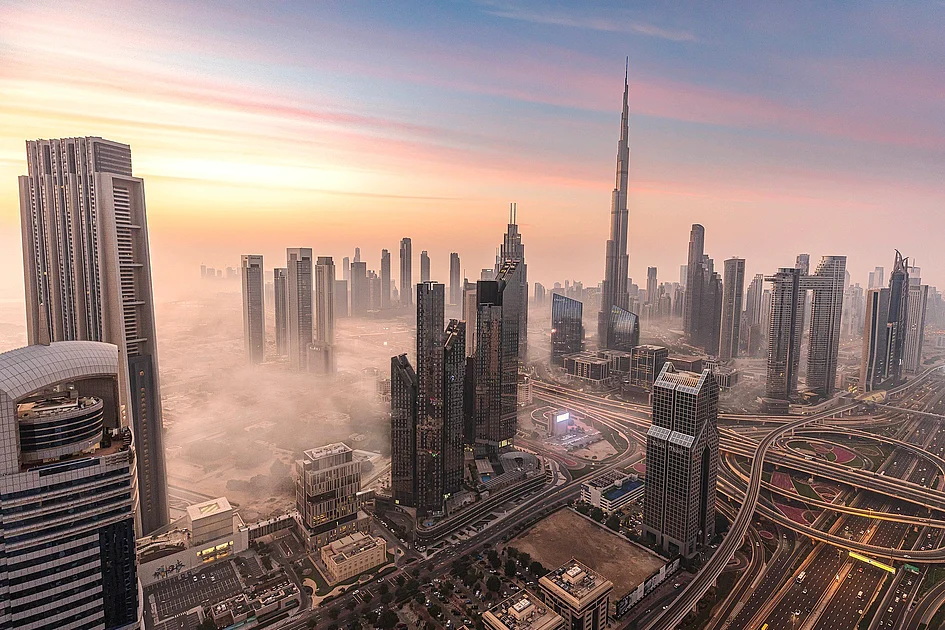
    Dubai’s commercial property landscape is undergoing a fundamental structural transformation that will culminate in a distinct two-tier market system by 2028, according to real estate experts. This market reset will see premium next-generation Grade A office spaces commanding substantial price premiums while older commercial buildings face increasing competitive pressures.

    The transformation comes despite impressive short-term performance metrics. Commercial real estate transactions have demonstrated remarkable growth throughout the current year, with sales value surging by 77.9 percent to reach AED 15.5 billion during the first eleven months, while transaction volume increased by 35.1 percent to 5,364 deals compared to the same period last year.

    According to Firs Al Msaddi, CEO of fäm Properties, the commercial sector has lagged significantly behind Dubai’s residential market in architectural innovation and quality standards for over fifteen years. “Since 2008, Dubai has not witnessed a genuine new generation of office developments,” Al Msaddi noted. “The residential segment underwent comprehensive transformation with new design languages, architectural standards, and construction codes, while the commercial sector awaited its reset moment.”

    The market shift will accelerate as the first wave of next-generation Grade A office buildings begins delivery in 2028. This influx of modern, efficient, and architecturally relevant office spaces will provide tenants with superior alternatives, fundamentally reshaping market dynamics and pricing structures across Dubai’s commercial landscape.

    Al Msaddi cited Vision Tower in Business Bay as a precursor to this trend, noting its consistent market outperformance due to its appeal to established corporate tenants. The building’s minimum half-floor requirement naturally filters for serious companies, demonstrating the substantial latent demand for genuine Grade A office space in Dubai.

    The emerging two-tier system will see commercial properties repricing according to quality benchmarks, creating distinct market segments with varying valuation models and tenant profiles.

  • BP names new boss as current CEO leaves after less than two years

    BP names new boss as current CEO leaves after less than two years

    In a historic move for the energy sector, BP has named Meg O’Neill as its new chief executive, marking the first time a woman will lead a major global oil corporation. The appointment comes amid significant leadership turbulence at the London-based energy giant.

    O’Neill, who currently serves as CEO of Australian energy firm Woodside Energy, will assume her new role on April 1st. She succeeds Murray Auchincloss, who is stepping down after less than two years at the helm. Auchincloss had replaced Bernard Looney in September 2024 following Looney’s dismissal for serious misconduct related to undisclosed relationships with colleagues.

    BP executive vice president Carol Howle will serve as interim chief executive during the transition period. Auchincloss will remain in an advisory capacity until December 2026, ensuring continuity during the leadership change.

    O’Neill brings extensive industry experience to BP, having spent 23 years in various technical, operational and leadership roles at ExxonMobil before leading Woodside Energy since 2021. Under her leadership, Woodside completed its significant acquisition of BHP Petroleum International in 2022 and grew into the largest energy company listed on the Australian Securities Exchange.

    In her first comments as CEO-designate, O’Neill emphasized her commitment to helping BP ‘meet the world’s energy needs’ while prioritizing market leadership, safety innovation, and sustainability initiatives.

    The leadership transition occurs as BP undergoes strategic shifts, including reducing renewable energy investments in favor of increased oil and gas production. This pivot follows pressure from investors concerned about profitability and share performance relative to competitors.

    The appointment reflects broader industry trends, with rivals Shell and Equinor similarly scaling back green energy investments amid favorable market conditions for fossil fuels and supportive political environments, including former President Trump’s pro-drilling stance.

  • DMCC partners with Crypto.com to drive global push for commodities tokenisation

    DMCC partners with Crypto.com to drive global push for commodities tokenisation

    In a landmark move that signals Dubai’s accelerating embrace of digital asset innovation, the Dubai Multi Commodities Centre (DMCC) has entered into a strategic partnership with cryptocurrency exchange giant Crypto.com. This collaboration, formalized through a Memorandum of Understanding, aims to revolutionize global commodities trading through blockchain-enabled tokenization of physical assets.

    The partnership brings together the world’s largest free zone and commodities trading hub with one of the most prominent digital asset platforms to explore transformative solutions for tokenizing real-world commodities. The initiative specifically targets precious metals, diamonds, energy products, and agricultural goods—seeking to modernize how these assets are financed, traded, and settled across international markets.

    Key objectives include reducing settlement friction, enhancing price transparency, and expanding access to broader pools of market participants. The alliance will assess the potential listing of tokenized commodities on the Crypto.com Exchange, contingent upon regulatory approvals and existing listing requirements. Additionally, both organizations will jointly investigate digital asset custody models, liquidity-facilitation mechanisms, and digital-asset payment solutions across DMCC’s digital platforms.

    Ahmed Bin Sulayem, Executive Chairman and CEO of DMCC, characterized tokenization as a structural opportunity to modernize commodities markets that still rely heavily on legacy systems. “The ability to move real assets on-chain could significantly enhance transparency and efficiency,” he stated, emphasizing Dubai’s positioning at the forefront of blockchain-enabled trade transformation.

    The collaboration extends beyond market infrastructure to include educational initiatives through the DMCC Crypto Centre. These will feature workshops, hackathons, and capability-building programs designed to strengthen institutional understanding of tokenized asset models and foster responsible innovation within Dubai’s rapidly expanding Web3 ecosystem.

    Crypto.com President Eric Anziani highlighted the significance of tokenized real-world assets as “one of the most significant advancements in the digital economy,” noting that the partnership provides an exceptional platform to explore these opportunities responsibly and at scale.

    This agreement builds upon DMCC’s earlier partnership with Dubai’s Virtual Assets Regulatory Authority (VARA), forming part of a comprehensive strategy to develop secure, compliant frameworks for integrating physical assets into the digital economy. With over 26,000 member companies across various sectors, DMCC provides a diversified commercial environment for testing and implementing blockchain applications within global supply chains.

  • Zen launches digital finance platform to advance real-world asset tokenisation

    Zen launches digital finance platform to advance real-world asset tokenisation

    In a significant development for digital finance, Zen has officially launched its innovative platform dedicated to transforming real-world assets into compliant digital tokens. Founded by seasoned entrepreneur Aniket Warty, whose career spans over four decades, the platform emerges as a sophisticated ecosystem prioritizing value creation, operational transparency, and long-term market resilience.

    The core of Zen’s infrastructure is Atlas Rails, a robust transaction system that seamlessly integrates the platform’s various verticals—ZenX, ZenTokenize, ZenPay, and ZenOTC—into a unified, programmable settlement layer. This architecture supports the entire lifecycle of asset tokenization, facilitating the conversion of tangible and intangible assets—including real estate, private equity, debt instruments, art, and intellectual property—into liquid digital positions.

    Atlas Rails is engineered to manage onboarding, risk assessment, payment routing, foreign exchange, settlement, and post-trade reconciliation. Its modular design allows integration with card issuance systems, digital wallets, and liquidity management tools, ensuring both operational flexibility and regulatory compliance.

    Zen distinguishes itself by addressing longstanding barriers to the adoption of tokenized assets within traditional finance, such as regulatory uncertainty and market volatility. The platform is built to endure different market cycles, offering institutional-grade security and stability that appeal to investors and asset owners alike.

    Aniket Warty, leveraging his extensive background in venture capital, private equity, and digital finance, applied first-principles thinking to develop Zen. His approach ensures the platform treats liquidity and tokenization as operational rather than speculative functions, aligning with the practical needs of institutions and creators.

    By bridging conventional asset markets with programmable digital finance rails, Zen provides a streamlined environment for asset issuance, trading, payments, and custody, marking a pivotal step toward the future of finance.

  • How Japan built a rare-earth supply chain without China

    How Japan built a rare-earth supply chain without China

    In the global race to secure critical mineral supplies beyond China’s dominance, Japan emerges as a pioneering case study in strategic supply chain resilience. The nation’s comprehensive approach to reducing dependency on Chinese rare-earth elements—vital components in automotive manufacturing, advanced electronics, and defense technologies—offers valuable lessons for Western nations currently facing similar challenges.

    Japan’s awakening to supply chain vulnerabilities occurred dramatically in 2010 when China implemented an unannounced two-month embargo during a territorial dispute. This economic retaliation, triggered by a maritime incident near disputed islands, exposed Japan’s critical dependence as Chinese rare earths constituted over 90% of its imports at the time. Tatsuya Terazawa, then economic policy chief at Japan’s trade ministry, recounted the moment industry officials warned that automotive supply chains faced imminent suspension due to the sudden cutoff.

    The government responded with a decisive $1 billion strategic package designed to diversify sources and build structural resilience. This initiative supported Japanese conglomerates in developing alternative supply channels, with particular focus on Australia’s Lynas Corporation—the only company attempting to establish a fully integrated rare-earth supply chain outside China.

    Through strategic partnerships between government entity Jogmec and trading giant Sojitz, Japan provided $250 million in financing to Lynas, securing long-term access to Australian-mined rare earths processed in Malaysia. This complex operation involves mining at Mount Weld in Western Australia, chemical separation at Lynas’s Malaysian facility (until recently the only large-scale processing plant outside China), and final distribution to Japanese magnet manufacturers serving automotive giants like Toyota.

    The transition proved challenging, confronting technical obstacles, environmental concerns regarding radioactive waste management, and significant local opposition in Malaysia. Despite these hurdles, Japan successfully reduced its Chinese rare-earth dependency from over 90% to approximately 60-70% today while expanding its portfolio of specialized magnet ingredients.

    As China recently implemented new waves of export controls targeting both materials and processing technology, the United States and European nations are accelerating their own supply chain initiatives. While the Trump administration has committed to developing domestic capabilities within a year—supporting operations at California’s Mountain Pass mine and processing facilities in Texas and North Carolina—Japan’s experience demonstrates that genuine supply chain independence requires sustained government commitment, international cooperation, and long-term strategic vision.

    According to Naoki Kobayashi of Japan’s trade ministry, current efforts should focus on multinational coordination to achieve economies of scale and cost competitiveness. Terazawa, now leading an energy think tank, emphasizes that recent international agreements represent merely preliminary steps, with the true test lying in sustained allied commitment to confronting China’s mineral dominance collectively rather than individually.

  • OQ commissions the Ladayn polymer programme at Suhar Industrial City, Oman

    OQ commissions the Ladayn polymer programme at Suhar Industrial City, Oman

    Oman’s integrated energy group OQ has officially inaugurated the groundbreaking Ladayn Polymer Programme at Suhar Industrial City, marking a significant advancement in the nation’s industrial diversification strategy. The ceremony, held under the patronage of Sheikh Dr. Ali bin Masoud Al Sunaidy, Chairman of the Public Authority for Special Economic Zones and Free Zones, celebrated the transition of nine manufacturing plants into commercial operation.

    This pioneering initiative represents Oman’s first national industrial framework specifically designed to connect polymer production from OQ’s industrial complexes with downstream manufacturing across various economic zones. With a total investment of approximately 40 million Omani riyals in its current operational phase (21 million local investment and 19 million in foreign direct investment), the programme aims to transform locally produced polymers into high-value finished products.

    The programme’s strategic importance lies in its alignment with Oman Vision 2040 objectives, particularly in developing a competitive industrial base with regional and international reach. Once fully operational, Ladayn is projected to generate approximately 435 direct employment opportunities alongside hundreds of indirect jobs across supporting supply chains and industrial services.

    Ashraf Hamed Al Mamari, Group CEO of OQ, emphasized that “Ladayn represents a practical embodiment of Oman’s Vision 2040 ambitions for economic diversification and the development of a value-driven industrial sector. Through this programme, we connect Oman’s polymer resources with a downstream manufacturing ecosystem capable of generating sustainable employment, empowering SMEs, and attracting long-term capital and investment.”

    The manufacturing portfolio showcases international collaboration with investments from China, India, Germany, Saudi Arabia, Palestine, and Turkey, alongside Omani companies expanding their production capacity. Notable projects include Multibond Metal (Chinese-Indian investment specializing in heat-resistant polymer solutions), Madayn Plastic Company (first industrial-scale producer of Form-Fill-Seal packaging bags in Oman), and M.A.K Sohar for Chemical Industries (German firm producing high-performance engineering polymers).

    Ladayn benefits from Suhar’s integrated industrial ecosystem, leveraging the strategic advantages of Sohar Port, Sohar Freezone, and advanced infrastructure. OQ plays a central role by supplying high-quality polymer feedstock at competitive terms while establishing long-term purchasing arrangements for finished products, creating commercial stability for investors.

    The programme’s diverse manufacturing output spans high-performance polymer solutions, engineering compounds, industrial packaging, medical products, food packaging, and woven polypropylene applications, serving key sectors including healthcare, food production, logistics, and automotive manufacturing.

    This initiative positions Oman as an advanced downstream manufacturing platform while supporting national self-sufficiency and creating new export opportunities through the localization of downstream industries and value maximization from locally produced polymers.