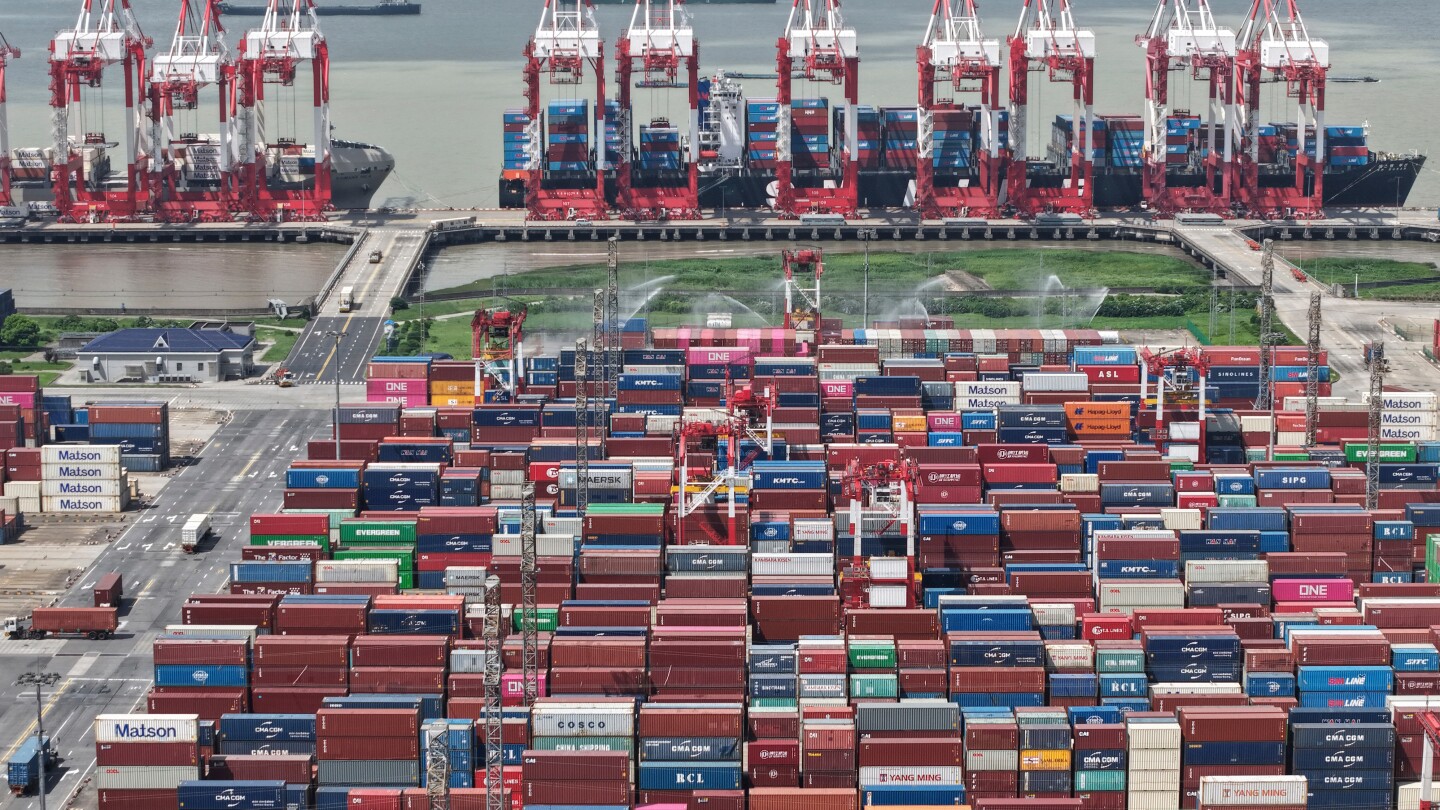
China’s trade dynamics in September presented a mixed picture, with global exports surging to a six-month high while exports to the United States continued their downward spiral. According to customs data released on Monday, China’s worldwide exports rose by 8.3% year-on-year, reaching $328.5 billion, significantly exceeding economists’ expectations and marking a notable improvement from August’s 4.4% growth. However, exports to the U.S. plummeted by 27% compared to the previous year, marking the sixth consecutive month of decline and following a 33% drop in August. Imports also showed improvement, growing by 7.4% in September, up from a modest 1.3% increase in August, though domestic economic challenges and a struggling real estate sector continue to dampen demand. The ongoing trade tensions between Beijing and Washington have cast a shadow over the outlook, with both sides imposing new tariffs and retaliatory measures. U.S. President Donald Trump’s policies aimed at reshoring manufacturing have pressured Chinese exports to the U.S., prompting China to diversify its markets. Shipments to Southeast Asia grew by 15.6%, while exports to Latin America and Africa surged by 15% and 56%, respectively. Despite these efforts, the external environment remains fraught with uncertainty, as highlighted by Wang Jun, vice minister of China’s customs agency, who emphasized the need for sustained efforts to stabilize trade in the fourth quarter. Analysts like Gary Ng of Natixis point to the resilience of China’s exports due to low costs and limited global alternatives but warn that escalating export controls could have a more prolonged impact on supply chains. Recent developments, including Trump’s threats of additional tariffs and export controls on critical software, coupled with China’s retaliatory measures such as new port fees and extended export controls on lithium-ion batteries and rare earths, have further strained relations. These tensions could jeopardize a planned meeting between Trump and Chinese President Xi Jinping in late October and underscore the lack of progress in reaching a comprehensive trade agreement.
分类: business
-

Trump says inflation is ‘defeated’ and the Fed has cut rates, yet prices remain too high for many
Inflation has shown a persistent upward trend in three of the last four months, slightly exceeding levels from a year ago. This issue, which played a role in derailing then-Vice President Kamala Harris’ presidential campaign, remains a significant concern. However, recent statements from President Donald Trump and Federal Reserve Chair Jerome Powell suggest a more optimistic outlook. Trump recently declared at the United Nations General Assembly that grocery prices and mortgage rates have declined, claiming victory over inflation. Similarly, Powell noted in August that inflation, though still elevated, has significantly decreased from its post-pandemic highs and that upside risks have diminished. Despite these reassurances, inflation remains above the Federal Reserve’s 2% target, posing risks for both the White House and the Fed. Surveys indicate that many Americans still view high prices as a major financial burden, and the Fed’s credibility in managing inflation could be at stake if its assumptions about temporary tariff-induced inflation prove incorrect. The Fed recently cut its key interest rate, prioritizing concerns over unemployment rather than inflation. However, economists warn that ongoing tariffs and corporate price hikes could lead to more than just a temporary inflation spike. For instance, tariffs on imported goods like furniture, appliances, and toys have driven up costs, with long-lasting manufactured goods seeing a 2% increase in August—a notable shift after decades of declining prices. Grocery prices rose 2.7% in August, the largest non-pandemic increase since 2015, while coffee prices surged nearly 21% due to tariffs on Brazilian imports and climate-related droughts. Despite these pressures, some Fed officials believe other factors, such as slowing rental costs and reduced immigration, will help mitigate inflation in the coming months. Nonetheless, the interplay between tariffs, consumer confidence, and inflation remains a critical issue for policymakers.
-

China-US biz travel shows signs of recovery
The business travel sector between China and the United States is showing signs of recovery, as evidenced by the bustling activity at IMEX America 2025 in Las Vegas. Despite lingering challenges such as visa processing delays, limited flight capacity, and high travel costs, companies from both nations are eager to reestablish in-person communication and business exchanges. China, as the world’s second-largest economy, continues to attract international visitors for business purposes, including participation in major exhibitions like the China International Import Expo and exploration of its expanding consumer market. Travelers are increasingly combining professional activities with cultural experiences, spending time in cities like Beijing, Shanghai, and Shenzhen. Alex Mortensen of HiSEAS International noted the growing momentum for US outbound travel to China, citing improvements in infrastructure and hospitality. However, he highlighted that visa policies remain a critical factor for sustaining this growth. Linda Wang of Asia Concierge pointed out the limited number of direct flights as a significant barrier, with only about 80 weekly flights compared to 300 pre-pandemic. Patrick Sudlow of American Express Global Business Travel echoed concerns about US visa processing delays for Chinese professionals. On a positive note, China has implemented measures to facilitate business visits, including visa-free policies for certain countries and a 240-hour visa-free transit policy. Industry professionals like G.V. Schloss of Maritz Global Events remain optimistic about expanding cooperation with China, emphasizing the importance of mutual respect and understanding in navigating the current geopolitical climate.
-
Trump: US will add extra 100% tariffs on China
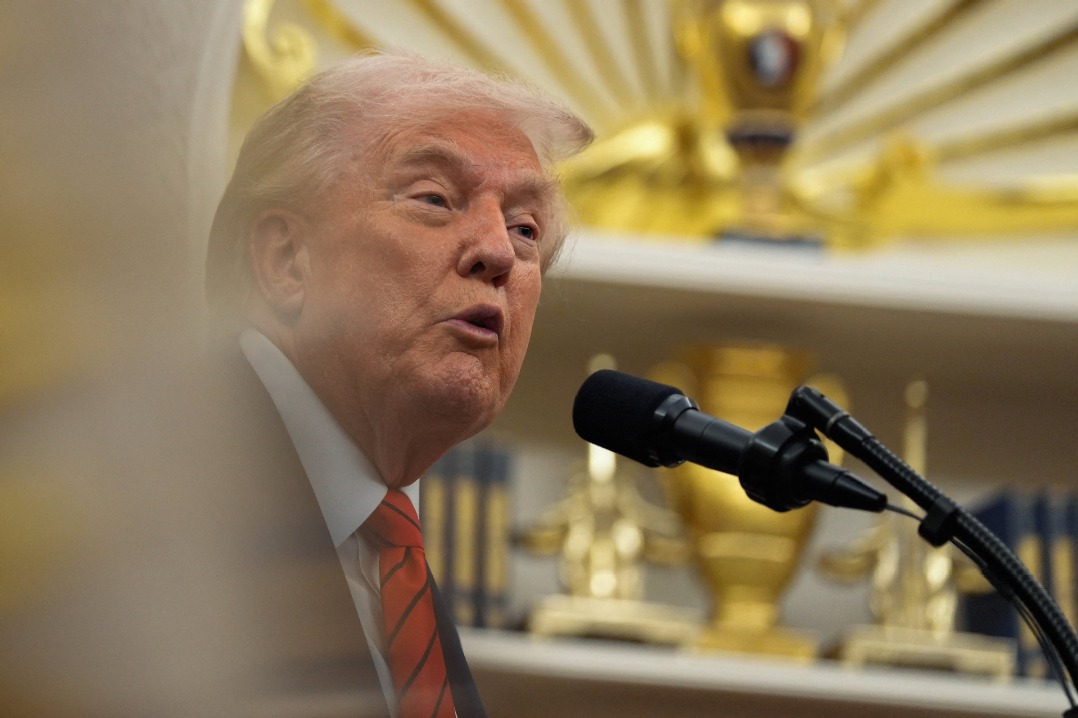
In a significant escalation of trade tensions, former US President Donald Trump announced on Friday that the United States will impose an additional 100% tariff on all imports from China starting November 1, 2025. The move, which could be implemented sooner depending on China’s actions, will apply on top of existing tariffs. Trump also revealed plans to enforce export controls on all critical US-made software from November. The announcement was made via his Truth Social account, where he emphasized that these measures are part of broader countermeasures under consideration. This decision comes despite recent trade talks between Chinese and US teams in Madrid, Spain, following earlier discussions in Switzerland, Britain, and Sweden. The announcement triggered a sharp decline in US stocks, marking the worst single-day performance since the height of the tariff war in April. Trump’s aggressive stance underscores the ongoing economic rivalry between the two nations, with potential ripple effects on global trade and markets.
-
Trump appointee’s case for bigger rate cuts fails to move Fed
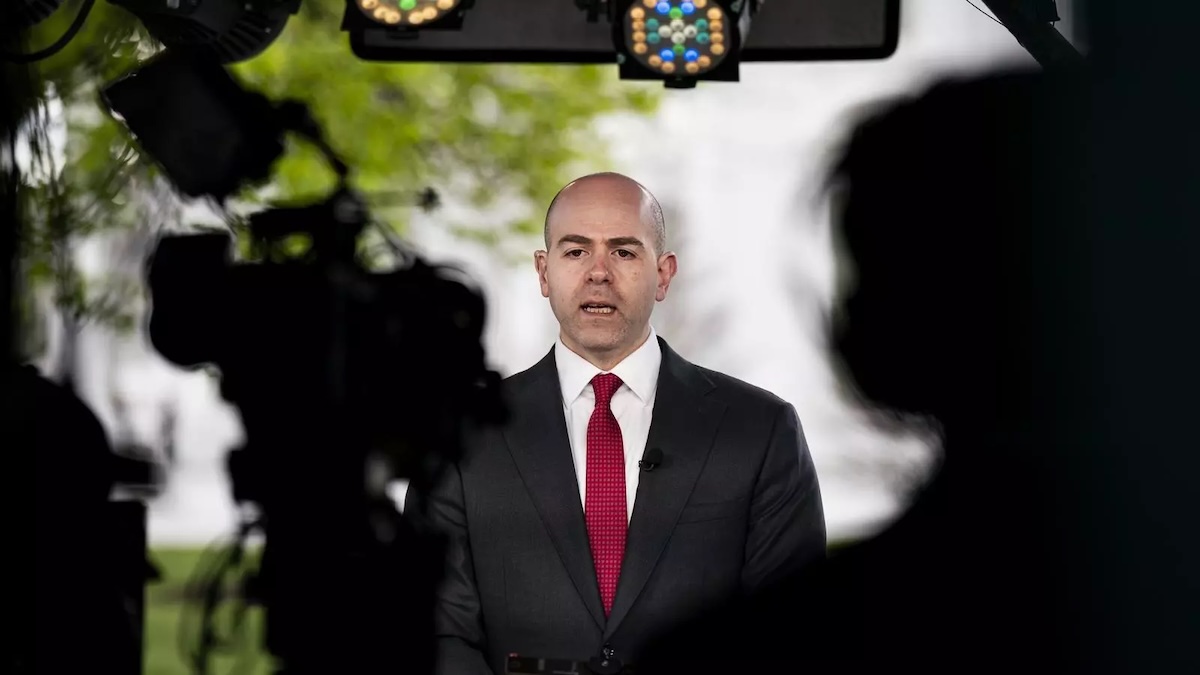
Stephen Miran, recently appointed to the Federal Reserve Board by President Trump, is pushing for more substantial and rapid interest-rate cuts than his colleagues. Miran, who joined the board last month and is currently on leave from his role as chair of Trump’s Council of Economic Advisors, argues that the federal funds rate should be significantly lower than its current range of 4% to 4.25%. While Trump has called for a three-percentage-point reduction, Miran advocates for a mid-2% range, about two points below today’s rate. His stance was evident during the Fed’s recent vote, where he was the sole dissenter against a modest quarter-point cut, instead favoring a half-point reduction. Miran’s projections, as indicated in the Fed’s September ‘dot plot,’ suggest a federal funds rate below 3% by year-end, a stark contrast to the majority forecast of 3.75%. His rationale centers on the ‘neutral rate of interest’ (r-star), which he believes is much lower than his peers estimate, warning that the Fed’s current policy risks exacerbating unemployment. Miran attributes his outlook to Trump’s policies, including tariffs, tax changes, and deregulation, which he claims will alter the supply and demand dynamics of money. However, his arguments face skepticism from economists and bond investors, with many questioning the feasibility of his projections. Despite his outlier position, Miran’s detailed justifications, supported by 28 footnotes, offer a rare depth in policy discourse. Yet, with inflation concerns and a softening job market, the Fed remains cautious, favoring gradual quarter-point cuts over Miran’s aggressive approach.
-

China tightens rules to block Pakistan rare earths exports to US
China has introduced stringent measures to restrict the export of rare-earth extraction technologies, following revelations that Pakistan is utilizing Chinese equipment to produce specialized metals for the United States. The new regulations, issued by the Chinese Commerce Ministry, encompass rare-earth production, processing, and separation equipment, along with related raw and auxiliary materials. Overseas producers must now obtain export licenses from the Chinese government to access these technologies and equipment.
-
Wall Street tumbles to its worst day since April after Trump threatens more tariffs on China
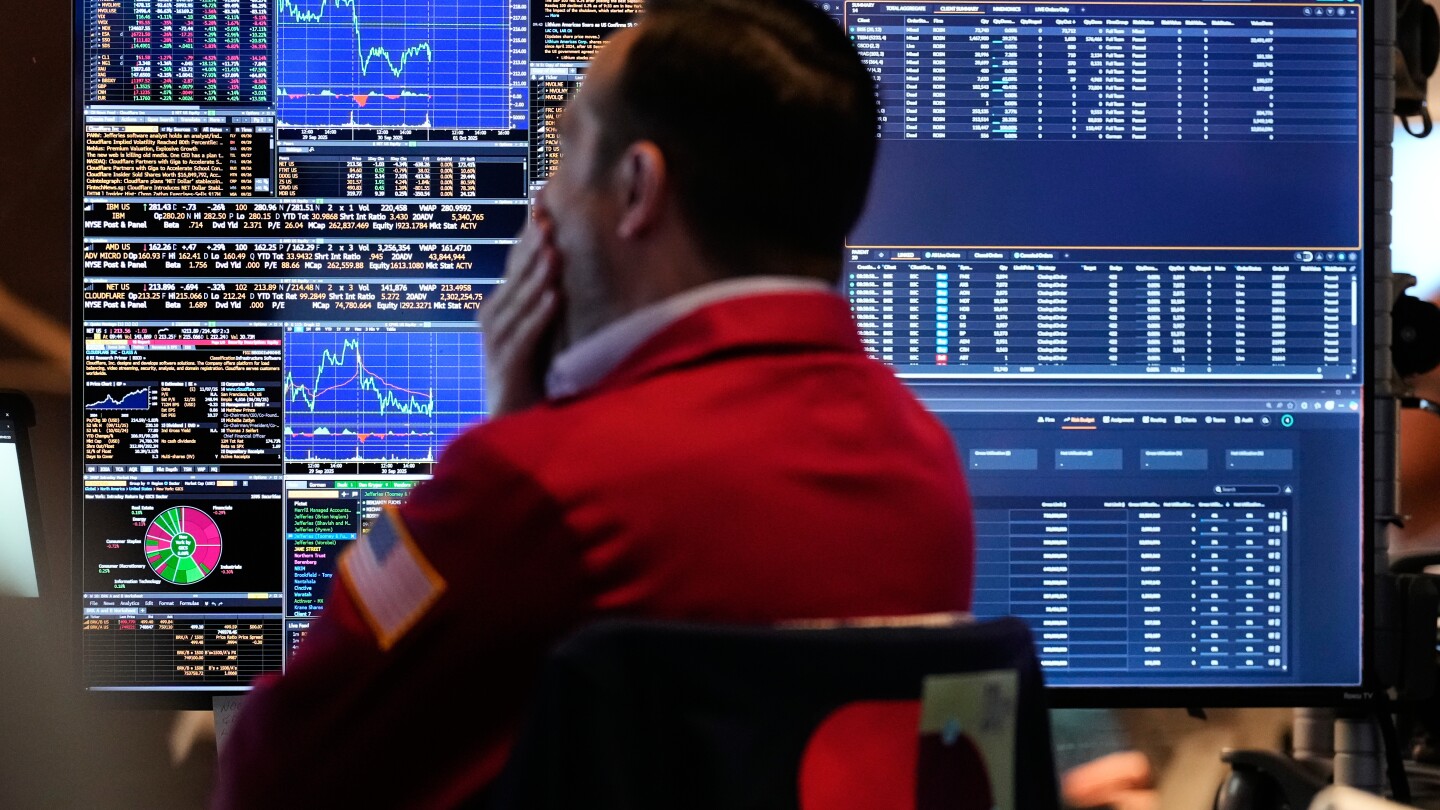
The tranquility that had enveloped Wall Street for months was abruptly shattered on Friday as U.S. stocks experienced a significant downturn. This dramatic shift was triggered by President Donald Trump’s announcement that he is considering a substantial increase in tariffs on Chinese imports. The S&P 500 plummeted by 2.7%, marking its worst performance since April. Similarly, the Dow Jones Industrial Average dropped by 878 points, or 1.9%, and the Nasdaq composite fell by 3.6%. The market had initially been on a path to modest gains in the morning, but Trump’s social media post on Truth Social, where he expressed his discontent with China’s restrictions on rare earth exports, sent shockwaves through the financial world. Rare earths are crucial for manufacturing a wide range of products, from consumer electronics to jet engines. Trump’s post also indicated that a planned meeting with Chinese President Xi Jinping during an upcoming trip to South Korea might no longer be necessary. The escalation in tensions between the two largest global economies led to widespread declines across Wall Street, with nearly six out of every seven stocks in the S&P 500 falling. The downturn affected a broad spectrum of companies, from tech giants like Nvidia and Apple to smaller firms grappling with the uncertainty surrounding tariffs and trade. The market’s vulnerability to a downturn was already a topic of discussion, as the S&P 500 had experienced a nearly relentless 35% rise from its low in April, leading some critics to argue that stock prices had become excessively high. Concerns were particularly pronounced in the artificial intelligence sector, where some saw parallels to the dot-com bubble of 2000. For stock prices to appear more reasonable, either a decline in prices or an increase in corporate profits would be necessary. Levi Strauss, for instance, saw its stock price drop by 12.6% despite reporting stronger-than-expected quarterly profits. The company’s full-year profit forecast was within Wall Street’s estimates, but it faced the challenge of heightened expectations following a significant surge in its stock price earlier in the year. The S&P 500 closed at 6,552.51, down by 182.60 points, while the Dow Jones Industrial Average ended at 45,479.60, a drop of 878.82 points. The Nasdaq composite finished at 22,204.43, down by 820.20 points. The oil market also saw significant movement, with the price of benchmark U.S. crude falling by 4.2% to $58.90 per barrel. This decline was partly attributed to a ceasefire between Israel and Hamas in Gaza, which alleviated concerns about potential disruptions to oil supplies. Brent crude, the international standard, dropped by 3.8% to $62.73 per barrel. In the bond market, the yield on the 10-year Treasury fell to 4.05% from 4.14% the previous day. This decline was influenced by a report from the University of Michigan indicating that consumer sentiment remains subdued, with concerns about high prices and weakening job prospects at the forefront. The Federal Reserve had recently cut its main interest rate for the first time this year, with further cuts anticipated to provide the economy with additional support. However, Fed Chair Jerome Powell has cautioned that the central bank may adjust its course if inflation remains high. A preliminary survey from the University of Michigan offered a glimmer of hope, showing that consumers’ expectations for inflation in the coming year had slightly decreased to 4.6% from 4.7% the previous month. While still elevated, this downward trend could help the Fed manage inflationary pressures. Internationally, stock markets in Europe and Asia also experienced declines, with Hong Kong’s Hang Seng falling by 1.7% and France’s CAC 40 dropping by 1.5%. However, South Korea’s Kospi surged by 1.7% following the reopening of trading after a holiday.
-

Has the clock stopped on Swiss US trade?
The Swiss economy, renowned for its competitiveness and innovation, faces unprecedented challenges as US-imposed tariffs of 39% on Swiss goods take a heavy toll. Despite Switzerland’s significant contributions to the US economy, including creating 400,000 jobs through investments, President Trump’s trade policies have left the Alpine nation grappling with economic setbacks. Swiss President Karin Keller-Sutter’s efforts to negotiate a reduction in tariffs have so far proven futile, leaving Swiss exporters in a precarious position. Approximately 17% of Swiss exports, valued at billions, are destined for the US market, making the tariffs a severe blow to key industries. While pharmaceuticals, Switzerland’s most lucrative export to the US, remain unaffected for now, the threat of a 100% tariff on imported medicines looms large. The medical technology sector, a global leader in precision engineering, is also at risk. Companies like MPS, which produce advanced medical devices, face immense pressure as the tariffs erode already slim profit margins. Swiss business leaders argue that the tariffs are not only unjustified but also counterproductive, potentially driving up costs for US patients and taxpayers. Despite the challenges, Switzerland is actively diversifying its trade partnerships, securing agreements with India, Mercosur, and China, while maintaining its strong ties with the EU. The long-term impact of the tariffs extends beyond economics, straining the historically robust business relations between Switzerland and the US. While Swiss entrepreneurs remain hopeful for a resolution, the current administration’s approach has left many disillusioned. As Switzerland navigates this trade storm, its resilience and adaptability will be put to the test.
-

US buys Argentine pesos, finalizes $20 billion currency swap
In a significant move to stabilize Argentina’s volatile financial markets, the United States Treasury Department has finalized a $20 billion currency swap line with Argentina’s central bank. Treasury Secretary Scott Bessent announced the decision on social media, emphasizing the U.S. commitment to taking exceptional measures to ensure market stability. The agreement follows four days of intensive discussions between U.S. officials and Argentine Economy Minister Luis Caputo in Washington, D.C. Argentine President Javier Milei, a staunch admirer of former U.S. President Donald Trump, expressed gratitude for the support, calling the two nations the closest of allies in fostering economic freedom and prosperity across the hemisphere. However, the decision has sparked controversy in the U.S., with critics questioning its alignment with Trump’s ‘America First’ agenda. U.S. farmers and Democratic lawmakers have voiced opposition, arguing that the move resembles a bailout for Argentina, which has recently benefited from soybean exports to China at the expense of American producers. In response, a group of Democratic Senators introduced the ‘No Argentina Bailout Act,’ aiming to block the Treasury from using its Exchange Stabilization Fund to assist Argentina. Critics also highlight Argentina’s troubled economic history, noting its status as the International Monetary Fund’s largest debtor, owing $41.8 billion. Despite these concerns, the announcement provided a temporary boost to Argentina’s financial markets, with dollar-denominated bonds rising 10% and the Buenos Aires stock market surging 15%. While Economy Minister Caputo praised the U.S. for its steadfast commitment, many observers view the intervention as a political gesture rather than a strategic economic investment.
-

PepsiCo, fresh off a strong third quarter, says new products will soon boost customer demand
PepsiCo remains optimistic about its future, banking on a wave of innovative products to reinvigorate consumer interest. The company announced on Thursday that it is launching new offerings, such as protein-infused Starbucks coffee, low-sugar Gatorade, and all-natural Doritos, to counter declining demand. This move comes as PepsiCo grapples with shifting consumer preferences, which have impacted its North American food business, leading to a 3% revenue drop in the third quarter. However, CEO Ramon Laguarta emphasized the company’s swift action to phase out underperforming products and reinvest in healthier, more natural alternatives. A new line of Doritos and Cheetos, branded as “NKD,” will feature no artificial flavors or colors, while Tostitos and Lay’s chips without artificial dyes are set to hit U.S. shelves soon. Laguarta highlighted the urgency of innovation to capture growing market segments. On the beverage front, PepsiCo has already seen success with Pepsi Zero Sugar, which experienced double-digit revenue growth, and Mountain Dew, boosted by new flavors like Summer Freeze and Dragon Fruit. North American beverage revenue rose 2% in the same quarter. Despite a 11% decline in net income to $2.6 billion, adjusted earnings of $2.29 per share exceeded analysts’ expectations. PepsiCo’s shares climbed nearly 3% in afternoon trading. The company also faces pressure from activist investor Elliott Investment Management, which holds a $4 billion stake and has urged PepsiCo to streamline its portfolio and refranchise its North American bottlers. Laguarta described discussions with Elliott as constructive, with both parties agreeing on PepsiCo’s undervaluation. He also hinted at potential refranchising and emphasized the importance of adapting to future demands, including increased online sales and warehouse efficiency. In a leadership update, PepsiCo appointed Walmart executive Steve Schmitt as its new CFO, replacing Jamie Caulfield, who will retire after over 30 years with the company.