
In a groundbreaking move, Mashreq NEO PLUS is transforming the banking landscape in the UAE by offering unparalleled financial benefits and convenience. This innovative digital banking solution is designed to help individuals and businesses maximize their savings and investments with ease. With the NEO PLUS Saver Account, customers can earn up to 6.25% interest per annum by transferring a monthly salary of AED 10,000 or more. For those unable to transfer their salary, maintaining a balance of AED 50,000 or more still yields an impressive 5% interest per annum. Notably, this account also offers a Shariah-compliant option, catering to a broader audience. Managed through the highly-rated Mashreq Mobile App, NEO PLUS ensures a seamless and user-friendly banking experience. Additionally, the platform eliminates hidden fees on everyday banking services, including local and international transfers, ATM withdrawals, and chequebooks. New customers are welcomed with a joining bonus of up to AED 5,000, which includes salary transfer incentives, debit card cashback, and referral rewards. Beyond savings, NEO PLUS opens the door to diverse investment opportunities, allowing customers to invest in US equities, UAE stocks, mutual funds, and bonds with as little as $1. The platform also offers 10 free trades every month in US stocks & ETFs, making it easier than ever to grow wealth. For aspiring homeowners, NEO PLUS provides exclusive perks, such as 100% cashback on valuation fees when booking a Mashreq Home Loan. With integrated services ranging from credit cards and loans to insurance and mortgages, Mashreq NEO PLUS offers a comprehensive banking solution. Recognized as the ‘Best Digital Bank in the Middle East’ for five consecutive years and the ‘Best Islamic Digital Bank’ globally for two years running, Mashreq NEO has earned a 4.8 customer rating, the highest in the UAE. Mashreq NEO PLUS is not just banking; it’s a smarter, more rewarding way to manage your finances. For more information, visit mashreq.com/NEOPLUS or download the Mashreq Mobile App to open your account.
分类: business
-

Giorgio Armani group names luxury veteran and longtime manager Giuseppe Marsocci as new CEO
The Armani fashion house announced on Thursday the appointment of Giuseppe Marsocci as its new Chief Executive Officer, marking a pivotal moment for the iconic Italian brand following the passing of its founder, Giorgio Armani, last month at the age of 91. Marsocci, a seasoned luxury industry executive with 23 years of experience in top roles within the Armani group, steps into the leadership role during a critical juncture for the company, one of Italy’s most valuable and globally recognized fashion empires.
-
Nestle to cut 16,000 jobs worldwide over next two years, says CEO
Nestle, the global leader in packaged foods, has unveiled plans to eliminate 16,000 jobs worldwide over the next two years as part of a broader strategy to enhance operational efficiency and drive sales growth. The announcement was made by newly appointed CEO Philipp Navratil during a press briefing on Thursday. Navratil, who previously headed Nespresso, assumed the role following the abrupt departure of his predecessor, Laurent Freixe, in September due to undisclosed personal misconduct. Despite the organizational upheaval, Nestle reported a 1.5% increase in real internal growth (RIG) for the third quarter, significantly surpassing analysts’ expectations of a 0.3% rise. This growth was attributed to strong performance in coffee and confectionery segments, driven by strategic pricing adjustments. The job cuts will include 12,000 white-collar positions and an additional 4,000 roles in manufacturing and supply chain operations. Nestle, which employs approximately 277,000 people globally, has faced mounting investor pressure amid rising costs, increasing debt levels, and a declining share price. The company, known for iconic brands such as KitKat, Nespresso, and Maggi, is striving to revitalize its sales momentum and regain market confidence. The restructuring initiative marks a pivotal moment for Navratil as he seeks to establish his leadership and steer Nestle toward sustainable growth.
-
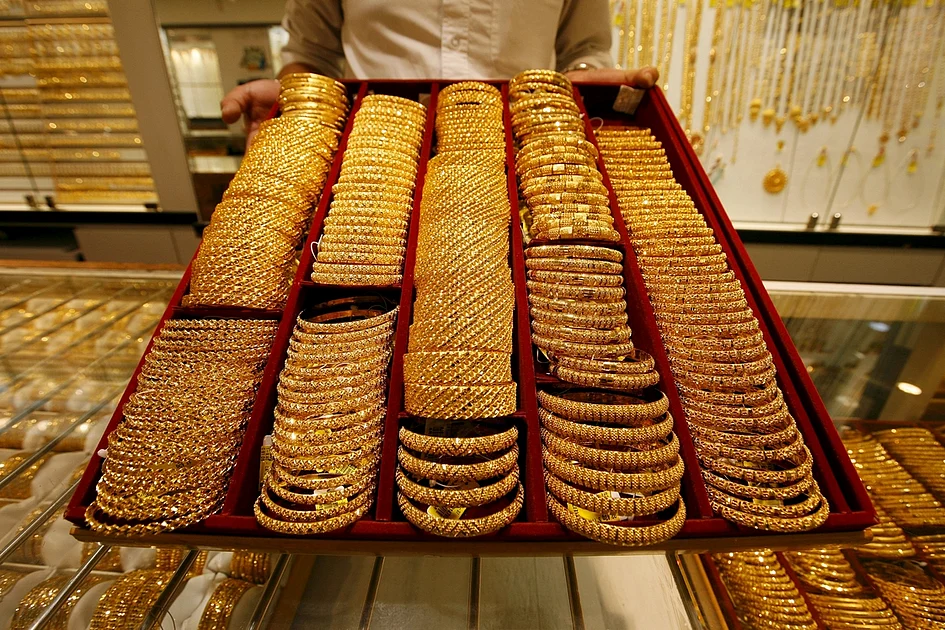
Dubai: Gold prices jump to Dh510; 24K gains over Dh25 this week so far
Gold prices in Dubai have surged to unprecedented levels, with 24K gold reaching Dh510 per gram on Thursday, marking a significant increase of Dh25.75 over the week. This upward trend has been consistent, setting new record highs for four consecutive days. Similarly, 22K gold rose to Dh472.25 per gram, reflecting a Dh24 increase since the beginning of the year. Other variants, including 21K and 18K, were trading at Dh452.75 and Dh388.25 per gram, respectively, at the market opening on Thursday. Globally, spot gold was priced at $4,231.5 per gram, up by over one percent. According to Pepperstone, a leading brokerage firm, gold’s remarkable rally continues, driven by a weaker dollar and expectations of rate cuts. The metal has seen a 15 percent surge over the past month, with minimal pullbacks, indicating strong demand from both institutional and retail investors. Analysts suggest that gold is increasingly viewed as a core component of diversified portfolios, particularly amid concerns over elevated US equity valuations and potential tech bubbles. While short-term pullbacks may occur, the broader trend remains firmly upward.
-
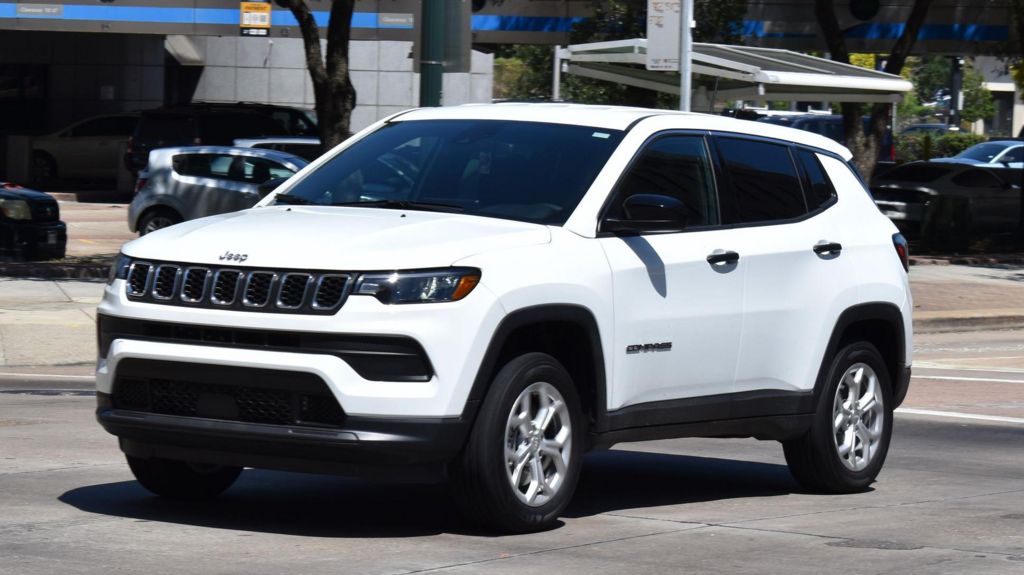
Canada threatens Jeep-maker over proposed US move
The Canadian government has issued a stern warning to global automotive giant Stellantis, threatening legal action over its decision to relocate the production of the Jeep Compass from Ontario, Canada, to its Illinois plant in the United States. This move comes as part of Stellantis’ $13 billion investment in the US, aimed at bolstering its manufacturing capabilities and creating more American jobs. However, Canada’s Industry Minister, Mélanie Joly, has accused the company of reneging on a ‘legally binding’ commitment to maintain operations in Brampton, Ontario, in exchange for substantial financial support from the Canadian government. Joly emphasized that the government would ‘exercise all options, including legal’ to ensure the agreement is honored. In a letter to Stellantis CEO Antonio Filosa, Joly highlighted the billions of dollars Canada had invested in the company, warning that the relocation could jeopardize the future of the Brampton factory. Filosa, in a statement, described the investment as the largest in the company’s history, focusing on growth and strengthening the US manufacturing footprint, but notably omitted any mention of its Canadian operations. Joly countered by reminding Stellantis of the strong partnership between the company and the Canadian government, recalling how Canada had supported the company during its near-bankruptcy in 2009. Prime Minister Mark Carney also expressed concern, stating that the government is working to protect Stellantis employees in Brampton and explore new local opportunities for them. Stellantis, which owns 14 car brands including Jeep, Alfa Romeo, and Chrysler, operates manufacturing plants across the US, UK, Europe, Canada, Mexico, and South America. The company has previously cited the impact of tariffs imposed by the Trump administration, which cost it $349.2 million in 2018. While President Trump initially introduced car tariffs to boost US manufacturing, he later eased tariffs on foreign car parts. However, a new 10% tariff on Canadian softwood lumber, effective this week, has further strained US-Canada trade relations, with Canadian producers now facing combined tariffs of over 45% due to an ongoing trade dispute.
-
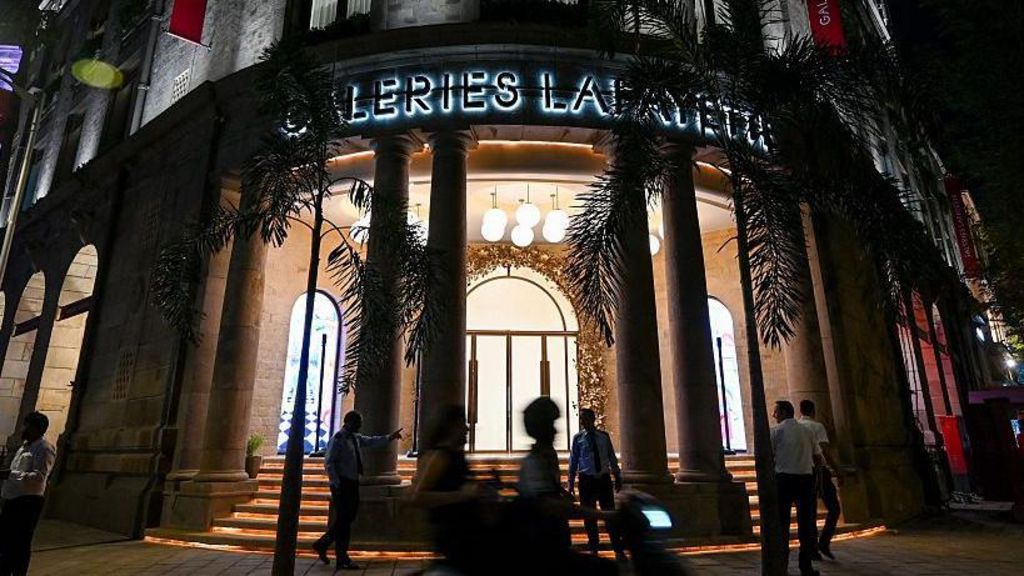
Galeries Lafayette to enter India amid luxury boom
Galeries Lafayette, the iconic French luxury department store, is making its grand entry into India with the opening of its first flagship store in Mumbai’s historic Fort area. This strategic move marks a significant milestone in the brand’s international expansion, as it seeks to capitalize on India’s rapidly growing luxury market. The store, spanning five levels and 90,000 square feet, is set to open in early November, with plans for another location in Delhi. Partnering with the Aditya Birla Group, Galeries Lafayette aims to offer an unparalleled shopping experience, featuring over 250 global luxury brands, private lounges, and concierge services. Nicolas Houzé, Executive Chairman of Galeries Lafayette Group, described the launch as a ‘defining moment’ and ‘a new chapter’ in the brand’s 130-year history. India’s luxury market, currently valued at $17 billion, is projected to soar to $85 billion by 2030, driven by increasing wealth creation and a shift in consumer preferences. Kumar Mangalam Birla, Chairman of the Aditya Birla Group, highlighted the growing appetite for high-end experiences among India’s affluent population. However, despite the booming luxury sector, income inequality remains a significant challenge, with a vast majority of the population unable to afford discretionary spending. This has led brands to focus on premium offerings catering to the wealthy, while mass-market demand remains subdued. Galeries Lafayette’s entry into India reflects a broader trend of global luxury brands targeting the country’s burgeoning high-end market.
-
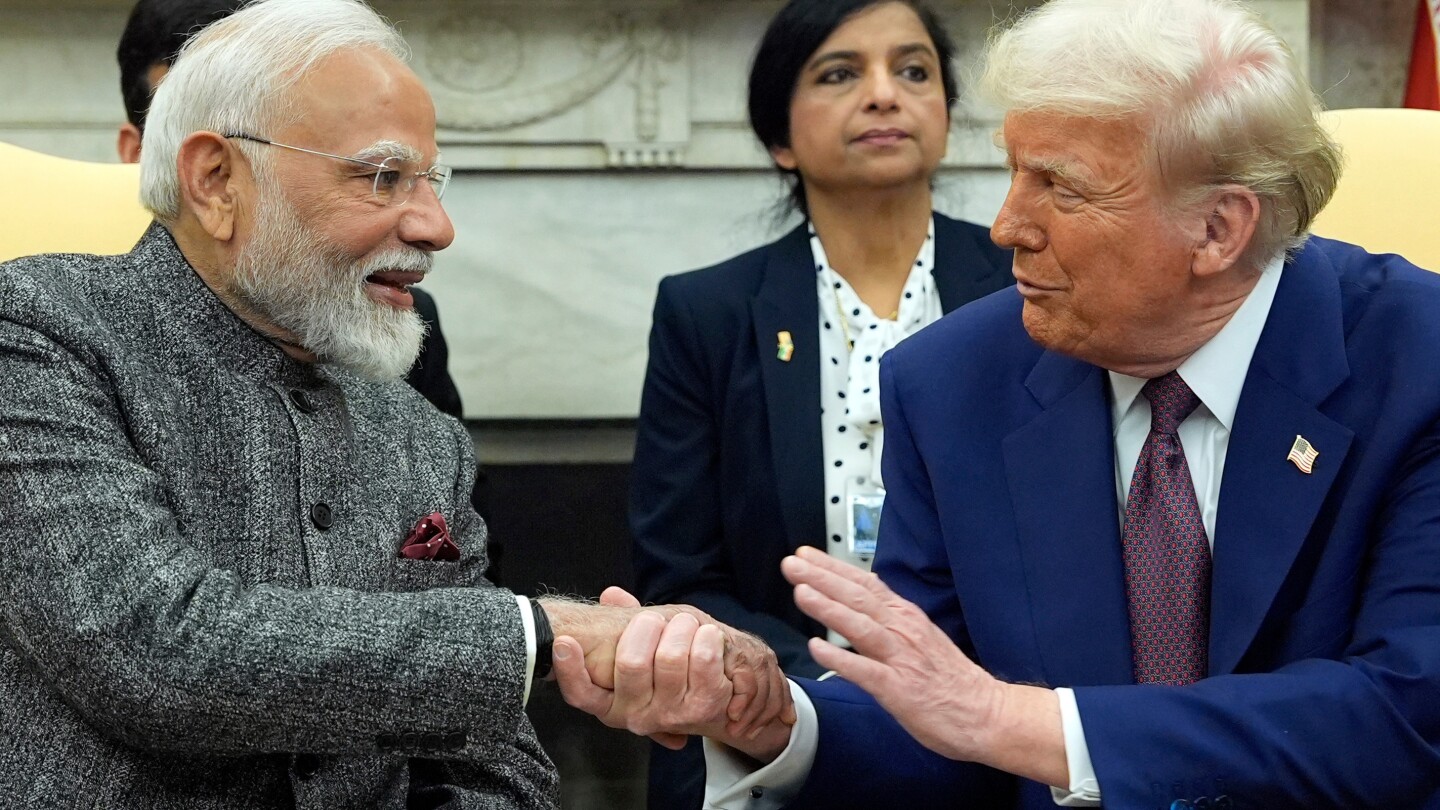
India seeks to import more US oil and gas under pressure from Trump to stop Russian oil purchases
India is actively pursuing increased imports of crude oil and natural gas from the United States as part of its strategy to diversify energy sources and address criticism from U.S. President Donald Trump regarding its purchases of discounted Russian oil. Trump claimed on Wednesday that Indian Prime Minister Narendra Modi had personally assured him India would cease buying Russian oil, a move that could intensify pressure on Moscow to negotiate an end to the Ukraine conflict. However, India’s foreign ministry did not directly address Trump’s remarks, instead emphasizing its commitment to safeguarding Indian consumers’ interests in a volatile energy market.
-
Taiwanese chipmaker TSMC sees nearly 40% jump in its net profit thanks to the AI boom
Taiwan Semiconductor Manufacturing Company (TSMC), the world’s largest semiconductor manufacturer, announced on Thursday a staggering 40% surge in net profit for the July-September quarter, fueled by the growing demand for artificial intelligence (AI) technologies. The company reported a record-breaking net profit of 452.3 billion new Taiwan dollars ($15 billion), surpassing analysts’ expectations. This remarkable performance follows a 30% year-on-year increase in revenue for the same period.
-
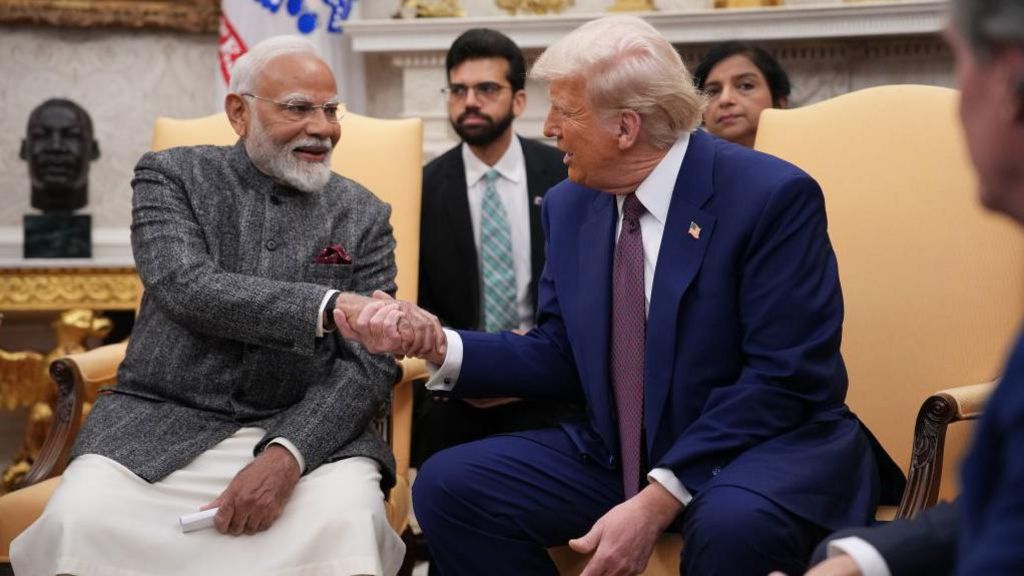
India’s exports to US plunge as Trump’s 50% tariffs kick in
India, a key exporter of garments, shrimp, and gems and jewellery to the United States, has witnessed a dramatic decline in its goods exports to its largest foreign market. Data reveals a sharp 20% drop in September alone, with a staggering 37.5% decline over the past four months, as the impact of steep US tariffs intensifies. The tariffs, which include a 50% levy on Indian goods and an additional 25% penalty for India’s continued oil purchases from Russia, took full effect in August. Ajay Srivastava of the Global Trade Research Initiative (GTRI) noted, ‘The US has become India’s most severely affected market since the tariff escalation began.’ Labour-intensive sectors such as textiles, gems and jewellery, engineering goods, and chemicals have borne the brunt of these measures, suffering significant losses. The decline in exports has also exacerbated India’s trade deficit, which surged to a 13-month high of $32.15 billion in September. While improved trade with countries like the UAE and China has partially offset the US export slump, negotiations between India and the US remain fraught with challenges. Talks resumed last month after a prolonged stalemate, with an Indian delegation currently in the US. Despite claims by former US President Donald Trump that Indian Prime Minister Narendra Modi agreed to halt Russian oil imports, the Indian foreign ministry described discussions as ‘ongoing,’ emphasizing US interest in deepening energy cooperation. Key trade disputes, particularly over access to India’s agriculture and dairy sectors, persist. Washington views India’s farm sector as a lucrative untapped market, but New Delhi has staunchly defended its protectionist stance, citing food security and the livelihoods of millions of small farmers. Bilateral trade between the two nations reached $190 billion in 2024, with ambitious targets to more than double this figure to $500 billion.
-
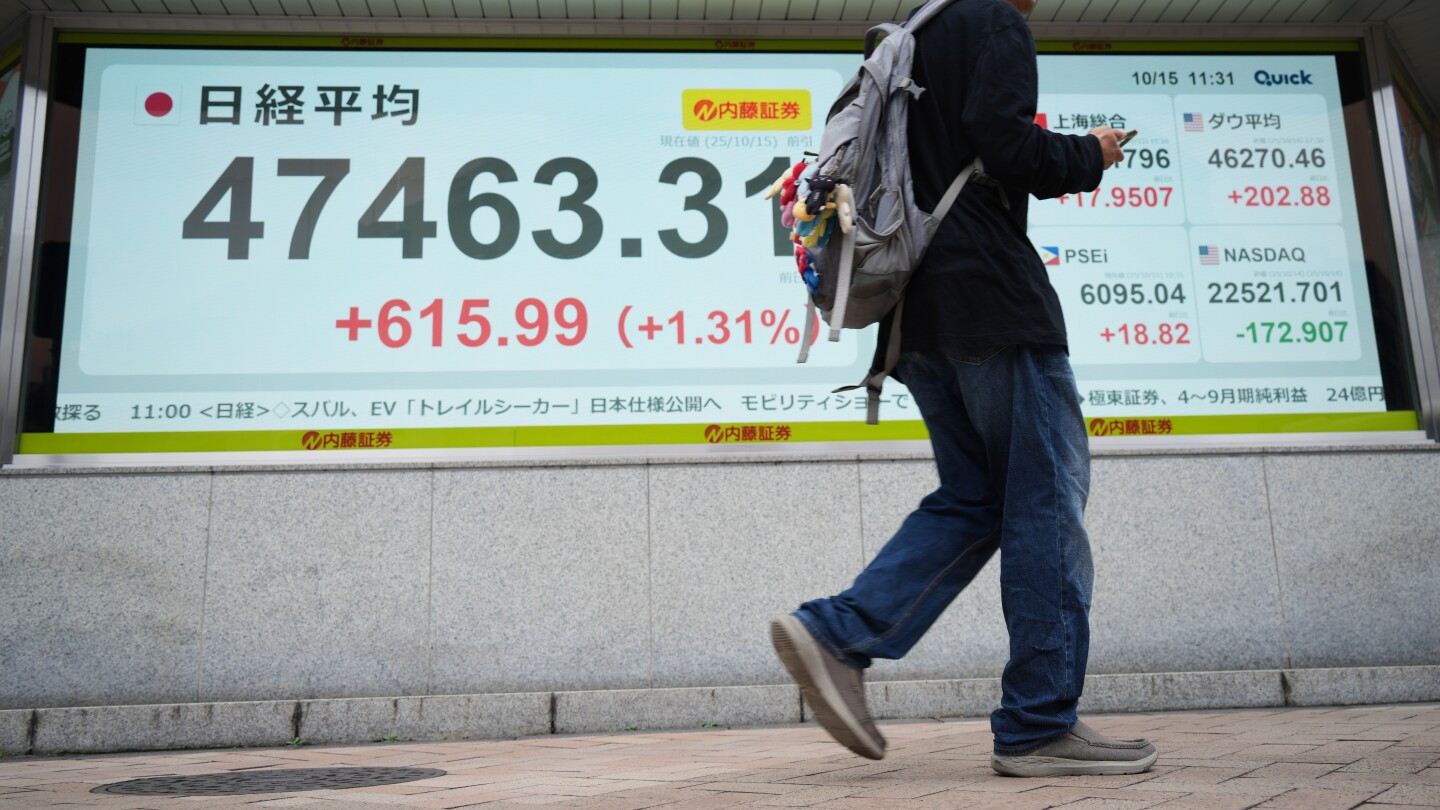
Asian shares are mostly higher after Wall St ends an erratic day with gains
Most Asian stock markets experienced an upward trajectory on Thursday, mirroring the gains observed on Wall Street after a volatile trading session. U.S. futures remained largely unchanged, while oil prices saw an increase. Japan’s Nikkei 225 index climbed 0.8% to 48,069.71, buoyed by a robust start to the earnings season and growing expectations of U.S. interest rate cuts. Despite a 0.9% month-on-month decline in Japan’s core machinery orders for August, the figures showed significant improvement from July’s 4.6% drop. South Korea’s Kospi index surged to a record high, rising 1.8% to 3,722.67, driven by optimism over potential tariff agreements between the U.S. and South Korea. Tech and auto stocks, including Samsung Electronics, Hyundai Motor, and Kia Corp., were among the top performers. In China, Hong Kong’s Hang Seng index dipped 0.4%, while the Shanghai Composite index edged up 0.1%. Australia’s S&P/ASX 200 soared 8% to 9,063.70, surpassing the 9,000 mark for the first time, fueled by gains in gold stocks amid rising gold prices. India’s BSE Sensex and Taiwan’s Taiex also posted gains of 0.5% and 1.5%, respectively. On Wall Street, the S&P 500 and Nasdaq Composite advanced, with technology stocks leading the charge following a strong earnings report from ASML, a key semiconductor equipment supplier. However, concerns over inflated stock prices and delayed economic updates due to the U.S. government shutdown have heightened scrutiny on corporate earnings. In commodity markets, U.S. crude oil and Brent crude prices both rose, while the dollar and euro saw modest gains against the yen.