分类: business

  • China sealing Hainan customs borders to make full free trade port

    China sealing Hainan customs borders to make full free trade port

    China has initiated a transformative economic experiment by establishing Hainan Island as a fully operational free trade port (FTP), implementing a groundbreaking customs framework that has generated contrasting interpretations among analysts worldwide. The scheme, activated on December 18, introduces a sophisticated three-tier model characterized as “opening the front line, controlling the second line, and enabling free internal movement.”

    The strategic architecture establishes Hainan’s external boundary as the ‘front line’ where zero-tariff policies apply for imported raw materials and production equipment. Meanwhile, the ‘second line’ constitutes the customs border with mainland China, featuring enhanced monitoring mechanisms to prevent market disruption. Internally, the island facilitates unrestricted movement of people, creating a unique economic ecosystem.

    Manufacturers operating within Hainan now benefit from tariff-free importation of materials, with finished products qualifying for mainland market access provided they achieve 30% local value-added content. The initiative simultaneously expands Hainan’s duty-free shopping privileges, allowing both domestic and international consumers with recent overseas travel records to purchase luxury goods tax-free, subject to an annual spending limit of 100,000 yuan (approximately $14,000).

    Chinese authorities have outlined a comprehensive development timeline: establishing fundamental policy frameworks by 2025, maturing institutional systems by 2035, and achieving international recognition as a high-standard free trade port by mid-century. Proponents argue the FTP will attract foreign direct investment, stimulate external trade, and position Hainan as a strategic gateway connecting China with global markets, particularly ASEAN nations.

    Professor Yu Fenghui of Huazhong University of Science and Technology emphasizes the scheme’s distinctive approach: “This isn’t merely replicating Singapore or Dubai. The critical differentiation lies in second-line control mechanisms, where authorities have established ten regulatory ports implementing smart inspections achieving clearance within approximately two minutes—creating an arbitrage firewall while maintaining openness.”

    The policy has expanded zero-tariff coverage from 21% to 74% of imported items, significantly reducing production costs. Industry analysts anticipate major benefits for high-end manufacturing, modern services, and digital economy sectors, with aircraft maintenance, renewable energy vehicles, healthcare, education, and data-driven industries identified as primary beneficiaries.

    However, international commentators express skepticism regarding the initiative’s viability amid deteriorating China-West relations. Canada-based analyst Ngan Shun-kau notes: “Beijing’s assertive diplomacy has precipitated widespread deterioration of external relationships. American and advanced economy capital is disengaging, foreign enterprises are departing, and China’s external trade is diminishing—precisely the elements a free trade zone requires to succeed.”

    Geopolitical dimensions further complicate the assessment, as the Hainan FTP represents China’s strategic response to evolving trade dynamics following US tariff implementations. Some observers note that manufacturers serving US markets are more likely to relocate to Southeast Asia than Hainan, while established industrial hubs in the Pearl and Yangtze River Deltas retain competitive advantages.

    Long-term objectives include using Hainan as a testing ground for high-standard international trade agreements like the Comprehensive and Progressive Agreement for Trans-Pacific Partnership (CPTPP) and Digital Economy Partnership Agreement (DEPA). Experts emphasize that Hainan must enhance its service sectors and align more closely with global regulatory standards to fulfill its potential as China’s experimental frontier in economic liberalization.

  • UAE gold prices surge four times in one week; what to expect in 2026

    UAE gold prices surge four times in one week; what to expect in 2026

    The UAE gold market has experienced an unprecedented surge, marking its fourth record-breaking price increase within a single week. As markets opened on Friday, December 26, 2025, 24K gold reached Dh543.25 per gram, representing a significant jump from Christmas Day’s slight dip to Dh539.75. This remarkable performance extends across various karat weights, with 22K, 21K, 18K, and 14K trading at Dh503, Dh482.25, Dh413.50, and Dh322.50 respectively. Simultaneously, silver prices skyrocketed to unprecedented levels, reaching $74.38 per ounce while spot gold stood at $4,514 by afternoon trading.

    The monthly performance metrics reveal even more dramatic growth, with gold appreciating over 7% and silver experiencing an extraordinary 34% surge. According to financial experts, 2025 is positioned to become gold’s strongest annual performance since 1979, driven by what analysts describe as a ‘perfect storm’ of economic factors.

    Bas Koojiman, CEO of DHF Capital, identifies multiple converging drivers behind this historic rally: relentless central bank acquisitions exceeding 980 tonnes in Q3 alone, massive ETF inflows as investors seek safety, a weakening US dollar amid Federal Reserve rate cut expectations, and escalating geopolitical tensions worldwide. The US-Venezuela blockades alongside ongoing conflicts in Ukraine and the Middle East have further contributed to this economic landscape.

    Critically, experts emphasize this represents a structural market shift rather than a temporary cyclical rally. Emerging markets are aggressively building gold holdings as part of de-dollarization strategies, with gold’s share in global assets climbing toward 3-4%. This re-rating of gold as a strategic necessity appears long-term rather than temporary, though analysts anticipate potential corrections following 2025’s explosive gains.

    The outlook for 2026 remains bullish, with projections suggesting gold could average between $4,500 to $5,000 per ounce. Sustaining these levels will require continued lower interest rates, a softer dollar, persistent geopolitical risks, and robust institutional demand. Market analysts interpret gold’s dramatic rise as a warning signal indicating widespread investor concern about geopolitical instability, trade tensions, record debt levels, potential inflationary pressures, and questions regarding the dollar’s continuing dominance in global markets.

  • Hangzhou–Quzhou High-Speed Railway begins operations

    Hangzhou–Quzhou High-Speed Railway begins operations

    Eastern China’s regional connectivity enters a new era with the formal inauguration of the Hangzhou–Quzhou High-Speed Railway on December 26, 2025. The inaugural service, train C3132, departed Quzhou West Station bound for Hangzhou, marking a significant expansion of the Yangtze River Delta’s sophisticated rapid transit network.

    This newly operational corridor spans 131 kilometers and represents a major engineering achievement. Designed for peak speeds of 350 km/h, the railway features five strategically located stations: Jiande, Jiande South, Longyou North, Quzhou West, and Jiangshan. It establishes a parallel route to the existing Hangzhou–Quzhou segment of the Shanghai–Kunming High-Speed Railway, creating a robust dual-channel transportation link between these key Zhejiang province hubs.

    The project, whose construction commenced in May 2020, presented substantial technical hurdles. The main line incorporates 38 tunnels and 119 bridges, with viaducts and subterranean passages constituting nearly 79% of its total length. A notable engineering challenge was the construction of a 685-meter bridge that had to safely cross the active Jinqian Railway. Huang Baoliang, project head at China Railway No 11 Bureau Group, emphasized that construction plans underwent continuous optimization to ensure safe passage over existing railways, highways, and rivers.

    Transportation experts highlight the line’s critical strategic importance. “The Hangzhou–Quzhou High-Speed Railway occupies a crucial position in the Yangtze River Delta intercity rapid transport network,” stated Guo Jianbin, a senior engineer with China Railway Shanghai Group’s transport department.

    The railway’s design prioritizes seamless regional integration. At Jiande Station, it interconnects with the Hangzhou–Huangshan High-Speed Railway, providing direct access to the comprehensive Hangzhou rail hub. The western terminus at Quzhou West links with the Jiujiang–Jingdezhen–Quzhou Railway, creating a direct westward corridor to major cities including Wuhan in Hubei province and Jiujiang in Jiangxi province. Additionally, Jiangshan Station facilitates convenient transfers to the Shanghai–Kunming High-Speed Railway, substantially optimizing regional rail connectivity and supporting accelerated regional economic development.

  • OMODA&JAECOO UAE unleash J8 SHS Super Hybrid Power at Dubai Autodrome

    OMODA&JAECOO UAE unleash J8 SHS Super Hybrid Power at Dubai Autodrome

    OMODA&JAECOO UAE has made a significant automotive industry statement with the inaugural test drive event of its JAECOO J8 SHS (Super Hybrid System) at Dubai Autodrome on December 24. The exclusive track experience assembled internal teams, authorized dealer partners, and over 40 prominent journalists and influencers to evaluate the vehicle’s capabilities under authentic driving conditions.

    The centerpiece of the demonstration was the third-generation plug-in hybrid technology (SHS-P) that powers the luxury SUV. This innovative system generates horsepower and torque output comparable to conventional 6.0-liter V12 petrol engines while delivering exceptional efficiency. The J8 SHS achieves 0-100 km/h acceleration in merely 5.8 seconds, positioning it among the fastest vehicles in its category with sports-car-like responsiveness.

    Beyond performance metrics, the Super Hybrid System establishes new benchmarks for driving range and efficiency. With complete fuel and charge, the vehicle offers an extraordinary combined range exceeding 1,300 kilometers. Its pure electric capability extends beyond 169 kilometers, sufficient for most urban weekly commutes. The advanced PHEV technology eliminates range anxiety through intelligent engine-generated power when external charging isn’t available.

    The J8 SHS features class-leading fast-charging capability, requiring just 25 minutes to charge from 30% to 80% capacity. The interior cabin matches its technical sophistication with premium NAPPA leather upholstery, 12-way power-adjustable seating, and five massage modes. Safety provisions include up to 10 airbags and 19 advanced ADAS intelligent driving assistance features.

    Shawn Xu, CEO of OMODA & JAECOO Automobile International, emphasized: ‘This demonstration reflects our confidence in the Super Hybrid System’s performance, technology, and real-world usability. The J8 SHS has been engineered specifically for UAE customers who expect both exceptional performance and luxury.’ The successful debut reinforces the brand’s commitment to innovation and hands-on engagement within the regional automotive market.

  • NYE 2026 in Dubai: Phased road closures to start from 4pm; list of streets revealed

    NYE 2026 in Dubai: Phased road closures to start from 4pm; list of streets revealed

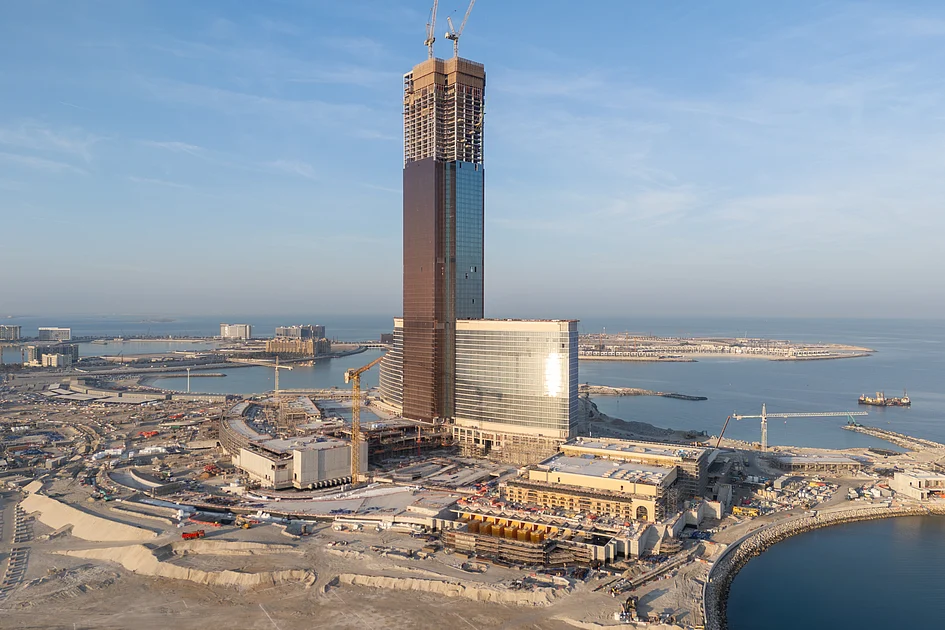
    Pure Bliss Development, a subsidiary of the prominent Lals Group, has officially announced the successful topping out ceremony for its flagship Bliss Tower project. This significant construction milestone was reached at the prestigious Dubai Land Residence Complex, marking a pivotal moment in the development’s timeline.

    The achievement signals the completion of the tower’s structural framework, paving the way for subsequent interior finishing phases and exterior cladding installations. The ceremony was attended by key stakeholders, project developers, and construction partners who celebrated this noteworthy progress in Dubai’s dynamic real estate landscape.

    Bliss Tower represents a substantial investment in Dubai’s property sector, incorporating contemporary architectural design with premium residential amenities. The development is strategically positioned within the Dubai Land Residence Complex, a master-planned community known for its integrated facilities and strategic location offering connectivity to major city attractions and business districts.

    Industry analysts note that this milestone demonstrates continued confidence in Dubai’s real estate market despite global economic fluctuations. The project’s progression aligns with Dubai’s broader vision of expanding its residential offerings to accommodate the city’s growing population and status as a global business hub.

    Construction timelines remain on schedule with anticipated completion dates expected to meet initial projections. The development is projected to contribute significantly to the available luxury housing inventory in the Dubai market upon finalization.

  • China, New Zealand reaping rewards of kiwifruit cooperation

    China, New Zealand reaping rewards of kiwifruit cooperation

    A groundbreaking scientific partnership between China and New Zealand is revolutionizing the global kiwifruit industry through shared genetic resources and advanced cultivation technologies. At the forefront of this collaboration is Sarah Pilkington, a leading kiwifruit scientist at New Zealand’s state Bioeconomy Science Institute in Auckland, whose work demonstrates the powerful synergy between the fruit’s Chinese origins and New Zealand’s agricultural innovation.

    Pilkington emphasizes the fundamental Chinese heritage of all modern kiwifruit varieties, noting that access to China’s rich germplasm resources has been instrumental to her research. “Kiwifruit originated in China—any kiwifruit that exists around the world is from China,” she stated, highlighting the importance of preserving the fruit’s genetic diversity for future generations.

    The scientist leads a specialized team utilizing cutting-edge molecular technologies to develop new kiwifruit cultivars at the Plant and Food Research group, part of the newly formed Bioeconomy Science Institute. This innovative institution emerged from a merger of four organizations earlier in 2025, combining expertise across plant and animal systems, advanced manufacturing, agritech, biotechnology, and food science sectors.

    The collaboration represents a model of international scientific cooperation where China provides the foundational genetic material while New Zealand contributes technological advancement capabilities. This symbiotic relationship ensures the protection of kiwifruit biodiversity while simultaneously driving commercial innovation in horticultural science.

    Beyond laboratory research, the partnership has significant implications for global food security and sustainable agriculture practices. The exchange of knowledge and resources between the two nations is creating more resilient kiwifruit varieties capable of withstanding climate challenges and meeting evolving market demands worldwide.

    The scientific alliance forms part of broader agricultural exchanges between China and New Zealand, reflecting deepening bilateral ties in research and development that benefit both nations’ agricultural sectors and the global kiwifruit industry.

  • Off-Plan confidence returns: Why Dubai is the choice for 2025 and beyond

    Off-Plan confidence returns: Why Dubai is the choice for 2025 and beyond

    Dubai’s property market has undergone a profound transformation in 2025, with off-plan developments emerging as the structural foundation of growth rather than speculative gambles. This paradigm shift is driven by three powerful forces: global talent migration, lifestyle-driven demand, and robust regulatory frameworks that have restored investor confidence to unprecedented levels.

    The first quarter of 2025 witnessed off-plan sales capturing 58.9% of all residential transactions, demonstrating their market dominance. This surge is fueled by flexible payment plans, modern amenities, and carefully designed communities that prioritize lifestyle, wellness, and opportunity. The market has evolved from its previous association with project delays and speculation into a model of reliability and trust.

    Critical to this transformation has been Dubai’s regulatory framework, particularly Law No. 8 of 2007, which mandates escrow accounts for all off-plan projects, providing essential buyer protection. Developers have responded by delivering projects ahead of schedule, while financial institutions have democratized access through mortgages available to individuals earning as little as Dh8,000 monthly.

    The buyer profile has fundamentally changed, dominated by end-users and long-term investors from both local and international markets. Millennials and Gen Z drive demand, attracted by post-handover payment structures such as 40/60 plans and 1% monthly schemes. These buyers seek affordability, lifestyle, and returns, with off-plan projects delivering 8-10% net ROI and approximately 20% capital appreciation by handover.

    International investment flows are led by buyers from Saudi Arabia, the UK, India, and China, drawn not just by individual units but by Dubai’s evolution into integrated, walkable communities. The city’s transformation under visionary leadership emphasizes 15-minute neighborhoods where residents can access work, dining, shopping, and essential services without car dependency.

    Beyond physical infrastructure, developers are embedding sustainability, wellness, and smart living into projects. The UAE smart home market, projected to grow at 27.5% CAGR between 2025-2030, incorporates automation, energy efficiency, and wellness-centric amenities. Dubai’s Green Building Regulations are pushing developers toward Net Zero-ready communities, ensuring resilience is designed into off-plan living.

    The UAE Golden Visa program has further accelerated demand by allowing property buyers to qualify before completing full payment, including properties under mortgage. This policy has transformed property purchases from mere financial assets into tickets for long-term residency in one of the world’s most dynamic cities.

    Dubai has established a global benchmark for livability and investment, with the future focused on translating growth into long-term resilience, inclusivity, and environmental sustainability. With consistent capital appreciation, strong ROI, global talent influx, and structural incentives, off-plan real estate is fundamentally redefining Dubai’s trajectory as the world’s preeminent lifestyle and investment destination, proving that ambition and livability are complementary pillars of an enduring metropolis.

  • UAE: Fly to this popular destination for just Dh114 as airfares dip on New Year

    UAE: Fly to this popular destination for just Dh114 as airfares dip on New Year

    Aviation analysts have identified January 1st as the optimal date for budget-conscious travelers seeking dramatically reduced airfares from the United Arab Emirates. Comprehensive market analysis reveals a predictable post-holiday pricing pattern where ticket prices experience a sharp decline immediately following New Year’s Eve celebrations.

    Travel platform data indicates particularly significant price reductions on routes to Middle Eastern destinations. Flights from Abu Dhabi to Beirut demonstrate the most substantial decrease, plummeting from over Dh700 to just Dh114 on January 1st. Similar downward trends are evident across multiple popular routes: Dubai to Kochi fares drop from Dh870 to Dh694, Dubai to Cairo tickets reduce from Dh620 to Dh470, and Dubai to Tbilisi flights experience a dramatic fall from Dh1,259 to Dh563.

    Industry experts from Wisefox Tourism explain this phenomenon stems from predictable travel behavior patterns. “January 1st consistently emerges as a low-demand travel day, as most residents prefer recovery after extensive New Year’s Eve celebrations rather than immediate travel,” noted Subair Thekepurathvalappil, Senior Tourism Manager. The UAE’s transformation into a premier December destination further influences this trend, with inbound tourist arrivals surpassing outbound departures during the festive period.

    Travel consultants emphasize the transient nature of these pricing opportunities. Luxury Travels representative Pavan Poojary cautioned that “this pricing window remains exceptionally brief, typically lasting only 24-48 hours before fares readjust to regular levels as normal travel patterns resume.”

    The current market conditions present exceptional value for flexible travelers targeting destinations across the Middle East, Caucasus region, and South Asia. Industry analysts recommend prompt booking for those seeking to capitalize on these temporary price reductions before the anticipated market correction.

  • Illegal fintech activities worth 30b yuan weeded out

    Illegal fintech activities worth 30b yuan weeded out

    Chinese authorities have dismantled a massive network of illegal financial operations totaling approximately 30 billion yuan ($4.27 billion) during a comprehensive six-month nationwide campaign. The joint operation between the Ministry of Public Security and the National Financial Regulatory Administration targeted 17 key provinces and municipalities from June to November 2025, representing one of the most significant crackdowns on financial misconduct in recent years.

    The specialized campaign resulted in the investigation of over 1,500 cases through nearly 60 coordinated raids, effectively dismantling more than 200 professional criminal organizations. According to official data released Thursday, the operation specifically addressed the growing threat of sophisticated financial ‘black and gray industries’ that have evolved into highly organized criminal enterprises.

    Hua Liebing, Director of the Ministry’s Economic Crime Investigation Bureau, revealed that these illicit operations have developed into full-fledged industrial chains encompassing false advertising, customized deception scripts, forged documentation, and specialized agency negotiations. The criminal networks have attracted highly qualified professionals, including lawyers and debt collection agency employees, who leverage their legal expertise to create ‘anti-debt collection’ teams for substantial profit.

    The technological sophistication of these operations presents particular challenges for enforcement agencies. Criminals increasingly employ artificial intelligence tools and complex internet technologies to create multilayered, nested products that complicate identity verification and detection processes. Additionally, these operations demonstrate growing internationalization trends, with criminals exploiting legal loopholes and disguising illegal purposes as legitimate financial activities.

    A representative case from Qingdao, Shandong province, involved a loan fraud scheme masterminded by suspect Wang and accomplices. Since 2020, the group developed a network of over 10 second-tier intermediaries recruiting locals to carry debt. Through forged bank statements, property deeds, and work certificates, they qualified debt carriers for high-value mortgages while colluding with appraisal firms to inflate property values and bribing bank staff to secure fraudulent loan approvals—defrauding over 120 million yuan in housing loans.

    Xing Guijun, Director of the NFRA’s Investigation Bureau, emphasized that these industries have evolved into ‘high-tech, large-scale, intelligent and industrialized fraud’ that outpaces traditional risk control measures. Effective governance requires strengthened law enforcement and judicial coordination, with financial institutions assuming primary responsibility for comprehensive risk management.

    The regulatory collaboration has already yielded significant results. Since March 2025, when the NFRA and Ministry of Public Security established formal case transfer regulations, authorities have processed over 4,500 financial crime leads involving 21 billion yuan. Financial institutions, under official guidance, have independently reported 1,700 cases involving 17 billion yuan.

    Looking toward 2026, the NFRA plans intensified crackdowns on key illegal financial activities, particularly targeting unlawful loan intermediaries and agency services. Authorities will enhance cross-departmental cooperation with market regulators and judicial bodies, develop standardized evidence transfer protocols, and conduct joint research to advance legislative recommendations for financial crime regulation.

  • Smart drilling systems from China boost efficiency at Iraqi oilfields

    Smart drilling systems from China boost efficiency at Iraqi oilfields

    BAGHDAD—Iraq’s oil industry is experiencing a technological transformation through Chinese innovation, with advanced drilling systems significantly enhancing operational efficiency and safety standards. At the forefront of this revolution is China Oilfield Services, whose cutting-edge equipment has become integral to Iraq’s energy infrastructure.

    In Maysan Governorate’s maintenance facilities, Chinese technicians work alongside Iraqi engineers to maintain the sophisticated Xuanji drilling system. This high-end technology, independently developed by China Oilfield Services in 2014, represents a breakthrough in drilling capabilities that previously remained under the exclusive control of Western corporations.

    The Xuanji system incorporates two groundbreaking technologies: rotary steerable drilling that provides enhanced power and safety, and logging-while-drilling that functions as a subterranean vision system. This combination allows precise navigation through rock formations thousands of meters underground, accurately identifying oil-bearing structures with unprecedented accuracy.

    Since its introduction to Iraqi operations in 2020, the system has achieved remarkable milestones, drilling 85,000 cumulative meters with over 21,000 hours of downhole operation. Complementing this technology, the Xuanyue system employs advanced cable-deployed instrumentation using acoustic, electrical, and nuclear magnetic resonance technologies to map hydrocarbon reservoirs, making previously invisible resources detectable and measurable.

    The Xuanyue technology has completed more than 5,000 logging operations in Iraq, directly contributing to increased reserves and production capabilities. Iraqi engineer Hussein Mohammed, who has collaborated extensively with Chinese technicians, confirmed that these advanced systems have made oilfield operations ‘smarter and more efficient.’

    According to An Haiyang, general manager of China Oilfield Services’ Iraq branch, these technologies represent more than just equipment—they embody a new era of energy cooperation between China and Iraq. The successful implementation of these systems has injected fresh momentum into bilateral energy partnerships while promoting technological upgrading within Iraq’s energy sector.

    The collaboration demonstrates how international technological partnerships can create win-win scenarios, enhancing operational capabilities while strengthening diplomatic and economic ties between nations.