分类: business

  • Cambodia’s economic growth faces challenges

    Cambodia’s economic growth faces challenges

    Cambodia’s economic outlook for 2025-2026 shows moderated growth projections amid external pressures, though analysts characterize the disruptions as temporary rather than structural. The Southeast Asian kingdom now anticipates 5.2% GDP growth for 2025, a notable downward revision from the previously projected 6.3%, according to Finance Minister Aun Pornmoniroth.

    The economic headwinds stem primarily from two significant challenges: heightened border tensions with neighboring Thailand and substantial tariff impositions by the United States. Cambodia currently faces a 19% tariff on all exports to the American market, creating substantial pressure on the nation’s export-oriented sectors.

    Despite these challenges, Cambodia maintains robust economic fundamentals supported by strong domestic consumption and a growing trend of domestic product utilization. The government has responded with strategic fiscal measures, increasing the 2026 national budget to $10 billion—a 7.8% rise from 2025 expenditures—to bolster economic resilience.

    International economic institutions have adjusted their forecasts accordingly. The International Monetary Fund projects Cambodia’s growth to moderate to 4.8% in 2025 and further to 4% in 2026, citing export volatility, reduced remittances, tourism sector slowdown, and tempered domestic demand as contributing factors.

    Private sector leaders like Arnaud Darc, CEO of Thalias Hospitality, emphasize that current disruptions represent short-term adjustments rather than fundamental weaknesses. The Cambodia-Thailand border closure has particularly impacted regional trade, with bilateral commerce dropping over 90% during the closure period and forcing exporters to absorb 8-12% increased logistics costs through alternative routes.

    Looking forward, Cambodia is leveraging international partnerships through mechanisms like the Regional Comprehensive Economic Partnership and the Cambodia-China Free Trade Agreement to enhance economic integration. A significant tourism initiative—a visa-free pilot program for Chinese visitors scheduled from June to October 2026—offers potential to revitalize the services sector and provide counterbalance to external pressures.

    Academic experts including Thong Mengdavid of the Royal University of Phnom Penh note that while immediate challenges highlight structural vulnerabilities, strategic investments in productivity, infrastructure, human capital, and governance reform position Cambodia for more resilient and diversified long-term growth.
  • US-China Business Council chief: US firms committed to China

    US-China Business Council chief: US firms committed to China

    In a significant demonstration of continued economic engagement, the US-China Business Council has reinforced American corporate commitment to the Chinese market during high-level trade discussions this week. The council’s leadership hosted a delegation led by Ren Hongbin, Chairman of the China Council for the Promotion of International Trade, for a comprehensive roundtable dialogue on bilateral trade relations.

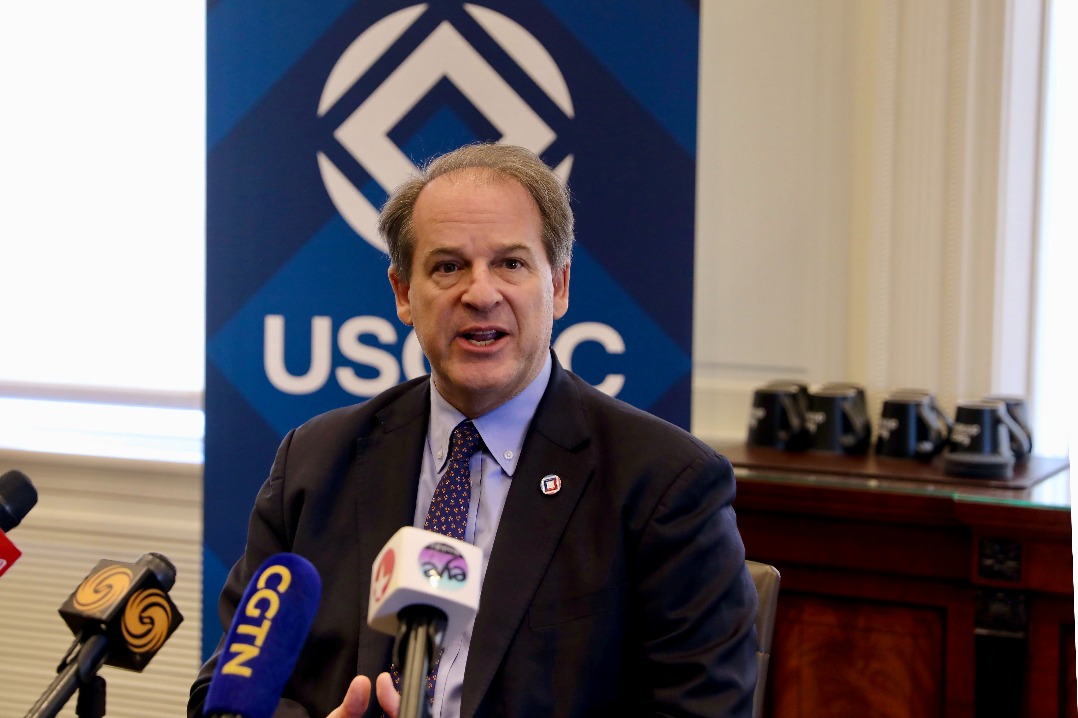
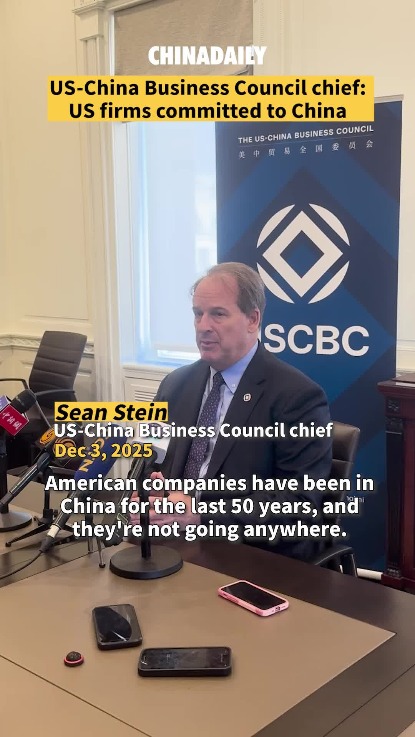
    Prior to the closed-door meeting, US-China Business Council President Sean Stein addressed media inquiries, directly countering narratives about American corporate withdrawal from China. “US firms are not leaving China,” Stein emphatically stated, adding that “more US multinational companies are actually deepening their engagement through collaborative ventures with Chinese partners.”

    The discussions occurred against the backdrop of ongoing economic diplomacy between the world’s two largest economies. Stein’s remarks highlight a contrasting narrative to recent geopolitical tensions, suggesting that business realities on the ground continue to drive cooperation despite political headwinds.

    The roundtable itself focused on practical business concerns and opportunities, with both sides exploring mechanisms to facilitate smoother commercial operations and joint innovation initiatives. This meeting represents the latest in a series of engagements between American business representatives and Chinese trade officials seeking to maintain productive economic ties.

    Industry analysts note that such business-to-business diplomacy often paves the way for more formal governmental agreements, with private sector commitments frequently preceding policy developments in US-China economic relations.

  • Sino-US soybean trade discussed in Washington

    Sino-US soybean trade discussed in Washington

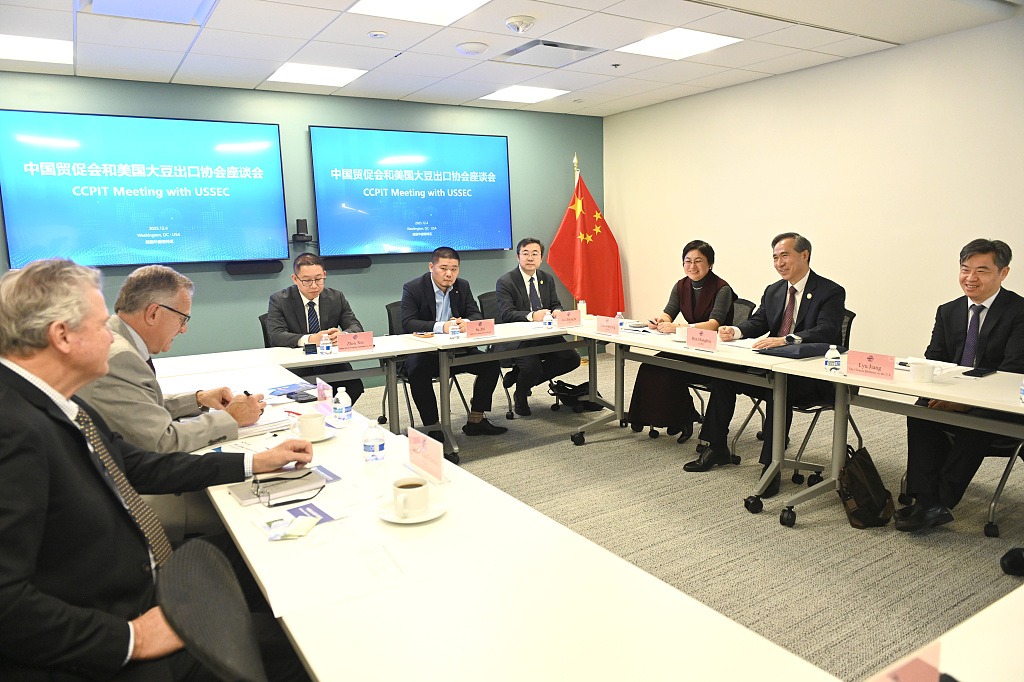
    In a significant development for agricultural trade relations, a high-level Chinese trade delegation convened with United States soybean industry leaders in Washington to discuss revitalizing bilateral soybean commerce and implementing recent high-level agreements. The meeting, led by China Council for the Promotion of International Trade President Ren Hongbin, featured substantive discussions with US Soybean Export Council CEO Jim Sutter and other agricultural representatives.

    The dialogue represents a concrete step toward implementing the consensus reached during the October meeting between President Xi Jinping and US President Donald Trump in Busan, South Korea. Both parties expressed strong commitment to rebuilding trade channels that have experienced significant disruption in recent years.

    Sutter characterized China as “the world’s largest and most irreplaceable soybean market” for American farmers, expressing robust optimism about the long-term relationship. He proposed that soybean trade could serve as a model for broader US-China cooperation, stating, “Soybeans and the soybean trade between these two countries can be a good example for how the countries can work together.”

    The human impact of trade tensions was articulated by USSEC Vice-Chair Mike McCranie, an active soybean farmer, who described the “painful” consequences of tariffs while emphasizing mutual dependency: “In my state, seven out of every ten rows grown are exported, and three-and-a-half of those go to China. We need one another.”

    The discussions extended beyond immediate trade resumption to include sustainable agriculture collaboration. Ren specifically encouraged joint development of green and low-carbon agricultural proposals for the 2026 APEC meeting in Shenzhen, building on previous successful cooperation on global supply-chain security at last year’s APEC summit in Lima.

    Chinese commercial enterprises demonstrated strong purchasing intent, with COFCO Oils & Fats representative Wang Bei confirming readiness to increase US soybean purchases as bilateral conditions improve. Additional companies proposed hosting dedicated USSEC seminars at the June 2026 China International Supply Chain Expo to promote sustainable US soy to Chinese buyers.

  • IndiGo CEO issues apology, outlines 3 lines of action to solve flight disruptions

    IndiGo CEO issues apology, outlines 3 lines of action to solve flight disruptions

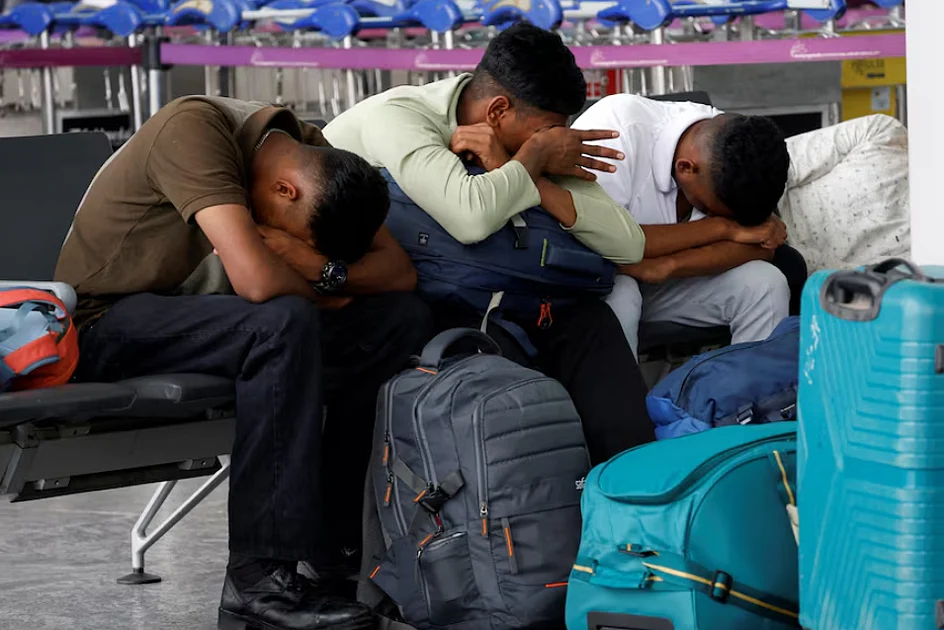
    IndiGo Airlines CEO Pieter Elbers has issued a formal public apology following days of severe operational disruptions that culminated in massive flight cancellations on December 5, 2025. The carrier cancelled over 1,000 flights—representing more than half of its daily operations—stranding passengers across Indian airports and creating widespread travel chaos.

    Elbers characterized December 5 as the ‘most severely impacted day’ of an ongoing operational crisis that has persisted for several days. The CEO outlined a three-point action plan to address the situation and restore normal operations.

    The comprehensive strategy includes enhanced customer communication with detailed refund information and support measures, a request for passengers with cancelled flights to avoid airports to prevent congestion, and a full system ‘reboot’ implemented on December 5. This reboot involved strategic cancellations to properly align aircraft and crew resources for a fresh operational start on December 6.

    Elbers acknowledged that previous measures proved insufficient, necessitating the complete operational reset. The airline has increased call center capacity and expects cancellations to drop below 1,000 flights by Saturday, with a full return to normal operations projected between December 10 and 15.

    The CEO expressed gratitude to India’s Directorate General of Civil Aviation for providing regulatory flexibility regarding Flight Duty Time Limitations (FDTL) during the crisis. Elbers concluded by recognizing the shaken customer confidence in IndiGo and pledged that frontline staff and teams are working relentlessly to restore trust in the airline’s services.

  • Five takeaways from the blockbuster Netflix Warner Brothers deal

    Five takeaways from the blockbuster Netflix Warner Brothers deal

    In a landmark transaction poised to redefine the entertainment industry, Netflix has announced its intention to acquire Warner Brothers Discovery’s streaming assets, including the prestigious HBO network and its legendary film studio. This colossal merger represents the most significant industry consolidation in recent years, combining Netflix’s dominant streaming platform with nearly a century’s worth of iconic entertainment content.

    The acquisition would unite Netflix’s extensive original programming, including Stranger Things and KPop Demon Hunters, with Warner Bros’ legendary franchises such as Harry Potter, Looney Tunes, Friends, and HBO’s critically acclaimed series including Succession, Sex and the City, and Game of Thrones. The deal additionally encompasses TNT Sports’ international operations outside the United States.

    Netflix’s subscriber base, already exceeding 300 million globally, stands to gain approximately 128 million additional subscribers from HBO’s existing audience. According to Mike Proulx, Vice President at research firm Forrester, this consolidation would render Netflix “arguably untouchable” in the streaming marketplace.

    Despite Netflix’s expressed confidence in regulatory approval, the deal faces substantial hurdles. Competition regulators in both the United States and Europe are scrutinizing the transaction, with bipartisan concerns in Washington regarding potential consumer price increases and reduced market choice. The acquisition’s completion remains uncertain, with Warner Brothers Discovery first required to spin off non-included assets such as CNN, Discovery, and Eurosport.

    Industry traditionalists have expressed dismay at the merger, with Titanic director James Cameron warning it could prove “disastrous” for the entertainment sector. The consolidation reflects the ongoing transition from traditional cinema to streaming dominance, a trend that Forrester’s Proulx describes as marking the official end of “legacy media.”

    Netflix executives have indicated the HBO brand will likely be preserved given its “very powerful” market presence, though specific integration plans remain undisclosed. The company has committed to maintaining theatrical releases for acquired properties, including the DC superhero franchise, despite co-CEO Ted Sarandos previously characterizing movie-going as an “outdated concept.”

  • Argentina’s President Milei to issue a dollar bond, eyeing a return to global markets

    Argentina’s President Milei to issue a dollar bond, eyeing a return to global markets

    BUENOS AIRES — In a significant financial maneuver, Argentina’s libertarian government under President Javier Milei has unveiled plans to issue dollar-denominated sovereign bonds for the first time since 2016. This strategic move aims to facilitate the nation’s reentry into international capital markets while addressing imminent debt obligations exceeding $4.2 billion due in January.

    The Economy Ministry detailed that the new bond issuance, structured under Argentine law and targeting both domestic and foreign investors, carries a 6.5% coupon rate with a maturity date set for November 2029. While the exact offering size remains undisclosed, the initiative reflects growing market confidence in Milei’s economic agenda following his party’s decisive midterm electoral victory.

    Economy Minister Luis Caputo emphasized that this approach enables debt settlement without depleting critical foreign reserves, bypassing the need for congressional approval due to its domestic legal framework. He attributed this financial reopening to the administration’s successful efforts in controlling budget deficits and removing capital controls that previously isolated Argentina’s debt markets.

    This bond issuance represents a milestone in Milei’s ambitious economic overhaul initiated upon his 2023 inauguration. The radical economist-turned-president has pursued aggressive measures to combat hyperinflation, stabilize the faltering economy, and reverse decades of left-wing populist spending policies that led to nine sovereign defaults—most recently in 2020.

    Despite securing a $20 billion IMF loan earlier this year, Argentina faces challenges in meeting the fund’s year-end reserve target of approximately $5 billion. IMF spokesperson Julie Kozack acknowledged the difficulties, urging authorities to implement consistent monetary and exchange frameworks to support reserve accumulation.

    Market analysts remain cautiously optimistic. Fernando Marull, an Argentine economist, likened the strategy to “refinancing a loan rather than paying entirely from scarce reserves.” However, concerns persist regarding the bond’s attractiveness to foreign investors due to its local legal jurisdiction and ongoing vulnerabilities in Argentina’s economic framework.

    Juan Battaglia, chief economist at Cucchiara brokerage, noted that while the government has made progress in normalizing financial accounts, “there is still a long way to go” for a full return to international markets. The success of this offering will significantly influence Argentina’s ability to manage its substantial $40 billion IMF debt and pursue sustainable economic growth.

  • US firms continue to ‘grow, invest in China’

    US firms continue to ‘grow, invest in China’

    Contrary to prevailing narratives of economic decoupling, American corporations are not only maintaining but expanding their substantial presence in China, according to Sean Stein, President of the US-China Business Council. Speaking to journalists in Washington on Wednesday during a meeting with a Chinese business delegation, Stein directly challenged what he termed the ‘myth’ of US corporate withdrawal from the Chinese market.

    Stein emphasized that despite media reports and political rhetoric suggesting otherwise, the reality on the ground reveals continued commitment to China operations. ‘American companies are somehow leaving the China market or stepping away from it. That is absolutely not the case,’ Stein stated unequivocally.

    The business leader’s comments come amid conflicting media narratives. While some outlets including The Wall Street Journal, Reuters and Forbes have documented instances of companies reducing exposure or reconsidering China strategies due to cost pressures, tariff implications and geopolitical risks, other publications such as Bloomberg, Politico and the New York Post have reported sustained US corporate engagement driven by market scale, supply chain depth and persistent consumer demand.

    Stein highlighted that many US companies have maintained operations in China for half a century and show no signs of departure. Rather than disengaging, these firms are implementing sophisticated ‘China-plus-one’ strategies—maintaining Chinese operations while simultaneously developing additional supply chain options elsewhere in Asia and beyond. This approach allows companies to benefit from China’s established manufacturing ecosystem while building resilience through regional diversification.

    Supporting Stein’s assessment, the US-China Business Council’s 2025 Member Survey released in July revealed that over 80% of American companies continue to invest in China to serve the local market. Notably, nearly all surveyed firms indicated that maintaining China operations remains essential for global competitiveness. The survey did acknowledge that some companies are recalibrating supply chains with expansions into Southeast Asia, India and Mexico—adjustments driven primarily by tariff considerations, rising input costs and the pursuit of operational resilience rather than wholesale departure from China.

  • ’10-hour wait’: UAE-India flights impacted by IndiGo’s massive cancellations

    ’10-hour wait’: UAE-India flights impacted by IndiGo’s massive cancellations

    India’s largest carrier IndiGo faces mounting operational challenges as massive flight cancellations and severe delays continue to disrupt travel between the United Arab Emirates and India for the fourth consecutive day. The airline canceled over 500 flights on Friday alone, creating a backlog that may require weeks to fully resolve.

    Passengers traveling between Dubai and Mumbai have borne the brunt of these disruptions, with some experiencing delays extending up to ten hours. Dubai resident Mohammed reported his brother’s 12:15 PM Thursday flight to Mumbai ultimately departed at approximately 10:00 PM that evening. Another traveler, Satish, arrived at Dubai International Airport Terminal 1 before 5:00 PM for a 7:00 PM flight only to face eventual cancellation, leaving him with limited rebooking options and visa complications.

    The scale of disruptions extends beyond the Mumbai route. A Dubai-Kozhikode flight scheduled for 3:20 AM Friday departed over eight hours late at 11:29 AM. Similarly, a Dubai-Ahmedabad flight originally set for 5:15 AM Friday was rescheduled for 3:00 PM—a nearly ten-hour delay.

    IndiGo issued a public apology on social media platform X, acknowledging ‘widespread disruption across IndiGo’s network and operations’ over the previous two days. The airline expressed regret to affected customers and industry stakeholders.

    The crisis stems primarily from new Flight Duty Time Limitations implemented by India’s Directorate General of Civil Aviation (DGCA). These regulations mandate 48 hours of weekly rest for pilots and cap weekly night landings at two, significantly reduced from the previous allowance of six. The changes respond to growing concerns about pilot fatigue but have created immediate operational challenges.

    In response to the ongoing disruptions, Indian media reports indicate the DGCA has issued notices to relax weekly rest requirements for crew members, suggesting regulatory flexibility to address the airline’s operational crisis.

  • Should you wait for UAE mortgage rates to fall? American personal finance guru weighs in

    Should you wait for UAE mortgage rates to fall? American personal finance guru weighs in

    Renowned American financial advisor Suze Orman has addressed one of the most persistent questions in UAE real estate: whether prospective homeowners should delay their purchases in anticipation of falling mortgage rates. In her comprehensive analysis, Orman emphasizes that home buying decisions should be grounded in current financial capabilities rather than speculative rate predictions.

    The core principle, according to Orman, centers on affordability rather than timing interest rate movements. She advocates for a conservative approach where total housing expenses—including mortgage payments, insurance, property taxes, and maintenance reserves—should not exceed 30% of one’s income. Crucially, buyers should maintain at least an eight-month emergency fund after accounting for their down payment.

    While acknowledging that the UAE’s currency peg to the US dollar means local rates often follow Federal Reserve adjustments, Orman highlights the imperfect synchronization between central bank policies and lender implementations. This lag means that potential savings from future rate cuts could be offset by rising property values in prime locations during the waiting period.

    Orman’s guidance extends beyond rate considerations to emphasize structural and financial due diligence on properties themselves. She warns against rushing into purchases simply because financing is available, urging buyers to critically evaluate whether a home’s asking price reflects its true value rather than hidden problems the seller might be attempting to transfer.

    The expert outlines a three-part strategy for prospective buyers: first, base decisions on current affordability rather than hopeful projections; second, conduct rigorous stress tests to ensure payment sustainability if rates increase; and third, adopt a long-term perspective focused on lasting security rather than short-term rate advantages.

    Ultimately, Orman concludes that the optimal time to purchase property isn’t determined by interest rate fluctuations but by personal financial readiness, stable income circumstances, and thorough evaluation of both the property’s physical condition and its financial implications.

  • India to conduct high-level inquiry into IndiGo service disruption

    India to conduct high-level inquiry into IndiGo service disruption

    The Indian Ministry of Civil Aviation has announced a comprehensive high-level investigation into the operational collapse of IndiGo Airlines that resulted in massive flight disruptions across the country on December 5th, 2025. The unprecedented service failure led to the cancellation of over 500 flights, severely impacting both domestic arrivals and departures at multiple major airports.

    The ministerial inquiry will conduct a thorough examination of the systemic failures within India’s largest carrier, establish accountability where warranted, and develop concrete measures to prevent recurrence of such widespread travel disruptions. The investigation aims to ensure passenger rights are protected and that similar operational crises do not occur in the future.

    In response to the escalating situation, authorities established a 24/7 control room with dedicated hotlines (011-24610843, 011-24693963, 096503-91859) to monitor developments in real-time and facilitate immediate issue resolution. The Directorate General of Civil Aviation concurrently granted IndiGo a temporary, one-time exemption from specific crew duty regulations to assist in stabilizing operations.

    The airline has been mandated to implement immediate corrective measures with the Ministry projecting a gradual normalization of services beginning within 24 hours. ‘We anticipate that complete restoration of services will be achieved within the next three days,’ stated the Ministry, emphasizing their expectation of full operational recovery by December 8th, 2025.