分类: business

  • China’s big layoff wave now buffeting its tech sector

    China’s big layoff wave now buffeting its tech sector

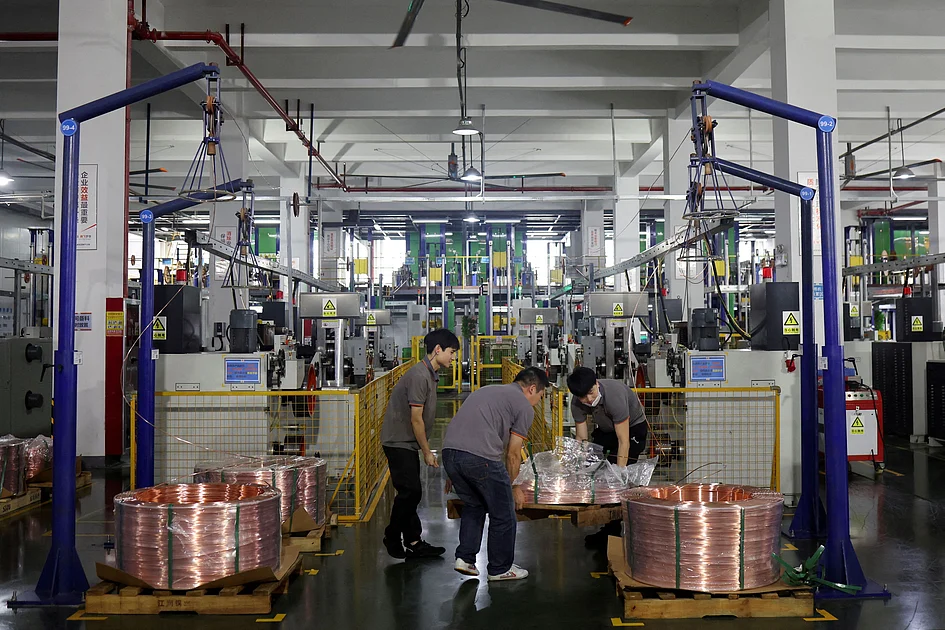
    China’s prolonged corporate downsizing trend has now expanded beyond manufacturing and property sectors into its once-booming technology industry. Major firms including Baidu, Lenovo, and Alibaba are implementing significant workforce reductions as core business operations weaken and artificial intelligence growth proves insufficient to compensate for broader economic challenges.

    Recent developments reveal technology companies are no longer immune to China’s economic slowdown. Baidu initiated year-end workforce adjustments in late November affecting multiple business units, with some non-core departments facing layoff ratios of 20-30%. The company offered severance packages ranging from n+3 to n+5 months’ salary, where ‘n’ represents years of service, with affected employees required to complete handovers by December’s end.

    These cuts followed Baidu’s disappointing third-quarter performance, particularly in its core advertising business. Online marketing revenue declined 18% year-on-year to 15.3 billion yuan ($2.16 billion), exceeding market expectations despite a 1% increase in monthly active users. Meanwhile, AI-related revenue including cloud services and autonomous driving unit Apollo Go grew 21% to 9.3 billion yuan, though this represented a significant slowdown from 34% growth in the previous quarter.

    Simultaneously, Lenovo’s Infrastructure Solutions Group (ISG) implemented mass layoffs affecting approximately 270 employees across Shanghai, Beijing, Tianjin, and Shenzhen locations. The company’s strategic shift toward globally centralized research and development has favored expansion in India’s Bangalore research center while targeting higher-cost Chinese software teams for optimization. Despite ISG revenue surging 63% to a record $14.5 billion, the division recorded its third consecutive half-year operating loss of $118 million.

    Industry analysts note that Lenovo’s profitability challenges stem from lacking proprietary technologies, with key AI solution components including chips and large language models relying heavily on external partners. The company faces intense competition across multiple fronts without clear innovation advantages.

    The technology sector layoffs occur against a backdrop of concerning youth unemployment data. China’s jobless rate for 16-to-24-year-olds (excluding college students) stood at 17.3% in October, while the rate for 25-to-29-year-olds remained unchanged at 7.2%. These figures demonstrate the challenging employment environment facing younger workers.

    Alibaba Group exemplifies the broader transformation, reducing its workforce from approximately 250,000 to under 200,000 employees through both layoffs and subsidiary sales. The company’s aggressive AI adoption has replaced approximately half of Taobao’s customer service workforce while Cainiao’s unmanned warehouses have improved efficiency by over 40%.

    The trend reflects a broader industry realization that manpower alone no longer creates competitive advantages, particularly when comparing Alibaba’s staffing to Pinduoduo’s ability to generate comparable gross merchandise volume with just 8,000 employees. Even senior technical roles are becoming vulnerable, with Tencent’s P8-level engineers—typically earning 750,000 to over 1.18 million yuan annually—becoming layoff targets as AI tools reduce needs for senior planning and coordination.

    This technology sector contraction follows years of steady shrinkage in China’s property and manufacturing sectors, with many electronics producers shifting capacity to Southeast Asia to cut costs and avoid US tariffs. The cumulative job losses across multiple sectors have squeezed household incomes and consumption, increasing pressure on internet and technology companies that rely on advertising and discretionary spending.

  • China puts anti-dumping tariff of up to 18.9% on imports of pork from the EU

    China puts anti-dumping tariff of up to 18.9% on imports of pork from the EU

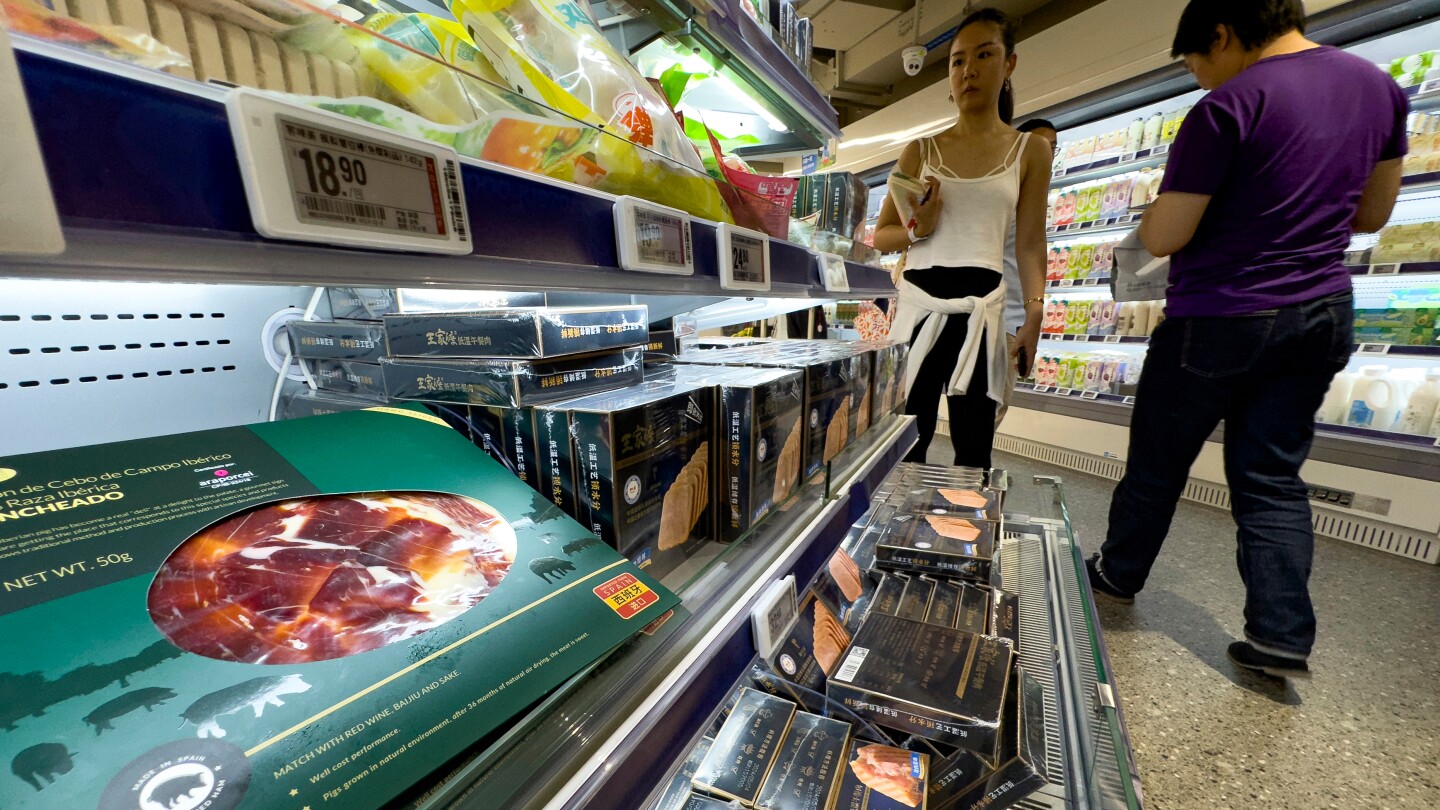
    China’s Commerce Ministry announced on Tuesday a significant reduction in final anti-dumping duties on European Union pork imports, setting tariffs between 4.9% and 19.8%—a substantial decrease from the preliminary rates of up to 62.4% imposed last September. The decision concludes a comprehensive investigation into EU pork trade practices that Beijing initiated in response to Brussels’ provisional tariffs on Chinese electric vehicles.

    The finalized tariffs, which will take effect Wednesday and remain for five years, apply to all pork products regardless of processing method—including fresh, chilled, frozen, dried, pickled, smoked, or salted varieties. The ministry stated its investigation determined that EU producers had been dumping pork and pig by-products in the Chinese market at prices below production costs or domestic market values, causing harm to China’s domestic pork industry.

    The announcement comes amid complex trade dynamics between the economic powers. The EU maintains a substantial trade deficit with China, exceeding €300 billion ($348 billion) in the previous year, yet remains a critical supplier of pork and specialty byproducts—including ears, snouts, and feet considered delicacies in China—to the Asian market.

    Notably, the resolution provides differentiated rates based on cooperation with the investigation, with collaborating companies facing lower duties. The decision follows similar trade measures against European brandy, though major cognac producers received exemptions, and ongoing probes into EU dairy products.

    The ministry emphasized that its conclusions were reached through an “objective, fair and impartial manner,” reflecting Beijing’s strategic approach to balancing trade relations while protecting domestic interests. EU pork exports to China peaked at €7.4 billion ($7.9 billion) in 2020 following China’s swine disease crisis but have declined as China rebuilt its domestic herds.

  • China’s economic agenda hailed

    China’s economic agenda hailed

    Analysts across Asia are recognizing significant regional economic implications from China’s newly announced economic priorities. The conclusion of China’s Central Economic Work Conference on December 11 has set the stage for substantial domestic market enhancement strategies that promise to create stabilizing effects throughout Asian supply chains.

    Economic experts note that China’s commitment to strengthening internal consumption mechanisms arrives at a critical juncture for export-dependent Asian economies facing constrained global trading conditions. The policy direction emphasizes consumption stimulation initiatives, urban-rural income augmentation programs, and the elimination of regulatory barriers that currently inhibit consumer activity.

    Reuben Mondejar, economics professor at IESE Business School in Spain, observed that while China’s agenda primarily addresses domestic economic dynamics, the resulting increase in Chinese import capacity will inevitably produce positive spillover effects across Asian trading partners.

    Singapore-based researcher Amitendu Palit from the National University of Singapore highlighted China’s evolution from primarily a manufacturing exporter to a substantial consumption market. “Global attention has traditionally focused on China’s production capabilities,” Palit noted, “while underestimating its remarkable potential as a consumer market.”

    The strategic shift assumes greater importance considering current U.S. tariff policies affecting numerous trading nations. Malaysia-based investment specialist Ian Yoong Kah Yin suggested that China’s market expansion could catalyze more structured economic integration between China and ASEAN members, potentially leading to enhanced manufacturing partnerships specifically targeting Chinese consumer demand.

    Financial analysts from Nomura confirmed that domestic demand stimulation remains Beijing’s consistent policy priority, maintaining the emphasis established in previous year’s economic planning sessions. China’s substantial foreign exchange reserves and rising living standards provide strong fundamentals for this consumer-focused approach.

    The conference outcomes also reaffirmed China’s commitment to institutional opening-up and service sector liberalization, measures that economists believe will stabilize global supply chains and reduce vulnerability to unilateral economic pressures from dominant global powers.

  • Shares are mostly lower in Europe and Asia ahead of US jobs and inflation reports

    Shares are mostly lower in Europe and Asia ahead of US jobs and inflation reports

    Financial markets across Europe and Asia experienced broad declines on Tuesday as investors adopted a cautious stance ahead of pivotal U.S. employment and inflation reports that could significantly influence future interest rate decisions.

    European benchmarks showed mixed but predominantly negative movement. Germany’s DAX index dropped 0.4% to 24,142.20 while Britain’s FTSE 100 slipped 0.3% to 9,722.23. France’s CAC 40 managed a marginal gain of 0.1%, reaching 8,129.43.

    Asian markets faced more substantial pressure. Tokyo’s Nikkei 225 declined 1.6% to 49,383.29 despite the S&P Global Flash purchasing managers index showing improvement to 49.7 from November’s 48.7, though remaining below the 50-point expansion threshold. Chinese markets retreated following disappointing November economic indicators showing retail sales growth at just 1.3% year-over-year, the slowest pace since 2022.

    Hong Kong’s Hang Seng dropped 1.5% to 25,235.41, while Shanghai’s Composite index fell 1.1% to 3,824.81. South Korea’s Kospi experienced the most significant decline, shedding 2.2% to 3,999.13 as technology shares, including SK Hynix (-4.3%) and Samsung Electronics (-1.9%), faced substantial selling pressure.

    The market apprehension stems from heightened sensitivity to upcoming U.S. economic data and potential policy shifts. Investors are particularly focused on the Bank of Japan’s Friday meeting, where an interest rate hike is widely anticipated—a move that could disrupt global bond, currency, and cryptocurrency markets.

    Adding to market concerns, iRobot shares plummeted 22% in premarket trading following the company’s Chapter 11 bankruptcy filing, compounding Monday’s 73% decline. The robotic vacuum manufacturer has struggled against intensifying competition despite assurances of uninterrupted device operations during restructuring.

    Meanwhile, artificial intelligence stocks displayed volatility amid growing skepticism about whether massive investments in chips and data centers will generate adequate returns. Nvidia gained 0.7% while Oracle fell 2.7% and Broadcom dropped 5.6%.

    Commodity markets also showed weakness with U.S. benchmark crude oil falling $1.08 to $55.74 per barrel and Brent crude declining $1.06 to $59.50. Currency markets saw the U.S. dollar weaken to 154.84 Japanese yen from 155.21, while the euro strengthened slightly to $1.1760 from $1.1755.

  • Americans like artificial Christmas trees even though few are made in US and prices are up

    Americans like artificial Christmas trees even though few are made in US and prices are up

    In a Fairfield, California workshop, Mark Latino oversees the production of Christmas tinsel on vintage machinery—a rare domestic operation in an industry dominated by overseas manufacturing. As CEO of Lee Display, a family business established in 1902, Latino represents a shrinking segment of American-made holiday decorations while navigating the complexities of global trade dynamics.

    Recent tariff implementations have illuminated the fragile economics of artificial Christmas tree production, triggering 10-15% price increases according to the American Christmas Tree Association. Despite these cost pressures, industry leaders confirm that large-scale production won’t return to U.S. shores due to fundamental structural challenges.

    Chris Butler, CEO of National Tree Co., explains the predicament: ‘Artificial trees require intensive labor and specialized components that simply aren’t manufactured in the United States.’ With over 80% of American households opting for artificial trees—a statistic consistent for 15 years—the industry faces a delicate balance between consumer price sensitivity and production realities.

    The migration of tree manufacturing began in the 1990s, first to Thailand and subsequently to China, where 90% of global production now occurs. The process remains remarkably hands-on, requiring 1-2 hours per tree for needle molding, branch assembly, and light attachment—tasks performed by workers earning $1.50-$2 hourly in China.

    Balsam Brands CEO Mac Harman illustrates the cost disparity: ‘Our feasibility study showed an $800 tree would cost $3,000 if manufactured domestically.’ The company couldn’t even source American-made gloves for fluffing branches, highlighting the depth of the supply chain challenge.

    While some companies are diversifying production to Cambodia, tariffs have followed this migration too—with rates fluctuating between 19-49%. The industry response has included workforce reductions, price increases, and operational cutbacks. Harman reports U.S. sales declines of 5-10% despite growth in international markets, suggesting tariffs have dampened domestic demand.

    For small operators like Lee Display, which produces approximately 10,000 trees annually alongside commercial displays, the tariffs still impact imported components like lights. Yet Latino values the control domestic production provides: ‘Everything here is either my fault or my careful planning.’

    As Butler summarizes the consumer mindset: ‘Putting a ‘Made in the U.S.A.’ sticker on the box won’t do any good if it’s twice as expensive. If it’s 20% more expensive, it won’t sell.’ This reality ensures that despite tariff pressures, America’s Christmas trees will continue bearing international origins for the foreseeable future.

  • UAE consumers drive premium spending as Saudi Arabia focuses on value

    UAE consumers drive premium spending as Saudi Arabia focuses on value

    A striking divergence in consumer behavior is reshaping retail markets across the Gulf region, with the United Arab Emirates and Saudi Arabia developing distinctly different spending patterns according to NielsenIQ’s latest State of the Nation report for Q3 2025.

    United Arab Emirates consumers are demonstrating a pronounced preference for premium products across multiple categories. The Fast-Moving Consumer Goods (FMCG) sector experienced a robust 7.7% revenue surge over the past year, while Technology & Durables (T&D) posted a healthy 6.9% increase. This trend reflects a sophisticated consumer base actively trading up for quality and variety, particularly within grocery purchases. Both value and premium FMCG segments in the UAE expanded by more than 20%, indicating growth across the entire spending spectrum.

    Conversely, Saudi Arabian shoppers are adopting a more pragmatic approach to everyday purchases while showing greater willingness to splurge on technology. The kingdom’s FMCG market grew modestly at 1.7% year-on-year, driven by value-conscious choices. However, technology spending surged by 4.5%, with premium categories including smartphones, televisions, and tablets leading this expansion. This creates a unique market dynamic where Saudi consumers balance frugality in daily essentials with aspirational technology purchases.

    Category performance highlights these contrasting trends. Saudi Arabia’s grocery growth is propelled by Pet Care (+13%), Snacking (+6%), and Beverages (+3%), while the UAE demonstrates balanced growth across categories. The technology sector in both markets shows consumers increasingly comfortable with significant online purchases, with digital channels now representing nearly one-third of T&D revenues.

    Retail channel preferences are also evolving across the region. Modern Trade maintains dominance with approximately 70% of regional FMCG sales, but e-commerce is gaining substantial traction. Online sales now contribute 11.9% of FMCG revenue in the UAE and 5.6% in Saudi Arabia. Traditional trade continues to play a significant role, accounting for 18% of sales in the UAE and 23% in Saudi Arabia.

    According to Andrey Dvoychenkov, General Manager at NielsenIQ APP, these trends present strategic opportunities for retailers and suppliers. Brands must develop tailored approaches for each market: emphasizing premium technology offerings during seasonal peaks in Saudi Arabia, while optimizing pricing architecture and maintaining robust omni-channel presence in the UAE. Understanding these nuanced consumer behaviors will be critical for capturing growth in the region’s dynamic economies.

  • UAE emerges as global hub for tokenisation and blockchain innovation

    UAE emerges as global hub for tokenisation and blockchain innovation

    The United Arab Emirates has strategically positioned itself at the forefront of the global digital asset revolution, emerging as a premier destination for blockchain innovation and tokenization technologies. Through progressive regulatory frameworks established by authorities including VARA (Virtual Assets Regulatory Authority) and ADGM (Abu Dhabi Global Market), the nation has cultivated an ecosystem that balances innovation with investor protection.

    Tokenization—the conversion of physical assets into digital tokens on blockchain networks—represents the cornerstone of this financial transformation. This technology enables unprecedented market features including 24/7 trading accessibility, fractional ownership opportunities, enhanced transparency, and global market reach. These advancements collectively dismantle traditional barriers that have historically limited access to investment opportunities.

    Yoni Assia, Chief Executive Officer of investment platform eToro, identifies the UAE’s approach as particularly significant. “The combination of clear regulatory vision and commitment to financial innovation makes the UAE one of the world’s most dynamic digital asset markets,” Assia noted. He emphasized that tokenization fundamentally democratizes investment access, allowing retail participants to construct diversified portfolios with reduced capital requirements compared to traditional markets.

    The implications for financial inclusion are particularly profound. Blockchain technology addresses longstanding systemic barriers through its inherent security protocols and cost-efficient infrastructure. However, Assia cautions that technological advancement alone cannot guarantee accessibility. “True inclusion requires platforms designed with educational resources, user-friendly interfaces, and affordable access points at their foundation,” he explained.

    Regulatory developments including Europe’s Markets in Crypto-Assets (MiCA) framework and proposed US legislation indicate growing global recognition of the need for balanced oversight. Rather than creating competition between decentralized and traditional finance sectors, industry leaders anticipate collaborative integration. Financial institutions are increasingly exploring blockchain applications including on-chain funds, blockchain-based settlement systems, and stablecoin payment infrastructures.

    Current tokenization applications already demonstrate tangible impact in equities and commodities markets, enabling cross-timezone trading without traditional market hour restrictions. Future expansion may encompass real estate, institutional investment products, and additional asset classes previously inaccessible to retail investors.

    The UAE’s leadership in this technological transformation signals more than mere technological adoption—it represents a fundamental reimagining of global financial accessibility where investment opportunity becomes universally available rather than exclusively privileged.

  • UK and South Korea strike trade deal

    UK and South Korea strike trade deal

    The United Kingdom and South Korea have formally cemented a comprehensive trade agreement designed to fortify economic relations between the two nations. Announced at Samsung’s flagship London store by UK Trade Minister Chris Bryant and his South Korean counterpart, Yeo Han-koo, the pact ensures that 98% of bilateral trade will remain tariff-free, mirroring the terms previously established between South Korea and the European Union.

    This agreement, which supersedes a previous deal set to expire in January 2026, safeguards approximately £2 billion worth of annual UK exports from potential tariff increases. Key British industries positioned to benefit include automotive manufacturing (with prominent supporters like Bentley Motors and Jaguar Land Rover), pharmaceuticals, financial services, and alcohol producers including Diageo, owner of Guinness.

    Beyond tariff preservation, the agreement focuses on reducing non-tariff barriers through streamlined regulations on product origins and enhanced digital and investment protections. South Korean Trade Minister Yeo Han-koo emphasized the complementary nature of the two economies, noting that Britain can serve as South Korea’s gateway to European markets while South Korea provides UK businesses with enhanced access to Asian markets.

    Prime Minister Keir Starmer hailed the agreement as “a huge win for British business” that will stimulate job creation and economic growth nationwide. The Department for Business and Trade identifies South Korea as the UK’s 25th largest trading partner, accounting for 0.8% of total UK trade in the year ending June 2025, though official figures show bilateral trade declined approximately 14% during this period.

    This agreement represents the fourth major trade deal secured by the current UK government following agreements with the EU, US, and India. While government assessments project minimal GDP impact from these agreements (the India deal estimated at 0.11-0.14% GDP growth), officials maintain that collective trade deals will generate economic expansion through job creation and reduced regulatory barriers for small businesses.

  • Japan business mood hits 4-year high, keeps alive BoJ rate-hike view

    Japan business mood hits 4-year high, keeps alive BoJ rate-hike view

    Japanese corporate sentiment reached its highest level in four years during the December quarter, according to the Bank of Japan’s closely monitored Tankan survey released Monday. The report revealed major manufacturers’ business confidence index climbed to +15, marking the third consecutive quarter of improvement and matching market forecasts.

    The survey’s findings reinforce widespread market anticipation that the central bank will proceed with interest rate increases this week. Large corporations projected substantial capital expenditure growth of 12.6% for the fiscal year ending March 2026, exceeding median market expectations of a 12% increase.

    Despite current optimism, companies expressed caution about the coming quarter, anticipating worsening business conditions due to concerns about higher U.S. tariffs and softening consumer spending. The non-manufacturers’ sentiment index remained robust at +34, nearly aligning with market projections of +35.

    Labor market conditions emerged as particularly significant, with companies reporting the tightest job market since 1991’s asset bubble era. This severe labor shortage, while potentially constraining growth in Japan’s aging economy, supports sustained wage growth—a critical factor for the BOJ’s rate hike considerations.

    Inflation expectations remained anchored around the central bank’s 2% target, with companies projecting 2.4% inflation across one, three, and five-year horizons. Separate BOJ research indicated regional branches expect 2026 wage increases to mirror those of 2025, supporting the bank’s assessment of continued price-wage momentum.

    Although Japan’s economy contracted in the third quarter due to export declines from U.S. tariffs, analysts anticipate recovery in the current quarter as exports and manufacturing output show signs of rebound. With inflation consistently above the 2% target for over three years, BOJ officials increasingly signal readiness to normalize monetary policy to avoid falling behind the curve on inflation management.

  • China’s economy stalls in November as calls grow for reform

    China’s economy stalls in November as calls grow for reform

    China’s economic indicators revealed significant softening in November 2025, with both industrial production and retail sales expanding at their most sluggish rates in over a year. According to data released by the National Bureau of Statistics on December 15th, factory output increased by merely 4.8% year-on-year—the weakest performance since August 2024—while retail sales growth plummeted to 1.3%, representing the poorest showing since the abrupt termination of zero-COVID restrictions in December 2022.

    The disappointing figures underscore profound challenges within the world’s second-largest economy, including fading consumer trade-in subsidies, a protracted property crisis dampening household expenditure, and industrial investment confronting deflationary pressures. With domestic demand remaining persistently weak, authorities have increasingly relied on export-oriented strategies to sustain growth. However, this approach faces mounting sustainability concerns as China’s record $1 trillion trade surplus provokes international backlash, with trading partners implementing protective tariff measures.

    Property sector distress continues to weigh heavily on economic prospects. New home prices declined further in November, while property investment plummeted 15.9% during the January-November period. The situation has become particularly acute for developers like state-backed China Vanke, which is urgently negotiating with bondholders to avert default after investors rejected a proposed one-year repayment delay.

    Economists note that the economy may have surpassed the threshold where conventional stimulus measures yield effective results. The International Monetary Fund estimates that resolving property sector challenges within three years could cost approximately 5% of GDP. Despite policymakers pledging proactive fiscal measures to stimulate consumption and investment at recent economic planning meetings, analysts express concerns that Beijing remains hesitant to transition from production-driven economic models toward consumer-led growth frameworks.

    With both the IMF and World Bank projecting more conservative growth trajectories for China, economic observers anticipate sustained challenges throughout 2026 despite potential partial recovery in coming months.