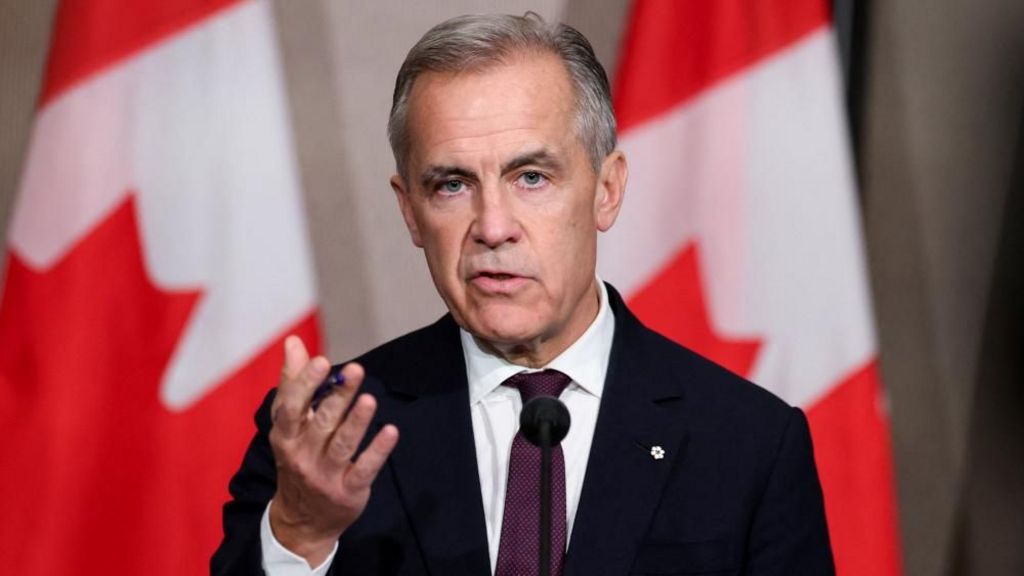
Prime Minister Mark Carney is poised to unveil his government’s inaugural federal budget on Tuesday, signaling a pivotal moment for Canada’s economic future. Amid the lingering impact of US President Donald Trump’s tariffs, Carney has cautioned Canadians to brace for ‘sacrifices’ as his administration seeks to overhaul the nation’s economic framework. The budget will feature a dual approach: significant spending cuts alongside ‘generational investments’ aimed at fortifying the economy and reducing reliance on US trade. Additionally, the plan outlines how Canada will finance billions in defense spending to meet NATO’s 2035 target of allocating 5% of GDP to defense. Analysts predict the federal deficit could surpass C$70 billion, a sharp increase from last year’s $51.7 billion. Carney, a former central banker for Canada and the UK, has vowed to position Canada as the strongest economy within the G7. ‘We used to take big, bold risks in this country. It is time to swing for the fences again,’ he declared in a recent pre-budget speech. The budget also emphasizes diversifying Canada’s export markets, with Carney setting an ambitious goal to double non-US exports within a decade. However, the transition will require substantial government support, as highlighted by Joy Nott, a KPMG Canada partner specializing in trade and customs. ‘Canadian companies need assistance in overcoming historic hurdles when entering new markets,’ she noted. Finance Minister Francois-Philippe Champagne reinforced the ‘made-at-home’ ethos by purchasing shoes from a Quebec-based manufacturer, symbolizing the shift from reliance to resilience. While the budget prioritizes investments, Carney has pledged to balance the federal operating budget within three years. The government has already tasked federal ministries with identifying up to 15% in program cuts to fund initiatives like trade infrastructure and housing. However, the Liberal Party’s ability to pass the budget remains uncertain, as they lack a majority in the House of Commons. Potential support from the left-wing NDP could be pivotal, though some MPs may abstain to avoid triggering a snap election. Carney’s budget also faces potential backlash against austerity measures, particularly as trade uncertainty and rising unemployment weigh on the economy. The Bank of Canada projects modest GDP growth of 1.2% in 2025, 1.1% in 2026, and 1.6% in 2027, underscoring the challenges ahead.