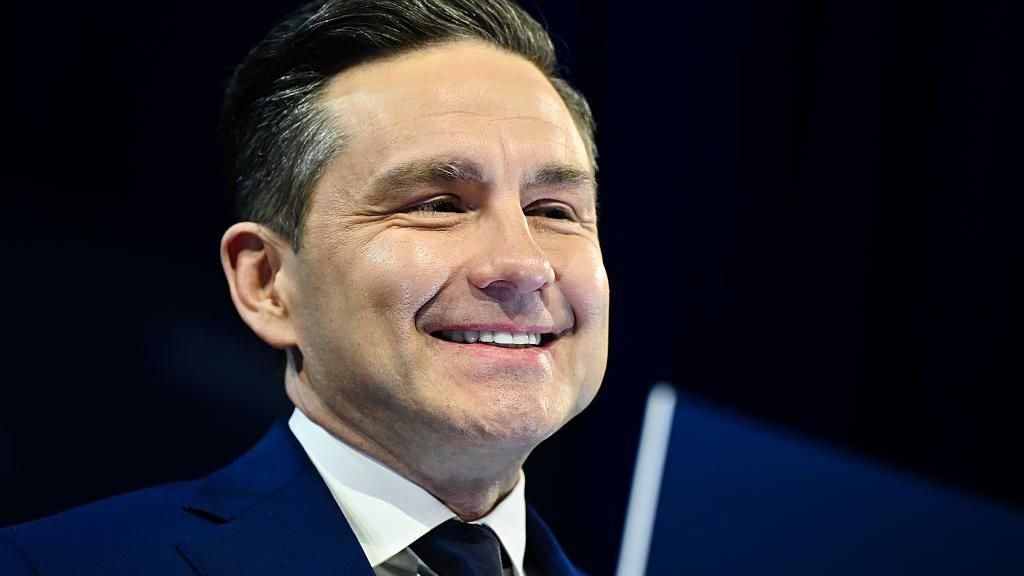
In a strategic move to amplify his international presence, Canadian Conservative Opposition Leader Pierre Poilievre engaged in a wide-ranging dialogue on ‘The Joe Rogan Experience,’ one of the world’s most influential podcasts. The conversation served as a cornerstone of Poilievre’s inaugural official tour across the United States, aimed at bolstering his profile amidst domestic polling that places him behind incumbent Prime Minister Mark Carney.
The interview transcended typical political discourse, beginning with Poilievre presenting Rogan with a Canadian-made kettlebell embossed with a maple leaf—a nod to their mutual interest in fitness and martial arts. However, the dialogue swiftly pivoted to substantive policy matters. Poilievre’s central mission was to advocate for the removal of trade tariffs imposed on Canada during the previous Trump administration. He articulated a vision of reinvigorated bilateral cooperation, stating, ‘We need to harness the goodwill of the American people… and what better place to do it than on the biggest podcast in the world.’
He presented a pragmatic economic argument, contending that eliminating tariffs on Canadian lumber and aluminum would directly contribute to lowering housing and vehicle costs for American consumers. Furthermore, he positioned Canada as a solution to rising U.S. energy prices, proposing an increase in Canadian oil exports by approximately two million barrels annually.
When probed on whether he had directly engaged President Trump on these issues, Poilievre demurred, upholding the principle of ‘one prime minister at a time’ and affirming that formal negotiations remain Carney’s prerogative, while his role was to offer supportive advocacy.
The podcast also ventured into contentious domestic Canadian policy, specifically the nation’s medically assisted dying laws. While affirming a general belief in individual choice, Poilievre expressed his party’s significant reservations about the planned expansion of the legislation to include individuals whose sole condition is a mental illness—a implementation already delayed until 2027.
Poilievre’s U.S. itinerary included high-level engagements in Detroit with automotive executives and in Texas, where he toured oil processing facilities and found a receptive audience in Governor Greg Abbott for increased Canadian exports. The tour culminates in New York City with an address to the Foreign Policy Institute. This outreach mirrors recent diplomatic efforts by Poilievre in the UK and Germany, where he promoted a new framework for enhanced cooperation between Canada, the UK, Australia, and New Zealand. These international forays occur against a backdrop of Carney’s own aggressive global travel schedule, focused on attracting foreign investment and diversifying Canada’s trade partnerships beyond the United States.