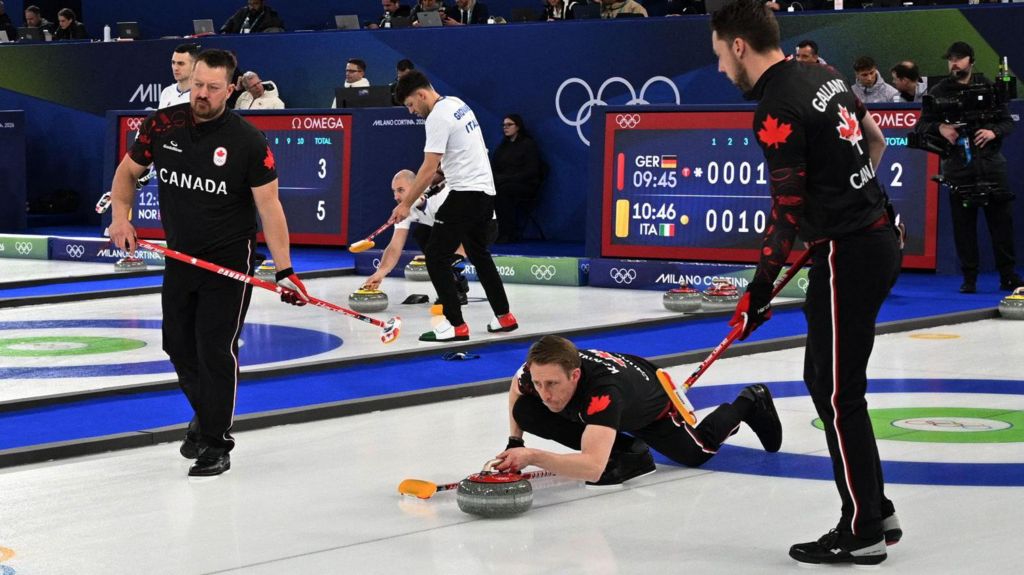
A significant controversy has erupted at the Winter Olympics, placing Canadian curling teams under intense scrutiny following multiple allegations of rules violations during competition. The incident has sparked widespread debate about sportsmanship and integrity in one of Canada’s most cherished sports.
The controversy began when Swedish curler Oskar Eriksson accused Canadian athlete Marc Kennedy of ‘double-touching’ – illegally touching the stone a second time after its initial release. The confrontation escalated into a heated verbal exchange that quickly circulated on social media, showing Kennedy appearing to make contact with stones during delivery.
Within 24 hours, the Canadian women’s team faced identical allegations, with skip Rachel Homan accused of the same violation. Both Canadian teams vehemently denied any intentional wrongdoing, though match officials removed stones from play in both instances. The allegations extended beyond Team Canada when Great Britain’s men’s team also faced similar accusations.
World Curling, the sport’s governing body, responded by clarifying regulations: ‘During forward motion, touching the granite of the stone is not allowed. This will result in the stone being removed from play.’ While the organization does not typically use video review, it deployed additional officials to monitor stone deliveries and implemented revised monitoring protocols requiring team requests for official observation.
Canadian reaction has revealed deep divisions within the curling community. Tim Gray from Alberta called it ‘a sad day for Canadian sport,’ emphasizing that ‘integrity in the sport is important, even if you have to call it on yourself.’ The Globe and Mail published an opinion piece criticizing the teams’ competitive approach, suggesting they appeared ‘desperate to win’ at any cost.
Kennedy acknowledged his emotional response while defending his integrity: ‘I probably could have handled it better. But we’re human out there and there’s a lot of emotions. I’ve curled my whole life, never once with the intention of getting an advantage through cheating.’
International curling figures have expressed concern about the scandal’s broader implications. Former Olympian Tomi Rantamaki noted that Canadian teams serve as role models worldwide, with young players from Finland to Korea often emulating Canadian techniques and behavior. The incidents have prompted serious conversations about maintaining curling’s traditional values of sportsmanship and fair play at the highest competitive levels.