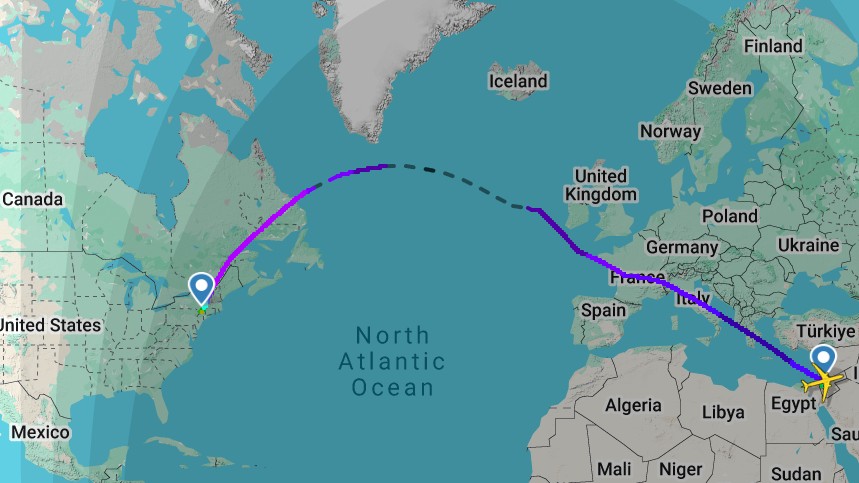
On Thursday, Israeli Prime Minister Benjamin Netanyahu traveled through the airspace of four ICC member states — Greece, Italy, France, and Canada — en route to New York to address the United Nations General Assembly, a journey that has reignited fierce global debate over compliance with an active International Criminal Court arrest warrant issued against him. The ICC issued the warrant for Netanyahu and former Israeli Defense Minister Yoav Gallant in November 2024, after judges confirmed reasonable grounds to hold the pair accountable for alleged war crimes and crimes against humanity committed in Gaza starting from October 2023, including the deliberate use of starvation as a weapon of war.
As a non-member of the International Criminal Court, the United States faces no legal obligation to enforce the warrant, but the issue has still sparked domestic friction. New York City Mayor Zohran Mamdani clarified in a July video address, following former U.S. President Donald Trump’s statement that Netanyahu would not face arrest during his visit, that local authorities lack independent legal jurisdiction to execute the ICC warrant. Despite this lack of power, Mamdani has publicly urged the federal government to acknowledge the warrant’s legitimacy and take action to enforce it.
Unlike the U.S., all four transited countries — as well as every European Union member state — are formal ICC parties bound by the Rome Statute to cooperate with the court’s arrest requests. This has left the four nations facing widespread criticism for repeatedly granting Netanyahu’s aircraft airspace access since the warrant was issued. Public flight trackers confirmed on Thursday that Netanyahu’s official aircraft, the Wing of Zion, successfully crossed all three EU nations before entering Canadian airspace, prompting fresh allegations that ICC member states are violating their binding international legal obligations.
Ahead of the flight, Canadian Foreign Minister Anita Anand announced that officials had launched a review of the submitted flight route, but she declined to directly answer questions on whether Ottawa recognizes Netanyahu as a war criminal. Anand only stated that Canada remains committed to respecting decisions of international courts, acknowledging the widespread suffering in Gaza, Palestine, and the West Bank, and upholding accountability for crimes against humanity. This marks a shift from Canadian Prime Minister Mark Carney’s clear statement last year that Netanyahu would be arrested if he entered Canadian territory.
Parallel to Netanyahu’s visit, the U.S. has once again drawn condemnation for denying entry visas to a high-level Palestinian delegation led by Palestinian President Mahmoud Abbas, marking the second consecutive year Washington has blocked Abbas from attending the General Assembly in person. The Biden administration cited Palestinian efforts to pursue legal cases against Israel at both the ICC and the International Court of Justice as a core reason for the visa ban. In response, the General Assembly passed a vote allowing Abbas to deliver his address to the body remotely via video. Palestinian UN representatives have since called on all diplomatic missions to stage a coordinated walkout during Netanyahu’s speech, in protest of Israel’s military and governance actions in Gaza and the occupied West Bank.
This week’s overflight controversy is not the first time ICC member states have faced scrutiny over their handling of Netanyahu’s travel. Last year, Netanyahu avoided French airspace on his trip to the General Assembly even after Paris granted permission, but his plane has since been allowed to cross French territory multiple times, including December 2025, February 2026, July 2026, and again this week. Canada, Greece, and Italy have also regularly appeared on Netanyahu’s flight routes to the U.S.
A clear precedent for the standoff emerged in 2025, when Hungary hosted Netanyahu for an official visit from April 3 to 6. ICC judges later ruled that Hungary had failed to meet its legal obligation to cooperate with the court and referred the non-compliance case to the ICC’s Assembly of States Parties. In response, Hungary initiated a full withdrawal from the court, but the process was reversed by the country’s new government before it could take legal effect.
Legal experts remain divided on the specifics of how the Rome Statute applies to overflights. The statute explicitly requires all member states to cooperate with arrest and surrender requests for ICC suspects, but it does not directly address the scenario of a suspect’s aircraft passing through a state’s airspace without landing. France has long taken the narrow legal position that it has no obligation under the Rome Statute to bar a state aircraft carrying an ICC suspect from crossing its airspace.
However, this interpretation has been widely challenged by independent legal experts. UN Special Rapporteur Ben Saul has argued that existing international law creates a clear path for enforcement. Under the 1963 Tokyo Convention, states are generally barred from interfering with in-flight aircraft to exercise criminal jurisdiction, but the treaty includes an explicit exception for cases where such intervention is necessary to uphold a state’s obligations under a multilateral international agreement. Saul notes that the Rome Statute qualifies as such an agreement, allowing ICC member states to compel an overflying aircraft carrying a wanted suspect to land for arrest. He further emphasizes that under general international law and the Convention on International Civil Aviation — which all four states in question have ratified — a state’s territorial airspace is considered full sovereign territory, just like its land or territorial sea, giving authorities full legal power to grant or deny access.
Other legal analysts have echoed this position, noting that even if there is debate over the obligation to force a landing, member states retain the clear right to refuse entry to their airspace for an aircraft carrying an ICC suspect. The ongoing controversy surrounding this week’s flight underscores deep divisions between international legal obligations and political realities, as major ICC member states balance their formal commitments to the court against geopolitical priorities tied to their relationships with Israel and the United States.