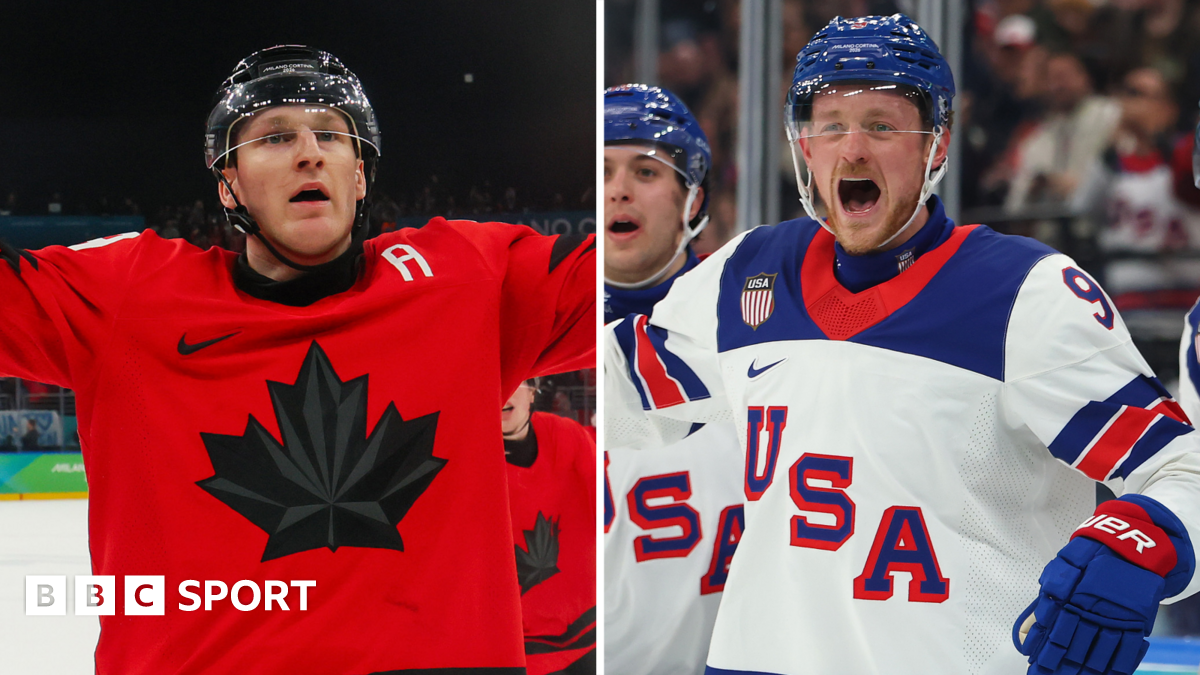
The Milano Santagiulia Ice Hockey Arena prepares to host one of the most anticipated confrontations in Winter Olympics history as North American rivals Canada and the United States clash for men’s ice hockey gold on Sunday at 13:10 GMT.
This championship matchup represents a study in contrasting Olympic legacies. Canada seeks to solidify its hockey dominance by capturing an unprecedented tenth men’s gold medal, while the Americans aim to end a 46-year drought since their legendary ‘Miracle on Ice’ victory in 1980. The historical advantage belongs to Canada, having defeated the U.S. in their two most recent Olympic final meetings (2002 and 2010).
Both teams navigated challenging paths to the championship game. Canada demonstrated remarkable resilience by overcoming a 2-0 deficit against Finland in Friday’s semi-final, scoring the decisive goal with merely 35 seconds remaining. The Americans secured their place through Quinn Hughes’ overtime winner against Sweden in the quarter-finals.
Canada faces significant challenges beyond the ice. Captain Sidney Crosby remains questionable with a knee injury that forced him to miss the semi-final, while a team-wide illness bug affected several players, notably Nathan MacKinnon during the quarter-final. Despite these setbacks, Canada boasts what experts consider the tournament’s most formidable roster.
“In Connor McDavid, you have the best player on the planet by a million miles,” noted hockey commentator Seth Bennett in discussion with BBC Sport. “He averaged three points per game entering the semi-finals. Combined with Nathan MacKinnon’s offensive brilliance and Cale Makar’s defensive excellence, they’ve assembled what resembles a fantasy team configuration.”
The American squad counters with its own strengths, particularly the effective combination of the Tkachuk brothers and Jack Eichel in attack, though captain Auston Matthews has yet to deliver his expected performance level. Defenseman Quinn Hughes has emerged as a crucial asset, with Bennett describing him as “possibly the world’s best three-on-three player.”
This Olympic tournament has been transformed by the return of NHL players after their absence from the previous two Games, elevating the competition to unprecedented levels of skill and excitement. The resolution of initial concerns regarding ice quality at the newly constructed arena has enabled what Bennett characterizes as “the highest level of hockey ever witnessed at an Olympics.”
The geopolitical dimension adds intrigue to the sporting spectacle. Canadian Prime Minister Mark Carney, a known hockey enthusiast, is expected to attend, while uncertainty surrounds the potential presence of U.S. President Donald Trump, whose previous comments regarding trade relations with Canada have heightened political tensions between the nations.
Despite the historical rivalry and political undertones, experts anticipate a fiercely competitive but less violent contest than February 2025’s Four Nations matchup that featured multiple fights in the opening seconds. With Olympic gold at stake, players are expected to prioritize skill over aggression, though Bennett predicts “every break in play will feature a cross-check, a word, a push, a scrum.”
The championship concludes what has been described as one of the most eventful Winter Olympics in recent history, both athletically and politically, with this final medal event serving as a fitting culmination to the Milan-Cortina 2026 Games.