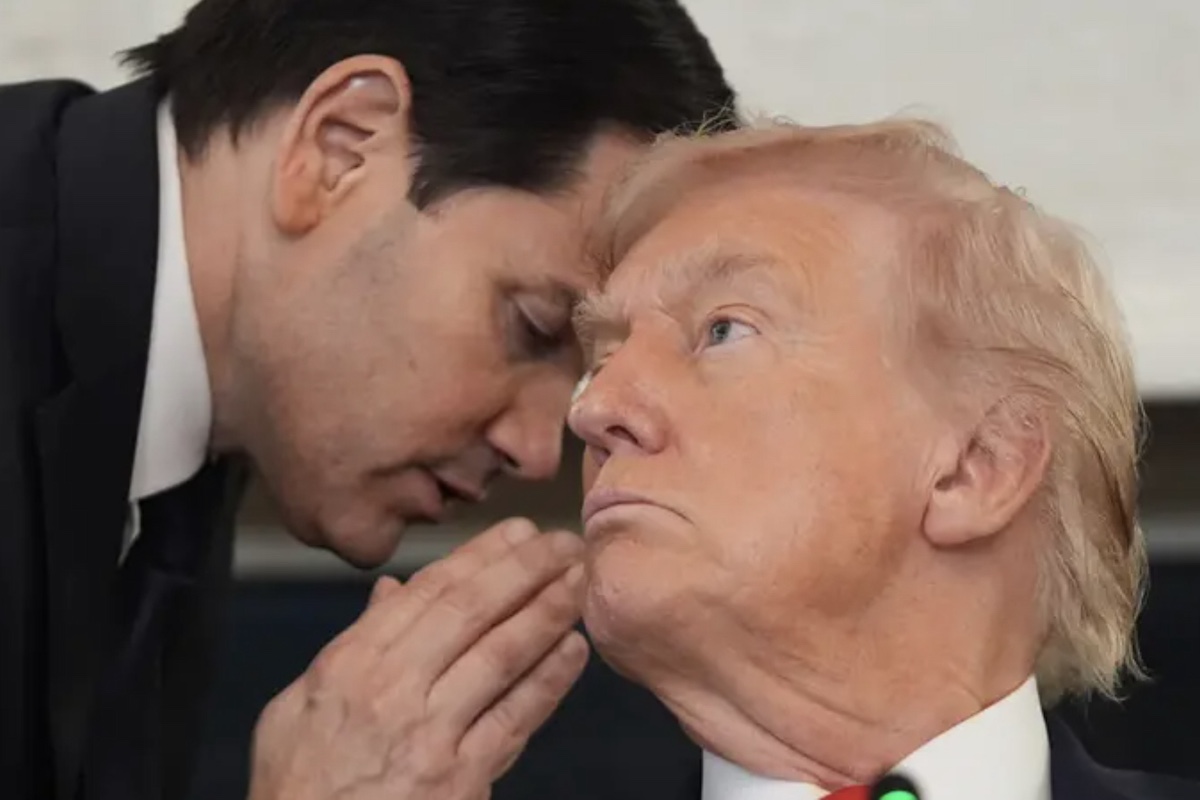
U.S. President Donald Trump’s recent visit to Israel and Egypt marked a pivotal moment in his second term, as he oversaw the initial implementation of the Gaza peace agreement. This accord, aimed at ending the two-year conflict in the region, is being hailed as a potential cornerstone of Trump’s foreign policy legacy, potentially surpassing the Abraham Accords of his first term, which normalized relations between Israel and several Arab nations. The swift negotiation of this ceasefire has brought renewed attention to the so-called ‘Trump Doctrine’—a high-energy, unconventional approach to global diplomacy. Central to this doctrine is a leaner, more agile decision-making structure within the administration. Secretary of State Marco Rubio, who also serves as National Security Adviser, has streamlined the National Security Council, reducing staff from 350 to 150. This restructuring has enabled faster, more decisive action, though it has not been without controversy. For instance, the use of Signal app group chats for classified discussions led to security concerns and the ousting of Trump’s first national security adviser, Michael Waltz. Rubio has since implemented a more sustainable communication method, relying on direct channels with key advisers like Chief of Staff Susie Wiles. The administration’s reliance on special envoys, such as Steve Witkoff and Jared Kushner, has also drawn both praise and criticism. While their unorthodox roles have facilitated high-level negotiations, questions about conflicts of interest persist. Trump’s personal diplomacy, characterized by a ‘shock and awe’ approach, has been instrumental in securing the Gaza deal. His ability to balance public support for Israeli Prime Minister Benjamin Netanyahu with private interventions, such as preventing the annexation of the West Bank, underscores his unique style. However, the sustainability of these breakthroughs remains uncertain. Critics point to the vagueness of Trump’s 20-point peace plan and the potential for it to unravel. As Trump pursues separate diplomatic deals with China, Russia, Iran, and North Korea, the true test of his doctrine will be whether he can drive a wedge between these adversaries and weaken their strategic alliances. The Gaza accord may be a significant achievement, but its long-term impact on global geopolitics is yet to be seen.