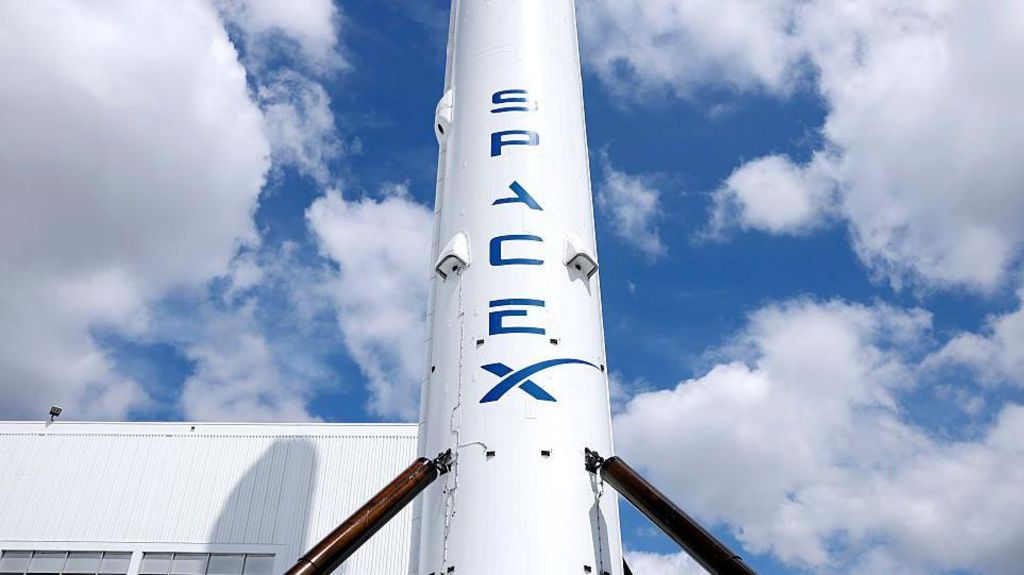
Next month will mark a watershed moment for private space exploration: Elon Musk’s Texas-based SpaceX will open its doors to public investors when it lists on the Nasdaq stock exchange via one of the most highly anticipated initial public offerings in Wall Street history.
Set to be the largest public share sale ever conducted, the June 12 IPO is projected to raise at least $75 billion in fresh capital and catapult SpaceX straight into the ranks of the 10 largest publicly traded companies in the United States. For casual and institutional investors alike, the offering presents a high-stakes opportunity to buy into a company redefining space technology — but it also carries extraordinary uncertainty tied to its founder’s outsize, long-term ambitions.
Until now, SpaceX has remained privately held, counting Musk and a small group of private backers as its sole owners. When trading opens, more than 550 million new shares will be available to investors at an offering price of $135 per share, valuing the company at roughly $1.75 trillion. That valuation places SpaceX above leading AI startups Anthropic and OpenAI, but below the sector’s biggest incumbents including Apple, Microsoft, Alphabet and Amazon.
While individual investors based in the UK and elsewhere will be able to purchase shares via regulated investment platforms and brokers, even indirect investors may have exposure: many pension funds, savings accounts and index-tracking funds automatically add shares of the largest listed companies to their portfolios, meaning everyday savers could see an impact from SpaceX’s performance regardless of whether they buy shares directly.
SpaceX’s business lines already extend far beyond its original core of rocket launches and space exploration. The company currently operates the Starlink satellite internet network, holds a stake in Musk’s social media platform X, and developed the AI chatbot Grok. It is legally separate from Musk’s better-known electric vehicle venture Tesla, though industry speculation suggests a potential merger between the two firms could come as early as 2026.
Musk has outlined that fresh capital from the IPO will go toward expanding existing operations while funding a slate of far-reaching, sci-fi-inspired long-term projects: asteroid mining, establishing a permanent human colony on Mars, and building AI data centers in orbit. In the company’s offering prospectus, Musk frames these projects as a existential necessity, arguing that humanity must move beyond Earth to avoid “the same fate as dinosaurs” and build a multiplanetary “age of abundance” to preserve the “light of consciousness.”
Not surprisingly, these sweeping ambitions have drawn heavy skepticism from market analysts. Critics point out that SpaceX posted $18.6 billion in revenue in 2024, but recorded a net loss of $4.9 billion over the same period. The company’s own IPO prospectus explicitly acknowledges its “history of net losses” and warns that it “may not achieve profitability in the future.”
The global AI race, a core focus of SpaceX’s future plans, is already notoriously capital-intensive and marked by unpredictable market shifts, leading to widespread concern that the company’s $1.75 trillion valuation is inflated, creating a bubble that could burst once public trading begins. Even veteran Wall Street analysts admit there is no reliable way to forecast whether share prices will rise or fall after listing, as the valuation depends almost entirely on the success of unproven long-term projects.
Opinions among industry experts are deeply divided. Ruth Foxe-Blader, a partner at U.S. venture capital firm Citrine Venture Partners, notes that SpaceX’s diverse portfolio of ongoing and planned projects gives it multiple pathways to growth, creating strong selling points for potential investors. But Michael Hewson, a market analyst at iForez, argues that the company’s valuation “defies belief” and that buying SpaceX shares amounts to a pure bet on Musk’s ability to deliver on his most extreme promises.
This IPO is the first of three massive AI-related public listings expected in 2025, with Anthropic and OpenAI set to follow with their own offerings. All three mega-listings share a common trait: they are attracting billions in investor capital despite no guarantee of sustained future profits.
One critical note for potential investors: even after the public share sale, Musk will retain more than 80% of the company’s voting power, only a tiny drop from his current control. That means he will retain full authority over all major company decisions, including leadership appointments and long-term strategic direction. The arrangement has drawn criticism in light of Musk’s well-documented erratic management style and competing responsibilities across his multiple business ventures. Yet industry observers note that Musk’s reputation as a innovator who has repeatedly defied early skeptics is, paradoxically, one of the biggest drivers of investor interest in the offering.
For early backers, the IPO could reshape Musk’s net worth: if the offering performs as expected, he will become the world’s first trillionaire. For investors, the choice boils down to a simple question: is Musk’s vision of a multiplanetary future a solid investment, or a high-risk gamble that may never pay off?