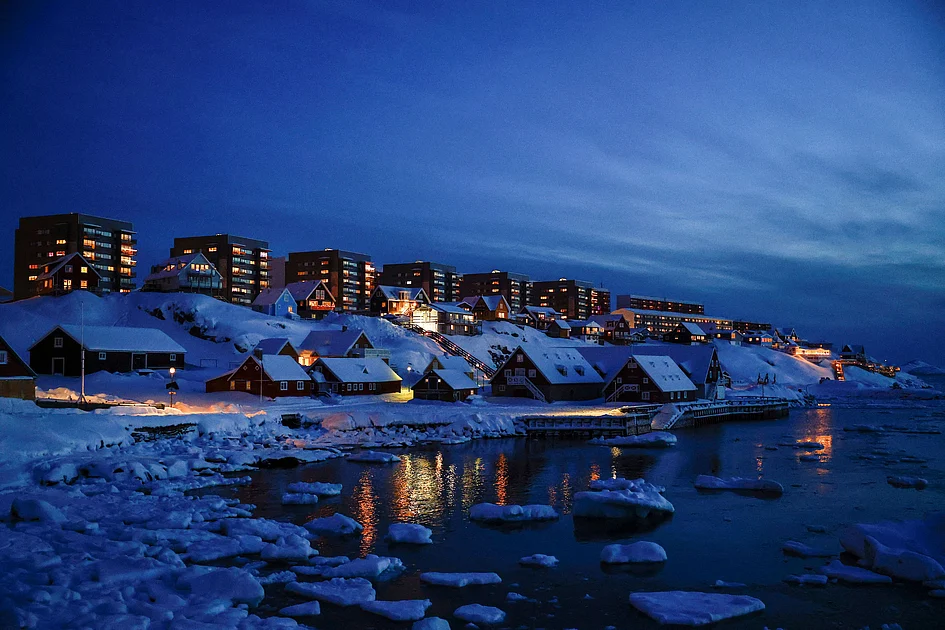
The geopolitical landscape witnessed an unusual proposition as former President Donald Trump reiterated his interest in acquiring Greenland from Denmark, despite Copenhagen’s firm stance that the autonomous territory is not available for purchase. While Trump recently appeared to dismiss military options by claiming a NATO agreement ensured U.S. access to Greenland, specifics of such an arrangement remain undisclosed and unverified.
Financial analysts project the hypothetical acquisition cost could approach $1 trillion when accounting for territory purchase, citizen compensation, welfare state maintenance, and infrastructure investments. This staggering figure raises eyebrows given the United States’ $38 trillion national deficit. Political opponents have questioned the prioritization, with Democratic Representative Brendan Boyle asking, “How about instead of giving the American people Greenland, we give them healthcare?”
Constitutional constraints present significant obstacles to any territorial expansion. The acquisition would require Senate ratification by a two-thirds majority (67 senators), necessitating substantial bipartisan support currently absent from Congress. Even some Republican senators, including Lisa Murkowski of Alaska, have emphasized that “respect for the sovereignty of the people of Greenland should be non-negotiable.”
Greenland’s current status as a self-governing territory within the Kingdom of Denmark complicates any potential transfer. With merely 57,000 inhabitants, statehood appears improbable, while alternative arrangements like a “compact of free association” or territorial status similar to Guam would require complex negotiations.
The strategic rationale centers on Arctic security competition with Russia and China, plus access to Greenland’s substantial rare-earth mineral deposits. However, the United States already maintains Thule Air Base on the island, and environmental regulations currently prohibit oil and natural gas extraction, while mining projects face bureaucratic and indigenous opposition.
Republican Senator Mitch McConnell summarized the prevailing skepticism: “I have yet to hear from this administration a single thing we need from Greenland that this sovereign people is not already willing to grant us.” The proposition remains more geopolitical theater than practical policy, highlighting the complex interplay between presidential ambition and constitutional reality.