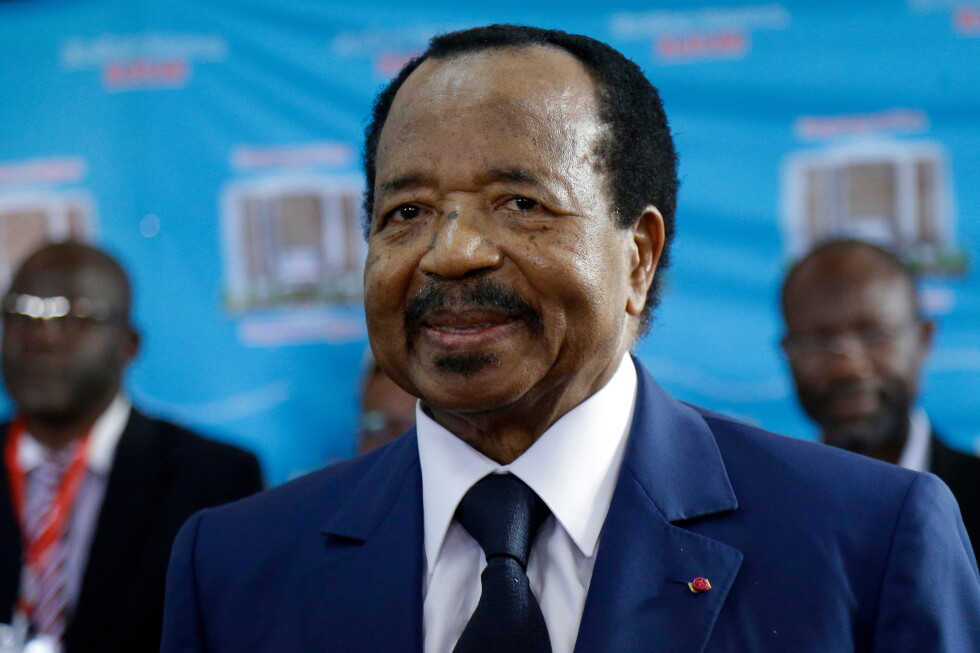
In Yaoundé, Cameroon, a growing political storm has erupted as 93-year-old President Paul Biya marked two full months outside his country’s borders this Thursday, leaving the Central African nation grappling with unanswered questions about his health and a looming power vacuum. As the world’s oldest sitting head of state, Biya has held uninterrupted power since 1982, and just began his eighth term in office after a deeply contested November 2024 election that drew widespread international and domestic criticism of electoral irregularities.
Biya first departed Cameroon on June 9 for what his office framed as a short private visit to Europe, a trip that has already grown into one of the longest overseas absences of his decades-long tenure. Long-running speculation about Biya’s health has intensified in recent years, as the president has increasingly spent weeks at a time in European locations including France and Switzerland, delegating day-to-day governance of the country to senior ruling party officials and members of his inner circle.
Cameroon’s constitution does not explicitly bar a sitting president from extended stays abroad, but the absence of a vice president to step in has left the country effectively operating on “autopilot,” according to opposition leaders. Issa Tchiroma Bakary, the opposition’s 2024 presidential candidate and a former long-time ally of Biya who now lives in exile in The Gambia, told reporters this Thursday that a widespread consensus has emerged across Cameroon that “all is not well” with the president. Biya’s prolonged stay in Switzerland, he added, only further erodes the already fragile legitimacy of a leader clinging to power through force.
The legacy of Biya’s 42-year rule has left the country deeply fractured. Decades of stagnant economic growth, a years-long armed insurgency waged by Boko Haram in northern Cameroon, and a violent separatist movement seeking independence for the country’s western Anglophone regions have left the nation’s large youth population deeply disillusioned with the aging leadership. More than 70% of Cameroon’s nearly 30 million residents are under the age of 35, meaning the vast majority of the population has never known a different head of state.
Wilson Tamfuh, a professor of public and international law at the University of Dschang, compared Cameroon’s current governance structure to a “seriously sick” human body. “Even if Biya still proves to be strong at this age, it is clear that his health challenges are taking a toll on his leadership,” Tamfuh explained. He added that frequent cabinet reshuffles over the past 15 years have done little to drive reform, amounting to nothing more than moving the same entrenched political figures between different ministries.
Tensions between the youthful population and Biya’s government boiled over after the 2024 election, when widespread nationwide protests left at least four people dead. In a last-minute, unexpected move this week, Biya, acting remotely from Europe, ordered a reshuffle of the country’s top military command: he replaced the heads of four out of five national joint military regions, and promoted multiple senior officers to higher ranks. No official explanation was provided for the shakeup, though government sources confirmed two of the posts were already vacant due to the death and scheduled retirement of the previous commanders.
Biya first rose to the presidency in 1982, following the resignation of Cameroon’s founding post-independence president Ahmadou Ahidjo. A controversial 2008 constitutional amendment eliminated presidential term limits, clearing the way for Biya to extend his rule indefinitely. If he completes his current eighth term, he will leave office at nearly 100 years old. The extended absence has deepened already existing fractures in Cameroon’s political landscape, leaving both opposition and independent analysts questioning the long-term stability of the country in the absence of its sitting leader.