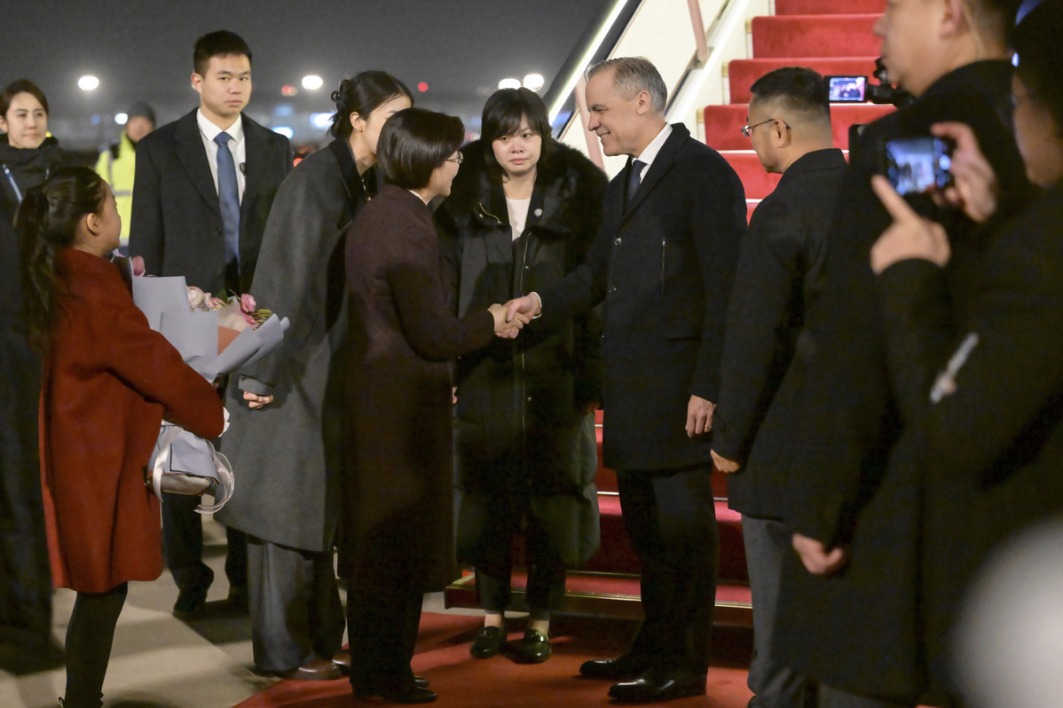
Canadian Prime Minister Mark Carney’s official visit to Beijing, commencing January 14, 2026, has been met with robust approval from the nation’s business sector. Industry representatives are characterizing the diplomatic mission as a pivotal step toward stabilizing and diversifying Canada’s economic partnerships amid a complex global landscape.
Bijan Ahmadi, Executive Director of the Canada China Business Council, emphasized the critical nature of re-engagement between Ottawa and Beijing. “Prime Minister Carney’s presence in China signifies a welcome recalibration of bilateral relations that began its gradual revival last summer,” Ahmadi stated. He underscored that sustained high-level dialogue provides the essential framework for navigating practical challenges, particularly within economic and trade domains.
The economic interdependence between the two nations forms a compelling foundation for renewed cooperation. With approximately $120 billion in bilateral merchandise trade, China stands as Canada’s second-largest trading partner. Investment flows reflect similarly robust connections: Chinese foreign direct investment in Canada exceeds $60 billion, while Canadian enterprises have invested over $40 billion in China.
Zheng Xiaoling, President of the Canada International Trade Promotion Society, highlighted the visit’s strategic timing against a backdrop of international geopolitical tensions and supply chain reorganization. “This diplomatic engagement carries profound economic significance,” Zheng observed. “It enables businesses to pursue market expansion and investment planning with renewed confidence, moving beyond previous hesitations caused by diplomatic friction.”
Industry leaders identified multiple sectors ripe for expanded collaboration, including clean energy technology, agricultural exports (canola, lobster, and meat products), financial services, higher education, healthcare innovation, and artificial intelligence. The visit also opens possibilities for enhanced two-way investment, potentially allowing Canadian firms to attract Chinese capital while optimizing Asia-Pacific production and supply-chain arrangements—particularly in electric vehicles, battery materials, and critical minerals.
Even during cooler diplomatic periods, commercial exchanges persisted through channels like the China International Import Expo, which attracted nearly 100 companies from British Columbia alone. Business leaders now urge stronger governmental support to leverage such platforms effectively, hoping to ignite broader recognition of Canadian products and technologies within the Chinese market.