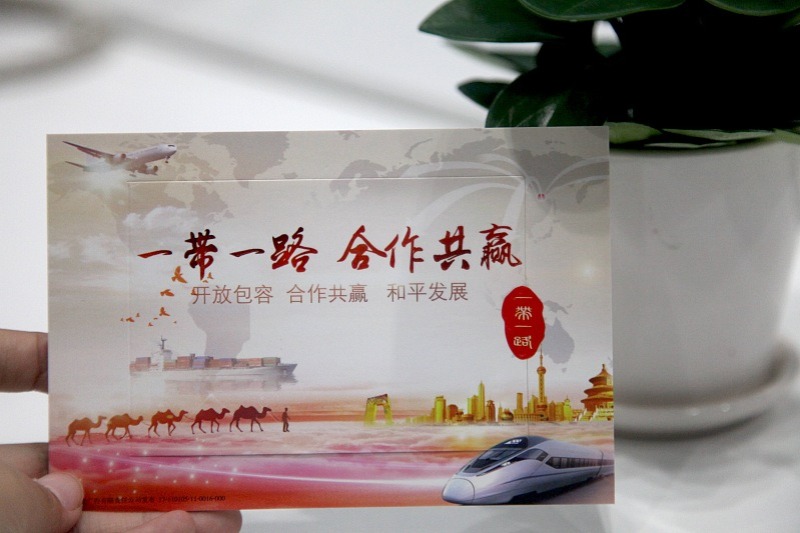
The Belt and Road Initiative achieved unprecedented momentum in 2025, reaching a record $214 billion in global engagement according to a comprehensive study by Fudan University’s Green Finance & Development Center and Australia’s Griffith Asia Institute. This remarkable growth represents China’s most active year since the initiative’s 2013 launch, driven primarily by massive renewable energy investments and strategic infrastructure development.
Construction contracts accounted for $128.4 billion while investments exceeded $85 billion, with energy sector engagement surging to $94 billion—more than double the 2024 figures and the highest in BRI history. The scale of individual projects expanded dramatically, with investment deals over $100 million reaching $939 million and average construction project sizes nearly doubling to $964 million.
Africa emerged as the primary beneficiary of construction activities, with Nigeria leading at approximately $25 billion, followed by the Republic of Congo at $23 billion. Middle Eastern nations also received significant attention, while Central Asia became the top investment destination with Southeast Asia and Africa following at $21 billion and $19 billion respectively.
The renewable energy transition proved particularly noteworthy, with green energy investments hitting their highest level since 2013. Wind, solar, and waste-to-energy projects attracted over $18 billion, complemented by $3 billion in hydropower investments, bringing total green energy engagement to more than $21 billion.
Aly-Khan Satchu, a prominent Kenyan investment banker, emphasized Africa’s strategic importance to China, noting that “China has been the cheerleader for Africa’s infrastructure investments—whether railways, roads or digital infrastructure—without which no jobs will be created.”
However, experts caution that future growth may face constraints. Frederick Otieno, a China-Africa relations scholar, noted that financial risks, geopolitical concerns, and stricter lending regulations are prompting Chinese lenders to adopt more selective approaches. “BRI engagement might remain considerable but is likely to level off into a selective, risk-aware pattern,” he observed.
The report anticipates continued Chinese engagement in energy, mining, and emerging technologies throughout 2026, though potentially with fewer megadeals as global trade volatility and supply chain considerations shape more targeted investment strategies.