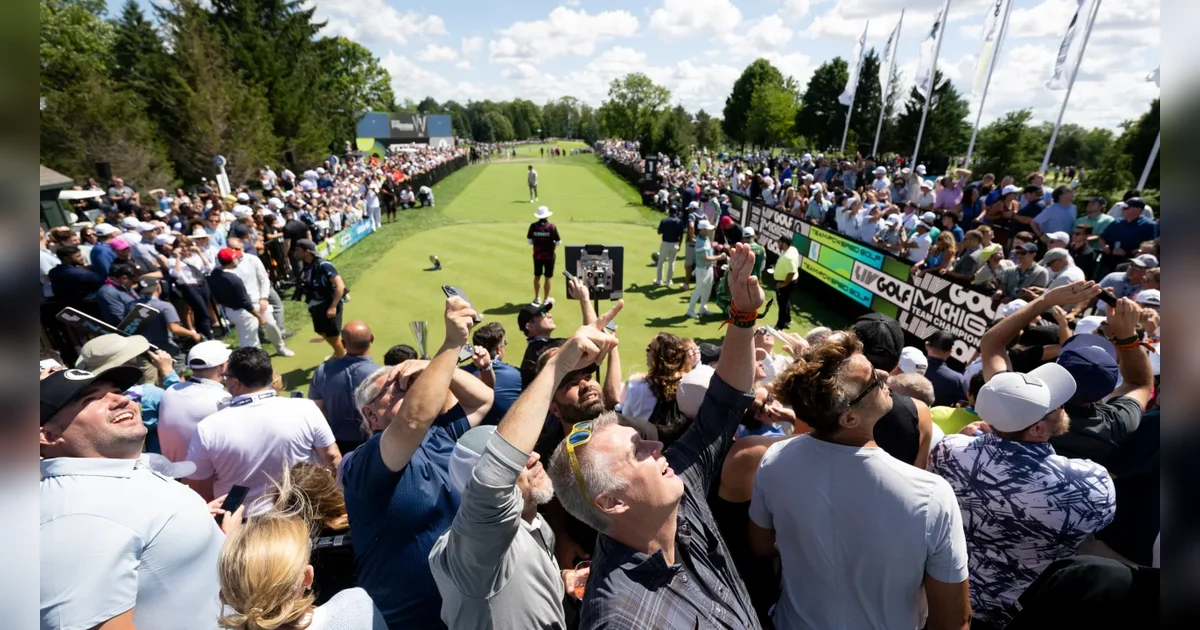
In a watershed moment for professional golf, the Official World Golf Ranking (OWGR) board has granted LIV Golf tournaments eligibility for world ranking points following years of contentious deliberation. This landmark decision, announced on February 4, 2026, marks the first formal integration of the Saudi-backed tour into golf’s global competitive framework since its controversial inception in 2021.
The breakthrough comes with significant structural modifications: OWGR points will be allocated exclusively to the top ten finishers and ties at each of LIV’s thirteen scheduled events. This restricted distribution model distinguishes LIV from all other OWGR-recognized tours, reflecting the board’s attempt to balance inclusivity with preservation of ranking system integrity.
While falling short of LIV’s original expectations, the compromise acknowledges the tour’s operational adaptations, including its transition toward traditional 72-hole tournaments and enhanced qualification pathways. The OWGR board characterized LIV’s application as “unique,” necessitating a tailored approach rather than full alignment with existing tour models.
Current points allocations position LIV events comparably to PGA Tour opposite-field competitions, notably surpassing this week’s DP World Tour Qatar Masters in total available points. Statistical analysis reveals:
– PGA Tour WM Phoenix Open: 344.55 total points (59.26 to winner)
– LIV Golf Riyadh: 108.29 total points (23.03 to winner)
– DP World Tour Qatar Masters: 121.74 total points (20.93 to winner)
The inherently limited field size of 57 players—contrasting sharply with conventional 156-player fields—continues to impact points distribution, remaining a central consideration in the OWGR’s calibrated approach.
Top-ranked LIV professionals Tyrrell Hatton (22nd) and Bryson DeChambeau (33rd) stand to benefit immediately, with broader implications for player mobility, emerging talent recruitment, and major championship eligibility. This decision represents the most significant step toward unifying golf’s fractured competitive landscape, potentially heralding a new era of coexistence between traditional tours and disruptive newcomers.