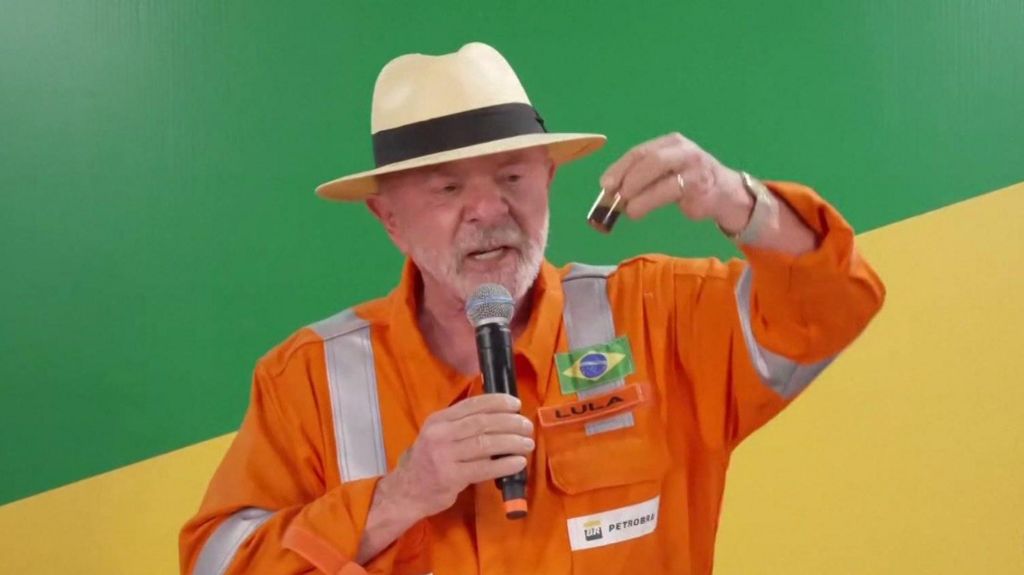
Brazilian President Luiz Inácio Lula da Silva has publicly celebrated a major crude oil discovery in offshore waters near the mouth of the Amazon River, marking a pivotal milestone for the country’s state-led energy exploration efforts, while drawing sharp criticism from conservation groups concerned about ecological harm.
In a public appearance shared via social media, Lula held up a glass vial containing a sample of the newly discovered crude to mark the announcement from state oil giant Petrobras. The president framed the find as a transformative asset for Brazil, calling it “a passport to the country’s future.”
The exploratory drilling that uncovered the oil was carried out 175 kilometers off Brazil’s Amazon coast, at a depth of more than 2,800 meters below sea level. As of the announcement, neither the total size of the oil reserve nor the commercial viability of large-scale extraction has been confirmed. Even so, the discovery has already validated Petrobras’ long-held bet on the untapped Brazilian Equatorial Margin region, according to company CEO Magda Chambriard. She emphasized that the find supports the firm’s core mission of strengthening Brazil’s national energy security.
The project has been mired in controversy since Lula approved exploratory drilling permits last year, just weeks before Brazil hosted the COP30 UN climate summit in November. Environmental campaigners have repeatedly warned that the region is one of the most biodiverse marine ecosystems on the planet, holding sensitive coral reef systems and adjacent coastal wetlands that support thousands of wildlife species. Any oil spill from extraction operations, they argue, could be carried by ocean currents across vast stretches of the Amazon coast, causing irreversible ecological devastation.
Lula has pushed back firmly against both domestic and international criticism, framing the project as a matter of Brazilian national sovereignty. Rejecting what he calls foreign interference in the country’s energy decisions, the president noted that opposition to the drilling has been particularly strong in Europe. “Any country which has oil of this quality won’t allow anyone to butt in,” he said, adding that he chose to announce the project ahead of COP30 because Brazil’s national interests demanded transparency.
The president, who is seeking a new four-year term in Brazil’s October presidential election, has sought to balance competing priorities around the discovery. He has repeatedly reaffirmed his long-term commitment to phasing out fossil fuels to combat global climate change, noting that Brazil remains a global leader in biofuel innovation and renewable energy development. Lula argues that revenue from current oil production is critical to funding Brazil’s just transition to a low-carbon economy, allowing the country to scale up renewable energy infrastructure while supporting vulnerable communities.
Local communities in the nearby Amazon border town of Oiapoque, Amapá state, have already reacted to the discovery with cautious optimism. Local housing authorities report a significant influx of new residents to the area, drawn by hopes of new jobs and economic opportunities in the remote northern region.
With less than two months remaining before Brazilians head to the polls, the oil discovery presents a delicate political balancing act for Lula: he aims to court voters hungry for regional economic development, while avoiding alienating the large base of environmentally conscious supporters who helped elect him in 2022.