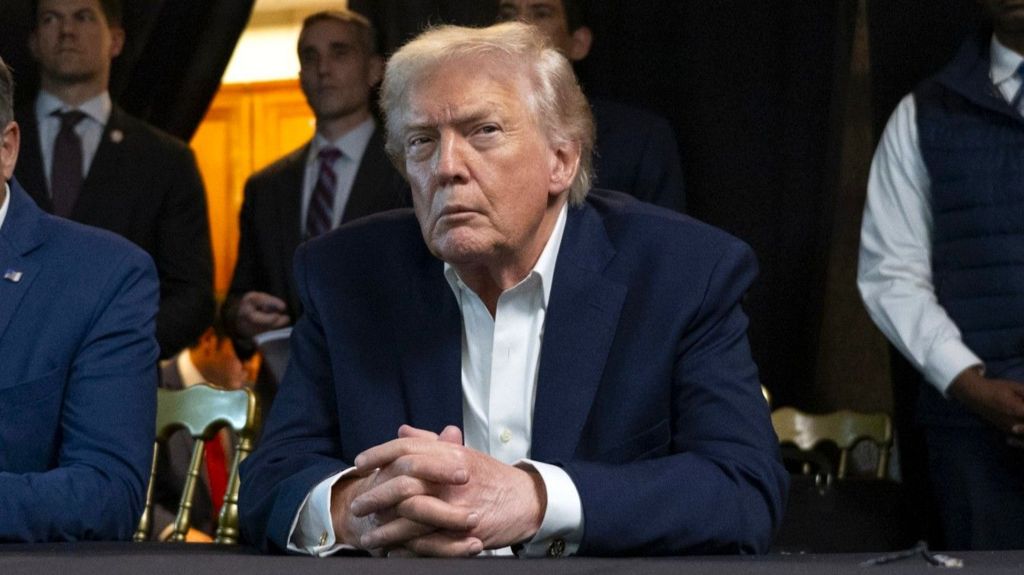
In a dramatic escalation of hemispheric policy, former Venezuelan President Nicolás Maduro has been captured by U.S. special forces and transported to a detention facility in Brooklyn, New York. The operation, monitored in real-time by former President Donald Trump from his Mar-a-Lago estate, represents what Trump characterizes as a “decisive victory” for his administration’s foreign policy approach.
Trump enthusiastically described the operation to Fox News, marveling at the “speed and violence” of the tactical mission that resulted in Maduro’s capture without American casualties. The former president framed the intervention as demonstrating his administration’s commitment to following through on campaign promises through direct action.
This operation signals the emergence of what Trump has rebranded as the “Donroe Doctrine” – an intensified version of the nineteenth-century Monroe Doctrine that asserts unprecedented U.S. dominance throughout the Western Hemisphere. The policy explicitly warns rival powers, particularly China, to avoid regional engagement and claims expanded American authority over resources and governance across Latin America and beyond.
Strategic resources appear central to this policy shift, with Venezuela’s substantial oil reserves and Greenland’s mineral deposits specifically identified as priorities. Trump administration officials have indicated willingness to use military and economic coercion against nations perceived as “out of line,” with Colombia, Mexico, Cuba, and Denmark explicitly warned about potential future actions.
The approach represents a fundamental break from established U.S. foreign policy traditions. Unlike previous administrations that sought legitimacy through international institutions or alliances, Trump’s doctrine operates explicitly through assertions of raw power and national interest. This marks a departure from both the isolationism of George Washington’s farewell address and the alliance-building of the post-World War II Truman Doctrine that established NATO and transatlantic partnerships.
Stephen Miller, a key Trump adviser, articulated this worldview on CNN, describing international relations as governed by “strength, force, and power” rather than diplomatic conventions or multilateral agreements. This perspective challenges the rules-based international order that has predominated since World War II, potentially returning to a nineteenth-century model of spheres of influence and great power competition.
The capture of Maduro and declaration of the Donroe Doctrine suggests a fundamental reorientation of American foreign policy toward explicit unilateralism and resource acquisition, with implications for global stability and international law.