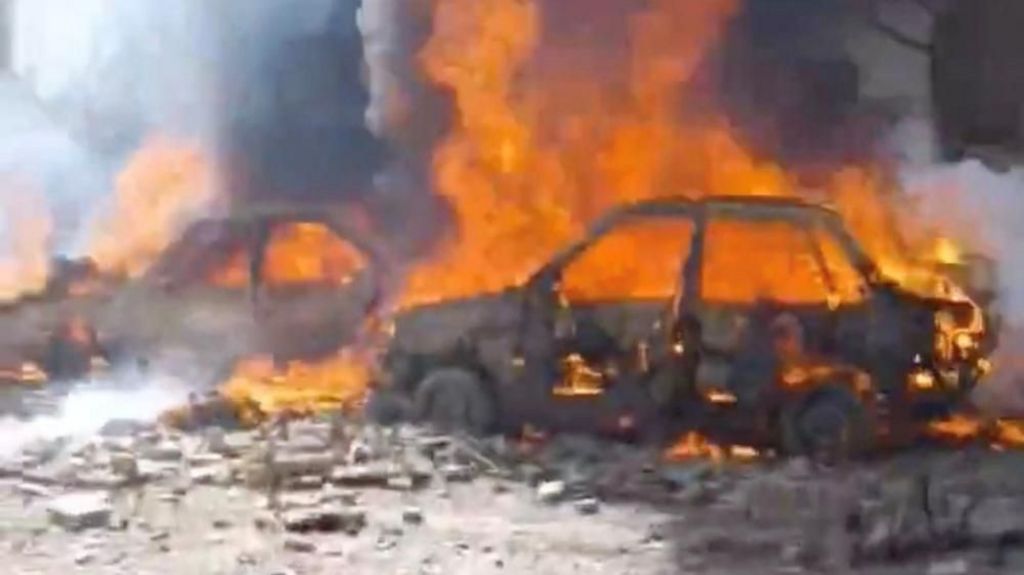
Tehran has been plunged into crisis following a massive coordinated airstrike by United States and Israeli forces that resulted in the death of Iran’s Supreme Leader Ayatollah Ali Khamenei. The attack, described by Israel as ‘pre-emptive,’ represents the largest aerial operation in Israeli Air Force history according to military officials.
Security footage from Tehran shows chaotic scenes with smoke rising over residential neighborhoods as emergency services respond to the strikes. The operation appears calculated rather than reactive, with both nations judging Iran vulnerable due to economic crises, damaged defenses from last summer’s conflict, and internal unrest following brutal crackdowns on protesters.
This military action delivers another blow to international law frameworks, as both President Trump and Prime Minister Netanyahu justified the strikes under self-defense principles despite the enormous power disparity between their nations and Iran. Netanyahu, facing domestic elections, has consistently viewed Iran as Israel’s primary security threat, while Trump’s objectives have shifted from previously declaring Iran’s nuclear program ‘obliterated’ to now emphasizing nuclear ambitions as justification.
The political calculus appears to include hopes for regime change, with both leaders addressing the Iranian people directly about ‘freedom’ and overthrow opportunities. Historical precedents in Iraq and Libya suggest such outcomes remain highly uncertain and likely to produce catastrophic collateral damage including state collapse and prolonged civil conflict.
Iran’s complex political structure, maintained through ideological commitment, corruption, and ruthless security enforcement, suggests the regime will persist despite leadership decapitation. The Islamic Revolutionary Guards Corps (IRGC) remains positioned to install a new clerical leader, unlikely to be swayed by Trump’s offers of immunity given the cultural significance of martyrdom in Shia ideology.
Regional powers including Saudi Arabia face heightened instability as this conflict threatens to export violence across the Middle East and beyond. The deliberate targeting of Khamenei demonstrates a belief in assassination as strategy, though dealing with a state rather than militant movement creates fundamentally different challenges than previous operations against Hamas or Hezbollah leadership.
With trust obliterated following the US withdrawal from the JCPOA nuclear agreement and recent demands for missile program restrictions, diplomatic solutions appear remote. Iran’s remaining leadership now calculates survival strategies while the world confronts the unpredictable consequences of escalated conflict in an already volatile region.