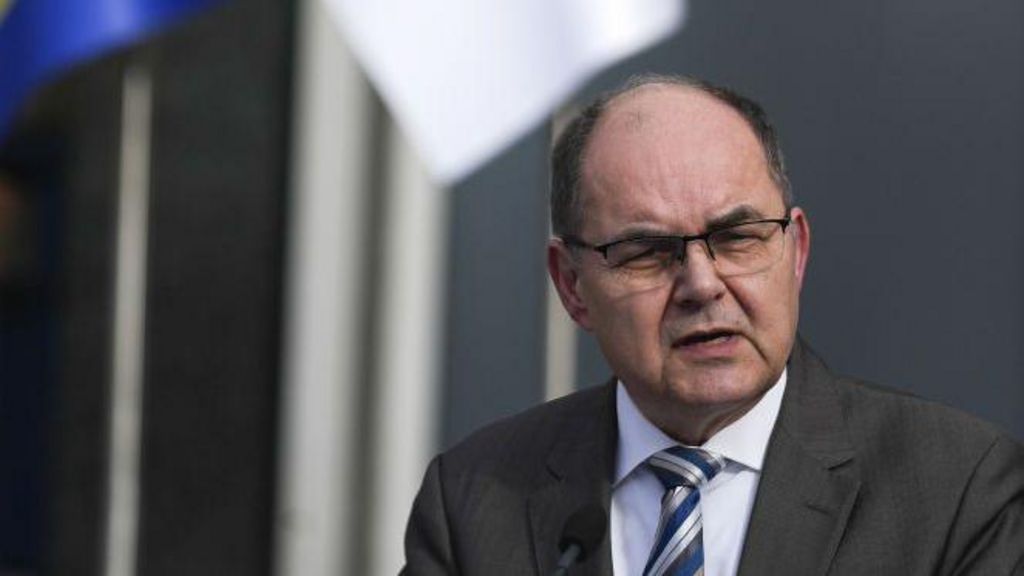
After more than three years in one of the most contentious positions in Balkan politics, Christian Schmidt, the international High Representative for Bosnia and Herzegovina, has formally announced he will step down from his role, ending a tenure marked by persistent confrontation with ethno-separatist leaders and growing geopolitical friction.
Schmidt, who took up the post in 2021, leaves behind a role that has been central to Bosnia’s post-conflict stability since the 1995 Dayton Peace Agreement. That landmark accord, which brought an end to three years of devastating ethnic conflict that tore the country apart, established the Office of the High Representative (OHR) as a UN-mandated watchdog tasked with upholding the terms of the peace deal. Endowed with sweeping executive authority known as the Bonn Powers, the post holder can intervene to override domestic legislation and remove fractious ethno-political leaders from office to preserve the country’s territorial integrity.
Early high-profile office holders like Paddy Ashdown, who held the role in the early 2000s, embraced these expansive powers, famously removing 60 Bosnian-Serb officials from office in a single 2004 day over their refusal to cooperate with the UN’s war crimes tribunal for the former Yugoslavia. The move earned Ashdown the unflattering moniker the “Viceroy of Bosnia”, and later office holders adopted a far more restrained approach, pushing for Bosnian leaders to take ownership of domestic affairs. This hands-off strategy ultimately yielded limited progress, however, paving the way for Schmidt to take a far more activist approach when he assumed the role.
Schmidt’s tenure was defined almost entirely by his standoff with Milorad Dodik, the powerful Bosnian-Serb leader who has long pushed for separatist secession from Bosnia and Herzegovina. Schmidt repeatedly used his Bonn Powers to block laws advanced by Dodik that would have advanced separatist goals, a confrontation that ultimately resulted in a one-year prison sentence and six-year ban from public office for Dodik. But the conflict ultimately eroded Schmidt’s own position: after Dodik spent heavily on high-powered Washington lobbying, the U.S. reversed its long-standing sanctions on the Bosnian-Serb leader. Observers have linked this policy shift to Dodik’s decision to award a major trans-Balkan gas pipeline contract to a little-known U.S. firm with close ties to former President Donald Trump’s family, a project that Schmidt openly opposed.
Beyond his standoff with Dodik, Schmidt’s appointment was never formally recognized by Russia from the start. With the loss of U.S. backing, his position became untenable, leading to his personal decision to end his service supporting peace implementation in Bosnia, as confirmed by his office.
Schmidt has confirmed he will remain in post until a successor is appointed, but the future of the OHR itself is now in serious question. Russia has long aligned with Dodik in calls to shut down the office entirely. If the U.S. now joins Russia in supporting closure, Bosnia will lose the only international check on ethno-nationalist separatist ambitions, leaving the country’s future stability and territorial integrity deeply uncertain.